
Review · HO CHI MINH CITY
Ho Chi Minh: Local Cooking Class At Auntie’s Home
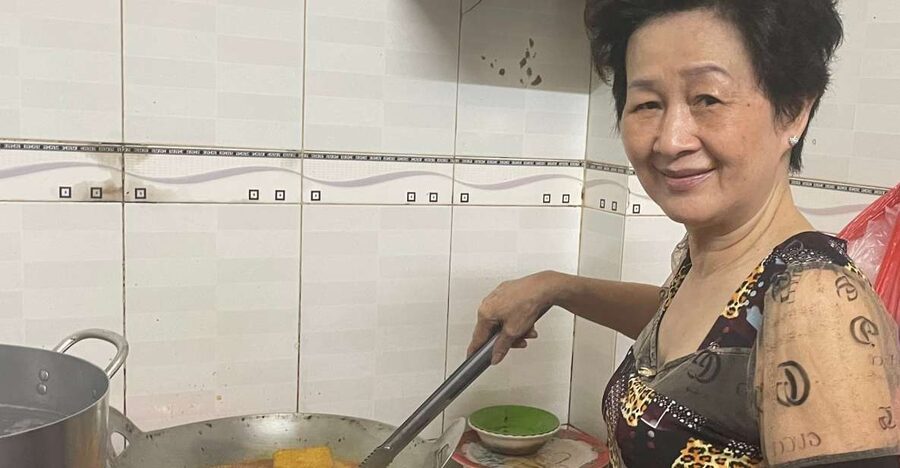
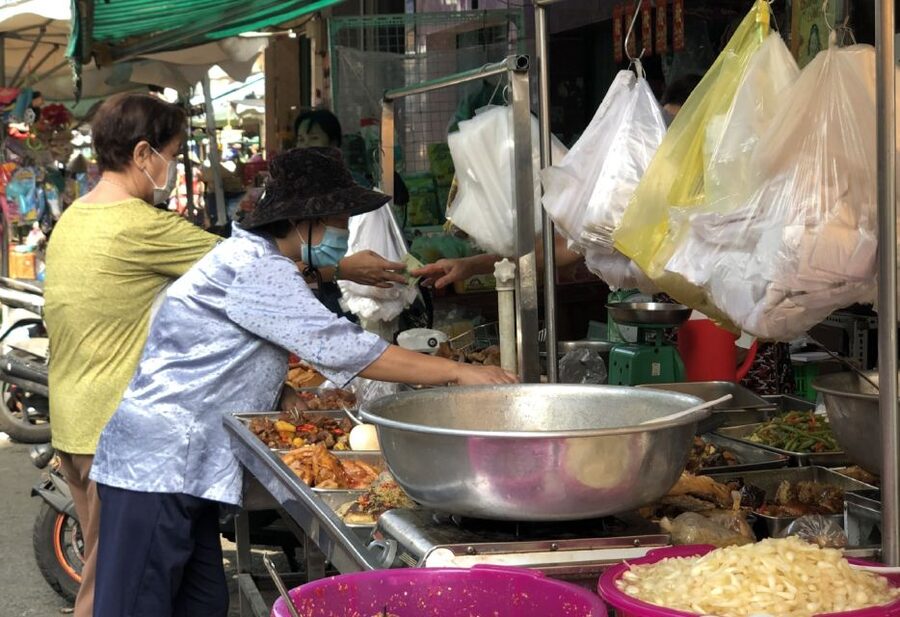
The best part of this Saigon cooking class is that the kitchen comes before the cooking. You walk through District 6 back alleys, browse a market used by local residents, and then enter Auntie Tu’s home to prepare lunch. This feels far removed from the polished restaurants around central Ho Chi Minh City.
I like the market visit, which gives you a look at everyday shopping and local ingredients. I also like the home setting, where Auntie Tu teaches her family-style recipes with help from English-speaking guides such as Bao or Kevin. The main consideration is comfort: the kitchen is small, the walkways are narrow, and transport may involve riding pillion on a motorbike.
Key points to know before booking
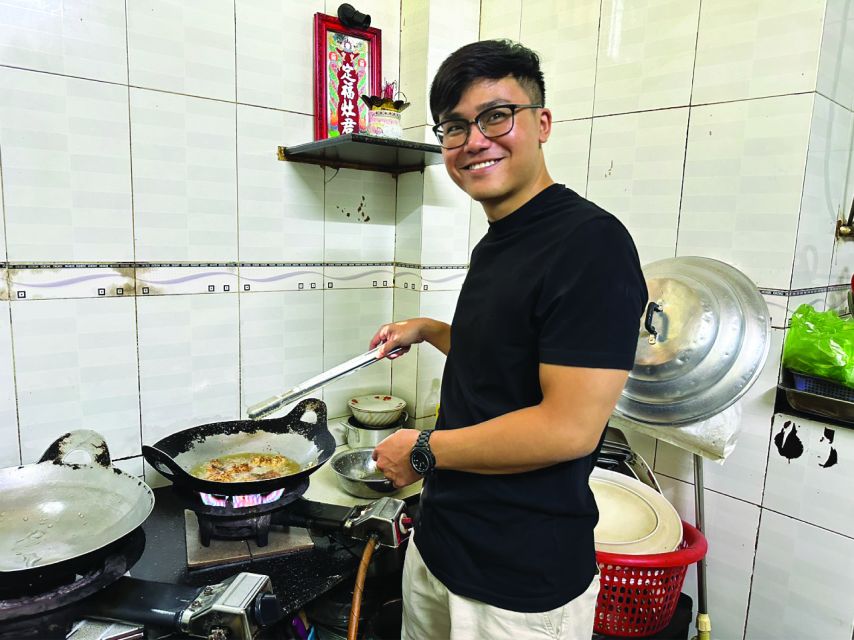
- Auntie Tu’s home kitchen: You help prepare five Vietnamese dishes in a real local house, not a purpose-built cooking school.
- District 6 market visit: You shop for ingredients in a market serving local residents and learn about daily grocery buying.
- Back-alley walking: The route takes you through narrow lanes and residential areas away from central Saigon.
- Possible motorbike transport: Solo travelers and pairs may ride behind a guide, adding excitement but requiring comfort on a scooter.
- Five-dish lunch: The standard menu includes meat, fish, egg, spinach, and sour soup, with a separate vegetarian menu.
- Personal guidance: Bao, Kevin, or another English-speaking guide translates and explains food customs while Auntie Tu teaches the cooking.
Why this cooking class feels different from a restaurant meal
Many Ho Chi Minh City food activities keep you in the central districts, moving from one restaurant or street stall to the next. This one takes you into a residential part of the city, where the main attraction is ordinary life: people shopping, neighbors moving through narrow lanes, and a working home kitchen.
That change of setting matters. You are not simply tasting Vietnamese food. You are seeing where ingredients are bought, how meals are prepared, and how a family kitchen operates. The experience is still arranged for visitors, but it is built around a real home and a real market rather than a staged dining room.
The four-hour schedule gives the outing enough time to breathe. You walk, shop, cook, eat, and return to your drop-off area without trying to pack in half of Saigon. If you want a quick cooking demonstration, this may feel too long. If you want a closer look at local routines, the pace is useful.
The activity costs $56 per person. That is not the cheapest way to eat in Ho Chi Minh City, where a filling street meal can cost very little. The value comes from the combination of private transportation, a guide, market food, cooking instruction, lunch, photos, and access to a local home. For someone who wants a personal cultural experience rather than a low-cost meal, the price is reasonable.
More cooking classes around Ho Chi Minh City:
- Cai Be Mekong Delta Tour: Cooking Class, Cycling & Craft Villages
★ 5.0 · 1,881 reviews - Mekong Delta 4 Islands, TukTuk, Boat, Try Khot Cake Local Cooking
★ 5.0 · 1,148 reviews - Mekong Day Trip Explore Village Bicycle CookingClass Group 12 Pax
★ 5.0 · 705 reviews
From central Saigon to District 6
Pickup is available from District 5, District 4, District 1, or District 3. Drop-off is available in District 4, District 5, District 3, or District 1. That coverage makes the outing fairly easy to fit into a stay in central Ho Chi Minh City.
The transport arrangement depends on group size. For one or two participants, the guide may pick you up by motorbike, with you riding behind. This can be a thrilling way to see the city, especially if you enjoy the close-up rush of Saigon traffic. It is not the right choice if you feel uneasy on scooters or prefer enclosed transport.
One participant described the motorbike ride as a major part of the experience, including a rainy return journey. You should not count on rain, of course, but bring practical clothing and expect city transport to be part of the outing rather than a silent transfer between stops.
Private transportation is included, and private or small-group arrangements are available. The exact feel will depend on your booking, but a smaller group should make it easier to ask questions, take part in the cooking, and move through tight lanes.
Walking through the back alleys
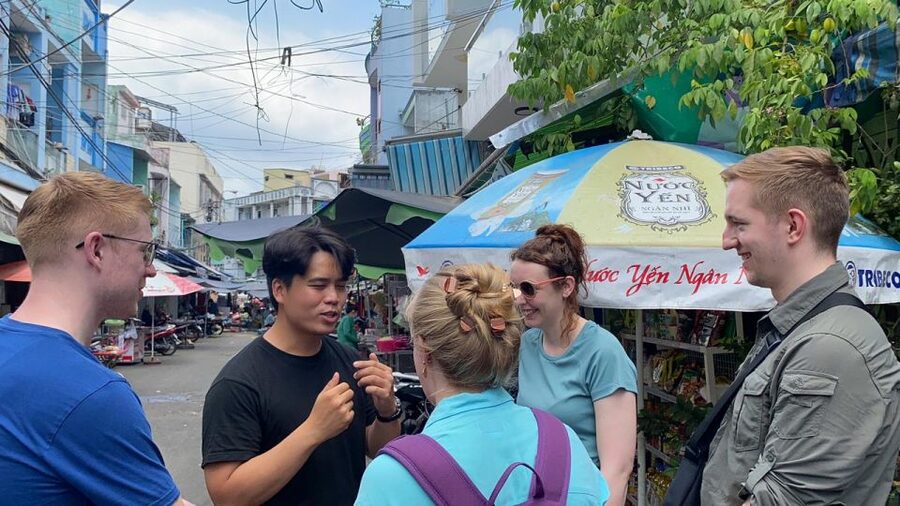
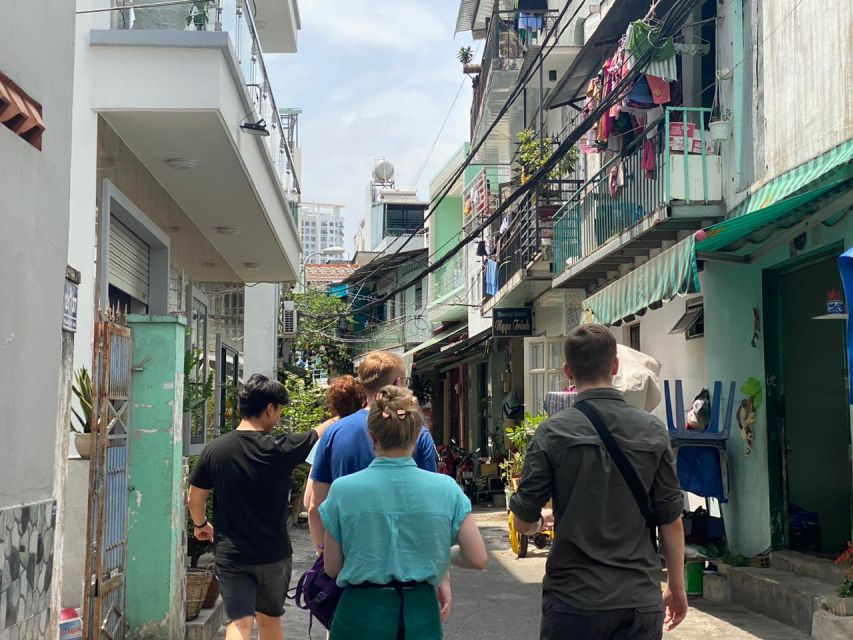
The first real stop is the neighborhood itself. You walk through a series of narrow back alleys on the way to the market, seeing daily activity away from the main roads.
This is not a grand sightseeing walk. There are no famous monuments or sweeping city views. The appeal is more direct: you get close to the parts of Saigon that residents use every day. Your guide can explain what you are seeing, answer questions about Vietnamese customs, and help you understand how food shopping fits into daily life.
Wear covered shoes. The lanes and market areas can be crowded, wet, or uneven, and open sandals are less practical. Sunglasses and sunscreen are also recommended, and the tour provides a conical hat for walking in the sun.
The walk may be the most revealing part of the day for people who have already seen central Ho Chi Minh City. You get a sense of how quickly the city changes from major streets to quiet residential lanes. At the same time, you should be comfortable with a less polished setting. This is a neighborhood visit, not a carefully controlled attraction.
Shopping at the local wet market
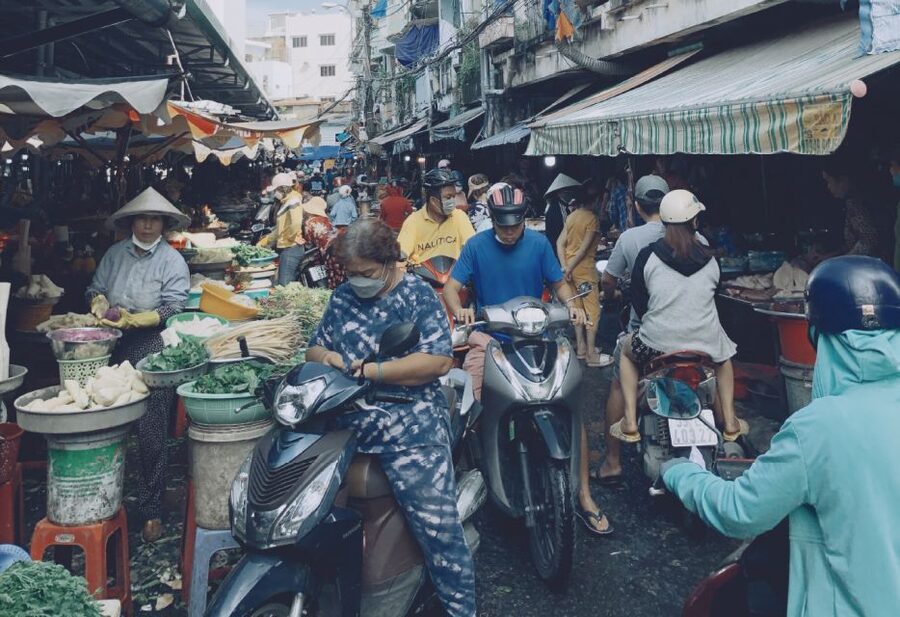
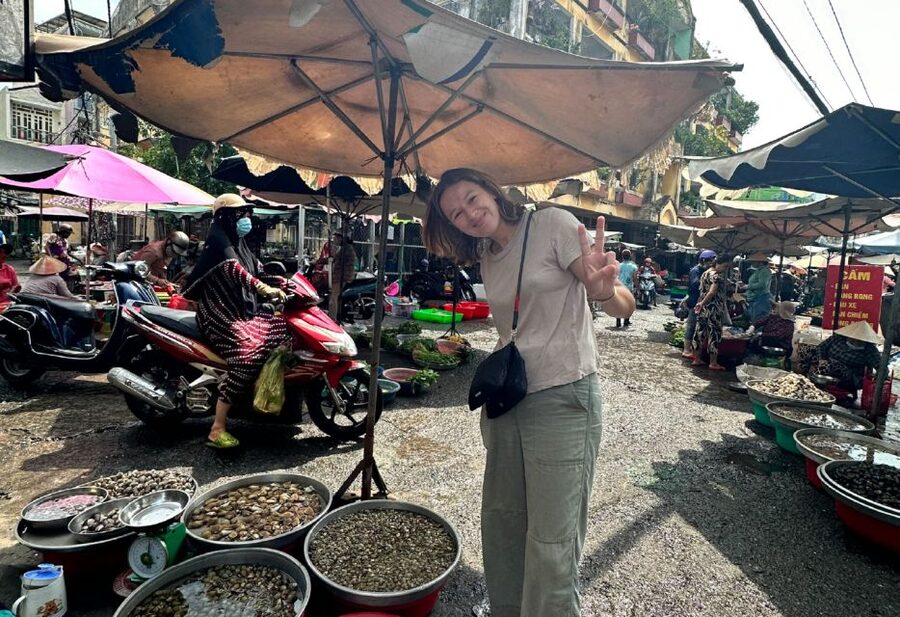
The market stop is listed as Bình Tây Market, while the experience description refers to a local wet market. Either way, the purpose is clear: you shop for ingredients with your guide before heading to the kitchen.
A market visit gives the cooking lesson a useful beginning. Instead of seeing ingredients already measured and arranged, you see them as part of the food system. Your guide can help explain Vietnamese names, common produce, and the practical language used when buying groceries.
The market is described as crowded with local shoppers and full of colorful produce and busy exchanges. You can expect a more energetic setting than a supermarket, with tight aisles and plenty of movement. Keep your belongings secure and stay close to the guide, especially if you are not used to crowded markets.
This stop is also useful for comparing Vietnamese shopping with your own routine. The lesson is not only about recipes. It is about how food reaches the kitchen and how a normal household chooses what to cook.
The market may not suit you if you dislike heat, crowds, strong food smells, or uneven walking surfaces. For most people, though, it gives the cooking class a stronger sense of place. You are not just learning a recipe in isolation. You are following the ingredients from market stall to plate.
Same kitchen, a different dish:
- HCM: Mekong Delta Islands Boat & Tuk-Tuk Tour with Tastings
★ 4.8 · 2,285 reviews - Small-group Mekong Floating Market Day Trip from Ho Chi Minh City
★ 5.0 · 886 reviews - Chef Vu Cooking Class Plus Market Trip in Saigon Center (Pick up by Cyclo)
★ 5.0 · 477 reviews - Immersive Cooking Class & Market Tour By Local Chef+Cookbook
★ 4.8 · 426 reviews
Cooking inside Auntie Tu’s home
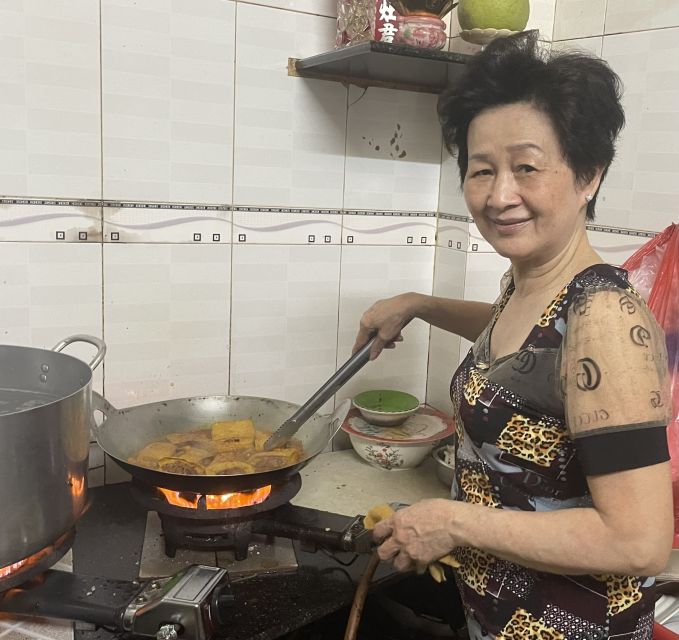
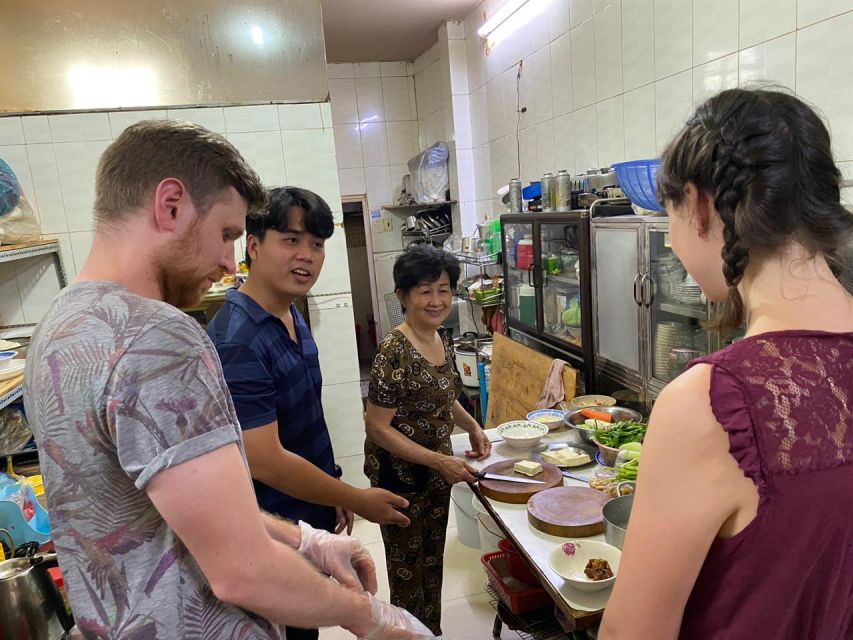
After the market, you return to Auntie Tu’s house for the main lesson. The kitchen is a regular local kitchen, and it is described as small. That detail is important. You should expect a close, hands-on setting rather than a large teaching studio with a separate workstation for every participant.
Auntie Tu leads the cooking, while the English-speaking guide translates and explains. Since Auntie Tu does not speak English, the guide acts as the link between you and the teacher. This arrangement also lets you ask questions about Vietnamese food and local customs as you work.
The lesson is practical. You do a substantial part of the preparation rather than simply watching a chef cook. You learn several Vietnamese cooking methods and receive Auntie Tu’s recipes afterward, according to the activity details provided to participants. Photos are also included.
The home setting is the heart of the experience, but it can also be its limitation. A small kitchen may feel crowded, and the instruction may be less formal than at a commercial cooking school. If you want precise demonstrations with professional equipment and polished presentation, choose a purpose-built class. If you value personal contact and a glimpse of ordinary home cooking, this setting is the better fit.
What you cook for lunch
The standard menu includes five dishes:
- Poached meat with pepper
- Fried egg with minced meat
- Fried red tilapia
- Sauteed garlic spinach
- Vietnamese sour soup
The vegetarian menu replaces these with:
- Stewed vegetables
- Fried salted tofu with lemongrass
- Fried egg with onion
- Sauteed garlic spinach
- Vegetarian sour soup
This is a full meal, not a token tasting. You prepare the dishes and eat them at the end, which gives you a clear sense of how the separate techniques work together as a Vietnamese lunch.
The menu also offers a useful spread of methods. You work with poaching, frying, sauteing, stewing, and soup preparation. That variety makes the class more useful at home because you are learning a group of techniques rather than one signature dish.
Vegetarians should select the vegetarian menu when booking or arranging the activity. The provided information lists a separate vegetarian set, but it does not specify substitutions beyond that menu, so anyone with allergies or strict dietary needs should confirm details in advance.
The meal and the feeling of home
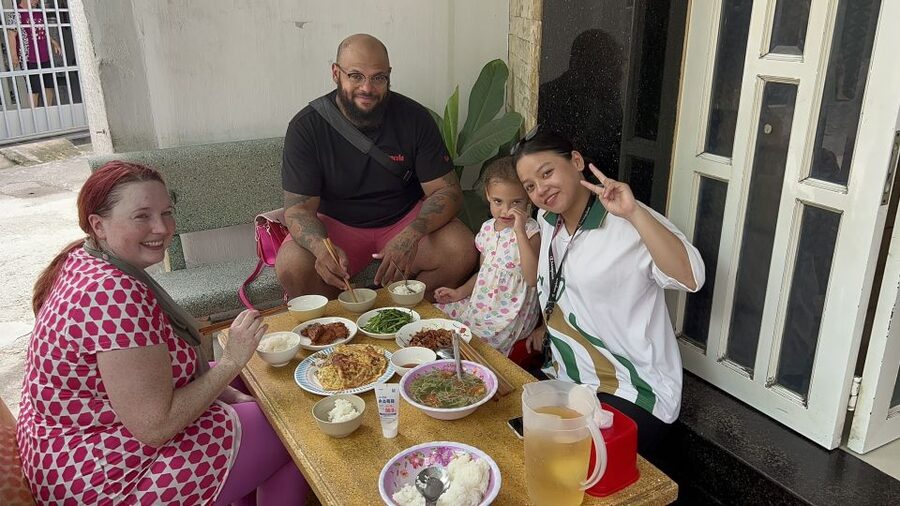
Lunch is served after the cooking, with the guide and host. This shared meal is where the different parts of the outing come together: the market ingredients, the cooking methods, and the home setting.
The appeal is simple. You sit down to food you helped prepare, in the same place where you learned to make it. That creates a stronger connection than eating a dish brought out by a restaurant server.
The experience is also social. The guide can explain customs and answer questions, while Auntie Tu’s role gives the meal a personal center. The phrase feels like home fits the design of the activity, though you should understand it as a welcoming local visit, not a private family gathering with no tourist structure.
Recipes are sent afterward, and photos are included. That is a practical bonus. You can try to repeat the dishes once you return home, though ingredient names and local produce may require some adjustment.
Guides, group size, and comfort
Bao and Kevin are two guides associated with the experience. Bao is described as friendly and helpful with Vietnamese food and culture, while Kevin is praised for clear English and explanations of local customs and traditions. The guide’s role is especially important because Auntie Tu teaches in Vietnamese.
Private or small-group bookings are available. A small group is likely to work best in the compact kitchen, giving you more room to participate and more time to speak with the guide. Larger groups may change the pace and reduce how much direct kitchen work each person gets, so check availability carefully.
This activity is not suitable for wheelchair users because of the back alleys, market conditions, and home setting. You should also be comfortable walking for part of the four-hour program and, depending on the arrangement, riding a motorbike.
Alcohol and drugs are not allowed. Bring sunglasses and sunscreen, and wear covered shoes for the walking and market portions.
Is the $56 price fair?
I would judge the price by what kind of day you want. If your goal is simply to eat Vietnamese food cheaply, $56 is expensive. You could spend far less at local stalls and restaurants.
If you want transportation, a local English-speaking guide, a market visit, a home cooking lesson, lunch, photos, and recipes, the price becomes easier to justify. You are paying for access and time, not only ingredients.
The strongest value comes from the personal setting. A standard cooking school can teach you techniques, but this activity also shows you the path from neighborhood market to household meal. That makes it a good choice for a first visit to Ho Chi Minh City or for anyone who has already covered the main city sights and wants something more personal.
Free cancellation is available up to 24 hours before the activity, and you can reserve now and pay later. The tour lasts four hours, with starting times based on availability.
Who should book this experience?
I would choose this class if you want to meet local people, learn practical Vietnamese cooking, and see a side of Ho Chi Minh City outside the central districts. It is especially suitable for couples, solo visitors, food-focused travelers, and small groups who enjoy asking questions and taking part rather than watching from the sidelines.
Families with older children may also find it engaging, provided everyone is comfortable with walking, crowds, and possible motorbike transport. The hands-on cooking gives the day a clear purpose, while the market and alleys add context.
I would look elsewhere if you need wheelchair access, dislike scooters, want a large professional kitchen, or prefer a food tour with many tastings and little instruction. This is one meal and one home visit, not a citywide eating tour.
Should you book Auntie Tu’s cooking class?
Book it if you want the cooking lesson to be tied to real neighborhood life. The back alleys, local market, small kitchen, guide translation, and shared lunch make this more personal than a standard demonstration.
Skip it if comfort and polished facilities matter more than local access. For everyone else, the combination of a market walk and Auntie Tu’s home kitchen offers a thoughtful four-hour introduction to Vietnamese food and daily life.
FAQ
How long does the cooking class last?
The experience lasts four hours. Check availability for the available starting times.
Where can pickup and drop-off take place?
Pickup is available in District 5, District 4, District 1, and District 3. Drop-off is available in District 4, District 5, District 3, and District 1.
Is transportation included?
Yes. Private transportation is included. For one or two participants, the guide may provide transport by motorbike, with the participant riding behind.
Is the cooking class available in English?
Yes. The tour has an English-speaking guide, and English is the listed language. The guide helps translate during the lesson with Auntie Tu.
Is there a vegetarian menu?
Yes. The vegetarian menu includes stewed vegetables, fried salted tofu with lemongrass, fried egg with onion, sauteed garlic spinach, and vegetarian sour soup.
Is the activity suitable for wheelchair users?
No. The experience is not suitable for wheelchair users because it includes walking through back alleys, a market visit, and a home cooking setting.
New cooking classes around Ho Chi Minh City
- M.O.M COOKING CLASS★ 4.8 · 6 reviews
- Mama Lan’s Home Cooking Class with 30+ Years of Experience★ 5.0 · 3 reviews
- MY Kitchen – Vietnamese Home Cooking Class in Hoi An★ 5.0 · 6 reviews
- Farm-To-Table Healthy Cooking Class: Half-Day Tour★ 4.8 · 41 reviews
- Ho Chi Minh City: Vietnamese Homestyle Cooking Class★ 4.9 · 91 reviews
- HCM: 2-Day Mekong Floating Market with Cooking & Bike Ride★ 4.6 · 68 reviews
- HCMc:Vietnamese Cooking Class with Local market tour & Meal★ 5.0 · 8 reviews
- HCMc:Authentic Vietnam Cooking Class with local market visit★ 5.0 · 2 reviews
Ho Chi Minh City Cooking Classes, side by side.
Cai Be Mekong Delta Tour: Cooking Class, Cycling & Craft Villages
Read our review →
Mekong Delta 4 Islands, TukTuk, Boat, Try Khot Cake Local Cooking
Read our review →
Small-group Mekong Floating Market Day Trip from Ho Chi Minh City
Read our review →
Mekong Day Trip Explore Village Bicycle CookingClass Group 12 Pax
Read our review →
Chef Vu Cooking Class Plus Market Trip in Saigon Center (Pick up by Cyclo)
Read our review →
Immersive Cooking Class & Market Tour By Local Chef+Cookbook
Read our review →
Ho Chi Minh City: Mekong Delta Tour with Sampan Journey
Read our review →
VIP Mekong Delta Adventure Cycling & Kayaking – Private Day Trip
Read our review →This kitchen also appears in