
Review · BANGKOK
Bangkok: Tingly Thai Cooking School Half-Day Cooking Class
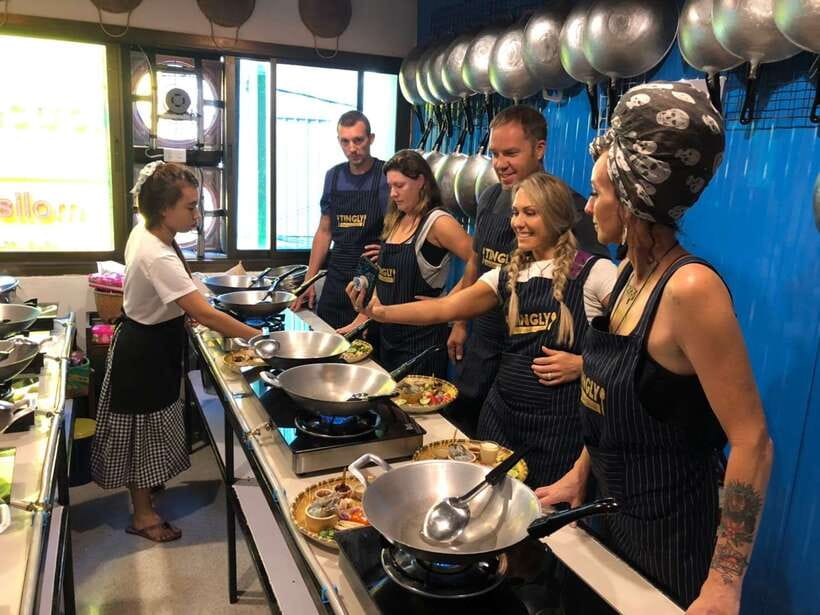
Bangkok’s best souvenir may be a recipe you can actually use. At Tingly Thai Cooking School, you visit a local market in the morning, grind curry paste by hand, cook four Thai dishes, and sit down to eat what you made. Instructors such as Song, Cho, and Nam bring plenty of energy, but the class remains clear enough for first-time cooks.
I like the market stop because it gives the food some context before you start chopping. I also like that you make the curry paste from scratch, rather than simply adding a ready-made packet. The one thing to consider is timing: the market portion belongs to the morning class, and the market closes by about 10 a.m., so the afternoon session misses that part.
Key points at a glance
- Four dishes in three hours: Make Tom Yum Kung, Pad Thai Kung, mango sticky rice, and one curry.
- Morning market visit: Walk through a local market with your guide and learn about the ingredients before cooking.
- Curry paste made by hand: Prepare the aromatic base yourself instead of starting with a premixed paste.
- Daily curry menu: Green curry appears Monday and Friday, red curry Tuesday and Saturday, Panaeng Wednesday and Sunday, and Massaman Thursday.
- Friendly English instruction: Guides including Song, Cho, Nam, and Chon are known for humor, patience, and clear demonstrations.
- Useful take-home material: You receive recipes so you can try the dishes again at home.
Why this Bangkok cooking class works so well
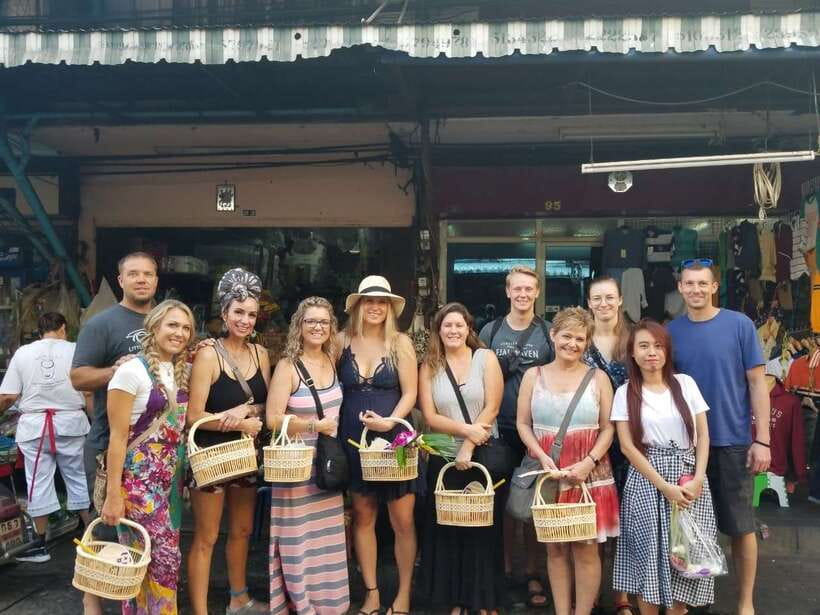
Thai cooking is easy to enjoy and harder to understand. A plate of Pad Thai can seem simple, but the balance of sweet, sour, salty, spicy, and savory flavors takes some practice. This class helps you see how those parts fit together.
You do not just eat a finished meal. You handle the ingredients, prepare the components, cook the food, and taste the results. That makes the experience useful beyond the three hours. You leave with a better sense of how Thai dishes are built, plus recipes for another attempt at home.
The class takes place at Tingly Thai Cooking School opposite the Marriott Hotel Surawong in central Bangkok. The price is $41 per person, which is strong value for a three-hour lesson that includes all ingredients, cooking equipment, drinking water, a four-dish meal, recipes, and, for the morning session, the market visit.
You should think of this as both a meal and a short cultural activity. If you only want to eat Thai food, a restaurant will be quicker. If you want to understand what goes into the bowl of soup or plate of noodles, this offers much more.
More Thai Cooking Classes around Bangkok:
- Bangkok: Hands-on Thai Cooking Class and Market Tour
★ 4.9 · 1,614 reviews - Bangkok: Maliwan Thai Cooking Class with Market Tour
★ 4.9 · 1,133 reviews - Hands on Thai Cooking Class and Market Tour
★ 5.0 · 660 reviews
Start with the market on the morning class
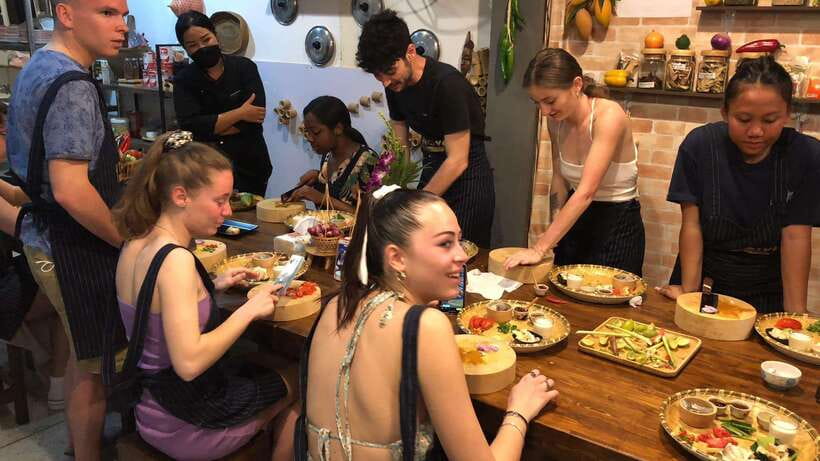
The morning class begins with a guided walk through a local market. This is not a long sightseeing tour, but it is a useful introduction to the raw materials you will soon cook.
Your guide shows you what is available at the stalls and helps select fresh ingredients for the class. You may learn to recognize Thai vegetables, herbs, curry components, and other items that can be hard to identify on your own. The market also gives you a chance to see how ordinary cooking begins in Bangkok, with fresh produce chosen for the day.
I recommend the morning session if your schedule allows. The market closes by about 10 a.m., so the afternoon class cannot include this stop. Several visitors specifically valued the market walk because the guide explained the ingredients before the kitchen work began.
There is one practical tradeoff. A morning market and a four-course meal make for an early and filling start. Come hungry, but not so hungry that you cannot focus. By the end, you will have eaten a substantial amount of food.
Four dishes, with one curry changing by the day
Every class makes three regular dishes. These give you a useful spread of Thai cooking methods and flavors.
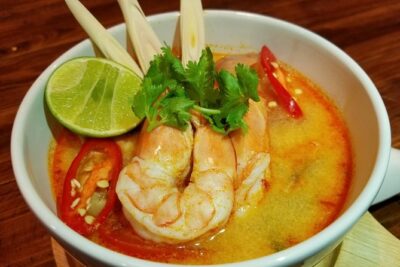
Tom Yum Kung is a hot and sour prawn soup. You work with the ingredients that create its sharp, aromatic character, then adjust the balance to suit the class. It is a good lesson in how a few strong flavors can work together without becoming muddy.
Pad Thai Kung is the familiar Thai-style fried noodle dish made with prawns. You learn how the noodles and sauce come together in the pan, rather than simply receiving a prepared serving. This is one of the most practical dishes to recreate at home, provided you can find the needed ingredients.
The dessert is Khao Neeaw Mamuang, or mango with sticky rice. It gives the meal a gentle finish after the heat and acidity of the soup and curry. It also shows that Thai cooking is not only about spice. Texture, sweetness, and ripe fruit matter just as much.
The fourth dish changes according to the day:
- Monday and Friday: green curry with chicken
- Tuesday and Saturday: red curry with chicken
- Wednesday and Sunday: Panaeng chicken curry
- Thursday: Massaman curry with chicken
This schedule matters if you have a favorite curry. Check the class day before booking. Panaeng and Massaman offer different flavor profiles from the green and red curries, so your menu can shape the whole experience.
You may see some variation in how the meal is described, with the curry and other dishes prepared as shared group work. The core promise remains four dishes, including the soup, noodles, dessert, and daily curry.
Grinding curry paste is the hands-on highlight
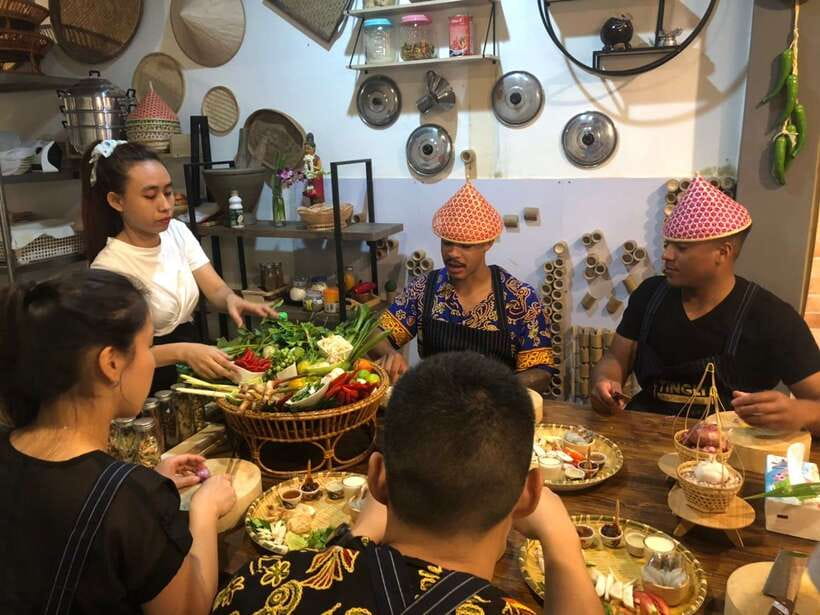
The most memorable lesson is likely the curry paste. You do not simply open a container and stir it into coconut milk. The class shows you how the paste is made from its separate ingredients, then uses it in the curry.
This matters because curry paste carries much of the dish’s character. You begin to understand why Thai curries taste different from one another and how fresh aromatics affect the final result. The process also gives you a practical lesson in texture and storage.
The instructors explain how to store Thai food as well. That is a small but useful detail. Many cooking classes teach you how to prepare a dish, then leave you to guess what happens when you make it at home. Here, you get some guidance for keeping ingredients and cooked food in good shape.
The lesson is suitable for beginners. Guests who said they rarely cook, or felt nervous about being out of their depth, found the instructions easy to follow. The guides work through each step and supervise the preparation, so you do not need advanced kitchen skills.
More half-day classes around Bangkok:
- Bangkok: Half-Day Thai Cooking Class in Bangrak District
★ 4.9 · 96 reviews - Half-Day Thai Cooking Class at Organic Farm in Chiang Mai
★ 5.0 · 19,087 reviews - Half-Day Cooking Class with Local Chef Laila in Marrakech
★ 5.0 · 952 reviews - Naxos: Half-Day Cooking Class at Basiliko Family Tavern
★ 5.0 · 887 reviews
Your instructor shapes the mood
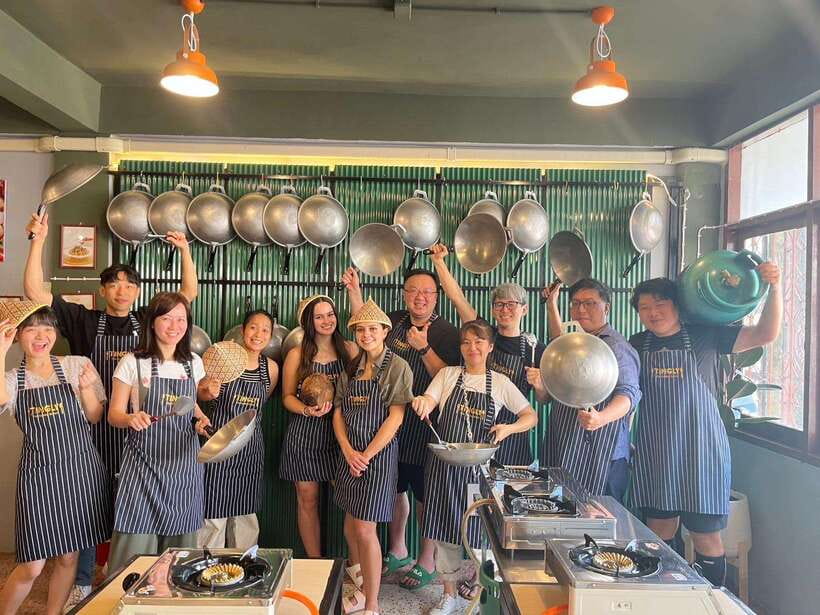
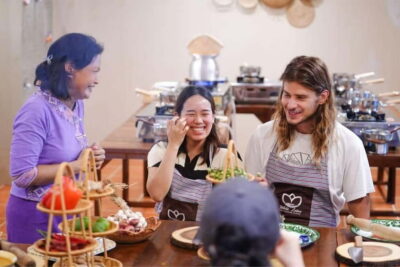
The food matters, but the instructor can make or break a group cooking class. Tingly’s guides are lively, social, and comfortable teaching in English.
Song is known for bringing humor and energy while explaining the recipes in a straightforward way. Cho is another high-energy instructor who keeps people involved and helps the room feel relaxed. Nam, sometimes listed as Naam, is praised for clear explanations, warmth, and careful attention to the group. Chon has also received praise for keeping the atmosphere light.
The tone is active rather than quiet. You should expect conversation, demonstrations, shared preparation, and plenty of interaction. That is good news if you are traveling alone or want an easy way to meet people over a meal. It may be less appealing if you prefer a private lesson or a slow, silent cooking session.
The group setup also means you may share some of the preparation. That can be part of the fun, but it gives you slightly less individual control than a one-to-one class. The instructors make an effort to include everyone, and the cooking school is described as clean, organized, and arranged so the demonstrations are easy to follow.
Spice levels and food allergies
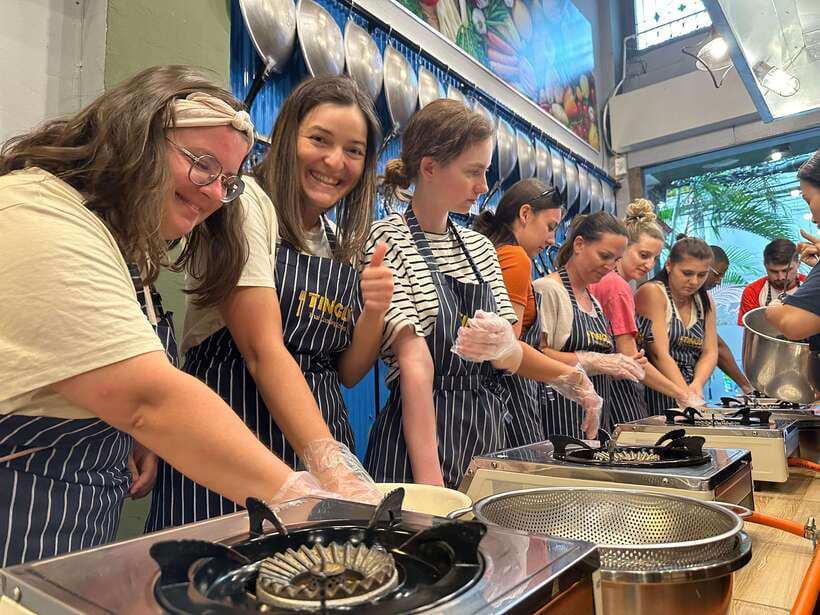
Thai food can be fiery, but you do not have to treat the class as a test of endurance. The cooking can be adjusted to different spice preferences, which is helpful if your group has mixed tastes.
Vegetarian options are available. Food allergies can also be accommodated, but tell the school in advance and remind the instructor when the class begins. Cho and Nam have been especially attentive with substitutions, changing ingredients so people with allergies can take part in every course.
You should still be specific. Do not assume that a vegetarian dish or allergy-friendly version will happen automatically. Clear communication gives the instructor time to adjust the preparation.
The class is not suitable for children under three or babies under one. Older children can take part if they are comfortable with the kitchen work and the length of the session. Families with children around 11 and 12 have found the class manageable and enjoyable, with the instructor helping younger cooks stay involved.
Sit down and eat what you made
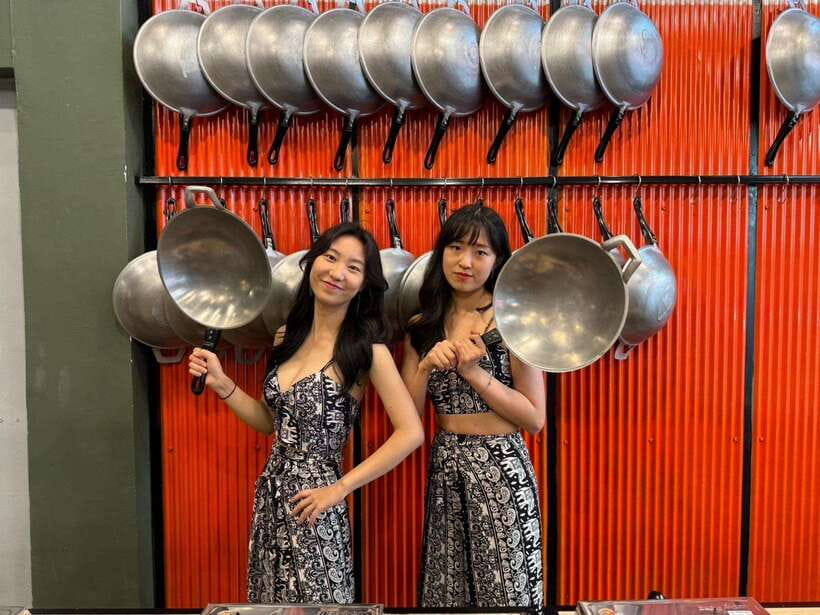
After the cooking, you sit down with the group and eat the dishes. This is more satisfying than a quick taste at the stove because you can see how the four parts of the meal work together.
The soup brings heat and sourness. The noodles provide a familiar main dish. The curry supplies the deeper, aromatic flavors, and the mango sticky rice finishes the meal with sweetness. You also get a chance to compare how the same ingredients behave in different dishes.
Bring a serious appetite. The portions are generous enough that many people leave very full. That is part of the value, but it also means you may want to plan a lighter meal afterward.
The shared table adds a social element. Solo visitors can meet other people without having to force conversation, while couples and families have a structured activity that keeps everyone involved. If you are looking for a private romantic meal, this is not that sort of experience.
What the $41 price includes
At $41 per person, the class is priced fairly for Bangkok. You receive a three-hour activity, four dishes, all cooking equipment, all ingredients, drinking water, instruction in English, and recipes to take home. The morning option adds the guided market visit at no extra mentionable cost.
The strongest value comes from the combination of meal and instruction. Four restaurant dishes could cost a similar amount in a central Bangkok dining area, but you would not get the market context, cooking practice, or recipes.
The recipes are important. A cooking class is poor value if the method disappears as soon as you leave. Here, you have a reference for making the dishes again, including the curry and mango sticky rice. You may need to adapt for ingredients available at home, but the basic process gives you a useful starting point.
Alcohol is not included, though it is available to purchase. Hotel pickup and drop-off are also not included, so you need to make your own way to the school opposite the Marriott Hotel Surawong.
Who should book this experience
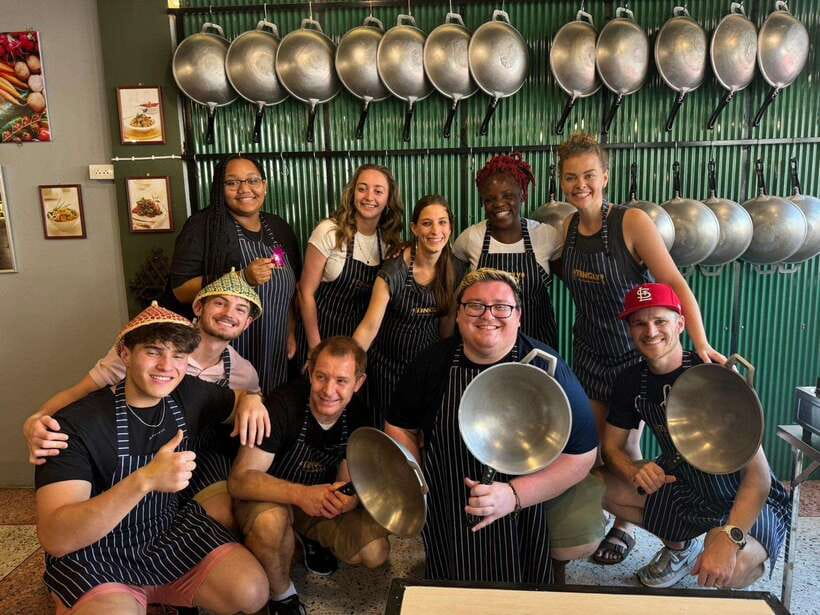
I would recommend this class to first-time visitors who want more than a standard food tour. It is also a good choice for solo visitors, families with older children, couples, and anyone who wants a practical souvenir from Bangkok.
You do not need to be a confident cook. The teaching is designed to guide beginners through each stage, and the instructors use humor to keep mistakes from becoming stressful. You should enjoy it even if your final curry is not quite restaurant perfect.
The class is less suitable if you dislike group activities, cannot eat the listed ingredients, or want a fully private lesson. It is also worth checking the daily menu before booking if one particular curry is the reason you are interested.
The morning class is the better all-around choice. You get the market walk, a look at fresh Thai ingredients, and the full cooking session. Choose the afternoon class only if it fits your Bangkok schedule better or you prefer a later start.
Small details that make the class practical
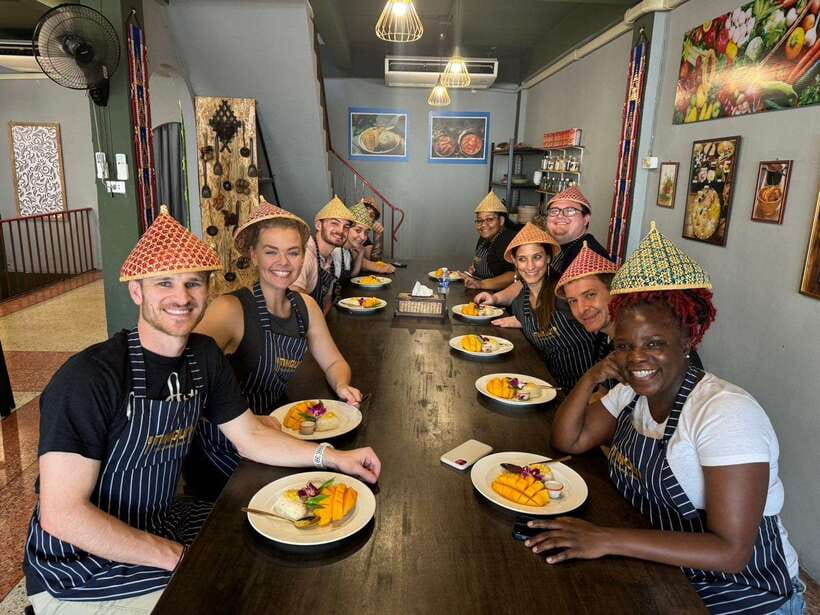
The activity lasts three hours, which is long enough to cook four dishes without turning into an all-day commitment. The schedule works well as a morning plan before an afternoon of sightseeing, though you should account for the time needed to travel to the school and arrive at the meeting point.
The cooking school provides the equipment and ingredients, so you do not need to bring supplies. Drinking water is included. Wear something comfortable for a hands-on kitchen session, and avoid arriving after a large breakfast.
English is the stated teaching language. The instructors use demonstrations as well as spoken explanations, which helps when a technique or ingredient name is unfamiliar.
Cancellation is free up to 24 hours in advance for a full refund, and you can reserve now and pay later. Those terms are useful if your Bangkok plans are still shifting, though you should always confirm the current booking details when choosing a session.
Should you book Tingly Thai Cooking School?
Book it if you want to eat well, learn a real technique, and leave Bangkok with recipes you can use. The market visit, handmade curry paste, four-dish meal, and lively instructors give the class more substance than a simple demonstration.
Choose the morning session for the full experience, especially if you want to see the market and learn about the ingredients before cooking. Check the weekday curry schedule, mention dietary needs clearly, and arrive hungry.
Skip it only if you dislike group cooking or want a quiet, private meal. For most visitors, $41 buys a generous lunch, a cultural introduction, and a skill you can carry home.
FAQ
How long does the Tingly Thai Cooking School class last?
The class lasts three hours.
Where is the cooking school?
Meet at Tingly Thai Cooking School opposite the Marriott Hotel Surawong in Bangkok.
Does the morning class include a market visit?
Yes. The morning class includes a guided visit to a local market, where you see the available ingredients and select produce for the cooking session.
Which dishes will I cook?
Every class includes Tom Yum Kung, Pad Thai Kung, and mango sticky rice with mango. The curry changes by day: green curry on Mondays and Fridays, red curry on Tuesdays and Saturdays, Panaeng curry on Wednesdays and Sundays, and Massaman curry on Thursdays.
Are vegetarian options available?
Yes. Vegetarian options are available.
Is the class taught in English?
Yes. The instructor language is English.
What is included in the price?
The price includes the four-course meal, cooking equipment, ingredients, recipes, drinking water, and the market tour for the morning class. Alcoholic drinks and hotel pickup and drop-off are not included.
New cooking classes around Bangkok
- Sathon: Hands-on Thai Cooking Class & Market Tour in Bangkok★ 5.0 · 19 reviews
- Sukhumvit: Hands-on Thai Cooking Class & Market Tour in BKK★ 4.9 · 255 reviews
- Bangkok: Thai Cooking Class and Onnuch Market Tour★ 4.7 · 72 reviews
- Bangkok: Thai Cooking Class With 4 Dishes & Thai Drink★ 5.0 · 17 reviews
- Bangkok: Tiniest Thai Food Hands-On Cooking Experience★ 4.3 · 2 reviews
- Bangkok: Half-Day Thai Cooking Class in Bangrak District★ 4.9 · 96 reviews
- Bangkok: Hands-on Thai Cooking Class & Market Tour in Sathon★ 5.0 · 16 reviews
- Bangkok: Cooking Class with Market Visit & Tuk Tuk Ride★ 4.8 · 27 reviews
Bangkok Cooking Classes, side by side.
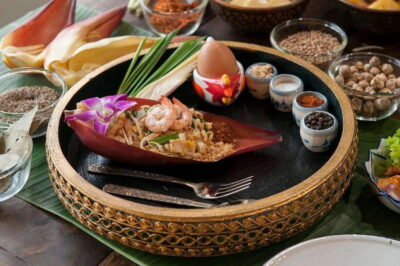
Bangkok: Hands-on Thai Cooking Class and Market Tour
Read our review →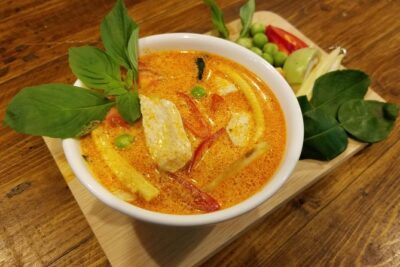
Tingly Thai Cooking Class with Morning Market Tour
Read our review →
Pink Chili – Thai Cooking Class and Market Tour in Bangkok
Read our review →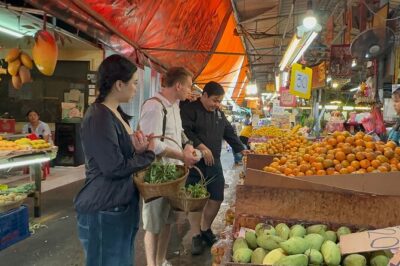
Authentic Thai Cooking with the Largest market visit &TukTuk ride
Read our review →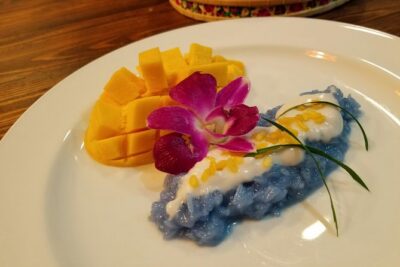
Bangkok: White Lotus Thai Cooking Class with Market Tour
Read our review →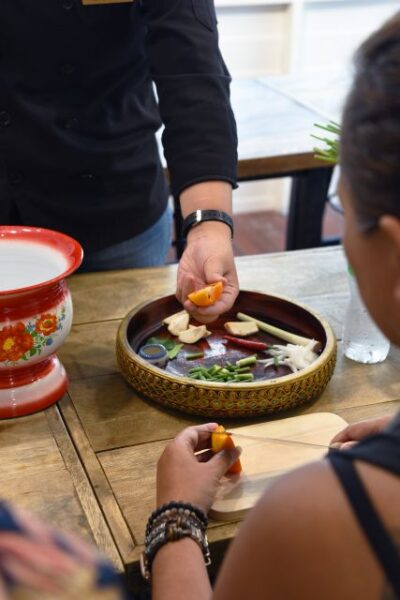
Sukhumvit: Hands-on Thai Cooking Class & Market Tour in BKK
Read our review →This kitchen also appears in