Review · BANGKOK
Hands on Thai Cooking Class and Market Tour
Thai food is built on fresh herbs, sharp chilies, fragrant curry paste, and a careful balance of sweet, sour, salty, and spicy flavors. This 3.5-hour class lets you work with those basics instead of simply watching a chef cook. In the morning, you visit Asok Market, then ride by tuk-tuk to the school and prepare a four-part meal.
I like the clear, step-by-step teaching, which works for beginners but still gives experienced cooks useful ideas. I also like that you make curry paste from scratch and leave with recipes, so the class has value after your Bangkok holiday. The main drawback is that only the morning departure includes the market visit. Afternoon and evening classes replace it with mango carving.
Key points to know before booking
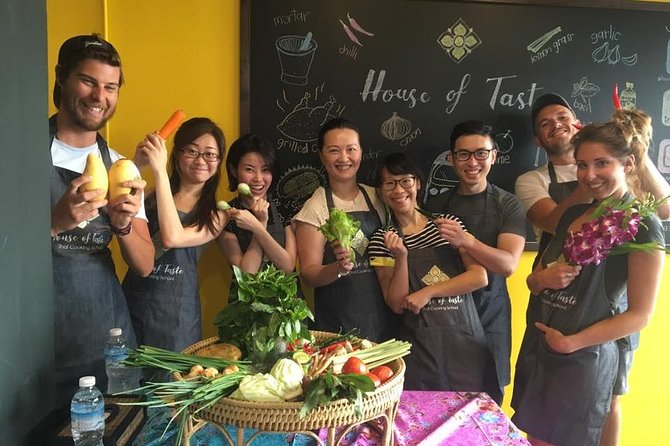
- Morning means market shopping: The morning class visits Asok Market and includes tuk-tuk transport to the cooking school.
- Afternoon and evening mean mango carving: These departures do not include the market tour.
- You cook four parts of a meal: The menu includes an appetizer or soup, Pad Thai with shrimp, a chicken curry, and mango sticky rice.
- The teaching suits beginners: Chefs such as Jay, April, and May have been praised for clear explanations, humor, and patient guidance.
- You eat a generous amount: Several dishes are prepared during class, so plan to arrive hungry rather than after a large breakfast.
- The class can hold up to 18 people: That keeps the price reasonable, but it may feel less personal than a tiny private lesson.
Starting at House of Taste in Bangkok
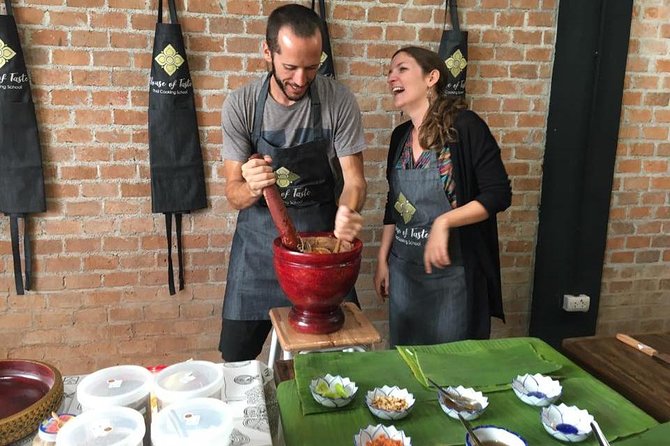
The class begins at House of Taste Thai Cooking School, at 147/4 Soi Sukhumvit 4 in the Khlong Toei area. It finishes back at the same meeting point, so you do not need to arrange a separate ride home from an unfamiliar part of Bangkok.
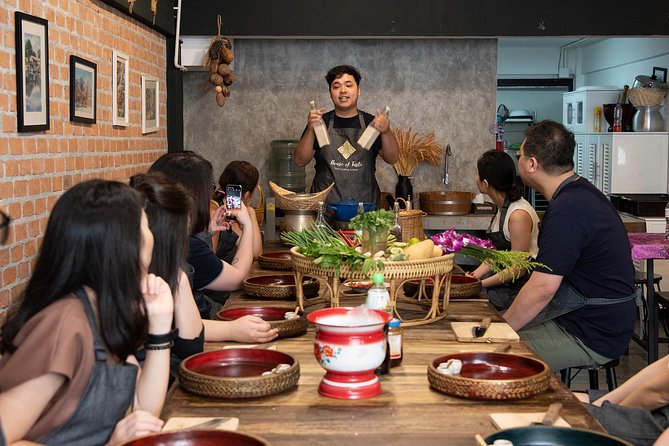
The cooking takes place in an air-conditioned classroom. That matters in Bangkok, where spending several hours around stoves and hot pans can become tiring. The school also provides hot and cold drinking water, a personal locker, and the ingredients needed for the meal.
You should allow a small amount of walking and wear comfortable shoes. Hotel pickup and drop-off are not included, so plan your route to the meeting point before class. The school is near public transportation, but the supplied details do not name a particular station or give a walking time.
The maximum group size is 18 people. That is not a private lesson, but it is still a manageable size for a structured cooking session. Your experience may depend partly on where you are positioned and how much direct access you have to the cooking stations.
More Cooking Classes with a Market Tour in Bangkok
- Bangkok: Hands-on Thai Cooking Class and Market Tour
★ 4.9 · 1,614 reviews - Bangkok: Maliwan Thai Cooking Class with Market Tour
★ 4.9 · 1,133 reviews - Tingly Thai Cooking Class with Morning Market Tour
★ 5.0 · 589 reviews
What the morning market visit adds
If you choose the morning departure, the class starts with a guided visit to Asok Market. This is the most useful choice if you want food context as well as recipes. Instead of meeting ingredients only after they have been washed and portioned, you get an introduction to the vegetables, herbs, spices, and other staples used in Thai cooking.
A market visit helps explain why Thai food tastes so fresh and layered. Ingredients that may seem interchangeable in a supermarket often have different smells, textures, and uses. Seeing them before cooking gives you a better sense of what curry paste, salads, soups, and stir-fries are built from.
The market portion also gives the class a stronger connection to daily Bangkok life. You are not just sitting in a classroom making a tourist version of Pad Thai. You are looking at the raw materials that shape ordinary Thai meals.
After the market, you travel to the school by tuk-tuk. The ride is a short but memorable link between the shopping stop and the kitchen. It is also one reason to choose the morning class if the market matters to you.
There is a practical tradeoff. Morning places can sell out, and the market tour is not available in the afternoon or evening. If you book a later class, you are not missing part of the same itinerary. You are choosing a different version of the experience, with mango carving in its place.
Afternoon and evening classes with mango carving
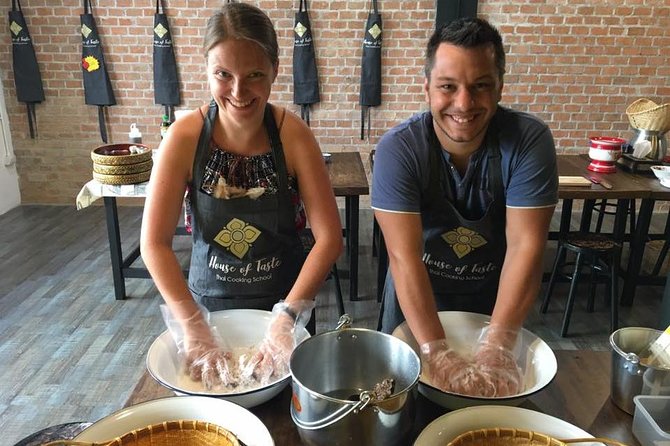
Later departures begin with a mango carving workshop rather than a market visit. This gives the class a hands-on activity before cooking and adds a decorative side to the meal.
Mango carving is not the same kind of cultural introduction as shopping for ingredients, so I would choose your time carefully. Pick the morning if you want to learn how Thai ingredients are bought and identified. Pick the afternoon or evening if the timing works better for your day or if the carving activity sounds more appealing.
The evening class can fit well after sightseeing, since the activity ends where it begins and includes dinner. You still get the cooking lesson, the recipes, the meal, and the chance to ask questions about Thai ingredients and methods.
The class runs for about three and a half hours. That is long enough for real instruction without taking up an entire day. It is also a substantial block of time, so do not schedule a tightly timed attraction immediately afterward.
Making curry paste from scratch
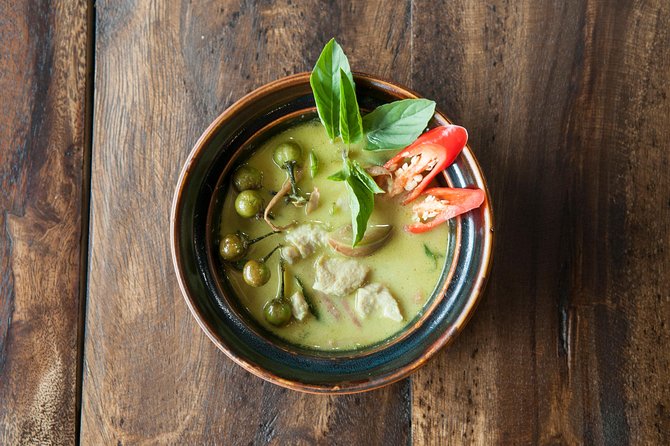
The most useful part of the class is the curry paste lesson. Thai curry can look complicated when you see a long ingredient list, but the process becomes easier once you understand the role of herbs, spices, and aromatics.
You get hands-on practice rather than watching the chef prepare everything. The instructor explains the ingredients and guides you through the method. This is where the class earns its name. You are not simply handed a finished dish at the end.
The school introduces vegetables, spices, and herbs in an air-conditioned setting, which makes the information easier to follow than it might be in a crowded outdoor kitchen. You can ask about substitutions and cooking methods as you go.
The chefs are an important part of the experience. Jay has been singled out for clear, helpful instruction and a lively sense of humor. April has been praised for explaining essential ingredients and traditional cooking methods in detail. May has also been described as friendly and effective. The instructor assigned to your date may differ, but the teaching style appears to be a major strength of the school.
You should expect guidance at each stage, not a lecture followed by a recipe sheet. That makes the class friendly to people who rarely cook. At the same time, an experienced home cook can focus on technique, seasoning, ingredient alternatives, and the reasons behind each step.
More Cooking Classes with a Market Tour in Thailand
- Hands-on Thai Cooking Class & Market Tour in Sukhumvit
★ 5.0 · 571 reviews - Pink Chili – Thai Cooking Class and Market Tour in Bangkok
★ 5.0 · 416 reviews - Authentic Thai Cooking with the Largest market visit &TukTuk ride
★ 5.0 · 350 reviews - Bangkok: White Lotus Thai Cooking Class with Market Tour
★ 5.0 · 285 reviews
The four-course meal you prepare
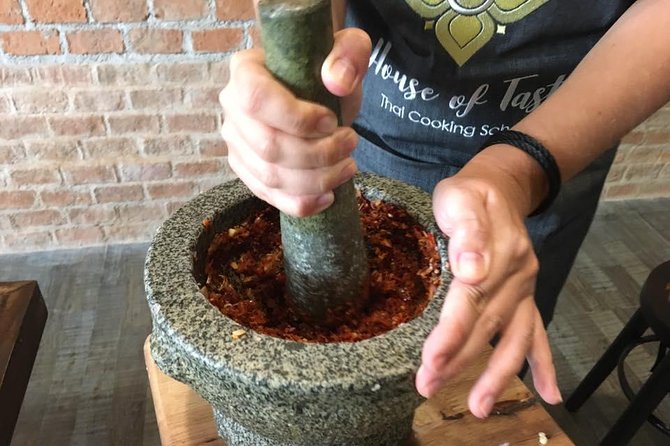
The daily menu is arranged around four parts. You choose one item from the appetizer or soup group, make Pad Thai with shrimp, choose one chicken curry, and finish with mango sticky rice.
Appetizer or soup
The first choice includes several familiar Thai favorites:
- Spicy lemongrass salad
- Spicy shrimp salad
- Green papaya salad
- Deep-fried spring rolls
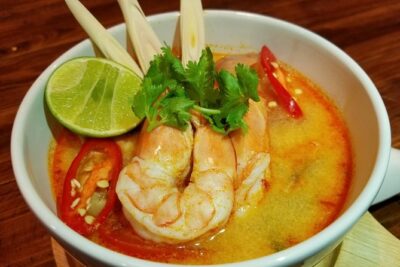
- Tom Yum Goong with shrimp
- Tom Kha Gai with chicken
This is a useful range because it shows different parts of Thai cooking. Salads teach balance and fresh seasoning. Tom Yum Goong brings sour, spicy flavors into focus. Tom Kha Gai shows how coconut milk changes the texture and taste of a soup. Spring rolls offer a more approachable fried option.
The menu can suit different tastes, but you should tell the school about dietary needs when booking. Vegetarian, halal, kosher, and allergy-related substitutions can be arranged. A vegetarian option is available, but specific substitutions should be requested in advance rather than left until you arrive.
Pad Thai with shrimp
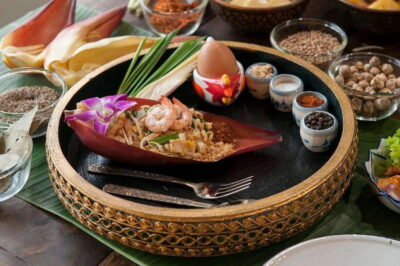
Pad Thai Goong is the first main course. You stir-fry rice noodles with shrimp and learn the basic sequence behind one of Thailand’s best-known dishes.
This is a good recipe to make in class because timing matters. Noodles can become soft, dry, or clumped if handled poorly. The step-by-step format helps you see how the ingredients come together rather than treating Pad Thai as a mystery dish ordered at a restaurant.
One useful detail from the class experience is that the recipe is intended to be practical at home. The ingredients and method are explained in a way that a novice cook can follow. You will still need access to Thai ingredients or suitable substitutes when you recreate it, but the recipe gives you a clear starting point.
Chicken curry
For the second main course, you choose one curry served with rice:
- Red curry with chicken
- Green curry with chicken
- Massaman curry with chicken
- Panang curry with chicken
This choice gives you some control over the meal. Red and green curry are familiar Thai standards, Massaman brings a different spice profile, and Panang is thicker and often milder in feel. The class does not ask you to prepare every curry in one sitting, so you learn the shared foundation and focus on one version.
The curry lesson is also where the homemade paste becomes useful. You can see how the paste changes the finished dish and why fresh herbs and spices matter. This connection between preparation and final flavor is more valuable than memorizing a list of ingredients.
Mango sticky rice
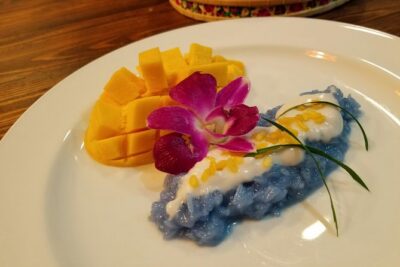
Dessert is mango sticky rice, a simple but satisfying finish. It also gives the class a chance to show how coconut, rice, and ripe fruit work together without heavy decoration.
Because you prepare several dishes before dessert, the meal is generous. I would not eat a full breakfast or lunch immediately before the class. You need enough energy to cook, but you also want room to enjoy the food at the end.
How much personal instruction to expect
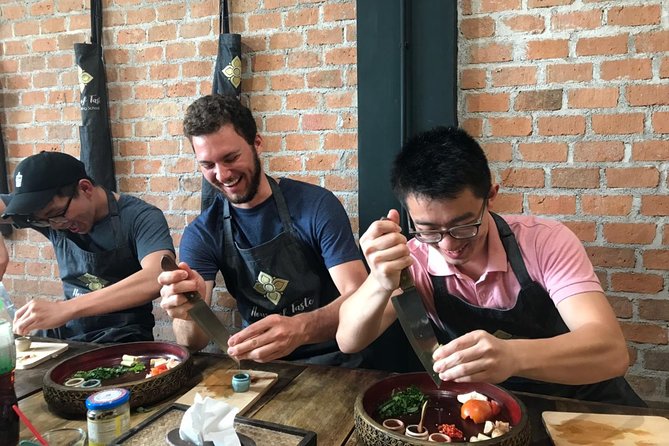
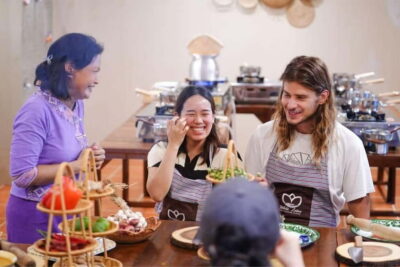
The strongest part of this experience is the teaching. The chef explains ingredients, cooking steps, and basic techniques while keeping the class lively. Humor is part of the format, so the lesson does not feel like a formal culinary exam.
The instruction is designed for all abilities. If you are a beginner, you can follow along with direct guidance and see how each dish develops. If you already cook, you can ask about substitutions, spice levels, and ways to reproduce the recipes at home.
The group size is the main limit. Up to 18 people is large enough that not every moment will feel one-on-one. A busy class may mean waiting briefly for access to a station or watching a demonstration before trying the method yourself.
Still, the setup balances group energy with practical instruction. A class with several people can be more fun, especially for families, couples, and solo visitors who like meeting others. Families with older children and teens should find the activity accessible, but children must be accompanied by an adult.
Price, value, and what is included
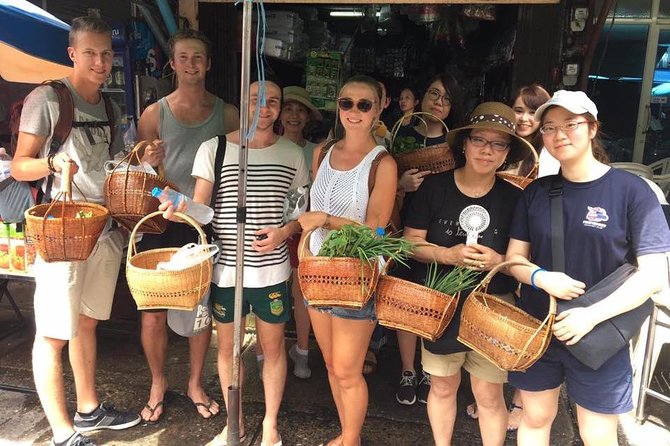
At $45.66 per person, this is a fair price for a three-and-a-half-hour activity that includes instruction, ingredients, a full meal, drinking water, a locker, recipes, and either a market visit or mango carving.
The value is strongest if you want more than a meal. You receive recipes to take home, and the class explains how the food is made. Four prepared dishes also make the cost easier to justify than a short demonstration with a single tasting.
The morning class offers the most for someone interested in Thai food culture because it adds the market and tuk-tuk ride. The afternoon and evening sessions still include the core cooking experience, but you should not pay expecting a market tour if you book one of those times.
Alcohol is not included, though it is available to purchase. Hotel transportation is also not included. Those are small costs and planning points, but they matter if you are comparing this class with a private cooking experience that includes transfers.
Who should book this Bangkok cooking class?
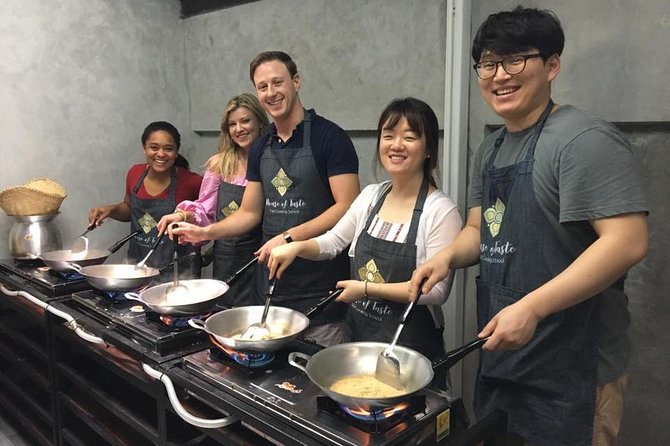
I would recommend it to first-time Thai cooks, food-focused visitors, couples, families with older children, and anyone who wants a useful activity during a Bangkok stay. The class has enough structure to calm beginners and enough ingredient detail to interest people who already cook.
Choose the morning if the market is important to you. It gives you the fuller experience, with ingredient shopping followed by a tuk-tuk ride to the kitchen.
Choose afternoon or evening if you prefer a later start or want mango carving. The evening option can work well as a dinner activity, but remember that all classes take about three and a half hours.
This may not suit you if you want a private chef, a very small group, or a quick one-hour lesson. It is also not ideal for a last-minute plan if your schedule cannot handle the non-refundable booking terms.
Practical booking advice
Confirmation is provided when you book. Give the school all dietary requirements at that point, including vegetarian, halal, kosher, or allergy needs.
The child rate applies only when a child shares with two paying adults, and children must be accompanied by an adult. The class requires a minimum number of participants, and poor weather can lead to a cancellation. In either case, the offered remedy is a different date or experience, or a full refund.
The experience itself is non-refundable and cannot be changed for any reason, so check your date and departure time carefully before paying. One booking problem has involved a date being selected incorrectly, so review the confirmation details right away.
Should you book it?
Book this class if you want to cook, eat, and understand Thai food rather than simply sample it. The clear instruction, homemade curry paste, four-part meal, and recipes make it a useful choice for beginners and a pleasant refresher for experienced cooks.
For the best version, choose the morning class and arrive hungry. If your schedule only allows afternoon or evening, you still get the main cooking lesson and meal, but book it for mango carving rather than the market visit.
FAQ
How long does the Thai cooking class last?
The activity lasts approximately 3 hours and 30 minutes.
Where does the class begin and end?
It begins and ends at House of Taste Thai Cooking School, located at 147/4 Soi Sukhumvit 4, Khlong Toei, Bangkok.
Does every departure include the market tour?
No. The Asok Market visit is available only with the morning class. Afternoon and evening classes include mango carving instead.
Is tuk-tuk transportation included?
Tuk-tuk transport from the market to the cooking school is included with the morning market itinerary. Hotel pickup and drop-off are not included.
What dishes will I cook?
You prepare an appetizer or soup, Pad Thai Goong with shrimp, one chicken curry served with rice, and mango sticky rice. The specific appetizer, soup, and curry come from the available menu choices.
Are vegetarian or allergy substitutions available?
Yes. Vegetarian, halal, kosher, and allergy-related substitutions can be provided. You should advise the school of your requirements when booking.
Is the class suitable for children?
Yes, children can attend, but they must be accompanied by an adult. The child rate applies only when sharing with two paying adults.
What happens if I need to cancel?
The experience is non-refundable and cannot be changed for any reason. If the provider cancels because of poor weather or because the minimum number of participants is not met, you can be offered a different date or experience, or a full refund.
More Thai Cooking Classes around Bangkok
- Bangkok: Tingly Thai Cooking School Half-Day Cooking Class
★ 4.9 · 1,191 reviews - Tingly Thai Cooking School Evening Class
★ 5.0 · 335 reviews - Tingly Thai Cooking School Afternoon Class
★ 5.0 · 291 reviews - Sukhumvit: Hands-on Thai Cooking Class & Market Tour in BKK
★ 4.9 · 255 reviews
New cooking classes around Bangkok
- Sathon: Hands-on Thai Cooking Class & Market Tour in Bangkok★ 5.0 · 19 reviews
- Sukhumvit: Hands-on Thai Cooking Class & Market Tour in BKK★ 4.9 · 255 reviews
- Bangkok: Thai Cooking Class and Onnuch Market Tour★ 4.7 · 72 reviews
- Bangkok: Thai Cooking Class With 4 Dishes & Thai Drink★ 5.0 · 17 reviews
- Bangkok: Tiniest Thai Food Hands-On Cooking Experience★ 4.3 · 2 reviews
- Bangkok: Half-Day Thai Cooking Class in Bangrak District★ 4.9 · 96 reviews
- Bangkok: Hands-on Thai Cooking Class & Market Tour in Sathon★ 5.0 · 16 reviews
- Bangkok: Cooking Class with Market Visit & Tuk Tuk Ride★ 4.8 · 27 reviews
Bangkok Cooking Classes, side by side.
Bangkok: Hands-on Thai Cooking Class and Market Tour
Read our review →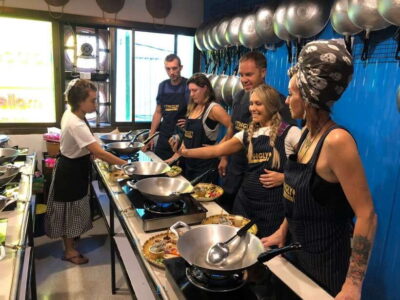
Bangkok: Tingly Thai Cooking School Half-Day Cooking Class
Read our review →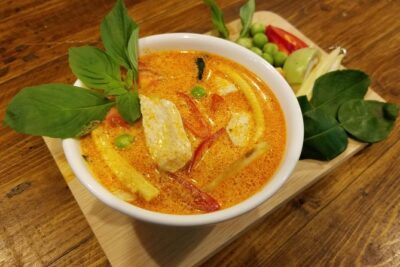
Tingly Thai Cooking Class with Morning Market Tour
Read our review →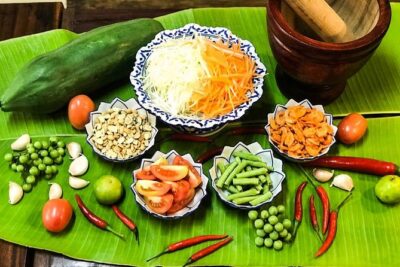
Pink Chili – Thai Cooking Class and Market Tour in Bangkok
Read our review →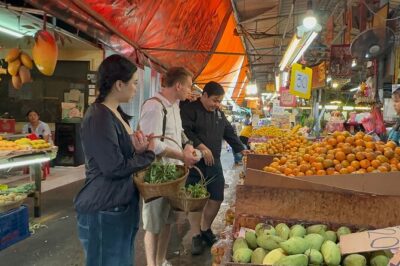
Authentic Thai Cooking with the Largest market visit &TukTuk ride
Read our review →