
Review · SIEM REAP
Cambodian Cooking Class from Siem Reap
Cambodian food makes the most sense when you see its ingredients up close. This hands-on village cooking class takes you beyond a restaurant table, with a tuk tuk ride from Siem Reap, a local market and family visit, then cooking beside a quiet pond with a Khmer chef.
I like the small groups, capped at six, and the way every person gets a cooking station. I also like the useful details: guides such as Sophia or Sophie explain ingredient substitutes, the recipe book goes beyond the dishes you prepare, and you eat the meal you make. The main drawback is the outdoor setting, which can feel hot in warmer weather.
Key points at a glance
- A real village setting: Walk through a rural community, visit a local family, and see herbs and vegetables growing near the home.
- Market-to-table cooking: Depending on the day’s arrangement, you may begin at a local market with a guide explaining produce, spices, leaves, and snacks.
- Small classes: Groups are limited to six, so the chef can help with chopping, pounding curry paste, and adjusting each dish.
- Classic Khmer recipes: Morning classes may include mango salad, fish amok, and sticky rice balls. Afternoon classes may feature minced fish on sugar cane, Cambodian curry, and Khmer brandy snaps.
- A pleasant final meal: Sit in a wooden pavilion beside a pond while your dishes arrive one by one, with a beer, soft drink, or water.
- Good practical value: The $32 price includes tuk tuk transport, the class, lunch, a drink, a guide, and a recipe book.
Leaving Siem Reap by tuk tuk
The experience lasts about three and a half hours and begins with pickup from your hotel in Siem Reap. The tuk tuk ride takes you away from the city and onto quieter roads, giving you a quick change of pace before the cooking begins.
This transfer is more than a simple ride. You get a glimpse of the roads and homes outside the central hotel area, without having to arrange your own transport. At the end, a tuk tuk returns you to the centrally located Beyond office rather than directly to your hotel, so check where that office is before making plans for the rest of your day.
The ride is open-air, which suits the setting but offers little protection from the sun. Bring a hat, especially for the village walk, and wear shoes you can walk in comfortably. The walk is short, but paths around homes, gardens, and rural kitchens may not be as even as city pavements.
More cooking classes around Cambodia:
- Khmer Cooking Class at a Local’s Home in Krong Siem Reap
★ 5.0 · 2,731 reviews - Siem Reap: Khmer Cooking Class at a Local’s Home
★ 5.0 · 1,108 reviews - Award-Winning Cooking Class Experience with Professional Teacher
★ 5.0 · 745 reviews
A market stop that explains Khmer ingredients
The most useful part of the outing may happen before you touch a cooking knife. The class often includes a visit to a local market, where your guide introduces the produce and ingredients used in Cambodian kitchens.
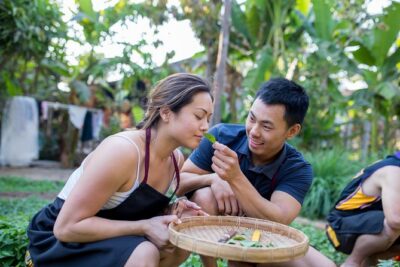
This is where unfamiliar foods become easier to understand. You may examine herbs, smell leaves, see local vegetables, and learn which ingredients form the base of a curry paste. Some guides also offer small tastes of local fruit or snacks. This makes the later cooking lesson clearer because you have already seen the ingredients in their everyday setting.
Guides including Sophia, Sophie, and Sophia Lauren have been singled out for clear English, patience, and lively explanations. They can also tell you what to use at home if you cannot find the exact Cambodian ingredient. That advice matters. A recipe is much more useful when it includes a practical substitute instead of asking you to search specialty shops in three different neighborhoods.
The market is not a polished food display made for photographs. It is a working local market, and that means smells, heat, and unfamiliar sights are part of the experience. If you prefer a quiet, air-conditioned introduction to food, this may feel intense. If you want to understand what Cambodian cooking looks like before it reaches your plate, it is a strong start.
Meeting a family and seeing a rural kitchen
After the market, or as part of the village walk, you visit a local family and learn about food preparation in a Khmer home. The visit can include the house, kitchen, and vegetable garden, with an explanation of the herbs and vegetables grown for daily meals.
I like this part because it adds context without turning the class into a long lecture. You see how cooking fits into ordinary household life, rather than treating Khmer food as a list of restaurant dishes. The garden visit also shows why fresh herbs and leaves matter so much to the flavor of Cambodian food.
The program works with local people and supports skills training for Cambodian families. That gives the activity a responsible tourism angle, although you should still approach the home visit with care. Ask before taking photographs, listen to your guide, and remember that you are entering a lived-in home, not a museum.
Some past arrangements have included a small gift of rice for the family. Do not assume that this is required or included every time, but your guide can explain the appropriate way to show thanks if you wish to do so.
Your own station in the outdoor pavilion
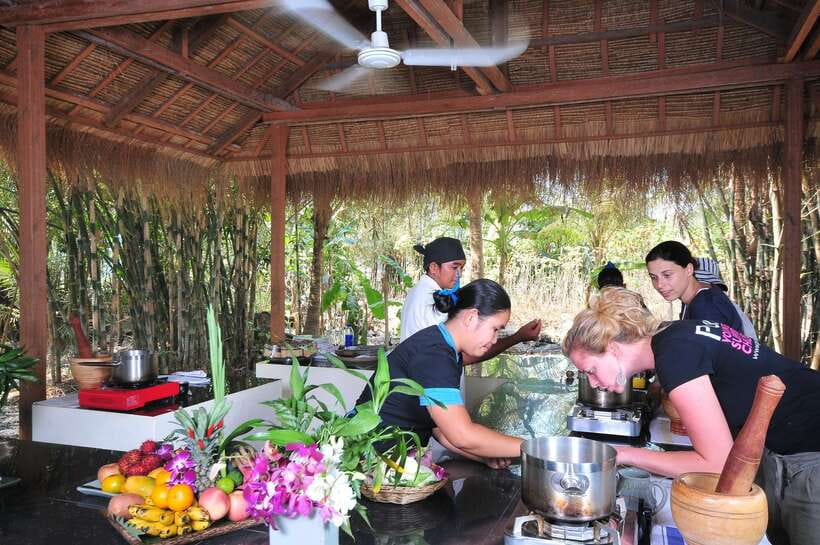
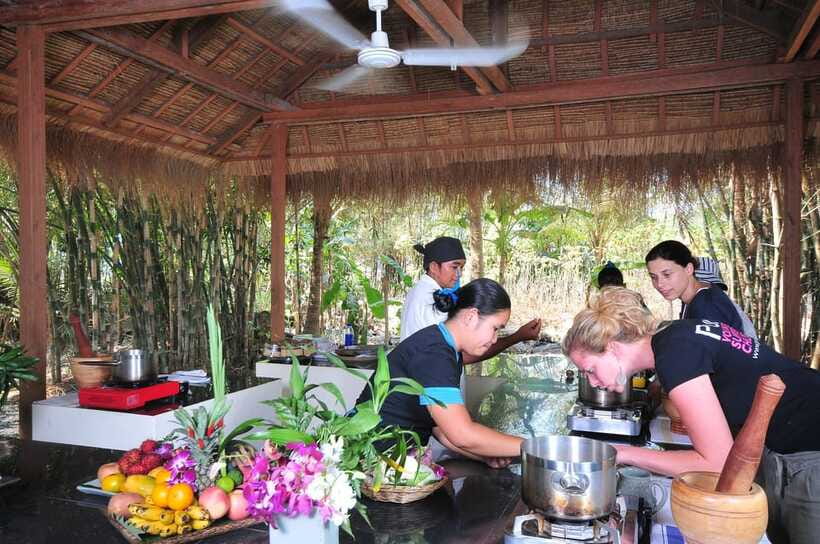
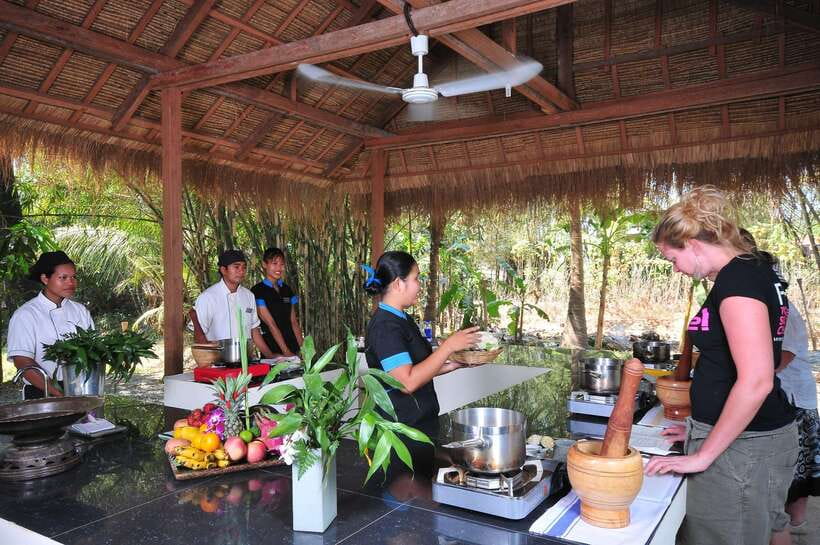
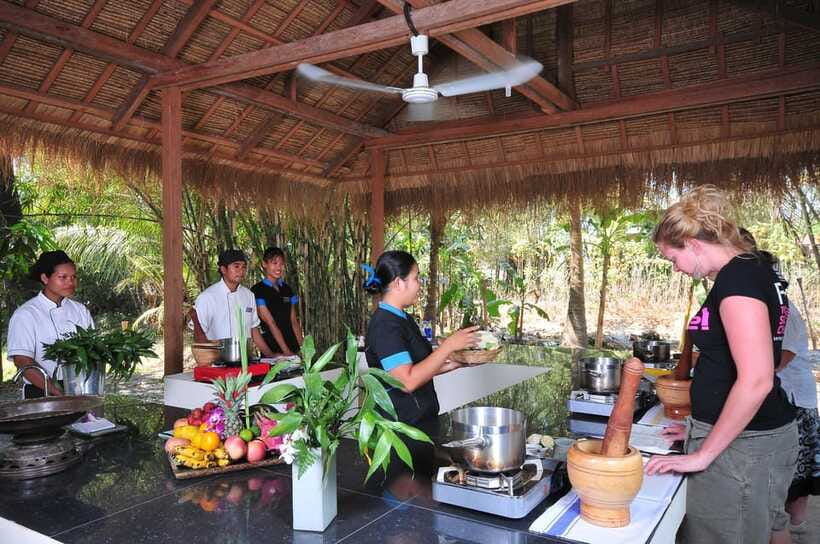
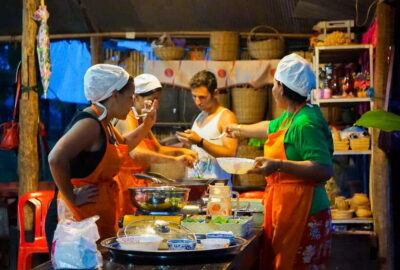
The cooking class takes place in an open-air pavilion near a pond. The setting is one of the activity’s strongest features. Instead of standing in a hotel demonstration kitchen and watching a chef do the work, you get your own station and equipment.
The lessons are designed for beginners. You chop, mix, pound, shape, and cook with help from the chef and guide. The pace is relaxed, and the staff can step in when a task gets tricky. You do not need special cooking skills, but you should expect to take part rather than simply observe.
A chef such as Prey or Prayer may lead the cooking while the guide explains ingredients and keeps the class moving. The staff have been praised for being patient with families, first-time cooks, and people with dietary restrictions. Tell them about allergies or food restrictions before the class begins so they can plan safely.
The outdoor design has two sides. The pond and garden make a peaceful place for lunch, and the open kitchen feels connected to the village. On a hot day, though, you may notice the heat while working near a stove. A hat helps during the walk, and cool water is useful even though a drink is provided with the meal.
Same kitchen, a different dish:
- Khmer Cooking Class Half Day (AM or PM)
★ 5.0 · 316 reviews - Cambodian Village Cooking Class
★ 5.0 · 265 reviews - Battambang: Cooking Class and Market Touring
★ 4.8 · 80 reviews - Phnom Penh’s Hands-On Khmer Cooking Class in the Countryside
★ 4.9 · 33 reviews
Morning menu: mango salad, fish amok, and sweet rice
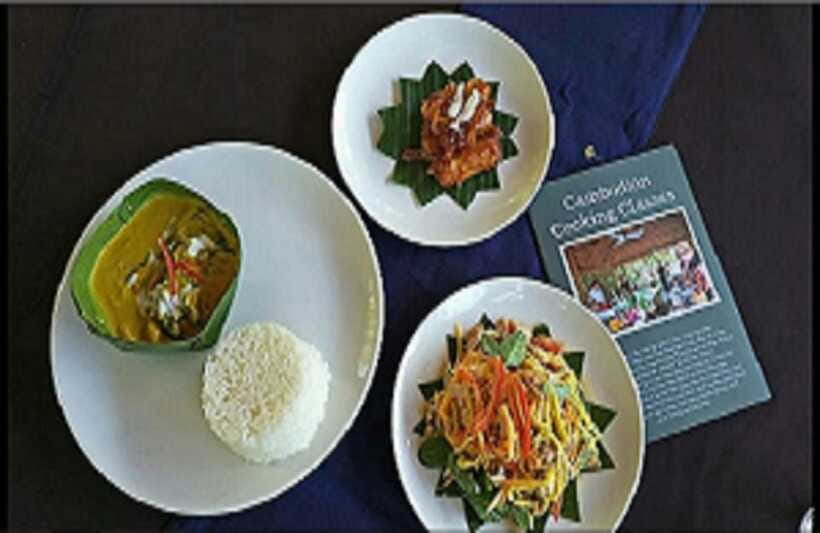
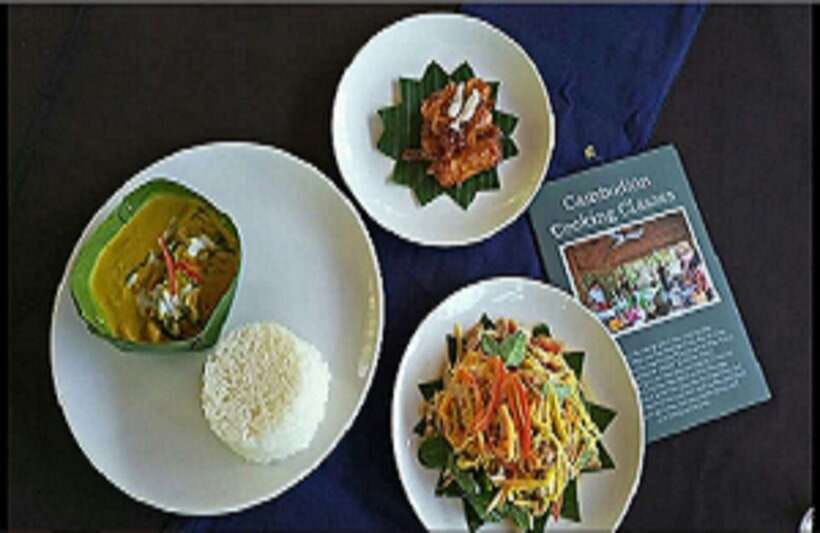
Morning classes focus on three familiar Khmer dishes. The menu begins with Cambodian mango salad, a fresh dish built around tropical produce and light flavors. It is a good first recipe because you learn how sour, sweet, salty, and aromatic elements work together without a heavy cooking process.
The main dish is fish amok, one of Cambodia’s best-known foods. Amok is a smooth, fragrant curry and is traditionally cooked in a young coconut for this class. It can be prepared with fish, chicken, or tofu, so tell the chef your preference or dietary needs in advance.
The useful lesson here is the curry base. You may chop the aromatics and crush them with a mortar and pestle, then learn how that mixture gives the dish its depth. Cambodian food uses spices and herbs, but it is generally less hot than many dishes from neighboring countries. The flavor comes from layers of fragrance rather than a blast of chili.
Dessert is sticky rice balls with palm sugar and grated young coconut. It is simple, filling, and a good reminder that Cambodian sweets often use coconut, rice, and palm sugar rather than heavy cream.
Afternoon menu: fish on sugar cane and Cambodian curry
The afternoon menu offers a different set of dishes. Prahet chien is minced fish formed around sugar cane, giving you a hands-on shaping task as well as a savory dish to cook.
You also prepare Cambodian curry. Compared with Thai food, the curry is usually gentler in heat, with aromatic spices doing most of the work. This is a useful distinction if you enjoy Southeast Asian food but are cautious about chili.
Dessert is Nom Tong Noun, a Khmer version of brandy snaps. It adds a crisp, slightly sweet finish to the class and gives you a recipe that feels different from the more familiar rice and coconut desserts.
The morning and afternoon menus are not interchangeable, so check the starting time and menu before booking if one dish is especially important to you. Fish amok is the big draw for many first-time visitors to Cambodian cuisine, while the afternoon menu provides more variety for anyone who wants to try curry and a less familiar dessert.
Eating beside the pond
Once the cooking is finished, you sit in the wooden pavilion and your food is served course by course. This pause is important. You are not rushing straight from the stove into a hurried lunch. You can compare the dishes, ask final questions, and enjoy the setting.
Lunch is included, and you eat what you cook. A complimentary beer, soft drink, or bottled water is also included. One older booking reported being charged separately for a beer despite expecting it to be included, so if a drink matters to you, confirm the arrangement when you arrive.
Portions can be generous. If you cannot finish everything, takeaway containers may be available, though you should not count on them as a formal part of the package. The meal is a practical reward for the work you have just done, and it also gives you a chance to notice how the ingredients come together.
The pond setting is calm, with some accounts noting turtles in the water. It is a pleasant contrast to the market and the heat of the cooking station. This is also the best time for photographs, once you have asked permission around the cooking and family areas.
Is $32 a fair price?
At $32 per person, this is good value for a three-and-a-half-hour activity. The price covers hotel pickup, tuk tuk transport to the venue, the village experience, an English-speaking chef and guide, the cooking class, lunch, a drink, and a recipe book.
You also receive something that a standard restaurant meal cannot provide: a working understanding of Cambodian ingredients. The recipe book helps turn the class into a useful souvenir, especially because it includes recipes beyond the dishes prepared that day.
The value is strongest for people who want a small group and a cultural activity in the same package. A cheaper cooking demonstration may offer food, but not the market visit, village walk, family setting, personal station, and return transport. On the other hand, if you only want to eat Cambodian food, $32 is more than the cost of a local meal.
The class has a rating of 4.9 from 190 bookings, and the most consistent praise focuses on the staff, food, setting, clear instruction, and organization. The drawbacks are modest but real: heat, outdoor conditions, and a menu that may not match your first choice if you book the wrong session.
Who should book this class?
I would choose this for couples, small groups, solo visitors, and families with children over 12. It suits people who like to do something active and want a better understanding of Khmer food than a restaurant meal can provide.
It is also a good early activity in Siem Reap. Learning about curry paste, local vegetables, and ingredient substitutes gives you more confidence when ordering Cambodian dishes during the rest of your trip.
Children under 12 cannot join the regular class, though private family classes may be arranged on request. If you have a serious dietary restriction, contact the provider before booking and repeat the information to the chef. The staff have accommodated several dietary needs, but clear communication is still essential.
I would skip it if you dislike outdoor heat, market smells, or hands-on food preparation. You should also skip it if you expect a formal culinary school with advanced techniques. This is a friendly introduction to home-style Khmer cooking, not professional chef training.
Should you book it?
Book this class if you want food, village life, and a small group in one half-day outing. The market and family visit give the recipes a human setting, while the personal cooking station means you actually learn rather than watch.
Choose the morning session if fish amok and sticky rice appeal to you. Choose the afternoon if you prefer Cambodian curry, minced fish on sugar cane, and Khmer brandy snaps. Bring a hat, wear comfortable shoes, and set aside the rest of the day at an easy pace. At $32, this is one of the more useful ways to spend a few hours outside central Siem Reap.
FAQ
How long does the Cambodian cooking class last?
The experience lasts about three and a half hours, including transport, the village activities, cooking, and lunch.
What is the price per person?
The listed price is $32 per person.
Is tuk tuk transportation included?
Yes. Tuk tuk pickup from your hotel is included, and a tuk tuk returns you to the centrally located Beyond office after the class.
What food is included?
Lunch is included, and you eat the dishes prepared during the class. A complimentary beer, soft drink, or bottled water is also included.
What dishes are prepared in the morning?
The morning menu includes Cambodian mango salad, fish amok, and sticky rice balls with palm sugar and grated young coconut.
What dishes are prepared in the afternoon?
The afternoon menu includes Prahet Chien, which is minced fish on sugar cane, Cambodian curry, and Nom Tong Noun, a Khmer-style brandy snap.
Do I need cooking experience?
No. The class is designed as a hands-on introduction, and the chef and guide provide instruction and help at each cooking station.
How many people can join the class?
Groups are limited to a maximum of six participants.
Can children join?
Children over 12 can join the standard cooking class. Private classes for families may be arranged on request.
What should I bring?
A hat is recommended for the village walk, and comfortable footwear is advised. The class takes place outdoors, so be prepared for warm conditions.
Is the class conducted in English?
Yes. The tour has an English-speaking guide and chef.
Can dietary restrictions be accommodated?
Dietary requirements can be accommodated, but you should provide the details before the class and confirm them with the chef.
Is a recipe book provided?
Yes. A recipe book is included, with recipes beyond the dishes prepared during your session.
Can I cancel for a full refund?
You can cancel up to 24 hours in advance for a full refund. You can also reserve now and pay later.
New cooking classes around Cambodia
- Sambo cooking class★ 5.0 · 3 reviews
- Phnom Penh’s Hands-On Khmer Cooking Class in the Countryside★ 4.9 · 33 reviews
- Khmer Food Culture Cooking Class in Kampot★ 5.0 · 7 reviews
- Kampot Countryside: Authentic Khmer Cooking Class★ 4.8 · 21 reviews
- Kampot : Cooking Class in a Local Chef with Market Tour★ 5.0 · 2 reviews
- Cambodian Cooking Class★ 4.9 · 25 reviews
- Battambang: Cooking Class and Market Touring★ 4.8 · 80 reviews
- Siem Reap: Afternoon Cooking Class & Village Tour★ 5.0 · 5 reviews
Siem Reap Cooking Classes, side by side.
Khmer Cooking Class at a Local’s Home in Krong Siem Reap
Read our review →
Award-Winning Cooking Class Experience with Professional Teacher
Read our review →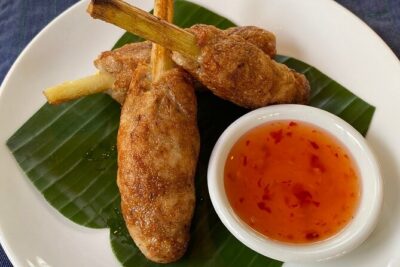
Siem Reap: Afternoon Cooking Class & Village Tour
Read our review →This kitchen also appears in