
Review · FLORENCE
cooking pasta class
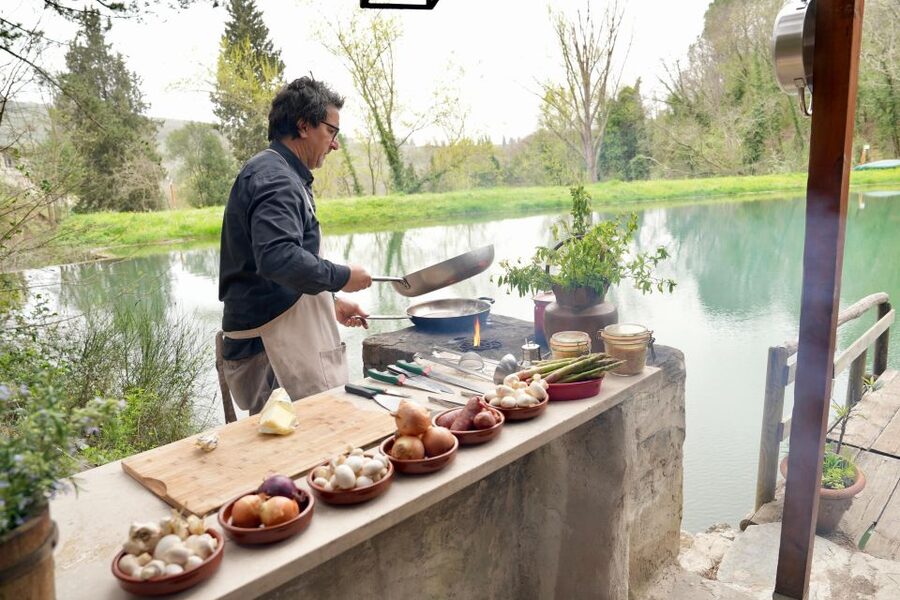
This is not a quick pasta demonstration followed by a polite meal. In the hills outside Florence, you work with your hands, cook over wood fire, and make a full Tuscan meal that includes pasta, bistecca alla fiorentina, dessert, and local wine.
I like two things right away. First, the class keeps its attention on old-fashioned cooking rather than modern machinery. Second, the small group is limited to eight people, giving the class a more personal feel. The main point to consider is the price: at $215.24 per person, this is a full food experience rather than a budget cooking lesson.
Key points at a glance
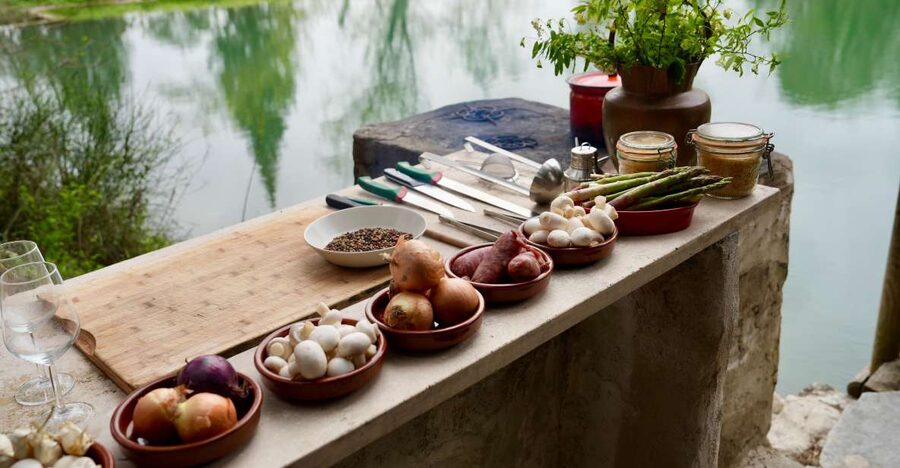
- Wood-fire cooking: Prepare the food without modern machinery, using traditional hands-on methods and live fire.
- Four Tuscan dishes: Make pici, tagliatelle or ravioli, bistecca alla fiorentina, and dessert.
- Three local wines: Taste selected wines from the area, including Chianti, with the meal.
- Small group size: The class accepts no more than eight participants.
- Round-trip transport: Transportation to and from the class location is included.
- Flexible booking: You can cancel up to 24 hours ahead for a full refund and reserve without paying immediately.
A four-hour meal built around real cooking
The class lasts four hours, which gives you enough time to do more than roll out one piece of dough and call it lunch. The format covers several parts of a traditional Tuscan meal, from handmade pasta through dessert.
You should expect the pace to be active but not rushed. The exact starting time depends on availability, so check the schedule before booking. A four-hour class can fit neatly into a Florence sightseeing day, but it is long enough that you should avoid placing another fixed appointment too close afterward.
The setting in the hills outside Florence is part of the appeal. You are not cooking in a standard city classroom with stainless-steel counters and restaurant equipment. The Tuscan countryside provides the backdrop, while the cooking itself relies on local ingredients, handwork, and fire.
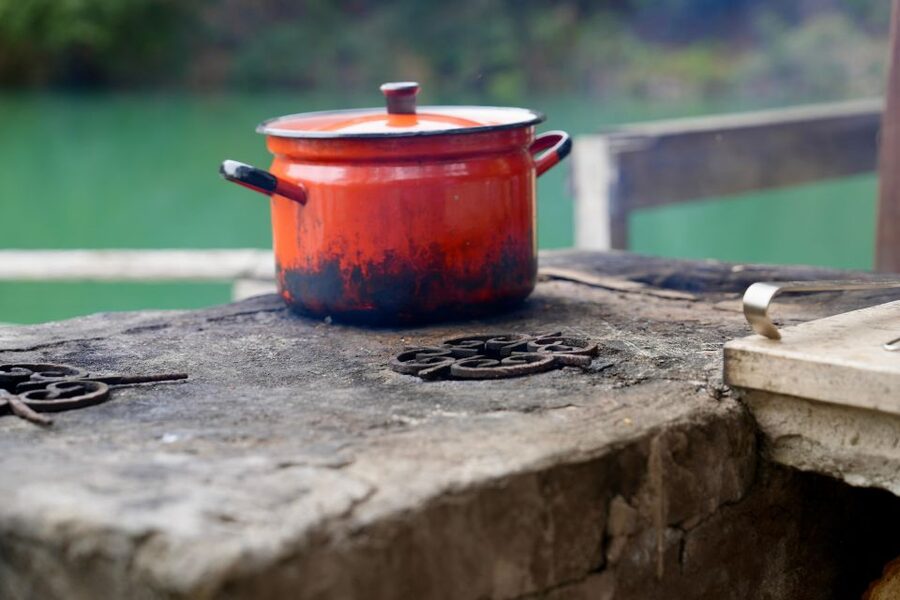
That approach has a clear benefit: you learn how food was made before kitchens became packed with electric tools. It also means the class may feel less polished and predictable than a modern studio. If you want exact measurements, appliances, and a tightly scripted demonstration, this may not be your ideal choice.
More Pasta Making Classes in Florence
- Florence: Pasta Cooking Class with Unlimited Wine
★ 4.9 · 10,285 reviews - Florence: Pasta & Tiramisu Cooking Class with Unlimited Wine
★ 4.9 · 6,708 reviews - Florence: Pasta Cooking Class with Unlimited Wine
★ 5.0 · 6,413 reviews
Making pici, tagliatelle, and ravioli by hand
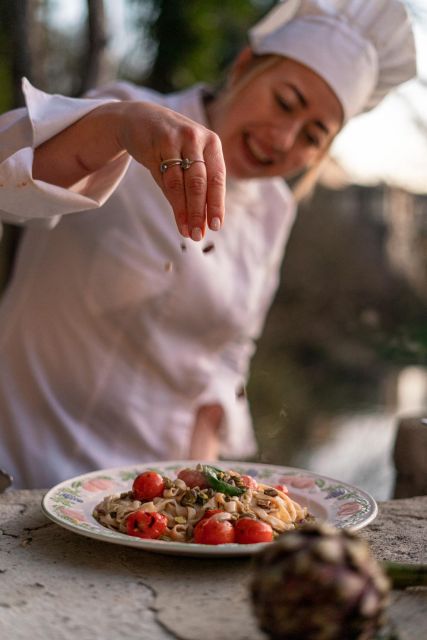
Pasta is the heart of the class. You prepare two types of handmade pasta, with the menu including pici and either tagliatelle or ravioli.
Pici is especially tied to Tuscany. It is a thick, hand-rolled pasta with a pleasantly rustic shape. Unlike a factory-made noodle, each strand can vary a little. That is part of the point. You learn how dough responds to your hands rather than treating pasta as a machine-perfect product.
Tagliatelle gives you a different lesson. It is cut into long ribbons and rewards attention to thickness and width. If ravioli is offered instead, the work shifts toward filling, folding, and sealing the pasta. That adds another useful skill, since poorly sealed ravioli can open during cooking.
The description does not specify which of tagliatelle or ravioli will be prepared on your date. You should check the current menu or ask the provider if that choice matters to you. Either option gives you a traditional pasta technique, but they are not the same activity.
The class also uses locally sourced ingredients. That matters because simple pasta depends on the quality of what goes into it. With fewer sauces, machines, and elaborate decorations to hide mistakes, the basic ingredients and the cook’s technique carry more weight.
You are not simply watching a chef handle the dough. The class is designed around preparation, so expect to take part. The live guide can teach in English, Spanish, or Italian, which makes the activity suitable for an international group.
Bistecca alla fiorentina over the fire
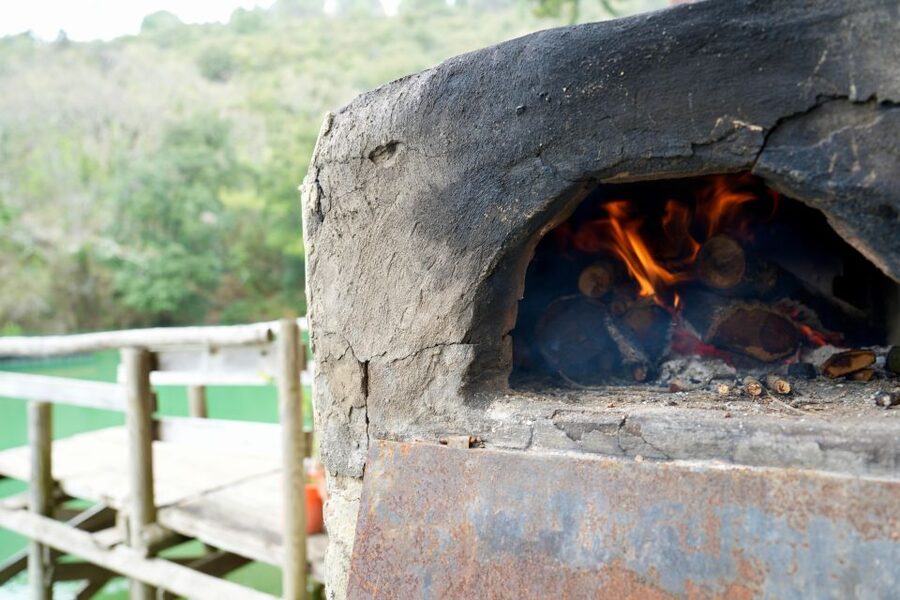
The second major food lesson is bistecca alla fiorentina, Florence’s famous thick-cut steak. Here, the wood fire is more than a romantic detail. It is the cooking method that gives the steak its place in the meal.
This part should appeal to anyone who wants a taste of Tuscan food beyond pasta and gelato. The class connects the steak to the region’s broader cooking tradition, where good ingredients and strong heat do much of the work.
A steak cooked over fire also brings less control than a modern stovetop or oven. You may find that interesting, especially if you enjoy traditional methods. If you prefer your food prepared with exact restaurant-style precision, remember that fire cooking is part of the character of the class.
One past participant singled out the steak as the best they had eaten anywhere and praised Mario for making the class both informative and entertaining. That is the clearest praise attached to the experience, and it gives you one useful clue: the steak and the personality of the guide are likely to be central parts of the meal.
Still, taste is personal, and no class can guarantee that every diner will rank a steak the same way. The practical takeaway is that this is not a pasta-only lesson. The bistecca is a major reason to choose this experience over a shorter workshop focused only on noodles.
Dessert completes the Tuscan menu
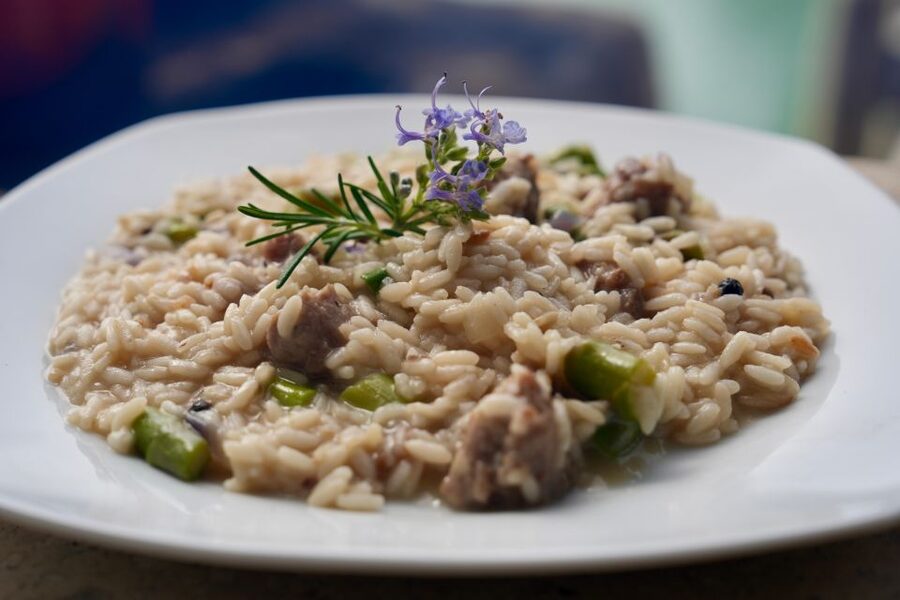
The meal includes a traditional dessert, though the exact dessert is not specified. That uncertainty is worth noting if you have a particular sweet dish in mind.
Including dessert makes the class feel like a complete meal rather than a single-skill workshop. You get a sense of how a Tuscan menu moves from handmade pasta to a main course and then to something sweet.
It also gives the class a useful rhythm. Pasta requires careful handwork, steak focuses on fire and timing, and dessert changes the type of preparation. The four-hour schedule has room for these different tasks instead of treating the meal as one long repetition of pasta making.
Because the dish is not named, ask ahead if dietary restrictions or allergies are important to you. The supplied details confirm the dessert is included, but they do not identify its ingredients or describe substitute options.
Same kitchen, a different dish:
- Cooking Class and Lunch at a Tuscan Farmhouse with Local Market Tour from Florence
★ 5.0 · 4,831 reviews - Pastamania – Florence Pasta Making Class
★ 5.0 · 3,050 reviews - Florence: Cooking Class Pasta & Tiramisu Making Unlimited Wine
★ 5.0 · 2,234 reviews - Florence Cooking Class The Art of Making Gelato & Authentic Pizza
★ 5.0 · 2,053 reviews
Chianti and three local wine pairings
Three varieties of local wine are included, with Chianti highlighted as part of the experience. The wine is paired with the dishes, so you are not simply handed a glass without context.
This pairing adds value for anyone trying to understand Tuscan food as a whole. A local meal is not only about individual recipes. Wine, steak, pasta, and dessert form part of the same regional table.
The three-wine format also gives you enough comparison to notice differences between bottles. You do not need to be a wine expert. The useful part is tasting the wines beside the food and seeing how the flavors change from one dish to the next.
There is one practical caution. The class includes alcohol, so you should plan your evening accordingly. Round-trip transportation is included, which removes the need to drive yourself to the location, but the activity is still best suited to adults who want food and wine as a combined experience.
Why the small group matters
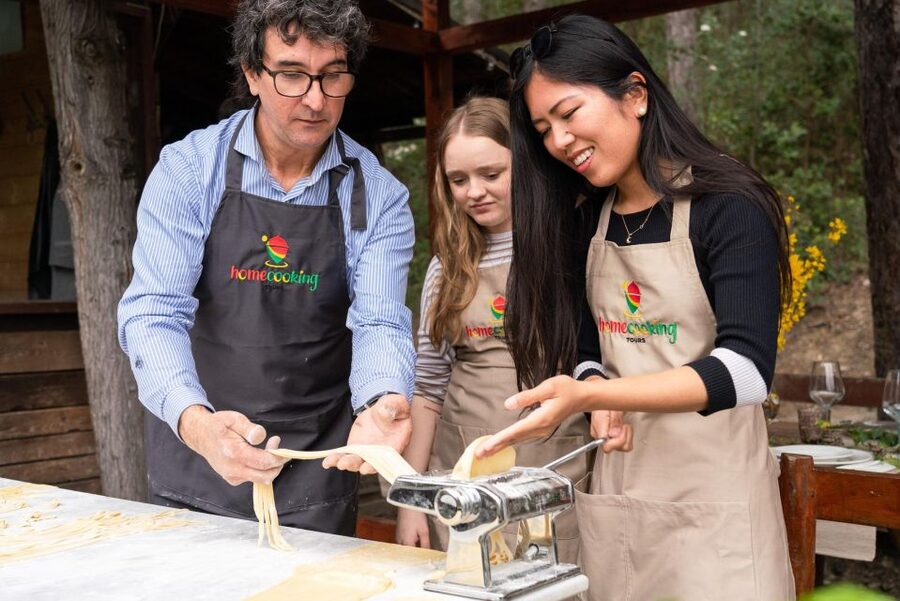
The class is limited to eight participants. That is a strong feature for a hands-on activity because pasta making can become frustrating when too many people crowd around one work surface or wait for a turn.
A group of eight should give you a better chance to hear the chef, see the techniques, and ask questions. It also makes the social side easier without turning the class into a large party.
The guide is listed as speaking English, Spanish, and Italian. Mario is the one named in the available feedback, and he was praised for being both entertaining and informative. If Mario is leading your session, his style may add energy to the class. The provider does not guarantee a particular guide, so you should not book solely on the assumption that he will be there.
Small group does not mean private class. Other participants will be sharing the work area and meal with you. That is usually an advantage for solo visitors and couples who like meeting people, but it may not suit someone seeking a completely private lesson.
The value of the $215.24 price
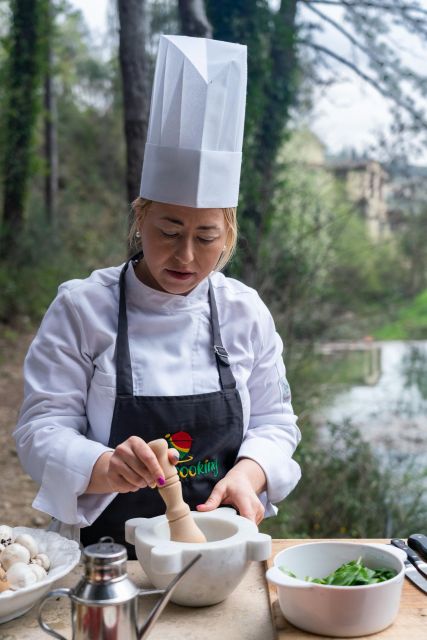
At $215.24 per person, this class is a substantial purchase. The price makes more sense when you count everything included: four hours of instruction, round-trip transportation, preparation of four types of food, three local wines, a full meal, and a countryside setting.
You are paying for an outing as much as for a recipe lesson. A shorter pasta class in central Florence may cost less, especially if it does not include transport, steak, wine, or dessert. This experience offers a broader menu and a more rural setting, so the comparison should be based on the whole afternoon or evening rather than the pasta lesson alone.
I would consider it good value for someone who wants one special food-centered activity during a Tuscany trip. It is less appealing if you only want to learn basic pasta dough and would rather spend the rest of the day sightseeing.
The wood-fire method also gives the experience a clear identity. You are not paying for a generic Italian cooking class that could take place anywhere. The regional ingredients, Chianti, Florentine steak, and traditional preparation connect the activity to Tuscany.
The strongest value comes when you participate fully. If you plan to sit back and watch, the price will feel high. If you want to shape the pasta, learn the cooking methods, eat what you prepared, and enjoy the setting, the package is easier to justify.
Transport and the hill setting
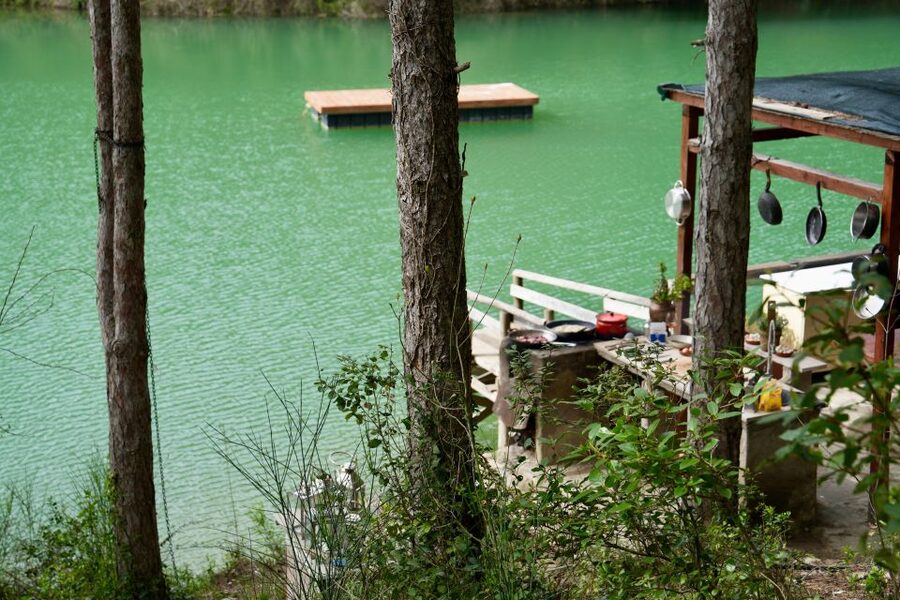
Round-trip transportation to the class location is included. That is important because the class is in the hills of Florence rather than simply in the center of town.
The transport saves you from arranging your own route and makes the rural setting more practical. You can focus on the meal instead of worrying about how to return after tasting wine.
The exact pickup details are not provided here, so check the meeting instructions before you commit to a tight schedule. The activity has a variable starting time, and transport arrangements can affect how easily it fits with museum visits, train travel, or dinner plans elsewhere.
The countryside setting should appeal to you if you want a break from Florence’s urban streets. You get fresh air, Tuscan views, and a calmer setting while you cook. Keep in mind that the location outside the city is also why this is not as simple as walking into a central cooking school.
The class is listed as wheelchair accessible. If you need specific information about vehicle access, surfaces, seating, or kitchen arrangements, confirm those details before booking, since the general accessibility note does not explain every part of the visit.
Who will enjoy this class most
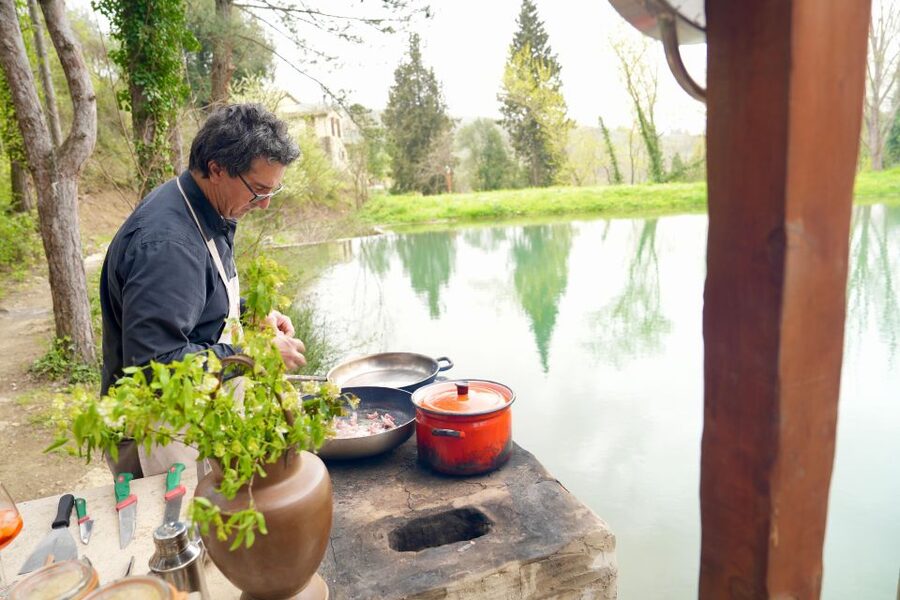
I would recommend this experience to you if food is one of the main reasons you are visiting Tuscany. It works especially well for couples, families, friends, and solo participants who like hands-on activities and shared meals.
It is also a good choice if you want several Tuscan specialties in one sitting. You will not have to choose between pasta and steak, and the wine tasting adds another local element.
The class may suit first-time cooks because local chefs guide the preparation. You do not need to arrive as a pasta expert. The format is built around learning traditional methods, not showing off advanced skills.
You may want to skip it if your schedule is packed or if you dislike long meals with group participation. Four hours is a meaningful block of time. The class also may not suit you if you avoid wine, meat, or fire-based cooking, since all three are central to the experience.
Vegetarian, vegan, and allergy information is not provided. Ask the provider before booking if you need menu changes. Do not assume that the bistecca or dessert can be replaced.
Booking details worth knowing
You can reserve now and pay later, which helps if you are still arranging the rest of your Tuscany plans. You can also cancel up to 24 hours before the activity for a full refund.
The class is offered in English, Spanish, and Italian. Check availability for the actual starting times, since the general duration is four hours but no single start time is fixed.
The rating is 5 out of 5 from four reviews, so the sample is small. The strongest specific praise concerns Mario’s combination of information and humor, the pasta dishes, and the steak. I would give those details more weight than the perfect score itself because they tell you what the class does well.
Should you book it?
Book this class if you want a full Tuscan food experience rather than a short pasta lesson. The combination of handmade pici, tagliatelle or ravioli, bistecca alla fiorentina, dessert, three wines, transport, and a small group gives the four hours a clear purpose.
Think twice if $215.24 feels high for a cooking activity, if you need a specific menu, or if you want a private class. Before booking, confirm the starting time, the exact pasta option, the dessert, dietary accommodations, and the transport meeting details.
For food-focused visitors, this is one of the better ways to connect cooking with place. You leave with more than a plate of pasta: you get a practical look at Tuscan methods, a fire-cooked regional meal, and an evening or afternoon shaped around the table.
FAQ
How long does the cooking class last?
The class lasts four hours.
Where does the class take place?
It takes place in the hills of Florence, in Tuscany, Italy.
What dishes will I prepare?
You will prepare pici, tagliatelle or ravioli, bistecca alla fiorentina, and a dessert.
Is wine included?
Yes. The experience includes tastings of three varieties of local wine, including Chianti from the region.
Is transportation included?
Yes. Round-trip transportation to the class location is included.
How many people can join the class?
The class is limited to eight participants.
Which languages are available?
The live guide can conduct the class in English, Spanish, or Italian.
Is the activity wheelchair accessible?
Yes. The activity is listed as wheelchair accessible.
Can I cancel for a refund?
Yes. You can cancel up to 24 hours in advance for a full refund.
New cooking classes around Florence
- Pasta Cooking Experience in Florence★ 4.8 · 139 reviews
- MasterSteak: Tuscan Steak Cooking Class with Unlimited Wine★ 5.0 · 2 reviews
- Florence: Market Visit and Cooking Class★ 4.4 · 16 reviews
- From Livorno: Authentic italian Pasta Cooking Class★ 5.0 · 3 reviews
- Florence: Traditional Pizza and Gelato Cooking Class + Wine★ 5.0 · 2 reviews
- Florence:Dolce Vita by Day Market Tour & Pasta Making Class★ 5.0 · 2 reviews
- Florence: Small Group Cooking Class at a Local’s Home★ 5.0 · 10 reviews
- Florence Cooking Class: Ravioli & Pasta & Wine + Gift Apron★ 5.0 · 5 reviews
Florence Cooking Classes, side by side.
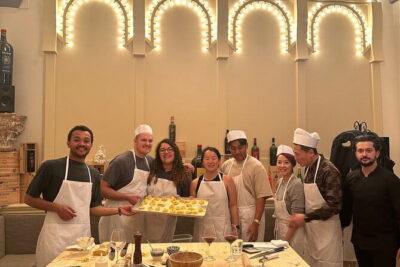
Florence: Pasta Cooking Class with Unlimited Wine
Read our review →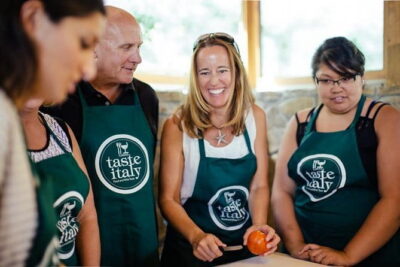
Cooking Class and Lunch at a Tuscan Farmhouse with Local Market Tour from Florence
Read our review →
Florence Cooking Class The Art of Making Gelato & Authentic Pizza
Read our review →
Small Group Cooking Class & Market Food Tour in Florence
Read our review →
Florence: Premium Pasta and Gelato Cooking Class
Read our review →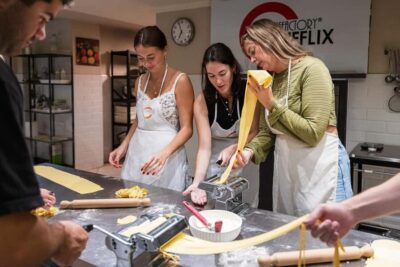
Florence: Handmade Pasta & Dessert Class with Unlimited Wine
Read our review →
Tuscany Day Trip: Chianti & Cooking Class Small Group
Read our review →This kitchen also appears in