Review · FLORENCE
Florence: Market to Table Cooking Lesson
Florence’s best cooking lesson begins before you reach the kitchen. You meet your chef at the central market, learn how locals choose meat, cheese, vegetables, and pasta ingredients, then turn those products into a full Tuscan meal. Fresh pasta is the main event, and you make it by hand rather than simply watching a demonstration.
I like the market-to-table link and the generous four-and-a-half-hour schedule. I also like that the class covers a complete meal, often including bruschetta, ragù or Bolognese, handmade pasta, and tiramisu, with Italian wine served at the table. The main drawback is that some tasks are shared, so you may watch the chef handle part of the cooking rather than cook every dish yourself.
- Market first: Meet farmers, bakers, butchers, and food sellers at Florence’s central market.
- Pasta by hand: Roll your own dough and learn the basic methods you can repeat at home.
- A full Tuscan meal: Prepare pasta, sauce, a meat or fish dish, and dessert.
- Chefs with personality: Past classes have been led by Julio, Emanuele, Andrea, Antonio, Thomas, and others.
- Lunch included: Eat what you make with red or white Italian wine.
- Practical limits: The market visit is skipped on Sundays and bank holidays, and the class is not suitable for people with gluten intolerance.
Starting at Florence’s central market
The meeting point is at Via Panicale 43/r, near Florence’s central market. The class lasts about four and a half hours, so plan it as a major half-day activity rather than a quick lesson squeezed between museum visits.
Your chef leads the market visit before the cooking begins. This is useful because it gives the food a setting and a reason. Instead of learning a generic pasta recipe in a classroom, you first see the ingredients in the place where Florentines shop.
The market portion can include stops with butchers, bakers, vegetable sellers, and other food merchants. You may hear about different cuts of meat, seasonal produce, cheese, and Tuscan specialties. One especially enjoyable part has been tasting truffle products, including oils, pastes, and cheeses.
The market visit is not a full shopping expedition through every aisle. The market is large, and the route may focus on selected stalls and tastings. One past class did not cover the entire market or buy every ingredient there. That matters if you expect a long guided food tour. Think of this part as an introduction to local ingredients and buying habits, followed by a cooking class.
The market visit can also vary with the group and the chef. Some explanations may run longer than expected, especially when the group stops to discuss meat. If you prefer a fast-paced tour, the market section may feel a little slow at times. If you enjoy learning why one cut or ingredient works better than another, it adds useful context.
The short ride to the cooking school
After the market, you ride by minivan to the cooking school. This transfer saves you from finding a second location on your own and keeps the experience together as one organized outing.
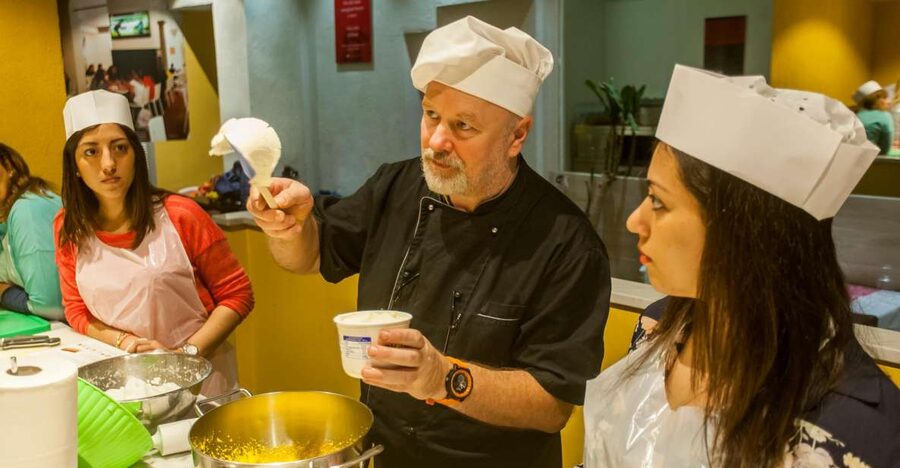
The shift from market to kitchen is important. You have just seen the raw materials, and now you move into the practical work. The chef explains the origin of the dishes and the Italian approach to cooking, including the idea that good ingredients often need only modest seasoning.
The class is conducted in English. Past instructors have included Julio, Emanuele, Andrea, Antonio, Thomas, and others, so the exact chef can vary by date. The strongest classes depend heavily on the person leading them. Julio was praised for humor, patience, and clear explanations, while Emanuele was described as entertaining and skilled at keeping the group moving. Andrea was noted for his patient instruction, and Thomas for his cooking tips and teaching style.
That variety is worth keeping in mind. You are booking a cooking format rather than a guaranteed lesson with one particular chef. The common thread is a chef who demonstrates techniques, explains the food, and guides the group through the meal.
More Cooking Classes with a Market Tour in Florence
- Cooking Class and Lunch at a Tuscan Farmhouse with Local Market Tour from Florence
★ 5.0 · 4,831 reviews - Small Group Cooking Class & Market Food Tour in Florence
★ 5.0 · 1,574 reviews - Pasta and Tiramisu Cooking Class with optional Local Market Tour
★ 5.0 · 515 reviews
Rolling pasta and building the meal
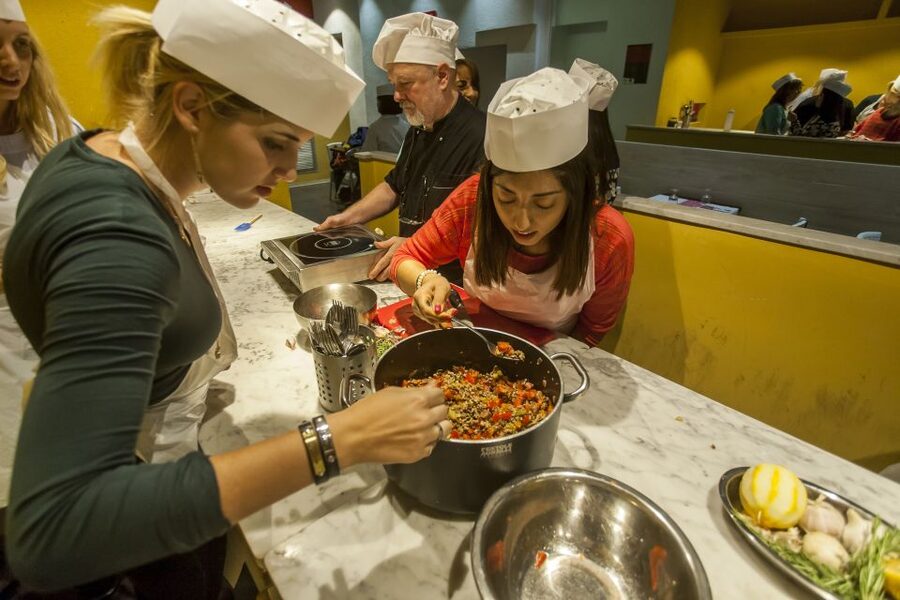
The kitchen portion usually includes fresh pasta, sauce, a savory main course, and dessert. Past menus have included bruschetta, tagliatelle or linguine, ragù, Bolognese, and tiramisu. The exact dishes may change with the season and the available ingredients.
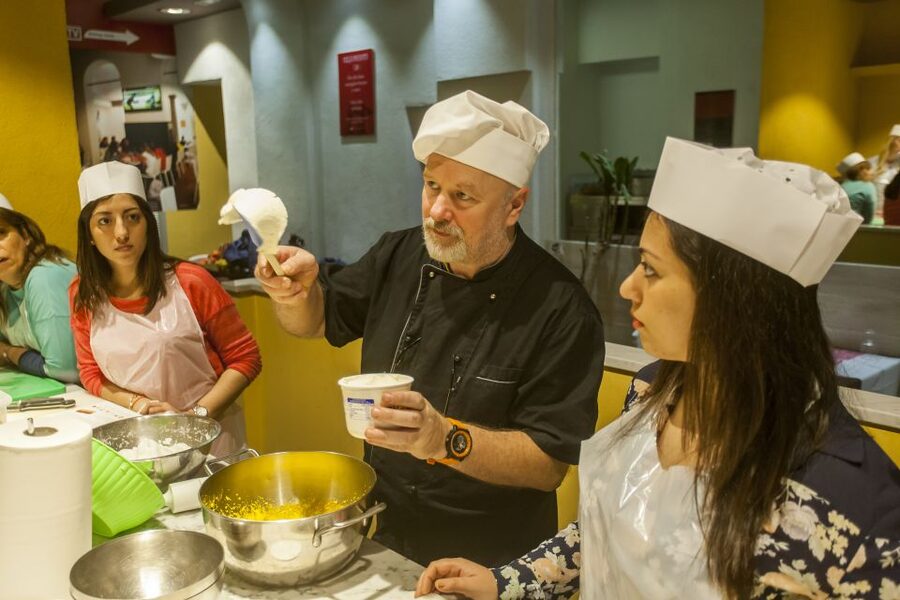
Making the pasta is the most hands-on part. You work with the dough, roll it, and shape it into noodles. This is not as difficult as it may look, but the feel of the dough matters. You learn how to handle it, how thin to make it, and how to manage the process without relying on a machine.
Several classes have given each person a turn at rolling pasta dough. That is a real benefit if you want a skill to take home. You are not only watching a chef produce a perfect sheet in seconds.
The sauce teaches another useful lesson. Ragù and Bolognese need time, careful preparation, and balance more than a long list of herbs. The chef may demonstrate cutting techniques, explain how the ingredients work together, and show how to build flavor with simple steps.
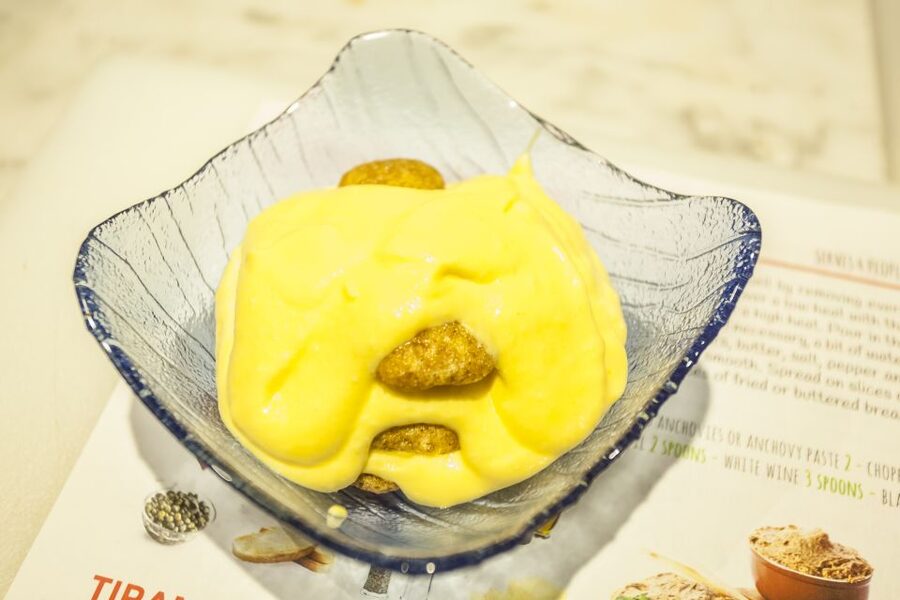
Bruschetta is a good early dish because it is straightforward and gives the group something to prepare while the main cooking continues. Tiramisu provides a satisfying finish and is one of the easiest dishes to recreate for family or friends. Several people have later prepared it at home, along with the pasta and sauce.
The class is collaborative. Everyone may chop, stir, shape pasta, or help with another stage of the meal. That works well for couples, friends, and solo participants who want a social activity. It can also mean that you do not personally handle every component from beginning to end.
One class had a group of only six, while another had ten, and a group of seventeen was still described as manageable. Group size can make a difference. A smaller class usually gives you more time with the chef and less time waiting for a turn. Even in a larger group, the cooking is divided into practical jobs, but the experience may feel less like a private lesson.
What you actually learn from the chef
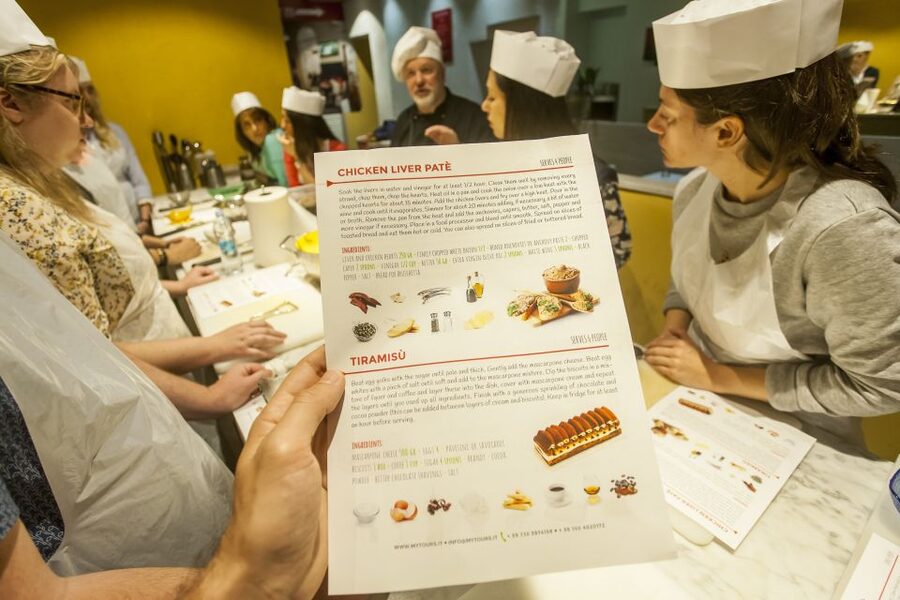
The strongest value here is not the meal alone. It is the collection of small methods you can reuse in your own kitchen.
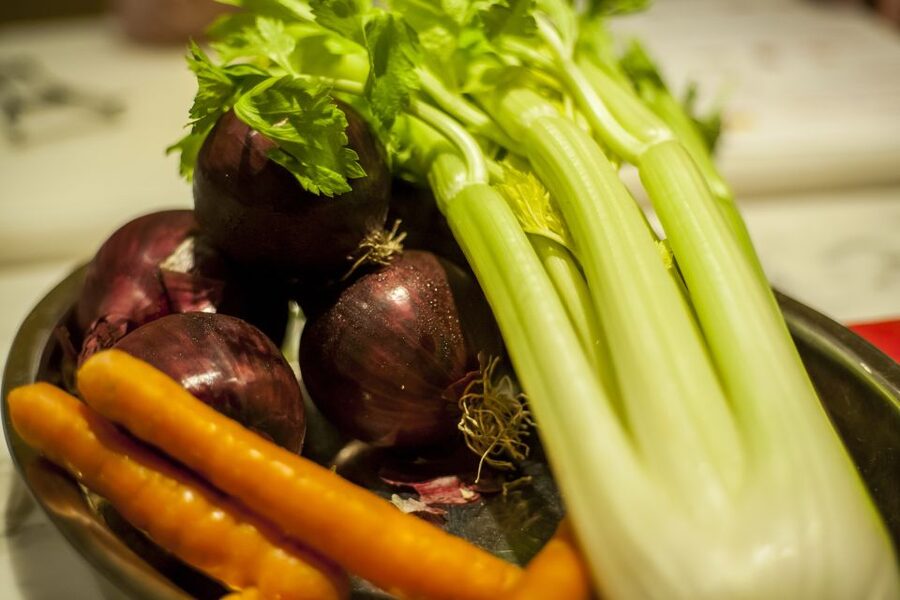
You learn how to choose ingredients, how to cut vegetables, how to prepare pasta dough, and how to keep a sauce simple. The market visit adds buying advice, while the kitchen turns that advice into a finished plate.
The chef also gives context about Tuscan food and regional cooking. This helps explain why the dishes are built as they are. The lesson is less about showing off complex restaurant techniques and more about making good food in a practical Italian style.
Do not expect an advanced professional course. The class is designed for ordinary home cooks, including people who have never made fresh pasta. Participants with cooking experience can still pick up new cutting methods, dough tips, and ways to organize a meal.
You should also be prepared to stand for much of the lesson. Past participants wished for stools during the cooking section, especially after several days of walking around Florence. The activity requires climbing and descending stairs, so it is not ideal if stairs are difficult for you.
Sitting down to eat what you made
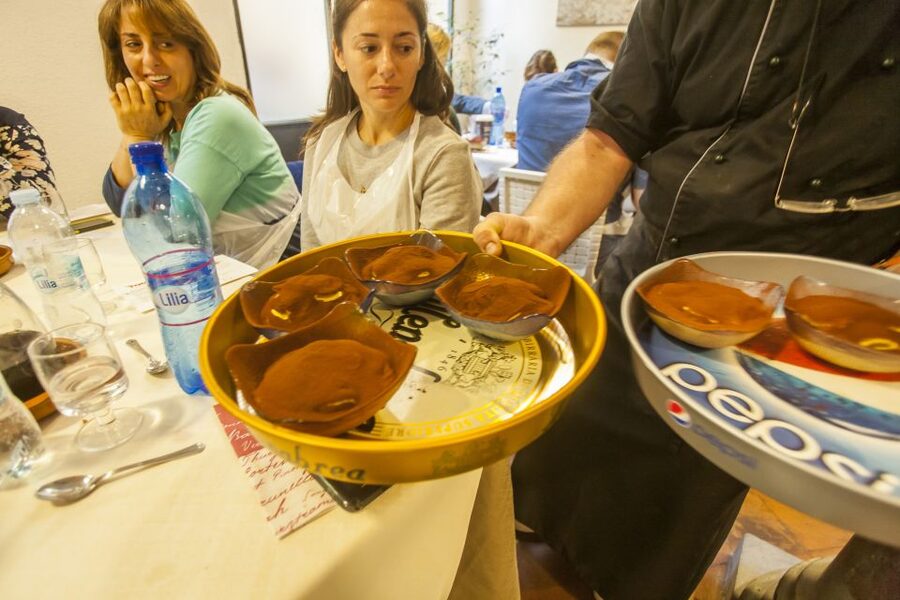
After the preparation, the group sits down to eat the meal. This is the reward, but it also completes the lesson. You can see how the separate steps fit together, taste the sauce after it has cooked, and compare the finished pasta with what you might buy dried in a shop.
Italian wine is served with lunch, usually red or white. The wine adds to the meal and makes the table feel more like a shared Italian lunch than a class that ends at the kitchen door.
The food has included bruschetta, handmade pasta with ragù or Bolognese, and tiramisu. Other sessions may feature a meat or fish course, depending on the menu. Since the dishes use fresh, seasonal ingredients, you should not assume that every date follows exactly the same recipe.
This is also where the four-and-a-half-hour schedule earns its keep. You have enough time to visit the market, learn the methods, cook, and eat without reducing the meal to a rushed tasting. The tradeoff is that the activity takes a large part of your day.
If you need to catch a train or reach another timed booking, leave plenty of room after the stated finish. One class ran late after a delayed start, and a participant had to leave before receiving the recipes and certificate. The return transfer brings you back to the departure point in central Florence, but you should not schedule anything immediately afterward.
More Cooking Classes with a Market Tour in Italy
- Florence: Cooking Class with Local Food Market Tour
★ 4.9 · 407 reviews - Florence: Cooking Class at a Tuscan Farm & Local Market Tour
★ 4.9 · 354 reviews - Florence: Market Visit and Cooking Class
★ 4.4 · 16 reviews - Florence: Market and Cooking Class at a Local’s Home
★ 5.0 · 9 reviews
Recipes, certificates, and useful follow-up
A graduation certificate is provided at the end, which is a cheerful souvenir even if it is not the main reason to book. It gives the class a clear finish and makes a nice memento for children or first-time cooks.
Recipes have been emailed after some classes, but past participants have had to wait or did not receive them. I would treat the printed or promised recipes as a useful extra, not the sole way you will remember the meal.
Take mental notes while the chef works. Pay attention to the amount of flour, the feel of the dough, the order of the sauce preparation, and the cutting size for the vegetables. If you want to recreate the meal, ask questions during the lesson and write down anything that seems easy to forget.
The most practical souvenir is confidence. People with little experience making pasta have found the process much easier than expected. The dishes are broken into simple steps, and the chef handles the more time-consuming work when needed so the group can keep moving.
Who will get the most from this class
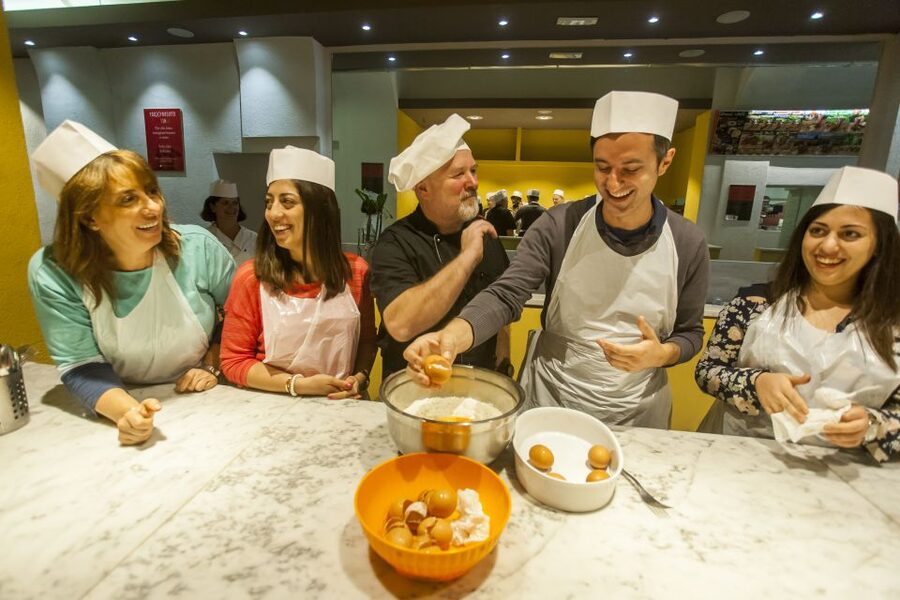
This experience suits you if food is one of the reasons you came to Florence. It is also a good choice for a rainy morning, a break from museums, or a social activity for a solo visitor.
You do not need to arrive as an expert cook. Beginners get clear tasks and direct guidance, while experienced home cooks can focus on the pasta technique, knife work, sauce balance, and local ingredients.
Couples and families can enjoy the shared meal, though children must be able to manage a long class with standing and stairs. The activity works especially well for people who want to cook together rather than sit through a demonstration.
It may not suit you if you need a gluten-free meal, because the experience is specifically built around pasta and is listed as unsuitable for people with gluten intolerance. It is also less suitable if you want a quiet, private lesson. The class format is social and collaborative.
Sunday and bank holiday bookings require special attention. The central market is closed on those days, so the market visit is skipped. The cooking portion still forms the heart of the experience, but you lose the ingredient-shopping introduction that makes this activity different from a standard pasta class.
Is the time worth the value?
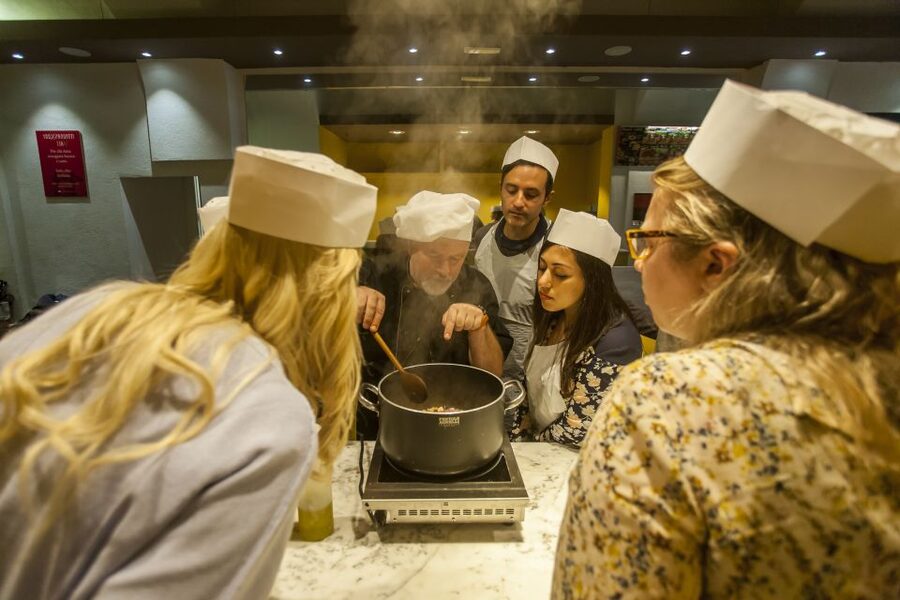
No price is provided here, so I cannot judge the exact cost against the current alternatives. I can judge what you receive for the time and effort: a guided market visit, transportation to the kitchen, a four-and-a-half-hour English-language lesson, hands-on pasta making, a full meal, wine, and a return transfer.
Compared with a short pasta demonstration, this offers more contact with the food and more context about buying ingredients. Compared with a dedicated market tour, it gives you a practical meal and a chance to use what you have seen.
The value is strongest if you will actually cook the dishes at home. If you only want lunch, the class may feel long. If you want to leave Florence with a repeatable method for pasta, ragù, bruschetta, and tiramisu, the extra hours make sense.
The overall rating is 4.6 from 96 ratings, and the most consistently praised features are the chefs, the food, the market tasting, and the chance to make pasta from scratch. The recurring cautions are modest: standing for long periods, occasional language complications in mixed-language groups, delayed recipe delivery, and the fact that some cooking is demonstration rather than individual work.
Should you book Florence’s market-to-table class?
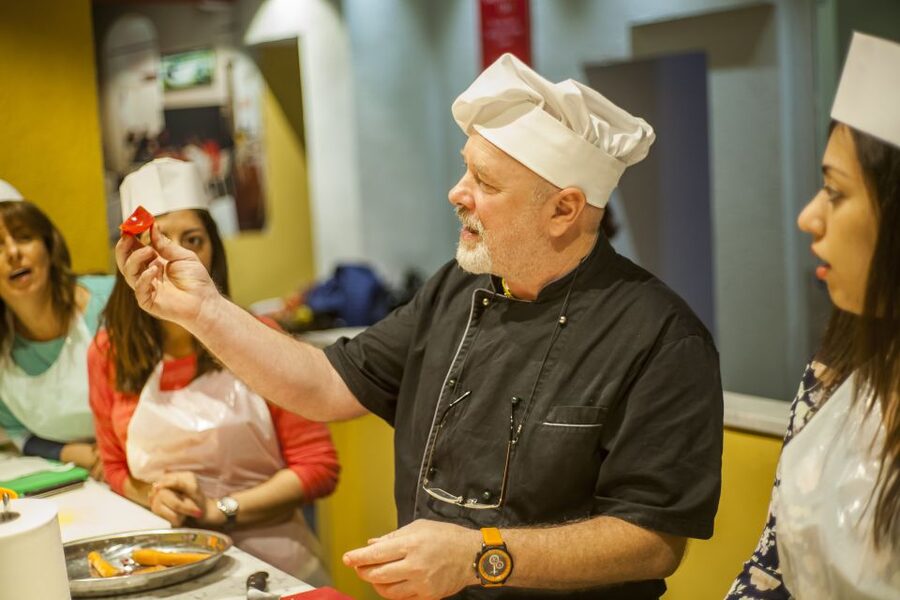
Book it if you want a friendly, practical food experience with a real meal at the end. The market stop, fresh pasta lesson, Tuscan dishes, wine, and chef-led instruction give you more than a basic pasta workshop.
I would choose it for a first visit to Florence, especially if you want a break from churches and galleries. Book on a day when the central market is open, arrive ready to stand and participate, and keep your afternoon flexible.
Skip it if you need gluten-free food, dislike group activities, have trouble with stairs, or want a short lesson with every minute devoted to cooking. For most home cooks, though, this is a useful way to spend half a day: you eat well, learn a few solid techniques, and gain the confidence to put fresh pasta on your own table.
FAQ
Where does the cooking class meet?
The meeting point is Via Panicale 43/r, 50123 Florence. The coordinates provided are 43.77748489379883, 11.253640174865723.
How long does the experience last?
The activity lasts about four and a half hours, including the market visit, minivan transfer, cooking lesson, meal, and return transfer.
Is the class taught in English?
Yes. The activity includes a live English-speaking guide or chef.
What food will I prepare?
The menu can include fresh pasta, sauces such as tomato, ragù, Bolognese, or pesto, a meat or fish dish, and dessert. Past menus have included bruschetta, tagliatelle or linguine, ragù, Bolognese, and tiramisu.
Is the market visit included every day?
No. The central market visit is skipped on Sundays and bank holidays because the market is closed.
Is the class suitable for people with gluten intolerance?
No. The activity is listed as unsuitable for people with gluten intolerance because handmade pasta is a central part of the lesson.
New cooking classes around Florence
- Pasta Cooking Experience in Florence★ 4.8 · 139 reviews
- MasterSteak: Tuscan Steak Cooking Class with Unlimited Wine★ 5.0 · 2 reviews
- Florence: Market Visit and Cooking Class★ 4.4 · 16 reviews
- From Livorno: Authentic italian Pasta Cooking Class★ 5.0 · 3 reviews
- Florence: Traditional Pizza and Gelato Cooking Class + Wine★ 5.0 · 2 reviews
- Florence:Dolce Vita by Day Market Tour & Pasta Making Class★ 5.0 · 2 reviews
- Florence: Small Group Cooking Class at a Local’s Home★ 5.0 · 10 reviews
- Florence Cooking Class: Ravioli & Pasta & Wine + Gift Apron★ 5.0 · 5 reviews
Florence Cooking Classes, side by side.
Florence: Pasta Cooking Class with Unlimited Wine
Read our review →
Cooking Class and Lunch at a Tuscan Farmhouse with Local Market Tour from Florence
Read our review →
Florence Cooking Class The Art of Making Gelato & Authentic Pizza
Read our review →
Small Group Cooking Class & Market Food Tour in Florence
Read our review →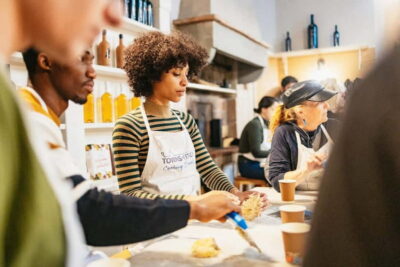
Florence: Premium Pasta and Gelato Cooking Class
Read our review →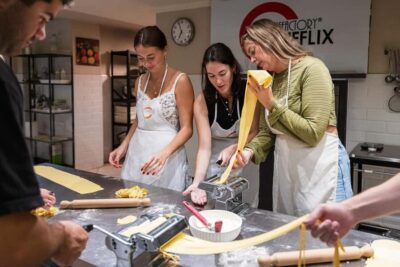
Florence: Handmade Pasta & Dessert Class with Unlimited Wine
Read our review →