
Review · BANGKOK
Mini Group: Uncle and Aunty Cooking House Afternoon Class
The best part of this afternoon is that Thai food begins at the market, not at the stove. You meet your host at Huai Khwang MRT, visit a respected Ganesha Shrine, shop for ingredients among local residents, then carry that knowledge into a cooking session. I like the link between the market and the meal, and I like that curry paste and coconut milk are made from scratch rather than opened from a packet.
I also like the personal scale. Sunee and Ann are named hosts, and the class can feel almost private when bookings are light. One practical caution: five hours is a long afternoon, and the pace can be tiring, especially in the heat or if you expect a quick demonstration instead of hands-on cooking.
Key points to know before you book
- The market comes first: Huai Khwang Market supplies the ingredients and gives you a useful look at ordinary Bangkok food shopping.
- A shrine adds cultural context: The Ganesha Shrine is an important community place, not simply a photo stop.
- You make Thai basics by hand: Curry paste and coconut milk are prepared from scratch.
- The menu changes by day: Daily dishes range from green curry and som tum to tom yum, fried noodles, desserts, and several meat or tofu dishes.
- The class is highly personal: Hosts such as Sunee and Ann explain ingredients, recipes, and market habits directly.
- Plan for a full afternoon: The class runs from about 2:00 pm to 7:00 pm, with transport between the meeting point and cooking location included.
From Huai Khwang MRT to a local Bangkok market
Meet your guide at Huai Khwang MRT Exit 4 at 2:00 pm. This is a sensible meeting point because you do not need to find a private kitchen in an unfamiliar neighborhood. Your host collects you there, then leads you on foot to the nearby Ganesha Shrine.
The shrine matters because it gives the afternoon a cultural opening. It is respected by the local community and offers a glimpse of Bangkok life beyond food stalls and sightseeing routes. The visit is brief, but it helps place the market and cooking lesson within a living neighborhood. Dress and behave respectfully at the shrine, and avoid treating it as just a backdrop for pictures.
From there, you walk to Huai Khwang Market. This is a real fresh market rather than a display arranged for visitors. You will see the raw materials that shape Thai cooking: herbs, vegetables, chilies, rice, curry ingredients, and other produce used in the afternoon recipes.
I like this part because it answers a question many Thai cooking classes skip: Where does this food begin? Your host can point out ingredients and explain where to shop, when to visit a market, and how to choose useful produce. The market stop also helps you understand why Thai cooking depends on balance. Sweet, sour, salty, spicy, fresh, and fragrant elements are assembled from many small ingredients.
The market can be crowded, warm, and full of strong smells. That is part of the point, but it may not suit you if you prefer a polished food tour with quiet aisles and printed labels. Wear comfortable shoes and keep your belongings close.
More cooking classes around Bangkok:
- Bangkok: Hands-on Thai Cooking Class and Market Tour
★ 4.9 · 1,614 reviews - Bangkok: Tingly Thai Cooking School Half-Day Cooking Class
★ 4.9 · 1,191 reviews - Bangkok: Maliwan Thai Cooking Class with Market Tour
★ 4.9 · 1,133 reviews
A short local transfer to the cooking kitchen
After shopping, you travel to the cooking location by local transport. One class used a tuk-tuk for this part of the route, while the exact vehicle may vary. The important detail is that transport from the MRT meeting point to the kitchen, and back again at the end, is included.
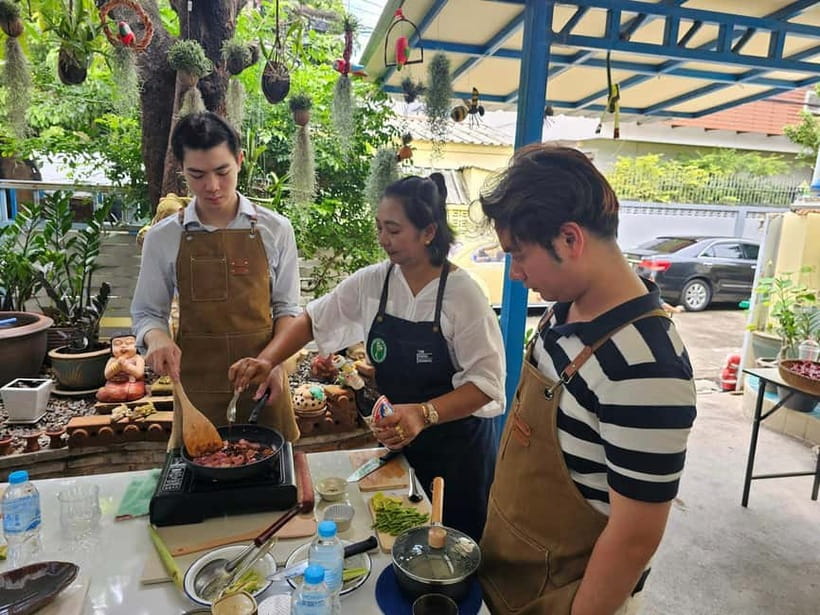
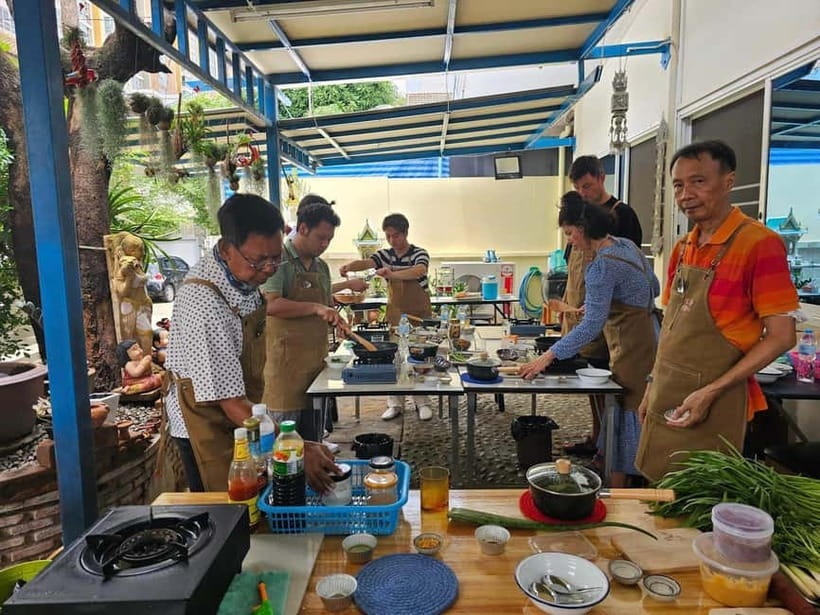
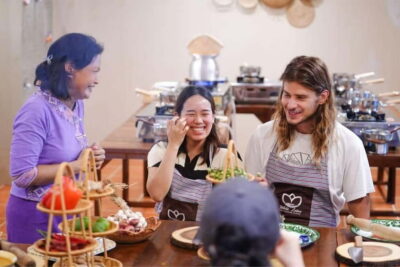
The cooking setting is described as a welcoming, outdoor kitchen on a terrace. That gives the class a home-style feel rather than the atmosphere of a formal culinary school. You may meet other members of the host’s household or cooking team. Sunee’s family, including her mother and husband, helped create a warm, personal setting during one class.
That personal contact is a real strength. You are not only following a chef through a fixed demonstration. You can ask about ingredients, cooking methods, and Thai food habits as you work. Sunee has also been able to communicate in German, while the activity is offered in English and German.
The setting may also mean less polish than a commercial school. Outdoor cooking can be warm, and the class may feel physically demanding after the market walk and transport. If you want a carefully staged kitchen with restaurant-style presentation, this is not the right kind of experience. If you want a closer look at how a local host cooks, the informality works in its favor.
Making curry paste and coconut milk from scratch
At about 3:00 pm, the host introduces the vegetables, rice, herbs, and other ingredients. This is where the activity becomes more than a recipe lesson. You learn how several basic parts of Thai food are made before they reach the wok or soup pot.
The two most useful techniques are fresh curry paste and homemade coconut milk. Curry paste is central to dishes such as Panang curry, green curry, red curry, and stir-fries with curry paste. Making it yourself lets you see the ingredients that create its flavor and gives you a better sense of how Thai cooks build heat and fragrance.
Coconut milk is equally important in soups, curries, and desserts. It appears in dishes such as tom kha gai, steamed coconut milk cups, bananas in coconut milk, and pumpkin in coconut milk. Preparing it from scratch connects the savory and sweet parts of the menu.
You may also work with sticky rice and herbs during this introduction. The host can explain ingredients you have never seen before, which is especially helpful if you plan to cook Thai food after returning home. I would pay close attention here, because the market explanations and ingredient handling may prove more useful than any single dish.
Four cooking sessions, with a different menu each day
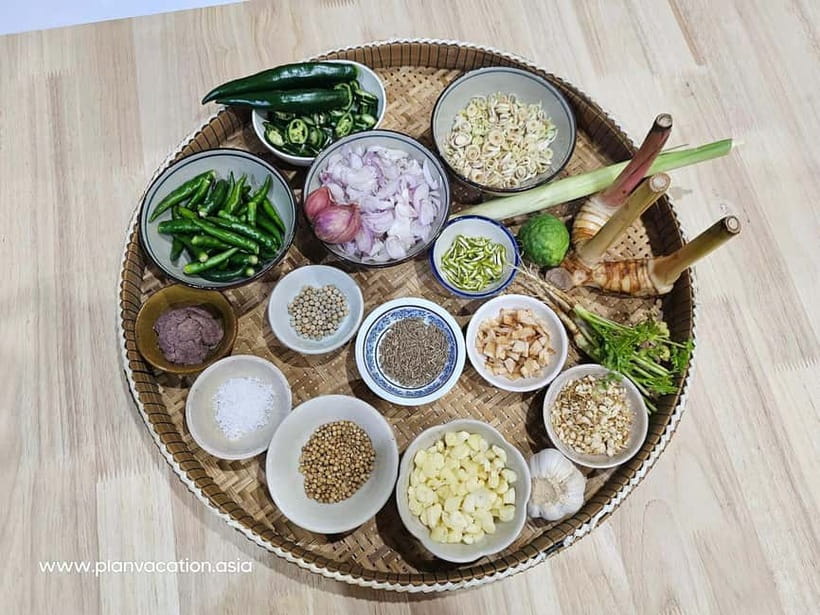
The main cooking period begins at about 4:00 pm and is divided into short sessions. The schedule lists soup or stir-fry, salad, curry, and dessert, with the food eaten fresh as it is completed. The published daily menus include five dishes, so the exact amount you prepare can vary by day and by class arrangement.
The day you choose matters. Here is the advertised weekly rotation:
- Monday: Pork Panang curry, stir-fried morning glory with red fire, poached eggs, stir-fried pork with yellow curry paste, and Khanom Tom, a boiled sweet snack.
- Tuesday: Tom Kha Gai, stir-fried tofu with bean sprouts, deep-fried pork with herbs, pork fried rice, and steamed pandan layer cake.
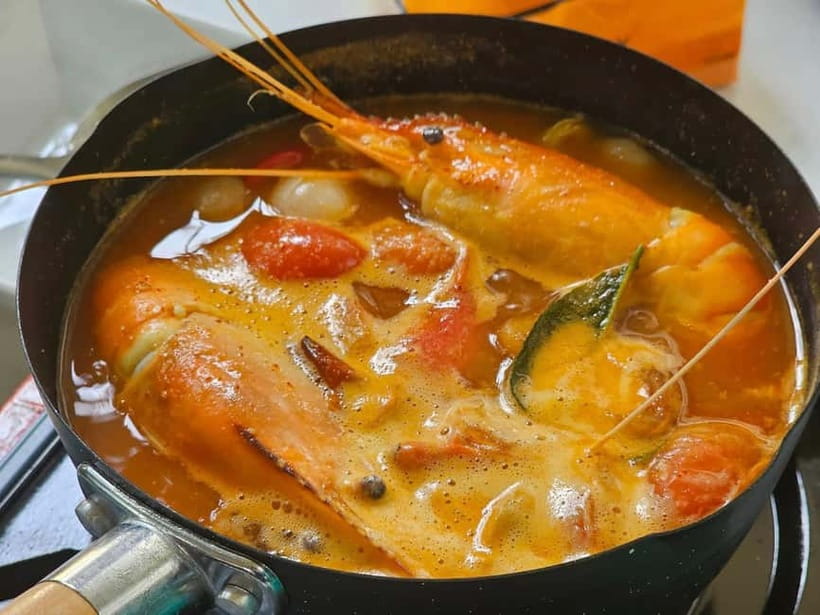
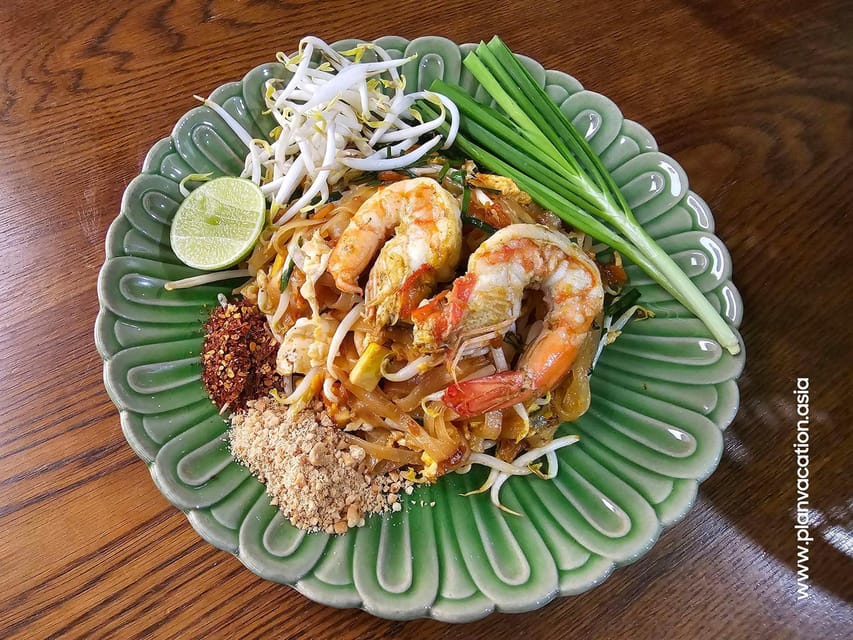
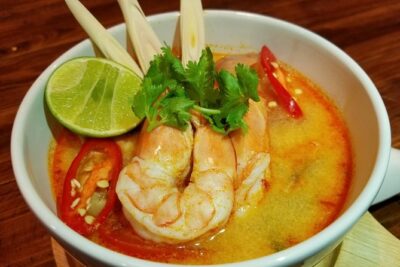
- Wednesday: Hot and sour soup with shrimp and mixed vegetables, stir-fried chicken with holy basil, a Thai omelet, Thai-style fried noodles, and steamed coconut milk.
- Thursday: Stir-fried minced pork with bamboo shoot, clear tofu soup with minced pork, deep-fried pork belly with herbs, Chinese-style fried noodles, and steamed banana cake.
- Friday: Chicken green curry, stir-fried kale with crispy pork, fried minced pork with garlic and pepper, stir-fried rice noodles with soy sauce and pork, and a soft mung-bean crepe.
- Saturday: Som tum, spicy minced pork salad, hot and spicy soup with pork ribs, fried chicken with Thai herbs, and banana in coconut milk.
- Sunday: Spicy chicken soup, stir-fried napa cabbage with minced pork, stir-fried pork with red curry paste and basil leaves, stir-fried rice noodles with chicken, and poached pumpkin in coconut milk.
This is a useful range, but do not book expecting one fixed set of dishes unless the operator confirms it. The menu is strongly meat-based on many days, with pork, chicken, shrimp, and crispy pork appearing often. Vegetarian and vegan options are available with advance notice, so make that request before the class rather than at the meeting point.
The format is practical. You cook, eat, and move to the next dish instead of waiting until the end for one large meal. Freshly cooked food also lets you taste the difference between a dish straight from the pan and one that has sat for an hour.
There is one small uncertainty in the published timing. The schedule lists sessions from 4:00 pm through 5:30 pm, then eating until around 6:00 pm, with return transport ending near 7:00 pm. The full experience is marketed as five hours. Expect the afternoon to occupy most of your day rather than assuming you will be finished shortly after the last recipe.
Same kitchen, a different dish:
- Hands on Thai Cooking Class and Market Tour
★ 5.0 · 660 reviews - Tingly Thai Cooking Class with Morning Market Tour
★ 5.0 · 589 reviews - Hands-on Thai Cooking Class & Market Tour in Sukhumvit
★ 5.0 · 571 reviews - Pink Chili – Thai Cooking Class and Market Tour in Bangkok
★ 5.0 · 416 reviews
What the food list tells you about the experience
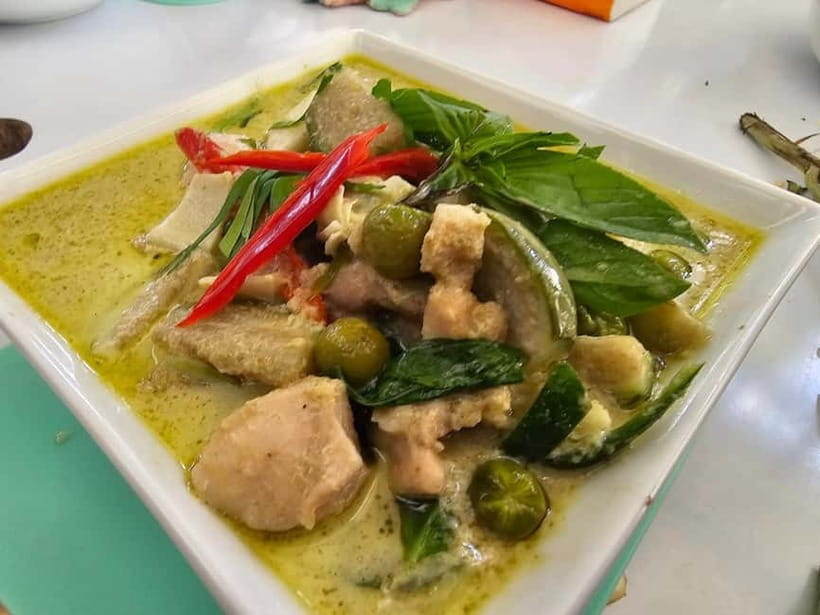
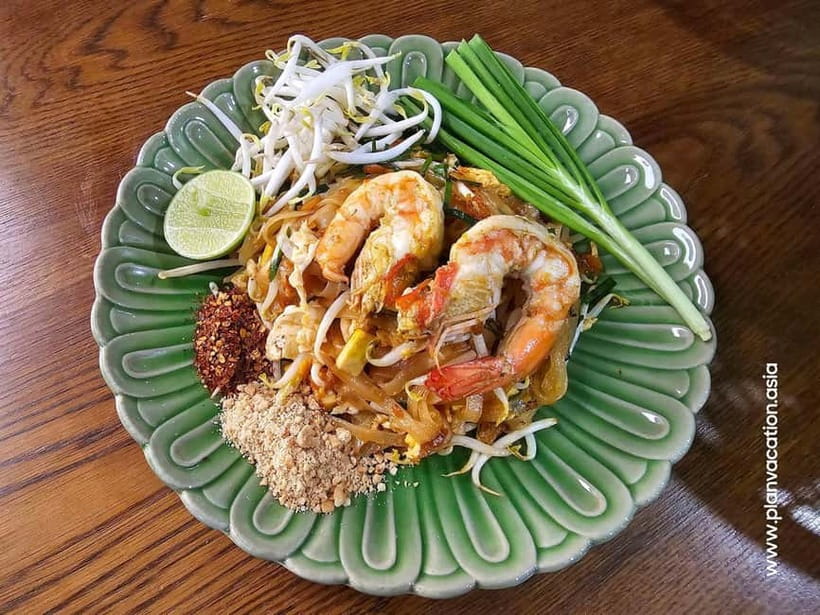
The menu covers familiar Thai favorites and a few dishes you may not know. Tom yum, tom kha gai, green curry, Panang curry, holy basil chicken, som tum, and Thai fried noodles are useful choices if you want to understand dishes commonly seen on restaurant menus.
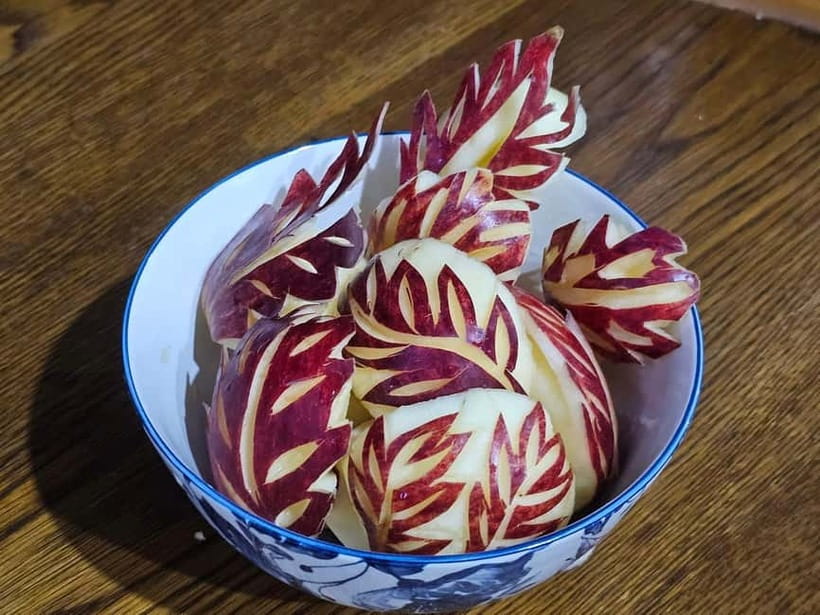
The desserts are a welcome feature. Thai cooking classes sometimes focus only on curries and stir-fries, but this one includes Khanom Tom, pandan cake, coconut milk desserts, banana cake, mung-bean crepes, bananas in coconut milk, and pumpkin in coconut milk. These recipes show how coconut, rice, beans, fruit, and pandan flavor are used beyond savory cooking.
You should also expect plenty of food. A class can include several dishes, and one participant found the long afternoon tiring but left more than full. That makes the $46 price look fair when you consider the market visit, local transport, instruction, ingredients, drinking water, and the meal you cook.
Still, value depends on your appetite and interest. If you only want to learn one or two recipes, five hours and multiple dishes may feel excessive. If you want dinner plus a broad introduction to Thai ingredients, the same length is a benefit.
A personal class led by Sunee or Ann
The human side is one of the strongest reasons to choose this activity. Sunee has been described as friendly, patient, and able to answer questions in detail. Ann has also guided a private lesson, explaining not only how to cook but where to find ingredients and when to shop.
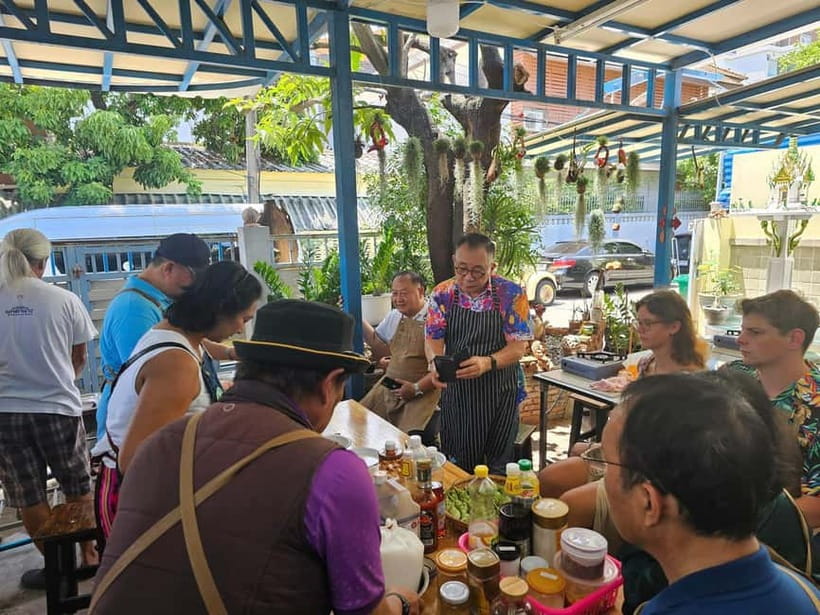
Group size is not clearly fixed, but a class can become very small when bookings are light. One afternoon had only two participants, making it feel like a private lesson. That is good news if you value direct instruction and want time to ask questions.
The intimate format can also mean the pace changes. You may spend longer on explanations, market shopping, or conversation than you would in a large class. That personal rhythm is part of the appeal, but it is another reason to allow the entire afternoon.
The hosts may also share small personal touches. Sunee’s family gave handmade gifts from the garden at the end of one class. That is not a guaranteed part of the program, but it reflects the home-centered character of the experience.
Practical details for a smooth afternoon
The meeting point is Huai Kwang MRT Exit 4, and the return is to the MRT area, with the stated end point near Exit 1. Confirm the exact exit with the operator when booking, since the start and finish references differ slightly.
Hotel pickup and drop-off are not included. You need to reach the MRT station yourself, but the activity includes transfer between the meeting point and cooking school. Hotel transport would add convenience, but the central meeting point keeps the price at $46 per person.
Free cancellation is available up to 24 hours before the start for a full refund. You can also reserve and pay later, which helps if your Bangkok schedule is still shifting. Assistance dogs are allowed, but ordinary pets are not. Feeding animals and making excessive noise are not permitted.
The activity is listed as wheelchair accessible, though the route includes a market walk, local transport, and a cooking setting. If you use a wheelchair, confirm the exact access arrangements in advance, particularly for the vehicle and kitchen.
Who should book this Thai cooking class?
I would choose this for you if you want food tied to ordinary Bangkok life, not only a chef’s demonstration. It suits curious cooks, couples, small groups, families with older children, and anyone who prefers meeting a local host over attending a large commercial class.
It is also a good choice if you want several recipes in one afternoon. The daily rotation lets you choose a date based on the foods you most want to learn, although you should confirm the exact menu before booking.
I would hesitate if you dislike markets, outdoor kitchens, local transport, or long hands-on sessions. The afternoon can be warm and tiring, and the menu may contain more meat than you want unless you arrange a vegetarian or vegan version ahead of time.
Should you book the Uncle and Aunty Cooking House class?
At $46, this is a strong value for a five-hour Bangkok experience that includes a real market visit, shrine stop, transport, ingredients, instruction, drinking water, and the meal you prepare. Its greatest strength is the connection between shopping and cooking, followed by the personal attention from hosts such as Sunee and Ann.
Book it if you want a warm, informal class with cultural context and plenty of food. Choose your day carefully, notify the host about dietary needs, and keep the whole afternoon free. If you want a short, polished demonstration, pick another format. If you want to understand how Thai ingredients move from market stall to family kitchen, this class gives you a useful and very tasty lesson.
FAQ
Where does the activity begin?
Meet your guide at Huai Kwang MRT Exit 4 at 2:00 pm.
Where does the activity end?
The activity returns to the Huai Kwang MRT meeting area, with the stated return point near Exit 1, at about 7:00 pm.
How long does the cooking experience last?
The full activity lasts about five hours, including the shrine, market visit, local transfer, cooking, dining, and return to the MRT area.
Is hotel pickup included?
No. Hotel pickup and drop-off are not included. You must reach Huai Kwang MRT Exit 4 yourself.
What is included in the price?
The price includes transfers from and to the MRT meeting area, cooking ingredients, drinking water, the dinner you prepare, and travel insurance.
Can I request vegetarian or vegan food?
Yes. Vegetarian and vegan options are available, but you must inform the operator in advance.
Which languages are available?
The host or greeter can provide the activity in English or German.
Can I cancel for a full refund?
Yes. You can cancel up to 24 hours before the activity for a full refund. Reserve-now, pay-later booking is also available.
New cooking classes around Bangkok
- Sathon: Hands-on Thai Cooking Class & Market Tour in Bangkok★ 5.0 · 19 reviews
- Sukhumvit: Hands-on Thai Cooking Class & Market Tour in BKK★ 4.9 · 255 reviews
- Bangkok: Thai Cooking Class and Onnuch Market Tour★ 4.7 · 72 reviews
- Bangkok: Thai Cooking Class With 4 Dishes & Thai Drink★ 5.0 · 17 reviews
- Bangkok: Tiniest Thai Food Hands-On Cooking Experience★ 4.3 · 2 reviews
- Bangkok: Half-Day Thai Cooking Class in Bangrak District★ 4.9 · 96 reviews
- Bangkok: Hands-on Thai Cooking Class & Market Tour in Sathon★ 5.0 · 16 reviews
- Bangkok: Cooking Class with Market Visit & Tuk Tuk Ride★ 4.8 · 27 reviews
Bangkok Cooking Classes, side by side.
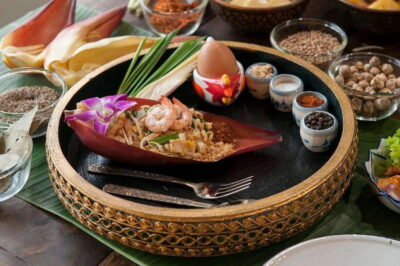
Bangkok: Hands-on Thai Cooking Class and Market Tour
Read our review →
Bangkok: Tingly Thai Cooking School Half-Day Cooking Class
Read our review →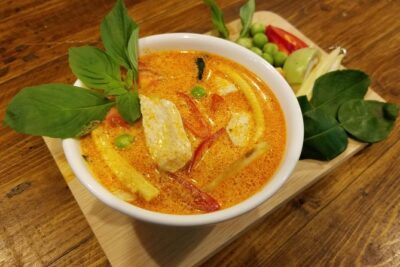
Tingly Thai Cooking Class with Morning Market Tour
Read our review →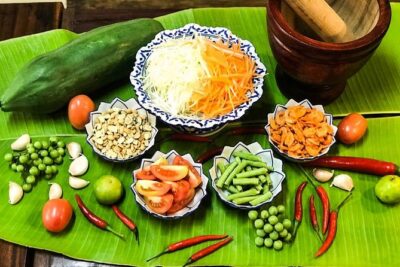
Pink Chili – Thai Cooking Class and Market Tour in Bangkok
Read our review →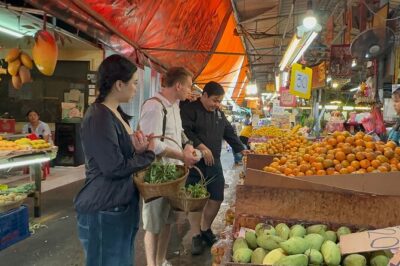
Authentic Thai Cooking with the Largest market visit &TukTuk ride
Read our review →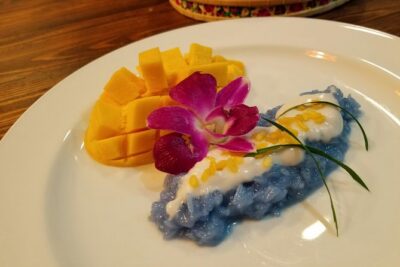
Bangkok: White Lotus Thai Cooking Class with Market Tour
Read our review →This kitchen also appears in