Review · HANOI
5 Traditional Dishes Hanoi Cooking Class with Market Trip
Hanoi’s best cooking lesson begins before you reach the stove. You meet your English-speaking chef in the Old Quarter, walk through the city’s largest market, and help choose the produce, herbs, and spices that will become five traditional Vietnamese dishes. I like that the market visit gives the food some context, rather than treating recipes as a list of steps.
I also like the small groups of up to 10 and the hands-on format. Guides including Perla, Vy, Emmy, Lynn, Coco, and Sunny have been praised for clear English, humor, patience, and good adjustments for allergies. The one drawback is pace: several dishes are prepared at once, and some work, such as cooking the barbecue pork, may be handled for you.
Key points to know before booking
- Five dishes in one class: Prepare pho bo, bun cha, fried spring rolls, papaya salad, and egg coffee or chocolate.
- Market shopping comes first: Walk with your chef through Hanoi’s largest market and learn how ingredients fit into Vietnamese cooking.
- Small-group teaching: The class accepts a maximum of 10 people, with many sessions running around six participants.
- Useful take-home material: You receive a cookbook and certificate, so the class can continue in your own kitchen.
- Dietary adjustments are possible: Vegetarian and non-red-meat versions are available, and guides have accommodated allergies.
- Plan for a brisk three hours: The stated duration is about 3 hours 15 minutes, with several recipes moving through the kitchen together.
Why this Hanoi class works well for food lovers
This is not just a demonstration with a plate placed in front of you. You shop for ingredients, take part in preparation, cook with a partner or small group, and sit down to eat what you made. That sequence gives you a better sense of how Vietnamese meals are assembled.
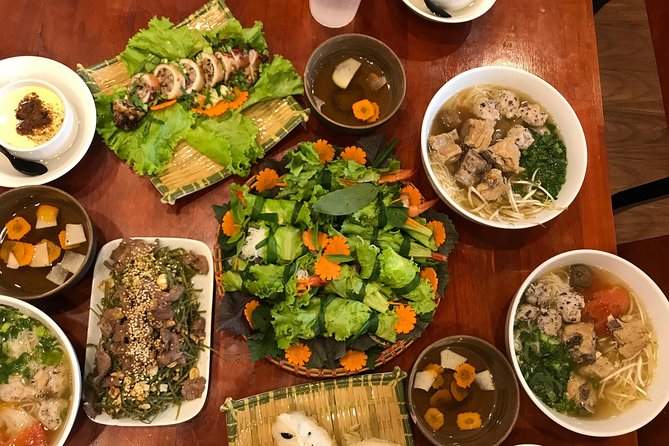
The menu also covers several sides of Hanoi cooking. Pho bo introduces broth, noodles, herbs, and beef. Bun cha brings together grilled pork, noodles, dipping sauce, and fresh greens. Nem ran, the Vietnamese fried spring roll, adds crisp texture, while papaya salad brings a fresh and sharp counterpoint.
Dessert arrives in the form of egg coffee or chocolate. Egg coffee is one of Hanoi’s signature treats, with a sweet, creamy topping over coffee. If coffee is not your thing, the chocolate option gives the class a second route to the final course.
At the end, you eat the food together and receive complimentary Vietnamese rice vodka. Coffee or tea is included as well. The meal is substantial, so arrive hungry rather than treating this as a small snack between sightseeing stops.
More Cooking Classes with a Market Tour in Hanoi
- Hanoi Cooking Class: Culture, Local Market & Meaning CSR Impact
★ 5.0 · 5,147 reviews - Vietnamese Food Cooking Class in Hanoi with Market Experience
★ 5.0 · 778 reviews - Hanoi: 5 Local Dishes Cooking Class with Meal & Market Visit
★ 5.0 · 420 reviews
Meeting your chef in Hanoi’s Old Quarter
The meeting point is 8 P. Gia Ngư, Hàng Bạc, in Hoàn Kiếm. This puts you in the Old Quarter, a practical base for a food-focused morning or afternoon. You should allow time to find the exact address, since Old Quarter streets can be crowded and confusing, especially if you are relying on a phone map.
The class ends back at the same meeting point. There is no hotel pickup or drop-off, so getting to and from the class is your responsibility. That is a minor inconvenience for most visitors staying in or near the Old Quarter, but it matters if your hotel is farther away or you have a tight transfer schedule.
Your teacher may be Perla, Vy, Emmy, Lynn, Coco, Sunny, Bella, Kim, Winnie, or another member of the Apron Up Cooking Class team. The specific guide is not guaranteed, but the teaching style is clear from the format: English instruction, group participation, and direct help at each stage.
The best guides do more than read a recipe. Perla has been praised for explaining each step and making dietary adjustments. Vy is known for keeping the class lively while making sure people understand the method. Emmy has been singled out for friendliness and allergy awareness, while Sunny has been described as passionate and inclusive with children.
Shopping for herbs and spices at Hanoi’s largest market
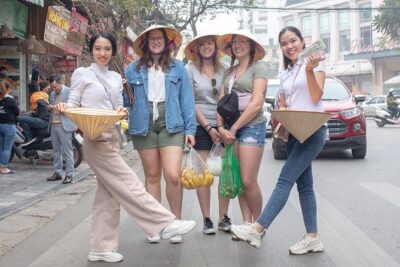
The market visit is one of the most useful parts of the experience. You walk with the chef and help select the ingredients for the recipes. This turns an ordinary shopping trip into a lesson in Vietnamese food, with attention to produce, spices, and the ingredients that give each dish its character.
You are not simply shown a row of prepared ingredients. The purpose is to understand what goes into the food before you start cooking. Your guide explains the items on offer and helps the group choose what is needed for the dishes.
For a first visit to Vietnam, this is valuable because many herbs and vegetables can look unfamiliar. The market also gives you a quick look at how local cooking begins, with fresh ingredients selected for the meal rather than measured from a shelf.
Keep your expectations realistic. The market section is part of a tightly timed class, not a separate market tour. You will not spend hours wandering every aisle. Instead, it is a focused introduction that leads directly into the cooking session.
One past participant raised a concern about hygiene. That is worth keeping in mind if you are sensitive to market conditions or commercial cooking spaces. The class is built around local food practices, so it may feel less polished than a hotel kitchen. For many people, that is part of the point, but you should choose accordingly.
Cooking pho bo, bun cha, and spring rolls
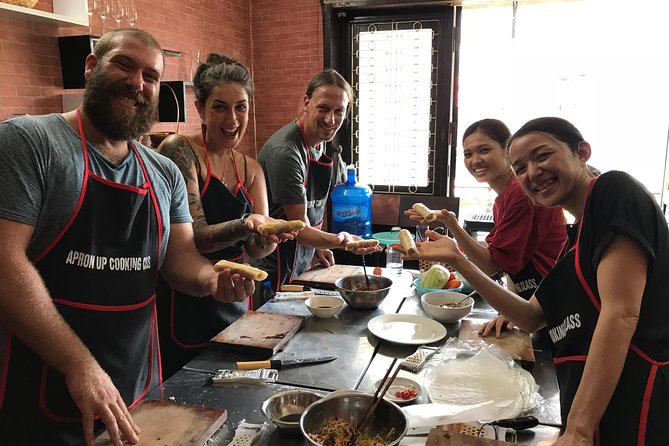
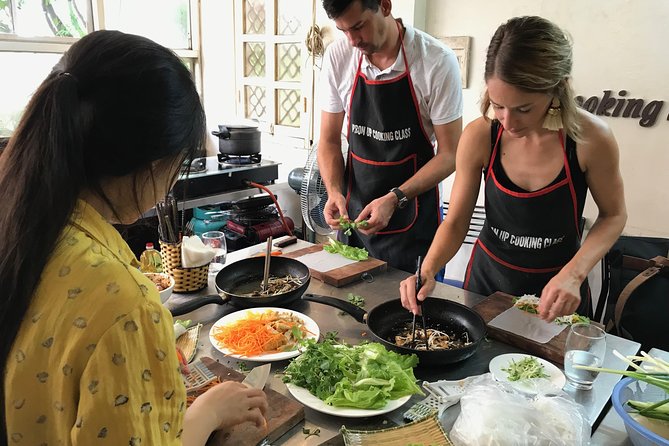
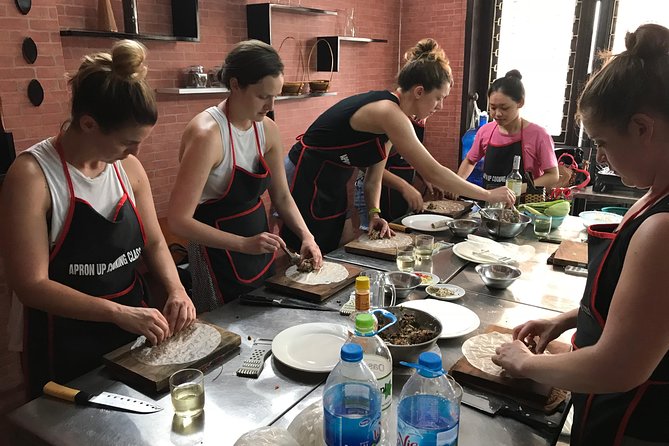
Once you return to the cooking facility, the group begins preparing the meal. The cooking is designed for participation, but it is also carefully organized because five dishes must come together in a limited time.
You may work with a partner, especially during tasks that require shared preparation. One person can chop or mix while the other handles another stage, then you switch roles. Solo participants can still take part, but the format is particularly comfortable for couples, families, and small groups.
Pho bo is the most familiar dish on the menu for many people, yet it remains a useful lesson. You learn how the broth, noodles, beef, herbs, and seasoning fit together. The class is not simply about copying a bowl of pho. It shows you the basic balance behind one of Vietnam’s most famous meals.
Bun cha is especially tied to Hanoi. The dish combines barbecued pork, rice noodles, herbs, and dipping sauce. It tastes different from pho and gives you a second look at the city’s food traditions. Some of the pork cooking may be done by the kitchen staff, so do not expect to handle every step from raw ingredient to finished plate.
Nem ran, or fried spring rolls, is a more tactile job. You prepare the filling, wrap the rolls, and cook them until crisp. The class gives you a chance to see how a simple wrapper becomes part of a larger meal, rather than treating spring rolls as a pre-made side dish.
Papaya salad adds freshness and contrast. It helps keep the meal from becoming too heavy, especially alongside fried rolls and pork. The menu is well planned in that respect, with soups, noodles, grilled meat, fried food, vegetables, and a sweet finish.
More Cooking Classes with a Market Tour in Vietnam
- Hanoi Cooking Class and Market Tour in Ancient House
★ 5.0 · 379 reviews - Rose Kitchen Hanoi: Market, Cooking & Culture Tour + Free PickUp
★ 5.0 · 342 reviews - Hanoi: Cooking Class in a Local Villa with Market Tour
★ 4.9 · 320 reviews - Hanoi Maya Kitchen: Traditional Cooking Class & Market Tour
★ 5.0 · 287 reviews
A fast class with plenty of food
The schedule is efficient. With five recipes underway, you may see several tasks happening at the same time. That keeps the class moving, but it can make the instruction feel less step-by-step than a single-dish workshop.
I would approach it as a lively group kitchen, not a private lesson. Your teacher demonstrates, assigns tasks, checks progress, and steps in when needed. Some prep and cooking are handled by staff, which allows the class to finish on time and keeps the results consistent.
That arrangement has a clear advantage: you get to taste a full Vietnamese meal in roughly one session. The trade-off is that you may not master every technique in detail. If your main goal is to become an expert at making pho broth from scratch, a more specialized class would offer deeper instruction.
The food portions are generous enough that you should not plan a large meal immediately afterward. You eat your own preparations together, which is part of the social appeal. The group meal also gives you time to compare results, ask final questions, and enjoy the dishes without rushing through each plate.
Egg coffee, rice vodka, and the final meal
The last course is egg coffee or chocolate. Egg coffee is the more distinctive choice if you want a taste associated with Hanoi. Its sweet, creamy texture makes a strong ending after the savory dishes.
Coffee or tea is included, as is Vietnamese rice vodka. The rice vodka is served as a small cultural touch rather than the central purpose of the class. If you do not drink alcohol, you can still take part in the meal without treating it as an essential feature.
The shared meal is where the class pays off. You have watched the ingredients arrive from the market, handled the preparation, and seen several dishes come together. Eating at the same table gives the experience a relaxed finish that a standard food demonstration often lacks.
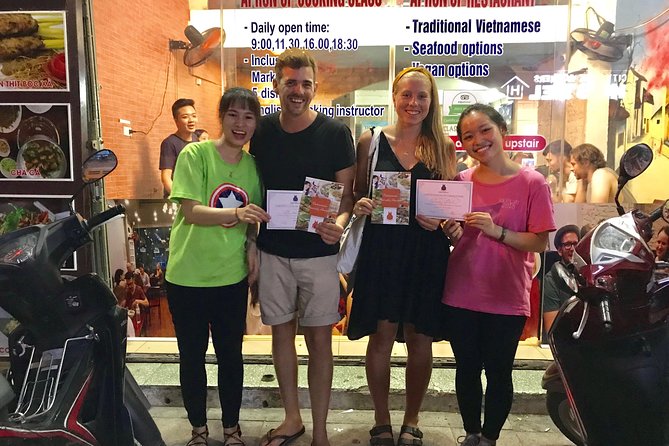
You also receive a cookbook and certificate. The cookbook is the more useful of the two, since it gives you a chance to recreate dishes such as pho, spring rolls, and egg coffee at home. Recipe notes are especially helpful after a fast class, when you may remember the flavors but not every measurement.
How much value do you get for $35.07?
At $35.07 per person, the price is reasonable for a 3-hour-15-minute activity that includes market shopping, instruction, a full meal, coffee or tea, rice vodka, a cookbook, and a certificate. You are paying for several experiences in one: a guided market visit, a cooking lesson, and lunch or dinner.
The value is strongest if you plan to eat the class meal as one of your main meals in Hanoi. It is also good value for couples and families who want an activity that is more active than a food tour and less formal than a private culinary school.
The price is less compelling if you want highly technical instruction or a private chef-led lesson. The class format is shared, and the teacher must divide attention among several people. Still, the maximum of 10 keeps the group small enough for individual help, and many sessions have had around six participants.
Since the class ends where it begins, you do not pay extra for transport, but you also do not receive hotel transfers. Include your own taxi, ride-hailing fare, or walking time when comparing the total cost with classes that collect you from your accommodation.
Dietary needs, families, and practical limits
Vegetarians and people who do not eat red meat can learn modified versions of the recipes. The class has also made adjustments for allergies, including for children. You should still state your needs clearly at booking and again when you meet the chef, since not every substitution is listed in detail.
Families can benefit from the format because children can take part in simple preparation and share the finished meal. Coco has been praised for involving younger participants, while Sunny has been described as inclusive with a child who had an allergy.
The class is also a good match for solo visitors who enjoy meeting people over food. The partner-based setup may feel slightly less natural when you arrive alone, but the small group gives you a chance to work with others rather than cook in isolation.
You should be comfortable with basic market conditions and an active kitchen. One participant wished for more detailed guidance, while another felt that too much was done by the staff. Those comments point to the same practical truth: the class is participatory, but it is not a fully independent cooking exam.
Booking advice and cancellation timing
The activity accepts mobile tickets, and confirmation is provided when you book. The stated duration is approximate, so allow a little extra breathing room around the start and end, especially if you have another timed booking afterward.
Free cancellation is available if you cancel at least 24 hours before the local start time. Cancellations or changes within 24 hours are not refunded, so avoid placing this class next to a flight, train, or uncertain day trip unless your plans are firm.
I would book early if you want a particular day or time, especially during a busy visit to Hanoi. The small-group cap is useful for teaching, but it also means spaces can fill.
Should you book the Apron Up Cooking Class?
I would recommend this class if you want a friendly introduction to Hanoi food with real participation. The market stop, five-dish menu, shared meal, recipe book, and small group give you more substance than a short cooking demonstration.
Book it if you like pho, bun cha, spring rolls, and egg coffee, or if you want a social activity that works for couples, families, and solo visitors. It is also a sensible choice for vegetarians and people avoiding red meat, provided you explain your needs in advance.
Skip it if you want a quiet private lesson, detailed mastery of one recipe, or a polished restaurant kitchen. The pace is brisk, some cooking is done for you, and the market setting may not suit everyone.
For most first-time visitors to Hanoi, the balance is right. You get a practical look at local ingredients, a full meal you helped create, and recipes you can use after Vietnam. At $35.07, that is a useful and tasty way to spend three hours in the Old Quarter.
FAQ
Where does the Hanoi cooking class start?
The class starts at 8 P. Gia Ngư, Hàng Bạc, Hoàn Kiếm, Hanoi, in the Old Quarter.
Where does the activity end?
The activity ends back at the same meeting point.
How long does the cooking class last?
The approximate duration is 3 hours 15 minutes.
How many people can join the class?
The maximum group size is 10 participants.
Which dishes will I learn to cook?
The menu includes pho bo, bun cha, fried spring rolls, papaya salad, and egg coffee or chocolate.
Are vegetarian options available?
Yes. Vegetarian versions are available, along with options for people who do not eat red meat.
Is hotel pickup included?
No. Hotel pickup and drop-off are not included.
What happens if I need to cancel?
You can receive a full refund if you cancel at least 24 hours before the local start time. Cancellations or changes made within 24 hours are not refunded.
New cooking classes around Hanoi
- Hanoi: Vegan Vietnamese Cooking Class in a Local Villa★ 5.0 · 42 reviews
- Hanoi: Vietnamese Cooking Class- Market Tour with Local Chef★ 5.0 · 2 reviews
- Hanoi Vegan Cooking Class: A Vietnamese Culinary Adventure★ 4.8 · 5 reviews
- Hanoi: Maya Traditional Cooking Class & Market Tour★ 4.9 · 243 reviews
- Hanoi’s Culinary: Authentic Cooking Class and Local Market★ 4.8 · 5 reviews
- Hanoi Food Adventure: Vietnamese Market Tour & Cooking Class★ 4.8 · 5 reviews
- Hanoi: Village Farm Tour and Cooking Class with Lunch★ 5.0 · 7 reviews
- Hanoi: Old Quarter Market Tour and Cooking Class with Meal★ 4.8 · 192 reviews
Hanoi Cooking Classes, side by side.
Hanoi Cooking Class: Culture, Local Market & Meaning CSR Impact
Read our review →
Vietnamese Food Cooking Class in Hanoi with Market Experience
Read our review →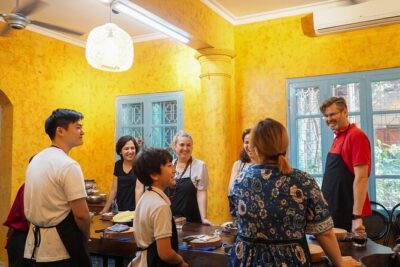
Hanoi: Handcrafted Wood Carving Workshop with Local Artisan
Read our review →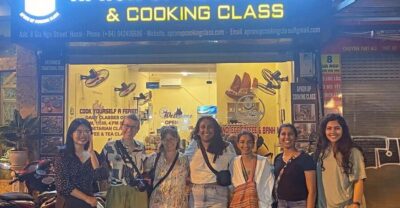
Hanoi: 5 Local Dishes Cooking Class with Meal & Market Visit
Read our review →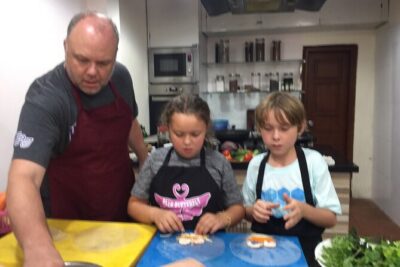
Hanoi Cooking Class and Market Tour in Ancient House
Read our review →
Rose Kitchen Hanoi: Market, Cooking & Culture Tour + Free PickUp
Read our review →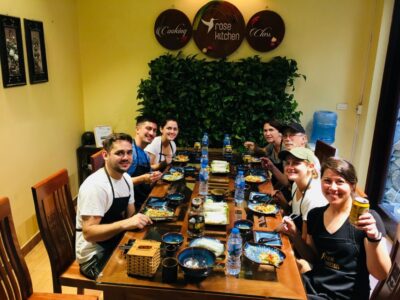
Hanoi: Cooking Class in a Local Villa with Market Tour
Read our review →