Review · HANOI
Hanoi: 5 Local Dishes Cooking Class with Meal & Market Visit
The best part of this Hanoi experience comes before the cooking: you visit a local wet market with your chef, see how fresh ingredients are chosen, then use those ingredients to prepare five Vietnamese dishes. You finish by eating the meal you helped make, with fruit, tea, rice whisky, and a cookbook to take home.
I like the hands-on format, since you do more than watch a demonstration. I also like the choice of two menus, which lets you focus on dishes such as pho, bun cha, banh xeo, spring rolls, papaya salad, or egg coffee. The main drawback is the pace: five dishes in three and a half hours keeps the class moving, and the market and cooking area are not suitable for wheelchair users or people with mobility impairments.
Key points at a glance
- A market visit comes first: Learn how your chef selects fresh ingredients before cooking begins.
- Five dishes in one class: Choose from two menus, or take both classes if you want the full selection.
- Real participation: Prepare ingredients, follow recipes, and cook rather than simply watching.
- Vegetarian options: The set menus can be adapted, so you can take part in the full meal without meat.
- A useful souvenir: You receive a certificate and cookbook for making the recipes at home.
- Friendly, flexible teaching: Guides including Winnie, Vy, Bella, Ruby, Kim, Perla, and Ashley are praised for clear instructions and patience.
Starting at Apron Up in Hanoi’s Old Quarter
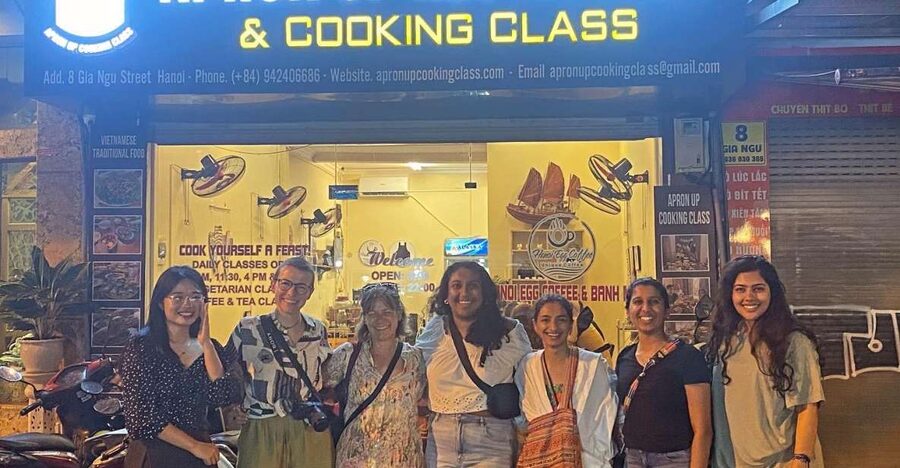
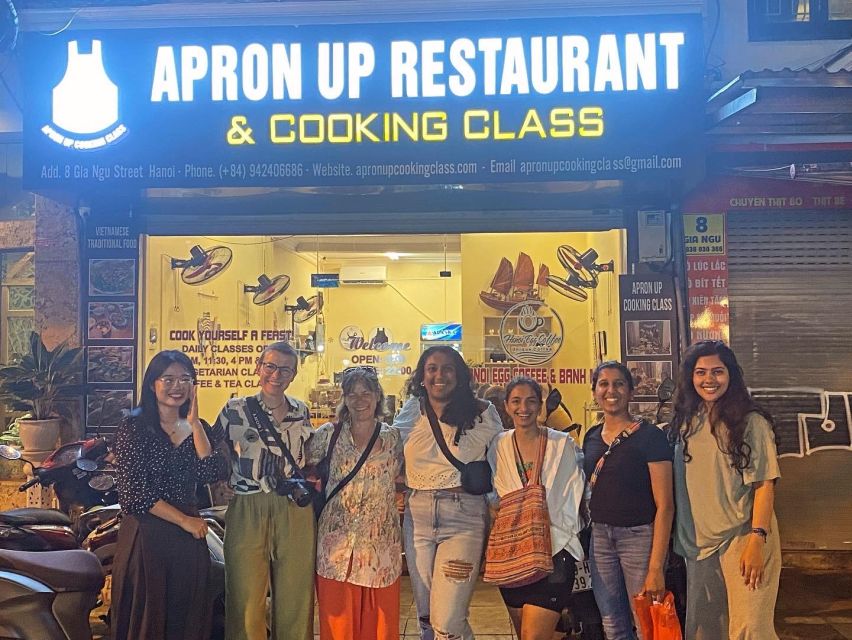
You meet your English-speaking instructor at Apron Up Cooking Class. Look for the large Apron Up sign in front of the venue. The activity begins and ends at this same meeting point, and transportation is not included, so plan your own way there.
The class lasts about three and a half hours. That is long enough to include the market, preparation, cooking, and a full meal, but not so long that the day gets swallowed by one activity. Check the available starting times when you book, since the experience can be arranged for lunch or dinner.
The teaching team includes guides such as Winnie, Vy, Bella, Ruby, Kim, Perla, and Ashley. The strongest part of their role is not simply explaining recipes. They keep everyone involved, adjust to different cooking skills, and offer small tips that make the dishes easier to repeat at home.
If you are new to cooking, you should be comfortable here. Ruby is praised for repeating instructions when needed, while Vy is noted for helping people with different levels of experience. If English is not your first language, pay close attention during demonstrations. One person found Bella occasionally difficult to understand, though the overall class remained enjoyable.
More Cooking Classes with a Market Tour in Hanoi
- Hanoi Cooking Class: Culture, Local Market & Meaning CSR Impact
★ 5.0 · 5,147 reviews - 5 Traditional Dishes Hanoi Cooking Class with Market Trip
★ 5.0 · 4,890 reviews - Vietnamese Food Cooking Class in Hanoi with Market Experience
★ 5.0 · 778 reviews
Shopping for ingredients at a Hanoi wet market
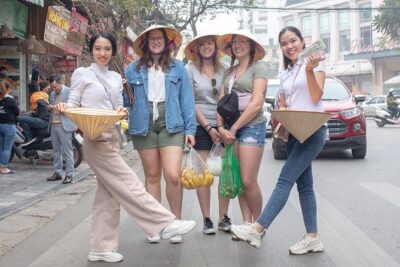
The market visit gives the class a useful local frame. Instead of arriving at a polished kitchen with ingredients already measured, you see the first decisions behind a Vietnamese meal. Your chef selects and buys the produce and other ingredients needed for the menu.
This is a practical lesson in freshness. Winnie, for example, explains how to judge ingredients at the market, while Vy introduces the food and explains what you will use later. You also learn the Vietnamese names for some of the ingredients, a small detail that makes shopping and ordering food more approachable during the rest of your stay.
The market is not treated as a separate sightseeing stop. It is part of the cooking lesson, so the visit is brief and focused. That is good if you want useful context rather than a long market tour. It also means you should not book this activity expecting a full guided exploration of Hanoi’s food markets.
The market may be less comfortable for anyone with limited mobility. The activity is specifically not suitable for wheelchair users or people with mobility impairments, and it is not recommended for children under four. People over 95 are also listed as unsuitable for the activity.
Choosing between two five-dish menus
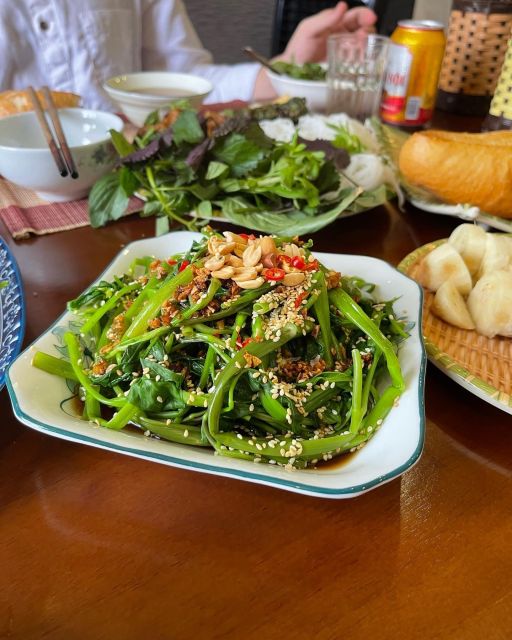
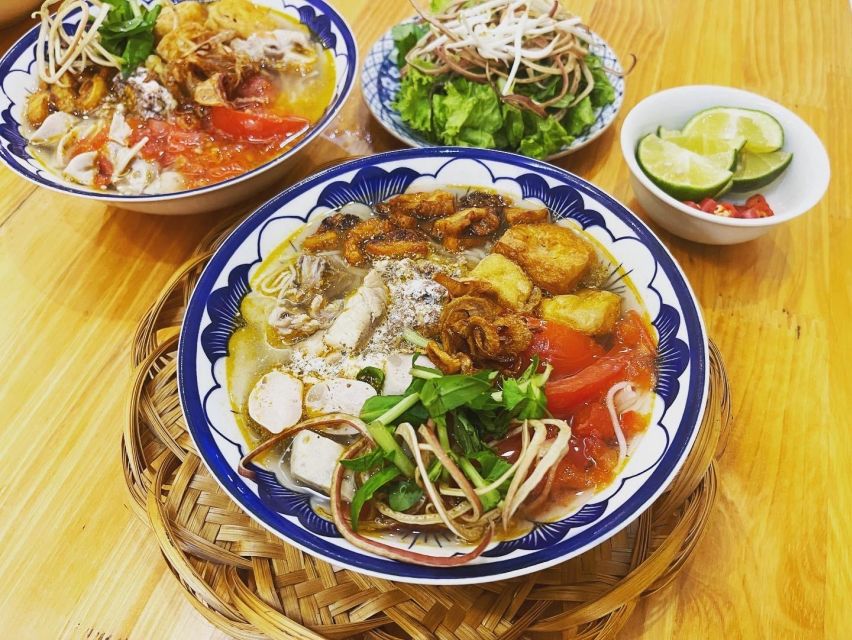
You choose from two set menus. The first includes banh xeo pancakes, bun cha, pork rib noodle soup, beef fresh rolls, chicken salad, and banana ice cream. Since the class makes five dishes, the exact selection is organized as a five-dish cooking session rather than an attempt to prepare every item listed.
The second menu features pho, bun cha, fried spring rolls, papaya salad, and egg coffee. This menu gives you a strong introduction to several Hanoi favorites, with a balance of soup, grilled meat and noodles, fried food, fresh salad, and a sweet coffee drink.
The menu choice matters. If pho is high on your Hanoi food list, choose the second set. If you want to try banh xeo, banana ice cream, or the pork rib noodle soup, choose the first. Bun cha appears in both options, making it a good anchor dish if grilled pork and noodles are a priority.
You can also take two classes to learn both menus. That is a bigger time commitment, but it makes sense for a serious food lover or for someone staying in Hanoi long enough to build several cooking sessions around the city.
Vegetarian adaptations are available. This is one of the class’s practical strengths because you are not simply given a separate plate at the end. Vegetarian participants can take part in the menu and enjoy versions of the dishes made for their diet. Tell the provider about your needs when booking so the class can be prepared.
Cooking five Vietnamese dishes by hand
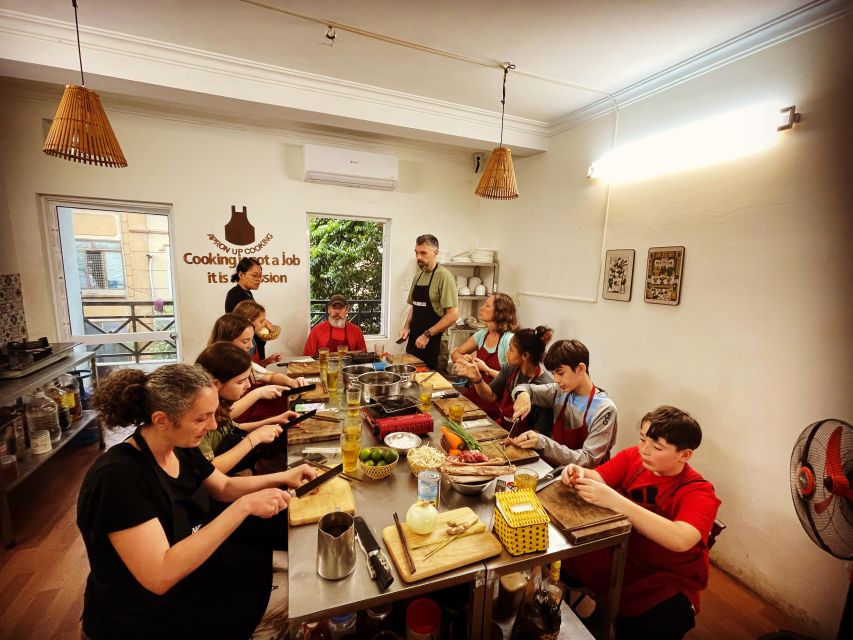
The class follows a step-by-step format. Your instructor demonstrates the work, then guides you through your own preparation. You roll up your sleeves, handle the ingredients, and help create each dish rather than sitting at the side of the room.
The pace is organized. Everyone has a job, and the dishes are prepared in a way that keeps the class moving toward the final meal. That structure matters when five dishes are involved. You should expect an active session with limited idle time, not a slow, one-recipe lesson.
The food also gives you a useful look at the balance of Vietnamese cooking. Fresh rolls and salads bring crisp ingredients and herbs into the meal. Bun cha combines grilled pork with noodles. Pho and pork rib noodle soup show how broth-based dishes are built. Banh xeo brings a crisp pancake element, while egg coffee and banana ice cream provide a sweet finish.
The focus is on useful home cooking tips. Your instructors explain how to prepare each dish and point out techniques you can use again. Vy is especially praised for sharing tips that help people recreate favorite Vietnamese dishes at home. Kim receives similar praise for patient, step-by-step teaching.
The setup works well for mixed groups. Some people arrive with plenty of cooking experience, while others are just starting out. Clear demonstrations let beginners keep up, and more confident cooks still have enough tasks to stay involved.
More Cooking Classes with a Market Tour in Vietnam
- Hanoi Cooking Class and Market Tour in Ancient House
★ 5.0 · 379 reviews - Rose Kitchen Hanoi: Market, Cooking & Culture Tour + Free PickUp
★ 5.0 · 342 reviews - Hanoi: Cooking Class in a Local Villa with Market Tour
★ 4.9 · 320 reviews - Hanoi Maya Kitchen: Traditional Cooking Class & Market Tour
★ 5.0 · 287 reviews
Sitting down to eat what you made
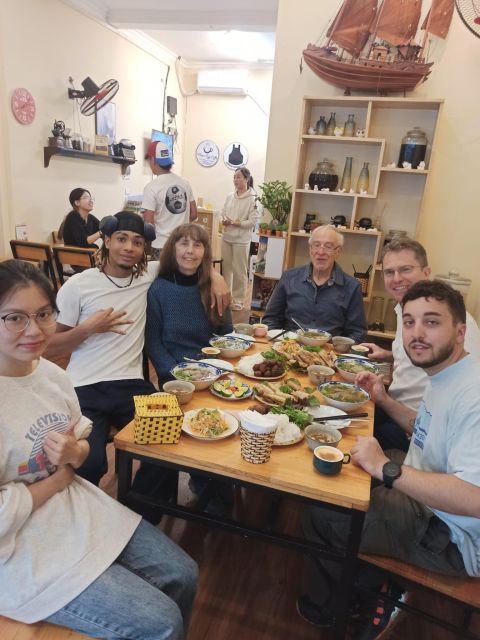
After the cooking, everyone sits down for lunch or dinner. This is more satisfying than eating a standard restaurant meal because you recognize the work behind each dish. You have handled the ingredients, followed the instructions, and seen the food come together.
The shared meal also gives the class a social finish. You eat with the people who cooked beside you, which can make this a good choice for solo visitors who want an easy way to meet others. The group format is part of the appeal, though on quieter days you might find yourself in a very small group or even having a near-private lesson.
Several participants have had one-on-one or small-group sessions when no one else booked their time. That can be excellent if you want close attention and the chance to work at your own pace. It can be less useful if you specifically want a lively group meal, so group size is best treated as variable.
Tea, seasonal fruit, and homemade rice whisky are included. The whisky is a tasting, not the main point of the activity. If you do not drink alcohol, you can still take part in the cooking and meal, but you should not expect a large drinks program.
The food receives the strongest praise. Dishes made under the instructors’ direction are described as delicious, and pho and spring rolls are particular favorites. Keep in mind that results depend partly on your own participation. The chef guides you closely, but this is still a cooking lesson, not a restaurant where every plate is prepared entirely for you.
A cookbook and certificate worth keeping
At the end, you receive a cookbook and a certificate confirming that you completed the class. The cookbook is the more useful of the two. It gives you a practical reminder of the recipes and helps turn a pleasant afternoon into something you can repeat at home.
The certificate is a simple souvenir, but it can be fun for families, couples, or anyone collecting small reminders of a trip. Perla’s class was particularly popular with a 13-year-old participant, who learned both cooking techniques and Vietnamese words for the ingredients.
The cookbook also helps solve a common problem with cooking classes: remembering what happened after you leave. Five dishes involve a lot of steps, and the recipe book gives you a better chance of making sense of them once you are back in your own kitchen.
Is $40 good value?
At $40 per person, the price covers the market visit, ingredients, cooking tools, five dishes, the meal, tea, rice whisky, fruit, an English-speaking instructor, the cookbook, and the certificate. That is solid value if you want both a meal and an activity rather than just a restaurant reservation.
The value is strongest for people who plan to cook Vietnamese food again. You are paying for guidance, ingredients, and a prepared meal, but also for the market lesson and the techniques you take home. If you only want to sample Hanoi dishes, spending $40 on a class may be more than you need.
The class also saves you from arranging several separate food experiences. In one session, you get a market visit, cooking instruction, five local dishes, and a shared meal. The tradeoff is that the experience is structured and efficient, not a relaxed afternoon with long breaks.
Free cancellation is available up to 24 hours before the activity for a full refund. You can also reserve now and pay later, which helps if your Hanoi schedule is still shifting.
Who will enjoy this cooking class most?
I would recommend this to first-time visitors who want a practical introduction to Hanoi food. It gives you useful dishes, market context, and a meal in one compact session.
It is also a good fit for couples, families with older children, and solo visitors who like meeting people through an activity. The class is suitable for vegetarians with menu adjustments, and the instructors are used to teaching people with different cooking skills.
You should choose another activity if you need step-free access, use a wheelchair, have a mobility impairment, or want a slow market tour. Children under four cannot join, and the experience may be tiring for anyone who finds several hours of standing and cooking difficult.
If your main goal is to master one dish in great depth, this may feel too broad. Five dishes offer variety, but they leave less time for long technical practice on a single recipe.
Should you book the Apron Up cooking class?
Book it if you want to understand Hanoi food by making it yourself. The combination of a market visit, five dishes, patient instruction, and a shared meal offers more value than a simple cooking demonstration.
Choose the menu carefully. Pick the pho and egg coffee menu for a broad taste of familiar Hanoi favorites, or the menu with banh xeo and banana ice cream for a different mix. If you have the time and want the complete recipe set, take both classes.
The strongest reason to book is the teaching. Winnie, Vy, Bella, Ruby, Kim, Perla, and Ashley are repeatedly praised for friendly guidance, clear demonstrations, and patience. You leave with more than a full stomach: you have recipes, cooking practice, and enough useful advice to try Vietnamese dishes again at home.
FAQ
Where does the cooking class begin?
Meet at Apron Up Cooking Class in Hanoi’s Old Quarter. Look for the large Apron Up sign in front of the venue.
Where does the activity end?
The class ends back at the meeting point at Apron Up Cooking Class.
How long does the experience last?
The activity lasts three and a half hours. Starting times vary, so check availability when booking.
What is included in the price?
The price includes an English-speaking instructor, the market trip, all ingredients and cooking tools, hands-on preparation of five dishes, lunch or dinner, tea, rice whisky, fruit, a cookbook, and a certificate.
Is transportation included?
No. Transportation to and from the meeting point is not included.
Can vegetarians join?
Yes. The set menus can be adapted for vegetarian diets.
What dishes can I learn to make?
Depending on the menu, dishes include banh xeo pancakes, bun cha, pork rib noodle soup, beef fresh rolls, chicken salad, banana ice cream, pho, fried spring rolls, papaya salad, and egg coffee. The class teaches five dishes.
Is the class suitable for young children?
Children under four are not permitted to join the activity.
Can I cancel my booking?
Yes. You can cancel up to 24 hours in advance for a full refund. You can also reserve now and pay later.
New cooking classes around Hanoi
- Hanoi: Vegan Vietnamese Cooking Class in a Local Villa★ 5.0 · 42 reviews
- Hanoi: Vietnamese Cooking Class- Market Tour with Local Chef★ 5.0 · 2 reviews
- Hanoi Vegan Cooking Class: A Vietnamese Culinary Adventure★ 4.8 · 5 reviews
- Hanoi: Maya Traditional Cooking Class & Market Tour★ 4.9 · 243 reviews
- Hanoi’s Culinary: Authentic Cooking Class and Local Market★ 4.8 · 5 reviews
- Hanoi Food Adventure: Vietnamese Market Tour & Cooking Class★ 4.8 · 5 reviews
- Hanoi: Village Farm Tour and Cooking Class with Lunch★ 5.0 · 7 reviews
- Hanoi Farm Tour and Cooking Class with Local Family★ 4.9 · 14 reviews
Hanoi Cooking Classes, side by side.
Hanoi Cooking Class: Culture, Local Market & Meaning CSR Impact
Read our review →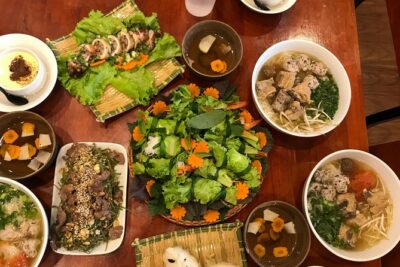
5 Traditional Dishes Hanoi Cooking Class with Market Trip
Read our review →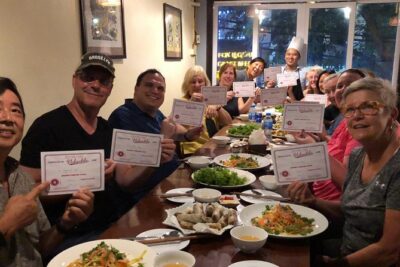
Vietnamese Food Cooking Class in Hanoi with Market Experience
Read our review →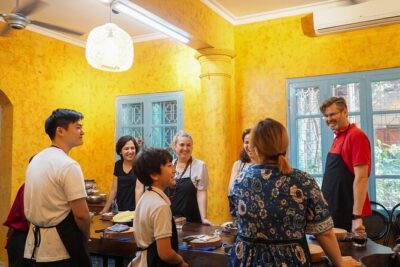
Hanoi: Handcrafted Wood Carving Workshop with Local Artisan
Read our review →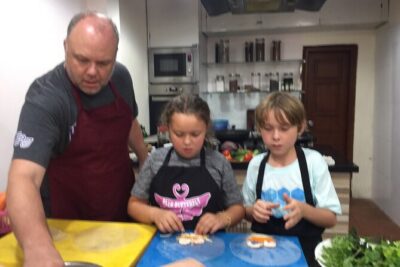
Hanoi Cooking Class and Market Tour in Ancient House
Read our review →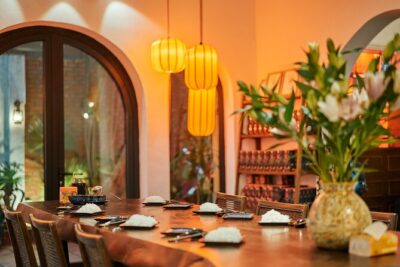
Rose Kitchen Hanoi: Market, Cooking & Culture Tour + Free PickUp
Read our review →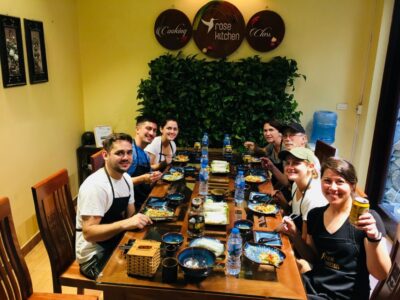
Hanoi: Cooking Class in a Local Villa with Market Tour
Read our review →