
Review · GREECE
Chania: Authentic Cooking Class
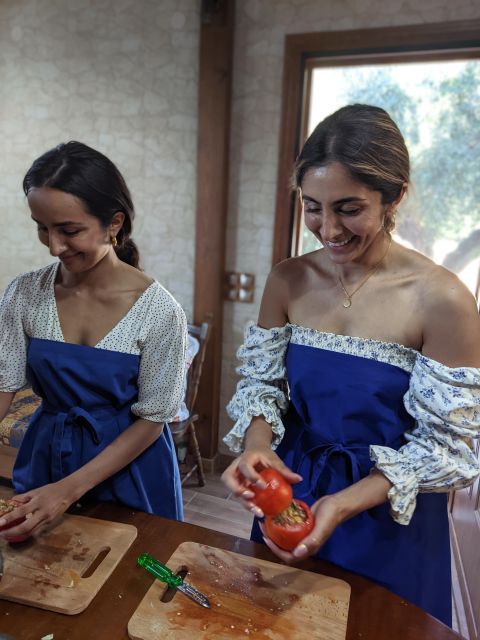
The best part of this Chania cooking class is that it takes place at the family home in Nerokourou, not in a polished restaurant kitchen. Under avocado and olive trees, Veerna, her brothers, and their helpers guide you through five classic Cretan dishes, from thieves dinner lamb to hand-rolled kalitsounia. I like the garden-to-table feel, and I like that the class ends with a long shared meal rather than a quick taste.
The main drawback is transport. The property is about 10 to 15 minutes from central Chania, but transportation is not included in the $129 price unless you arrange a paid transfer. You will also want to set aside a full four hours, since this is a generous meal and social evening, not a fast lesson.
Key points to know before booking
- Veerna leads a warm, family-run class: Her brothers and assistants help create a relaxed, social setting.
- The menu covers real Cretan staples: You prepare lamb, stuffed vegetables, dolmades, kalitsounia, tzatziki, and dakos.
- The wood-fired oven sets the pace: The lamb cooks for more than two hours while you work on the other dishes.
- Produce comes from nearby: Herbs and vegetables are picked from the garden or bought from local farmers.
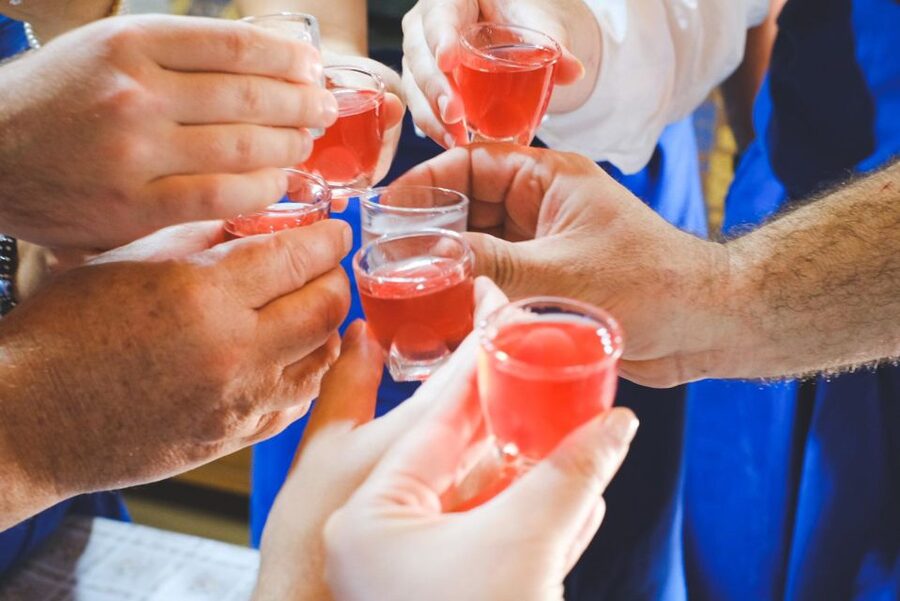
- The class ends with a full meal: Expect local wine, raki, dessert, and sometimes leftovers to take away.
- Plan your ride carefully: The property is easy to reach by car or taxi, while shared transfers cost extra.
A family kitchen 15 minutes from Chania
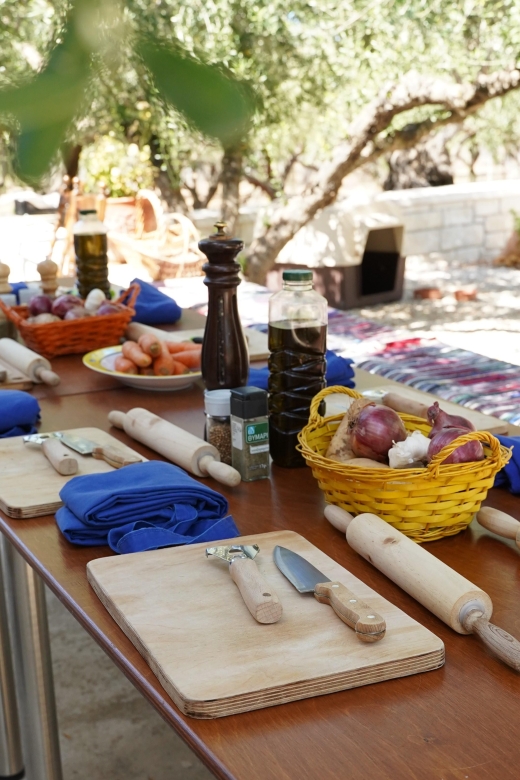
This is the sort of food class that makes sense in Crete. You leave the old town, drive a short way into Nerokourou, and arrive at a family property with olive trees, avocado trees, garden beds, and an outdoor cooking area. The setting gives the class room to breathe. You are not standing shoulder to shoulder in a city kitchen while a chef races through a demonstration.
Veerna is the central host and teacher. Her brothers, including Nikos and Kostas, may also help with the cooking, conversation, and practical details. The family welcomes you with a homemade refreshment or Greek coffee, along with cookies. That first drink matters. It gives you time to meet the other people at the table and hear what you will be preparing.
The atmosphere is friendly and informal. Familiar faces may stop by the home, and the family’s olive farm and animals add to the sense that you are visiting a working household rather than attending a staged show. One class even included a birthday cake for a participant. That sort of personal touch cannot be promised, but it shows the tone of the place.
You should expect English instruction. The setting is wheelchair accessible, and the class can suit families. One family brought children aged 11 and 14, and the young participants took part in the cooking and ate the vegetables they had helped prepare.
More cooking classes around Greece:
- Athens: Classic Cooking Class with Market Visit and Wine
★ 5.0 · 1,101 reviews - Athens: Food Market Visit and Cooking Class with Wine
★ 4.9 · 1,087 reviews - Greek Cuisine Cooking Class in Santorini with Recipes and Wine
★ 5.0 · 969 reviews
The meal begins with a story about thieves
The first major dish is oven-roasted lamb. It goes into the wood-fired stone oven early because it needs more than two hours to cook. While it roasts, Veerna explains why the dish is called the thieves dinner and connects it to Cretan history and local cooking traditions.
This is a smart way to organize the class. The slow dish starts first, and the waiting time becomes part of the lesson instead of dead time. You get a story, a look at the oven, and a better sense of how Cretan cooking developed around simple ingredients, long cooking, and outdoor hearths.
The lamb also gives the final meal some weight. This is not a class built around a few small samples. You will eat a substantial dinner or lunch at the end, so arrive hungry but not desperate. The cooking process takes place in stages, and you will snack along the way.
Garden vegetables become dolmades

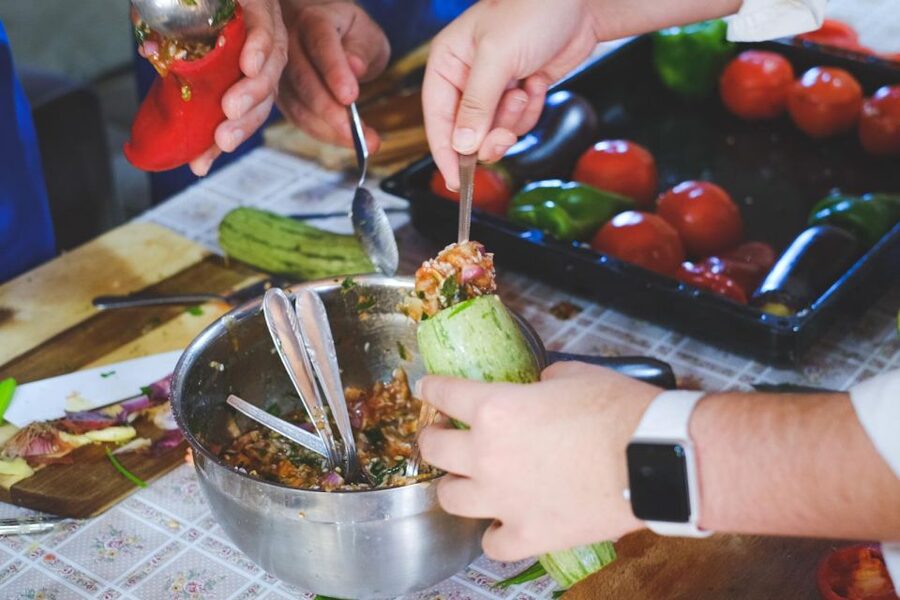
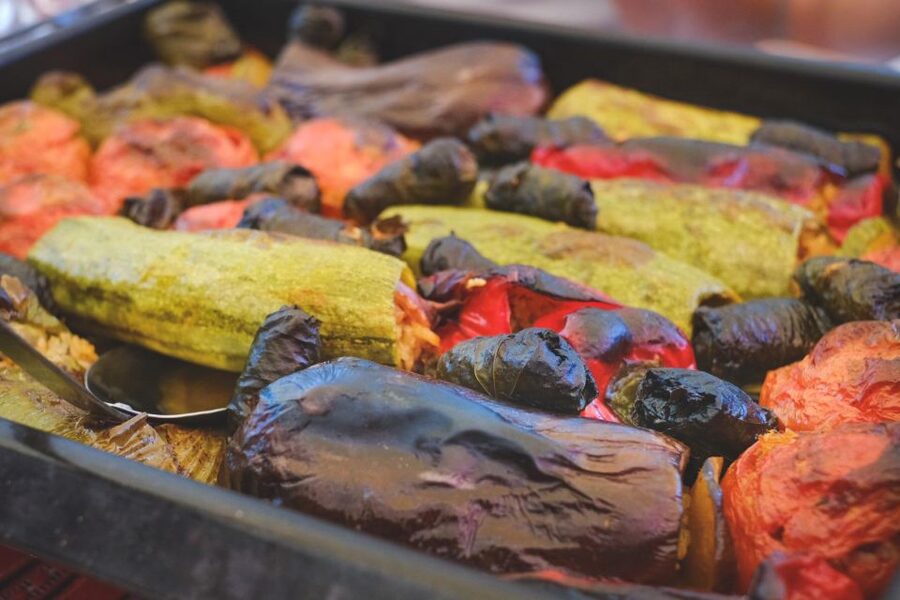
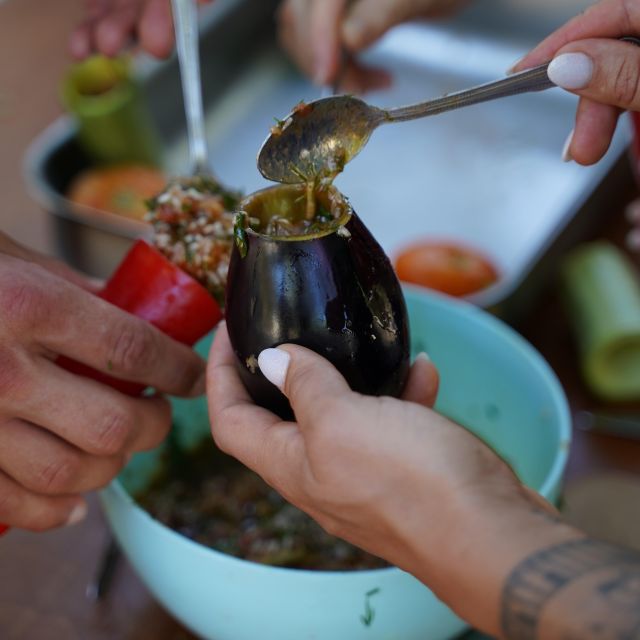
Next comes stuffed vegetables and dolmades, or stuffed grape leaves. You gather herbs and vegetables from the garden, then use them in the filling. The garden connection is one of the strongest reasons to choose this class. You can see where some of the ingredients come from instead of simply finding bowls of anonymous produce on a counter.
Rolling grape leaves takes a little care. You need to judge how much filling to use and how tightly to wrap each leaf. Veerna demonstrates the method, then lets you try. The work is hands-on, but it is not presented as a test. If your first dolma is loose or uneven, you get another chance.
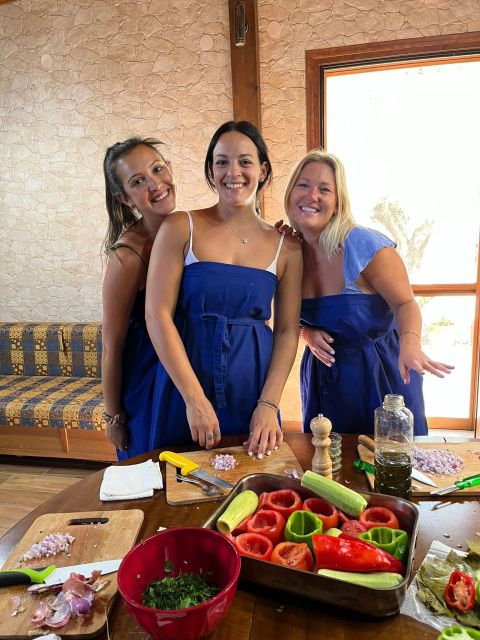
The stuffed vegetables and grape leaves go into the oven while you move on to the next task. The class keeps changing jobs, which helps avoid the common problem of one person cooking while everyone else watches. The timing is carefully arranged so you usually have something to do, taste, or learn.
Vegetarian diners should ask about their needs when booking. A vegetarian alternative was provided for one class, so the kitchen has shown flexibility, but you should not assume every dietary request is automatic.
Rolling dough for Veerna’s kalitsounia
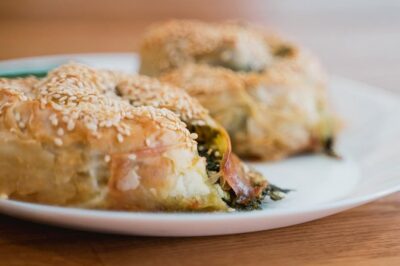
The kalitsounia lesson is likely to be the most memorable cooking skill of the day. These traditional Cretan pies use dough filled with cheese and wild greens. Veerna is especially associated with kalitsounia, which she has made and sold for years.
You roll out the dough, add the filling, and shape the pies before they go into the oven. The process looks more difficult than it feels once you see the technique. One participant was surprised by how manageable the pastry work was, though trying the recipe at home will still require patience.
This part gives you something useful to take home. A plate of lamb may be hard to recreate exactly, especially if you lack a wood-fired oven. Dough, filling, and shaping are more practical skills. The class also sends the recipes afterward, which makes it easier to try the dishes again in your own kitchen.
Do not expect a professional pastry workshop with perfect results from every person. The point is to learn the method, handle the ingredients, and enjoy the process. The uneven pies may be the ones you remember best.
Same kitchen, a different dish:
- Naxos: Half-Day Cooking Class at Basiliko Family Tavern
★ 5.0 · 887 reviews - Greek Cooking Class in Athens Including Rooftop Dinner with Acropolis View
★ 5.0 · 826 reviews - Greek Small-Group Athens Cooking Class & Dinner
★ 5.0 · 574 reviews - Exclusive Cooking Experience in our Cave Home by Petra Kouzina
★ 5.0 · 572 reviews
Tzatziki and dakos come last, but you eat them first
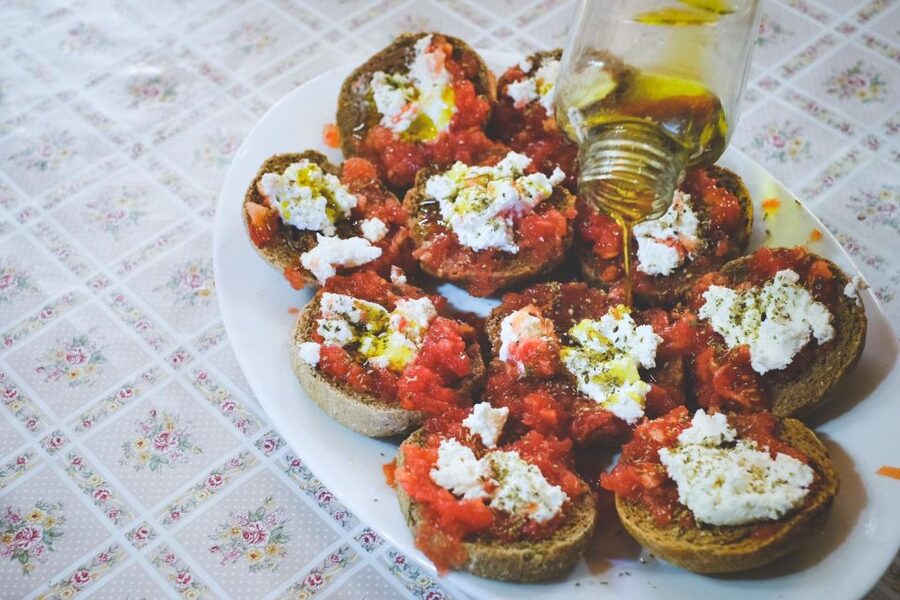
The appetizers are prepared near the end of the cooking work. You make tzatziki and dakos, a Cretan snack built around barley rusks, tomato, cheese, olive oil, and seasoning. These are simple dishes, but they show how much flavor can come from good local ingredients.
I like that these recipes are easy to repeat at home. You do not need a stone oven or a garden to make them. Tzatziki can become a regular part of your cooking, and dakos is a quick way to serve a Cretan-style snack with little effort.
The appetizers also give you something to eat before the lamb and stuffed dishes are ready. With cookies, drinks, and snacks along the way, the four-hour schedule feels less like a formal lesson and more like an afternoon or evening at a family table.
A long meal with wine, raki, and dessert
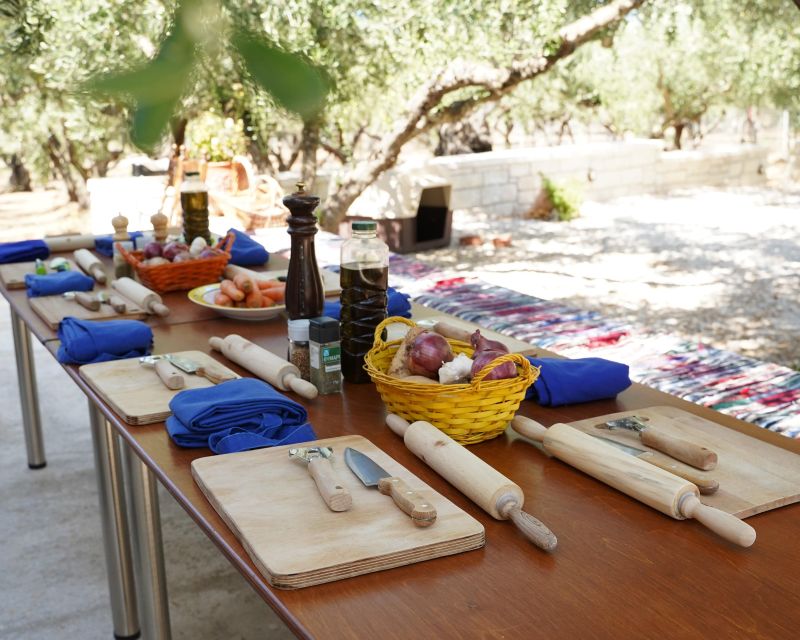
When the dishes are ready, everyone sits down to eat what the group has made. Local wine is served generously, and raki appears as part of the Cretan welcome. Dessert is also included, so you should not expect the meal to finish after the main dishes.
This final sitting is central to the experience. You have time to talk with Veerna, her family, and the other people in the class. Groups can include couples, families, cruise passengers, and people from different countries. That mix gives the evening a social side without requiring you to make conversation from scratch.
The meal may also include leftovers to take away. One participant left with enough food for another dinner. That is not guaranteed for every group, but the portions are clearly intended to be generous rather than symbolic.
If you are driving, keep the wine and raki in mind. A taxi is the sensible choice if you plan to drink. The class is close enough to Chania for a short ride, but it is not in the old town where you can simply walk back to your hotel.
What the $129 price really covers
At $129 per person, this class costs more than a short market tour or a basic restaurant demonstration. The value comes from the amount of food, the four-hour length, the hands-on work, the family setting, and the drinks included.
You are paying for more than instruction. The price covers ingredients, lunch or dinner, local wine, raki, and the full use of the cooking setup. Garden produce and local farm ingredients also shape the meal, which gives the class a stronger connection to Crete than a generic Greek cooking lesson.
The price makes the most sense if you value a complete evening rather than simply learning two or three recipes. It is also a reasonable choice for cruise passengers looking for a substantial shore excursion. One past participant paid about 20 euros for a taxi from the cruise port, though fares can change, so confirm your own ride before booking.
Transfers are available for an extra fee. The company uses a nine-seat van and a five-seat electric vehicle, and the ride may be shared with other people attending the class. If you prefer to drive, you can park along the fence at the property.
Timing, comfort, and practical details
The stated duration is four hours, but allow a little extra time if you have a fixed evening plan. One class lasted about four and a half hours, and the shared meal is not meant to be rushed. You may also spend time walking around the olive grove or waiting for a taxi.
Starting times vary, so check availability for your date. The class works well in the afternoon or evening, especially if you want a relaxed meal after the main cooking is finished.
Wear clothes that can handle flour, oil, and food splashes. You will be using your hands and rolling pins, so taking photos during the busiest parts can be awkward. If photos matter to you, ask the hosts whether someone can take a few during the class.
The location is easy to reach by car or taxi and is roughly 15 minutes from central Chania. The exact meeting point is provided when you book. Wheelchair access is listed, but if you have specific mobility needs, confirm the details before arrival because the experience includes garden and outdoor areas.
Cancellation is free up to 24 hours before the start time, and you can reserve now and pay later. Those terms are useful if your Chania schedule depends on ferry, cruise, or flight arrangements.
Who will enjoy this class most
You should book this if you want food, conversation, and local family contact in equal measure. It suits couples, families with older children, solo visitors who enjoy joining a group, and cruise passengers with enough time to get beyond the port.
It is also a strong pick if you want recipes you can actually use at home. Tzatziki, dakos, dolmades, stuffed vegetables, and kalitsounia offer a good range of skills. You learn mixing, stuffing, rolling, shaping, oven cooking, and the practical use of herbs and vegetables.
You may want a different activity if you prefer a short, tightly scripted class or a formal culinary school. The family atmosphere is part of the appeal, but it also means the evening includes conversation, breaks, and a leisurely meal. This is not a class where you finish the final dish and leave immediately.
The wine and raki make it less suitable for anyone avoiding alcohol unless you are comfortable declining those drinks. The hosts also provide food and dessert, so people with allergies or strict diets should ask in advance.
Should you book the Chania Authentic Cooking Class?
I would book this class if you want one of your Chania days to feel personal and unhurried. The strongest features are Veerna’s hands-on teaching, the family welcome, the garden ingredients, and the chance to eat a full Cretan meal in the place where it was prepared.
The main things to arrange are transport and time. Add the cost of a taxi or paid transfer to the $129 fee, and keep the evening open for at least four hours, possibly longer. If that fits your plans, this is a good-value choice for a full meal, several practical recipes, and a genuine look at everyday Cretan hospitality.
FAQ
Where is the Chania cooking class located?
The class is in Nerokourou, a beautiful area about 10 to 15 minutes from central Chania. You can reach it by car or taxi and park along the fence.
Is transportation included?
Transportation is not included in the activity price. Transfer service is available for an extra fee, depending on your location. Shared transport may use a nine-seat van or a five-seat electric vehicle.
What food will I prepare?
The menu includes oven-roasted lamb, stuffed vegetables, stuffed grape leaves, kalitsounia filled with cheese and wild greens, tzatziki, and dakos. Lunch or dinner, dessert, local wine, and raki are included.
How long does the class last?
The scheduled duration is four hours. Allow extra time if you need to catch transport afterward, since the shared meal may make the visit last longer.
Is the class taught in English?
Yes. The instructor language is English.
Can I cancel or pay later?
You can cancel up to 24 hours in advance for a full refund. The booking option also allows you to reserve your place and pay later.
New cooking classes around Greece
- Savor Rhodes: 11-Dish Wine Pairing and Cooking Adventure★ 4.4 · 12 reviews
- Santorini: Hands on Cooking Class with a Chef★ 4.7 · 16 reviews
- Santorini: Cooking Class with a Professional incl. Full Meal★ 5.0 · 2 reviews
- Santorini: Greek Cooking Class with Wine Tasting★ 5.0 · 7 reviews
- Santorini: Vineyard and Winery Tour with Cooking Class★ 4.9 · 5 reviews
- Santorini Cooking Class with Wine Tasting & Lunch★ 4.9 · 36 reviews
- Santorini: Cooking Class with a Chef at the Ftelos Brewery★ 4.8 · 33 reviews
- Rhodes: Winery Tour, Tasting and cooking with the Winemaker★ 4.8 · 21 reviews
Greece Cooking Classes, side by side.
Athens: Classic Cooking Class with Market Visit and Wine
Read our review →
Greek Cuisine Cooking Class in Santorini with Recipes and Wine
Read our review →
Naxos: Half-Day Cooking Class at Basiliko Family Tavern
Read our review →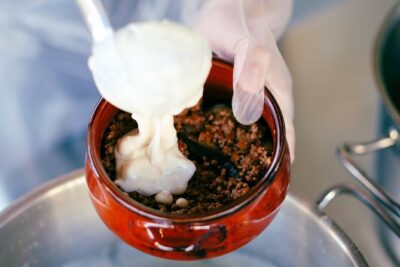
Greek Cooking Class in Athens Including Rooftop Dinner with Acropolis View
Read our review →
Greek Small-Group Athens Cooking Class & Dinner
Read our review →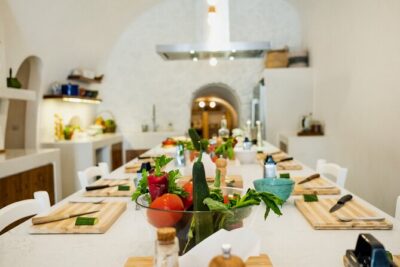
Exclusive Cooking Experience in our Cave Home by Petra Kouzina
Read our review →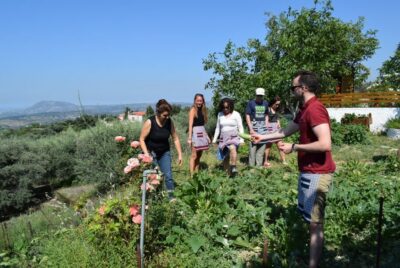
Chania: Authentic Cooking Class in the White Mountains
Read our review →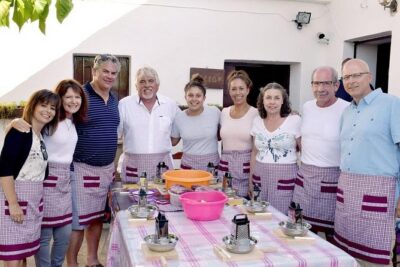
This kitchen also appears in