

Review · LISBON
Traditional Portuguese Cooking Class in Lisbon
Portugal’s food story comes alive around a shared kitchen table, not just on a restaurant plate. In this three-hour Lisbon class, you help prepare a seasonal four-course meal, including Portuguese favorites such as bacalhau, pork dishes, and pastel de nata. I especially like the relaxed teaching style and the steady supply of Portuguese wine, beer, snacks, and nonalcoholic drinks.
I also like the small maximum of 10 people, which gives you a real chance to chop, stir, shape, and ask questions. The main drawback is that this is a family-style class, so you may prepare only parts of some dishes rather than cook every recipe from start to finish. The meeting address is outside central Lisbon, and one participant reported being sent to the wrong one of two locations, so confirm the venue before setting out.
Key points at a glance
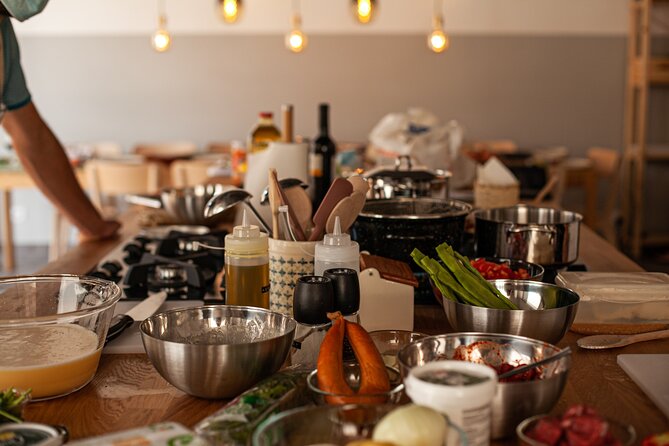
- Seasonal Portuguese menu: The dishes change with the time of year, so the menu uses ingredients suited to the season rather than forcing the same meal year-round.
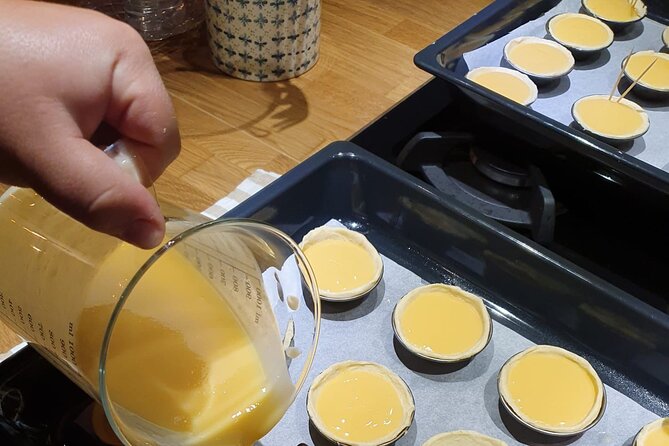
- Pastel de nata included: You prepare the famous custard tart with puff pastry that has already been made, keeping the focus on shaping and baking.
- Small class size: A maximum of 10 people makes this more hands-on than a large demonstration.
- Drinks are part of the meal: Portuguese wine and beer are included for adults, along with water, juices, tea, and other nonalcoholic choices.
- Morning or evening timing: You can choose a class that fits a day of sightseeing or use the evening session as a dinner with a cooking lesson.
- Friendly, low-pressure instruction: Miguel, Beatriz, Pedro, and Teresa are among the instructors named by participants, with teaching that suits beginners, families, and solo visitors.
What the three-hour Lisbon class is really like
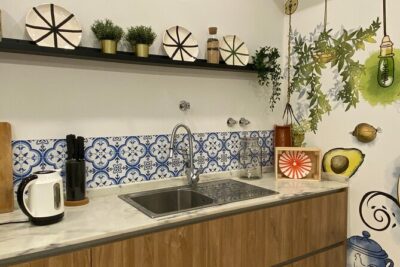
This is not a formal culinary school lesson. It is a social cooking session built around a shared meal. You arrive at the Homecooking Lisbon venue at R. Aliança Operária 54, 1300-049 Lisboa, and settle into a modern, clean kitchen and dining space.
The class is offered in English, and the cooking is guided step by step. You do not need professional skills or much kitchen confidence. The instructors are there to explain what to do, demonstrate the techniques, and keep the pace moving without turning the session into a test.
That relaxed tone matters. Portuguese cooking often depends on simple ingredients, careful seasoning, and the way dishes are cooked for a table of people. You get a better sense of that when you are preparing food with other people instead of watching a chef work from across the room.
The group limit is 10. That is small enough for the instructor to notice when you need help, and large enough to create the friendly, shared atmosphere that makes a cooking class different from a standard restaurant meal. The class can also work well if you are traveling alone, since the format naturally puts you in contact with people at the same table.
More cooking classes around Lisbon:
- Lisbon: Pastel de Nata Baking Class
★ 4.9 · 2,106 reviews - Lisbon: Traditional Portuguese Cooking Class
★ 4.9 · 592 reviews - Lisbon: 2-Hour Pastel de Nata Cooking Class
★ 4.8 · 461 reviews
A seasonal menu built around Portuguese comfort food
The menu changes during the year. That is good news for the food, since ingredients are selected for freshness and season. It also means you should not book expecting one fixed list of dishes. A hearty bean and chorizo stew, for example, is less likely to appear in the height of summer.
The sample menu gives you a useful picture of the cooking style:
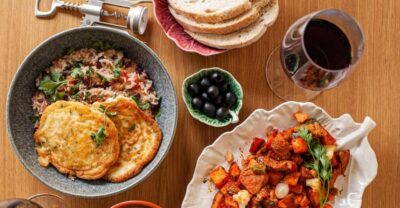
- Caldo-verde, the familiar Portuguese soup of potatoes and greens
- Pica-pau, a small-plate dish of seasoned meat
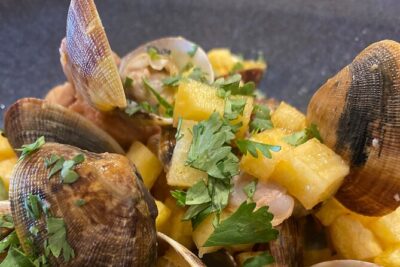
- Amêijoas à Bulhão Pato, clams with garlic, herbs, and a fragrant sauce
- Bacalhau à Brás, salted cod with potatoes and egg
- Pataniscas de bacalhau, cod fritters
- Carne de porco com amêijoas, pork with clams
- Migas com entrecosto, pork ribs served with migas
- Pastel de nata, the famous custard tart
- Arroz doce, Portuguese rice pudding
- Torta de laranja, an orange roll
You should think of this as a selection of possible dishes rather than a promise that every item will appear at one sitting. The exact menu depends on the season and the session. Recent class descriptions include cod, pork, rice, egg dishes, potatoes, and dessert, so the meal tends to give you a broad sample of Portuguese home cooking.
This is one of the strongest parts of the class. Cod, pork, clams, greens, potatoes, and egg are not just restaurant decorations. They are central ingredients in Portugal’s everyday cooking. You get a taste of how several familiar ingredients can become very different dishes through seasoning and method.
From finger foods to the final custard tart
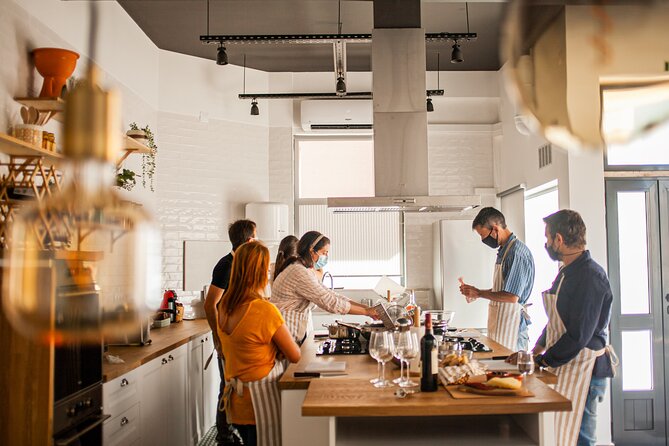
The cooking starts with drinks and finger foods, which give you something to enjoy while the meal comes together. Portuguese wine and beer are included for participants aged 18 and over. Water, juice, tea, and other nonalcoholic drinks are available for younger people and anyone who prefers not to drink alcohol.
The class then moves through the meal in stages. You may chop vegetables, prepare seafood, mix a batter, season meat, or help with one of the side dishes. The work is shared, so you are not expected to produce four complete dishes alone.
That shared approach is both a strength and a limitation. It keeps the class sociable and prevents the three-hour session from becoming exhausting. It also means a serious home cook may wish for more time with each recipe. You will learn the methods behind the dishes, but you may not personally cook every part of every course.
The meal is eaten family-style at the end. This is a nice fit for Portuguese food, which often works best when placed in the middle of the table and passed around. It also gives you time to talk with the instructor and other people in the group.
The pastel de nata is a major draw. You prepare and bake the tart using puff pastry that is already prepared. That is worth knowing in advance: you learn the shaping and baking process, but you are not making puff pastry from raw ingredients. For many people, that is the right balance, since homemade laminated pastry would take far longer than this class allows.
Instructors who keep the class moving
The teaching style is warm and practical rather than stiff. Miguel is described as clear and patient, with an easy way of explaining each step. Beatriz is praised for adding personal stories and comments about Portuguese food and culture. Pedro is noted for teaching traditional dishes in a memorable, low-pressure way, while Teresa is described as making sure everyone feels included.
The instructor can guide the room without taking over. That distinction is important. You are there to cook, not simply watch a professional prepare food while you sip wine.
The class is also suitable for children. Families with children aged 10 and 12 found the format manageable, and one parent described it as a good activity for the whole family. Younger cooks may not handle every task, of course, but the interactive structure gives them a role.
The class can be a good choice for solo visitors, couples, families, or friends. Birthday celebrations have been acknowledged during the session, and the social setting gives solo participants an easy way to meet people without needing to arrange a group in advance.
Same kitchen, a different dish:
- Lisbon Portuguese Cooking Class with 3-Course Dinner
★ 5.0 · 445 reviews - Lisbon: Pasteis de Nata Baking Class
★ 5.0 · 134 reviews - Lisbon Market and Food Tour with Cooking Class and Lunch
★ 5.0 · 117 reviews - Private Lisbon Market Tour & Portuguese Cooking Class with Paula
★ 5.0 · 89 reviews
How much hands-on cooking should you expect?
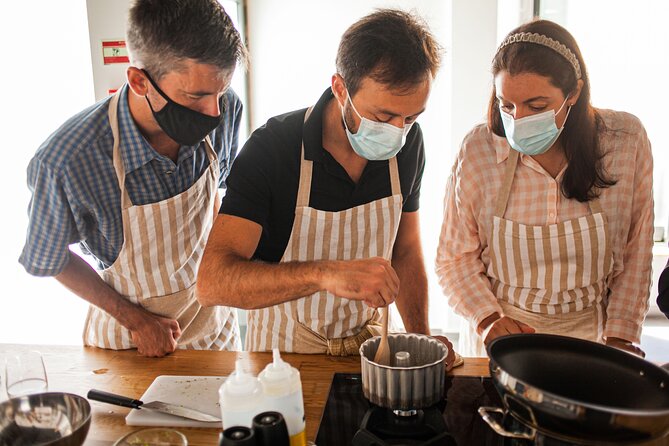
You will take part in the preparation, but the experience is not designed as a private lesson. The food is made for the group, and different people work on different portions of the meal.
You might prepare one section of the cod dish, help with a pork recipe, work on a side dish, or handle part of the dessert. The instructor explains why ingredients are used and how the dishes are assembled. You also receive access to recipes afterward, which helps fill in the details of dishes you did not personally prepare.
The pace is generally steady. It is instructional without demanding advanced knife skills or cooking knowledge. You will have time to ask questions, though the room can become lively and loud when two groups are using the same space.
If you are a serious cook hoping to master every dish in technical detail, this may feel too casual. If you want to learn the basic logic of Portuguese home cooking, eat well, and enjoy a social evening, the format makes sense.
The venue and getting to R. Aliança Operária 54
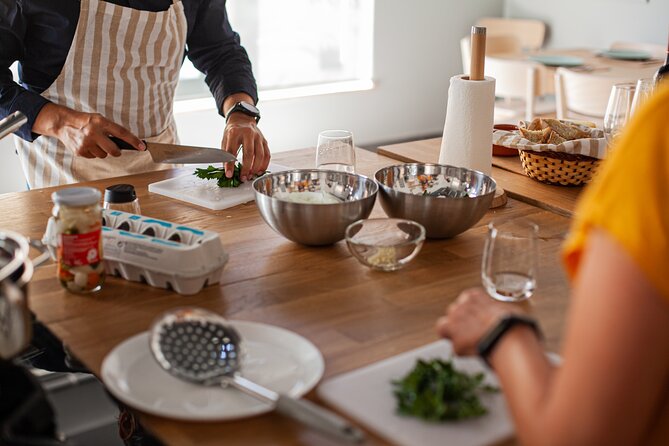
The meeting point is R. Aliança Operária 54, 1300-049 Lisboa, and the class ends at the same place. The venue is described as clean, modern, spacious, and inviting, with both kitchen and dining areas.
It is near public transport, but it is not in Lisbon’s central sightseeing core. You may find a taxi the simplest choice on the way there, while a bus can work for the return journey. Allow extra time rather than trying to arrive at the last minute.
There is one practical warning worth taking seriously. Two locations have apparently been used, and one person arrived at the wrong address because of a venue mix-up. Confirm the exact meeting point directly with Homecooking Lisbon before the class, especially if your booking confirmation and directions do not match.
The activity ends where it begins, so you do not need to arrange a separate pickup. Still, plan your evening route before you start, since the class can finish after dinner hours and the venue is outside the main center.
Morning lunch or evening meal?
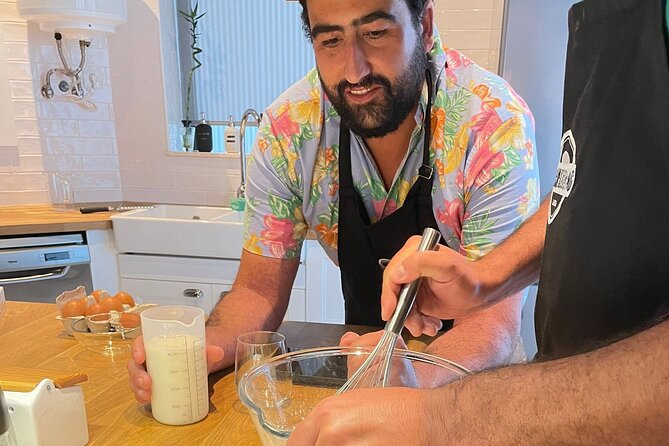
The choice of time changes the feel of the activity.
The morning class, such as an 11 a.m. session, works well if you want the cooking to become lunch. Afterward, you still have the afternoon for a museum, a walk, or a visit to another part of Lisbon.
The evening class feels more like a social dinner party. You cook with drinks and snacks, then sit down to eat the meal you helped prepare. It is a useful option when you want an evening activity that is more interactive than simply choosing another restaurant.
Both sessions last about three hours. That is long enough to cover several dishes without taking over your entire day. If you have a tightly packed sightseeing schedule, remember that the class is a meal as well as a lesson. You will want to allow time for the cooking, sitting down to eat, and returning to central Lisbon.
Is $102.84 a fair price?
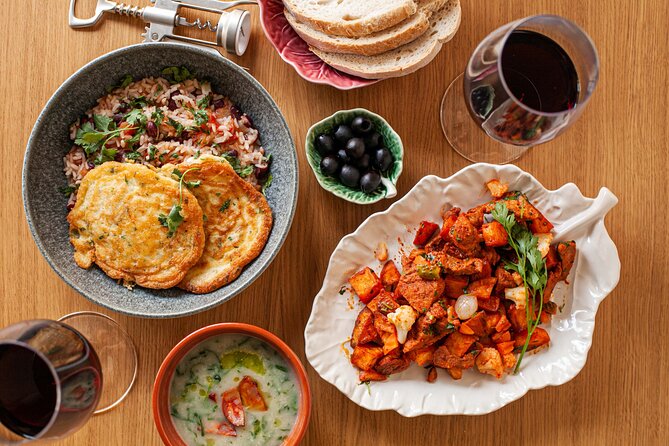
At $102.84 per person, this is not a cheap meal. It can still be good value if you use the class for what it is: a three-hour food activity, a full shared meal, drinks, instruction, and cultural context in one booking.
You are not paying only for the ingredients. The price also covers the kitchen, the instructor’s time, the hands-on setup, wine and beer for adults, nonalcoholic drinks, snacks, and the chance to ask questions while cooking. The small group size adds value, since a maximum of 10 people is much more useful for participation than a large demonstration.
The value is strongest if you want to understand Portuguese dishes rather than simply eat them. A restaurant can serve bacalhau à Brás or pastel de nata, but it cannot usually explain the process while you help prepare the food.
The price is less attractive if your main aim is a cooking lesson with detailed individual instruction for every recipe. Because the meal is prepared family-style, your own hands-on time is shared across the menu.
Who should book this Lisbon cooking class?
I would recommend it for:
- First-time visitors who want a direct introduction to Portuguese food
- Families with children who enjoy practical activities
- Solo visitors looking for an easy social setting
- Couples who prefer a meal with an activity attached
- Home cooks who want recipes and basic techniques rather than professional training
- People who enjoy wine, conversation, and a relaxed group meal
I would be more cautious if you dislike communal cooking, have strict dietary needs that have not been discussed in advance, or want to prepare every course alone. The supplied information does not set out dietary substitutions, so ask Homecooking Lisbon before booking if that matters to you.
The alcohol policy is clear: wine and beer are not served to anyone under 18. Water, juice, tea, and other soft drinks are available instead.
Free cancellation is available until 24 hours before the start time. Cancellations or changes inside that window are not refunded, and the experience may be canceled if poor weather or low enrollment prevents it from running. In those cases, you are offered another date or a refund.
My verdict: book it for food, people, and practical context
Book this class if you want to do more than tick Portuguese dishes off a menu. You will prepare a seasonal meal, taste several traditional flavors, learn how pastel de nata is assembled, and leave with recipes you can use later.
The best parts are the small group, the warm instruction, the included drinks, and the mix of cooking and cultural explanation. The main compromises are the out-of-center location, the possible address confusion, and the fact that family-style cooking means you will not personally complete every dish.
Confirm the venue, allow time for transport, and arrive ready to share tasks. If that sounds like your kind of Lisbon evening, $102.84 buys a useful and enjoyable food lesson, not just another dinner.
FAQ
Where does the Portuguese cooking class meet?
The stated meeting point is R. Aliança Operária 54, 1300-049 Lisboa, Portugal. The activity ends back at the meeting point.
How long does the class last?
The class lasts approximately three hours.
Is the cooking class offered in English?
Yes. The experience is offered in English.
How many people can join the class?
The maximum group size is 10 participants.
Are drinks included?
Yes. Portuguese wine and beer are included for participants aged 18 and over. Water, juices, tea, and other nonalcoholic drinks are available.
Can children take part?
Yes. The class is suitable for families, and alcoholic drinks are not served to anyone under 18.
What happens if I need to cancel?
You can cancel at least 24 hours before the start time for a full refund. Cancellations or changes made less than 24 hours before the start time are not refunded.
New cooking classes around Lisbon
- Lisbon: Setúbal Market and Wine tour with Cooking class★ 5.0 · 4 reviews
- Lisbon: Traditional Portuguese Cooking Class★ 5.0 · 41 reviews
- Lisbon: Portuguese Cooking Class with Wine Tasting★ 5.0 · 4 reviews
- Lisbon: Portuguese street food cooking class with Drinks★ 4.9 · 37 reviews
- Lisbon: Portuguese Cooking Class for Beginners★ 4.9 · 78 reviews
- Lisbon: Pasteis de Nata Baking Class★ 5.0 · 134 reviews
- Lisbon: Portuguese Petiscos Cooking Class★ 4.7 · 6 reviews
- Lisbon Market and Food Tour with Cooking Class and Lunch★ 5.0 · 117 reviews
Lisbon Cooking Classes, side by side.

Lisbon Portuguese Cooking Class with 3-Course Dinner
Read our review →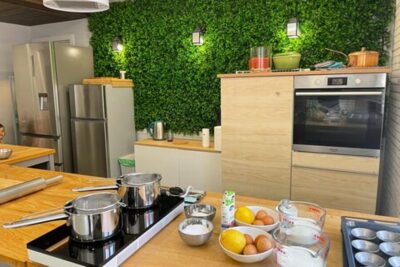
Lisbon Market and Food Tour with Cooking Class and Lunch
Read our review →
Private Lisbon Market Tour & Portuguese Cooking Class with Paula
Read our review →
This kitchen also appears in