
Review · SIEM REAP
Khmer Cooking Class at a Local’s Home in Krong Siem Reap
The best part of this Siem Reap cooking class is that you do not simply watch someone prepare Cambodian food. You walk through a local market, see herbs and vegetables growing in the garden, then cook a full four-course meal yourself. Fish amok, tom yam soup, salads, tempura, and banana tapioca are among the choices.
I like the small group limit of six, which gives you room to ask questions and get hands-on help. I also like the easy tuk-tuk pickup and drop-off, plus instructors such as Sorya, Sivorn, Kong, and Sky, who guide beginners patiently and keep the class lively. The main thing to note is that the class may take place in an open-air cooking area in a residential neighborhood rather than inside a private family home, and several small groups may cook there at once.
Key points to know before booking
- Four dishes per person: Choose your own menu and cook every course before sitting down to eat.
- Market and garden visit: The morning session includes a fuller market stop, while later times may have a shorter or different market visit.
- Small class size: The advertised maximum is six people, though the open-air kitchen can host several groups.
- Tuk-tuk transfers included: Pickup and return to your hotel make this simple to fit into a Siem Reap day.
- Vegetarian choices available: Tell the operator about dietary needs or allergies before the class.
- Excellent value at $27: The price includes transport, ingredients, instruction, and the meal you prepare.
A market visit before the cooking begins
The class starts with pickup by traditional tuk-tuk. That matters in Siem Reap, where a short ride away from the central hotel area can quickly show you a quieter, more local side of town. The driver contacts you to confirm the pickup point, and the ride takes you to the market or meeting point for the market visit.
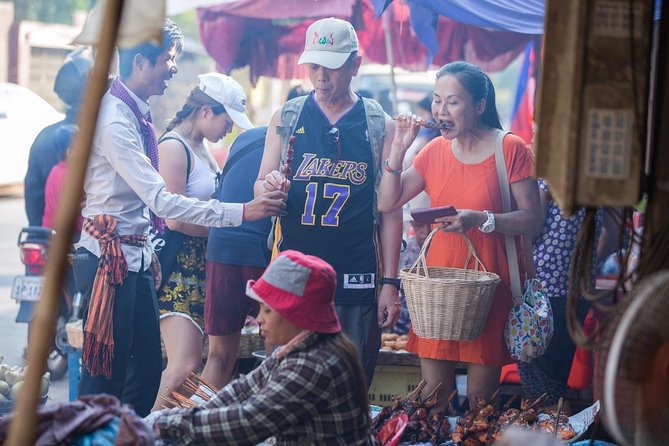
The market stop is not just a quick shopping errand. Your guide explains the ingredients used in Khmer cooking and shows you the food local families buy. You may see fresh herbs, vegetables, meat, fish, and other everyday products. For a first introduction to Cambodian food, this is useful context. It helps you understand that dishes such as fish amok are built from ordinary fresh ingredients, not from mysterious restaurant-only products.
The timing matters. The morning session, listed at 9:30 a.m. in the practical details shared by past participants, offers the fullest market experience. The market is active and better suited to seeing ingredients being selected for the meal. Later sessions can have a shorter market stop. One afternoon participant found the market quiet because the stalls do not fully open again until around 5 p.m.
That does not ruin the class, but it changes the emphasis. Book the morning time if the market is a major reason you want to go. Choose the afternoon or evening option if you care more about cooking and prefer to fit the class around temple visits.
More Home Cooking Classes in Cambodia:
- Siem Reap: Khmer Cooking Class at a Local’s Home
★ 5.0 · 1,108 reviews - Porto: Pastel de Nata Cooking Class with Grandma’s Recipe
★ 5.0 · 1,565 reviews - Local Home Korean Cooking Class & Market Adventure in Seoul
★ 5.0 · 1,024 reviews
From market produce to a garden kitchen
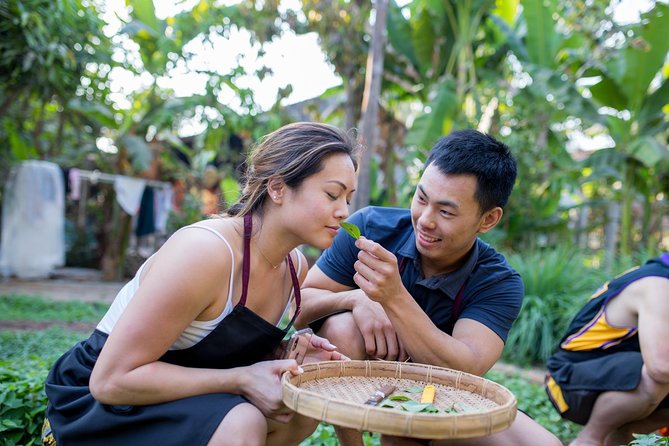
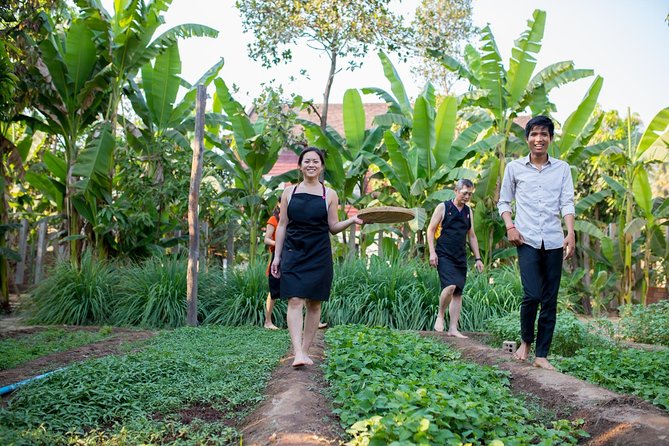
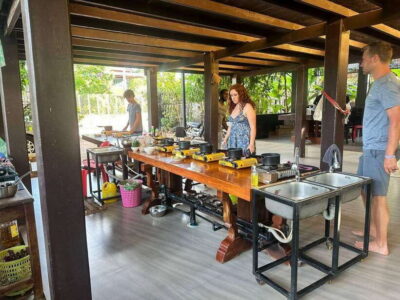
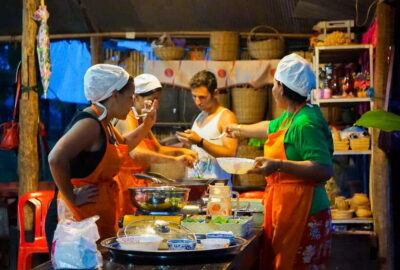
After the market, you continue by tuk-tuk to the cooking location. The setting is described as a local neighborhood with an open tiled cooking area and a garden. Some of the herbs and vegetables used in the class are grown on site, so you get to see the plants behind the ingredients before using them at the stove.
The garden visit adds a useful layer to the class. A guide such as Sorya may point out herbs, vegetables, and other plants, sometimes inviting you to smell or examine them. For anyone who has eaten Khmer food in restaurants but could not identify the flavors, this short walk helps put the menu in context.
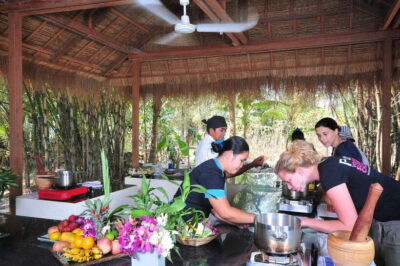
Keep your expectations clear about the name. The experience is marketed as cooking at a local’s home, but the cooking may happen in a purpose-built open-air area rather than inside a family kitchen. Several small groups can use the space at the same time. The setup is still locally run and personal, but it is not the private home visit some people may picture.
This is a fair trade for many people. The open kitchen gives each cook room to work, and the instructors can prepare ingredients and equipment for a group. If your priority is a truly private meal in a family home, this may not be the right choice. If you want a practical Khmer food lesson with a local feel, the setting works well.
Choosing four Khmer dishes to cook
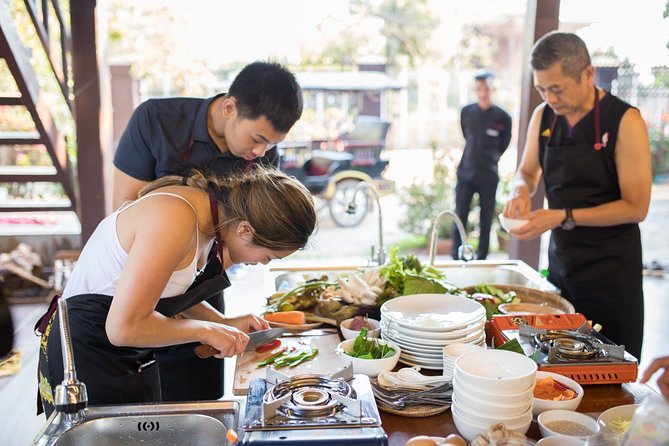
The class gives you a choice of four dishes. This is one of its strongest features because you can shape the meal around your interests and dietary needs. You are not limited to a fixed demonstration menu. One person might prepare fish amok while another makes a salad, tempura, soup, or dessert.
Fish amok is the natural choice for many people visiting Cambodia. It is one of the country’s best-known dishes, usually built around fish, coconut, and fragrant Khmer seasonings. The class gives you a chance to learn the preparation directly rather than simply ordering it at a restaurant.
Tom yam, also written tom yum or tom yam, brings a hot and sour note to the meal. Other possible dishes include steak salad, tempura, and banana tapioca dessert. The exact choices can vary, so you should ask about the current menu if a particular dish matters to you.
The four-dish format creates a generous meal. If two people choose different recipes, you can end up tasting eight dishes between you. That is excellent for variety, though it can also mean a great deal of food. Plan to arrive hungry and avoid scheduling a heavy dinner immediately afterward.
Hands-on instruction from Sorya, Sivorn, Kong, and Sky
This is a practical lesson, not a cooking show where you sit back and take notes. You wash ingredients, prepare them, and cook with step-by-step help. The instructors show you what to do, check your progress, and offer shortcuts that make the recipes easier to repeat at home.
Sorya is described as both a guide and a cooking teacher. She leads the market and garden portions and has also taught the cooking itself. Sivorn is another instructor praised for clear explanations and patient support. Kong, sometimes introduced as King Kong, is known for a funny, friendly manner and for helping each person through the recipes. Sky is also mentioned as an attentive instructor who takes photos and helps cooks along the way.
The names matter because the class is not an anonymous demonstration. You have a person beside you who can answer practical questions. That is especially helpful if you have little cooking experience. Several menu choices are simple enough for beginners, and the staff adjust their help to the pace of the group.
The instructors also take photos during the activity. This is a nice extra because your hands may be covered in food and you will not want to stop every few minutes to use your phone. Recipe instructions are sent afterward in at least some sessions, which makes it easier to recreate the dishes at home. Ask about the recipe handout if bringing the cooking skills home is important to you.
More cooking classes around Cambodia:
- Award-Winning Cooking Class Experience with Professional Teacher
★ 5.0 · 745 reviews - Khmer Cooking Class Half Day (AM or PM)
★ 5.0 · 316 reviews - Cambodian Village Cooking Class
★ 5.0 · 265 reviews - Cambodian Cooking Class from Siem Reap
★ 4.9 · 190 reviews
Eating the meal you prepared
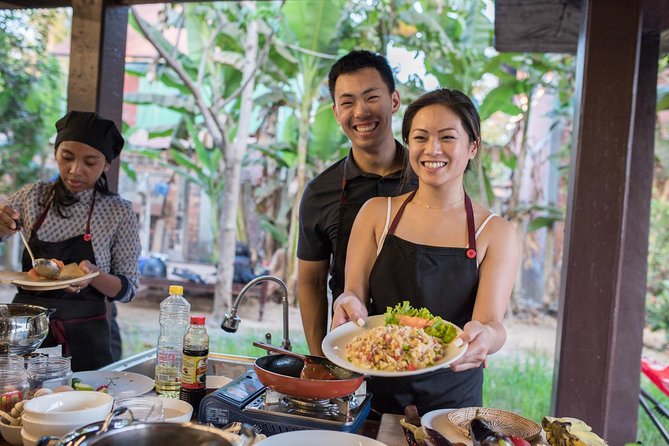
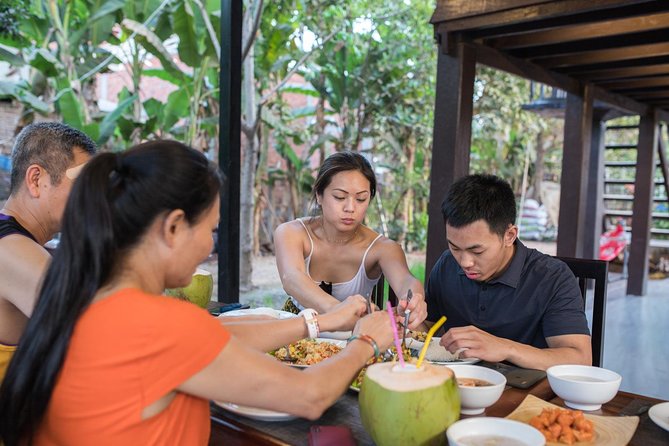
Once the cooking is finished, you sit down and eat the four-course meal. This is more satisfying than watching a chef prepare a dish and receiving a small tasting plate. You have handled the ingredients, made the choices, and seen the dish develop from raw produce to finished food.
The meal is also a useful test of the recipes. The cooking style is designed for a class, so the instructions may use simple shortcuts. That is not necessarily a weakness. Short, practical recipes are easier to repeat in your own kitchen, especially if you do not have specialist equipment or a large amount of free time.
The amount of food can be substantial. People who select four dishes each may find themselves very full by the end. Water is provided, but beer and wine are not included. Bring extra money if you want alcoholic drinks, and confirm what is available before the cooking starts.
The shared meal gives the class a social finish. You can compare dishes with the other cooks, ask about ingredients, and enjoy the results without rushing straight back to your hotel. It is a good fit for couples, families, and small groups who want an activity that produces dinner as well as a memory.
What the $27 price includes
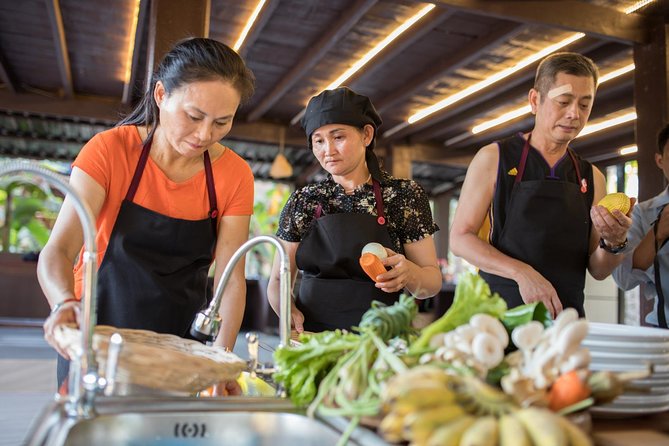
At $27 per person, the class offers strong value. The fee includes hotel pickup and drop-off by tuk-tuk, a local host or guide, the ingredients, hands-on instruction, and the four-course meal you prepare. Transport alone makes the price easier to justify, since you do not need to arrange a separate ride to a cooking school outside the central area.
The price is especially good if you use the class as both a meal and an activity. You receive several hours of instruction, a market and garden visit, and a substantial lunch or dinner. A restaurant meal would cost less in some parts of Siem Reap, but it would not include the food lesson, market visit, or return transfer.
There are small extras to budget for. Beer and wine are excluded. The advertised inclusions also refer to additional visits to a mushroom farm and crocodile farm with a local guide, but the exact arrangement is not explained in detail. Ask the operator what is included on your chosen departure if those visits matter to you.
The group limit is advertised as six people. That is a good size for a lesson because you can work independently without getting lost in a crowd. Still, the cooking area may contain several groups at once. You get small-group instruction within a larger shared setting, not necessarily a private class.
Picking the right start time
You can choose from three class times, including lunch and dinner options. The exact times offered at booking are the best guide, but the practical notes identify a morning departure around 9:30 a.m. and an afternoon departure around 12:30 p.m.
Choose the morning if you want the most useful market visit. You will see more activity and watch the guide select ingredients at a livelier time. This option also makes the cooking class a natural lunch activity.
The afternoon departure works well if you plan to visit Angkor Wat or other sights earlier in the day. Just remember that the market portion may be brief or quiet at that hour. The cooking and garden visit remain the main attraction.
An evening class suits anyone who wants to cook dinner rather than lunch. It can be a pleasant way to end a day in Siem Reap, especially if you have already spent the morning at the temples. Check the pickup time carefully and allow flexibility for the tuk-tuk ride.
Who will enjoy this class most
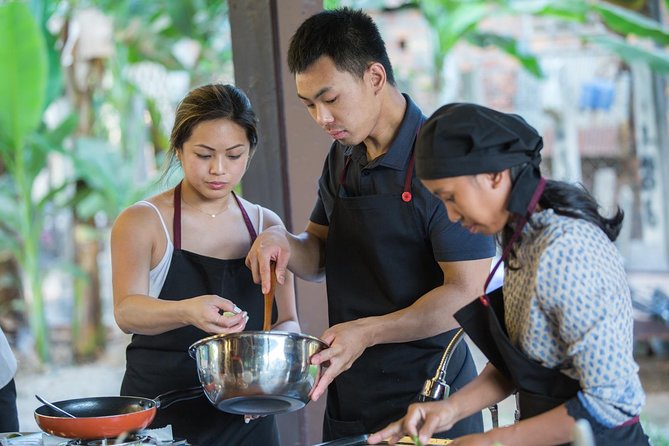
I would recommend this for first-time visitors who want to understand Cambodian food beyond a restaurant menu. It is also a good match for people who like learning by doing, since you prepare every course rather than watching a long demonstration.
Families can enjoy it too, but children must be accompanied by an adult. The hands-on format gives younger cooks a clear task, although adults should decide if the hot cooking equipment is suitable for their children.
Vegetarians should contact the operator before booking or as soon as possible after booking. The menu can accommodate vegetarian choices, and the staff have done so successfully, but you should not leave this request until the class begins. The same advice applies to food allergies.
This is less suitable for someone who wants a quiet, private meal in a host family’s house. The open-air kitchen can have several groups, and the home description does not always match the physical setting. It is also not ideal if you dislike tuk-tuks, outdoor cooking, or a large amount of food.
Practical details worth knowing
The experience lasts about three hours. Wear comfortable clothing and shoes, since the activity includes walking through a market and moving around a cooking area. The supplied details do not specify a dress code, so simple clothes that can handle a splash of sauce are sensible.
Hotel pickup and drop-off are included by tuk-tuk. Give a clear hotel name and pickup point when booking, then watch for communication from the driver. The activity is near public transportation, but the included transfer is simpler for most people.
Confirmation is provided at booking. Free cancellation is available if you cancel at least 24 hours before the start time. Changes or cancellations inside that window are not accepted for a refund, and the cutoff follows local time in Cambodia.
The experience is offered by Angkor Wat Travel Tour. It is highly rated, with a 5 out of 5 score from 2,731 ratings and 100 percent recommendation shown in the supplied details. Ratings can never replace your own priorities, but this level of consistent approval supports the practical strengths of the class: friendly instruction, fresh food, smooth pickup, and a satisfying meal.
Should you book the Khmer cooking class?
Book it if you want an active food experience with market access, local produce, and four dishes to cook yourself. At $27, the transport, instruction, ingredients, and meal make it one of the better-value half-day activities in Siem Reap. The friendly teaching style suits beginners, and the menu choices give vegetarians and curious eaters room to adapt the meal.
Go in with the right picture. This may be an open-air cooking school in a local neighborhood, not a private family kitchen. The morning class is the best choice for a fuller market visit, while later sessions put more weight on cooking. If those details work for you, this is an easy recommendation for a practical and tasty introduction to Khmer cuisine.
FAQ
How long does the Khmer cooking class last?
The class lasts approximately three hours, including the market or garden visit, cooking lesson, and meal.
How many people can join the class?
The advertised maximum is six people. The open-air cooking area may host several separate groups at the same time.
Is hotel pickup included?
Yes. Hotel pickup and drop-off are included by traditional tuk-tuk.
Does the experience include a market visit?
Yes. The activity includes a visit to a local market. The morning session generally allows more time for the market, while later sessions may have a shorter or quieter visit.
What food will I cook?
You choose four Khmer dishes from the available menu. Options mentioned include fish amok, tom yam, steak salad, tempura, and banana tapioca dessert.
Can vegetarians or people with allergies join?
Yes, vegetarian choices may be available, and allowances can be made for some allergies. Tell the operator about your dietary needs before the class.
Are drinks included?
Water is available, but beer and wine are not included in the price.
What is the cancellation policy?
You can cancel at least 24 hours before the start time for a full refund. Cancellations or changes made less than 24 hours before the start time are not accepted for a refund.
New cooking classes around Cambodia
- Sambo cooking class★ 5.0 · 3 reviews
- Phnom Penh’s Hands-On Khmer Cooking Class in the Countryside★ 4.9 · 33 reviews
- Khmer Food Culture Cooking Class in Kampot★ 5.0 · 7 reviews
- Kampot Countryside: Authentic Khmer Cooking Class★ 4.8 · 21 reviews
- Kampot : Cooking Class in a Local Chef with Market Tour★ 5.0 · 2 reviews
- Cambodian Cooking Class★ 4.9 · 25 reviews
- Cambodian Cooking Class from Siem Reap★ 4.9 · 190 reviews
- Battambang: Cooking Class and Market Touring★ 4.8 · 80 reviews
Siem Reap Cooking Classes, side by side.
Siem Reap: Khmer Cooking Class at a Local’s Home
Read our review →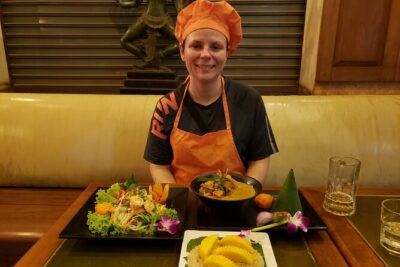
Award-Winning Cooking Class Experience with Professional Teacher
Read our review →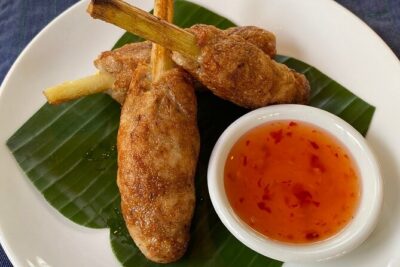
Siem Reap: Afternoon Cooking Class & Village Tour
Read our review →This kitchen also appears in