Review · SAN SEBASTIAN
Basque Cooking Experience: Market Tour & Hands-On Class English
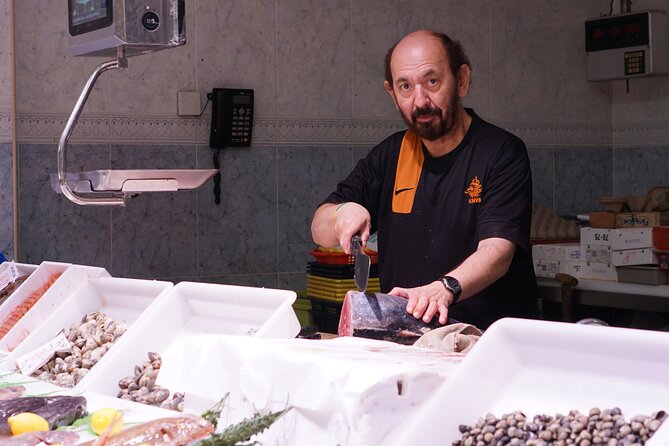
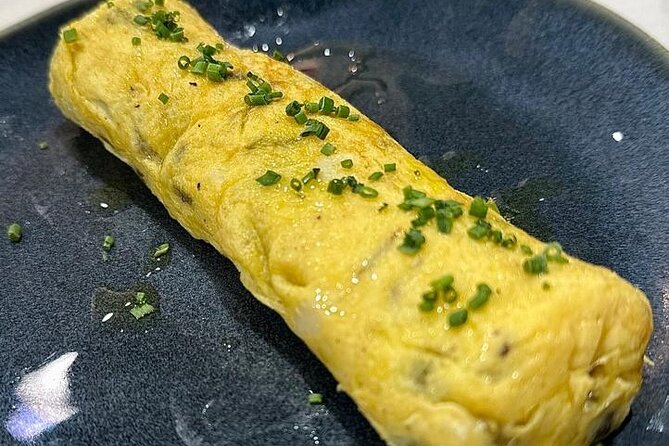
San Sebastián’s best food lesson may begin before you reach the stove. At Mercado de La Bretxa, Carlos introduces you to the farmers, fishmongers, and butchers behind Basque cooking, then brings those ingredients into a hands-on class. You help prepare four courses, including cod omelette, hake in green sauce, rib steak with piquillo peppers, and burnt Basque cheesecake.
I like the small class size, capped at 10 people, because you get more than a demonstration. You chop, mix, cook, and ask questions. I also like the market visit, where you learn how to judge fresh fish and see how local produce shapes the meal. The main consideration is the price, $168.17 per person, which is a serious spend for a three-and-a-half-hour activity, though the meal, drinks, instruction, recipes, and apron add real value.
Key points at a glance
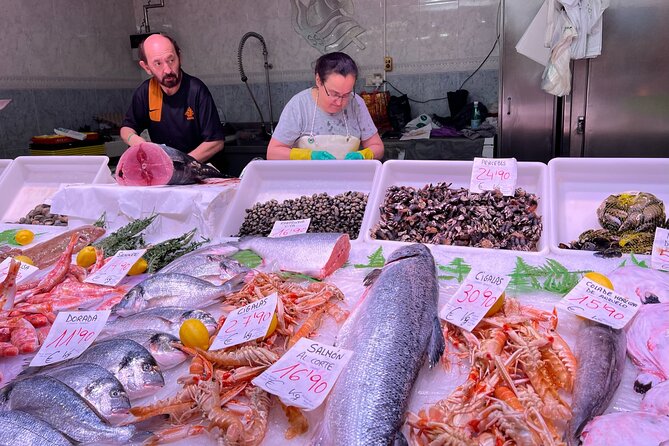
- Market-first cooking lesson: Visit Mercado de La Bretxa and meet the people who sell the ingredients used in class.
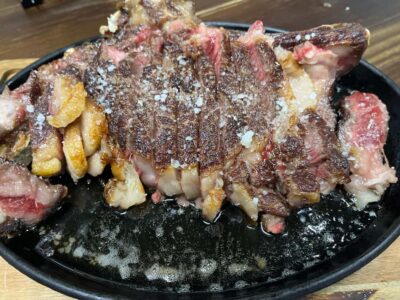
- Four-course Basque menu: Prepare cod omelette, hake in green sauce, rib steak with piquillo peppers, and burnt Basque cheesecake.
- Carlos leads the class: Expect clear English instruction, practical cooking tips, and a friendly teaching style.
- Hands-on from start to finish: You do more than watch, with chopping, cutting, mixing, and grilling built into the class.
- Local drinks with lunch: Courses are paired with regional wine, cider, or other beverages, with wine served only to participants over 18.
- Small group, useful souvenirs: A maximum of 10 people helps keep the lesson personal, and you take home an apron and recipes.
Why this San Sebastián food class works so well
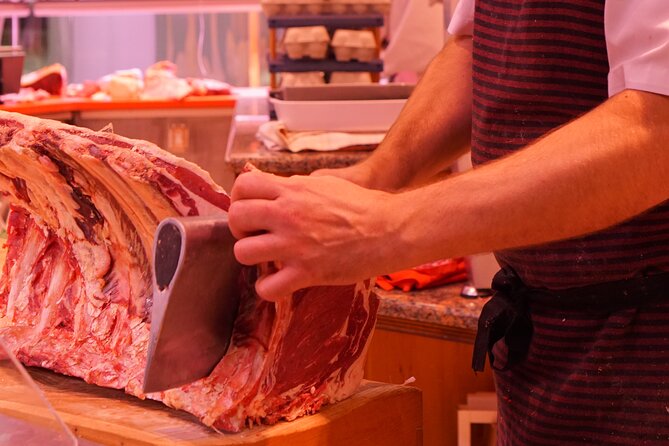
The clever part of this class is its order. You do not begin with a prepared cooking station and a speech about Basque food. You first see where the food comes from, then use it in the kitchen.
That matters in San Sebastián, where food is closely tied to local buying habits. A market visit gives you a practical introduction to the ingredients rather than a broad cultural lecture. You see fish, meat, and produce in their working setting, and you learn why freshness and careful selection matter before you try to cook.
Carlos is the main guide and instructor, with Luis and other staff helping in the kitchen. The teaching style is friendly and clear in English. You can ask questions about the ingredients, the cooking methods, or the local food customs without needing previous experience.
The class also has a social side. With no more than 10 people, you have a good chance to work alongside others instead of standing at the back of a large group. The format suits couples, solo visitors, friends, and families with an interest in cooking. It can also work for an experienced home cook, since the market and local techniques add something beyond a basic beginner class.
More Cooking Classes with a Market Tour in Spain
- Barcelona: Paella Cooking Experience & Boqueria Market Tour
★ 4.8 · 3,661 reviews - Barcelona Paella Cooking Class with Market Visit, Tapas & Sangria
★ 5.0 · 2,531 reviews - Paella Cooking Class, Wine Tasting & Central Market in Valencia
★ 5.0 · 1,150 reviews
Starting at Mercado de La Bretxa
The experience begins at 10:00 a.m. at the Donostia Information and Tourism Office on Alameda del Boulevard, 8. From there, you head to Mercado de La Bretxa, the first major stop.
The market section is not just a quick walk past food stalls. You learn how to select fish and how the local vendors handle the products that will later appear on your plate. The focus includes fishmongers, farmers, and butchers, so you get a look at several parts of the local food chain.
Fish is especially important here. The class uses hake for the main course, and the market visit helps you understand what to look for when choosing seafood. That lesson has value at home too. It gives you a method for selecting ingredients rather than simply telling you that Basque cuisine depends on fresh food.
You also get a chance to meet the people selling the ingredients. That contact gives the market visit more purpose than a sightseeing stop. It connects the meal you will cook with the people who supply it.
The market can be the most useful part for anyone who already cooks regularly. A standard cooking class can teach you a recipe, but this visit adds shopping judgment and local context. Beginners benefit too, since the guide explains the products before asking you to handle them.
Keep in mind that the morning starts with the market, so this is not an activity for someone who wants to sleep late and meet the group at lunchtime. The start time is fixed at 10:00 a.m., and the market is an active working stop rather than a relaxed café visit.
From fresh ingredients to four Basque dishes
After the market, you move to the cooking school for the practical part of the morning. The kitchen has enough room for the class, with a separate dining area where you eat what you prepare.
The menu gives you a useful range of Basque cooking techniques. It is not four versions of the same dish. You work with eggs and cod, prepare a fish course, cook steak, and finish with cheesecake. That variety keeps the lesson interesting and lets you practice several basic methods.
Cod omelette
The cod omelette starts the meal. It introduces a simple dish in which the quality and preparation of the fish matter as much as the cooking itself.
This is a good first course for a mixed-ability class. You can learn the basic handling of the ingredients without facing the more involved steps of a main dish. The class is structured so that each person has a chance to help, rather than watching Carlos do all the work.
Same kitchen, a different dish:
- Barcelona Interactive Spanish Cooking Experience
★ 4.5 · 2,155 reviews - Spanish Cooking Class Paella Tapas and Sangria in Madrid
★ 5.0 · 1,340 reviews - Paella Cooking Class in Madrid with Bottomless Wine Pairing
★ 5.0 · 985 reviews - Seville: Spanish Cooking Class with Dinner
★ 4.9 · 900 reviews
Hake in green sauce
The hake in green sauce brings the market lesson into sharper focus. It is the point where selecting good fish has a direct effect on the final dish.
You receive step-by-step guidance, so you are not expected to know how to prepare hake or make the sauce in advance. The recipe also gives you a practical example of how a few well-handled ingredients can form a central Basque dish.
Rib steak with piquillo peppers
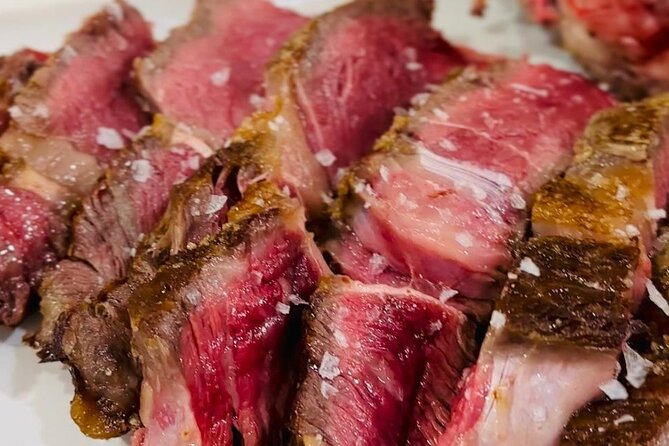
The rib steak adds a change of pace. You move from fish preparation to meat and grilling, with piquillo peppers providing a familiar Basque touch.
This course makes the class more useful for home cooks because it covers a technique many people already use but may want to improve. You get instruction while working, not just a recipe card at the end. If you do not eat red meat, this is worth considering before booking. One participant was accommodated with a no-red-meat diet, but the supplied information does not promise that every dietary request can be handled, so ask ahead.
Burnt Basque cheesecake
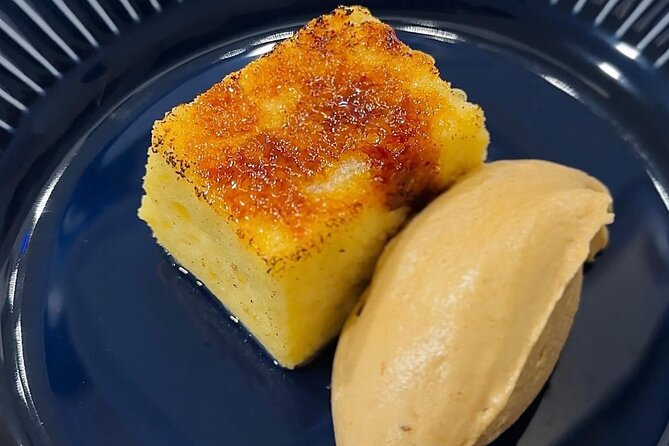
Dessert is burnt Basque cheesecake, one of the most recognizable dishes associated with San Sebastián’s food scene. It is also a smart ending for the lesson because it gives you a recipe that feels special without requiring a long list of complicated components.
The cheesecake has proved popular with people who want to recreate the meal at home. You receive copies of the recipes, so the class does not end when you leave the dining table.
What hands-on really means here
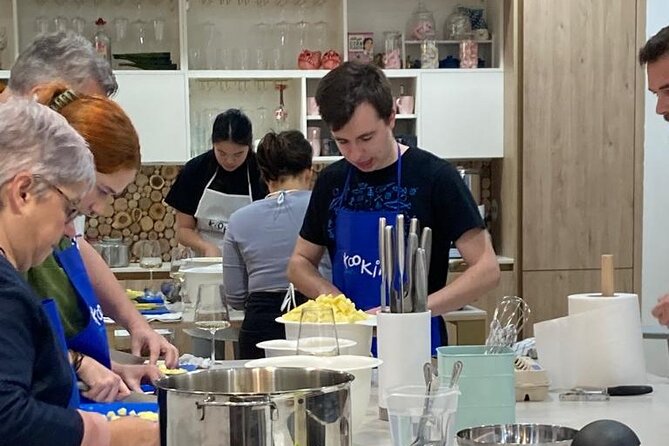
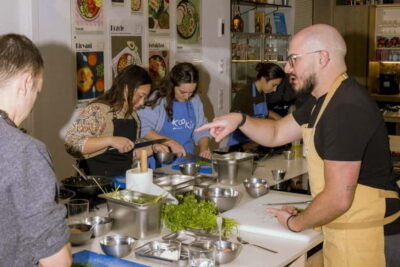
You are not simply seated while the chef performs. The format includes chopping, cutting, mixing, and grilling, with Carlos directing the group and helping when needed.
That distinction matters. Some cooking activities call themselves hands-on but give each person only one small task. Here, the stated format and the detailed descriptions of the class point to active participation across the meal. If you enjoy learning by doing, this is a strong reason to choose it.
The class welcomes all experience levels. Beginners get direct instructions and support, while more experienced cooks can focus on local ingredients, seafood selection, and Basque methods. Carlos is described as patient, personable, and easy to understand, which helps when a group includes people with different cooking backgrounds.
The teaching also goes beyond the four recipes. You pick up general kitchen techniques that can be used in everyday cooking. That makes the class more valuable than an activity built only around copying a fixed menu.
There is still a limit to what three and a half hours can cover. You will not become an expert in Basque cooking in one morning, and the group format means Carlos must divide his attention. The small group helps, but it remains a shared class rather than a private lesson.
Eating the meal with local drinks
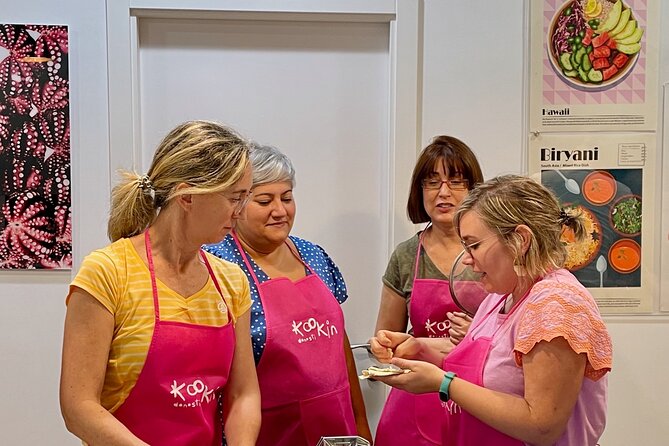
Once the cooking is done, you sit down and eat the food together. Each course comes with a suggested pairing, including local wine, cider, or another regional beverage.
This is one of the strongest cultural parts of the activity. You are not just learning what goes into the food. You are learning how the meal is enjoyed in the Basque Country. The class may also include instruction in pouring txakoli, the local drink associated with San Sebastián and the surrounding Basque region.
Wine is available only to people over 18. The information does not specify every nonalcoholic option, so anyone avoiding alcohol should confirm what will be served before booking.
The shared meal gives the class a relaxed finish. You cook with people you may not know, then sit down at the same table to eat the result. That can make the morning feel less like a formal lesson and more like a communal meal, without losing the educational side.
The food itself is the main reward. You get four prepared courses rather than a small tasting, and the menu includes seafood, meat, vegetables, eggs, and dessert. If you are comparing this with a standard market tour or a restaurant meal, the price begins to make more sense because you receive both activities and lunch.
Price, group size, and practical value
At $168.17 per person, this is not a cheap way to grab lunch in San Sebastián. It is a premium food activity, and you should book it because you want the full combination of market visit, instruction, cooking, meal, and drinks.
The value improves if you would otherwise pay separately for a market tour, a cooking class, and a substantial meal. You also receive the recipes and an apron to take home. Those extras are modest, but they make the experience easier to remember and repeat in your own kitchen.
The maximum group size is 10. That is small enough for personal help and conversation, while still large enough to create a social atmosphere. The class is offered in English, which makes the cooking instructions accessible to English-speaking visitors.
It lasts about three hours and 30 minutes and ends back at the original meeting point. Plan your day around the full block of time rather than treating it as a quick morning stop.
The activity is often reserved well ahead, with an average booking time of 29 days in advance. If your dates are fixed, do not assume you can leave it until the last minute.
Free cancellation is available if you cancel at least 24 hours before the 10:00 a.m. start time. Changes or cancellations inside that window are not accepted for a refund. The activity also requires a minimum number of participants, and if the provider cancels because that minimum is not met, you are offered another date or experience, or a full refund.
Who should book this class
I would choose this for you if food is one of the main reasons you are visiting San Sebastián. It gives you a better understanding of the city’s cooking than simply ordering pintxos and moving on.
It is particularly well suited to:
- First-time visitors who want a local food introduction
- Home cooks who enjoy learning techniques they can repeat
- Couples and friends looking for a shared activity
- Solo visitors who like small-group social experiences
- Anyone curious about seafood, local markets, and Basque ingredients
- People who want a substantial meal as part of a cooking activity
It may be less suitable if you want a private class, dislike group participation, or have strict dietary needs that have not been confirmed in advance. It is also not the best pick if your only goal is to eat. You will spend part of the morning shopping, listening, preparing, and cleaning as part of the cooking process.
Should you book the Basque Cooking Experience?
Yes, if you want an active food experience rather than a passive tasting. The strongest reasons to book are the market visit, the small group, Carlos’s clear instruction, and the four-course meal with local pairings.
The price is high, but the package is substantial. You spend about three and a half hours learning how ingredients are chosen, preparing a complete Basque menu, eating what you cook, and taking home recipes and an apron.
Book it early if you want a specific date, especially since it is commonly reserved several weeks ahead. If you have dietary restrictions, confirm them before booking. For most food-focused visitors, this is a practical and enjoyable way to connect San Sebastián’s markets, cooking, and table in one morning.
FAQ
Where does the Basque cooking experience begin?
It begins at the Donostia Information and Tourism Office at Alameda del Boulevard, 8, 20003 Donostia, San Sebastián.
What time does the class start?
The activity starts at 10:00 a.m.
How long does the experience last?
It lasts approximately three hours and 30 minutes.
Is the class offered in English?
Yes. The experience is offered in English.
How many people can join the class?
The class has a maximum of 10 participants.
What dishes will I prepare?
The menu includes cod omelette, hake in green sauce, rib steak with piquillo peppers, and burnt Basque cheesecake.
Are drinks included?
The meal includes thoughtful beverage pairings, including regional wine and cider. Wine is served only to participants over 18.
What do I take home?
You receive an apron as a souvenir and copies of the recipes prepared during the class.
New cooking classes around Spain
- Seville: Paella-Cooking Experience with Sangria & Full Meal★ 4.9 · 42 reviews
- Seville: Paella Showcooking Experience★ 4.7 · 161 reviews
- Seville: Paella Cooking Class & 30-Min Local Expert Q&A★ 4.8 · 37 reviews
- San Sebastián: Market Tour, Cooking Class, & Meal★ 5.0 · 2 reviews
- San Sebastián: Market Tour and Basque Cooking Class English★ 5.0 · 5 reviews
- Barcelona: Paella Seafood Master Cooking Class with Sangria★ 5.0 · 73 reviews
- Pontevedra: Galician Cooking Class with Chef Instructor★ 4.9 · 3 reviews
- Mojo Workshop Cooking Class in Ancient Canarian Village★ 4.9 · 127 reviews
San Sebastian Cooking Classes, side by side.
San Sebastián: Market Tour and Basque Cooking Class English
Read our review →