
Review · GREECE
Chania Area: Cooking Class at a Farm in Stylos Village
The best part of this Stylos Village experience is that you do not simply watch someone prepare Cretan food. You walk through the farm, gather ingredients, and help turn them into a full meal over a wood fire. I like the personal family setting and the chance to learn recipes passed down through generations. I also like that the meal uses produce from the farm and garden.
The main consideration is time and comfort. Five hours is a generous stay, and much of it takes place outdoors, so you should wear comfortable shoes and sun protection. Hotel transfers are not included, and the $129 price is higher than a basic cooking lesson, though it includes food, drinks, and the full farm visit.
Key points at a glance
- Farm-to-table cooking: Gather vegetables and herbs from the garden before preparing the meal.
- Traditional Cretan menu: Make tzatziki, dakos, Cretan salad, gemista, lamb, fried potatoes, and cheese pies.
- Cooking over wood: The hosts use wood fires rather than electricity for the cooking.
- Family atmosphere: The class feels like an invitation into local home life, not a formal demonstration.
- Five hours with a full meal: Coffee, homemade lemonade, raki, house wine, and lunch are included.
- Simple planning: Bring sun protection and comfortable shoes, and arrange your own way to the farm.
Arriving at the farm in Stylos Village
Stylos Village gives this class a quieter setting than a cooking school in central Chania. The experience begins with a welcome of traditional delicacies, coffee, and homemade lemonade. That opening matters because it lets you settle in before the practical work starts.
I like this kind of beginning. You are not rushed straight to a workbench or handed a recipe sheet. The welcome sets a relaxed pace and gives you time to meet the family and the other people joining the class.
The hosts describe their cooking as something learned from their grandmother and mother. That family connection shapes the whole experience. You are learning food that belongs to a household and a region, rather than a menu designed only for tourists.
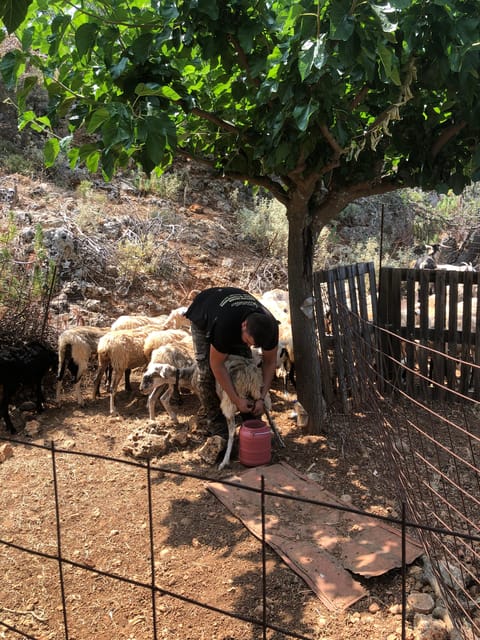
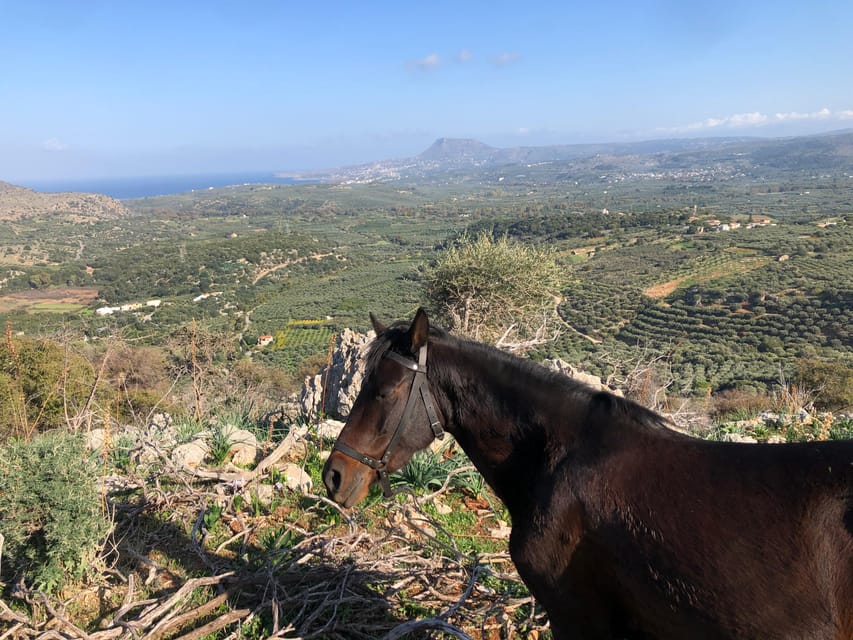
The setting is part of the appeal. You are around a farm with views, garden space, and places to work and eat. Since the activity lasts five hours, the location matters. A cramped indoor class could feel long, but a farm setting gives the day room to breathe.
More Farm Cooking Classes in Greece
- Naxos Perivoli Farm Experience & Wood-fire Cooking Class
★ 5.0 · 339 reviews - Melanes: Naxos Perivoli Farm & Cooking Class with Wood Fire
★ 5.0 · 177 reviews - Athens Cooking Class and Lunch in our beautiful garden in Greece
★ 5.0 · 130 reviews
Gathering herbs and vegetables from the garden
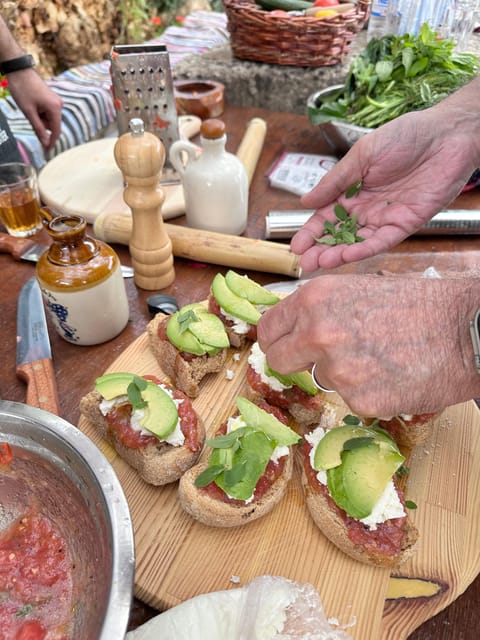
After the welcome, you take a walk through the garden to collect the ingredients used in the cooking. This is one of the most useful parts of the activity because it connects the finished dishes to the soil, plants, and daily work behind them.
You may gather vegetables and aromatic herbs for the recipes. The hosts say they use biological ingredients, and the food is prepared with produce from the farm and garden. The exact harvest can depend on what is growing, so you should not expect a fixed garden tour with a guaranteed list of plants.
I like this approach because it gives you a better sense of how Cretan food is built. Fresh herbs are not just a garnish added at the end. They help shape the flavor of salads, dips, stuffed vegetables, and cooked dishes.
This walk also adds gentle activity to the day. The experience includes exercise on the farm, but it is not presented as a strenuous hike. Still, you should wear shoes that are comfortable on outdoor ground. Sun protection is important, especially during the warmer months.
Cooking Cretan dishes over a wood fire
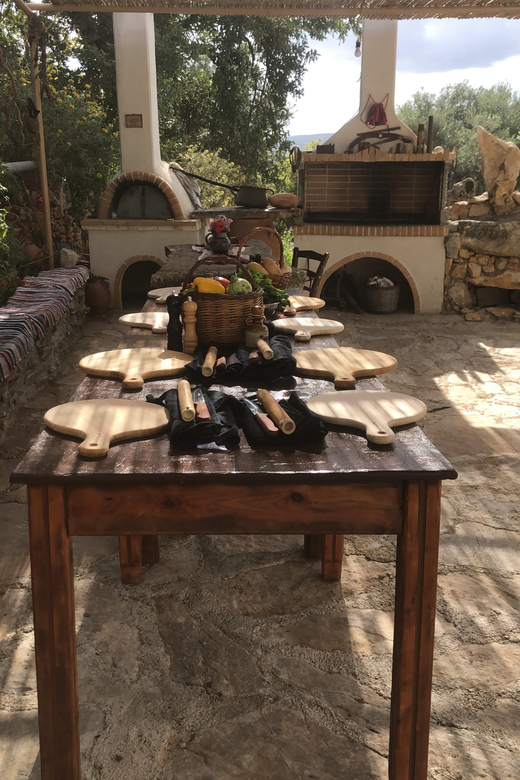
The cooking lesson covers a wide range of familiar Cretan foods. You help prepare tzatziki, dakos, Cretan salad, gemista, tsigariasto lamb, fresh fried potatoes, and traditional cheese pies.
That is a substantial menu for one class. You will not master every detail in the same way you might in a small, tightly focused pastry workshop. Instead, you get a broad introduction to the flavors and methods that shape a Cretan family meal.
Tzatziki gives you a simple starting point, while dakos shows how a few strong ingredients can make a satisfying dish. Cretan salad keeps the focus on fresh produce. Gemista, or stuffed vegetables, gives you a look at a more involved home-style preparation.
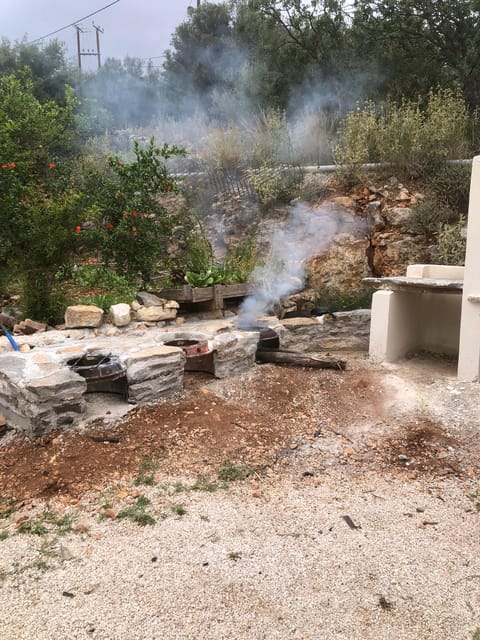
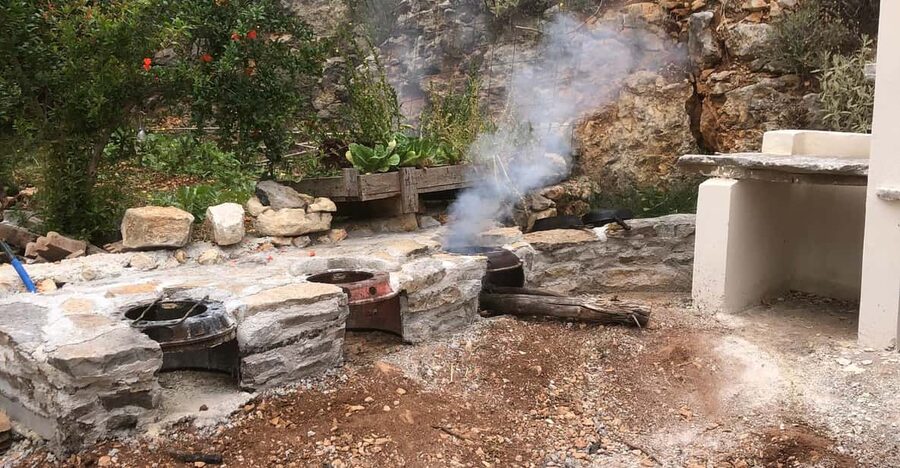
The lamb and potatoes make the meal feel substantial. Tsigariasto lamb is a traditional slow-cooked style, and the wood fire adds a clear connection to older household cooking methods. The hosts do not use electricity for the cooking, relying only on wood.
That choice is part of the character of the class, but it also has a practical effect. Wood-fire cooking can be slower and less exact than an electric or gas stove. If you want a polished, highly controlled cooking demonstration, this may feel informal. If you want to see how food is made in a more traditional setting, it is a strong fit.
The cheese pies add another hands-on element. They are a good reminder that Cretan cooking is not only about vegetables, olive oil, and herbs. It also includes breads, doughs, dairy, meat, and generous shared meals.
You should expect to participate rather than simply take notes. The hosts aim to teach cooking tricks and encourage you to make the recipes together. The exact division of tasks is not specified, so the amount you personally chop, mix, shape, or cook may vary.
Lunch with wine, raki, and homemade drinks
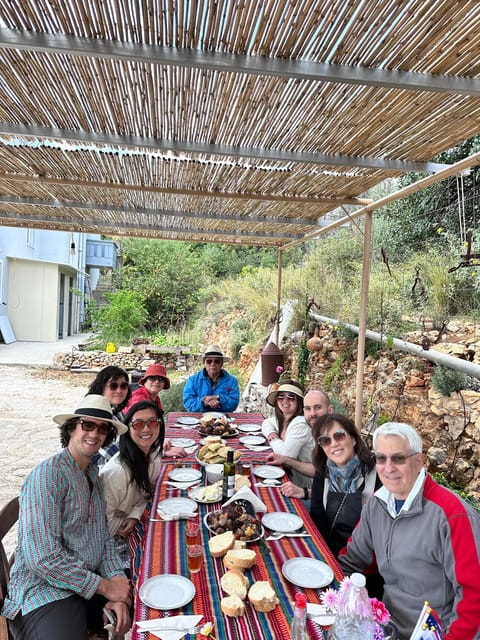
Once the dishes are ready, you sit down for a full meal. Local wine is served with lunch, and the included drinks also cover coffee, homemade lemonade, and raki.
The meal is a real part of the experience, not a small tasting after a short demonstration. You are preparing several dishes and then eating them together, so bring a healthy appetite.
I especially like the way the meal follows the garden walk and cooking. You can see where some ingredients came from, take part in preparing them, and then enjoy the results at the same table. That makes the food easier to remember than a dish served without context.
The drinks also reflect the rhythm of a Greek welcome. Coffee and lemonade suit the beginning of the visit, while wine belongs with lunch. Raki adds a traditional local touch. If you do not drink alcohol, you can still take part in the cooking and meal, but the supplied details do not specify alternative drinks beyond coffee and lemonade.
The social side is just as important as the menu. Several people describe the atmosphere as warm, open, and family-like. You should expect conversation and cultural exchange, not a silent class where everyone concentrates only on measurements.
Some people were especially pleased by feeling included in the family setting. That makes this a good choice if you want personal contact and local conversation. It may be less suitable if you prefer a private, highly structured lesson with little interaction.
Same kitchen, a different dish:
- Athens: Classic Cooking Class with Market Visit and Wine
★ 5.0 · 1,101 reviews - Athens: Food Market Visit and Cooking Class with Wine
★ 4.9 · 1,087 reviews - Greek Cuisine Cooking Class in Santorini with Recipes and Wine
★ 5.0 · 969 reviews - Naxos: Half-Day Cooking Class at Basiliko Family Tavern
★ 5.0 · 887 reviews
What the family setting adds
The hosts present their cooking as a tradition taught by their grandmother and mother. That gives the recipes a personal story without turning the class into a history lecture.
The strongest feature here is the sense of being welcomed into ordinary local life. The setting is a farm, the food is homemade, and the cooking is shared. You are not only learning what goes into a dish. You are also seeing how food can organize a family gathering.
Past participants from France, Australia, Germany, and the United States have described the hosts as warm and open. One person who arrived late still felt welcomed. That suggests the tone is forgiving and informal, though you should still aim to arrive on time out of courtesy.
The class also seems suited to people who enjoy conversation across cultures. You can learn about Greek customs while cooking, and the hosts encourage an easy exchange rather than keeping the focus only on technique.
The tradeoff is that an informal family atmosphere may mean less standardization. Recipes may be taught by feel, with practical tips rather than exact professional measurements. For many home cooks, that is the point. If you need precise quantities and a printed technical method for every dish, check what recipe materials are provided before booking.
Is $129 a fair price?
At $129 per person, this is not a cheap meal with a short cooking add-on. It is a five-hour experience that includes a farm visit, ingredient gathering, cooking instruction, a full lunch, coffee, lemonade, raki, and house wine.
I think the price can make sense if you value time with a local family and want a meal that you help create. The cost covers more than the food on the plate. You are paying for the setting, the preparation, the teaching, the drinks, and the long social meal.
The value is weaker if your main goal is simply to eat traditional dishes. Chania has many ways to enjoy Cretan food without spending $129. This activity makes sense when the process matters as much as the meal.
There is also no hotel transfer. You need to arrange your own transportation to Stylos Village, and that adds a planning step and possibly an extra cost. The supplied information does not give a transfer option, meeting point from Chania, or transport price, so confirm the exact arrival details before paying.
The class is listed as wheelchair accessible. Since the activity includes a garden walk and farm exercise, I would still ask the provider about the specific route, outdoor surfaces, and access to the cooking and dining areas if you use a wheelchair.
Who will enjoy this five-hour experience?
I would recommend it most strongly to people who enjoy food as a social activity. Couples, families, and small groups who like cooking together should find plenty to do.
It also suits anyone who wants a less polished and more personal look at Crete. You will not be visiting a grand culinary venue. You will be spending time at a family farm, using local ingredients, and sharing dishes in a relaxed setting.
Vegetable lovers should have plenty to enjoy, with salad, dakos, gemista, herbs, tzatziki, potatoes, and cheese pies on the menu. Meat eaters will appreciate the lamb. The supplied details do not explain how dietary restrictions or allergies are handled, so tell the provider in advance rather than assuming substitutions are available.
Children may enjoy the garden and hands-on cooking, but the activity lasts five hours. Families should consider the child’s patience, the outdoor setting, and the wood-fire cooking before booking.
I would be more cautious about recommending it to someone who wants a quick activity, a chef-led technical course, or a fixed schedule with detailed recipe instruction. The family atmosphere is central, and conversation is part of the experience.
Practical details before you book
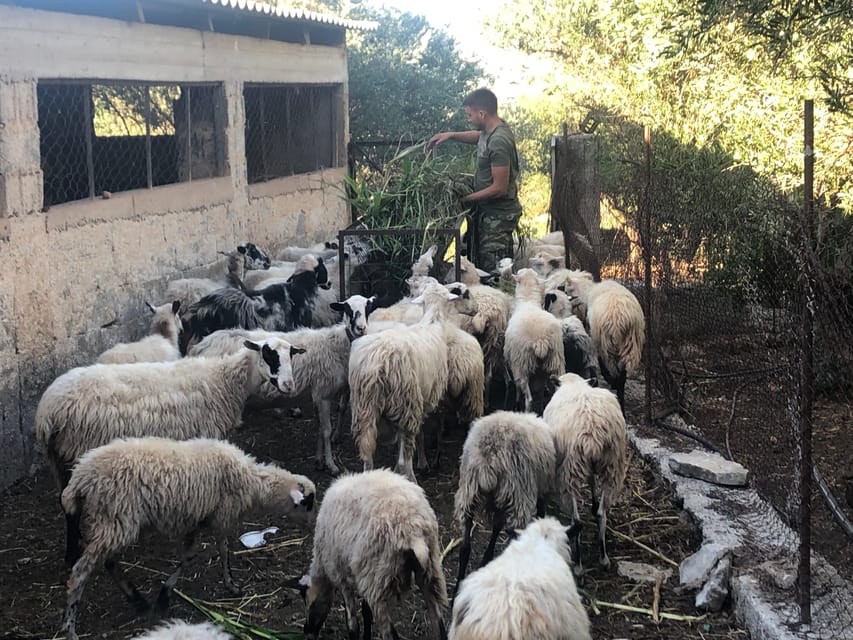
The class lasts five hours, so leave enough time in your Chania plans. The starting time can vary, and you need to check availability when choosing a date.
Wear comfortable shoes and use sun protection cream. These are not minor suggestions, since you will walk around the farm and spend time outdoors.
You can cancel up to 24 hours before the activity for a full refund. You can also reserve now and pay later, which helps if you are still arranging your Crete schedule.
The activity is wheelchair accessible, but ask for specific access details if you need them. Hotel transfer is not included, so arrange your own transport to the farm in Stylos Village.
Should you book the Stylos Village cooking class?
Book it if you want a long, personal food experience rather than a short cooking lesson. The garden walk, wood-fire cooking, broad Cretan menu, and shared meal give you a real sense of how the dishes fit together.
The strongest reasons to go are the family welcome and the chance to cook with ingredients gathered on site. The main drawbacks are the $129 price, the missing hotel transfer, and the possibility that the informal format will not provide the exact technical instruction some cooks want.
For me, this is best treated as a half-day cultural visit with food at its center. If that sounds better than simply sitting down at a restaurant, it is a worthwhile choice near Chania.
FAQ
Where does the cooking class take place?
The class takes place at a farm in Stylos Village, in the Chania area of Crete.
How long does the experience last?
The experience lasts five hours.
What food will I prepare?
You will prepare tzatziki, dakos, Cretan salad, gemista, tsigariasto lamb, fresh fried potatoes cooked over a wood fire, and traditional cheese pies.
Is lunch included?
Yes. A full meal is included after the cooking session.
Which drinks are included?
Coffee, homemade lemonade, raki, and house wine are included.
Is hotel transportation included?
No. Hotel transfer is not included, so you need to arrange your own way to the farm.
What should I wear?
Wear comfortable shoes and apply sun protection cream. The experience includes time walking around the farm and garden.
New cooking classes around Greece
- Savor Rhodes: 11-Dish Wine Pairing and Cooking Adventure★ 4.4 · 12 reviews
- Santorini: Hands on Cooking Class with a Chef★ 4.7 · 16 reviews
- Santorini: Cooking Class with a Professional incl. Full Meal★ 5.0 · 2 reviews
- Santorini: Greek Cooking Class with Wine Tasting★ 5.0 · 7 reviews
- Santorini: Vineyard and Winery Tour with Cooking Class★ 4.9 · 5 reviews
- Santorini Cooking Class with Wine Tasting & Lunch★ 4.9 · 36 reviews
- Santorini: Cooking Class with a Chef at the Ftelos Brewery★ 4.8 · 33 reviews
- Rhodes: Winery Tour, Tasting and cooking with the Winemaker★ 4.8 · 21 reviews
Greece Cooking Classes, side by side.
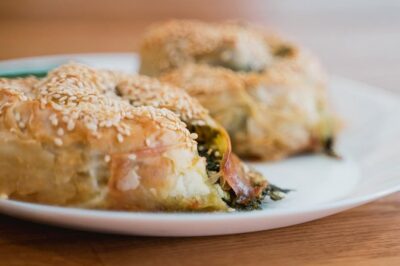
Athens: Classic Cooking Class with Market Visit and Wine
Read our review →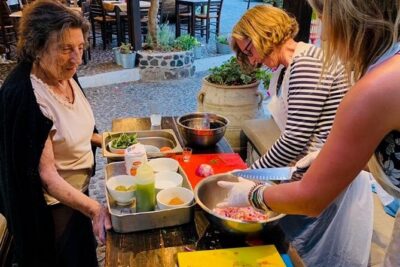
Greek Cuisine Cooking Class in Santorini with Recipes and Wine
Read our review →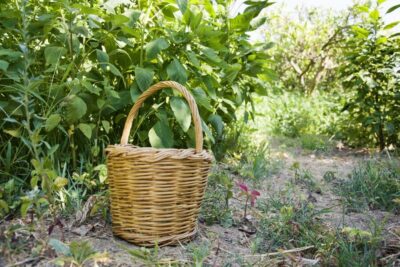
Naxos: Half-Day Cooking Class at Basiliko Family Tavern
Read our review →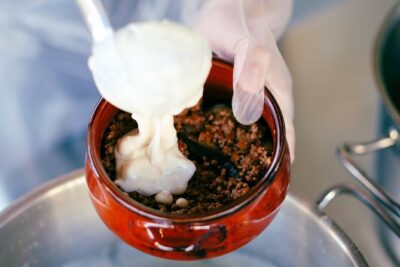
Greek Cooking Class in Athens Including Rooftop Dinner with Acropolis View
Read our review →
Greek Small-Group Athens Cooking Class & Dinner
Read our review →
Exclusive Cooking Experience in our Cave Home by Petra Kouzina
Read our review →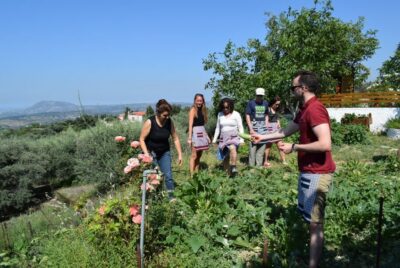
Chania: Authentic Cooking Class in the White Mountains
Read our review →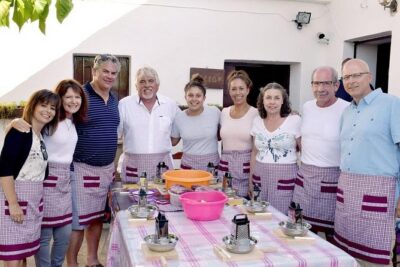
This kitchen also appears in