
Review · GREECE
Crete: Cooking classes. Based on Cretan cuisine
The best part of this Cretan cooking class near Rethymno is that it feels tied to everyday island life, not a polished restaurant demonstration. You work with greens, herbs, homemade cheese, olive oil, and other ingredients used in Cretan homes, then sit down to eat what you prepared.
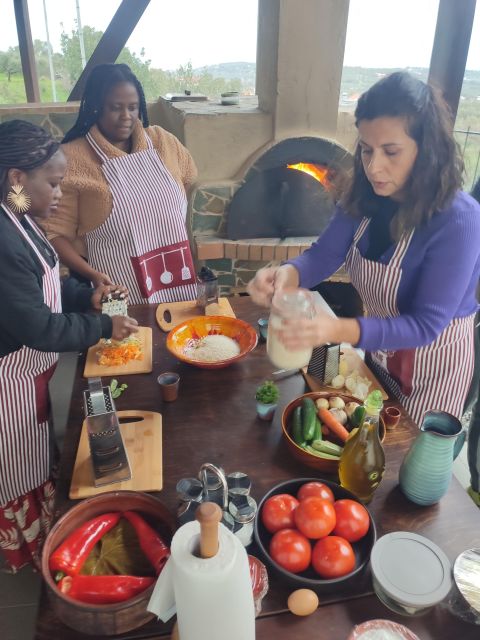
I like the warm, family-style welcome from Chrysoula and the hands-on menu, which includes moussaka, dolmadakia, chortopites, tzatziki, and rooster with orzo. I also like the setting: an outdoor kitchen, an olive-wood-fired oven, orchards below, and vegetables from the garden. The main drawback is practical: transportation is not included, and the meeting point is given as a roadside location, so you need to arrange your own arrival or request a transfer price.
Key points at a glance
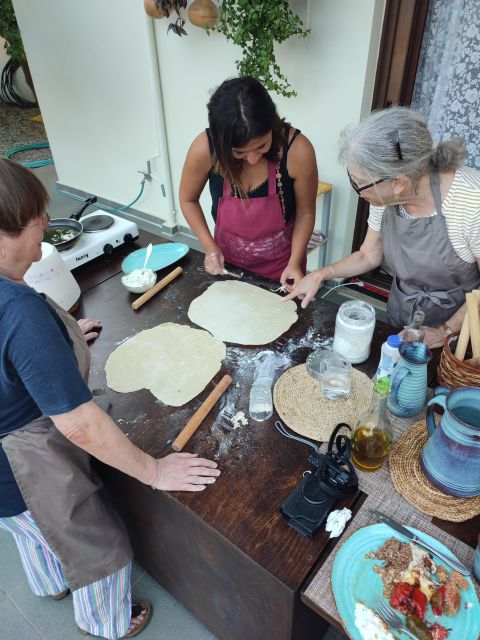
- A real cooking session: You prepare and cook the dishes instead of simply watching a chef work.
- Chrysoula’s welcoming style: The class is designed to feel like cooking with a beloved aunt.
- A broad Cretan menu: Expect pies, cheese, salad, stuffed vine leaves, moussaka, rooster with orzo, and dessert.
- An outdoor setting: The kitchen, olive-wood-fired oven, garden, and olive orchards add a strong sense of place.
- A shared meal at the end: You eat the food you made together, with red or white wine included.
- Useful planning detail: The class lasts 3.5 hours, costs $153 per person, and does not include transportation.
Cooking Cretan food the way it is eaten at home
Cretan cooking is often praised for its simplicity, but simple does not mean plain. The food depends on good ingredients, careful preparation, and imagination rather than heavy seasoning or flavor enhancers.
That idea shapes this class. You may work with seasonal greens, herbs, fruit, fresh milk, meat, and plenty of Cretan olive oil. These are not presented as rare luxury ingredients. They are the basic building blocks of the island’s daily cooking.
I like this approach because it gives you a better sense of Cretan food than a restaurant meal alone. You learn how the ingredients fit together, why wild greens matter, and how traditional dishes can be filling without relying on elaborate sauces or strong spices.
The class is also useful for people who enjoy food but do not consider themselves experienced cooks. One of the strongest details from the experience is that Chrysoula’s instructions make dishes such as moussaka and dolmas feel manageable. You are not expected to arrive with professional skills.
More Greek Cooking Classes around Greece:
- Greek Cuisine Cooking Class in Santorini with Recipes and Wine
★ 5.0 · 969 reviews - Greek Cooking Class in Athens Including Rooftop Dinner with Acropolis View
★ 5.0 · 826 reviews - Greek Small-Group Athens Cooking Class & Dinner
★ 5.0 · 574 reviews
Meeting Chrysoula near Rethymno
The cooking takes place in the Rethymno area, with the activity beginning and ending at the listed location, 9H27+M8. The meeting point is on the road, and the hostess waits there to direct you to the cooking area.
That arrangement is worth taking seriously. This is not a central Rethymno restaurant with an obvious front door. You need to plan how you will reach the meeting point. Transportation is not part of the $153 price, though you can contact the provider for a transfer quote.
Once you arrive, the tone becomes personal. Chrysoula is the host and English and Greek are spoken during the class. The atmosphere is meant to feel like visiting family rather than attending a formal culinary school, which suits the food well.
You should allow enough time to find the roadside meeting spot. The supplied location code is useful, but you should still check the starting time and arrival instructions before the day of the class.
A Cretan welcome with raki or Greek coffee
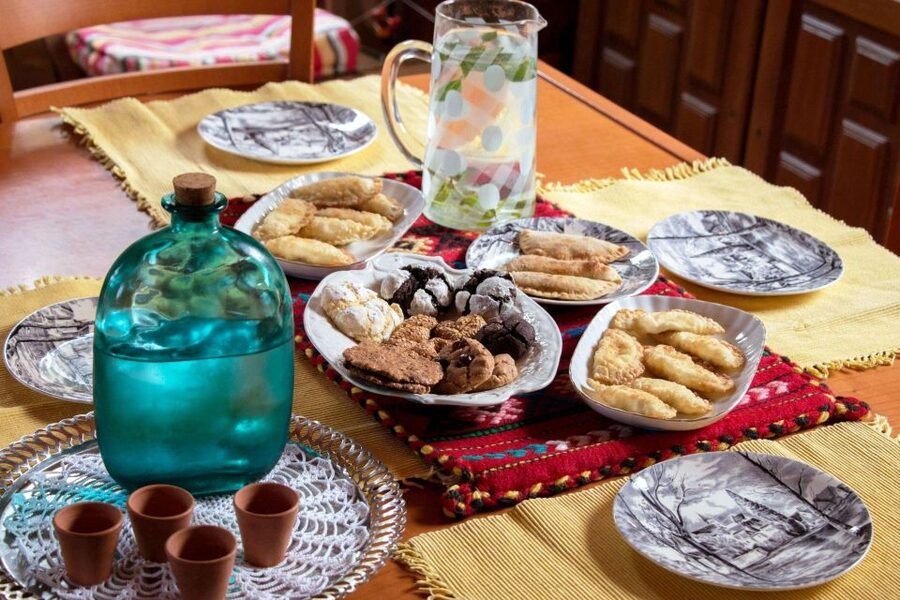
The session begins with an aperitif, either raki or Greek coffee, along with cheese and small pies made with homemade cheese and honey. Raki is a well-known local drink, so this opening gives you an immediate taste of Cretan hospitality.
If you prefer a nonalcoholic start, Greek coffee is the better choice. The available information does not specify other drink substitutions, so anyone with dietary or beverage concerns should ask ahead.
The early dishes also introduce the balance used throughout the class. Homemade cheese, honey, pastry, and olive oil create plenty of flavor without complicated seasoning. You get a quick lesson in how Cretan food often combines earthy, salty, creamy, and sweet elements.
Making pies, cheese, and wild-green dishes
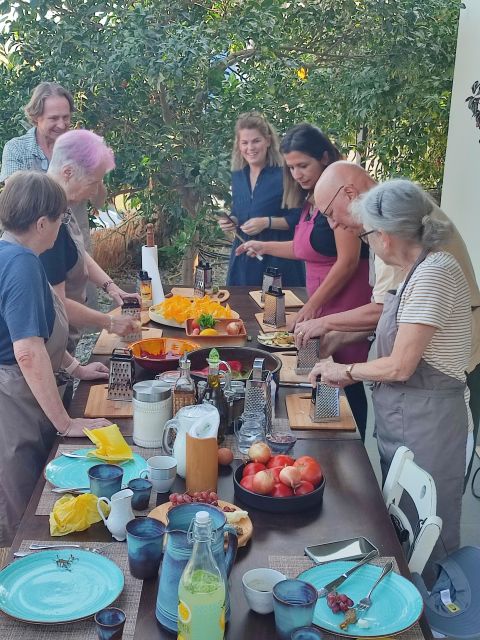
The pie-making section covers two distinct Cretan styles. Small cheese pies are served with honey, while chortopites are filled with several kinds of wild greens.
This is one of the more interesting parts for anyone who wants to understand local cooking. Wild greens are an important part of Cretan food, and the class connects them with a practical home recipe rather than treating them as a novelty.
You also learn about homemade cheese made from fresh sheep’s and goat’s milk. The ingredients are presented as part of traditional household cooking, and the lesson gives you a clearer idea of how dairy fits into the island’s food culture.
The menu is large, so the class is not built around mastering one recipe in minute detail. Instead, you get a broad introduction to several dishes and the techniques behind them. That is a good trade for a short 3.5-hour session, but it means you should not expect an advanced pastry course or a professional kitchen certificate.
More cooking classes around Greece:
- Athens: Classic Cooking Class with Market Visit and Wine
★ 5.0 · 1,101 reviews - Athens: Food Market Visit and Cooking Class with Wine
★ 4.9 · 1,087 reviews - Naxos: Half-Day Cooking Class at Basiliko Family Tavern
★ 5.0 · 887 reviews - Exclusive Cooking Experience in our Cave Home by Petra Kouzina
★ 5.0 · 572 reviews
Preparing the cold dishes
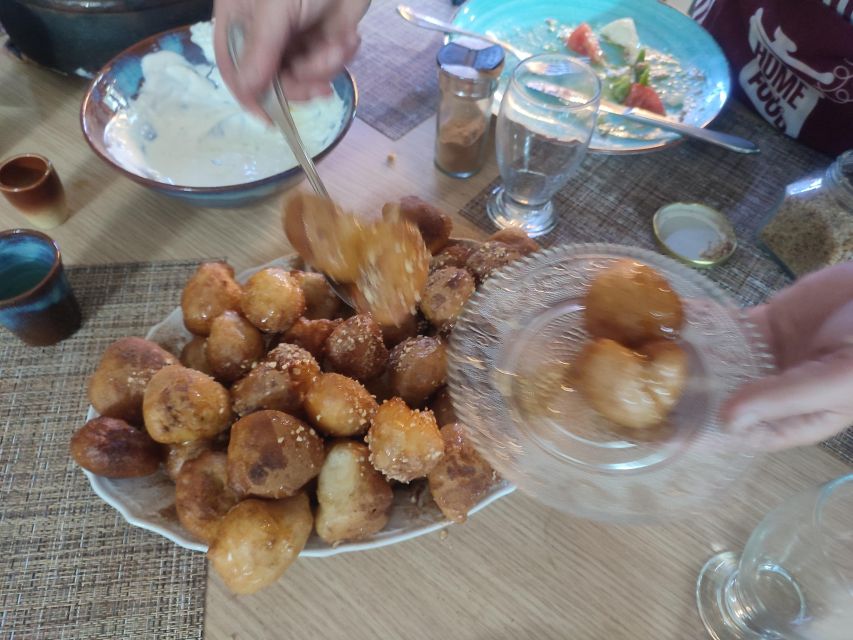
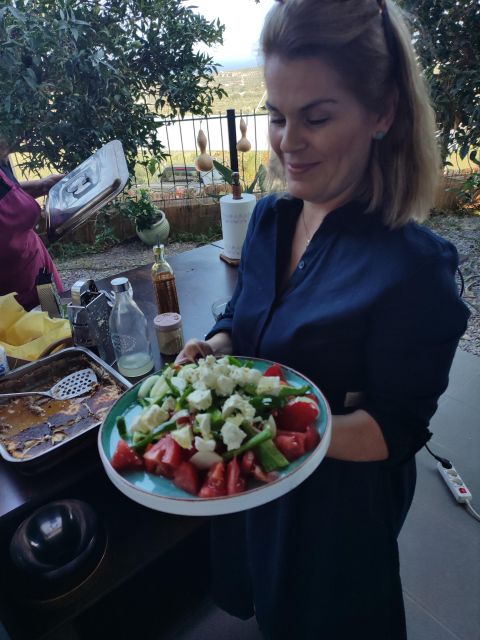
The class includes tzatziki and a Greek salad, two familiar dishes that become more meaningful when you prepare them with local ingredients.
The tzatziki combines strained yogurt, cucumber, garlic, and olive oil. The salad includes tomatoes, cucumber, green pepper, onion, capers, olives, and barley rusk, with a generous amount of olive oil.
The barley rusk is an especially useful detail. It gives the salad a Cretan character and shows how bread products are used to make a dish more substantial. The salad is not just a side plate of vegetables. With the rusk, olives, oil, and other ingredients, it becomes part of the meal’s structure.
I like that these recipes sit beside more labor-intensive dishes. You see the range of Cretan food, from quick combinations to dishes that need more preparation and cooking time.
Folding dolmadakia and zucchini flowers
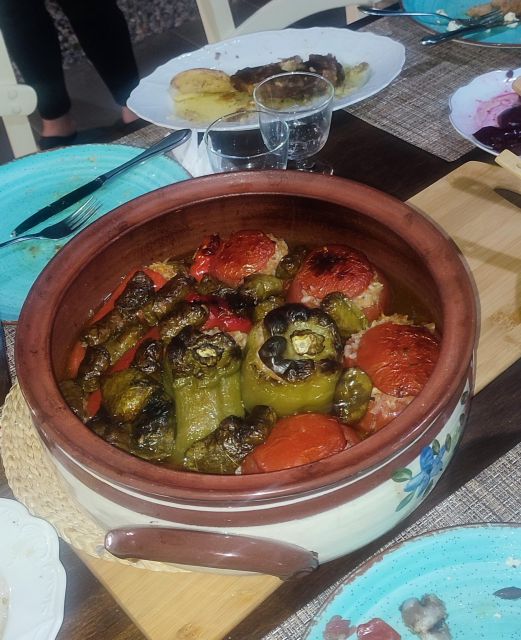
Dolmadakia are stuffed vine leaves, and this class also includes zucchini flowers filled with rice, vegetables, herbs, and olive oil.
Stuffed vegetables take patience. You need to prepare the filling, place the right amount inside each leaf or flower, and fold everything so it holds together during cooking. This is a hands-on step where simple instructions matter, and Chrysoula’s teaching style is a key part of the experience.
For you, the value is not only the final taste. You leave with a better sense of the care involved in traditional home cooking. These are dishes that can look effortless on a plate but require attention at the preparation stage.
The menu also gives you plenty to do while other dishes cook. Because the class includes several recipes, the pace should feel active rather than centered on one long wait.
Moussaka and rooster with orzo from the oven
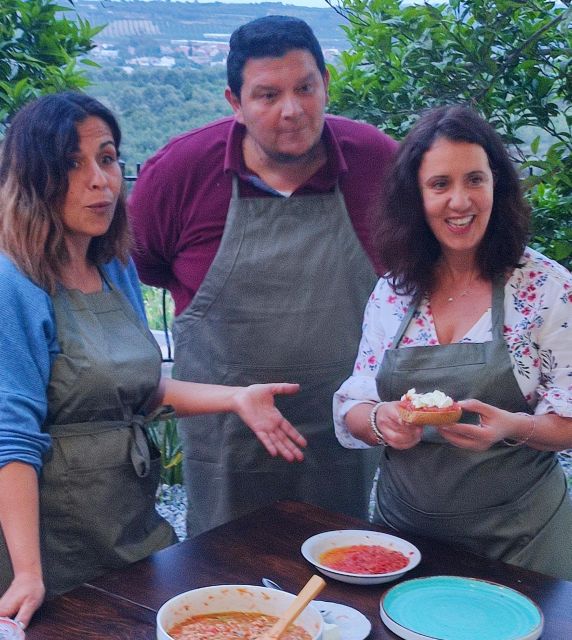
The two main dishes are moussaka and giouvetsi. The moussaka includes potatoes, zucchini, eggplant, minced meat in tomato sauce, and béchamel. Giouvetsi pairs rooster with orzo and is cooked in a wood-fired oven.
Moussaka will be familiar to many people who have eaten Greek food, but preparing it from the beginning helps explain its layered character. There are several components, and each one contributes to the finished dish. It is a more substantial task than making a salad or dip.
Giouvetsi offers a different taste of Greek cooking. The rooster and orzo combination is hearty, and the olive-wood-fired oven gives the dish a strong traditional setting. The oven is one of the details that makes this more than a generic cooking class.
The menu is meat-based, so you should check in advance if you need vegetarian, vegan, or other dietary changes. The supplied details do not promise alternate versions of the dishes.
Eating everything together after the cooking
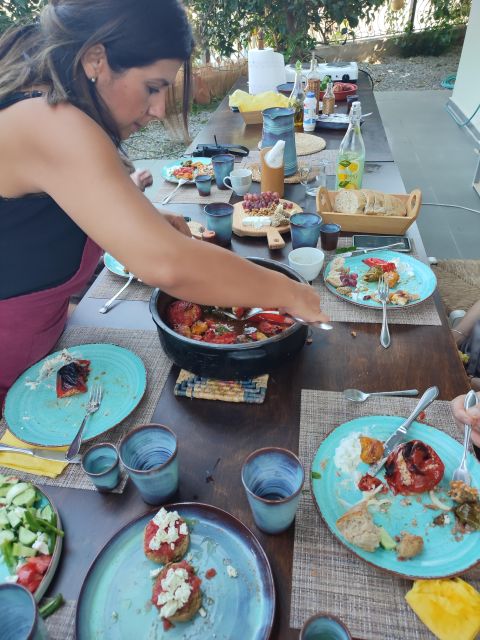
At the end, the class becomes a shared feast. You sit down to eat the dishes prepared during the session, with red or white wine included.
This ending matters. Cooking is more satisfying when you get to taste the full result, and the meal gives you time to enjoy the food at a slower pace. It also turns the class into a social experience rather than a lesson that ends when the last pan leaves the stove.
Dessert is Greek yogurt or homemade ice cream with homemade fruit sweet. That provides a cool, simple finish after the pies, stuffed vegetables, and baked main courses.
You should arrive ready for a full meal rather than a small tasting. The menu includes many dishes, and the experience is built around eating together at the end.
What the outdoor setting adds
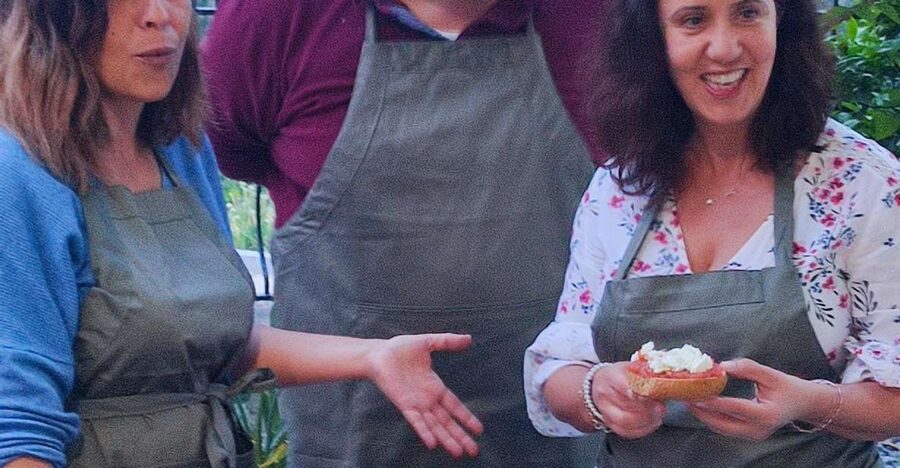
The outdoor kitchen is a major part of the character here. You might see the olive orchards below the cooking area, and the use of an olive-wood-fired oven gives the meal a strong connection to the surrounding agricultural setting.
You also have the chance to work with vegetables from the garden. That detail matters because it links the food to the place where it is being prepared. You are not simply being told that olive oil, greens, and vegetables are important. You see how they fit into the cooking environment.
The setting may not suit someone who wants a slick, air-conditioned culinary studio. The appeal is its informality and connection to home cooking. Bring a camera if you want to record the setting and dishes, as photography is specifically suggested.
Is $153 per person a fair price?
At $153 per person, this is not a budget meal or a quick market snack. The value depends on how much you care about the full experience.
You are paying for 3.5 hours of instruction, a substantial menu, drinks, a welcome aperitif, the final meal, and access to a setting that includes an outdoor kitchen and wood-fired oven. You also get personal guidance from Chrysoula rather than a self-guided recipe sheet.
The price is easier to justify if you would otherwise pay separately for a high-quality meal, a cultural activity, and a food demonstration. It is less appealing if you only want to taste Cretan dishes or if you already have a packed schedule in Rethymno.
Transportation is the main extra cost to consider. Since it is not included, add the price of reaching the meeting point or ask the provider for a transfer quote before booking.
Who will enjoy this class most?
I would recommend this class to anyone who enjoys cooking with other people and wants more than a restaurant meal. It suits couples, families, and small groups who like a relaxed, social activity.
It is also a good choice for cooks who want practical ideas they can use at home. The recipes include several well-known Greek dishes, but the focus on greens, homemade dairy, olive oil, barley rusk, and traditional oven cooking gives them a distinctly Cretan setting.
People with limited mobility should note that the activity is listed as wheelchair accessible. You should still confirm the exact route from the roadside meeting point to the kitchen if that detail is important for your group.
This is not the best fit for someone who wants a short, highly technical class, a city-center location, or a menu built around personal dietary requests. The available information does not describe private group size, so ask about that if you need a very intimate session.
Booking details worth checking
The class lasts 3.5 hours, with starting times based on availability. English and Greek are the teaching languages, and a tour guide is not included. Chrysoula serves as the instructor and host.
You can cancel up to 24 hours before the activity for a full refund. You can also reserve now and pay later, which is useful if your Crete plans are still changing.
The experience is listed as skipping the ticket line, though this is a cooking class rather than a major ticketed monument. The practical point is that you do not need to deal with a separate attraction admission.
Should you book the Cretan cooking class?
Book it if you want to spend part of your Crete visit cooking, eating, and talking in a personal setting. The strongest reasons are Chrysoula’s warm hosting, the wide range of traditional dishes, the outdoor kitchen, and the shared feast at the end.
Think twice if transportation is difficult, if $153 feels high for a meal-based activity, or if you need a tightly customized menu. For everyone else, this is a useful way to connect Cretan food with the people, ingredients, and everyday methods behind it.
FAQ
Where does the cooking class take place?
The activity takes place near Rethymno, beginning and ending at the listed location, 9H27+M8. The meeting point is on the road, where the hostess waits to direct you.
How long does the cooking class last?
The class lasts 3.5 hours.
How much does the experience cost?
The listed price is $153 per person.
Is transportation included?
No. Transportation is not included, but you can contact the provider for a transfer price.
Who teaches the class?
Chrysoula is the hostess and instructor. The activity is conducted in English and Greek.
What food will I prepare?
The menu includes cheese pies with honey, chortopites, homemade cheese, tzatziki, Greek salad with barley rusk, dolmadakia, stuffed zucchini flowers, moussaka, and rooster with orzo.
Are drinks included?
Yes. The experience includes an aperitif, raki or Greek coffee, and red or white wine. Dessert is Greek yogurt or homemade ice cream with homemade fruit sweet.
Can I cancel for a refund?
Yes. You can cancel up to 24 hours in advance for a full refund. You can also reserve now and pay later.
New cooking classes around Greece
- Savor Rhodes: 11-Dish Wine Pairing and Cooking Adventure★ 4.4 · 12 reviews
- Santorini: Hands on Cooking Class with a Chef★ 4.7 · 16 reviews
- Santorini: Cooking Class with a Professional incl. Full Meal★ 5.0 · 2 reviews
- Santorini: Greek Cooking Class with Wine Tasting★ 5.0 · 7 reviews
- Santorini: Vineyard and Winery Tour with Cooking Class★ 4.9 · 5 reviews
- Santorini Cooking Class with Wine Tasting & Lunch★ 4.9 · 36 reviews
- Santorini: Cooking Class with a Chef at the Ftelos Brewery★ 4.8 · 33 reviews
- Rhodes: Winery Tour, Tasting and cooking with the Winemaker★ 4.8 · 21 reviews
Greece Cooking Classes, side by side.
Athens: Classic Cooking Class with Market Visit and Wine
Read our review →
Greek Cuisine Cooking Class in Santorini with Recipes and Wine
Read our review →
Naxos: Half-Day Cooking Class at Basiliko Family Tavern
Read our review →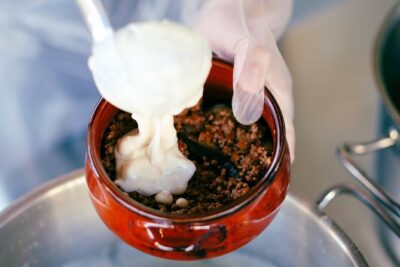
Greek Cooking Class in Athens Including Rooftop Dinner with Acropolis View
Read our review →
Greek Small-Group Athens Cooking Class & Dinner
Read our review →
Exclusive Cooking Experience in our Cave Home by Petra Kouzina
Read our review →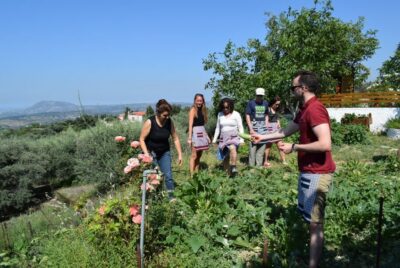
Chania: Authentic Cooking Class in the White Mountains
Read our review →
This kitchen also appears in