
Review · GREECE
Kalamata: Farm-to-Table Experience with Cooking
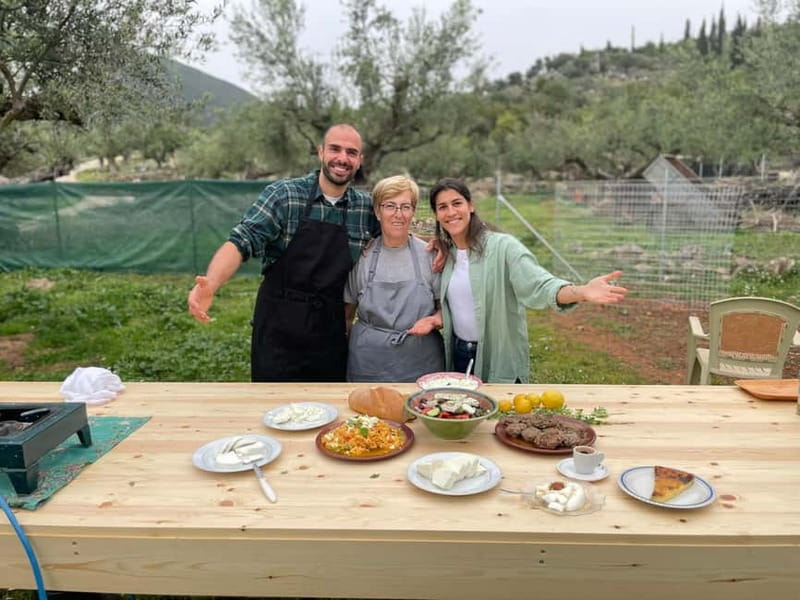
The best part of this Kalamata experience is that lunch begins in the garden, not in the kitchen. You pick tomatoes, peppers, herbs, and other seasonal produce, collect eggs, meet the goats that provide the milk, then turn those ingredients into a proper Messinian meal with hosts Nicole and Porta.
I like the hands-on cheesemaking, especially the chance to prepare both Sfela and soft Anthotyro. I also like the relaxed farm setting, where goats, chickens, dogs, olive trees, and an outdoor kitchen all become part of the day. The main consideration is access: you need comfortable shoes for uneven ground, and this is not suitable for wheelchair users, people with back problems, or people with animal allergies.
Key points to know before booking
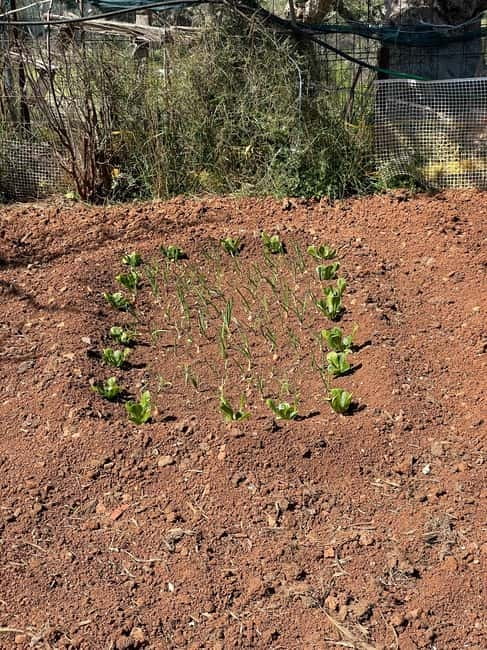
- Pick the ingredients yourself: Harvest vegetables and herbs from the garden, collect eggs, and learn about seasonal products such as olives and figs.
- Make two local cheeses: Prepare Sfela, a semi-hard brined cheese, and Anthotyro, a soft cheese with a mild, creamy texture.
- Cook a full Messinian meal: Make Kagianas, beef patties, tzatziki, Greek salad, and bread baked in a traditional wood-fired oven.
- Spend time with farm animals: Goats, free-range chickens, and friendly farm dogs are part of the experience.
- Small group, personal guidance: The group is limited to 10 people, with English, Greek, and Spanish available.
- Plan for outdoor conditions: Bring water, sunscreen, a hat, a camera, and shoes that can handle uneven paths.
A farm visit where the meal starts in the garden
Mama Gaia gives you a clear look at how a traditional Greek meal comes together. You do not simply sit down to eat food prepared by someone else. You help gather it, prepare it, and understand its place in local life.
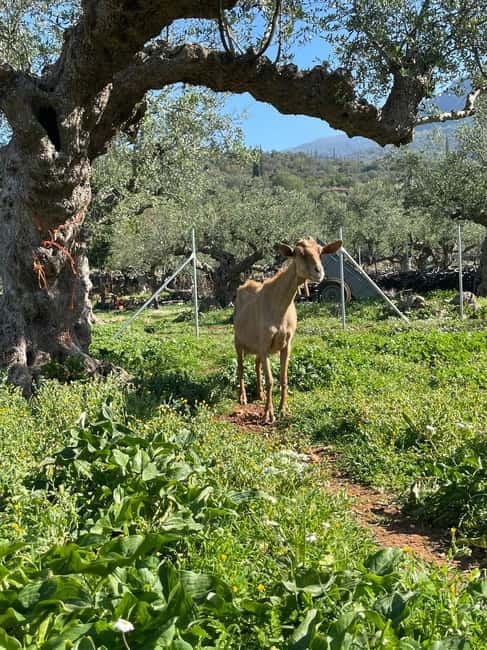
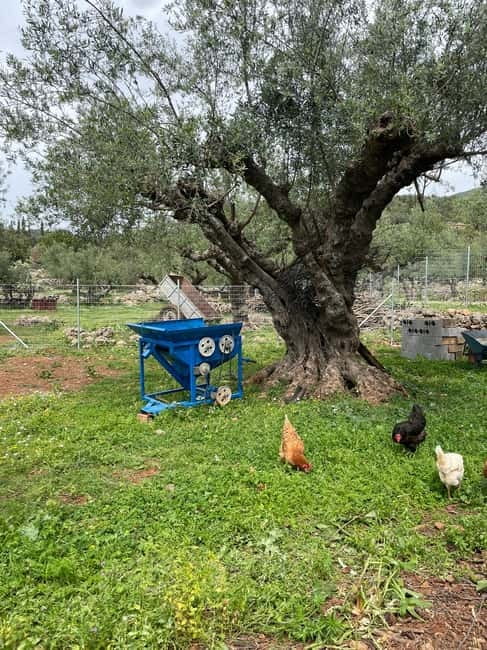
The farm sits in the Messinian countryside, surrounded by olive trees and open views. The setting matters because it connects the food to the land in a simple, direct way. You see the garden, the animals, the cooking area, and the table as parts of one working farm rather than separate attractions.
Nicole and Porta welcome you as local hosts who care about sustainable farming and traditional cooking. Their role is not limited to showing you a recipe. They explain how ingredients are used, why certain dishes matter, and which methods you can repeat at home.
The group size is limited to 10 people. That is a useful number for a cooking activity because you should have room to take part without the kitchen becoming crowded. It also gives you a better chance to ask questions, handle the ingredients, and follow the cheesemaking steps closely.
More Farm Cooking Classes in Greece
- Naxos Perivoli Farm Experience & Wood-fire Cooking Class
★ 5.0 · 339 reviews - Melanes: Naxos Perivoli Farm & Cooking Class with Wood Fire
★ 5.0 · 177 reviews - Athens Cooking Class and Lunch in our beautiful garden in Greece
★ 5.0 · 130 reviews
Meeting the goats, chickens, and farm dogs
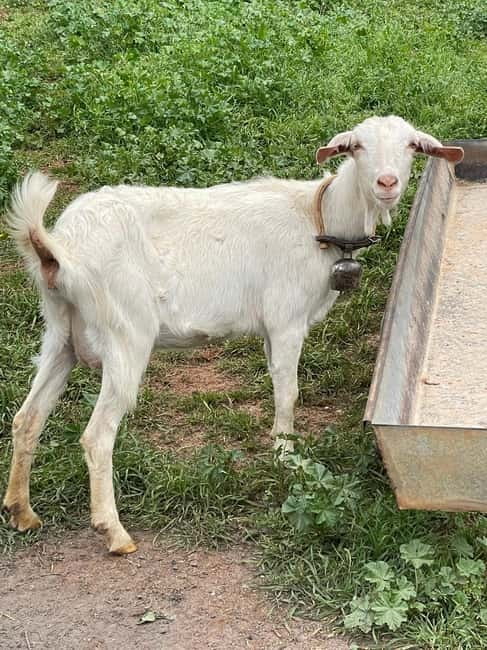
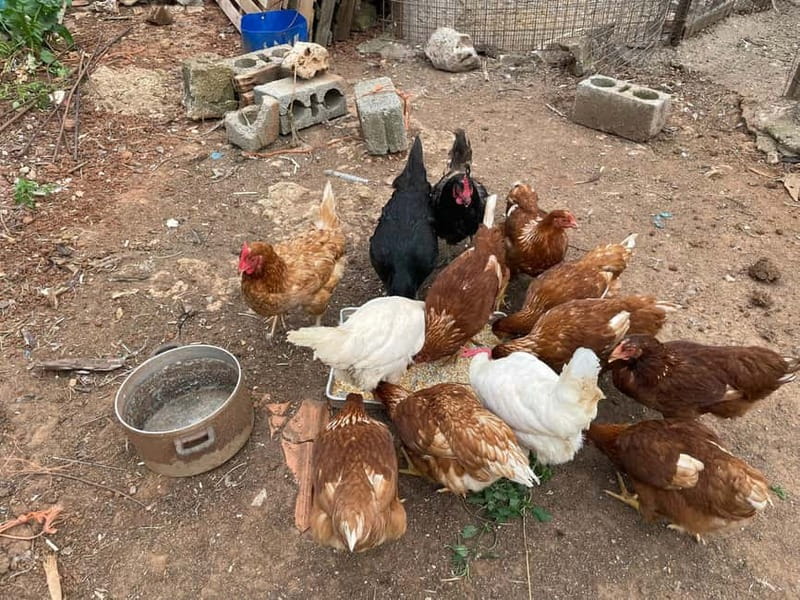
The animal portion adds warmth and a bit of fun to the visit. You meet goats that provide milk for the homemade cheese, free-range chickens that lay the eggs, and farm dogs that accompany you around the property.
This is not a wildlife visit or a formal animal show. The animals are part of the daily farm routine, which makes the connection to the food more meaningful. The milk used for cheese and the eggs used in cooking come from animals you have just seen.
You may also have the chance to learn about olives, figs, and other products suited to Messinia’s Mediterranean climate. The exact seasonal produce can change, so do not expect the garden to look the same at every time of year. That variation is part of the appeal of a working farm.
Animal allergies are an important concern. Since goats, chickens, dogs, and other farm activity are part of the day, this is not a good choice if contact with animals could cause a problem.
Picking vegetables and collecting eggs
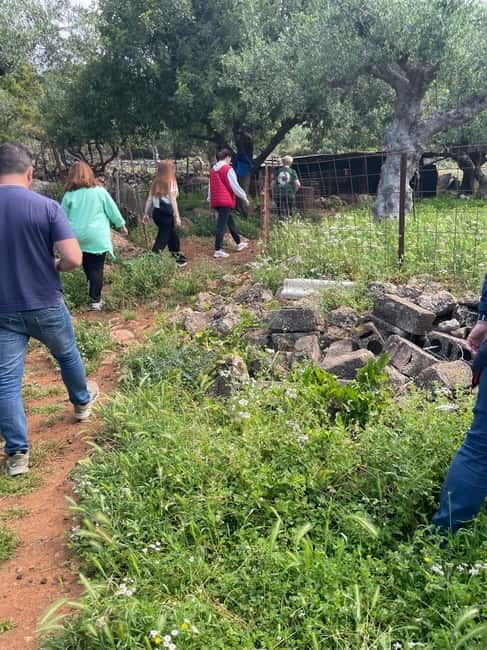
The garden visit is one of the strongest parts of the experience because it gives you a practical role right away. You walk through the vegetable beds and pick tomatoes, peppers, herbs, and other seasonal ingredients for the meal.
The work is straightforward, but it changes how you taste the food later. A tomato picked for the day’s salad feels different from one taken from a market shelf, especially when you have handled the entire process from garden to table.
You also collect fresh eggs from the coop. Those eggs go into dishes such as Kagianas, a rustic preparation of eggs, fresh tomatoes, and local cheese. The dish is simple, but it shows how Greek home cooking often depends on a few good ingredients rather than a long list of complicated steps.
Wear clothes and shoes you do not mind using outdoors. The farm has uneven surfaces, and you may move between the garden, animal areas, and cooking space. A hat, sunscreen, and water are sensible additions, especially during the warmer months.
Learning to make Sfela and Anthotyro
The cheesemaking workshop gives the day its most distinctive cooking lesson. You learn to prepare Sfela, a semi-hard cheese preserved in brine and associated with the region. Its firmer texture and salty character make it a natural match for bread, salads, and other local foods.
You also make Anthotyro, a soft, creamy cheese with a delicate flavor. Preparing two different cheeses helps you see how texture, handling, and preservation affect the final result.
This is a useful lesson for home cooks because it is based on technique rather than a one-time tasting. The hosts explain the process as you work, and the instruction is designed to be approachable. You should not expect a professional dairy course, but you will come away with a better sense of how traditional cheese is made.
The cheese workshop also explains why goats matter to the farm. The animals are not simply there for atmosphere. Their milk supports one of the central food traditions featured during the visit.
Same kitchen, a different dish:
- Athens: Classic Cooking Class with Market Visit and Wine
★ 5.0 · 1,101 reviews - Athens: Food Market Visit and Cooking Class with Wine
★ 4.9 · 1,087 reviews - Greek Cuisine Cooking Class in Santorini with Recipes and Wine
★ 5.0 · 969 reviews - Naxos: Half-Day Cooking Class at Basiliko Family Tavern
★ 5.0 · 887 reviews
Cooking Kagianas, salad, and grilled beef
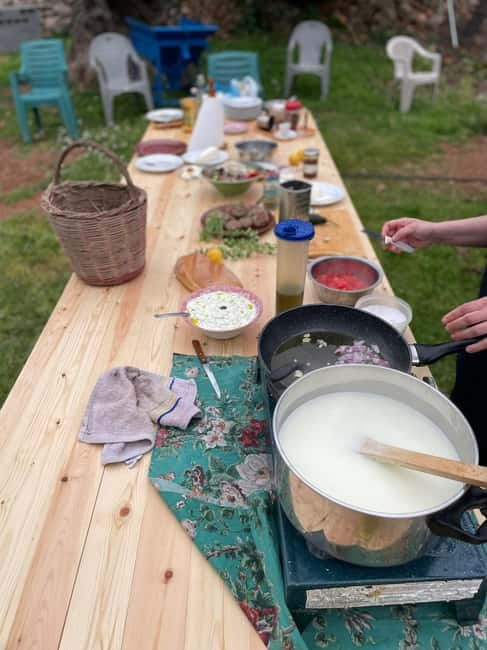
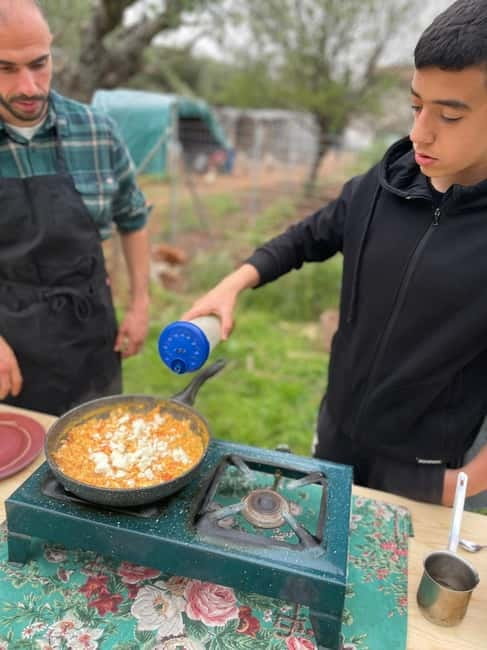
Once the ingredients are ready, you move into the rustic outdoor kitchen. The meal includes several familiar Greek dishes, but the setting and your involvement give them more meaning.
Kagianas combines eggs, fresh tomatoes, and local cheese. It is a good example of practical country cooking: a small number of everyday ingredients turned into a satisfying dish. You help prepare it under the guidance of the hosts, then taste it as part of the shared meal.
You also grill free-range beef patties and serve them with fresh garden greens and homemade tzatziki. The greens and herbs come from the same kind of produce you have just seen in the garden, while the tzatziki adds the cool, garlicky contrast you expect from a Greek table.
The Greek salad brings together tomatoes, cucumbers, onions, olives, and feta, with extra virgin olive oil over the top. It is a familiar dish, but this experience gives you useful context about the role of fresh vegetables, olives, cheese, and oil in Messinian cooking.
Fresh bread is baked with local flour in a traditional wood-fired oven. That detail adds a satisfying finish to the cooking portion. Bread is easy to overlook when it arrives already sliced on a restaurant table, but baking it on the farm makes the meal feel more connected to older household routines.
The open-air meal under the olive trees
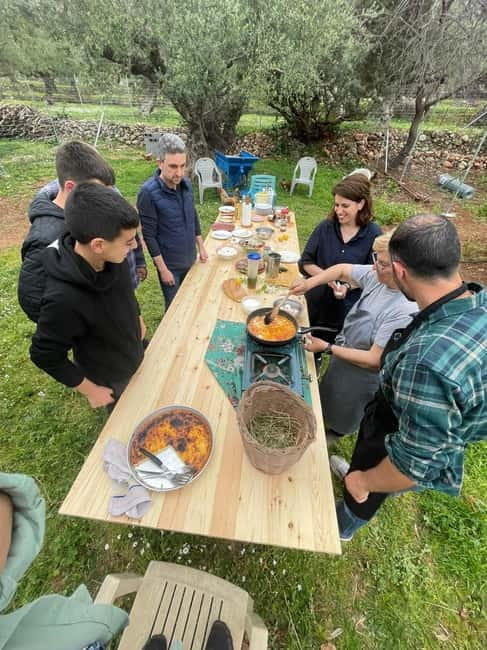
The final meal is served around a table near the olive trees, with the sounds of nature around you. This is not a quick tasting before moving on. It is the time to eat what you have prepared and connect the separate parts of the day.
I like this format because the meal rewards your participation. You know where the vegetables came from, you have handled the eggs, and you have helped prepare the cheese. The food becomes a record of the day rather than just another plate of Greek dishes.
The hosts also explain the cultural meaning of the recipes and the cooking techniques behind them. That makes the activity useful after your holiday. You can try the Greek salad, tzatziki, or Kagianas at home, and you will remember the farm setting and the method behind each dish.
The experience has received a top rating from four verified bookings, with special praise for the warm welcome, clear teaching, animals, and the chance to harvest, cook, and eat in one place. Nicole is singled out for making the occasion memorable, while the hosts as a pair are described as welcoming and committed to their work.
What the $141 price includes
At $141 per person, this is not the cheapest way to eat in the Kalamata area. You can certainly find a less expensive restaurant meal. The value comes from the amount of activity included before you sit down at the table.
Your fee covers the guided farm tour, the cheesemaking workshop, the cooking class, the meal, ingredients, and cooking equipment. You are paying for instruction and participation as well as food.
That makes the price easier to justify if you want a full cultural activity rather than a simple lunch. It is especially suitable for people who enjoy cooking, food traditions, and rural settings. If you mainly want to sample Greek dishes with little effort, a restaurant will be cheaper and more convenient.
Transportation to and from the farm is not included. You need to arrange your own way there, and the supplied information does not give a pickup service or a specific meeting point. Check those details before paying, since the transport question can affect the real cost of the day.
Timing, weather, and practical comfort
The activity is listed as lasting one day, with the exact start time available when you check the date. The experience can work as a morning activity or an evening visit, depending on the scheduled session. One booking describes a very enjoyable morning, while another describes an evening that included meeting the animals, harvesting, cooking, and eating.
Because much of the experience takes place outdoors, weather matters. Poor conditions can lead to rescheduling. Keep your plans flexible enough to handle a change, particularly if you are connecting this activity to a fixed departure or another timed tour.
Bring comfortable shoes, a hat, sunscreen, water, and a camera. Smoking is not allowed. Comfortable clothing is more useful than anything formal, since you will walk on uneven ground, work with food, and spend time around animals.
Tell the hosts about dietary restrictions or allergies in advance. The information does not promise a particular substitute menu, so early notice is the best way to find out what can be adjusted.
The activity is not suitable for wheelchair users or people with back problems. Uneven paths, outdoor work, and movement around the farm are part of the experience. It is also a poor fit for anyone with animal allergies.
Who will enjoy Mama Gaia most
I would choose this for a couple, family, or small group that wants a real food activity rather than a polished demonstration. It suits curious cooks, people interested in farming, and anyone who wants a slower look at Messinian life.
It also works well if you have a morning or evening to spare near Kalamata. The small group keeps the format personal, and the English, Greek, and Spanish language options make it accessible to a wider range of visitors.
Children may enjoy the goats, chickens, dogs, garden, and hands-on tasks, but the supplied information does not give a minimum age or child policy. If you are booking with children, confirm that point first.
I would think twice if you dislike animals, have difficulty walking on uneven surfaces, or want a tightly scheduled indoor class. This is a farm day, and farm days come with sun, soil, changing weather, and a little unpredictability.
Should you book this farm-to-table experience?
Book it if you want to do more than eat Greek food. You will harvest ingredients, learn two kinds of cheese, cook several traditional dishes, and share the finished meal under the olive trees. The strongest reasons to go are the personal teaching from Nicole and Porta, the link between animals and food, and the chance to take part in every stage of the meal.
Skip it if your priority is low cost, easy transport, or a fully accessible setting. At $141, the value is in the full day of activity and instruction, not just the food on the plate. For the right person, Mama Gaia offers a warm, practical look at how local food moves from farm to table.
FAQ
Where does the farm-to-table experience take place?
It takes place at Mama Gaia in the Messinia area of the Peloponnese, near Kalamata.
How much does the experience cost?
The price is $141 per person.
What is included in the price?
The price includes a guided farm tour, a hands-on cheesemaking workshop, a cooking class with local hosts, the farm-to-table meal, and all necessary cooking equipment and ingredients.
Is transportation to the farm included?
No. Transportation to and from the farm is not included, so you need to arrange your own transport.
What languages are available?
The hosts or greeters speak English, Greek, and Spanish.
How large is the group?
This is a small-group activity limited to 10 participants.
What food will I prepare?
You will help make Sfela and Anthotyro cheeses, Kagianas, grilled free-range beef patties, tzatziki, Greek salad, and bread baked in a traditional wood-fired oven.
What should I bring and wear?
Bring comfortable shoes, a hat, sunscreen, water, and a camera. Wear clothing suitable for walking on uneven surfaces and outdoor cooking.
Is the farm suitable for wheelchair users?
No. The experience is not suitable for wheelchair users or people with back problems.
Can I attend if I have food allergies or dietary restrictions?
You should inform the hosts about any dietary restrictions or allergies in advance. The supplied information does not specify which substitutions are available.
Can I cancel the booking?
You can cancel up to 24 hours in advance for a full refund. The reserve-now, pay-later option lets you book without paying immediately.
New cooking classes around Greece
- Savor Rhodes: 11-Dish Wine Pairing and Cooking Adventure★ 4.4 · 12 reviews
- Santorini: Hands on Cooking Class with a Chef★ 4.7 · 16 reviews
- Santorini: Cooking Class with a Professional incl. Full Meal★ 5.0 · 2 reviews
- Santorini: Greek Cooking Class with Wine Tasting★ 5.0 · 7 reviews
- Santorini: Vineyard and Winery Tour with Cooking Class★ 4.9 · 5 reviews
- Santorini Cooking Class with Wine Tasting & Lunch★ 4.9 · 36 reviews
- Santorini: Cooking Class with a Chef at the Ftelos Brewery★ 4.8 · 33 reviews
- Rhodes: Winery Tour, Tasting and cooking with the Winemaker★ 4.8 · 21 reviews
Greece Cooking Classes, side by side.
Athens: Classic Cooking Class with Market Visit and Wine
Read our review →
Greek Cuisine Cooking Class in Santorini with Recipes and Wine
Read our review →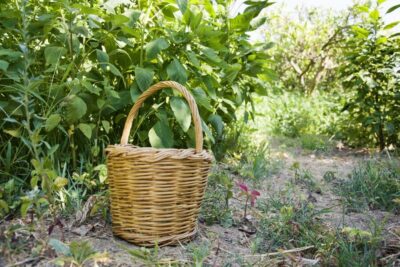
Naxos: Half-Day Cooking Class at Basiliko Family Tavern
Read our review →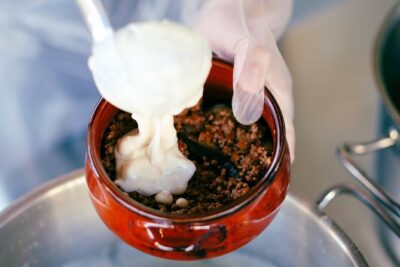
Greek Cooking Class in Athens Including Rooftop Dinner with Acropolis View
Read our review →
Greek Small-Group Athens Cooking Class & Dinner
Read our review →
Exclusive Cooking Experience in our Cave Home by Petra Kouzina
Read our review →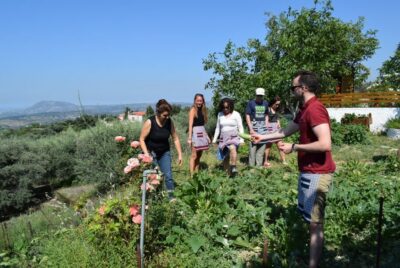
Chania: Authentic Cooking Class in the White Mountains
Read our review →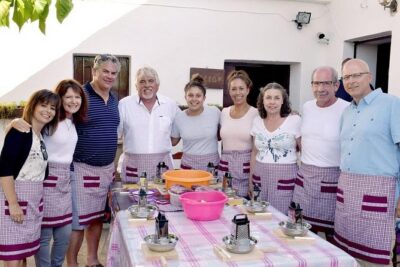
This kitchen also appears in