
Review · MEXICO
PDC Traditional Mexican Cooking Experience
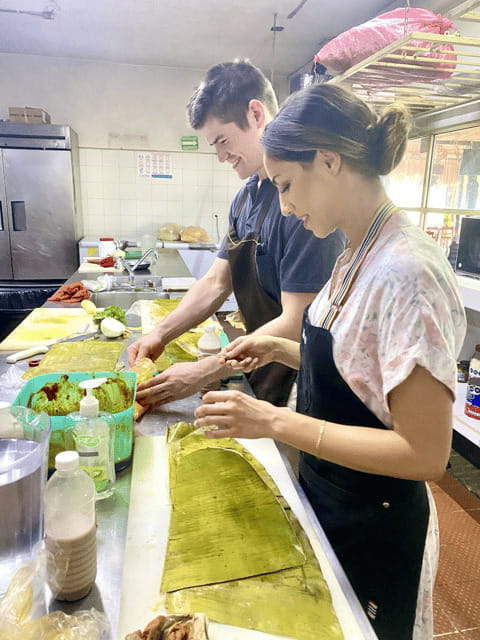
The best part of this Playa del Carmen cooking class is that you do not simply follow a printed recipe. Panchito and the cooking team explain how food connects to family, place, and Mexican life while you prepare tamales, chiles rellenos, and other dishes. I like the small group of no more than eight, and I like that the food is prepared in a real kitchen rather than a staged outdoor setup.
You also get a generous amount of cooking for the $116 price, with drinks, ingredients, equipment, and help from the staff included. One consideration: the ingredients are prepared before you arrive because there are no real local farmer markets nearby, so this is a hands-on kitchen lesson, not a market visit or farm-to-table outing.
Key points to know before booking
- Tamales made from scratch: You help prepare a dish that can change your idea of what a tamale should be.
- A 5 to 10 minute walk: Meet at Town Hall Plaza, then walk with the host to the restaurant kitchen.
- Small groups matter: With a maximum of eight people, you get room to cook and ask questions.
- Several dishes, not one recipe: Expect aguas frescas, antojitos, a main course, and side dishes.
- Land, Sea and Sky option: Seafood lovers may prepare octopus, shrimp, flank steak, and chicken in a volcanic-rock molcajete.
- Take-home food included: If you cannot finish everything, you can pack up the dishes you prepared.
Why this class is about more than recipes
Traditional Mexican cuisine is recognized by UNESCO as an Intangible Cultural Heritage of Humanity. That recognition is not only about famous dishes. It reflects a living food tradition passed through families and communities, shaped by regional ingredients, cooking methods, and local identity.
That idea gives this class its purpose. You are not just learning how long to cook something or how much chili to add. You are hearing how food fits into Mexican family life and how regional differences produce different flavors across the country.
Panchito leads the experience, with Francisco, Lilia, a chef, and support cooks helping in the kitchen. The tone is conversational rather than classroom-stiff. You can ask about Mexican history, Playa del Carmen, food, family customs, or the reasons behind a cooking method.
I especially like the emphasis on cooking as an act of care. The class treats food as a way to show affection, not as a technical exercise alone. That makes the experience a good match for anyone who wants context with their meal.
More Mexican Cooking Classes around Mexico:
- Cabo San Lucas Mexican Cooking Class Experience and Local Markets
★ 5.0 · 915 reviews - Mexican Cooking from Scratch in a Local Home in Tulum
★ 5.0 · 585 reviews - Authentic Mexican Legacy Cooking Class in Cabo San Lucas
★ 5.0 · 530 reviews
Meeting Panchito at Town Hall Plaza
Your starting point is Town Hall Plaza on 20th Avenue, between 8th and 10th streets, in downtown Playa del Carmen. This is a useful central meeting place, but give yourself enough time to find it without rushing.
After introductions and a short explanation of the experience, the group walks for about five to ten minutes to the restaurant venue. The walk is short, but it is worth wearing comfortable shoes, especially if you have already spent the day exploring downtown.
There is no hotel pickup listed, and the activity begins at the plaza. The meeting point matters because the cooking does not happen in a private home. It takes place in an ample rented restaurant kitchen, where the chefs and support staff can manage hot equipment, food preparation, and group safety.
That setup may feel less intimate than cooking inside a family home. On the other hand, it provides more working space and professional equipment. For a class with several dishes and plenty of cooking, that is a sensible tradeoff.
Starting with aguas frescas and antojitos
The first kitchen work involves preparing aguas frescas, the fruit or grain-based refreshments commonly served in Mexico. These drinks give you an immediate introduction to the balance of sweetness and freshness used at the table.
You also prepare antojitos, small Mexican starters with pre-Hispanic influences and later regional changes. The term covers a broad family of foods, so the exact preparation can vary.
This opening stage helps you settle into the kitchen before the larger dishes begin. You are not handed one plate and told to copy every movement. Instead, the class builds from drinks and starters toward the more involved main course.
Because the ingredients are prepared in advance, you avoid spending part of the three-and-a-half-hour session shopping. That is important in Playa del Carmen, where the experience does not have access to a genuine local farmer market. You lose the market stop, but you gain more time at the stove, counter, and mortar.
Making tamales and chiles rellenos
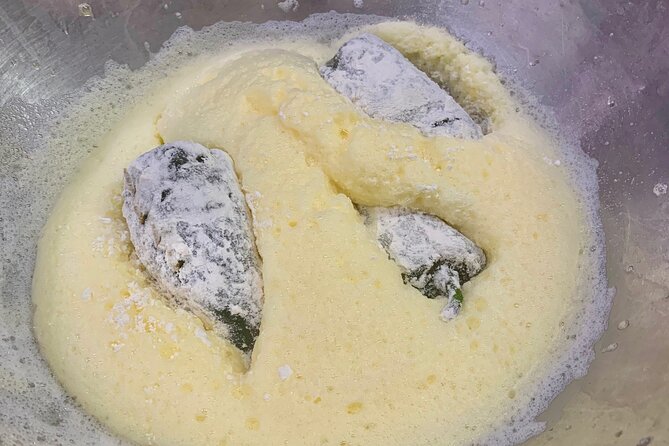
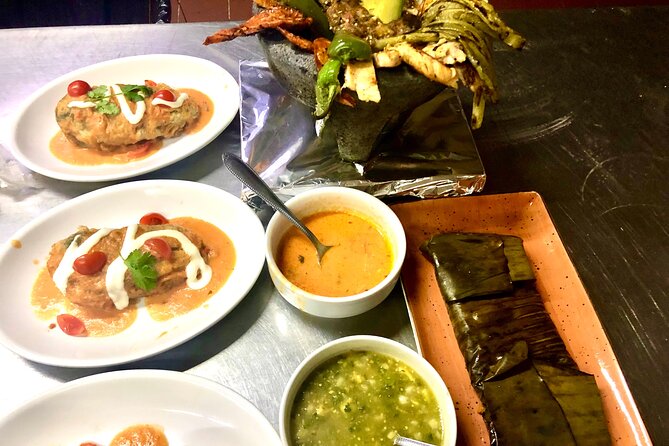
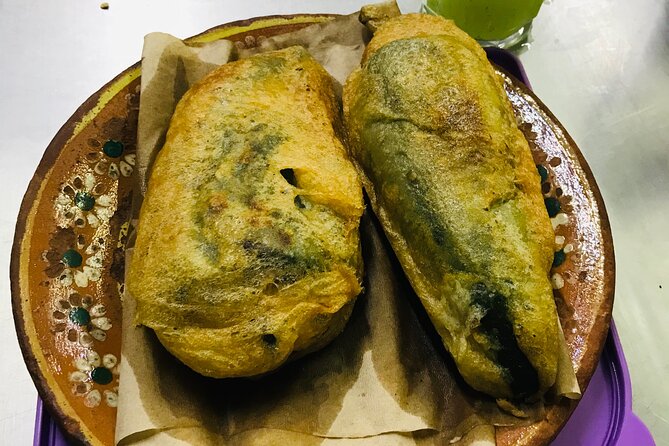
The class menu changes from time to time. Tamales and chiles rellenos have both appeared as central parts of the cooking, and they are exactly the sort of dishes that benefit from guided instruction.
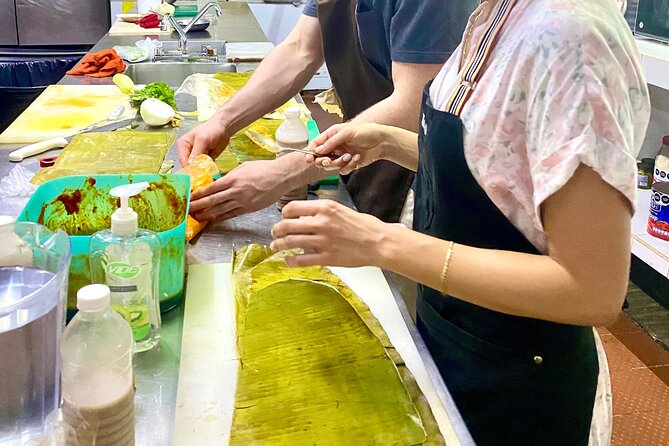
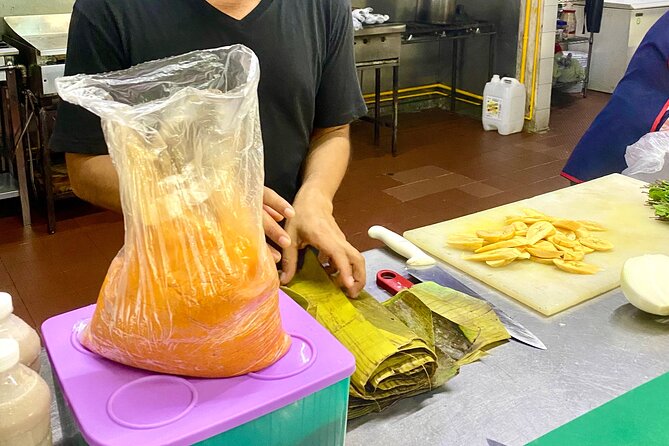
Tamales are a particularly useful lesson because they involve more than mixing ingredients. The preparation, filling, wrapping, and cooking all require care. One participant described the experience of making them as a complete change in their view of what a tamale could be. That makes sense: a fresh tamale prepared in a group kitchen can show you details that are easy to miss when ordering one from a restaurant.
Chiles rellenos bring another set of techniques and flavors. The class may prepare them alongside tamales, but the exact combination can vary. You should think of the menu as a traditional Mexican cooking session rather than a fixed restaurant menu.
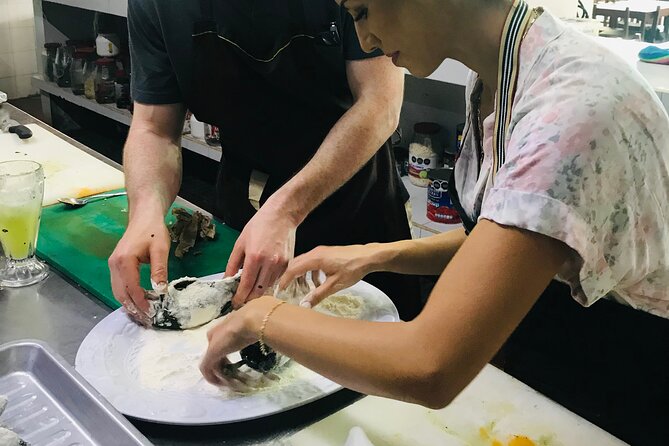
The cooking team demonstrates the steps and then lets you take part. Francisco, Lilia, Panchito, and the kitchen staff provide guidance as you work. That division is useful for beginners, while experienced home cooks can focus on the reasons behind the method and the regional background.
More cooking classes around Mexico:
- Puerto Vallarta Cooking Class Experience with Market Tour
★ 5.0 · 698 reviews - Mexican Cooking Class with Food Market Visit in Mexico City
★ 5.0 · 506 reviews - Authentic Mayan Cooking Class in Cozumel
★ 5.0 · 344 reviews - Flavors of Oaxaca: Cooking Class with No Set Menu and Local Market Tour
★ 4.5 · 333 reviews
The Land, Sea and Sky molcajete
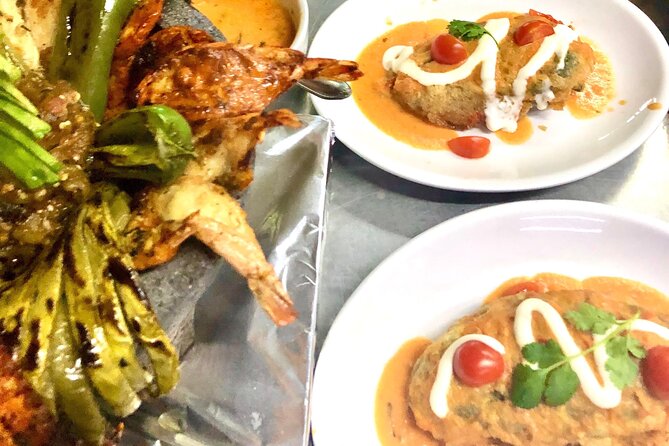
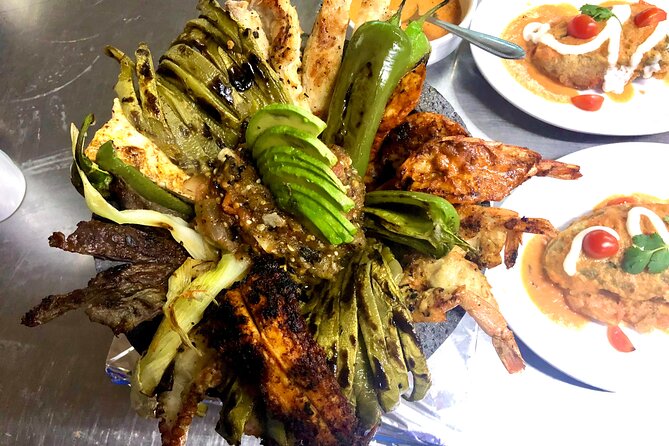
Seafood lovers have a particularly memorable option: a Cielo, Mar y Tierra Molcajete, described in English as Land, Sea and Sky. It combines octopus, shrimp, flank steak, and chicken, with grilled vegetables and guacamole added to the volcanic-rock mortar.
This is one of the most unusual parts of the experience. A molcajete is not just a serving bowl. Its rough volcanic-rock surface and heavy form are linked to older Mexican cooking traditions. Preparing the dish in one gives you a better feel for the physical side of the cuisine.
The combination is substantial. You are working with seafood, beef, and chicken in one preparation, so it is not the ideal choice if you prefer a single ingredient to take center stage. It is a good choice if you want variety and enjoy trying several textures and flavors in one meal.
Red snapper or lobster may be available for an additional charge, depending on your choice. The base seafood option includes octopus and shrimp, while the more expensive additions are optional. Ask about the surcharge before deciding so the final cost does not surprise you.
The dish is accompanied by side dishes, and the cooking team prepares the components with you. This creates a meal that feels closer to a shared feast than a small tasting portion.
Regional identity in every dish
Mexico is not one flavor profile. Corn and chili peppers form a major base of traditional cooking, but the results change from region to region. Ingredients, climate, local customs, and family practice all shape the final dish.
The class uses food to explain those differences. You may hear about why one area favors a particular chili, how a sauce is built, or how a dish reflects local habits. The point is not to memorize a list of regions. It is to understand that traditional Mexican food has many identities.
That context is where the class gains value. A recipe card can tell you quantities, but it cannot always explain why a dish matters or how it fits into daily life. Here, the host connects the kitchen work to Mexican history and the story of Playa del Carmen.
The conversation is also part of the experience. One participant especially valued the relaxed discussion about Mexico, personal beliefs, and everyday life. You should expect a social cooking session, not a silent demonstration.
Food, drinks, and generous portions
The $116 price includes cooking ingredients, tools, cooking materials, refreshments, and beverages. A chef, host, and support cooks are also part of the session.
That is a fair amount of coverage for three and a half hours, especially because the class includes several dishes rather than one main recipe. You are paying for instruction, food, staff support, and the use of a properly equipped kitchen.
The portions may be more generous than you expect from a cooking class. One participant received enough prepared food to enjoy again later, and another described making enough for two meals for two people. That will vary by menu and appetite, but the option to pack up unfinished food adds real value.
You may also pair the food with flavored Mexican wine from a selected winery or another drink of your choice. The information provided does not specify which winery or all available beverages, so ask the host about the day’s choices if wine matters to you.
The price is harder to justify if you mainly want to eat and do not care about cooking. A Playa del Carmen restaurant meal could cost less, depending on where you eat. But if you want instruction, conversation, several dishes, drinks, and food to take away, the calculation looks much better.
What the three-and-a-half hours feel like
The experience lasts about three and a half hours. That gives the class enough time to move through multiple preparations without turning the session into a rushed demonstration.
The early introduction sets the cultural frame. Then you prepare refreshments and antojitos before moving to the main dish and sides. The exact pace depends on the menu, the group, and how much help each person needs.
A group of eight is small enough for individual attention, but it is still a group activity. You will share counter space, talk while you cook, and watch the staff handle parts of the process. If you want a private lesson with one chef focused only on you, this is not that format.
The kitchen has been selected for a quality-controlled service, with chefs and support cooks involved. That makes it more suitable for people who want to cook with guidance rather than manage every part alone.
English and Spanish instruction are available. That makes the experience accessible to English-speaking visitors while still allowing the cooking team to work in Spanish when appropriate.
Who will get the most from this experience
I would choose this class if you enjoy food stories as much as food itself. It suits curious eaters, couples, families, and small groups who want to spend part of a Playa del Carmen visit doing something active.
It is also a good fit for experienced home cooks. One participant had already taken several cooking classes and wanted something beyond being handed ingredients and told to follow directions. The conversation, demonstrations, and cultural explanation offered a different kind of lesson.
Beginners should be comfortable here as well. The host and cooks demonstrate the process, then guide you as you prepare the food. You do not need to arrive with professional kitchen skills.
This may not suit you if you dislike seafood, cannot eat chili peppers, or want a fixed menu guaranteed in advance. The main course changes, and the seafood molcajete includes several kinds of meat and seafood. If you have dietary needs, ask before booking because the supplied information does not list allergy or substitution policies.
Practical details that affect your decision
The meeting point is the Town Hall Plaza in downtown Playa del Carmen, followed by a five to ten minute walk. Plan around the walk rather than arriving at the restaurant on your own, since the group begins together at the plaza.
The class is limited to eight participants. That is one of the strongest practical features because cooking requires counter space and access to the instructor.
You can cancel up to 24 hours in advance for a full refund, and you can reserve now and pay later. Those options help if your Playa del Carmen schedule is still changing.
The activity is priced at $116 per person and lasts 3.5 hours. It includes all cooking materials, refreshments, beverages, instruction, kitchen use, and the ability to take away food you do not finish.
Should you book the PDC Traditional Mexican Cooking Experience?
Book it if you want to understand Mexican food through preparation, conversation, and family-style sharing. The best reasons are the small group, the range of dishes, the chance to make tamales and chiles rellenos, and the unusual Land, Sea and Sky molcajete.
The main compromise is the lack of a market visit. Ingredients are ready before you arrive, so the class gets straight to cooking instead of showing you how to shop. For me, that is a worthwhile trade if your priority is time in the kitchen.
At $116, it is not the cheapest meal in Playa del Carmen. It offers more than a meal, though: instruction, drinks, cultural context, several dishes, and food for later. If that combination sounds better than another restaurant dinner, this is a strong pick for your itinerary.
FAQ
Where does the cooking experience begin?
Meet at Town Hall Plaza on 20th Avenue between 8th and 10th streets in downtown Playa del Carmen. From there, the group walks about five to ten minutes to the restaurant venue.
How long does the experience last?
The cooking experience lasts approximately 3.5 hours.
How many people are in the group?
The experience is limited to eight participants.
What languages are available?
Instruction is available in English and Spanish.
Are ingredients and cooking tools included?
Yes. Cooking ingredients, tools, and cooking materials are included, along with refreshments and beverages.
What dishes might I prepare?
The experience begins with aguas frescas and antojitos. Main dishes may vary and can include tamales, chiles rellenos, pipian, mole, or a Land, Sea and Sky molcajete with octopus, shrimp, flank steak, and chicken.
Can I take food home?
Yes. You may take away the dishes you prepared if you cannot finish them during the experience.
New cooking classes around Mexico
- San Miguel de Allende: Mexican Cooking Class | Mole & Salsas★ 4.8 · 7 reviews
- San José del Cabo:Cooking Class +Margaritas & Mezcal tasting★ 4.8 · 12 reviews
- Puerto Escondido: Mexican Cooking Class, enjoy mexican food★ 5.0 · 9 reviews
- Playa del Carmen: Isa’s Authentic Mexican Cooking Class★ 4.9 · 18 reviews
- Playa del Carmen: Mexican Cooking Class★ 5.0 · 16 reviews
- Oaxaca: Vegetarian Cooking Class★ 4.8 · 139 reviews
- Oaxaca: Traditional Oaxacan Cooking Class with Market Visit★ 4.9 · 80 reviews
- Oaxaca: Traditional Oaxacan Food Cooking Class★ 5.0 · 10 reviews
Mexico Cooking Classes, side by side.
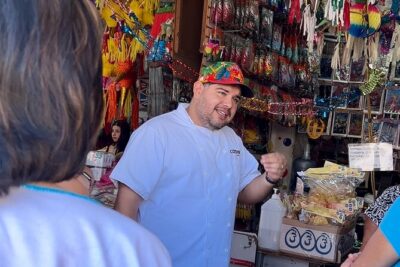
Cabo San Lucas Mexican Cooking Class Experience and Local Markets
Read our review →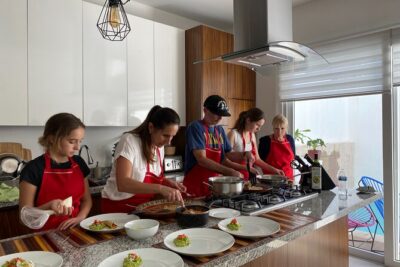
Puerto Vallarta Cooking Class Experience with Market Tour
Read our review →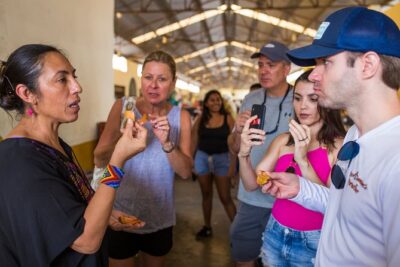
Mexican Cooking from Scratch in a Local Home in Tulum
Read our review →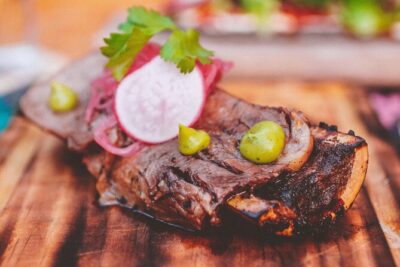
Mexican Cooking Class with Food Market Visit in Mexico City
Read our review →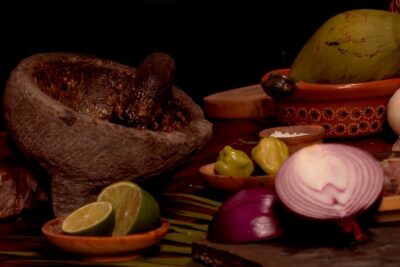
Flavors of Oaxaca: Cooking Class with No Set Menu and Local Market Tour
Read our review →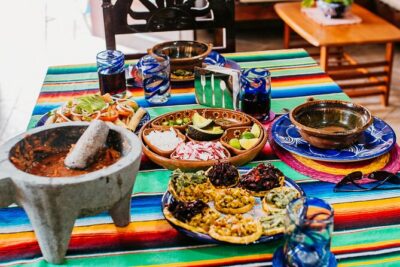
This kitchen also appears in