Review · PHUKET
Phuket – Blue Elephant Thai Cooking Class with Market Tour
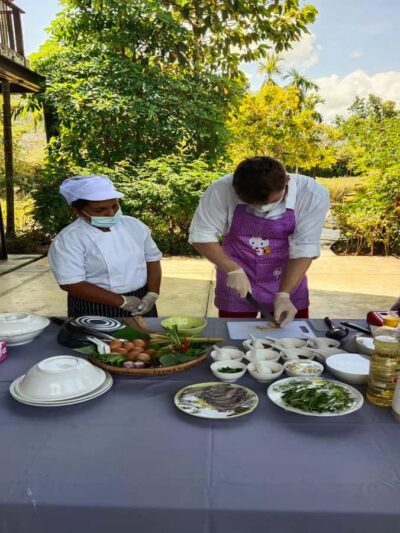
Thai cooking makes the market the first lesson. At Blue Elephant Phuket, you visit a local morning market before cooking, learning what unfamiliar herbs, spices, fruits, and vegetables actually do in the pan. I like that practical start, and I like the four-course format, which gives you more than one curry to take home. The main drawback is simple: you must arrange your own way to Phuket Town.
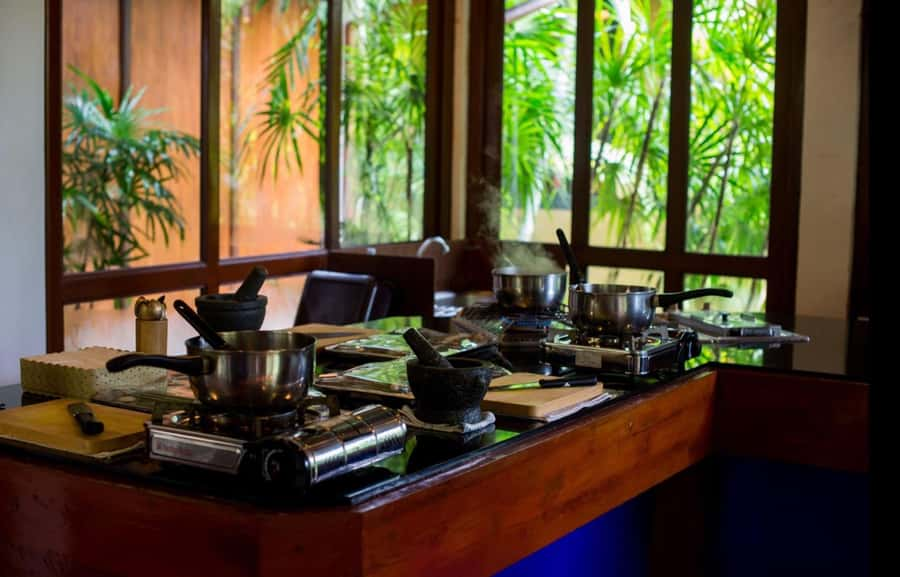
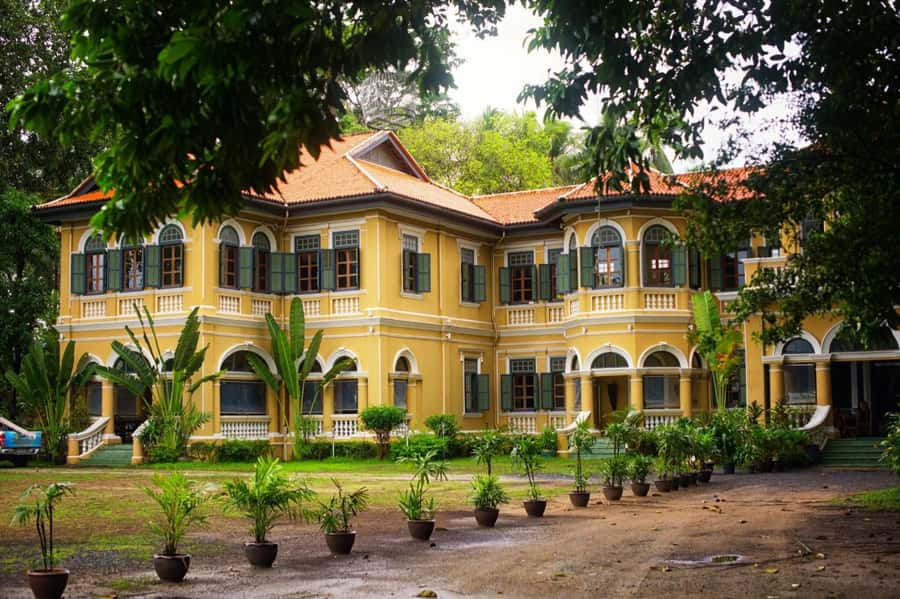
I also like the polished setting. The class begins at a historic Governor’s Mansion with a herbal drink and cool towel, then moves to a clean cooking room with your own wok and work space. Chef Molly and Chef Paul have both earned warm praise for clear instruction and good humor, though the quality of your final plate will depend partly on how closely you follow directions.
Key details before you book
- The market comes first: See Thai produce and seasonings in their everyday setting before you cook with them.
- Four dishes in four hours: You prepare a starter, soup, main dish, and accompanying dish, then eat them for lunch.
- Your menu depends on the day: Thai classics include green curry, Massaman curry, papaya salad, spicy soups, and stir-fried noodles.
- Small groups matter: The class is limited to 10 participants, with English and Thai instruction.
- You leave with useful take-home items: Expect recipes, a Blue Elephant apron, shopping bag, products, certificate, and souvenir.
- Plan your own transport: Hotel pickup and drop-off are not included, and arrival is required 15 minutes before the start.
Why the market tour is more than a shopping stop
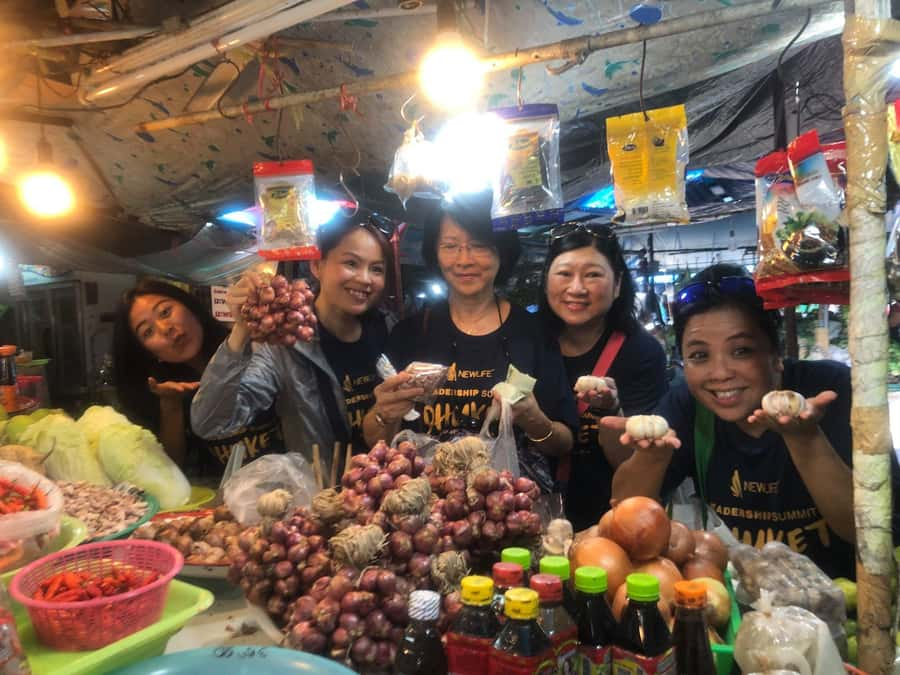
The morning market gives the cooking class a useful beginning. Instead of meeting Thai ingredients only after they have been trimmed, measured, and placed beside your wok, you see them as local shoppers do. Your chef points out fruits, vegetables, herbs, and spices, then explains their traditional uses.
That matters because Thai recipes often rely on ingredients that look similar but behave differently in a dish. A market visit can help you tell the difference between ingredients you may not recognize at home, and it gives the later cooking instructions some context.
I especially like this order of events. You first see the raw materials, then hear how they are used, and only after that begin cooking. It turns the market into part of the lesson rather than a quick photo stop.
The market is also the least controlled part of the morning. The cooking school is organized and comfortable, while a local market is a working place with its own pace. If you prefer a quiet, highly polished tour from start to finish, this portion may feel more practical than scenic. That is also its value: you get a glimpse of food culture in use, not just a display of ingredients prepared for visitors.
More Cooking Classes with a Market Tour in Thailand
- Chiang Mai: Cooking Class, Market & Thai Herbs Garden Tour
★ 4.9 · 4,824 reviews - Chiang Mai: Authentic Cooking Class with Market & Farm Visit
★ 4.9 · 4,546 reviews - Phuket Thai Cooking Class with Market Tour Option
★ 5.0 · 2,665 reviews
From the Governor’s Mansion to the cooking school
The meeting point is Blue Elephant Phuket Restaurant and Cooking School in Phuket Town, housed at the Governor’s Mansion. You arrive on your own and should be there 15 minutes before the scheduled start.
The setting adds a sense of occasion without changing the purpose of the class. After the market, you return for a Thai herbal drink and cool towel, a welcome reset in Phuket’s heat. The mansion and its garden are a real part of the appeal, especially if you enjoy architecture and attractive dining spaces as much as food.
The experience is not designed as a long sightseeing tour of Phuket Town. Its focus stays on cooking. Still, the location gives the morning more character than a plain commercial kitchen, and it makes the final meal feel like a proper lunch rather than a rushed tasting.
Keep the transport detail in mind. There is no hotel pickup or drop-off, so you need to budget for your own ride to and from Phuket Town. The start time varies, and you should check availability for the date you want.
A four-course lesson with your own wok
Back at the school, the class begins with theory. The chef explains the methods behind a four-course Thai meal, including the balance of spicy, sour, sweet, salty, and aromatic elements that gives Thai food its character.
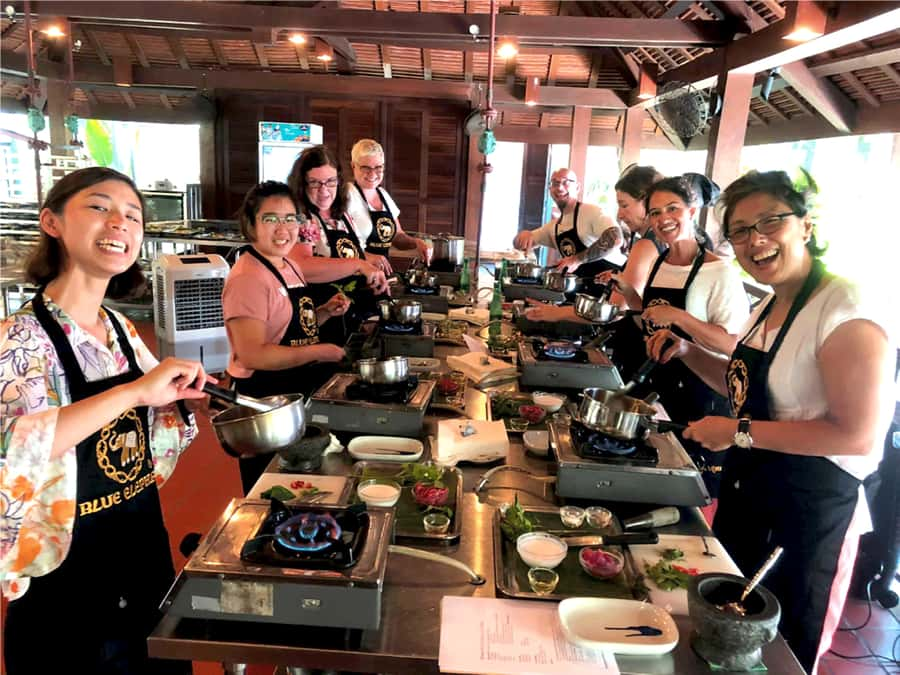
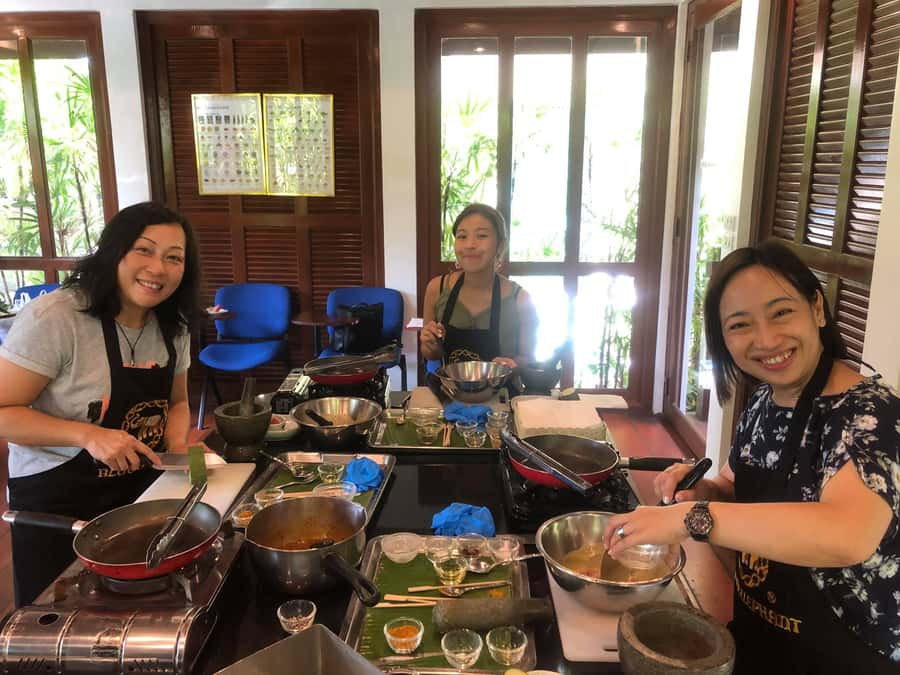
Then you move into the practice room. Each participant has a personal work space and wok, and instructors assist as you prepare four dishes: a starter, a soup, a main dish, and an accompanying dish.
That personal station is important. You are not simply watching a chef cook and then eating a plate prepared in the back. You handle the ingredients and work through the methods yourself. If you make a mistake, an instructor can step in before it ruins the dish.
The structure suits beginners because the work is broken into separate recipes. It also gives confident home cooks enough variety to pick up useful ideas, especially if Thai cooking at home has so far meant opening a curry paste jar and hoping for the best.
There is one amusing but genuine risk: you eat what you make. That is a good reason to pay close attention to quantities, timing, and instructions. One participant found the cooking skills in the group uneven, but the organized teaching and instructor support kept the day enjoyable. Your food may not look restaurant-perfect, but it is part of the lesson.
What you might cook on each day
The menu changes daily, so your choice of date affects the dishes. This is worth checking before booking, particularly if you have your heart set on a specific curry or seafood recipe.
Monday offers papaya salad, spicy and sour soup with prawns, red curry with beef and pumpkin, and stir-fried rice noodles with prawns. It is a strong introduction to familiar Thai flavors, with a fresh salad, hot soup, curry, and noodles.
Tuesday includes triangular spring rolls with spicy chicken filling, sea bass soup with turmeric, prawns with tamarind sauce, and Massaman curry with chicken. The tamarind sauce and Massaman curry give this menu a sweeter, gentler side alongside the sharper soup.
Wednesday brings crispy paper prawns, coconut milk soup with prawns, green curry with chicken, and grilled sea bass with Thai herbs. This is a good pick if you want to sample one of Thailand’s best-known curries and several seafood dishes.
Thursday features grilled long eggplant salad with prawns, coconut milk soup with chicken, steamed red tilapia with red curry sauce, and stir-fried beef with holy basil leaves. The holy basil dish offers a useful contrast to the creamy soups and curry.
Friday includes golden bags stuffed with green curry, soup with stuffed rambutan, baked glass noodles with prawns, and red curry with beef. The stuffed rambutan makes this the most unusual menu on paper, while the glass noodles provide a different texture from rice noodles.
Saturday offers crispy crab soufflé, spicy sea bass soup, spicy beef with southern curry paste, and red chicken curry with pineapple. This menu leans toward stronger flavors and is a good fit if you enjoy heat.
Sunday brings duck spring rolls, spicy ginger soup with chicken, duck breast salad with lychee, and yellow curry with prawn and Phuket pineapple. The duck and lychee combination gives Sunday’s menu a fruitier, more distinctive direction.
The menus are substantial. You are not making one small sample before being sent away. You prepare four separate dishes and then eat them at Blue Elephant Restaurant. If you have dietary restrictions, the supplied information does not explain substitutions, so ask the operator before booking rather than assuming changes are possible.
More Thai Cooking Classes around Thailand:
- Half-Day Thai Cooking Class at Organic Farm in Chiang Mai
★ 5.0 · 19,087 reviews - Thai and Akha Cooking Class in Chiang Mai
★ 5.0 · 4,358 reviews - Bangkok: Hands-on Thai Cooking Class and Market Tour
★ 4.9 · 1,614 reviews - Bangkok: Tingly Thai Cooking School Half-Day Cooking Class
★ 4.9 · 1,191 reviews
The instructors make the difference
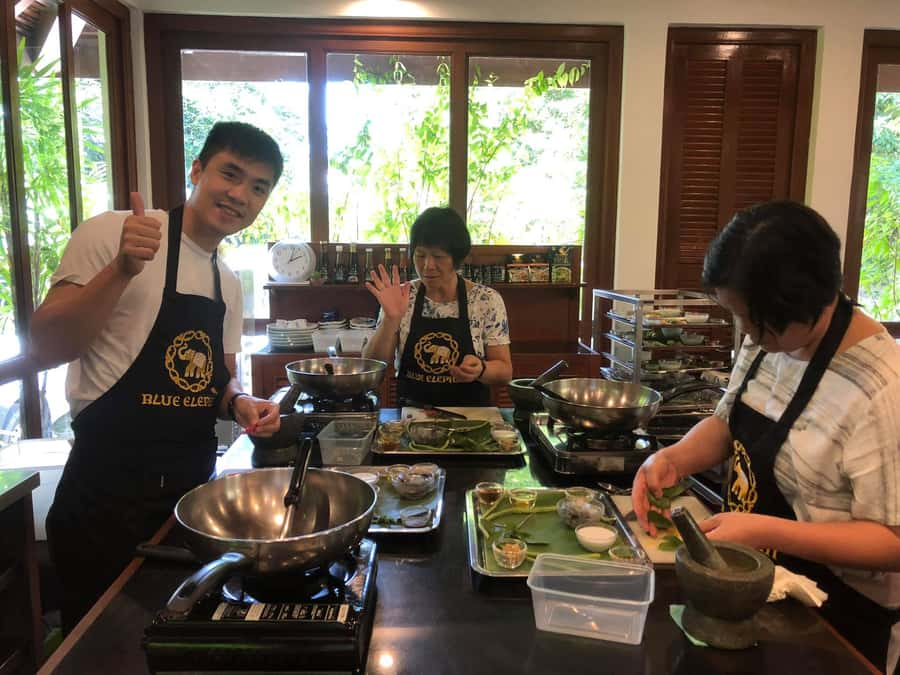
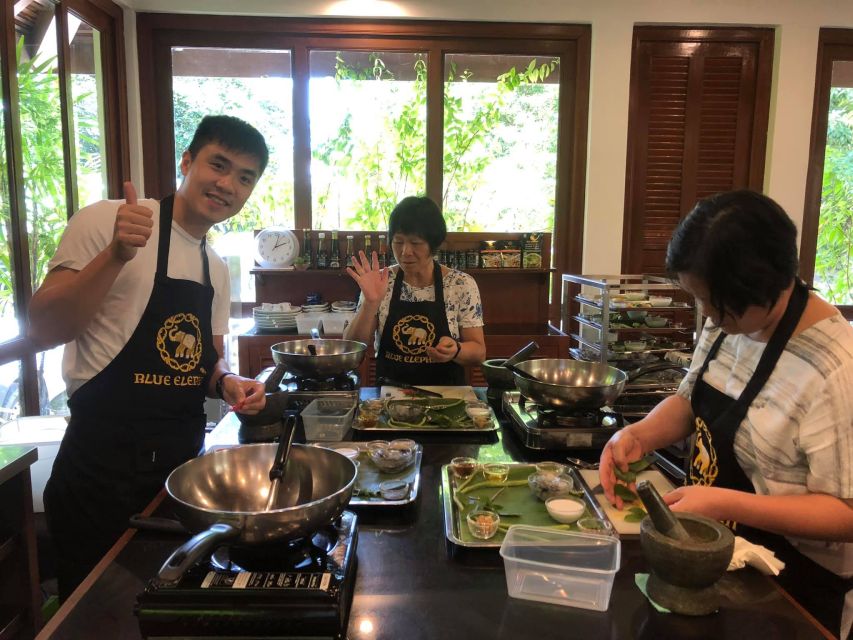
The class is led in English and Thai, and the group is limited to 10 people. That small size should make it easier to see demonstrations, ask questions, and get help at the stove.
Chef Molly receives especially strong praise for explaining unfamiliar ingredients and guiding each cooking session. Chef Paul is also singled out for his warmth and humor. Chef names may vary by date, but these examples give you a sense of the teaching style to expect: direct, friendly, and hands-on rather than formal and distant.
The best part of an instructor-led cooking class is often the correction you receive at the moment you need it. Thai cooking can move quickly once the wok is hot, so practical help matters more than a long lecture. The school’s four-part format gives the instructors several chances to show you how the ingredients and techniques fit together.
The class is not a private lesson. With up to 10 people, the pace must work for a small group, and some participants will cook more confidently than others. That is normal. If you want constant one-on-one attention, a private class would be a better match, but this group size is still small enough to feel personal.
Lunch is the test of what you learned
At the end, you sit down at the Blue Elephant Restaurant and eat the dishes you prepared. This is more useful than a separate restaurant meal because you can connect the final taste to your own choices at the stove.
You will notice where your curry became too mild, where the soup needs more sourness, or how quickly herbs change a dish. Those lessons are hard to get from a recipe card alone. Eating your own food also gives the class a clear payoff after four hours of market visits, explanations, chopping, and cooking.
The restaurant setting gives lunch a polished finish. At the same time, do not expect every plate to match a professional kitchen. Your meal reflects the group’s varied cooking skills. That is part of the fun, and it also keeps the class honest. You are learning to make Thai food, not watching a chef perform a perfect demonstration for you.
Is $174 a fair price?
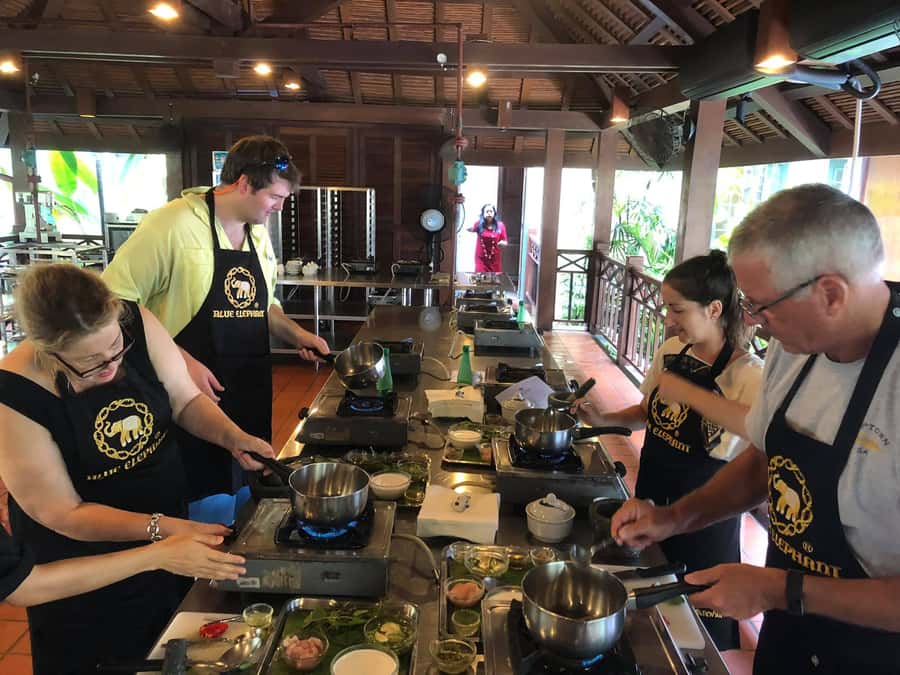
At $174 per person, this is not a budget cooking class. The price makes more sense when you count what is included: a four-hour activity, a market visit, all ingredients, instruction, use of a cooking station and wok, a four-course lunch, herbal drinks, a cool towel, apron, recipes, certificate, shopping bag, products, and a souvenir.
You are also paying for the Blue Elephant setting and the small group, not just for ingredients in a classroom. If you are already planning to spend generously on a special meal in Phuket, the class gives you both lunch and practical skills.
The value is strongest for food lovers who will use the recipes at home. The recipe cards mean you do not need to write down every method while cooking, and the Blue Elephant apron and shopping bag make useful reminders of the day.
The value is weaker if you dislike structured lessons, already know Thai cooking well, or only want a quick meal. You also need to pay for your own transport, which adds a separate cost. I would book this for the learning and hands-on cooking, not simply because it includes lunch.
What you take home
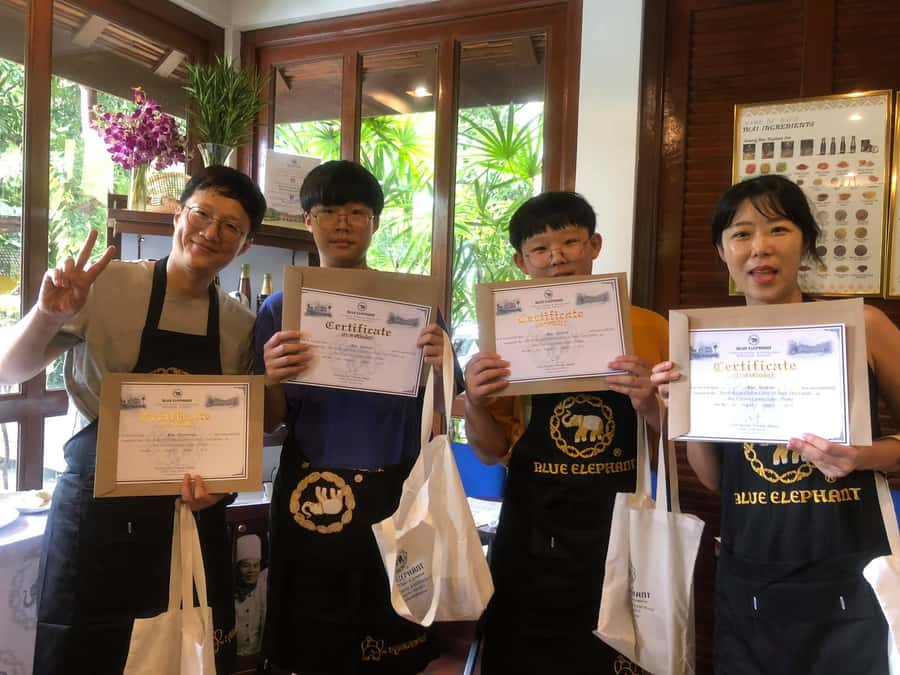
The practical souvenirs matter more than the usual disposable tour trinket. You receive recipe cards for the dishes, a Blue Elephant apron, a shopping bag and products, a certificate, and a special souvenir.
The recipes are the most useful item. Thai food can be difficult to recreate when you cannot remember the order of ingredients or the correct cooking time. Having the methods written down lets you repeat the dishes later and adjust them to your own kitchen.
The certificate is a pleasant record of the class, while the apron and bag are functional. Together, these extras give the day a longer life than the lunch itself.
Who should book this Phuket class?
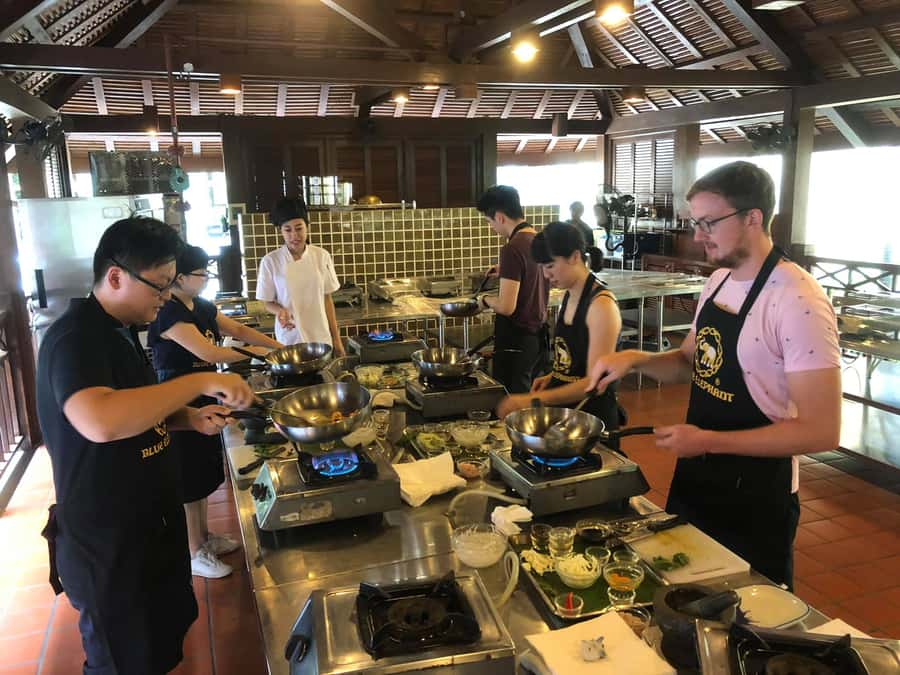
I would recommend it to food-focused visitors, couples, families with an interest in cooking, and anyone who wants a structured morning in Phuket Town. It works particularly well for beginners because the instructors guide each dish and provide a separate station.
It is also a good choice for people who enjoy trying unfamiliar ingredients. The market tour and changing menus expose you to more than the usual pad Thai lesson.
You may want to skip it if you need hotel transport, have a very limited budget, or want a fully private cooking session. The day has a fixed four-hour structure, and the menu is set by the day of the week.
Should you book Blue Elephant Phuket?
Book it if you want to understand Thai food by handling it yourself. The market visit, four dishes, small group, polished mansion setting, and sit-down lunch form a well-planned package, and the instruction from chefs such as Molly and Paul adds real value.
Before paying, check the menu for your chosen day and arrange your own transport to Phuket Town. Choose Monday or Wednesday for familiar Thai favorites, Friday or Sunday for more unusual combinations, and Saturday if you enjoy stronger spice. At $174, it is a premium outing, but it earns that price best when you will actually use the recipes after returning home.
FAQ
Where does the Blue Elephant Thai Cooking Class take place?
The class takes place at Blue Elephant Phuket Restaurant and Cooking School in Phuket Town, at the Governor’s Mansion.
How long does the activity last?
The activity lasts four hours.
Is hotel pickup included?
No. You must make your own way to Blue Elephant Phuket and arrange your own return transport.
How early should I arrive?
You should arrive 15 minutes before the departure time.
How many people are in the group?
The group is limited to 10 participants.
What languages are available?
The live tour guide and instruction are available in English and Thai.
What food do you prepare?
You prepare four dishes: a starter, a soup, a main dish, and an accompanying dish. The exact menu changes by day of the week.
What is included with the class?
The price includes all ingredients, a Blue Elephant apron, certificate, shopping bag and products, cooking recipes, a refreshing towel, Thai herbal drinks on arrival, and lunch consisting of the dishes you prepare.
New cooking classes around Thailand
- Sathon: Hands-on Thai Cooking Class & Market Tour in Bangkok★ 5.0 · 19 reviews
- Railay: Hands-On Thai Cooking Class at Railay Beach★ 4.9 · 30 reviews
- Phuket: Thai Cooking Class with Market Tour★ 5.0 · 2 reviews
- Phuket: Pum Thai Cooking School with Meal★ 5.0 · 3 reviews
- Phuket: Rawai Thai Cooking Class with Local Chef★ 4.8 · 23 reviews
- Phuket foodie tour+ Thai cooking class + Local food tasting★ 5.0 · 4 reviews
- Phuket: Half Day Thai Cooking Experience with Market Tour★ 5.0 · 11 reviews
- Phuket: Authentic Thai Cooking Class★ 4.8 · 145 reviews
Phuket Cooking Classes, side by side.
Phuket Thai Cooking Class with Market Tour Option
Read our review →
Phuket: Elephant Sanctuary Tour, Cooking Class & Lunch
Read our review →
Phuket: Half Day Easy Thai Cooking Class & Local Market Tour
Read our review →
Phuket: Half Day Thai Cooking Experience with Market Tour
Read our review →