Review · ROME
3 in 1 Cooking Class near Navona: Fettuccine, Ravioli & Tiramisu
The best thing about this Rome cooking class is that you make three dishes in one sitting, without needing much kitchen experience. You begin with tiramisu, move on to fresh fettuccine and ravioli, then sit down to eat what you prepared. Chef Mimi, Lori, Carlotta, Leo, Maria, Paris, and Mattia are among the instructors who lead these sessions, so the personality may vary by date.
I like the hands-on pace and the fact that the recipes are simple enough to repeat at home. I also like the relaxed meal at the end, with wine, coffee, or limoncello included. The main consideration is that you do not make the sauces yourself, and the portions may feel modest if you arrive very hungry.
Key points to know before booking
- Three classic dishes in one class: Prepare tiramisu, fettuccine, and ricotta ravioli during an approximately three-hour session.
- Beginner-friendly instruction: Chefs such as Mimi, Lori, Carlotta, Leo, Maria, Paris, and Mattia use clear, patient guidance for first-time pasta makers.
- Choose your fettuccine sauce: Your pasta is served with cacio e pepe, tomato and basil, or amatriciana.
- A social meal follows the work: Sit down with your freshly prepared food, water, a glass of wine or soft drink, and your choice of coffee or limoncello.
- The sauces are prepared separately: You make the pasta, filling, and tiramisu, but sauce preparation is not part of the lesson.
- Useful for families: The format has worked well for children around age 11 and for people who rarely cook.
What this Rome cooking class is really like
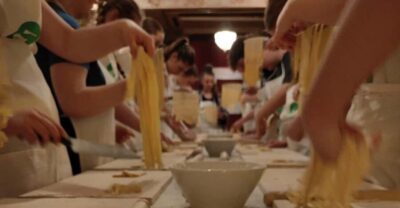
This is not a quiet demonstration where you watch a chef do all the work. You get an apron, sit with the group, and take part in the basic preparations. The class is designed for cooks of all levels, including people who have never rolled pasta before.
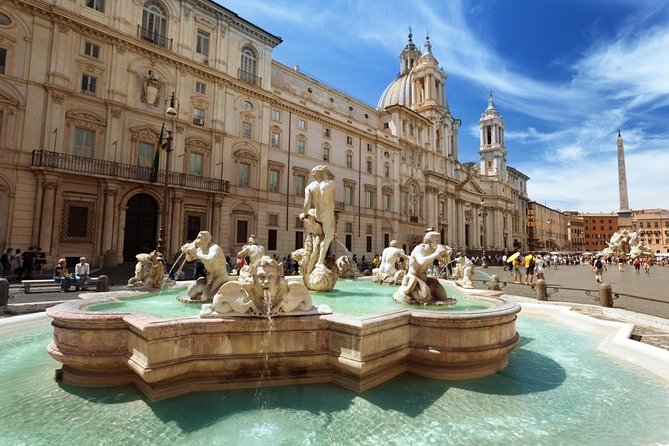
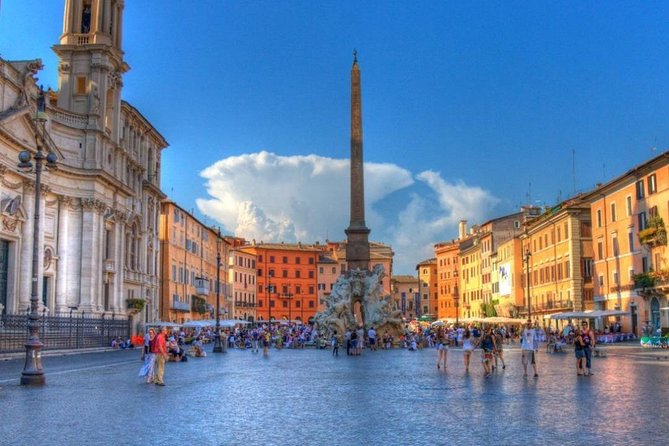
The meeting point is Via Giuseppe Zanardelli 14, a central address near Piazza Navona. You make your own way there, and the class finishes at the same place. Since the activity is close to public transportation, it fits neatly into a day spent around the historic center.
The class lasts about three hours. That is enough time to learn several techniques without turning the afternoon into a full-day culinary course. Start times are offered throughout the day, which gives you room to place it between sightseeing plans. I would still avoid scheduling a major timed attraction immediately afterward. Cooking classes can run a little long when a group needs extra help.
The group can include up to 18 people. That is not an intimate private lesson, but it is small enough for the chef to circulate and help people who are struggling with dough, filling, or shaping. The best instructors keep the room moving while giving extra attention to beginners.
More Pasta Making Classes in Rome
- Rome: Pasta Making Class with Wine, Limoncello, and Dessert
★ 4.9 · 3,177 reviews - Rome Cooking Class: Make Pasta and 3 Spritz Cocktails
★ 5.0 · 2,937 reviews - Rome: 3-in-1 Fettuccine, Ravioli, and Tiramisu Cooking Class
★ 4.9 · 2,704 reviews
Tiramisu comes first
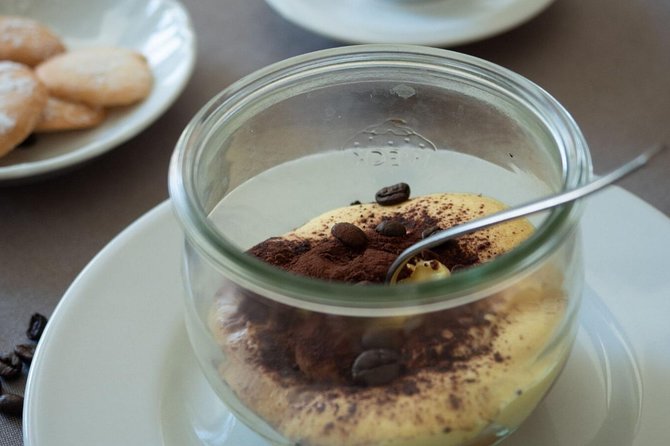
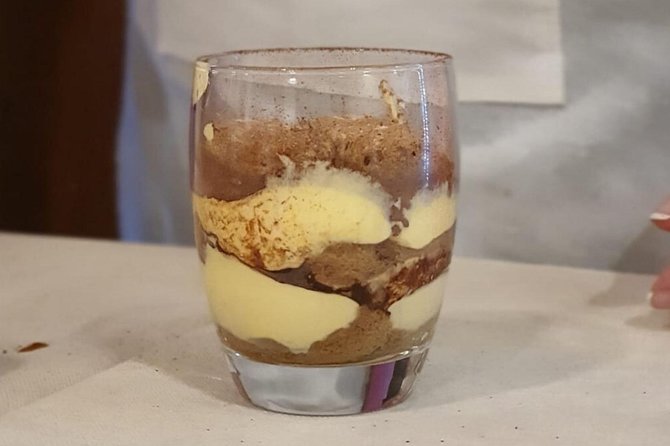
The class begins with tiramisu, which is a smart choice. This dessert needs time to chill, so preparing it first allows it to rest while you work on the pasta.
You follow a traditional-style recipe and assemble your own portion. The process is approachable, and it gives you an early success before the flour starts flying. One useful detail from the class format is its flexibility: an alternative ingredient was offered for a participant who disliked coffee. If you have a dietary concern or strong dislike, ask the chef what can be adjusted before you begin.
The tiramisu is not just a dessert demonstration. You make it yourself, and it returns at the end of the meal. That makes it one of the most satisfying parts of the experience for people who want a recipe they can repeat at home.
It also works well for families. A child around 11 enjoyed taking part, and the step-by-step structure gives younger cooks a clear job. Still, children should be comfortable following instructions and working around food preparation. The activity is hands-on, not a childcare program.
Rolling fettuccine from fresh dough
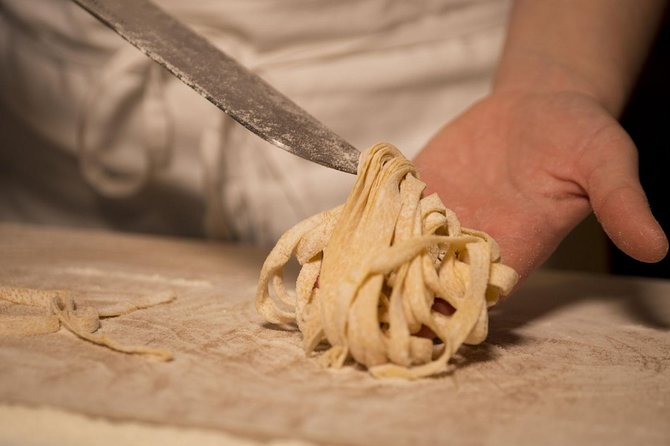
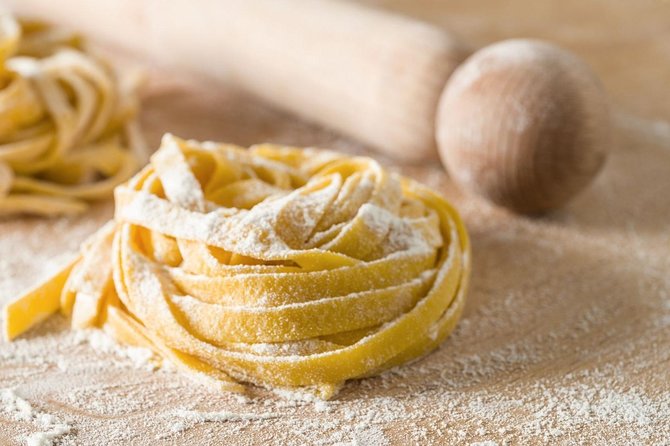
Next comes the pasta. The class focuses on making fresh fettuccine from scratch, with the chef explaining how to work the dough and shape the noodles.
This is where the class delivers its main lesson. Fresh pasta dough is not difficult, but it does require a feel for texture. You learn through your hands when the dough is too sticky, too dry, or ready to roll. A good chef can correct small problems before they become large ones, and the instructors praised most often for patience include Lori, Leo, Maria, Paris, and Mattia.
The class is relaxed rather than formal. You are encouraged to try, make mistakes, and keep going. That matters more than memorizing a perfect recipe. At home, your first batch may not look exactly like the Roman version, but you should leave with enough confidence to try again.
Your fettuccine is served with a sauce of your choice:
- Cacio e pepe
- Tomato and basil
- Amatriciana
The choice gives the meal a personal touch, but the sauces are not prepared as part of your lesson. The staff handles that portion separately. If your main goal is to learn sauce technique, this class will leave a gap. If your priority is fresh pasta, the arrangement keeps the class focused and manageable.
One practical advantage is that the pasta you make is cooked and served to you rather than treated as a group experiment. You get to eat the result of your own work. This also keeps the meal organized when the class includes families or a larger group.
Ravioli adds the most satisfying challenge
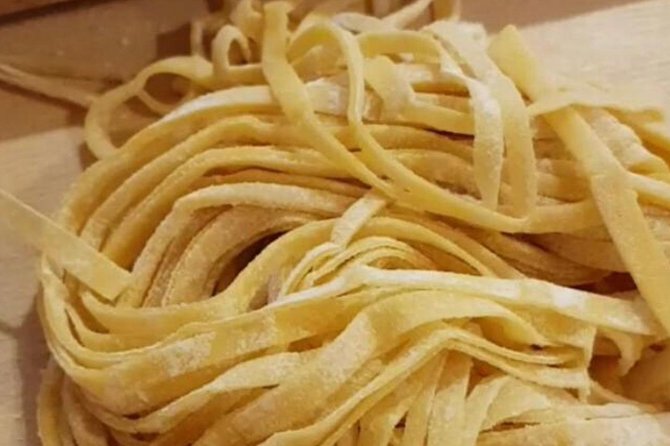
The ravioli section is the part I would not skip. Fettuccine teaches you how to make and shape pasta, but ravioli adds filling, sealing, and portion control.
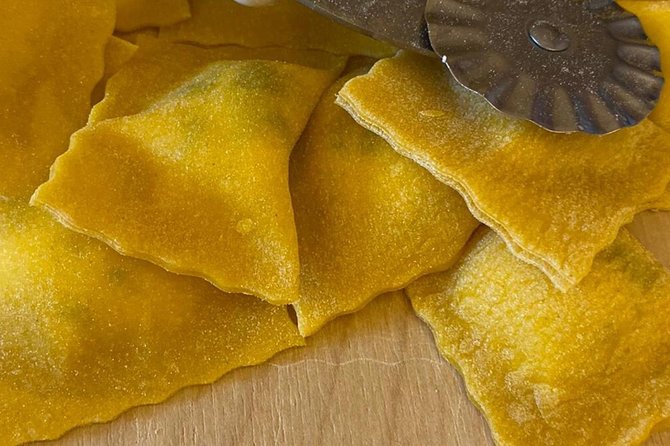
The filling includes ricotta and Parmigiano, with seasonal ingredients used in the preparation. The finished ravioli is served with butter and sage. That combination is simple, traditional, and well suited to fresh pasta because it does not overpower the delicate filling.
Ravioli requires a little more care than fettuccine. You need to place the filling neatly, avoid trapping too much air, and seal the edges firmly. The chef guides you through the process, and the hands-on help matters here. If your ravioli does not look perfect, that is part of the lesson. Homemade pasta has character.
I especially like that this section teaches a different skill rather than giving you more of the same. You leave having worked with long noodles, filled pasta, and dessert. For the price, that makes the class feel more substantial than a basic pasta lesson.
The tradeoff is time. With three preparations in one session, you are learning the essentials rather than exploring every regional variation. You will not become a pasta specialist in three hours. You will, however, understand the basic method well enough to practice at home.
More Tiramisu and Dessert Classes in Rome
- Fettuccine & Tiramisù: Cooking Class with Wine & Limoncello
★ 4.9 · 2,103 reviews - Rome: Pasta & Tiramisu Cooking Class near the Spanish Steps
★ 4.8 · 1,395 reviews - Cooking Class in the Heart of Rome: Pizza and Tiramisu Making
★ 5.0 · 1,330 reviews - 2-in-1 Pasta and Tiramisu Cooking Masterclass in Rome
★ 5.0 · 832 reviews
The meal: wine, pasta, and a practical finish
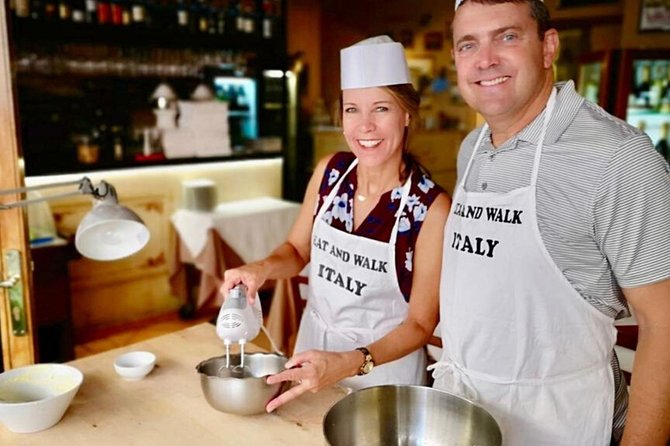
Once the pasta is ready, the kitchen cooks it for you. You then sit down and eat the dishes you made.
The meal includes your fettuccine with the selected sauce, ravioli with butter and sage, and your tiramisu. Water is included, along with a glass of wine or a soft drink. You can finish with either Italian coffee or a shot of limoncello.
This end-of-class meal is a major part of the value. You are not paying only for instruction and then searching for lunch elsewhere. The food is the payoff, and eating together gives the class a pleasant social rhythm.
The wine pairing is straightforward rather than elaborate. You choose red or white wine to drink with the pasta, but this is not a wine tasting. Extra drinks and extra food cost more, and they are not included.
Keep your expectations realistic about quantity. One person found the portions a little small. The class is built around learning and tasting, not serving a huge Roman feast. If you have skipped meals all day, you may want a snack before arriving.
The chefs shape the experience
The cooking itself is consistent in outline, but the chef leading your session will affect the mood. The instructors connected with especially warm feedback include Mimi, Lori, Carlotta, Leo, Maria, Paris, Mattia, Tom, and Furio.
Mimi is described as bubbly and friendly, with clear explanations that work well for families. Lori brings humor, patience, and energy, which helps keep the group involved. Carlotta is lively and attentive. Leo is valued for detailed instruction and a calm manner. Maria is easy to follow and circulates to assist people who need help.
Paris is particularly patient with first-time pasta makers. Mattia is described as kind and attentive, while Furio is good at involving children. Tom focuses on useful tips and tricks. You cannot normally choose the instructor, so book this for the format and food rather than for one specific chef.
The strongest pattern is the teaching style. The class is meant to feel social and encouraging, not intimidating. That makes it a good choice for a first cooking experience in Italy, especially if one person in your group cooks often and another rarely touches a mixing bowl.
What you take home besides dinner
The most useful souvenir is the technique. You learn how dough should feel, how to shape fettuccine, how to fill ravioli, and how to assemble tiramisu.
Recipes are also sent afterward. The materials include the tiramisu, pasta, and three sauce recipes. This makes the experience more valuable than one meal that disappears at the table. You can try the dishes again for family or friends, which several participants have done successfully.
The recipes are described as simple, but simple does not mean effortless. Your home results will depend on flour, eggs, rolling equipment, and practice. Still, the class gives you a clear starting point and enough guidance to avoid the most common beginner mistakes.
I like that the menu is familiar. Cacio e pepe, amatriciana, tomato and basil, butter and sage, and tiramisu are dishes you can recognize in Rome restaurants. You are learning food that connects directly with the city, rather than an elaborate recipe you are unlikely to prepare again.
Price and overall value at $83.44
At about $83.44 per person, this is not the cheapest meal you can buy in Rome. You could eat pasta for less. The value comes from combining instruction, ingredients, a full tasting meal, drinks, and recipes in a three-hour experience.
The price makes sense if you want an activity as well as dinner. It is especially reasonable for a couple, family, or group of friends looking for something more interactive than another restaurant reservation. You also save the effort of finding a separate meal after the class.
The value is weaker if you mainly want a professional cooking lesson. You do not make the sauces, and the group may include as many as 18 people. Serious home cooks may prefer a smaller, more specialized class with more time devoted to dough, regional pasta shapes, or sauce preparation.
For most first-time visitors, the balance is fair. You get three dishes, a central location, flexible start times, and a meal at the end. The high rating and 98 percent recommendation fit the experience’s main strengths: clear teaching, friendly chefs, tasty food, and a low-pressure format.
Who should book this class
I would recommend it to:
- First-time pasta makers
- Couples who want an activity beyond sightseeing
- Families with older children
- Friends looking for a social evening
- Visitors needing a break from walking and museums
- Anyone who wants recipes to repeat at home
It is also a useful rainy-day plan. After several days of walking around the Forum, Colosseum, and Vatican, sitting down to cook gives your legs a rest while keeping you connected to Rome.
I would hesitate if you need a private class, want to prepare every component from start to finish, or expect a large restaurant-style dinner. The group setting and limited sauce instruction are clear boundaries.
Practical details for your Rome schedule
You can choose from several start times when booking. The meeting point is Via Giuseppe Zanardelli 14, and the activity returns there. A mobile ticket is accepted, and the class is offered in English.
Wear something comfortable and arrive ready to work at the table. An apron is provided. You do not need previous cooking experience, special equipment, or a high level of Italian.
The experience can be booked far ahead, with an average booking time of about 40 days. If your dates are fixed, especially during a busy Rome visit, reserve early. Free cancellation is available up to 24 hours before the start time. Inside that window, the payment is not refunded and changes are not accepted.
Should you book the fettuccine, ravioli, and tiramisu class?
Book it if you want a friendly, practical introduction to Italian cooking with a meal built in. The combination of three dishes, rotating chefs who are patient with beginners, and recipes sent afterward gives you something useful to carry home.
Skip it if your priority is advanced culinary training or sauce-making. You will not learn every part of the meal, and the portions are designed for a tasting-style lunch or dinner rather than a feast.
For most people, I think this is a smart use of three hours in Rome. You get flour on your hands, fresh pasta on your plate, and a story that lasts longer than another restaurant receipt.
FAQ
How long does the cooking class last?
The class lasts approximately three hours.
Where does the class meet?
It starts at Via Giuseppe Zanardelli 14, 00186 Rome, and ends at the same meeting point.
Which dishes will I make?
You will make tiramisu, fresh fettuccine, and ravioli filled with ricotta and Parmigiano.
Can I choose my pasta sauce?
Yes. The fettuccine can be served with cacio e pepe, tomato and basil, or amatriciana.
Are drinks included?
Water is included, along with a glass of wine or a soft drink. You can also choose coffee or a shot of limoncello. Extra drinks and food are not included.
Is the class suitable for beginners and children?
Yes. The class is designed for all experience levels, and the format has been enjoyed by families with children around age 11.
Do I learn to make the sauces?
No. The class covers the pasta, ravioli filling, and tiramisu. The sauces are prepared separately and are not part of the hands-on lesson.
New cooking classes around Rome
- ROME:Hands-On Lasagna & Marsala Tiramisu Cooking Experience”★ 5.0 · 3 reviews
- Rome: Vatican Food Tours, Cooking classes & Free Tours★ 4.9 · 11 reviews
- Rome: Trastevere Pasta Making Class★ 4.9 · 33 reviews
- Rome: Traditional Pasta, Spritz & Tiramisu Cooking Class★ 4.9 · 279 reviews
- Rome: Traditional Pasta and Tiramisu Cooking Class★ 5.0 · 4 reviews
- Rome: Small Group Pasta cooking class near Piazza Navona★ 4.9 · 8 reviews
- Rome: Traditional Cooking Class in the Jewish Ghetto★ 4.9 · 75 reviews
- Rome: “Rooftop Pasta and Cocktails Cooking Class”★ 5.0 · 12 reviews
Rome Cooking Classes, side by side.

Rome: Pasta Making Class with Wine, Limoncello, and Dessert
Read our review →
Rome Cooking Class: Make Pasta and 3 Spritz Cocktails
Read our review →
Rome: 3-in-1 Fettuccine, Ravioli, and Tiramisu Cooking Class
Read our review →
Rome: Fettuccine Pasta Cooking Class in Rome’s City Center
Read our review →
Fettuccine & Tiramisù: Cooking Class with Wine & Limoncello
Read our review →
Pasta Cooking Class Near the Colosseum with 3 Spritz Cocktails
Read our review →
Enjoy Spritz and Pasta Making in Piazza Navona
Read our review →