Review · KHAO LAK
3 hours Khao Lak Cooking Class and Market Visit
The best part of this three-hour Khao Lak cooking class happens before you reach the stove. You visit a local market, see unfamiliar produce up close, taste a few snacks, and help choose the ingredients for your meal. I like that the class connects market shopping with Thai cooking, instead of treating food as a set of disconnected recipes. I also like the small-group feel reported on one session, where a solo participant received nearly constant hands-on help.
The main caution is that the menu and teaching materials may not be identical every time. Four dishes are prepared, but one participant found the recipe instructions disappointing, so ask how detailed the recipe guides will be if you want to recreate everything at home. Also, arrive hungry. There is market food, the cooked meal, and possibly extra local treats along the way.
Key points at a glance
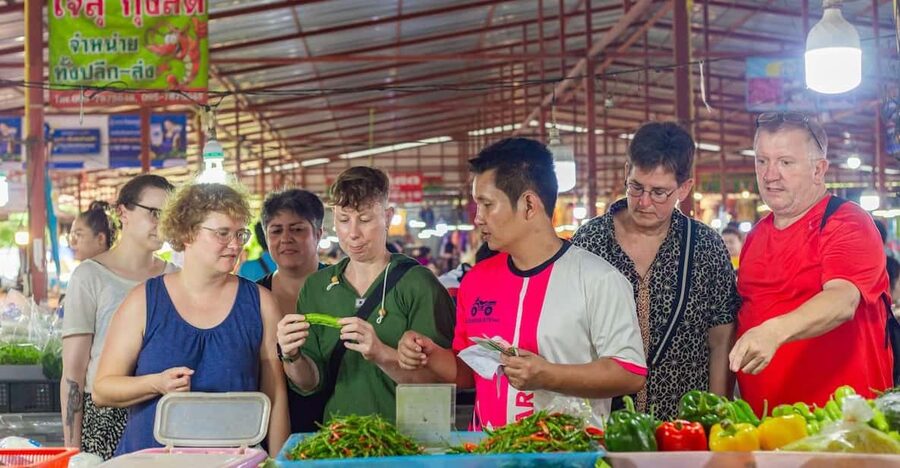
- Market-first cooking: Select ingredients with your guide and sample local snacks before class.
- Four-course meal: Expect hands-on preparation of Thai favorites, with Pad Thai, Tom Yum Goong, Som Tum, and mango sticky rice among the featured dishes.
- Small-group advantage: A very small class can give you more time at the stove and more direct help.
- Good value at $87: Pickup, drop-off, food, equipment, drinks, recipe material, fruit carving or coconut milk preparation, and a certificate are included.
- Thai flavor lessons: Learn how sweet, sour, salty, and spicy elements work together.
- A practical tip: Wear comfortable clothes, bring a hat and a change of clothes, and do not eat a large breakfast.
Why the market visit matters
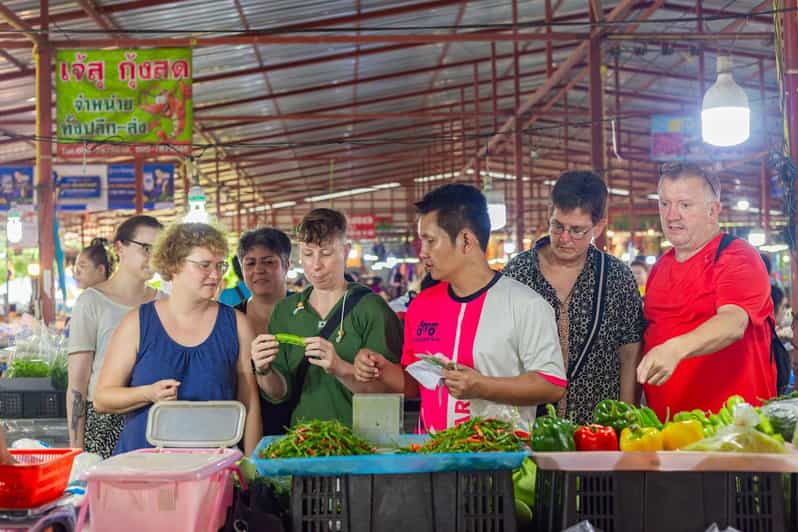
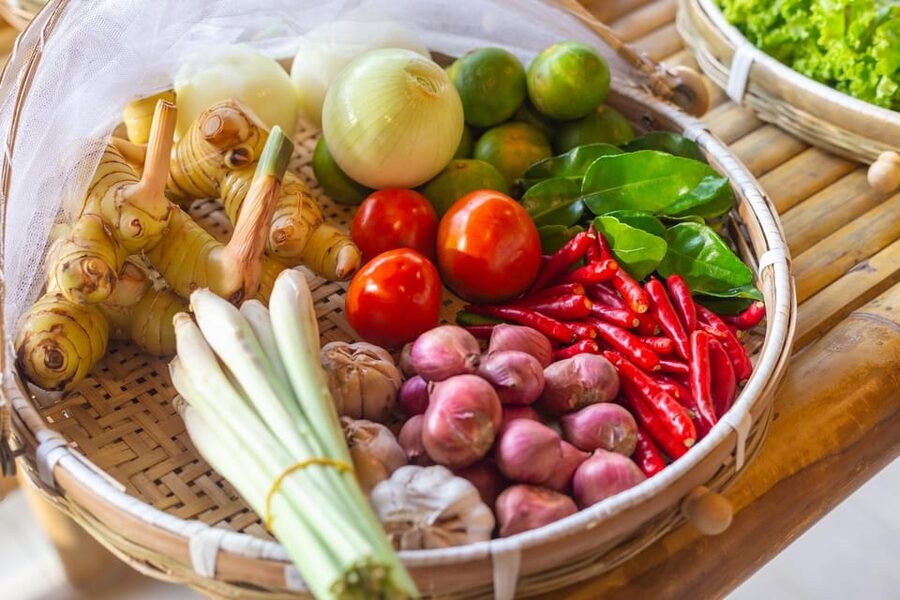
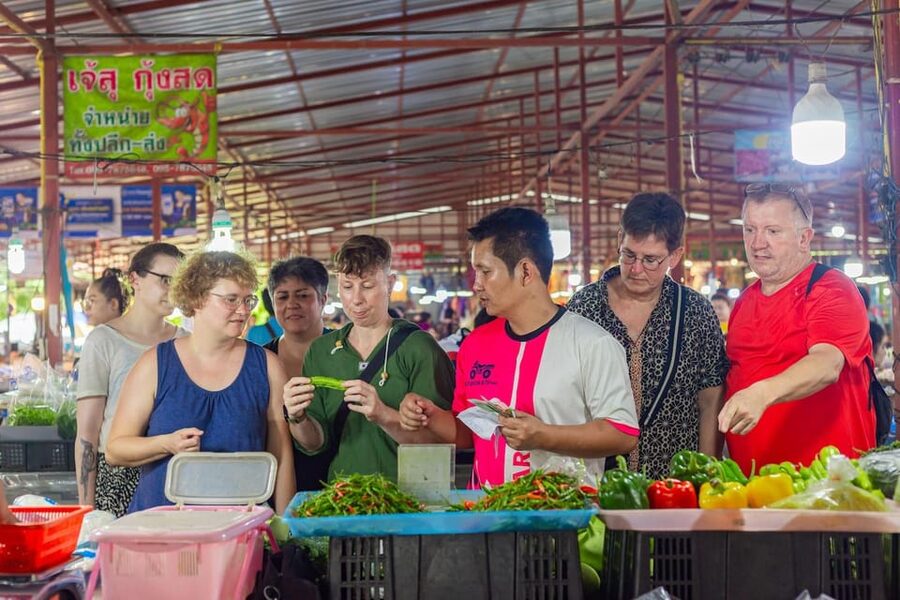
Thai food makes more sense once you have seen the ingredients in their everyday setting. At the market, your guide points out the products used in the class and helps you choose what will go into your meal. This turns shopping into part of the lesson, not just a stop before the real activity begins.
You may see produce and pantry items that are not familiar from a supermarket at home. The useful part is having someone explain what each item does, how it is used, and which flavors it brings to a dish. That context helps you understand why Thai recipes often rely on balance rather than one dominant taste.
The market also gives you a chance to try food before cooking. Sesame balls were a particular favorite for one participant, and snacks such as these make the visit feel more like a local food outing than a simple ingredient pickup. If you have never visited a Thai market, this is likely to be one of the most memorable parts of the morning or afternoon.
Do not expect a long market tour with time to browse every stall. The visit serves the cooking class, so the pace is shaped by the menu. That is useful if you want a focused activity, but less suitable if you are looking for an unhurried market photography session.
More Cooking Classes with a Market Tour in Thailand
- Chiang Mai: Cooking Class, Market & Thai Herbs Garden Tour
★ 4.9 · 4,824 reviews - Chiang Mai: Authentic Cooking Class with Market & Farm Visit
★ 4.9 · 4,546 reviews - Phuket Thai Cooking Class with Market Tour Option
★ 5.0 · 2,665 reviews
Four dishes and the Thai flavor balance
The class focuses on the four basic flavor notes often associated with Thai cooking: sweet, sour, salty, and spicy. Your chef explains how to adjust those elements instead of simply handing you a fixed recipe and telling you to follow it.
The featured dishes include Pad Thai, Tom Yum Goong, Som Tum, and mango sticky rice. The exact preparation may change, and one account describes four courses cooked in a wok, so you should treat the advertised dishes as examples rather than a guaranteed menu for every session.
Pad Thai is a sensible dish for a first cooking class. It looks familiar, but the final taste depends on the sauce, the balance of seasoning, and the order in which ingredients meet the heat. The class gives you a chance to see why a restaurant version can taste so different from a hurried home attempt.
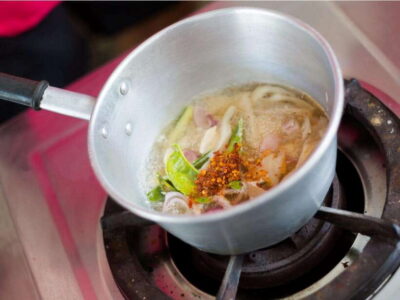
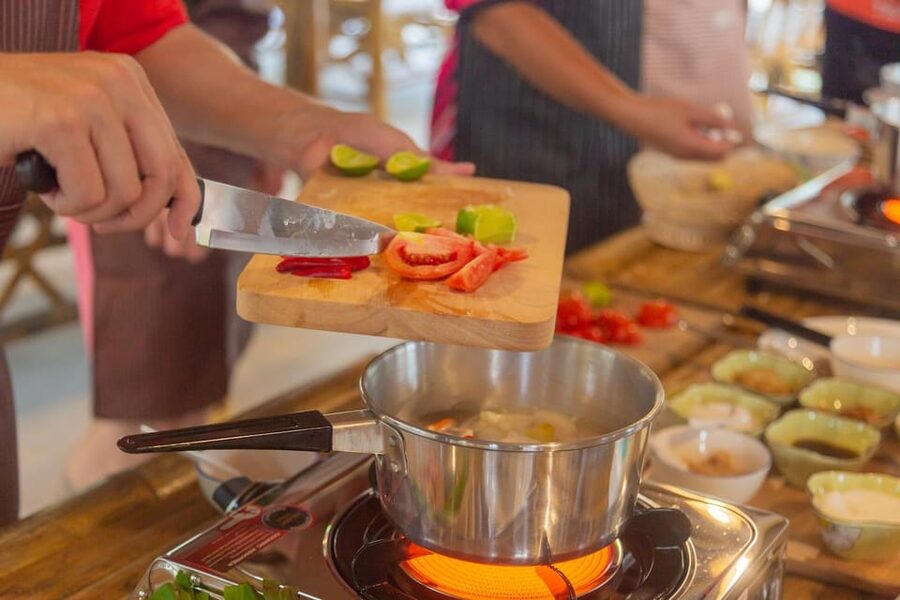
Tom Yum Goong shows off the sharper side of Thai food. Sourness, heat, herbs, and seafood need to work together, and the lesson is useful if you usually find Thai soup too spicy or too sour. You can watch how the flavor develops and learn that strength is not the same as balance.
Som Tum, the green papaya salad, brings freshness and crunch to the meal. It is a good example of Thai food that depends on seasoning as much as cooking. The ingredients are combined rather than slowly simmered, so tasting and adjusting matter.
Mango sticky rice gives the meal a sweet finish. The contrast between ripe mango, sticky rice, and coconut flavor is simple, but it also shows how Thai desserts use texture and richness without needing a long list of ingredients.
The order and final dishes are not fully specified for every departure. If you have a dietary restriction, ask before booking what substitutions are possible. The available information confirms the ingredients are provided, but it does not promise a separate vegetarian, vegan, halal, or allergy-safe menu.
Hands-on time at the stove
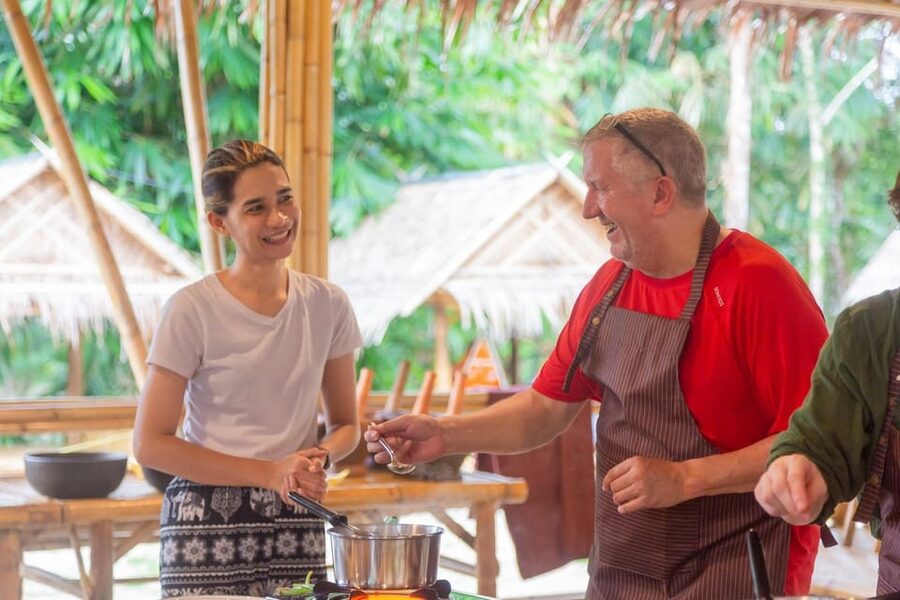
The cooking class is led in English by a local chef or guide. Tony is named as one guide who has led the activity, and his style is described as humorous, approachable, and clear. That matters in a cooking lesson because you need to feel comfortable asking basic questions, especially when unfamiliar ingredients or techniques appear.
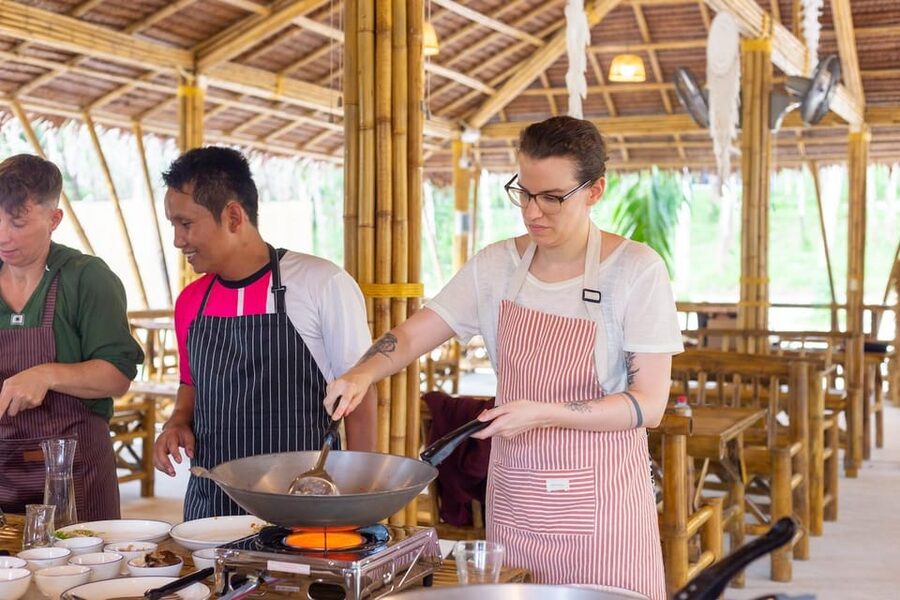
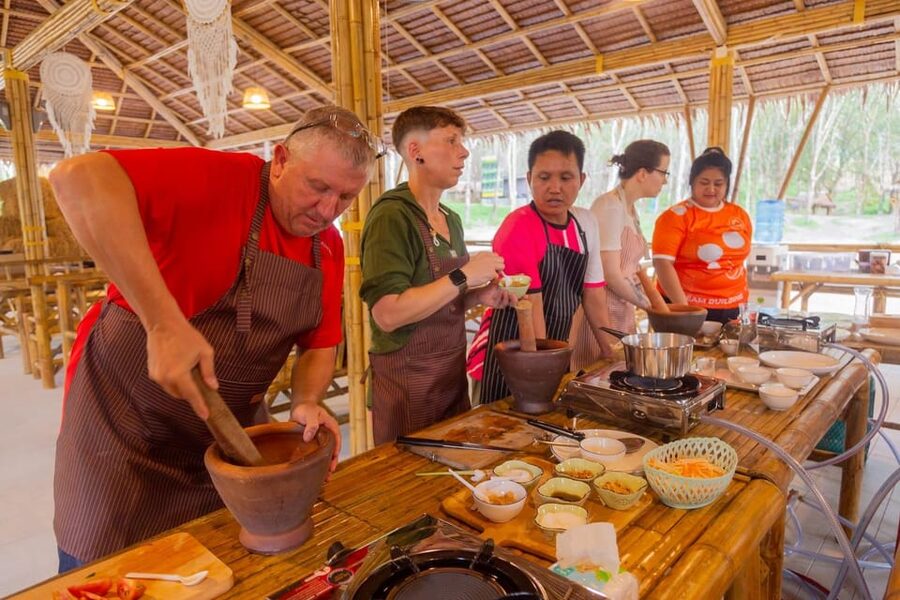
You are not left to cook from a distance. The format is designed for you to prepare the dishes with guidance, and the smaller the group, the more direct your time at the stove should be. One session had only one participant, which created an unusually personal class. You should not assume every departure will be private, but the possibility of a small class is worth noting.
Some preparation is done in advance. That is normal for a three-hour class and helps the group finish several dishes without spending the whole session chopping and waiting. It also means you may not perform every step from raw ingredient to finished plate. If you want a slow, technique-heavy lesson, this may feel abbreviated. If you want to learn the key methods and eat a full meal in a short time, the format makes sense.
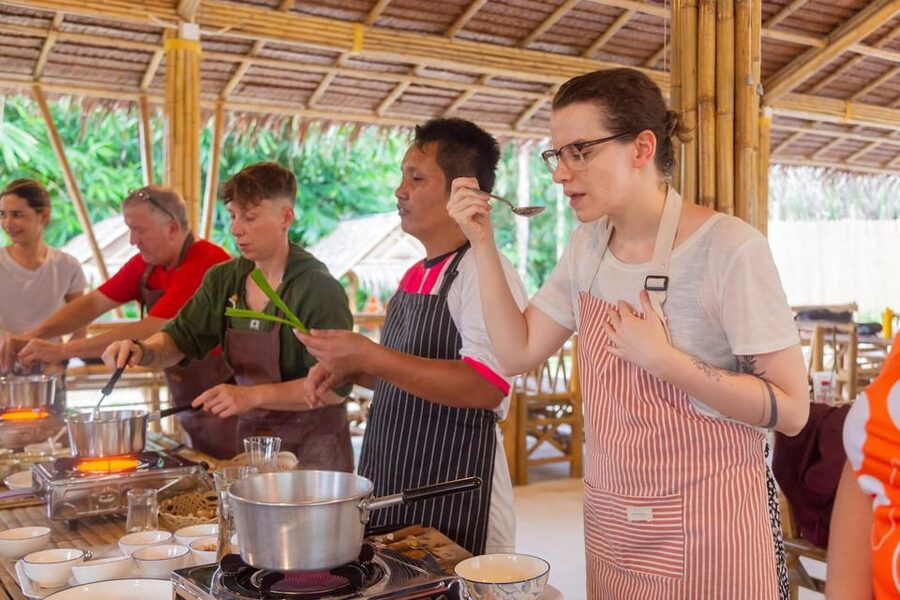
The class is practical rather than formal. You learn by seeing, handling, seasoning, and tasting. The lesson should leave you with a better feel for Thai flavor combinations, though you may still need practice at home to match the balance you liked in class.
What you actually eat
Plan this as a food-heavy activity. Market snacks come first, then the dishes prepared during class, and there may be additional local treats. Homemade ice cream was also offered during one session, though it should not be treated as a guaranteed part of the program.
The meal is substantial enough that breakfast can work against you. I would eat lightly beforehand, especially if your departure is early. You will want room for tasting as you go, since sampling is part of learning how the flavors change.
The food is one of the strongest reasons to book. Pad Thai received especially warm praise for its taste, and the overall meal is designed to be eaten soon after cooking. That immediate reward makes the class more satisfying than a demonstration where you watch someone else prepare the food and leave without a proper meal.
Keep expectations sensible about restaurant-level presentation. This is a teaching session, not a fine-dining service. The value lies in choosing ingredients, learning the seasoning, and eating what you made.
Same kitchen, a different dish:
- Half-Day Thai Cooking Class at Organic Farm in Chiang Mai
★ 5.0 · 19,087 reviews - Thai and Akha Cooking Class in Chiang Mai
★ 5.0 · 4,358 reviews - Bangkok: Hands-on Thai Cooking Class and Market Tour
★ 4.9 · 1,614 reviews - Chiang Mai: Cooking Class with Market and Pickup
★ 4.9 · 1,365 reviews
Extra activities: fruit carving and coconut milk
The package includes either fruit carving or coconut milk preparation. This adds a cultural and practical element beyond the main dishes, though the available information does not state which option each group receives or how long it takes.
Fruit carving can appeal to families and anyone interested in the decorative side of Thai food. Coconut milk preparation is more closely tied to cooking and desserts. If one option matters more to you, ask the provider before the class rather than assuming you will receive both.
A certificate of achievement is also included. It is a small souvenir rather than a professional qualification, but it can be fun to take home, especially for children or anyone building a collection of cooking experiences.
Free tea or coffee is provided. Equipment and all cooking ingredients are included, so you do not need to carry special tools or shop for produce before arrival.
Is $87 a fair price?
At $87 per person, this is not the cheapest way to eat in Khao Lak. You could order several Thai meals for less. The comparison changes once you count the included market visit, hotel transportation, ingredients, equipment, drinks, cooking instruction, recipe material, certificate, and the meal itself.
The price makes the most sense if you value an activity that combines food, culture, and practical skills. You are not paying only for dinner. You are paying for a guide to explain the ingredients, a structured class, transport, and the chance to prepare several dishes yourself.
It is especially good value for a small group. More personal instruction can make the difference between watching a demonstration and actually learning. If your class is larger, the value depends more on how much individual stove time you receive.
The recipe guides deserve a quick question before booking. They are listed as included, but one participant felt the instructions were not sufficient for cooking the dishes later. Ask if the material contains measurements and full preparation steps. That will help you judge the class as a take-home cooking lesson rather than simply a pleasant meal with instruction.
Pickup, clothing, and timing
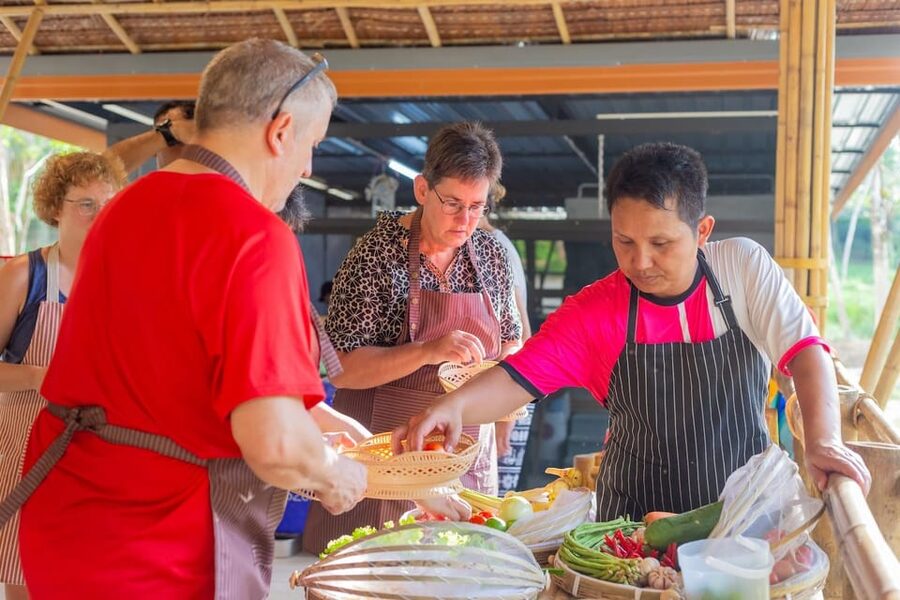
Hotel pickup and drop-off are included, which removes one of the less pleasant parts of arranging a cooking activity in an unfamiliar area. The experience lasts three hours, so it fits more easily into a Khao Lak holiday than a full-day food tour.
Bring a hat for the market and outdoor portions. A change of clothes is also recommended. Cooking can be messy, and hot weather can make a fresh shirt useful even if you avoid spills.
Wear something comfortable and practical. You will be moving between the market and cooking area, handling ingredients, and spending time near heat. Alcohol and drugs are not allowed.
The language listed for the activity is English. The guide names, menu details, and amount of individual cooking time may vary by departure, so ask direct questions if you need a particular dish, level of instruction, or dietary arrangement.
One note in the operating information refers to elephant activities and says the animals are never forced to participate. That policy belongs to the sanctuary setting and may not affect the cooking lesson itself, but it is worth clarifying if your booking combines this class with any elephant encounter. No refund is promised if an elephant-related activity changes because of the animal’s choice.
Who will enjoy this class most?
I would recommend it to first-time visitors who want an easy way to understand Thai food beyond ordering from a menu. It also suits couples, families, solo participants, and anyone who likes learning by doing rather than sitting through a demonstration.
Food lovers will appreciate the market tasting and the chance to compare ingredients before using them. Beginners should feel comfortable, since the class is designed for all skill levels and expert guidance is included.
It may be less suitable if you want a quiet, slow-paced market walk, a specialist culinary course, or a guaranteed private class. It is also not the right pick for someone who wants to avoid a large meal. The schedule is built around eating, and there is plenty to sample.
The full rating is 5 out of 5 from 15 ratings, which fits the strongest parts of the experience: the friendly instruction, the market connection, the hands-on cooking, and the amount of food. Still, the recipe-guide concern is real enough to check in advance.
Should you book the Khao Lak cooking class?
Book it if you want to taste local snacks, learn how Thai flavors fit together, and cook several dishes without giving up an entire day. The included pickup and supplies make it simple, and the $87 price is reasonable when you plan to use the class as both a meal and a cultural activity.
I would book with two conditions: arrive hungry and ask how detailed the recipe guides are. If possible, also confirm the menu and whether the class size is small. With those points clear, this is a friendly, practical choice for turning a Khao Lak holiday meal into a skill you can take home.
FAQ
How long does the Khao Lak cooking class last?
The experience lasts three hours and includes the market visit, cooking lesson, and food tasting.
What dishes will I cook?
The class features Thai dishes such as Pad Thai, Tom Yum Goong, Som Tum, and mango sticky rice. The exact menu may vary, and one session included four wok-prepared courses.
Is hotel transportation included?
Yes. Hotel pickup and drop-off are included in the price.
Are ingredients and cooking equipment provided?
Yes. All ingredients and equipment needed for the class are included.
What language is the class offered in?
The listed language is English. Guides can include Tony, who has led sessions with market explanations and cooking instruction.
Can I cancel for a full refund?
You can cancel up to 24 hours in advance for a full refund. The booking option also allows you to reserve now and pay later.
More three-hour classes around Thailand
- Marrakech: 3-Hour Open-Air Moroccan Cooking Course
★ 4.9 · 74 reviews - 3-hour Tuscan Cooking Class with Wine & Oil Tasting
★ 4.5 · 36 reviews - Sabah Traditional Authentic Cuisine Cooking Class 3 Hours
★ 4.9 · 22 reviews - Lake Atitlan Maya Kitchen: 3-Hour Cooking Class
★ 4.8 · 17 reviews
New cooking classes around Thailand
- Sathon: Hands-on Thai Cooking Class & Market Tour in Bangkok★ 5.0 · 19 reviews
- Railay: Hands-On Thai Cooking Class at Railay Beach★ 4.9 · 30 reviews
- Phuket: Thai Cooking Class with Market Tour★ 5.0 · 2 reviews
- Phuket: Pum Thai Cooking School with Meal★ 5.0 · 3 reviews
- Phuket: Rawai Thai Cooking Class with Local Chef★ 4.8 · 23 reviews
- Phuket foodie tour+ Thai cooking class + Local food tasting★ 5.0 · 4 reviews
- Phuket: Half Day Thai Cooking Experience with Market Tour★ 5.0 · 11 reviews
- Phuket: Authentic Thai Cooking Class★ 4.8 · 145 reviews
Khao Lak Cooking Classes, side by side.
Thai Cooking Class in Khao Lak by Amazon Prime Series Chef
Read our review →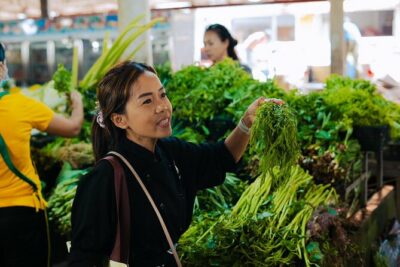
Thai cooking class &Market tour by Amazon Prime Series Chef.
Read our review →
Riverside Thai Cooking Class in Khao Lak with Market Tour
Read our review →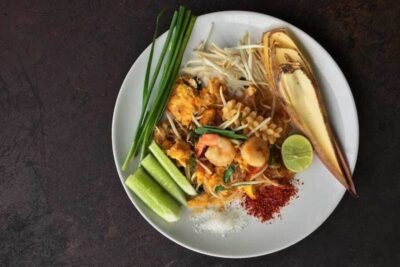
4-Hour Traditional Thai Cooking Class in Khaolak
Read our review →
Khao Lak: Half-Day Cooking Class and Ingredient Hunt
Read our review →