
Review · SPAIN
Malaga: Authentic Paella Cooking Class with Sangría
Malaga’s best food lesson may begin with a shopping trip. In morning sessions, you walk to Atarazanas Market with a guide such as Felipe, Elise, Jose or Javi, then return to Kulinarea’s modern kitchen to cook paella, gazpacho, sangria and, in several sessions, churros. You do not just watch a chef work. You chop, stir, taste and sit down to eat what you made.
I like the market connection, which gives the meal a local starting point instead of treating paella as a stand-alone recipe. I also like the generous food and drink, including olive oil, regional wine, beer or soft drinks, sangria and a full meal.
The main consideration is time. At 210 minutes, this is a large part of your day, and the market visit is available only in morning sessions from Monday to Saturday. Evening classes, Sundays and listed holidays go straight to the kitchen.
Key details before you book
- Start at Atarazanas Market: Morning classes visit Malaga’s main food market before cooking, while evening, Sunday and holiday sessions skip it because the market is closed.
- Cook your own paella: The format is hands-on, with a chef guiding you through preparation, cooking and timing.
- Taste more than paella: The menu includes homemade gazpacho or salmorejo, sangria, olive oil and drinks such as regional wine, beer or soft drinks. Churros have also been served in several sessions.
- Use a central Soho kitchen: Kulinarea is at Avenida Manuel Agustín Heredia 24, close to the port and nightlife, with Parking de La Marina across the street.
- Plan dietary needs early: Restrictions must be shared before the class. The kitchen cannot promise changes requested on the day.
- Take home a useful souvenir: Each participant receives a Kulinarea apron, a better memento than another refrigerator magnet.
A market-first introduction to Malaga’s food
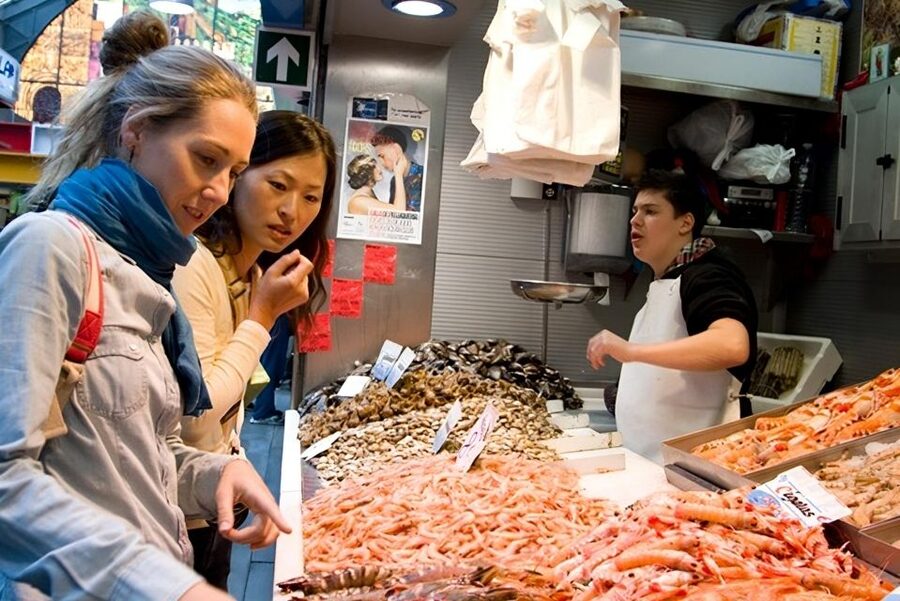
The morning version starts with a short walk to Atarazanas Market. This matters because you see the ingredients before they become lunch. The guide discusses the market, local produce and Malaga’s food traditions, and some sessions include tastes of olives and almonds.
The market stop also adds a bit of city context. Guides have explained the history of the market building and how parts of Malaga changed over time, including the city’s former relationship with the water. You get more than a quick pass through produce stalls, but this is still a short food tour rather than a full market-shopping excursion.
I would choose a morning class if Atarazanas is high on your Malaga list. The visit gives you a better sense of where the vegetables, oils and other ingredients come from. If you book in the evening, do not expect a replacement market tour. The class begins at the kitchen instead.
On Sundays and the listed national holidays, the market is closed. Those dates include January 1 and 6, February 28, parts of Holy Week, May 1, August 15 and 19, September 8, October 12, November 1, December 6 and 8, and December 25. Check the session details carefully if the market is important to you.
More Spanish Cooking Classes around Spain:
- Barcelona: Paella Cooking Experience & Boqueria Market Tour
★ 4.8 · 3,661 reviews - Barcelona Paella Cooking Class with Market Visit, Tapas & Sangria
★ 5.0 · 2,531 reviews - Barcelona Interactive Spanish Cooking Experience
★ 4.5 · 2,155 reviews
Kulinarea’s clean, modern kitchen
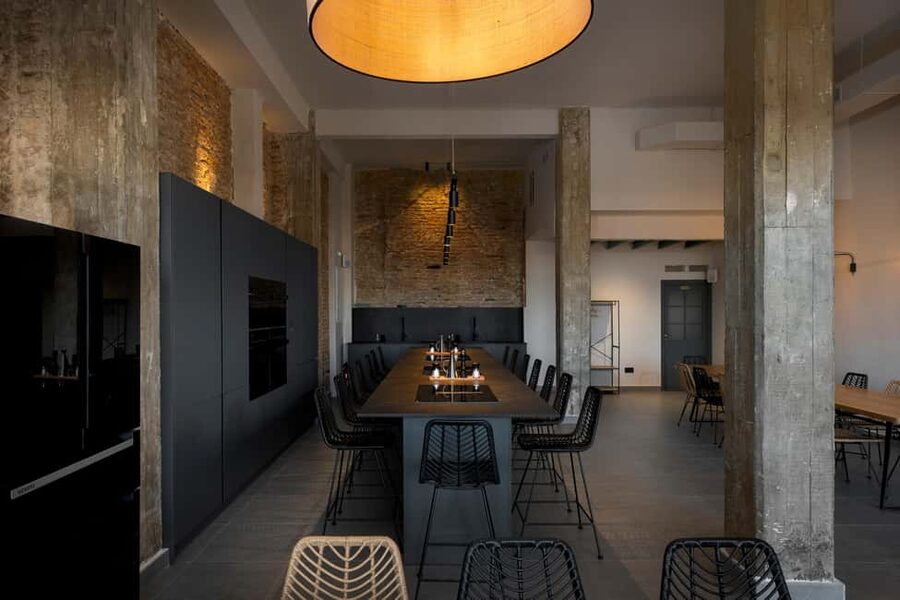
The cooking takes place at Kulinarea, at Avenida Manuel Agustín Heredia 24 in the Soho District. The kitchen is described as spacious, modern, very clean and well equipped. That is not a minor point in a cooking class. Good work surfaces and organized ingredients make it easier for you to take part instead of waiting for space.
The location is also practical. It is close to Malaga’s port, and Parking de La Marina is directly across from the meeting point. Pick-up and drop-off are not included, so you make your own way there. From the kitchen, you can continue toward the port or Malaga’s nightlife after the meal.
The class is conducted in English. The staff names vary by session, with guides and chefs including Felipe, Carmen, Jose, Elise, Javi, Anais, Alba, Alma and Pepo appearing in different classes. The important distinction is the division of roles: a guide may lead the market walk, while the chef directs the cooking.
Olive oil tasting before the chopping begins
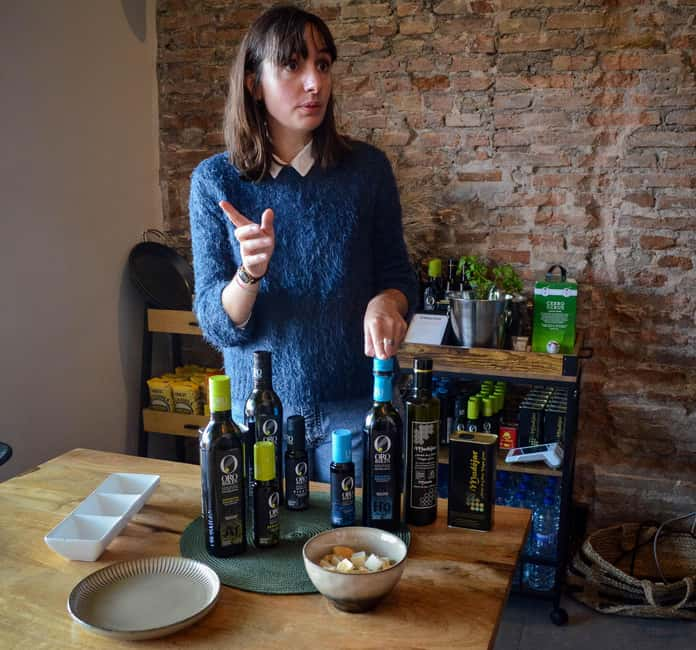
Before the main cooking starts, you taste extra virgin olive oils with traditional snacks. This is a smart opening because it teaches you to notice differences in flavor before you start adding ingredients to a pan.
The olive oil tasting is brief, not a separate producer visit. Still, it gives you a useful Spanish food lesson without adding much time. Some sessions also include olives and almonds at the market, so the morning option offers the fuller tasting sequence.
You may also learn how oil is used in the recipes and why ingredient quality matters. This is the sort of small detail that can help when you try to repeat the meal at home. The class is not built around technical culinary theory, though. It stays friendly and practical.
Cooking paella with Alba, Alma and other local chefs
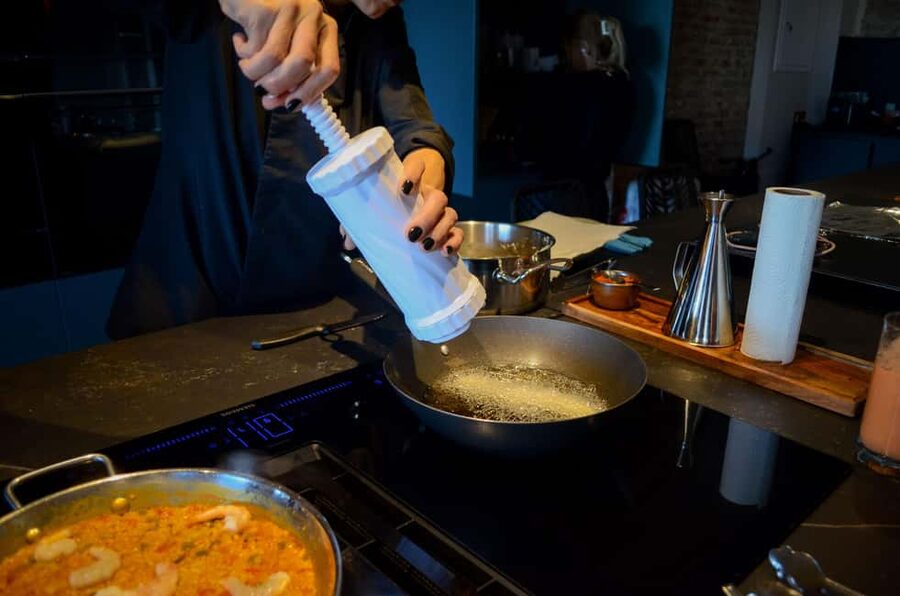
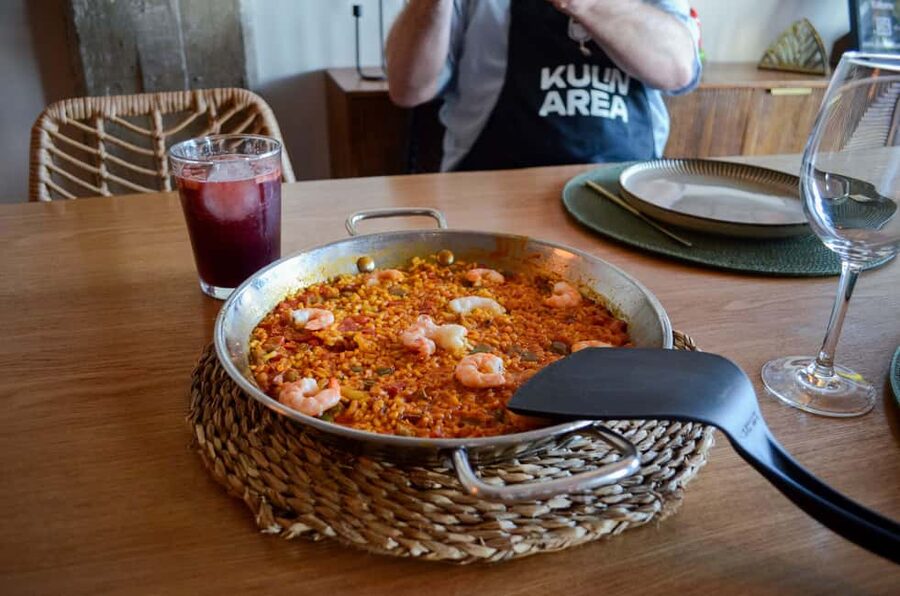
The central activity is your paella. The chef prepares the ingredients and explains each stage, then gives participants jobs so everyone has something to do. Depending on the session and group, you may work with onions, peppers and other vegetables before building the dish and cooking the rice.
Chefs including Alba, Alma and Pepo are praised for clear instructions, patience and encouragement. That matters if you are not confident in the kitchen. The class is designed so that you can follow along, even if your home paella usually comes from a restaurant menu rather than your own stove.
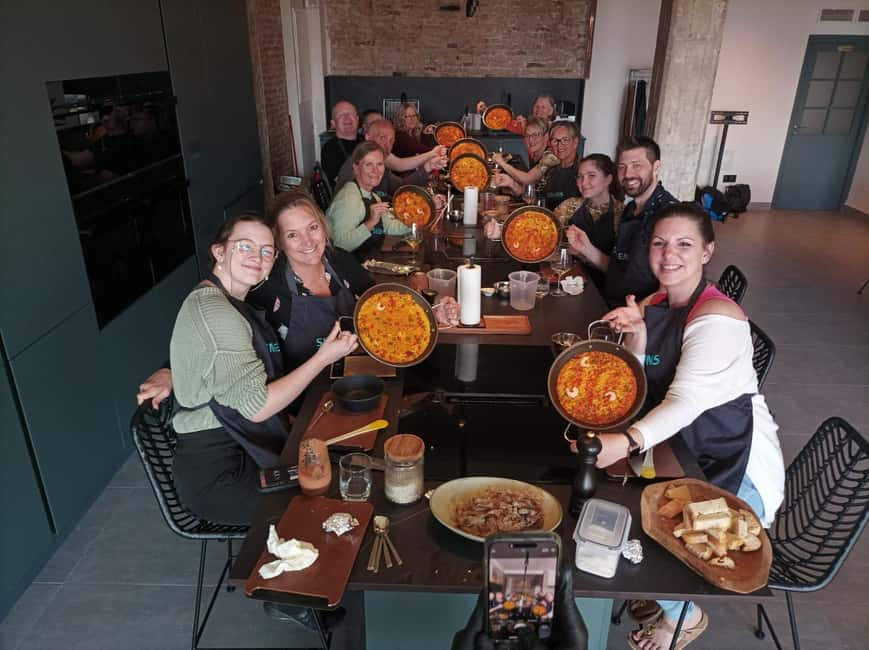
One particularly useful feature is the chance to compare the finished pans. A group can follow the same broad method and still produce paellas with slightly different flavors. That gives you a realistic lesson in cooking: timing, heat and small personal choices affect the final plate.
The meal is described as plentiful, and each person cooks their own paella in at least some group formats. Confirm the exact setup for your date if individual pans are important to you, since the supplied details do not promise an identical arrangement for every class.
More cooking classes around Spain:
- Spanish Cooking Class Paella Tapas and Sangria in Madrid
★ 5.0 · 1,340 reviews - Paella Cooking Class, Wine Tasting & Central Market in Valencia
★ 5.0 · 1,150 reviews - Paella Cooking Class in Madrid with Bottomless Wine Pairing
★ 5.0 · 985 reviews - Seville: Spanish Cooking Class with Dinner
★ 4.9 · 900 reviews
Gazpacho, salmorejo, sangria and churros
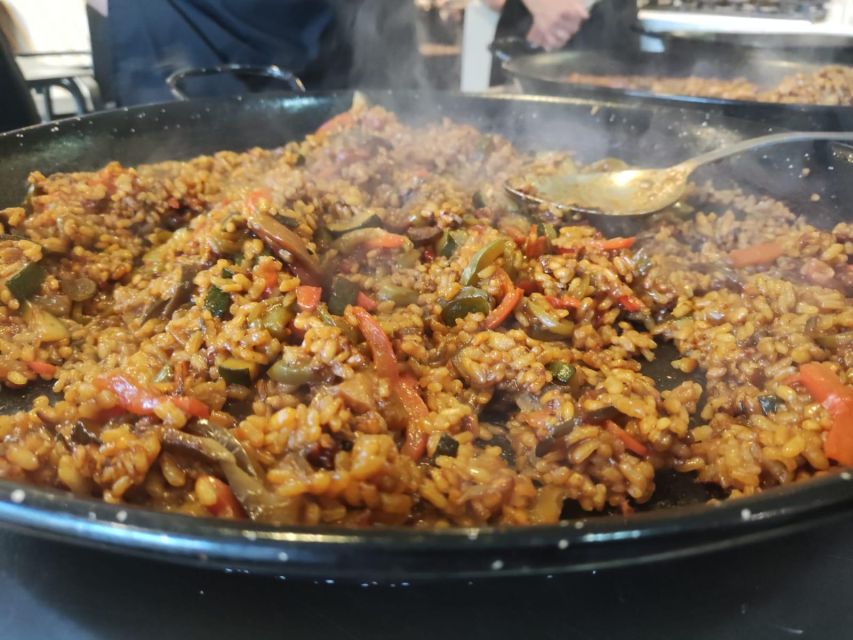
Paella is only part of the meal. You also prepare homemade gazpacho or salmorejo, depending on the session. These cold Andalusian dishes make sense in Malaga’s warm climate and give you a second useful recipe to take home.
Sangria is prepared during the class, with the guide or chef explaining the steps. Regional wines, beer and soft drinks are available, and wine is sometimes poured while the cooking is under way. The drinks are part of the social side of the experience, but you can choose a nonalcoholic option.
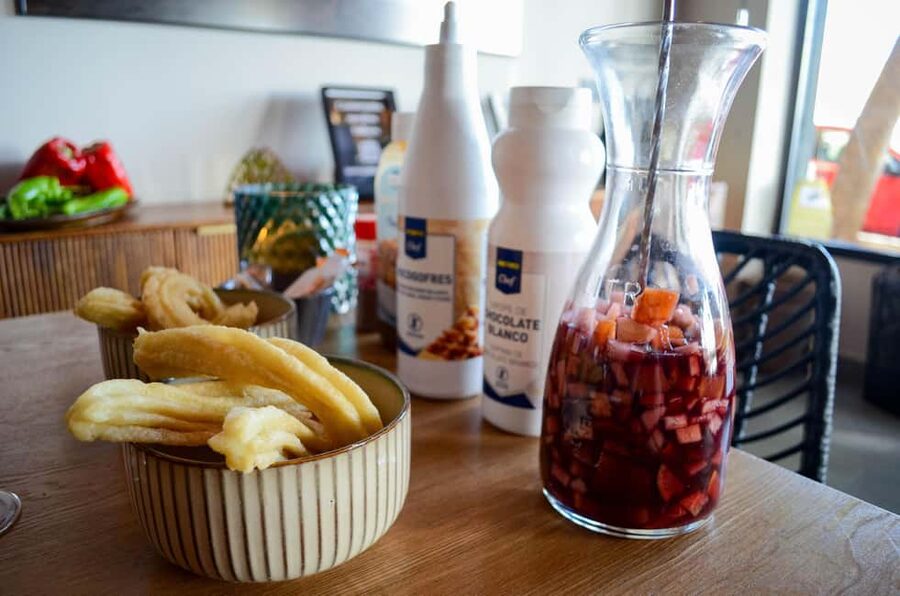
Churros have appeared as a surprise finish in several sessions, and they seem to be a frequent part of the food spread even though the main description highlights paella, gazpacho and sangria. You may make the batter and finish with churros after the savory dishes. I would treat them as a likely bonus rather than a guaranteed part of every advertised menu.
At the end, you sit down with the group to eat. This shared table is one reason the class works well for couples, families and solo visitors who want a social evening. It is also when you can compare the different paellas and continue talking with the chef and other participants.
What makes the price of $77 worthwhile
At $77 per person, the cost is higher than simply ordering paella at a Malaga restaurant. You are paying for roughly three and a half hours, an English-language guide and chef, the cooking lesson, a market visit on eligible morning sessions, olive oil tasting, several dishes and drinks.
The value improves if you would otherwise book a market tour and a separate cooking class. Here those pieces are joined, and the meal itself replaces lunch or dinner. The apron adds a practical souvenir, and the recipes give you something useful to carry home.
The value is lower if you only want to eat paella quickly. This is not a short demonstration. You spend time preparing ingredients, listening to instructions and working with the group. It suits someone who sees cooking as part of the holiday, not simply as a way to fill an hour.
The social side, and who will enjoy it most
This is a good fit for food-focused couples, families with older children, groups of friends and solo visitors who like meeting people over a shared meal. Teenage participants have enjoyed it after initially showing little interest, and children can take part in the cooking, though the activity is not suitable for children under four or babies under one.
It also works for mixed cooking ability. The chef keeps the process moving and helps when needed, so the person who cooks at home can take the lead without leaving everyone else idle. Several sessions have included people who rarely cook and still produced a satisfying meal.
The class may not suit you if you need a quiet, private lesson. The format is social, and the mood depends partly on the mix of people in your group. One small group finished earlier than expected, so the full 210 minutes may not always be used in exactly the same way.
Dietary planning deserves attention. Tell Kulinarea about allergies or restrictions before the class. Do not wait until you arrive, since changes cannot be arranged on the day. A pescatarian participant was accommodated in one session, but you should still provide your own details in advance rather than assume a particular substitution.
Practical timing and location advice
Choose a morning, Monday through Saturday, if you want the Atarazanas Market walk. The experience lasts 210 minutes, and available start times vary, so check the date before planning a museum visit or train departure afterward.
Evening sessions are useful if you want to spend the day sightseeing. They go directly to the Soho kitchen, which means less walking and no market stop. Sundays and holidays follow the same kitchen-only arrangement because the market is closed.
You are responsible for reaching Avenida Manuel Agustín Heredia 24. There is no included pick-up or drop-off. If you drive, Parking de La Marina is in front of the meeting point, which is handy but still worth allowing time for.
Free cancellation is available up to 24 hours before the class for a full refund. You can also reserve and pay later, which helps if your Malaga plans are still shifting.
Should you book the Kulinarea class?
Book it if you want to make a full Spanish meal, not just eat one. The strongest version is a weekday or Saturday morning, when the Atarazanas Market visit adds local food context before the cooking begins.
I would especially recommend it for first-time visitors who want one organized food experience, families with children old enough to participate, and couples looking for an evening that includes dinner. The modern kitchen, patient chefs and generous meal make the $77 price reasonable for a 210-minute activity.
Skip it if you dislike group cooking, have complex dietary needs that cannot be confirmed in advance, or want a short tasting rather than a hands-on class. For everyone else, bring an appetite, arrive ready to chop, and leave room in your suitcase for the apron.
FAQ
Where does the Malaga paella class meet?
The class meets at Kulinarea, Avenida Manuel Agustín Heredia 24, in Malaga’s Soho District.
Does the experience include a visit to Atarazanas Market?
Morning sessions from Monday to Saturday include a short visit to Atarazanas Market. Evening classes, Sundays and the listed national holidays go directly to the kitchen because the market is closed.
How long does the cooking class last?
The experience lasts 210 minutes, or three and a half hours.
What food and drinks are included?
The experience includes paella, homemade gazpacho or salmorejo, sangria, an extra virgin olive oil tasting and drinks such as regional wine, beer or soft drinks. Churros are also prepared in several sessions.
Is the class taught in English?
Yes. The instructor language is English.
Can dietary restrictions be accommodated?
You must provide dietary information before the class. Restrictions cannot be arranged on the day itself.
Is transportation included?
No. Pick-up and drop-off are not included. You travel to Kulinarea yourself, and Parking de La Marina is located across from the meeting point.
New cooking classes around Spain
- Seville: Paella-Cooking Experience with Sangria & Full Meal★ 4.9 · 42 reviews
- Seville: Paella Showcooking Experience★ 4.7 · 161 reviews
- Seville: Paella Cooking Class & 30-Min Local Expert Q&A★ 4.8 · 37 reviews
- San Sebastián: Market Tour, Cooking Class, & Meal★ 5.0 · 2 reviews
- San Sebastián: Market Tour and Basque Cooking Class English★ 5.0 · 5 reviews
- Barcelona: Paella Seafood Master Cooking Class with Sangria★ 5.0 · 73 reviews
- Pontevedra: Galician Cooking Class with Chef Instructor★ 4.9 · 3 reviews
- Mojo Workshop Cooking Class in Ancient Canarian Village★ 4.9 · 127 reviews
Spain Cooking Classes, side by side.
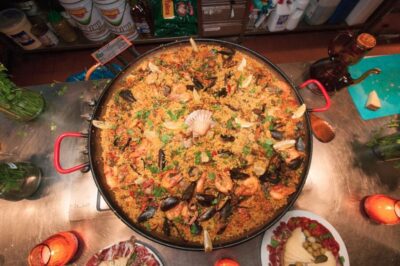
Barcelona: Paella Cooking Experience & Boqueria Market Tour
Read our review →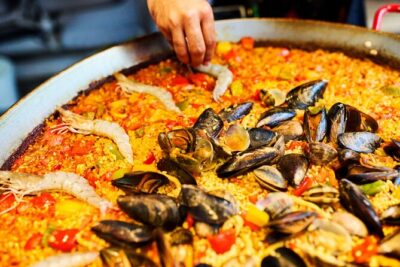
Barcelona Paella Cooking Class with Market Visit, Tapas & Sangria
Read our review →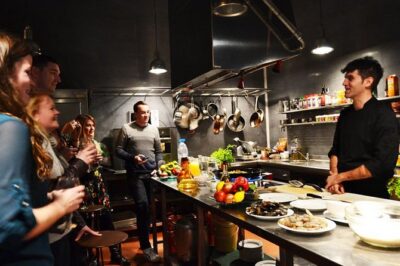
Barcelona Interactive Spanish Cooking Experience
Read our review →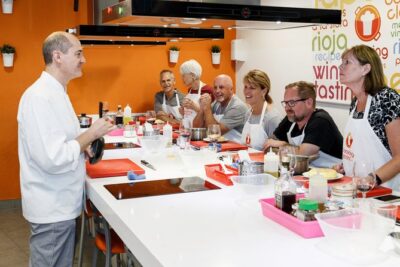
Spanish Cooking Class Paella Tapas and Sangria in Madrid
Read our review →
Paella Cooking Class, Wine Tasting & Central Market in Valencia
Read our review →
Paella Cooking Class in Madrid with Bottomless Wine Pairing
Read our review →
Valencian paella cooking class, tapas and visit to Ruzafa market.
Read our review →This kitchen also appears in