Review · SEMINYAK
Bali: Balinese Cooking Class and Market Tour
The best part of this five-hour Seminyak experience is the full path from market stall to lunch table. You see the ingredients, learn how they are used, then help prepare Balinese dishes with a chef and cooking assistants. It is more useful than a simple demonstration because you get to handle the food and eat the finished meal.
I like the market introduction to local spices and produce, and I like that your $40 includes morning tea, lunch, a certificate, and a cookbook. The main caution is consistency: one account describes a rushed, highly commercial class with limited market time and assistants doing too much of the work. Your experience may depend on the group and the staff assigned to it.
Key points to know
- Market first: Begin by looking at tropical fruit, vegetables, and spices before cooking.
- Five hours total: This is a half-day activity with morning tea and lunch included.
- Hands-on cooking: You help prepare several dishes, though the amount of personal cooking may vary.
- Useful take-home items: You receive a certificate and cookbook for repeating the recipes at home.
- Hotel pickup only: Pickup is included, but there is no drop-off service.
- Strong overall rating: The experience has a 4.8 rating from 19 bookings, with one detailed complaint about a rushed format.
From Seminyak hotel lobby to the market
Your morning begins with hotel pickup. You should wait in the lobby 10 minutes before the scheduled time, since the driver may wait only five minutes after pickup time. The service is practical, but remember that the included transfer is one way. You will need to arrange your own return after lunch.
The market visit gives the class a useful local setting. Instead of meeting the ingredients only after they have been measured and arranged in a kitchen, you see fresh produce, locally grown fruit, and aromatic spices before cooking begins. That helps you understand why Balinese food has such a strong focus on fresh herbs, seasoning pastes, and carefully combined flavors.
You will also have a chance to practice haggling. Treat this as a cultural lesson rather than a serious shopping mission. One complaint about the experience described a market stop limited to two stalls, with concerns about prices varying by appearance and origin. I would keep your expectations modest: this may be a short ingredient-shopping visit rather than a long, independent market walk.
Still, even a brief visit can be worthwhile if the chef explains what you are seeing. Ask about unfamiliar spices, how produce is selected, and which ingredients are common in everyday Balinese cooking. The quality of this part depends heavily on how much explanation your guide provides.
More Cooking Classes with a Market Tour in Indonesia
- Ubud: Cooking Class with Transfers and Optional Market Visit
★ 4.9 · 824 reviews - Balinese Ubud cooking school (9 Dish Cooking and Market Tour)
★ 5.0 · 540 reviews - Ubud: Balinese Cooking Class and Market Tour
★ 4.8 · 531 reviews
Morning tea and the first taste of Bali
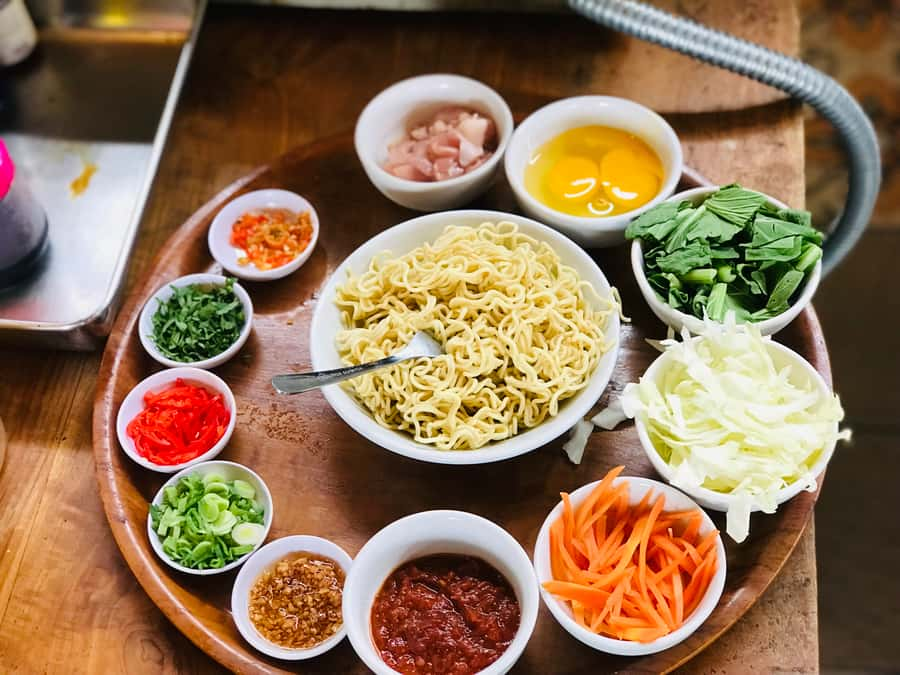
After the market, you receive morning tea with a Balinese cake. This is a small detail, but it makes the schedule more comfortable. You are not expected to move straight from an early hotel pickup into several hours of chopping and cooking on an empty stomach.
The snack also gives you a first taste of local food before the main meal. Since the class includes lunch later, the morning cake is best viewed as a light introduction rather than a full meal. If you have dietary restrictions, confirm them when booking because no specific dietary arrangements are provided in the information available.
The class is taught in English and Indonesian, with an audio guide offered in both languages. That gives you basic language flexibility, though the listing does not identify the chef by name. You can expect instruction from the chef and help from cooking assistants, but the exact teaching style may change from one session to another.
Preparing several Balinese dishes
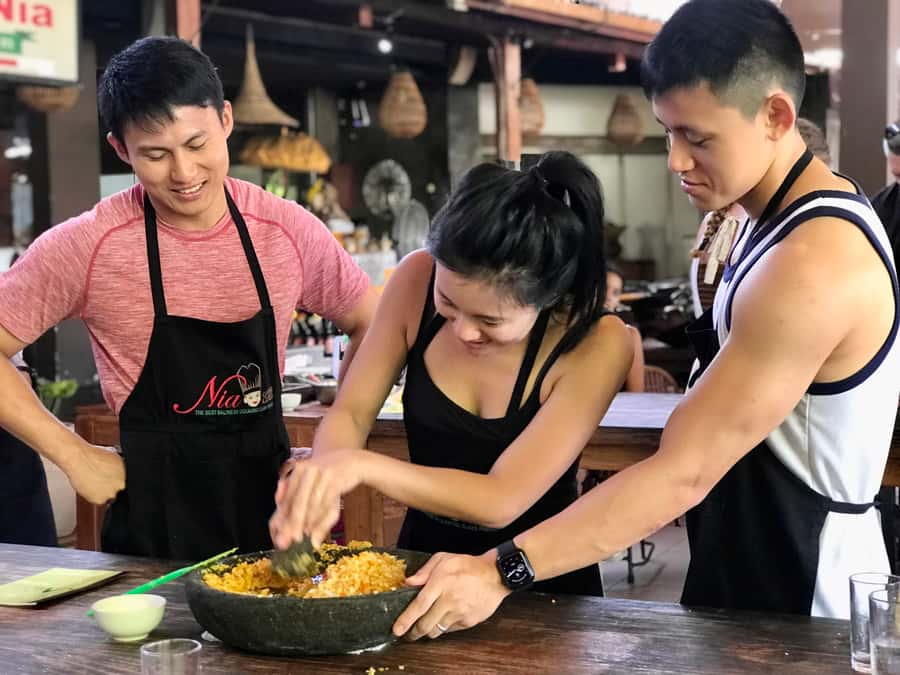
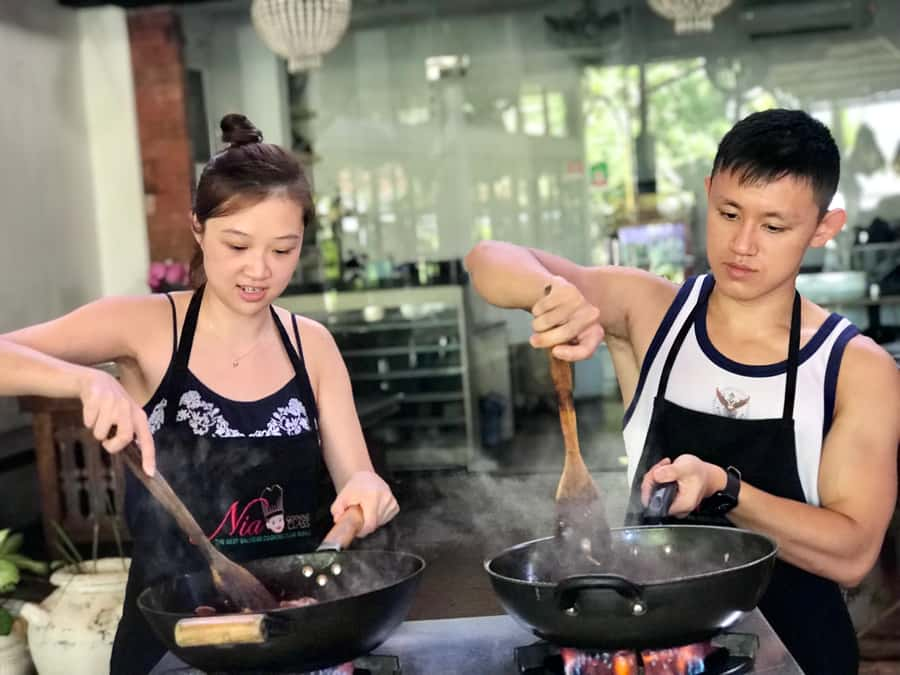
The main lesson focuses on popular Balinese dishes and local cooking methods. You follow the chef’s instructions, help cut and prepare ingredients, and take part in cooking with the rest of your group. The format is designed to make the meal social, so you are likely working alongside other people rather than taking a private lesson.
I like the practical nature of this setup. You are not only watching someone cook. You get a chance to learn how ingredients are prepared and how the separate parts of the meal come together. For someone who wants a basic introduction to Balinese food, five hours gives enough time for more than one dish and for a proper meal afterward.
The amount of hands-on work is the key question. One particularly positive account describes a chef who made sure everyone had a chance to cook and explained different techniques carefully. Another detailed account describes a more assembly-line experience, with participants mainly cutting garlic while assistants handled much of the cooking.
That contrast matters. If you want advanced instruction or a quiet lesson with long one-on-one coaching, this may not be the right format. If you are happy to learn in a group, share tasks, and pick up useful techniques along the way, the class should suit you better.
The class also appears to include small snacks during the preparation. One account describes certain dishes being served as they were made, so you may taste some food before the final lunch. This breaks up the cooking and helps you understand how the dishes are meant to taste at different stages.
Eating the meal you helped prepare
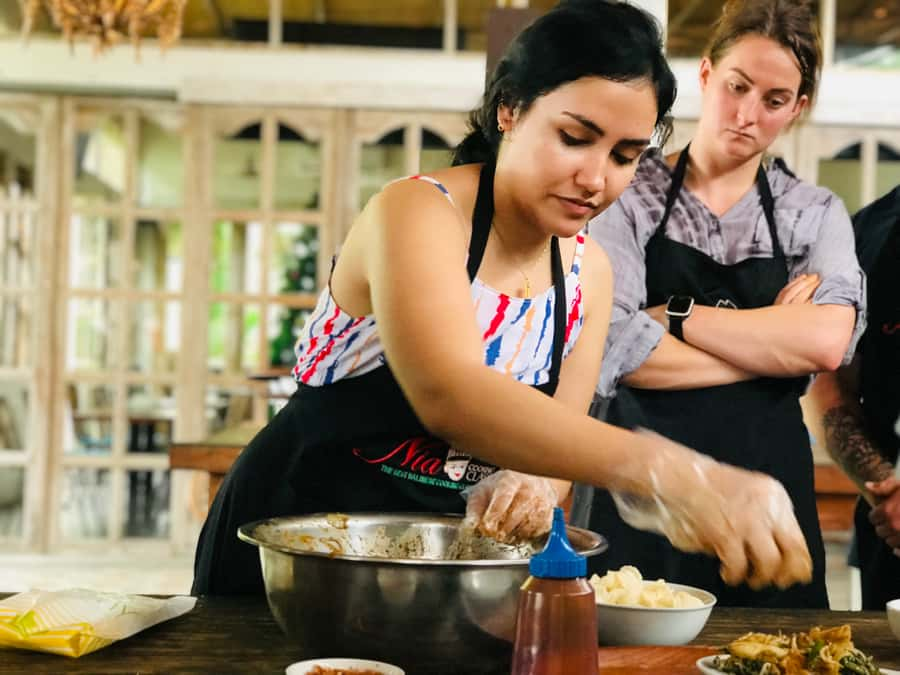
The final meal is the natural reward for the morning. You sit down with your group and eat the food prepared during the class. This gives the activity a clear finish: market ingredients become prepared dishes, and the group shares the result together.
Several parts of the meal deserve a little caution. The information promises lunch, but it does not provide a fixed menu, so you should not book expecting specific dishes unless the provider confirms them. One complaint also claimed that the final spread included many dishes that the participant had not personally prepared. That may reflect the group format, where assistants or separate cooking stations contribute to the shared meal.
For me, this is still one of the stronger reasons to choose the class. You do not have to find lunch afterward, and eating together makes the lesson feel like a social activity rather than a technical workshop. The meal also lets you judge the flavors while the cooking process is still fresh in your mind.
If you are hoping to recreate the lunch exactly at home, pay close attention to quantities and seasoning. Take notes as you go, even though a cookbook is included. Recipes often need adjustment depending on the ingredients available in your own kitchen.
More Balinese Cooking Classes around Indonesia:
- Ubud: Balinese Cooking Class at an Organic Farm
★ 5.0 · 1,786 reviews - Ubud Cooking Class Bali with Balinese Chef
★ 5.0 · 1,609 reviews - PRIVATE Authentic Balinese Cooking Class in Ubud at Putu’s Home
★ 5.0 · 644 reviews - Seminyak: Balinese Cooking Class & Market Tour
★ 4.9 · 458 reviews
The cookbook and certificate
You leave with a cookbook and certificate. The cookbook is the more useful of the two. It gives you a way to repeat the dishes after returning home, and it turns the morning into something more lasting than a meal you enjoyed once in Bali.
The certificate is a pleasant souvenir, especially if you are collecting small records of your activities. It is not a professional qualification, of course, but it marks your participation and can be a fun addition to a family trip or group holiday.
I would keep the cookbook accessible while the lesson is still fresh. Write down any changes the chef makes, especially if the class uses ingredients that may be difficult to find at home. The provided book may be general, while your own notes can capture the small points that make the recipes work.
Is $40 a fair price?
At $40 per person, the value is solid if you want a half-day activity with food included. You are paying for hotel pickup, the market tour, morning tea, cooking instruction, lunch, a cookbook, and a certificate. Since lunch is part of the program, the price covers more than a short demonstration.
The value becomes weaker if you are mainly seeking a detailed market tour or private cooking instruction. The market portion may be brief, and the group format means you may not personally prepare every dish from start to finish. In that case, part of what you are paying for is the shared setting, the staff, the meal, and the overall cultural activity.
I would compare it with the price of a regular lunch and a separate food tour in Seminyak. If you want an easy, organized morning that combines both, $40 is reasonable. If you already have strong cooking skills and want serious culinary training, spend your money on a smaller class if you can find one.
Who will enjoy this class most?
This experience suits you if you want an approachable introduction to Balinese food and do not mind learning in a group. It is also a good fit for couples, friends, and families with older children who enjoy eating, cooking, and trying unfamiliar ingredients.
You will probably get the most from it if you take an active role. Ask questions, volunteer for cooking tasks, and pay attention when the chef explains preparation methods. The class works better when you participate instead of waiting for an assistant to do everything.
It is less suitable if you want a private lesson, a long market walk, or complete control over every dish. The reported complaint about limited market time and assistants doing much of the work is worth keeping in mind. I would also avoid booking it if one-way transport creates a problem for your schedule, since drop-off is not included.
The activity is wheelchair accessible, which is useful, but the available information does not explain the exact market or kitchen arrangements. If you need specific access support, ask the provider before booking.
Children under four are listed as unsuitable, with separate restrictions also shown for children under two, children under three, and babies under one. The age information is inconsistent, so families should confirm the minimum age directly. The activity also lists restrictions for people over 70 and over 95, as well as people with altitude sickness. Those warnings do not fit a normal Seminyak cooking class particularly well, so clarify any concern before paying.
Timing, cancellation, and language
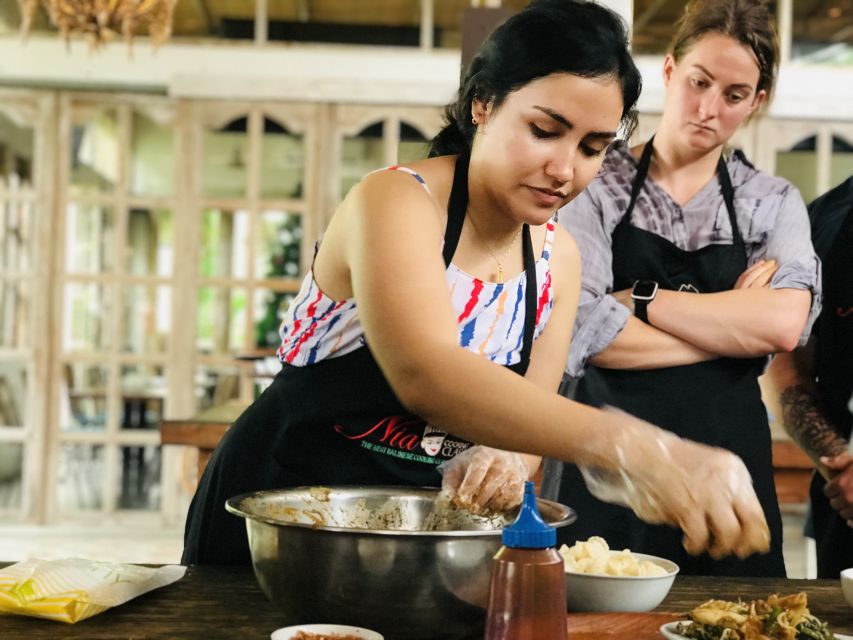
The activity lasts five hours, with starting times available according to the date you select. A morning schedule is implied by the market visit, morning tea, and lunch, but you should check the exact departure time when booking.
You can cancel up to 24 hours in advance for a full refund. The reserve-now, pay-later option is useful if your Bali plans are still changing. It lets you hold a place without paying immediately, subject to the booking conditions shown at checkout.
Instruction is available in English and Indonesian. The audio guide is also listed in those languages. That should help if you prefer to follow written or recorded explanations alongside the chef’s demonstrations.
Should you book the Nia Balinese Cooking Class?
I would book this class if you want a reasonably priced half-day activity that combines food, a short market visit, lunch, and a cookbook. The strongest parts are the ingredient introduction, the chance to help prepare several dishes, and the shared meal at the end. The high overall rating also suggests that many sessions deliver a fun and well-organized morning.
I would not book it expecting a slow, intimate lesson or a full market exploration. The main risk is that a large or busy session could feel rushed, with assistants handling much of the work. If you book, arrive ready to participate and ask how much hands-on cooking your group will receive.
For most people, the decision comes down to your aim. Choose it for a friendly cultural activity and a taste of Balinese cooking. Skip it if your priority is advanced technique, private attention, or a detailed shopping tour.
FAQ
How long does the Balinese cooking class last?
The activity lasts five hours, including the market visit, morning tea, cooking lesson, and lunch.
What is included in the $40 price?
The price includes hotel pickup, the market tour, morning tea with a Balinese cake, lunch, a certificate, and a cookbook.
Is hotel drop-off included?
No. Hotel pickup is included, but drop-off is not.
What languages are available?
The instructor and audio guide are available in English and Indonesian.
Can I cancel the booking?
Yes. You can cancel up to 24 hours in advance for a full refund.
Is the class wheelchair accessible?
Yes. The activity is listed as wheelchair accessible.
New cooking classes around Indonesia
- Seminyak: Vegetarian Cooking Class★ 5.0 · 3 reviews
- Seminyak : cooking class traditional food bali★ 5.0 · 5 reviews
- Quad ride, waterfalls & aunthentic cooking class in munduk★ 4.9 · 53 reviews
- Pure Bali Village Experience Cooking & Jamu Class, Transfer★ 4.8 · 5 reviews
- Ubud: Organic Farm Harvest, Bali Cooking Class by Pemulan★ 4.8 · 12 reviews
- packages cooking class and romantic dinner in a local home★ 5.0 · 4 reviews
- Nusa Dua: Balinese Cooking Class with Market Tour★ 5.0 · 4 reviews
- Munduk Balinese Cooking Class lunch/Dinner at a Local Home★ 5.0 · 26 reviews
Seminyak Cooking Classes, side by side.
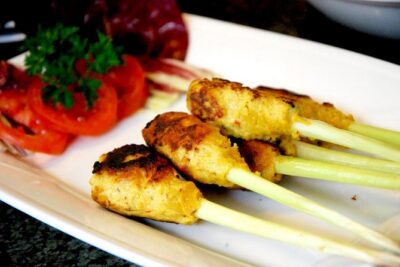
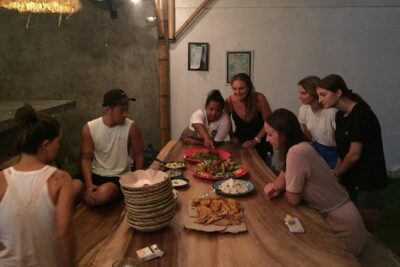
Cooking class in the comfort of your own personal villa. Yes, I’ll come to you!
Read our review →