Review · UBUD
Balinese Ubud cooking school (9 Dish Cooking and Market Tour)
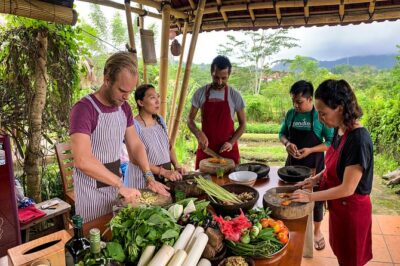
Nine dishes in one class is the big draw here. You make a full Balinese meal, from sate lilit and pepes ayam to sambal matah and klepon, rather than stopping after one curry and a side dish.
I like the morning market visit, where guides explain local fruit, spices, sweets, and rice farming. I also like the choice of regular or vegetarian menus, plus recipes to take home. The main caution is travel time: the school is outside central Ubud, and one booking may involve a drive of about 50 minutes from the meeting point.
Key points to know
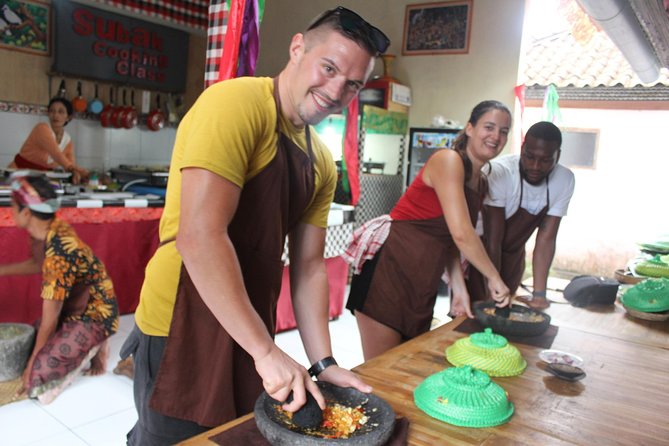
- Nine recipes in one class: You prepare a broad spread of Balinese dishes, then eat the meal together.
- Morning means more sightseeing: The morning option includes a traditional market and rice paddies.
- Afternoon has a different extra: Afternoon participants make a Balinese offering instead of visiting the market.
- Local teaching team: Instructors and hosts have included Yogi, Putu, Gus, Wayan, and Tata.
- Ubud pickup has limits: Pickup and drop-off are offered within the Ubud area, with extra charges outside it.
- Small enough to participate: The maximum group size is 14 people, though the class can still feel communal.
A full Balinese meal, not just a single recipe
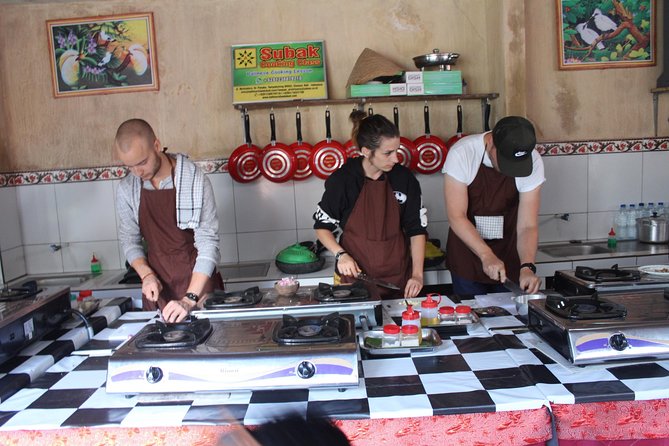
This class gives you a useful picture of how Balinese cooking works because the menu covers several different techniques and flavors. You make soup, grilled or steamed food, fried items, raw sambal, a spice paste, vegetables, and dessert.
The regular menu includes Balinese vegetable soup, chicken cooked with coconut milk and spices, sweet fried tempe, chicken sate lilit, and chicken pepes wrapped in banana leaf. You also prepare lawar, sambal matah, base gede, and klepon, with white rice served alongside the main dishes.
That is a lot of food for one sitting. I would arrive hungry, because this is not a small tasting menu. Several people have found there was enough left to pack for the hotel, which is a useful option if you cannot finish everything at lunch or dinner.
The vegetarian menu is not an afterthought. Chicken dishes are replaced with tofu and tempe preparations, including tofu bumbu Bali, tempe skewers with peanut sauce, and pepes tofu. You still make the soup, lawar, sambal matah, base gede, klepon, and rice.
You should select the regular or vegetarian menu when booking. The available information does not promise a fully custom menu, so tell the provider about your needs in advance rather than assuming changes can be made on the day.
More Cooking Classes with a Market Tour in Indonesia
- Ubud: Cooking Class with Transfers and Optional Market Visit
★ 4.9 · 824 reviews - Ubud: Balinese Cooking Class and Market Tour
★ 4.8 · 531 reviews - Balinese Cooking class with traditional morning market visit
★ 5.0 · 161 reviews
What the nine dishes teach you
The menu is valuable because each dish shows a different part of Balinese food culture. Base gede, the basic spice paste, is especially important. It gives you a foundation you can use at home in curries, meat dishes, tofu, or vegetables.
Sambal matah is a good contrast. This fresh sambal uses raw spices and coconut oil, so it is not cooked down like a thick chili sauce. You can adjust the heat, which matters if your group has mixed spice preferences.
Sate lilit gives you a glimpse of a distinctly Balinese preparation. Instead of placing chunks of meat on a skewer, the seasoned mixture is shaped around the skewer. Pepes ayam then changes the method again, using banana leaf for a grilled or steamed parcel.
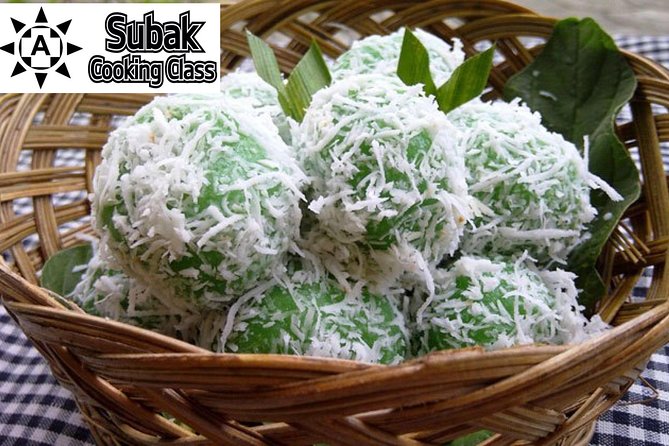
The sweet course, klepon, rounds out the meal. These boiled sticky-rice-flour balls contain palm sugar, and they give the class a hands-on dessert that is quite different from the savory dishes.
The instructors demonstrate each step and then guide you through preparation and cooking. The class is designed for beginners, and no previous cooking experience is required. Still, the level of hands-on work may vary. Most of the practical feedback points to active participation at individual stations, but one unhappy participant felt that much of the preparation had already been done.
That difference may come down to the day, the group, or what you expect from a cooking class. If you want to chop every ingredient from scratch, ask how much preparation is done before arrival. If you prefer a smoother class with less cleanup, the advance preparation may be a benefit.
The morning market adds real context
Choose the morning option if the market matters to you. The traditional market visit is available only in the morning, and it gives you more than a quick stop for photographs.
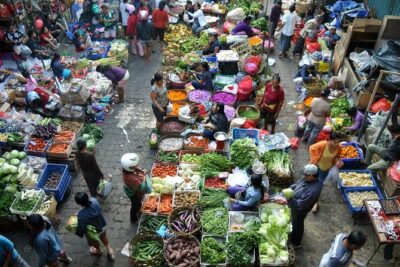
A local host explains how people buy and sell food, along with the fruits, vegetables, spices, sweets, and cooking ingredients on display. You may also taste unfamiliar fruit and local pastries. This makes the later kitchen work easier to understand because you have already seen the ingredients in their everyday setting.
The market is also where the experience feels most connected to daily life. You are not only being shown a recipe in a classroom. You are seeing the produce and food habits that support it.
The market can be lively and crowded, and this is not a polished food hall. Wear a normal, comfortable outfit and bring your camera if you want photos. You may also want cash, although the supplied details only specifically call for cash if you need to pay an extra transport charge outside Ubud.
The timing matters. A five-hour experience that includes a market, rice fields, transport, cooking, and a meal will feel full. If you want a slow market visit and a long cooking lesson, you may find the schedule brisk.
Rice fields and a local home
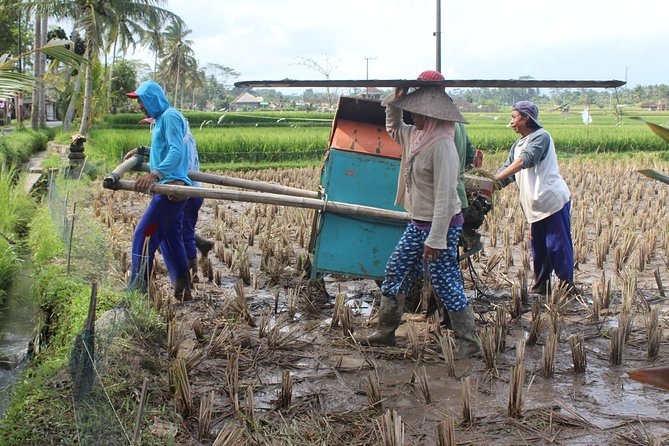
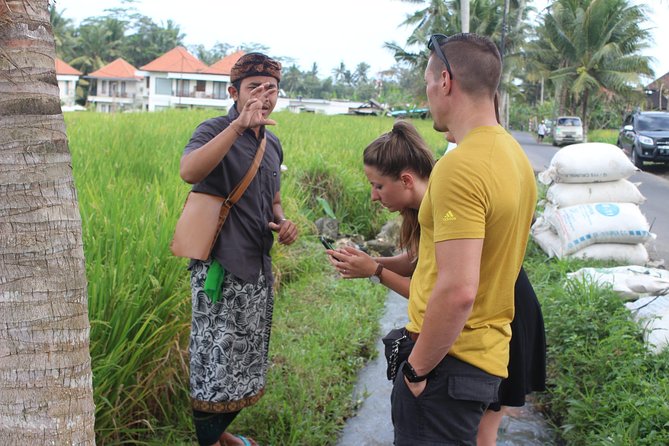
The morning program also includes a rice-paddy visit. Guides explain how rice is grown in Bali, the different kinds of rice, and how long it takes to reach harvest.
This stop gives useful context to the bowl of rice on your plate. Rice farming is not just scenery here. It is part of the food system and an important part of local life.
The rice fields are also a good photo stop. One account describes a view toward a volcano, although the exact view depends on conditions and location. Do not treat this as a mountain sightseeing tour. It is a short cultural and agricultural stop linked to the cooking class.
The school is set up in a Balinese home, according to the program details. That helps the class feel more like a visit to a working local setting than a formal culinary institute. It also means you should expect a practical home-style environment rather than a sleek restaurant kitchen.
The route may take you north of Ubud or into a village outside the central area. This is part of the appeal, but it explains the transport complaints. The meeting point is Ubud Palace, and pickup or drop-off is offered only within the Ubud area unless you arrange and pay for an extra transfer.
More Cooking Classes with a Market Tour in Ubud
- Jambangan bali cooking class with morning market tour
★ 5.0 · 35 reviews - Balinese cooking class/Go shopping at the market, cook, eat
★ 5.0 · 12 reviews
Afternoon participants make an offering
The afternoon option has a different cultural stop. Instead of the traditional market, you make a Balinese offering.
This gives you a look at a daily religious practice that is often easy to notice in Bali but harder to understand from the outside. The activity is included only with the afternoon class, so choose your start time based on the cultural side trip you prefer.
There is some inconsistency in how the extras are described, so check the exact schedule at booking. The program information links the market to the morning class and the offering to the afternoon class. The rice-paddy visit is listed with the morning option.
How the cooking session works
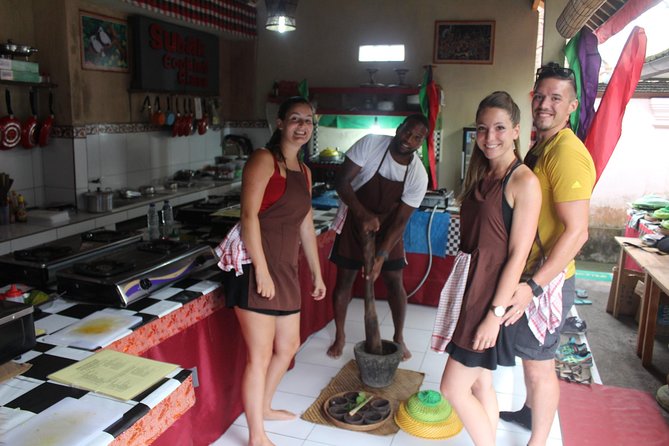
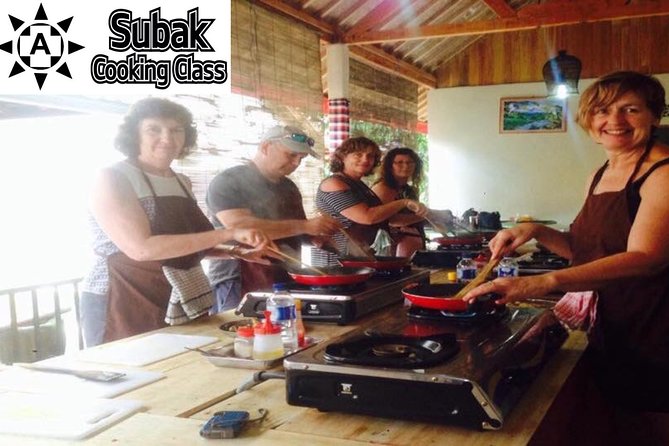
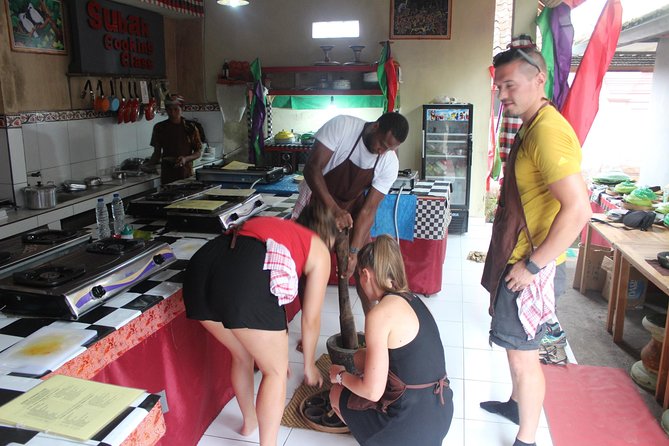
After the sightseeing portion, you move into the cooking school and work through the recipes with a Balinese chef and kitchen staff. You use the equipment provided and receive mineral water, food tasting, and a copy of the recipes.
The class commonly organizes people in pairs or around shared work areas. Individual cooking stations have been available, which lets you do more than simply watch a demonstration. The group limit is 14, so it is not a private lesson, but it is smaller than a large tour-bus activity.
The teaching style appears to be a major part of the experience. Yogi is described as a warm and funny instructor who explains the process step by step. Putu has also been praised for making the afternoon class lively, while Gus has shared information about food, culture, and religion. Guides such as Wayan and Tata have handled market visits and transport.
Staff names and assignments may change, but the pattern is clear: the class depends heavily on the person leading it. Good instruction matters here because nine dishes can become confusing if the order and timing are not explained well.
The kitchen team handles the cleanup, according to one account, so you can focus on cooking and eating. That is a plus for a half-day activity, especially after working through such a long menu.
Spice levels can be adjusted. One participant prepared a milder version while others in the group preferred more heat. Tell the instructor early if you want less spice, though the recipes are intended to retain their Balinese character.
The meal is the payoff
The final meal is served as lunch or dinner, depending on the class time. You eat the dishes you have prepared, with white rice and the other members of the group.
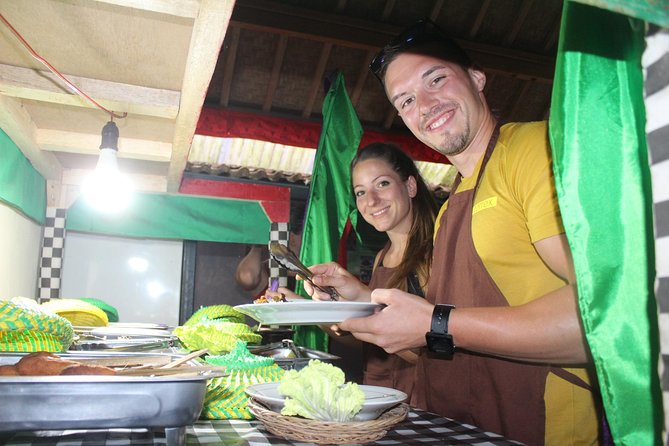
This communal meal is one of the best parts of the format. You have tasted ingredients at the market, learned the cooking methods, and then see how the separate dishes work together on the plate.
The food is meant to resemble the kind of meal you would receive at a Balinese restaurant or food stall, not a watered-down tourist version. The menu has enough variety to show how Balinese food balances spice, coconut, fresh herbs, vegetables, grilled flavors, and sweet notes.
Portions can be generous. If you cannot finish, ask about packing leftovers rather than letting good food go to waste. The program includes the meal you cook, but alcoholic drinks are not included.
Price, transport, and the real value
At $58, this is not the cheapest cooking class in Bali. The value depends on how much of the day you use.
You are paying for roughly five hours, a guide, transport within the Ubud area, the market or offering activity, the rice-field stop on the morning program, ingredients, kitchen equipment, bottled water, instruction, recipes, and a full meal. Compared with a short class that teaches two or three dishes, nine recipes and the cultural stops make the price easier to justify.
The transport policy is the main point to clarify before you book. Pickup and drop-off are included in Ubud only. If you stay outside Ubud, extra charges apply, and pickup is not arranged unless you request it. The listed meeting point is Ubud Palace, so do not assume that hotel pickup is automatic.
One booking involved a long drive after meeting in central Ubud. Another raised concerns about driving and an unexpected toll arrangement. These are not reasons to reject the class outright, but they are reasons to confirm the pickup point, transfer cost, and route before departure.
The experience has a maximum of 14 people and free cancellation up to 24 hours before the start time. Changes or cancellations inside that window are not accepted for a refund.
Who will get the most from this class
I would choose this for food-focused visitors who want a substantial activity, not a quick demonstration. It also works well for couples, families, and mixed-age groups because the menu gives everyone several jobs and the meal brings the group together.
Vegetarians have a clear alternative menu, which makes the class useful for mixed groups. People who dislike spicy food should speak up early, since the class can adjust heat but is still built around Balinese seasoning.
The morning option is best if you want food and culture together. You get the market, rice fields, and cooking lesson in one block. The afternoon option is better if making a Balinese offering appeals more than shopping at a market.
I would be more cautious if you are staying far from Ubud or dislike long road transfers. The five-hour estimate does not necessarily include a lengthy journey from another part of Bali, and the extra transport charge can change the total cost.
Should you book it?
Book this class if you want to learn a broad set of Balinese recipes and eat a large, freshly prepared meal afterward. The strongest reasons are the nine-dish menu, the choice of vegetarian cooking, the friendly teaching style associated with instructors such as Yogi and Putu, and the morning market visit.
Before paying, confirm four things: your menu choice, your pickup location, the extra cost from your accommodation, and whether the market or offering is included in your selected time. If you want maximum cultural content, pick the morning class. If you prefer a quieter start and an offering lesson, choose the afternoon.
The class is a good value for an active half-day in Ubud, but it is not a quick central-Ubud activity. Allow for the drive, bring an appetite, and expect a communal kitchen rather than a private chef lesson.
FAQ
How long does the Balinese cooking class last?
The experience lasts approximately five hours, including the cultural visits, cooking session, and lunch or dinner.
How many dishes will I prepare?
You will prepare nine Balinese recipes. The regular menu includes chicken, tempe, vegetables, sambal, spice paste, dessert, and rice. The vegetarian menu replaces the chicken dishes with tofu and tempe preparations.
Is the market visit included in every class?
No. The traditional market visit is available only with the morning class. The afternoon option includes making a Balinese offering instead.
Is pickup included?
Pickup and drop-off are included within the Ubud area. If you stay outside Ubud, an additional charge applies, and you need to request the transport in advance. The stated meeting point is Ubud Palace.
Is the cooking class suitable for vegetarians?
Yes. A separate vegetarian menu is available, including tofu bumbu Bali, tempe manis, tempe skewers with peanut sauce, pepes tofu, lawar, sambal matah, base gede, klepon, and rice.
Does the price include the meal?
Yes. The price includes lunch or dinner made during the class, food tasting, bottled water, kitchen equipment, and recipes to take away. Alcoholic drinks are not included.
Can I cancel for a full refund?
You can cancel at least 24 hours before the local start time for a full refund. Cancellations or changes made less than 24 hours before the start time are not accepted for a refund.
More Balinese Cooking Classes around Ubud
- Ubud Cooking Class Bali with Balinese Chef
★ 5.0 · 1,609 reviews - PRIVATE Authentic Balinese Cooking Class in Ubud at Putu’s Home
★ 5.0 · 644 reviews - Balinese Farm Cooking Class by Pemulan Bali
★ 5.0 · 410 reviews - Balinese Vegan Cooking Class with Fresh Harvesting & Garden Tour
★ 5.0 · 86 reviews
New cooking classes around Ubud
- Ubud: Organic Farm Harvest, Bali Cooking Class by Pemulan★ 4.8 · 12 reviews
- packages cooking class and romantic dinner in a local home★ 5.0 · 4 reviews
- Jambangan bali cooking class with morning market tour★ 5.0 · 35 reviews
- Balinese cooking class/Go shopping at the market, cook, eat★ 5.0 · 12 reviews
- Bali: Cooking Class with Monkey Forest and Art Village Tour★ 5.0 · 2 reviews
- Ubud: Balinese Cooking Class with Hotel Transfers★ 4.8 · 17 reviews
- From Ubud: Authentic Bali Farm Cooking School & Organic Farm★ 5.0 · 122 reviews
- Balinese Vegan Cooking Class with Fresh Harvesting & Garden Tour★ 5.0 · 86 reviews
Ubud Cooking Classes, side by side.
Ubud: Cooking Class with Transfers and Optional Market Visit
Read our review →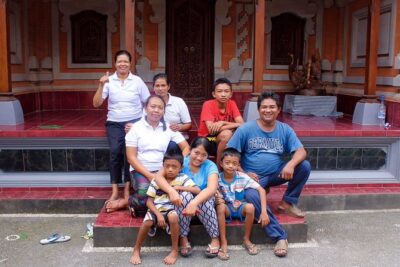
PRIVATE Authentic Balinese Cooking Class in Ubud at Putu’s Home
Read our review →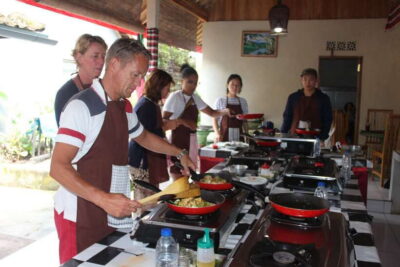
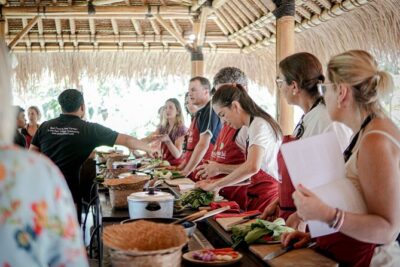
Balinese Cooking class with traditional morning market visit
Read our review →
From Ubud: Authentic Bali Farm Cooking School & Organic Farm
Read our review →