
Review · VALENCIA
Authentic Valencian Paella Cooking Class
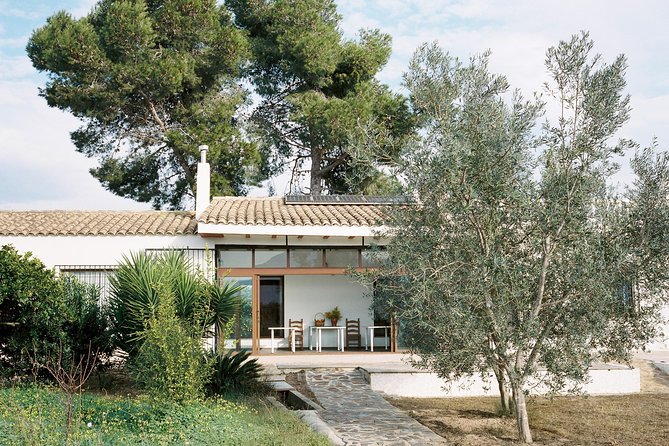
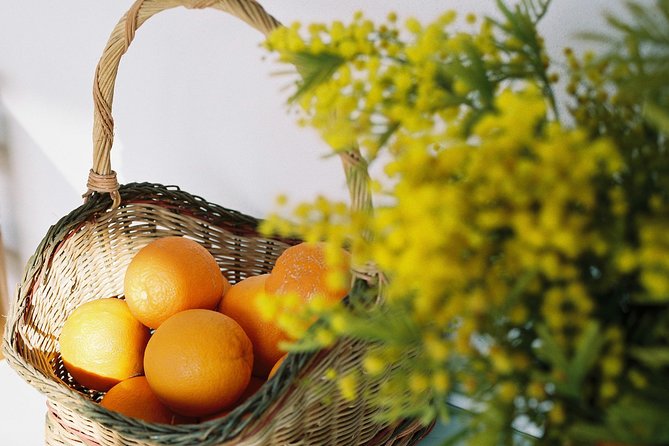
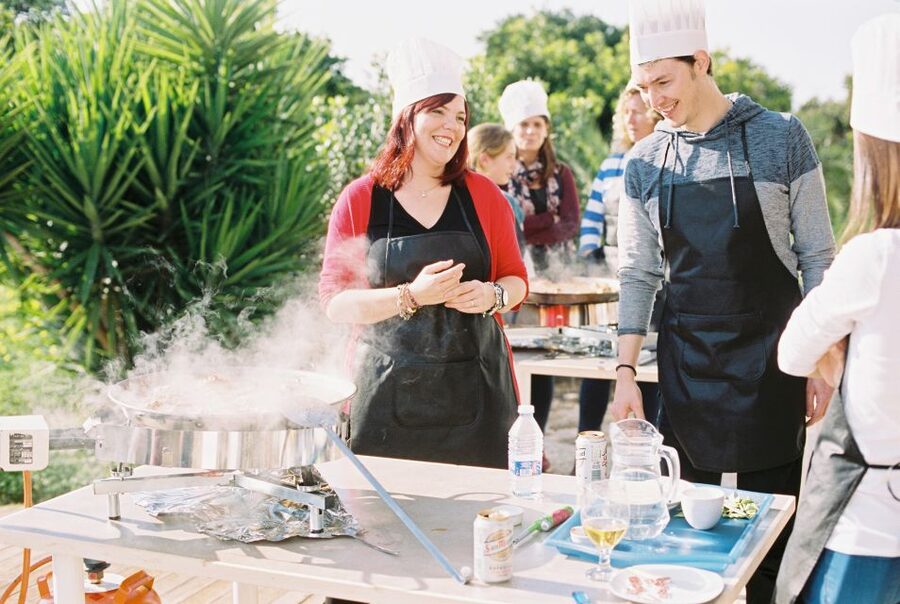
The best part of this experience is that paella is not treated as a quick cooking demo. You leave Valencia for a farmhouse near Albufera, cook your own pan with help from Rafa and the Valencian chef, then sit down to eat it with local drinks and homemade dessert. I especially like the orange groves and rice fields around the farmhouse, and the way the class turns lunch into a shared Valencian custom.
I also like the generous food and drink: tapas while the rice cooks, sangria, DO wines, soft drinks, mistela, coca de llanda, and fruit. The main drawback is the outdoor setting. On a hot day, the burners, sun, and apron can make the cooking area uncomfortably warm, and the English interpretation may vary depending on the staff member leading your session.
Key points to know before booking
- A countryside setting near Albufera: You cook at a home outside Valencia, surrounded by rice fields and orange trees rather than in a city classroom.
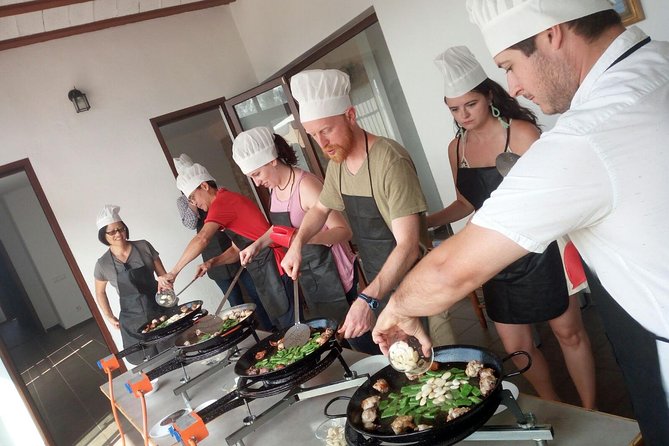
- Your group cooks its own paella: Each pair or small group works with its own pan, making the lesson hands-on and personal.
- Rafa brings energy and tradition: His explanations cover paella’s origins, local customs, and the proper way to prepare and enjoy the dish.
- A full four-hour food experience: Tapas, drinks, paella, sangria, dessert, and mistela make this much more than a single recipe lesson.
- Vegetable and seafood options are available: Ask for your preferred paella when booking.
- Plan for heat and a filling meal: Wear comfortable shoes, bring sun protection, and arrive hungry.
From Valencia to the orange groves
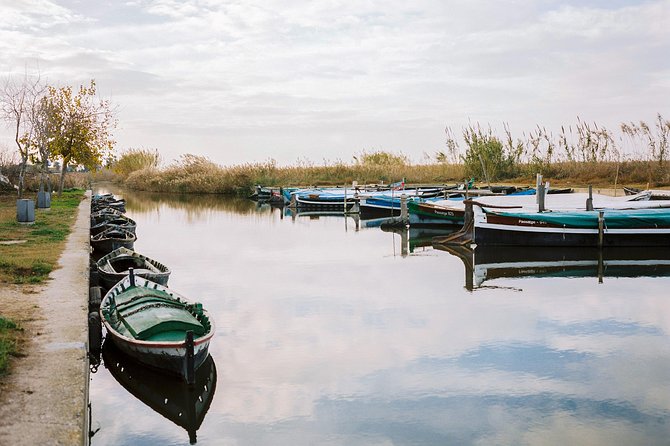
This four-hour experience begins at a meeting point near Valencia, followed by a trip to a home near the Albufera Natural Park. The ride takes you away from the city and toward the agricultural setting that gives Valencian paella its sense of place.
The setting matters. Paella developed as a practical rice dish in the region around Valencia, and cooking it beside rice fields gives the lesson useful context. You are not simply mixing ingredients in a rented kitchen. You are seeing the countryside that helped shape the dish.
The exact transport arrangement should be checked when you book. Past sessions have included pickup and drop-off in Valencia, and the journey has been described as roughly 25 to 40 minutes. One useful improvement would be a little more explanation during the drive, especially as you pass rice fields, orange trees, and nearby towns.
Once you arrive, the mood is informal. You are welcomed into a home and its outdoor cooking area, not ushered through a formal restaurant. That helps explain why the experience feels social from the start. You can have a drink, meet the other people in your group, and settle into the pace of a long Spanish lunch.
More Spanish Cooking Classes around Spain:
- Barcelona: Paella Cooking Experience & Boqueria Market Tour
★ 4.8 · 3,661 reviews - Barcelona Paella Cooking Class with Market Visit, Tapas & Sangria
★ 5.0 · 2,531 reviews - Barcelona Interactive Spanish Cooking Experience
★ 4.5 · 2,155 reviews
Rafa, Juliette, and the cooking team
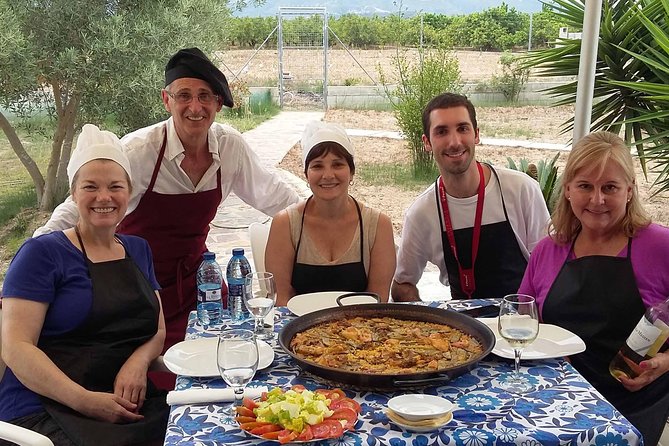
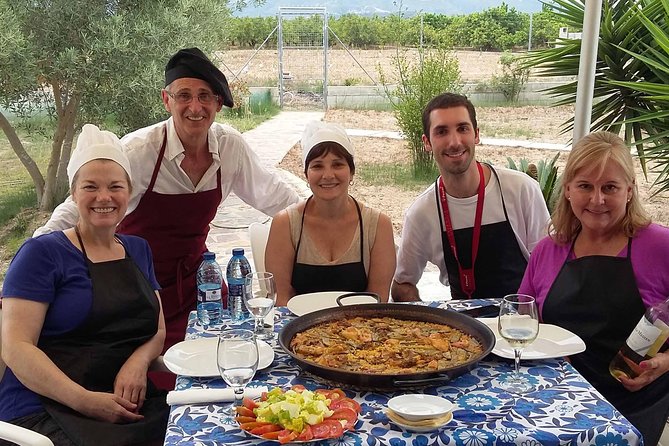
Rafa is the central personality of the class. He teaches with plenty of humor and enthusiasm, and his role goes beyond showing you when to add the rice. The class includes the origins of paella, local customs, and the proper way to enjoy the finished dish.
Juliette has helped with hosting, translation, and keeping the day moving. Other sessions have included assistants and chefs such as Arturo, Carlos, Alberto, Roberto, and José. The exact team can vary, but the format remains the same: a Valencian cook handles the food while a host or translator helps you follow along in English or Spanish.
English and Spanish are the stated languages. Communication has generally been part of the experience, but the quality of interpretation can depend on who is working that day. If detailed cooking questions matter to you, ask for clarification as you go. The class is designed to be friendly and practical, so you do not need advanced cooking skills to take part.
Apron on, spoon in hand
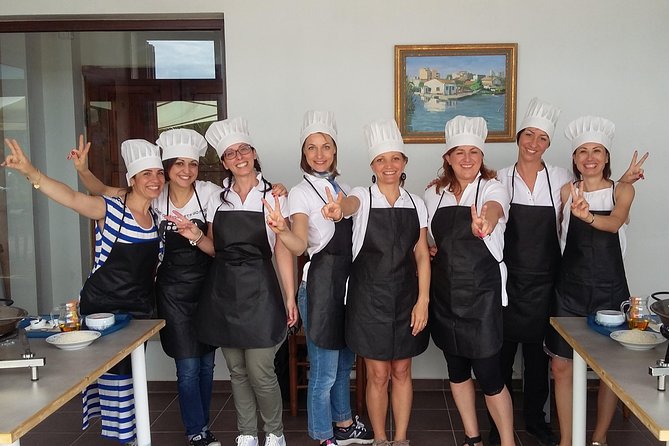
The hands-on portion begins with the simple tools of a paella cook: an apron, a spoon, and your cooking station. Each pair or small group prepares its own pan, which is one of the strongest features of the class. You are not standing at the edge of a demonstration while someone else does the important work.
The chef takes you through the stages of cooking and explains what to watch for. You learn how the ingredients are combined, how the rice absorbs the stock and seasoning, and why timing matters. The point is not only to copy a recipe. It is to understand the rhythm of the dish.
The available choice includes authentic Valencian paella, with vegetable or seafood versions available if requested. Ask for your preference ahead of time rather than assuming it can be changed at the last minute.
The class also explains how paella fits into Valencian life. This is useful because paella is often treated abroad as a general Spanish dish with any combination of rice, meat, and seafood. Here, the emphasis is on local practice and restraint. The familiar phrase arroz con cosas captures the local objection to throwing unrelated ingredients into a pan and calling it Valencian paella.
Cooking your own pan also gives you a better feel for the final result. You see how the rice changes, how the flavors develop, and how the finished dish differs from a restaurant plate prepared out of sight. It is a good lesson for anyone who wants to recreate the meal at home.
Tapas and drinks while the rice cooks
Paella takes time, so the waiting period becomes part of the meal rather than dead time. You are served Valencian snacks and tapas while the rice cooks. Past menus have included items such as olives, Spanish omelet, cheese, chorizo, and other local produce, though the exact selection may change.
Drinks are included. You can expect sangria, local DO wines, soft drinks, and later mistela, a sweet Valencian fortified wine. The wine and sangria help create a relaxed atmosphere, but you can choose soft drinks if you prefer not to drink alcohol.
This is one reason you should not eat a large meal beforehand. The tapas arrive before the paella, and dessert follows. The food is not a token sample designed to fill a short activity. It is a substantial lunch spread over a long afternoon.
The social side is just as important as the food. You share a table with people from different countries, compare cooking results, and listen to stories about Valencian customs. If you prefer a quiet, highly structured cooking school, this may feel too informal. If you like food, conversation, and a little cheerful noise, the format works well.
More cooking classes around Spain:
- Spanish Cooking Class Paella Tapas and Sangria in Madrid
★ 5.0 · 1,340 reviews - Paella Cooking Class, Wine Tasting & Central Market in Valencia
★ 5.0 · 1,150 reviews - Paella Cooking Class in Madrid with Bottomless Wine Pairing
★ 5.0 · 985 reviews - Seville: Spanish Cooking Class with Dinner
★ 4.9 · 900 reviews
The paella you cook yourself
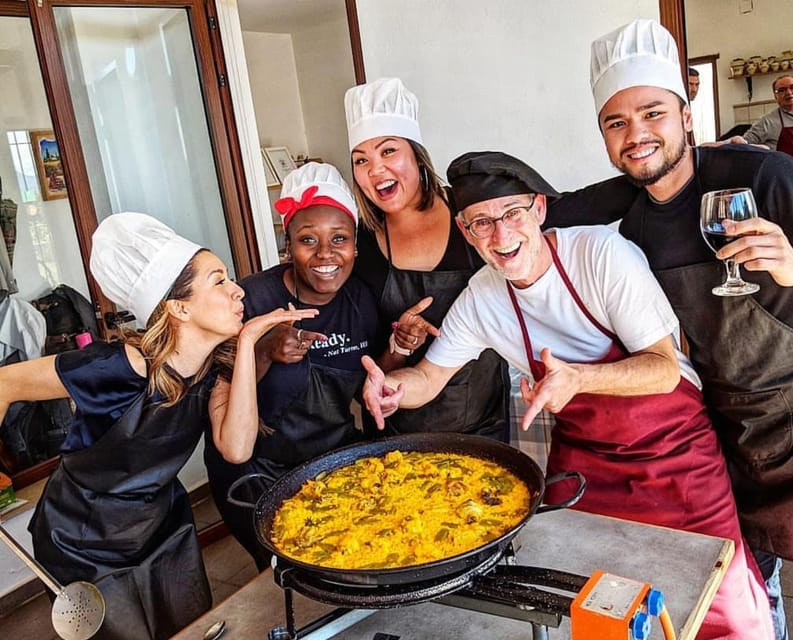
The main meal arrives after the cooking lesson, when each group eats the paella it prepared. That creates a satisfying finish because you know exactly how the pan came together.
The taste depends partly on your group, the ingredients, and the guidance you follow, but the teaching structure gives you a fair chance of producing a good result. You are not expected to work alone. The chef and assistants are close by to answer questions and correct mistakes.
Traditional Valencian paella is associated with the countryside around Valencia and commonly includes local ingredients. The available seafood and vegetable options make the class easier to fit into different diets, though you should state your needs when booking.
Portions are generous. If you cannot finish your paella, takeaway boxes may be available, as they have been offered in past sessions. Do not count on this as a formal part of the package, but it is a helpful possibility if the tapas and dessert have already defeated you.
Homemade dessert and a small certificate
The meal ends with coca de llanda, a traditional Valencian sponge cake, and seasonal fruit. The cake is a simple but fitting finish: less showy than a restaurant dessert, and more in keeping with the home-style setting.
Mistela may also be served at this stage. Its sweet flavor works well after the savory rice and salty tapas. You are given recipes so you can try the dish again at home, and a participation certificate adds a playful souvenir to the day.
Some people are especially interested in the certificate and recipe collection. Others will value the cooking knowledge more. I would treat the certificate as a pleasant extra, not a reason to choose this activity over another class.
How much value do you get for $81?
At $81 per person, this is not the cheapest paella lesson in Valencia. The price makes more sense when you count the full package: about four hours, transport arrangements to a farmhouse setting, instruction, a hands-on paella, tapas, dessert, wine, sangria, soft drinks, mistela, recipes, and the chance to meet the cooking team.
You are also paying for access to a private home and countryside location near Albufera. A standard city cooking class may offer a more polished kitchen and easier access, but it will not necessarily provide the same setting or the same sense of being welcomed into a local household.
The value is strongest if you want a half-day experience rather than a quick lesson. It is less compelling if your only goal is to learn a recipe as efficiently as possible. In that case, a shorter urban class may suit you better.
The booking terms add flexibility. You can reserve now and pay later, and cancellation is available for a full refund up to 24 hours before the activity. Check the starting time and meeting instructions before you commit, since availability changes by date.
Heat, clothing, and practical concerns
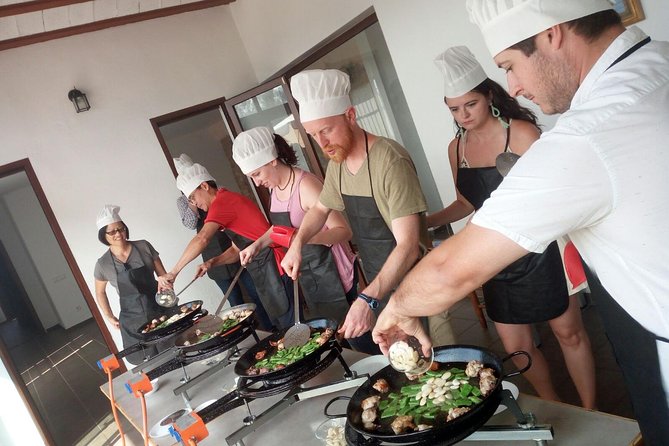
Wear comfortable shoes and practical clothes. You will be outside around cooking equipment, and oil may splatter beyond the apron. The apron does not cover your arms or legs, so shorts and sleeveless tops leave more skin exposed to sun and stray drops.
Sun protection is sensible, especially in summer. The cooking area is outdoors under umbrellas, but shade does not remove the heat from the sun or the burners. July and August sessions may feel demanding if you are not comfortable sitting outside for several hours.
Children must be accompanied by an adult, and each booking requires at least two adults. The experience is offered in English and Spanish, with other languages available by inquiry.
The activity suits couples, families with older children, solo visitors who enjoy joining a group, and anyone who plans a food-focused stay in Valencia. It is less suitable for someone seeking a quiet museum-style tour or a tightly timed class with no social element.
Should you book this paella class?
I would book it if you want to connect paella with the countryside, local hospitality, and a long shared meal. The farmhouse setting, the chance to cook your own pan, and the generous food and drink make this a fuller experience than a basic recipe demonstration.
Book with two cautions in mind. Confirm your transport details, and prepare for outdoor heat. Also, if precise English instruction is important, ask how interpretation will be handled for your date.
For food lovers, this is one of the better ways to spend half a day outside Valencia. You learn enough to understand the dish, eat well, and leave with recipes and a clearer idea of why Valencian paella is tied so closely to its home region.
FAQ
How long does the paella cooking class last?
The activity lasts approximately four hours, including the cooking lesson, tapas, drinks, paella, dessert, and time spent eating together.
Where does the experience take place?
You meet near Valencia and then travel to a home near the Albufera Natural Park, surrounded by orange groves and rice fields.
Which languages are available?
The activity is offered in English and Spanish. You can ask about other languages before booking.
Can I choose vegetable or seafood paella?
Yes. Vegetable and seafood paella options are available, but you should ask for your choice when booking.
What food and drinks are included?
The experience includes Valencian snacks, authentic Valencian paella, homemade sangria, DO wines, soft drinks, coca de llanda, seasonal fruit, and mistela.
What should I bring and know before going?
Bring comfortable shoes and wear practical clothing. Children must be accompanied by an adult, and at least two adults are required per booking. The cooking takes place outdoors, so sun protection is useful, particularly on hot days.
New cooking classes around Spain
- Seville: Paella Showcooking Experience★ 4.7 · 161 reviews
- Seville: Paella-Cooking Experience with Sangria & Full Meal★ 4.9 · 42 reviews
- Seville: Paella Cooking Class & 30-Min Local Expert Q&A★ 4.8 · 37 reviews
- San Sebastián: Market Tour, Cooking Class, & Meal★ 5.0 · 2 reviews
- San Sebastián: Market Tour and Basque Cooking Class English★ 5.0 · 5 reviews
- Barcelona: Paella Seafood Master Cooking Class with Sangria★ 5.0 · 73 reviews
- Pontevedra: Galician Cooking Class with Chef Instructor★ 4.9 · 3 reviews
- Mojo Workshop Cooking Class in Ancient Canarian Village★ 4.9 · 127 reviews
Valencia Cooking Classes, side by side.
Paella Cooking Class, Wine Tasting & Central Market in Valencia
Read our review →
Valencian paella cooking class, tapas and visit to Ruzafa market.
Read our review →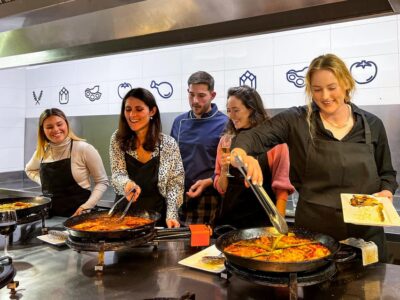
Valencia: Paella Cooking Class with Central Market Tour
Read our review →
Valencian Paella Cooking Class, Tapas & Sangria – Evening
Read our review →
Real Paella Cooking Class – Market Visit & Sangría Workshop
Read our review →
Valencia: Traditional Paella Cooking Class and Dinner
Read our review →
Private Paella & Tapas Cooking Class in a Local Chef’s Home
Read our review →This kitchen also appears in