
Review · ROME
Pasta Cooking Class with Pesto Sauce Making in Rome Center
Fresh pasta and pesto make a fine Roman souvenir, especially when the souvenir is a skill you can use at home. This small-group class begins inside Ristorante Panzirone on Piazza Navona, where an English-speaking chef guides you through fettuccine and traditional Genovese pesto. The pasta is then cooked for you and served at the restaurant.
I like the six-person limit, which gives the lesson a personal feel, and I like the setting: your meal can continue outside with views of Piazza Navona’s fountains and street performers. The main consideration is that you do not handle every stage of the meal. You make the dough, cut the pasta, and crush pesto ingredients, but the chef cooks the pasta and completes the serving.
Key points at a glance
- A central Rome kitchen: Meet inside Ristorante Panzirone at Piazza Navona 73, one of Rome’s easiest locations to fit into a sightseeing day.
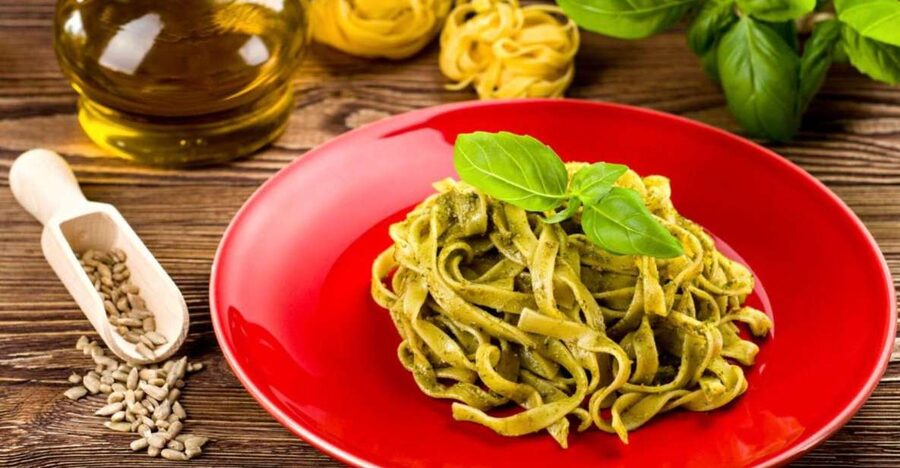
- Two Italian staples: You make fresh fettuccine and traditional Genovese pesto rather than focusing on just one dish.
- Small groups: The class is limited to six participants, with past sessions led by chefs such as Sara, Bea, and Lisa.
- A meal after the lesson: Your handmade pasta is cooked by the restaurant and served with bruschetta and a drink.
- A relaxed finish: Adults receive coffee or limoncello after the meal, while children receive a soda with dinner.
- Know your limits: The class is not suitable for vegans, people with gluten intolerance, people with nut allergies, children under seven, or people with mobility impairments.
Starting inside Ristorante Panzirone on Piazza Navona
The meeting point is refreshingly simple: go to Ristorante Panzirone, Piazza Navona 73, and ask the restaurant staff for the cooking class. Arrive about 10 minutes early. You do not meet on a street corner or hunt for a separate studio, which matters in the middle of Rome’s busy historic center.
Piazza Navona gives this activity a useful two-part rhythm. You begin with hands-on food preparation, then sit down to eat in one of Rome’s most famous public squares. If you are planning to visit the Pantheon, Campo de’ Fiori, or nearby churches, the class fits naturally into a day on foot.
The setting also shapes the meal. In past sessions, the final course has been served outside, with views toward fountains and street performers. That is not just decoration. After working with flour and pesto, sitting down in the square gives the activity a clear finish and lets you enjoy the center of Rome without rushing straight to the next sight.
More Pasta Making Classes in Rome
- 3 in 1 Cooking Class near Navona: Fettuccine, Ravioli & Tiramisu
★ 5.0 · 7,376 reviews - Rome: Pasta Making Class with Wine, Limoncello, and Dessert
★ 4.9 · 3,177 reviews - Rome Cooking Class: Make Pasta and 3 Spritz Cocktails
★ 5.0 · 2,937 reviews
The first lesson: making fettuccine by hand
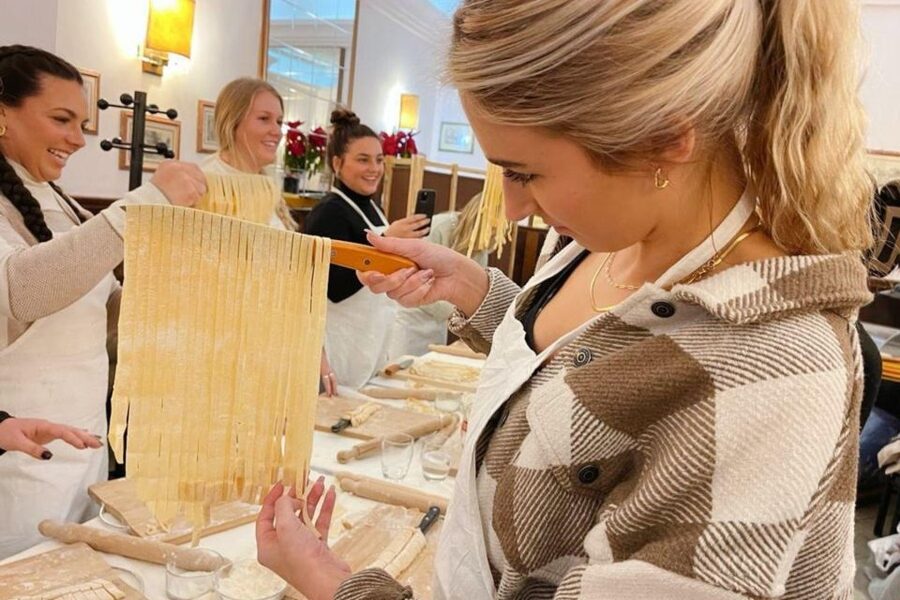
The pasta portion begins with the basics of fresh dough. You make the dough, work it, and cut it into fettuccine under the chef’s direction. This is the part of the class where you gain the most useful skill, because the process can be repeated in your own kitchen.
The instruction is in English, and the small group size helps. A class of six gives the chef time to watch how you handle the dough and offer corrections. If only two or four people book a particular session, the class can feel especially personal. One small session had just a couple in attendance, turning the lesson into something close to a private demonstration with plenty of room for questions.
You should expect a practical lesson, not a long lecture on pasta theory. The useful details are in the physical work: how the dough comes together, how to shape it, and how to cut the strands. Chefs Sara, Bea, and Lisa have led sessions, and the strongest feedback centers on their friendly, hands-on approach and their willingness to explain tips as you work.
There is also a small distinction worth knowing. You make and cut the pasta, but the restaurant team cooks it for you later. That keeps the class orderly and avoids a crowded kitchen, but it means you will not control the boiling time or finish the dish yourself. If your ideal class has you cooking every course from start to finish, this may feel a little limited.
Pesto with a traditional Genovese approach
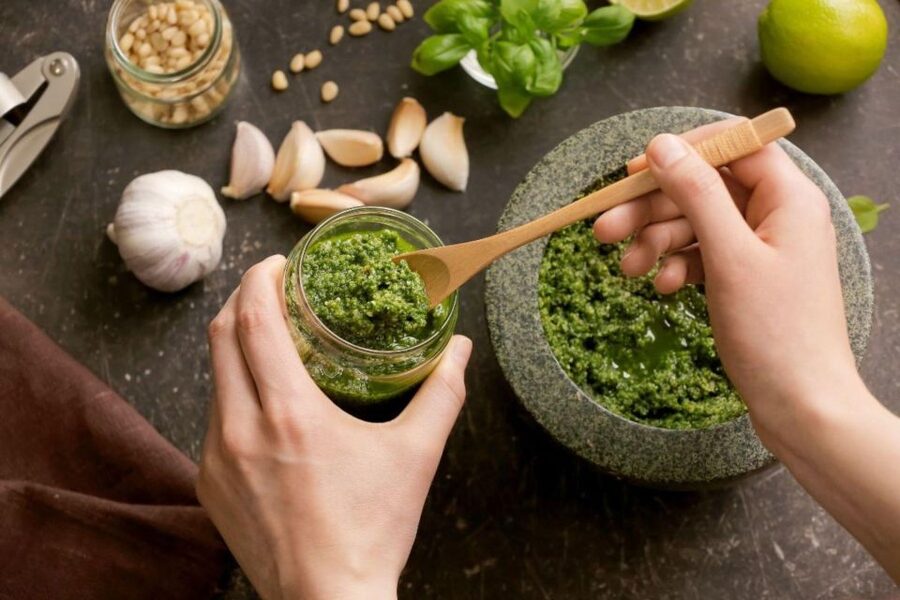
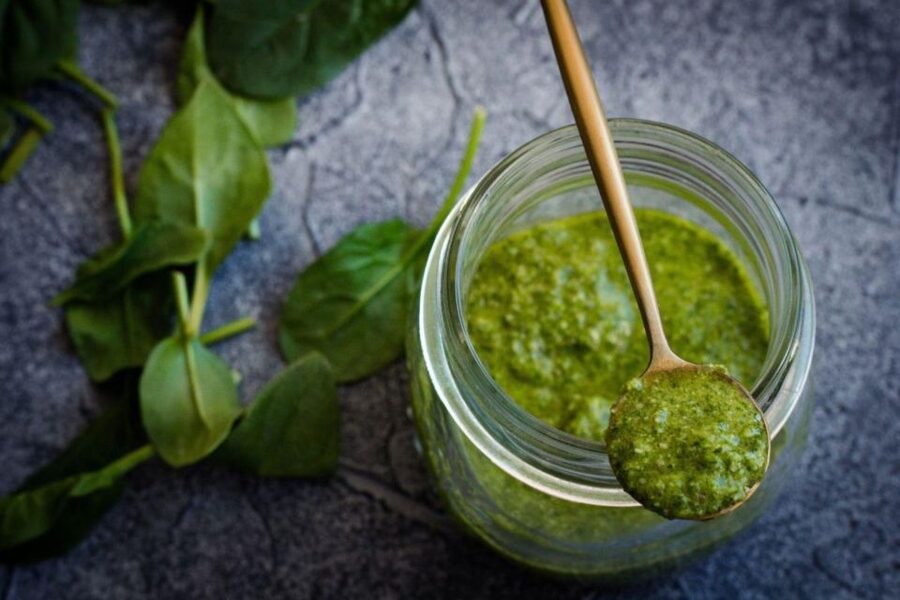
The second task is making pesto. You work with the ingredients and crush them as part of the lesson, learning how this uncooked sauce comes together. Pesto is a good choice for a short class because it does not require a separate cooking stage. Once prepared, it can go straight onto the pasta.
The class presents pesto as a simple, fresh sauce that is easy to repeat at home. That is one of its best features. You are not learning a dish that requires a special oven, hours of simmering, or hard-to-find equipment. The tools and ingredients are supplied, so you can focus on technique rather than preparation.
The work is not fully independent. The class has you participate in crushing ingredients and preparing the sauce, but you should not expect to build the entire restaurant plate alone. One participant wanted more involvement in cooking the pasta and completing the meal. That is a fair point, and you should book with the right expectation: this is a guided introduction to pasta and pesto, not a professional kitchen simulation.
Still, the two dishes work well together. Fettuccine gives you a dough-based skill, while pesto shows you how a sauce can be made without cooking. You leave with two separate techniques that can be paired again at home.
Sitting down to eat what you made
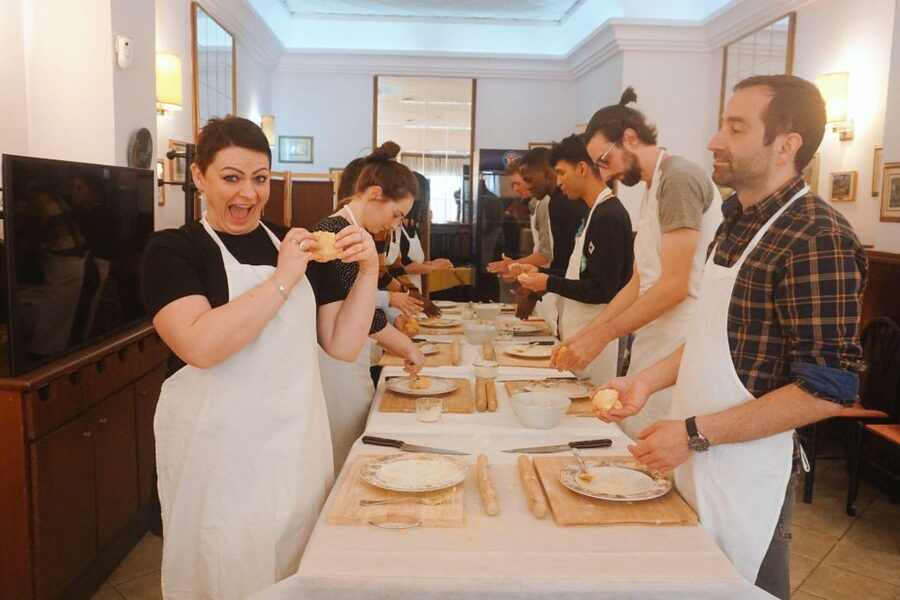
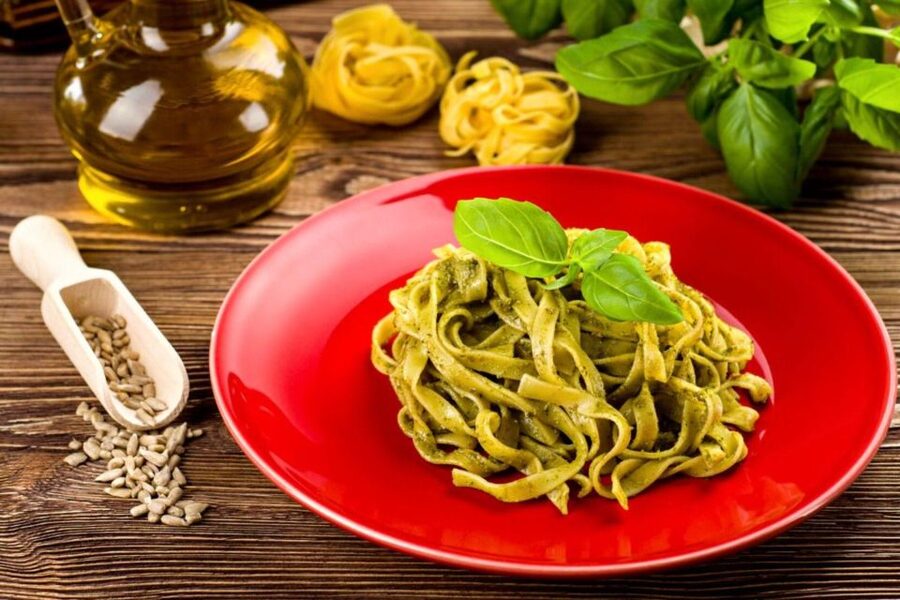
After the lesson, the chef turns your pasta over to the restaurant kitchen. The cooked fettuccine and pesto are brought to your table, along with the included appetizer and drink.
Your meal includes bruschetta, plus one glass of wine or a small beer for adults. Children receive a soda. Adults also receive coffee or limoncello after the meal. These inclusions matter when you compare the $58 price with a class that charges only for instruction. Here, the fee covers the lesson, ingredients, tools, cooking, and a sit-down meal.
The final course is also where the activity feels most social. You have shared a worktable with other people, then move to the dining area to eat together. The group can include couples, families with eligible children, solo participants, and friend groups. With no more than six people, you have a reasonable chance to talk without the class turning into a large production.
The outside seating adds real value when available. You can eat while looking across Piazza Navona, with the fountains and performers providing the backdrop. It is a very different finish from eating a plate of pasta in a classroom and then walking away.
Keep in mind that additional orders are not included. Extra drinks, food, and dessert are billed separately at the restaurant. The included meal is enough to complete the activity, but if you want a larger lunch, another drink, or something sweet afterward, budget for it.
Same kitchen, a different dish:
- Rome: 3-in-1 Fettuccine, Ravioli, and Tiramisu Cooking Class
★ 4.9 · 2,704 reviews - Rome: Fettuccine Pasta Cooking Class in Rome’s City Center
★ 4.8 · 2,414 reviews - Fettuccine & Tiramisù: Cooking Class with Wine & Limoncello
★ 4.9 · 2,103 reviews - Pasta Cooking Class Near the Colosseum with 3 Spritz Cocktails
★ 5.0 · 1,686 reviews
What the $58 price gets you
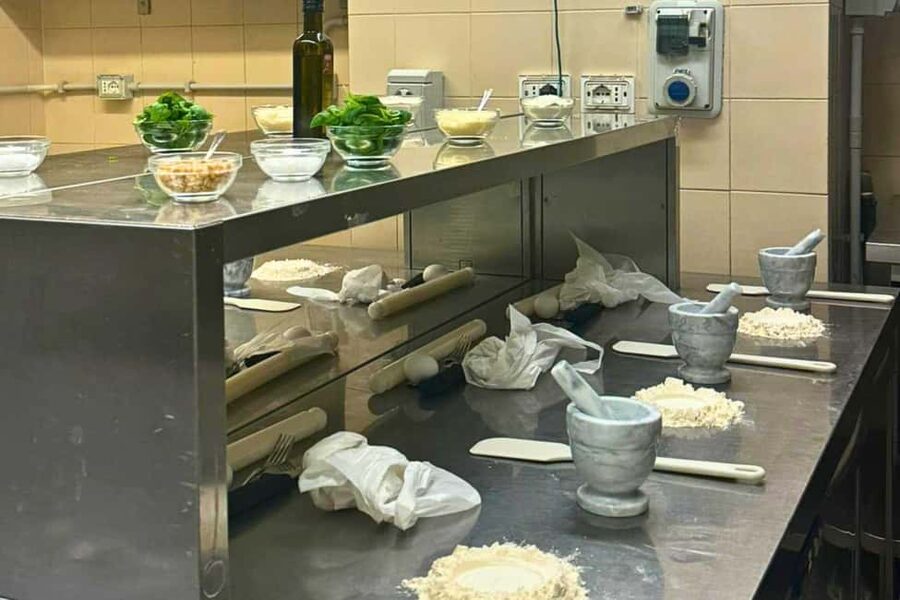
At $58 per person, this is not the cheapest way to eat pasta in Rome. It is also not just a restaurant meal. You are paying for a 2.5-hour activity, instruction from a local chef, ingredients, equipment, food preparation, and a meal with a drink.
I see the value in the combination. A plate of pasta may cost less, but it will not teach you how to make fresh fettuccine or pesto. A cooking class without a meal may cost less, but you would still need to find lunch afterward. Here, the lesson and the meal are joined together in a central location.
The price makes the most sense if you enjoy participating rather than simply watching. It is also a good use of time for a first visit to Rome, when a meal in Piazza Navona feels more memorable than a quick stop at a generic restaurant.
The value is weaker for someone who wants advanced instruction. You do not appear to spend the full class cooking every component, and the restaurant handles the final pasta cooking. If you already make fresh pasta often, you may find the lesson basic.
A 2.5-hour break from sightseeing
The activity lasts about two and a half hours. That is long enough for the work to feel substantial, but short enough to fit into a full day of Rome sightseeing.
You should not squeeze a major timed attraction immediately afterward. The class has a set teaching period followed by a meal, and the meal can take on a relaxed pace. You can leave when you prefer after eating, but it is wiser to keep the next part of your day flexible.
The timing works well around Piazza Navona because the area rewards wandering before or after the class. You can arrange an earlier visit to the square, attend the class, then continue toward nearby sights. Arriving early also gives you time to find Ristorante Panzirone without turning the start of the class into a frantic search.
The activity is offered at different starting times depending on availability. Check the schedule when booking and match it to your sightseeing plan rather than assuming a fixed morning or evening slot.
Who will enjoy this class most
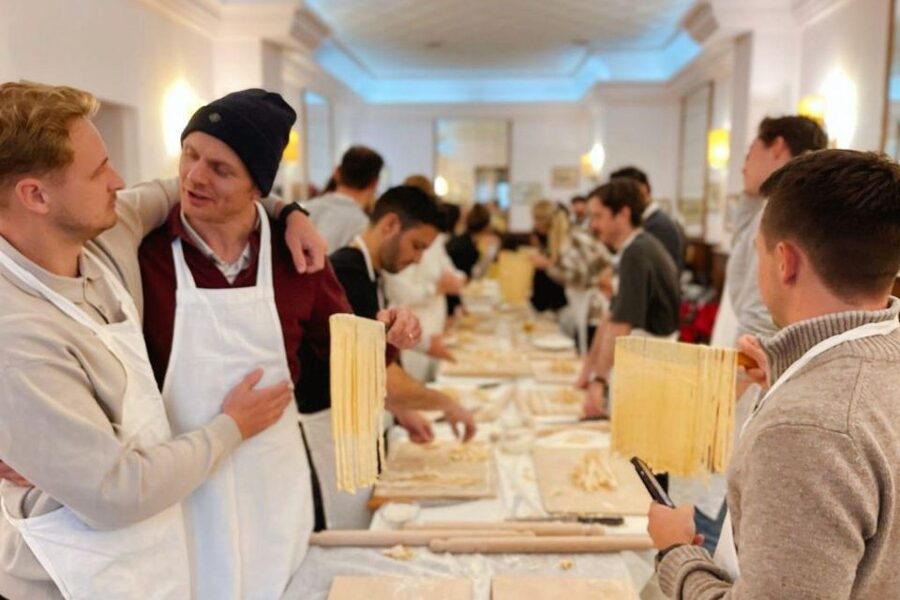
I would recommend this class to you if you want an easy, social introduction to Italian cooking in the middle of Rome. It suits couples, small friend groups, solo visitors, and families with children aged seven or older who are comfortable working with flour and kitchen tools.
It is especially useful for people who like taking a practical memory home. You can repeat both the pasta and pesto techniques after your trip, even without a large kitchen or specialist equipment.
The experience is less suitable if you need a fully hands-on cooking workshop. You will not cook the pasta yourself, and you will not complete every part of the final plate. If your priority is a formal culinary course with detailed instruction on several sauces, this class may be too light.
The food restrictions are important. The class is not suitable for vegans, anyone with gluten intolerance, or anyone with nut allergies. It is also not suitable for people with mobility impairments. Those limits are not minor details, since both the pasta and pesto are central to the activity.
Small groups and the human side of the lesson
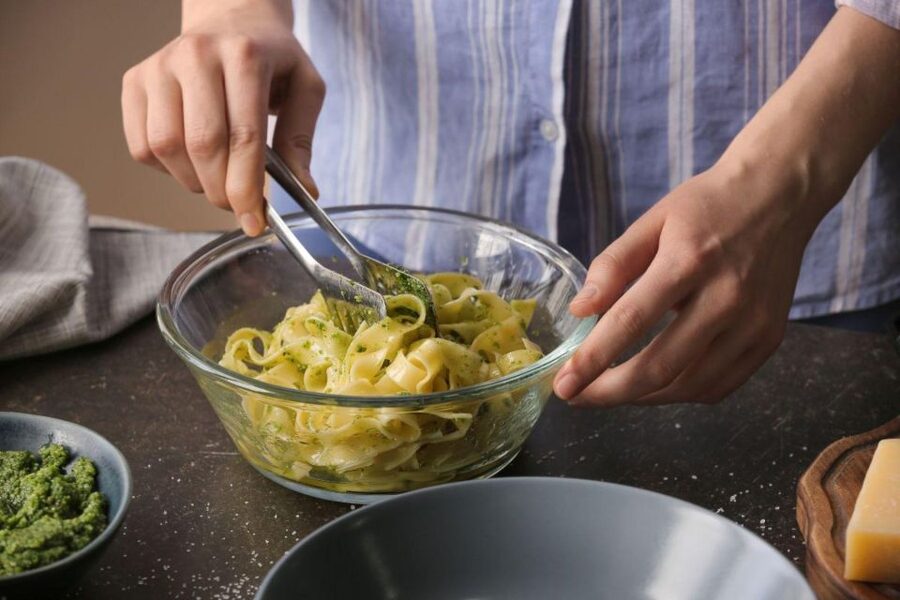
The six-person maximum is one of the strongest features. A small group lets the chef keep an eye on the dough, answer questions, and make room for conversation.
The named instructors connected with this class include Sara, Bea, and Lisa. Their approach has been described as friendly, informative, and playful, with useful tips on both pasta and sauce. That balance matters. A dry demonstration can make a cooking class feel like school, while too much joking can leave you unsure what to do. Here, the tone aims for practical help with a relaxed meal afterward.
A small class can also change from one date to another. You might work with a full group of six, or you might find yourself in a much smaller session. The smaller the group, the more direct time you may receive from the chef. The tradeoff is that the social energy can be quieter if only a couple of people attend.
Booking details worth checking before you go
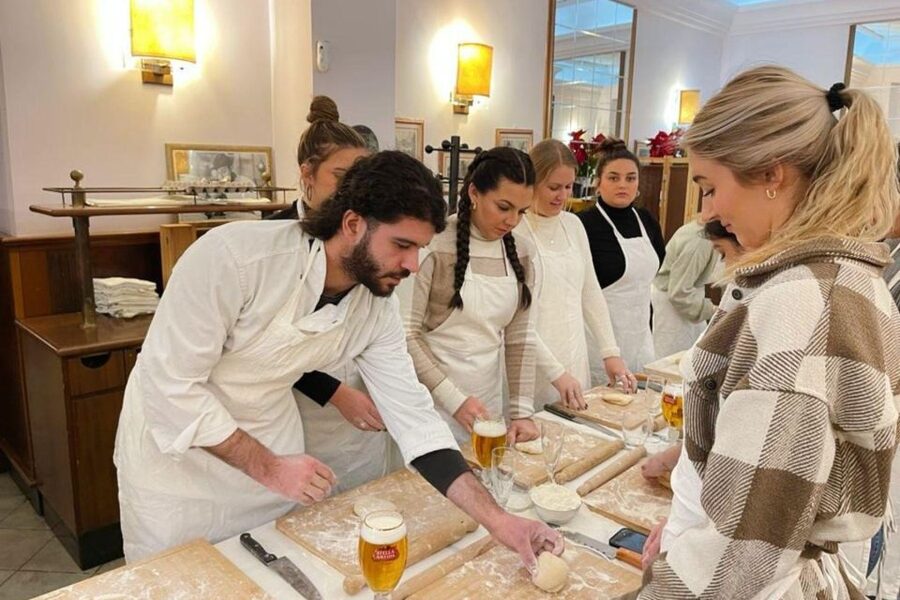
The class is conducted in English. Ask the restaurant staff for the cooking class when you arrive, rather than waiting outside for a separate instructor. Get there about 10 minutes early.
The activity offers free cancellation up to 24 hours before the start for a full refund. You can also reserve and pay later, which is useful when your Rome schedule is still changing.
The meeting point is in the heart of Rome, but the venue is not suitable for people with mobility impairments. The class also excludes vegans, people with gluten intolerance, people with nut allergies, and children under seven.
For adults, the included drink is a glass of wine or a small beer, followed by coffee or limoncello. Children receive a soda during the meal. Extra food, dessert, and drinks cost more and are paid directly at the restaurant.
Should you book the Piazza Navona pasta class?
Book it if you want a compact, social cooking activity that combines fresh pasta, pesto, and a meal in one of Rome’s best-known squares. The small group, English instruction, and friendly chefs make it more personal than a large demonstration, while the included bruschetta and drink improve the overall value.
Go in knowing that you will not cook every stage. You make the dough, cut the fettuccine, and work on the pesto, while the restaurant cooks and serves the final dish. For most people, that is a sensible balance between learning and enjoying lunch. For serious home cooks seeking advanced technique, it may feel too basic.
At $58, I think the class earns its price if you value the experience as much as the food. You leave with a meal, a story from Piazza Navona, and two Italian techniques you can try again at home.
FAQ
Where does the cooking class meet?
Meet inside Ristorante Panzirone at Piazza Navona 73 in Rome. Ask the restaurant staff for the cooking class when you arrive.
How long does the activity last?
The cooking class and meal take about 2.5 hours. Starting times vary, so check availability when booking.
What food do I make?
You make handmade fettuccine pasta and traditional Genovese pesto sauce with guidance from an English-speaking chef.
What is included with the meal?
The meal includes bruschetta, a glass of wine or small beer for adults, and a soda for children. Adults also receive coffee or limoncello afterward.
Can I order additional food or drinks?
Yes. Any extra drinks, food, or dessert are available at an additional cost and are paid at the restaurant.
Who should not book this activity?
The class is not suitable for vegans, people with gluten intolerance, people with nut allergies, children under seven, or people with mobility impairments.
New cooking classes around Rome
- ROME:Hands-On Lasagna & Marsala Tiramisu Cooking Experience”★ 5.0 · 3 reviews
- Rome: Vatican Food Tours, Cooking classes & Free Tours★ 4.9 · 11 reviews
- Rome: Traditional Pasta, Spritz & Tiramisu Cooking Class★ 4.9 · 279 reviews
- Rome: Trastevere Pasta Making Class★ 4.9 · 33 reviews
- Rome: Traditional Pasta and Tiramisu Cooking Class★ 5.0 · 4 reviews
- Rome: Small Group Pasta cooking class near Piazza Navona★ 4.9 · 8 reviews
- Rome: Traditional Cooking Class in the Jewish Ghetto★ 4.9 · 75 reviews
- Rome: “Rooftop Pasta and Cocktails Cooking Class”★ 5.0 · 12 reviews
Rome Cooking Classes, side by side.

3 in 1 Cooking Class near Navona: Fettuccine, Ravioli & Tiramisu
Read our review →
Rome: Pasta Making Class with Wine, Limoncello, and Dessert
Read our review →
Rome Cooking Class: Make Pasta and 3 Spritz Cocktails
Read our review →
Rome: 3-in-1 Fettuccine, Ravioli, and Tiramisu Cooking Class
Read our review →
Rome: Fettuccine Pasta Cooking Class in Rome’s City Center
Read our review →
Fettuccine & Tiramisù: Cooking Class with Wine & Limoncello
Read our review →
Pasta Cooking Class Near the Colosseum with 3 Spritz Cocktails
Read our review →
Enjoy Spritz and Pasta Making in Piazza Navona
Read our review →This kitchen also appears in