Review · PHUKET
Phuket: Half Day Easy Thai Cooking Class & Local Market Tour
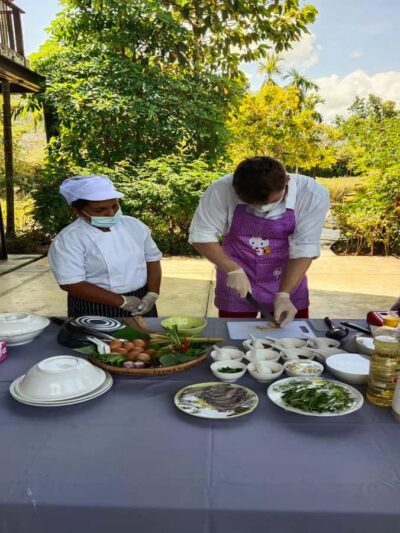
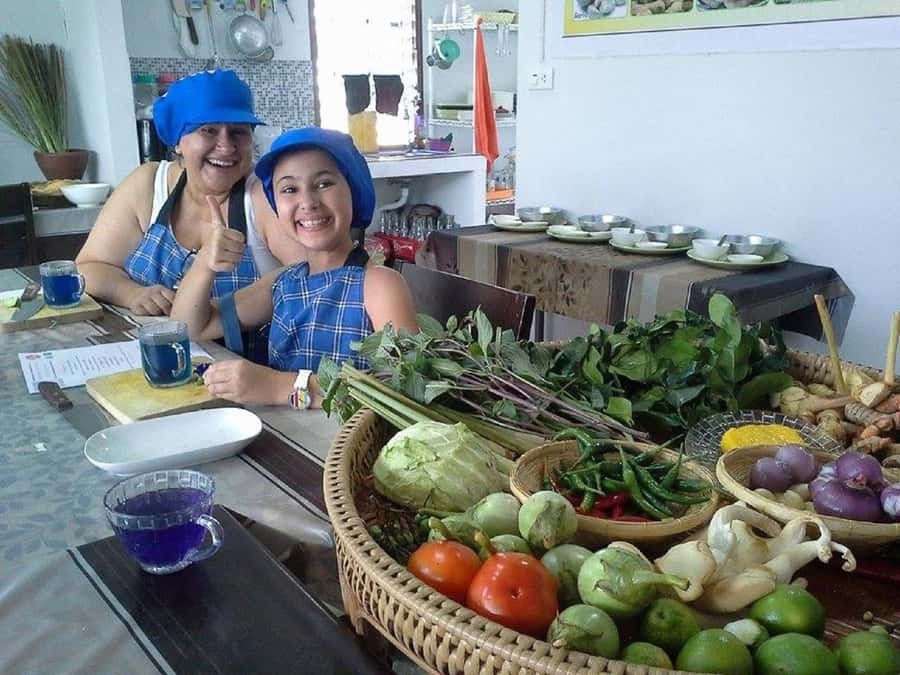
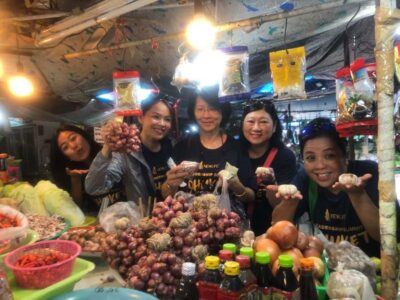
The best part of this Phuket cooking class happens before you touch a wok. You visit a local market with your instructor, learn what the unfamiliar herbs and vegetables do, and help select the ingredients for lunch or dinner. Back at the kitchen, you pick more produce from a small garden before cooking a generous spread of Thai food.
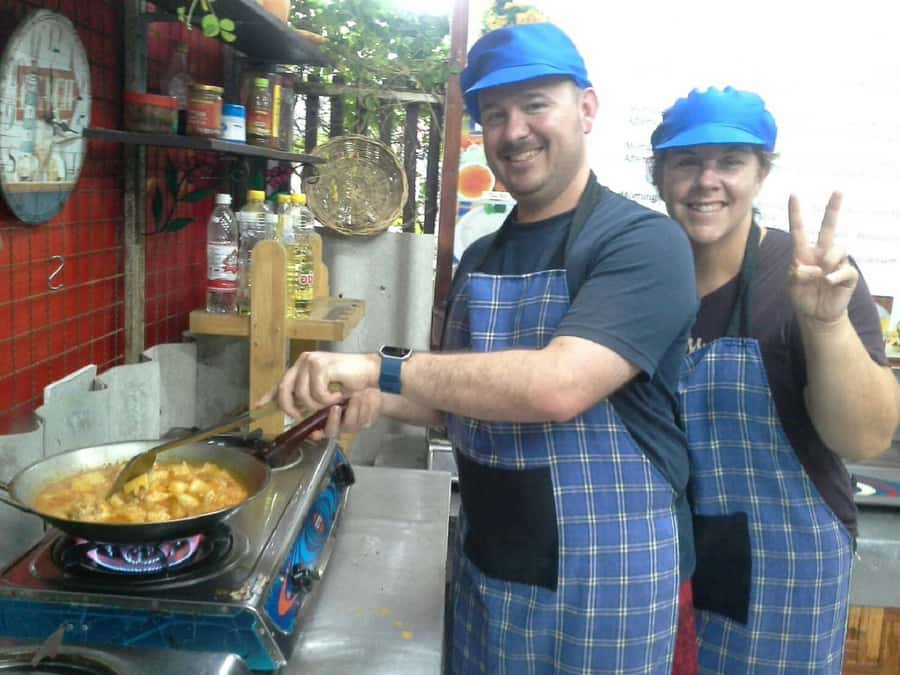
I like the market-to-plate format, which gives the dishes some cultural context instead of treating pad Thai as a standalone recipe. I also like the cheerful teaching style of Tik, Rosa, and the other instructors, who make the class easy for beginners. The main thing to consider is the heat in the cooking area, plus the very large portions. Come hungry, and expect leftovers.
Key points at a glance
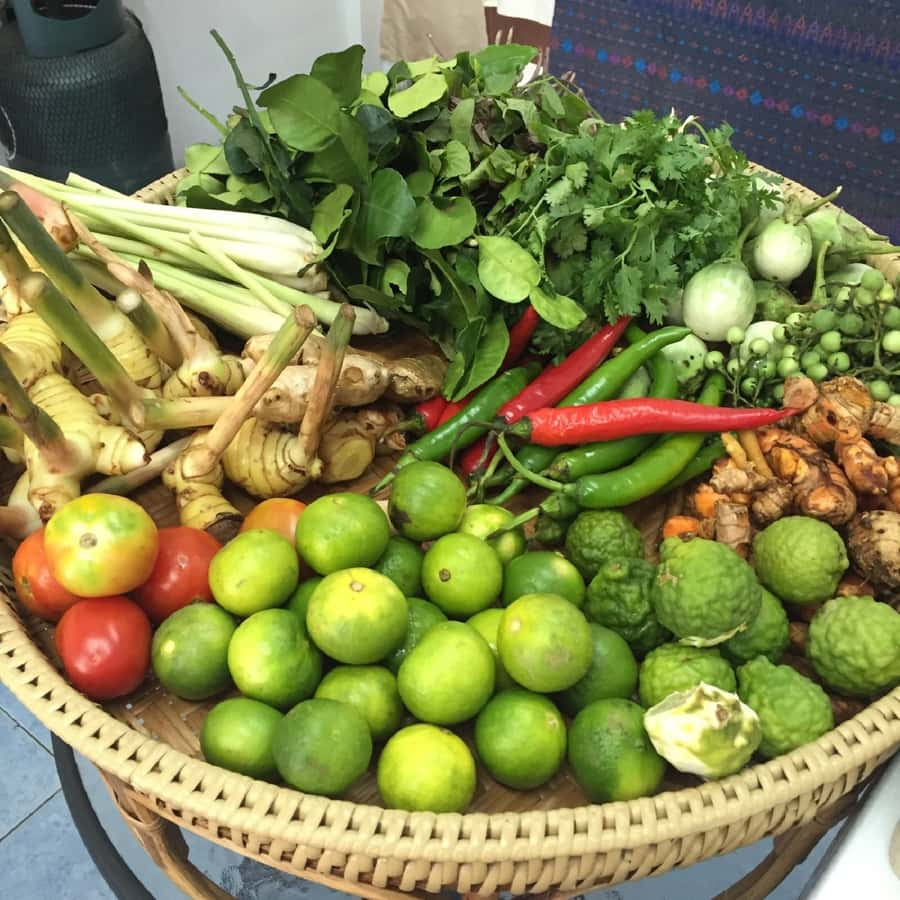
- Market shopping comes first: Learn to identify Thai herbs, vegetables, curry ingredients, and seasonings before cooking them.
- A changing daily menu: The dishes depend on the day and time, so check the menu before booking.
- A small kitchen garden: Pick fresh ingredients from the garden, a useful link between Thai cooking and the plants behind it.
- Small groups of up to 10: You get hands-on guidance without joining a large demonstration-only class.
- Hotel pickup is included: Transport is covered from Kata, Karon, Patong, Rawai, and Phuket Town.
- Expect a full meal: Three main dishes plus dessert is common, and takeaway boxes are available for extra food.
From Phuket market shelves to your cooking station
This is a four-hour experience built around a simple idea: Thai food makes more sense when you see the ingredients before they reach the pan.
Your pickup is scheduled for 9:00 AM for the morning class or 2:00 PM for the afternoon class. The cooking sessions begin at 9:30 AM and 2:30 PM. After transport, you meet your English-speaking instructor at a local market and walk through the produce stalls together.
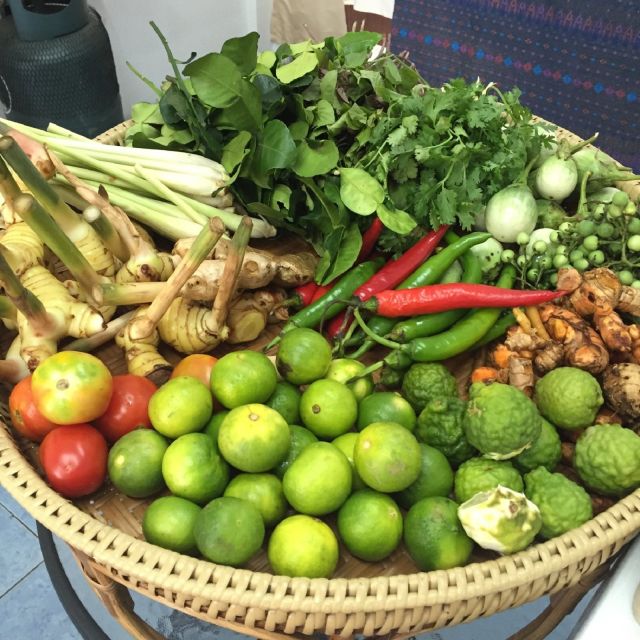
This is not just a quick stop for photographs. Your instructor explains the ingredients used in that day’s menu, and you may taste some of them along the way. That matters because Thai cooking often depends on balancing several strong flavors: sour, salty, sweet, spicy, bitter, and aromatic. Seeing fresh herbs and roots in their original form helps you understand why a dish tastes different from a packet-based version made at home.
You might encounter ingredients that are hard to identify at first. The class gives you a practical introduction to the items that create Thai flavor, from curry components to fresh herbs and vegetables. If you cook Thai food at home, this may be the most useful part of the morning, since it helps you recognize what to look for in an Asian grocery store later.
The market visit also gives the class a local feel. You are not simply handed premeasured ingredients in a teaching kitchen. You see the shopping process and learn why freshness and the right variety of an ingredient matter.
More Cooking Classes with a Market Tour in Thailand
- Chiang Mai: Cooking Class, Market & Thai Herbs Garden Tour
★ 4.9 · 4,824 reviews - Chiang Mai: Authentic Cooking Class with Market & Farm Visit
★ 4.9 · 4,546 reviews - Phuket Thai Cooking Class with Market Tour Option
★ 5.0 · 2,665 reviews
The kitchen garden adds a useful extra lesson
After the market, you continue to the cooking kitchen, which has been described as being in the Chalong area. The setting is more out of the way than a hotel activity room, but that is part of its appeal. You are visiting a working local kitchen rather than a polished restaurant classroom.
Before cooking, you may pick ingredients from the small kitchen garden. It is not a major farm visit, and you should not expect a long gardening tour. Its value is more direct: you can see that some of the leaves and herbs used in the recipes are growing right beside the kitchen.
The cooking school is arranged in two main areas. Ingredient preparation takes place in an air-conditioned room, while the cooking area is not air-conditioned. Phuket can be hot, and standing beside a wok adds more heat, so wear light clothing and bring water. The layout is practical, but comfort drops once the burners are going.
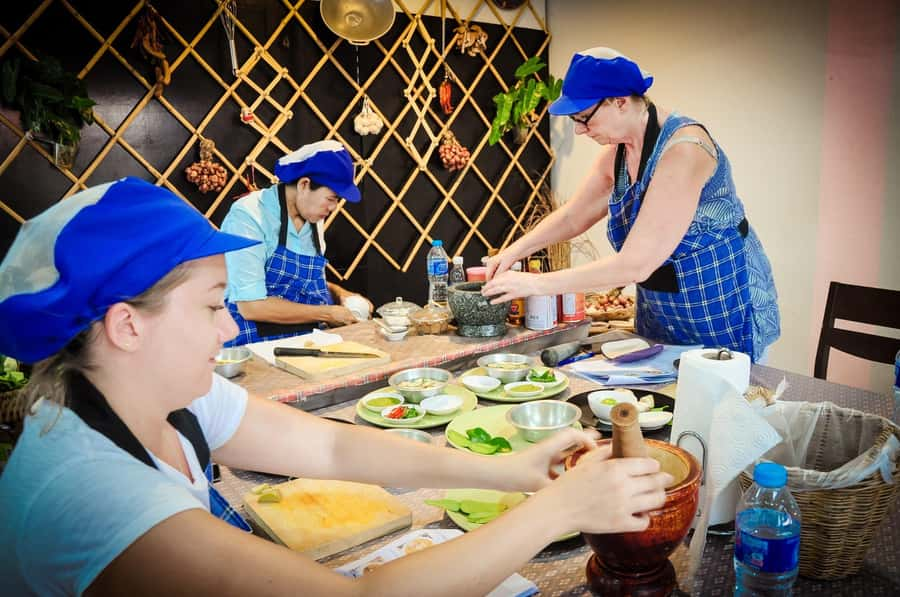
The kitchen itself is kept clean, and each participant receives a preparation area. The class is limited to 10 people, which keeps the demonstration close enough to follow. Depending on the group and the setup, you may share some cooking stations, so the amount of time you personally spend at the wok can vary. Most importantly, ask your instructor how the stations will be divided at the start.
Tik, Rosa, May, and a relaxed teaching style
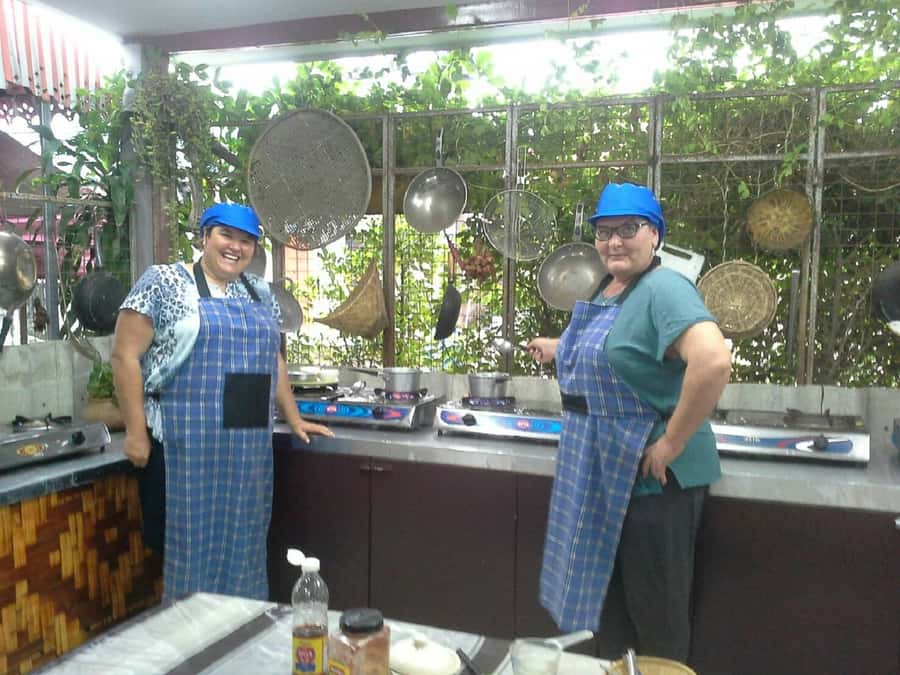
The named instructors who appear in the experience include Tik, Rosa, and May. Their styles differ slightly, but the pattern is clear: the class is meant to be friendly, practical, and easy to follow.
Tik is often described as funny, direct, and good at keeping everyone involved. Rosa brings humor and clear explanations, while May has been praised for explaining the market ingredients and cooking steps in a simple way. The wider team helps with preparation and makes the class workable for people who have never used a wok.
You do not need strong cooking skills. The instructor demonstrates each dish and then guides you through cleaning, cutting, seasoning, and cooking. The recipes are designed to be approachable, but you still get a real hands-on lesson rather than watching a chef do everything.
I especially like the balance between instruction and participation. You learn not only what to add, but also how the ingredients affect the final flavor. That is more useful than memorizing a list of measurements without understanding the purpose of each item.
The English instruction is a practical benefit for international visitors. If you are nervous about cooking with a group of strangers, the light humor helps. Couples, families, solo participants, and mixed groups can all take part, and solo participants may be paired with someone for preparation.
What you cook depends on the day
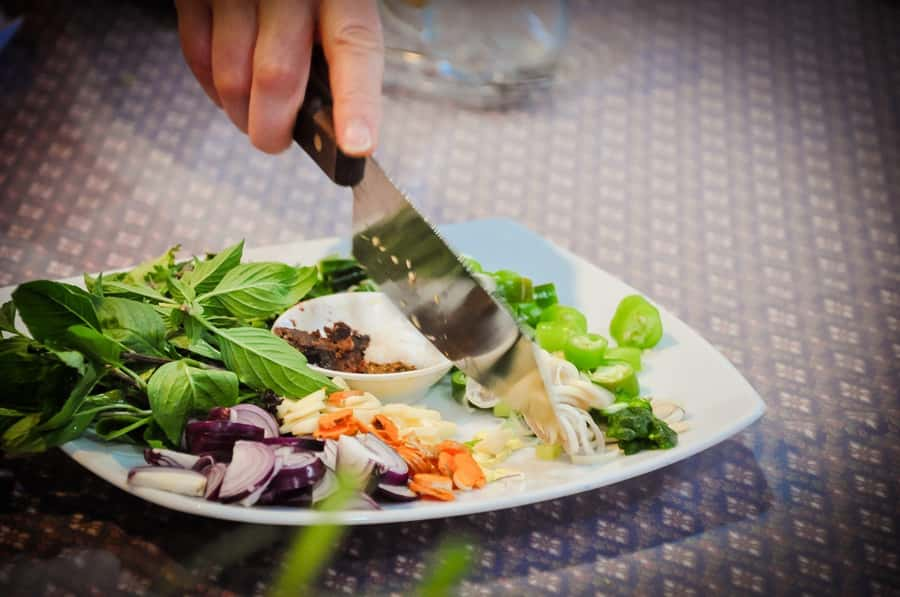
Do not book this class assuming you will automatically make pad Thai and green curry. The menu changes by day and by morning or afternoon session.
A typical morning menu includes four items. On Monday, Tuesday, Wednesday, Thursday, and Friday, you may prepare combinations such as tom yam kung, pad Thai, green curry, mango sticky rice, papaya salad, panang curry, or deep-fried banana. Saturday morning changes the rhythm with massaman curry, spring rolls, tom yam kung, and banana in coconut milk.
Afternoon menus offer a different set of dishes. Depending on the day, you might make chicken satay, tom kha kai, pad see-ew, fried chicken with cashew nuts, fried basil, red curry, larb, spring rolls, or chicken in oyster sauce. Desserts rotate too, with mango sticky rice, deep-fried banana, or banana in coconut milk appearing on different days.
The menu is a real booking factor. If you have your heart set on mango sticky rice, spring rolls, massaman curry, or tom kha kai, check the schedule before choosing your date and time. The Special Sunday class gives you more flexibility: you choose three Thai main dishes and a Thai dessert. That option requires at least two people.
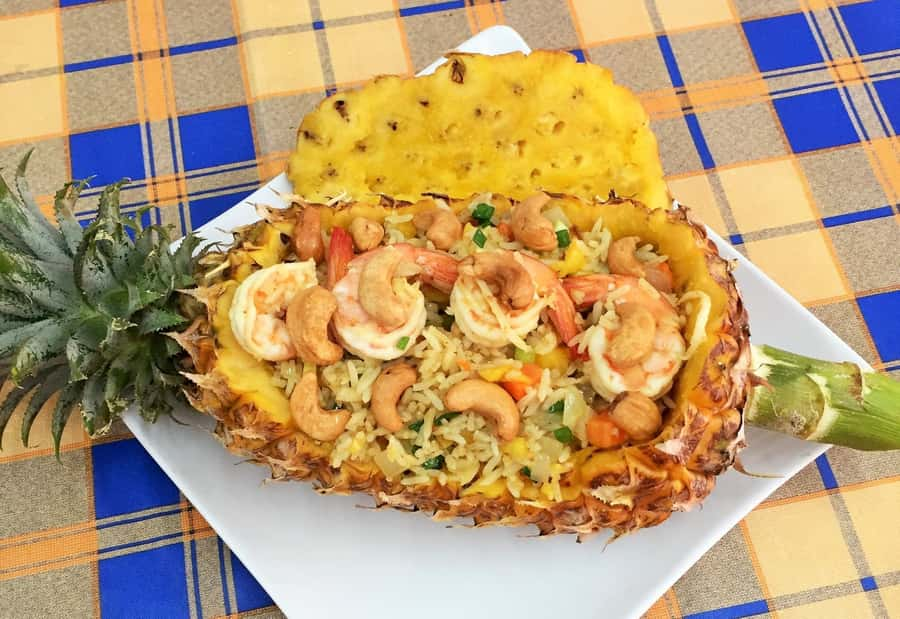
The class commonly produces three main dishes and a dessert, though the exact number and format can depend on the menu. You prepare the food, then sit down to eat what you have made. Portions are generous enough that many people cannot finish everything. Takeaway boxes are provided, so the extra food can become a later snack or meal.
That generosity is good value, but it changes how you should plan the day. Do not eat a large breakfast before the morning class or a heavy lunch before the afternoon session. This is a cooking lesson with a substantial meal at the end, not a small tasting.
More Thai Cooking Classes around Thailand:
- Half-Day Thai Cooking Class at Organic Farm in Chiang Mai
★ 5.0 · 19,087 reviews - Thai and Akha Cooking Class in Chiang Mai
★ 5.0 · 4,358 reviews - Bangkok: Hands-on Thai Cooking Class and Market Tour
★ 4.9 · 1,614 reviews - Bangkok: Tingly Thai Cooking School Half-Day Cooking Class
★ 4.9 · 1,191 reviews
The food has a purpose beyond the plate
Thai cooking is often presented as a list of famous dishes. This class does more by showing how the dishes are built.
You handle fresh ingredients, prepare herbs and vegetables, and work through the steps needed for soups, curries, stir-fries, salads, and desserts. The market visit helps explain the raw materials, while the kitchen garden shows how some ingredients are grown and used close to home.
For a home cook, the curry lesson can be especially useful. You may see how fresh ingredients contribute to a curry rather than relying only on the prepared paste available in many supermarkets. The goal is not to turn you into a professional chef in four hours. It is to make Thai cooking feel manageable enough to try again.
The recipes are sent by email after the class, and an electronic cookbook is also provided. That gives the experience lasting value. You can recreate the dishes at home, though some ingredients may be difficult to find depending on where you live. The instructor may also explain which ingredients matter most and which substitutions are more realistic.
The dessert is not an afterthought. Mango sticky rice receives particular praise, and it gives the class a sweet finish after several savory dishes. If your chosen day includes it, save room.
Transport saves time, but Phuket traffic still matters
Roundtrip pickup is included from Kata, Karon, Patong, Rawai, and Phuket Town. That makes the class easier to fit into a short Phuket stay, since you do not need to arrange a taxi to the market and another ride back from the kitchen.
Pickup times are listed as 9:00 AM for the morning class and 2:00 PM for the afternoon class. Traffic can affect the schedule, especially during heavy rain or busy periods. Transport has generally been smooth, but one longer pickup from Kamala took about an hour to reach the market. Plan a little breathing room rather than booking a tight appointment immediately afterward.
Transport from several other areas costs extra. Pickup from Kamala, Surin, Ao Makham, Cape Panwa, or Koh Sirah is THB300 per person. Bang Tao or Laguna costs THB400 per person. Nai Yang Beach, Nai Thon Beach, Mai Khao, or Ao Por costs THB600 per person. A private car option from those northern areas is listed at THB1,500 per car.
Those fees can affect the value calculation. At $68 per person, the class includes ingredients, the market visit, instruction, the garden visit, the meal, recipes, and included pickup from the main southern resort areas. If you are staying farther away, compare the added transport charge with the cost and time of arranging your own ride.
Is $68 a fair price?
For four hours, $68 is a reasonable price if you value the full experience rather than just the food. You are paying for transport, market guidance, ingredients, kitchen instruction, a large meal, and recipes to take home.
The value is strongest for people who want to learn. A restaurant meal in Phuket may cost less, but it will not show you how the ingredients are selected or prepared. A cooking demonstration without hands-on work may also cost less, but you will leave with fewer practical skills.
The value is less clear if you want a quiet, private lesson or a small tasting menu. This is a social class with up to 10 participants, shared spaces, changing menus, and a generous amount of food. You should also remember that the cooking area can be hot and that the market and kitchen are not necessarily close to every resort.
Free cancellation up to 24 hours before the activity gives you some flexibility. You can also reserve now and pay later, which helps if your Phuket schedule is still shifting.
Who should book this Phuket cooking class?
I would choose this class for couples who want an activity beyond the beach, families with older children or teenagers, solo visitors who enjoy meeting people, and home cooks who want to understand Thai ingredients.
It also suits beginners. The instructions are broken into manageable steps, and the instructors help with preparation and cooking. You do not need to know how to use a wok before arriving.
Food lovers should check the menu carefully. The rotating schedule is fun if you enjoy surprises, but less useful if you want a specific dish. The Sunday option is best for two or more people who want more control.
I would hesitate only if you dislike heat, large meals, group activities, or long transfers from northern Phuket. The class is friendly and well organized, but it is not a private chef lesson. If you need every participant to cook every part of every dish, confirm the station arrangement before you book.
Should you book it?
Yes, if you want to connect Thai food with the ingredients and people behind it. The market tour, garden visit, hands-on cooking, and generous meal make this feel like more than a recipe demonstration.
Choose your day with care, arrive hungry, and wear cool clothes. If you are staying in an included pickup area and can accept a group class, $68 is a fair price for a useful four-hour experience that continues at home through the emailed recipes.
FAQ
How long does the Phuket Thai cooking class last?
The experience lasts four hours, including transport arrangements, the market visit, ingredient preparation, cooking, and the meal.
What time do the morning and afternoon classes start?
The morning class starts at 9:30 AM, with hotel pickup at 9:00 AM. The afternoon class starts at 2:30 PM, with pickup at 2:00 PM.
Is hotel pickup included?
Roundtrip pickup is included from Kata, Karon, Patong, Rawai, and Phuket Town. Extra charges apply for several other areas, including Kamala, Surin, Bang Tao, Laguna, Nai Yang Beach, Nai Thon Beach, Mai Khao, and Ao Por.
Does the menu stay the same every day?
No. The menu changes by day and by morning or afternoon session. The Special Sunday class allows you to choose three Thai main dishes and one Thai dessert, and it requires at least two people.
Is the class suitable for beginners?
Yes. The English-speaking instructor demonstrates the preparation and cooking steps, then guides you through the process. The group is limited to 10 participants.
Are ingredients and recipes included?
All ingredients are included. Recipes are sent by email after the class, and an electronic cookbook is provided. Takeaway boxes are available for food you cannot finish.
New cooking classes around Thailand
- Sathon: Hands-on Thai Cooking Class & Market Tour in Bangkok★ 5.0 · 19 reviews
- Railay: Hands-On Thai Cooking Class at Railay Beach★ 4.9 · 30 reviews
- Phuket: Thai Cooking Class with Market Tour★ 5.0 · 2 reviews
- Phuket: Pum Thai Cooking School with Meal★ 5.0 · 3 reviews
- Phuket: Rawai Thai Cooking Class with Local Chef★ 4.8 · 23 reviews
- Phuket foodie tour+ Thai cooking class + Local food tasting★ 5.0 · 4 reviews
- Phuket: Half Day Thai Cooking Experience with Market Tour★ 5.0 · 11 reviews
- Phuket: Authentic Thai Cooking Class★ 4.8 · 145 reviews
Phuket Cooking Classes, side by side.
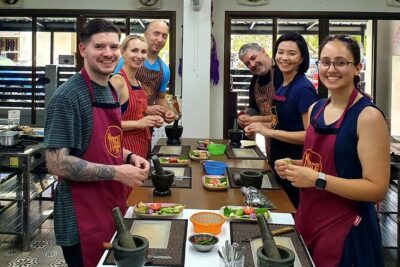
Phuket Thai Cooking Class with Market Tour Option
Read our review →
Phuket: Elephant Sanctuary Tour, Cooking Class & Lunch
Read our review →
Phuket – Blue Elephant Thai Cooking Class with Market Tour
Read our review →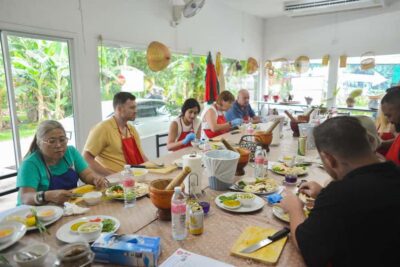
Phuket: Half Day Thai Cooking Experience with Market Tour
Read our review →