
Review · MEXICO
San Miguel de Allende: Mexican Cooking Class | Mole & Salsas
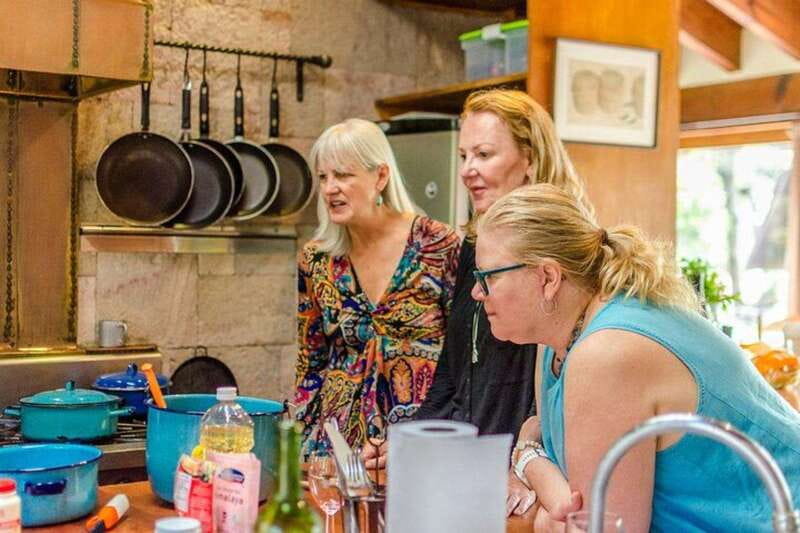
A 34-ingredient mole, two fresh salsas, and dinner in an antique mansion make this more than a quick cooking demonstration. Chef Miguel teaches the cultural role of each ingredient, then puts you to work with local produce, corn chips, rice, potatoes, and the many spices that give mole its layered flavor. I especially like the small six-person group and the chance to enjoy Mexican wine and chocolate water while you cook.
The main consideration is the price: $212 per person is a serious outlay for three hours. You are paying for an intimate class, a full meal, drinks, the historic setting, and a hands-on lesson, but budget-minded eaters may find it costly compared with a regular San Miguel dinner.
Key points at a glance
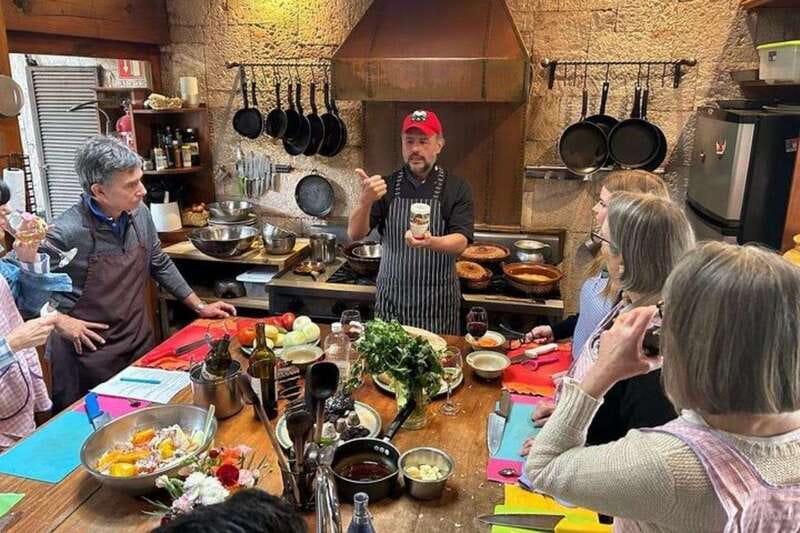
- Chef Miguel leads the class: He teaches in English or Spanish and explains both cooking methods and the cultural role of the ingredients.
- The mole is a major project: The sauce uses 34 ingredients and is served over potato-filled enmoladas.
- You make two salsas: White and blue-corn chips provide the first course and a good way to taste the sauces.
- Dinner is part of the lesson: Your group eats the mole, enmoladas, rice, and salsas after cooking.
- The setting is a real attraction: The class takes place inside an antique mansion on Aldama in central San Miguel.
- The group stays small: A maximum of six people makes it easier to ask questions and follow each step.
A cooking class in the heart of San Miguel
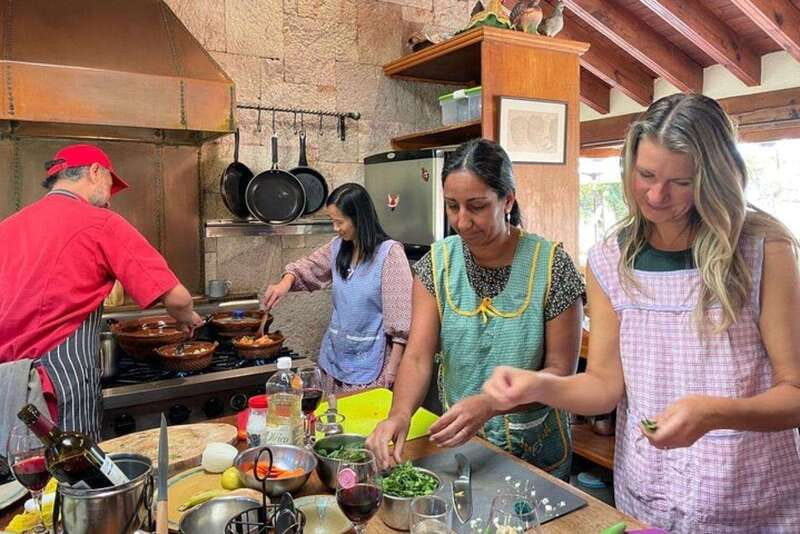
The class takes place at Aldama 9, only about a block and a half from the Parroquia in Centro. That central address matters. You can reach it on foot from the heart of town, and you do not need to spend part of your afternoon arranging transportation to an outlying kitchen.
The entrance is easy to miss if you are hurrying. Walk down Cuna de Allende to Cuadrante, turn left, then make an immediate right onto Aldama. Walk about half a block to number 9 and ring the bell. The cooking space is inside an antique mansion, so the location gives the lesson a sense of place before the food even reaches the table.
I like this kind of setting because it connects the meal to San Miguel itself. You are not simply sitting in a generic cooking studio. You are working in an old central building, then ending the session with dinner in a setting that feels suited to a long Mexican meal.
The class lasts three hours. That is enough time for instruction, preparation, tasting, and dinner without turning the activity into an all-day commitment. Still, the experience is built around participation, not a quick sample. You should arrive ready to spend much of the session standing, chopping, stirring, tasting, and listening.
More Mexican Cooking Classes around Mexico:
- Cabo San Lucas Mexican Cooking Class Experience and Local Markets
★ 5.0 · 915 reviews - Mexican Cooking from Scratch in a Local Home in Tulum
★ 5.0 · 585 reviews - Authentic Mexican Legacy Cooking Class in Cabo San Lucas
★ 5.0 · 530 reviews
Meeting chef Miguel and learning the food’s meaning
Chef Miguel is the instructor, and the class places as much weight on context as on technique. You learn why mole and salsa matter in Mexican cooking, how individual ingredients contribute to the final taste, and how traditional methods shape the dishes.
That background is useful because mole can look mysterious when it arrives at a restaurant. It is dark, complex, and often difficult to identify one ingredient at a time. Here, you see the sauce develop through its separate components. The class describes the mole as using 34 ingredients, which gives you a sense of the work involved and the reason the finished sauce has such a broad flavor.
The small group size helps. With no more than six participants, you have a better chance to hear the instructions, see what Miguel is doing, and ask about an ingredient or method before the class moves on. One recent class had five people, a size that allows conversation without making the kitchen feel crowded.
Instruction is available in English and Spanish. That makes the activity practical for international visitors, though the exact balance of languages will depend on the group and the instructor’s approach that day. If you want to ask detailed food questions, the small format gives you room to do so.
Starting with two salsas and corn chips
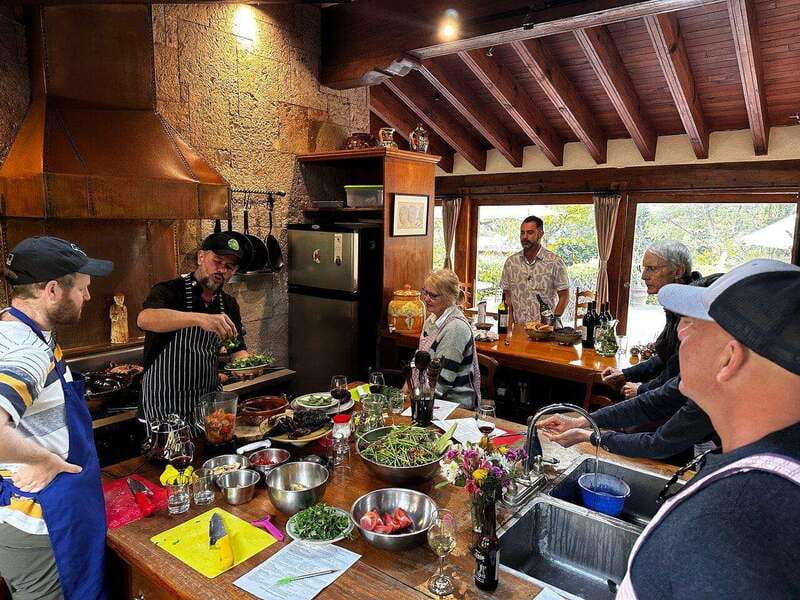
The first menu item is two traditional Mexican salsas. They are made with different combinations of ingredients and techniques, so this part of the class gives you a useful comparison of how small changes can produce very different results.
You enjoy the salsas with white and blue-corn chips. That sounds simple, but it is a smart way to begin. Chips let you taste each salsa on its own, compare heat and texture, and notice how the sauces work with corn. They also give the cooking group something to eat while the more involved dishes come together.
I appreciate that the salsas are not treated as a side note. In Mexican cooking, salsa can shape an entire bite, and the class gives you time to understand that role. You are not just copying a recipe. You are learning how balance, texture, and fresh ingredients affect the result.
The menu information does not specify the exact salsa recipes or heat level. If you are sensitive to spicy food, ask Miguel about the peppers and seasoning as you begin. The class is designed to accommodate vegetarian, vegan, and gluten-free preferences, but you should communicate your needs when booking or before the cooking starts.
Preparing ancestral Mexican rice
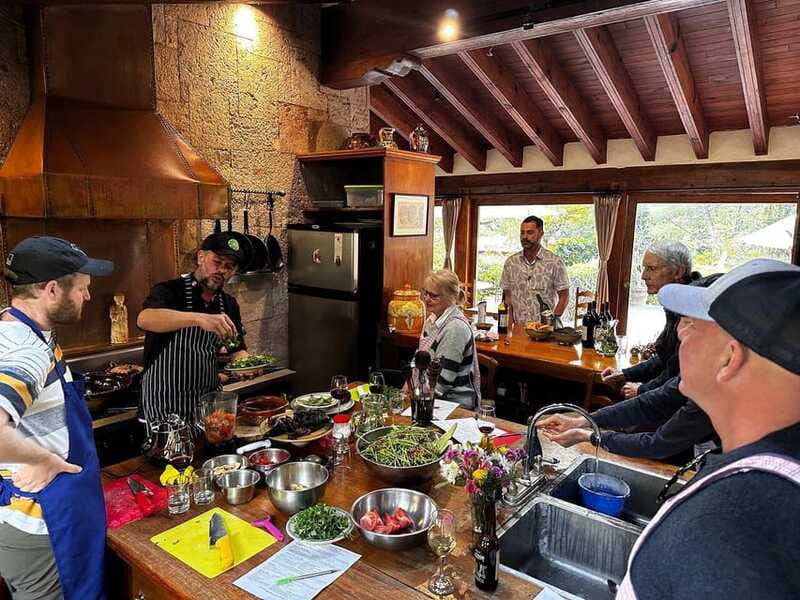
The rice course uses corn, carrots, zucchini, and other local ingredients. It is described as ancestral Mexican rice, and it provides a useful counterpoint to the mole. The rice is lighter and more familiar in texture, while the vegetables add color and sweetness.
This step also helps you see how a Mexican meal is built. The menu is not just a large serving of mole. You prepare a grain dish, vegetables, salsas, chips, and the filled enmoladas. Each part has a role on the final plate.
Because the rice includes vegetables, it works well for vegetarian and plant-based diners. The experience also specifically accommodates vegan and gluten-free preferences. Still, recipes can involve shared preparation areas or packaged ingredients, so anyone with a serious allergy should discuss the details with the provider in advance.
More cooking classes around Mexico:
- Puerto Vallarta Cooking Class Experience with Market Tour
★ 5.0 · 698 reviews - Mexican Cooking Class with Food Market Visit in Mexico City
★ 5.0 · 506 reviews - Authentic Mayan Cooking Class in Cozumel
★ 5.0 · 344 reviews - Flavors of Oaxaca: Cooking Class with No Set Menu and Local Market Tour
★ 4.5 · 333 reviews
Making mole and assembling enmoladas
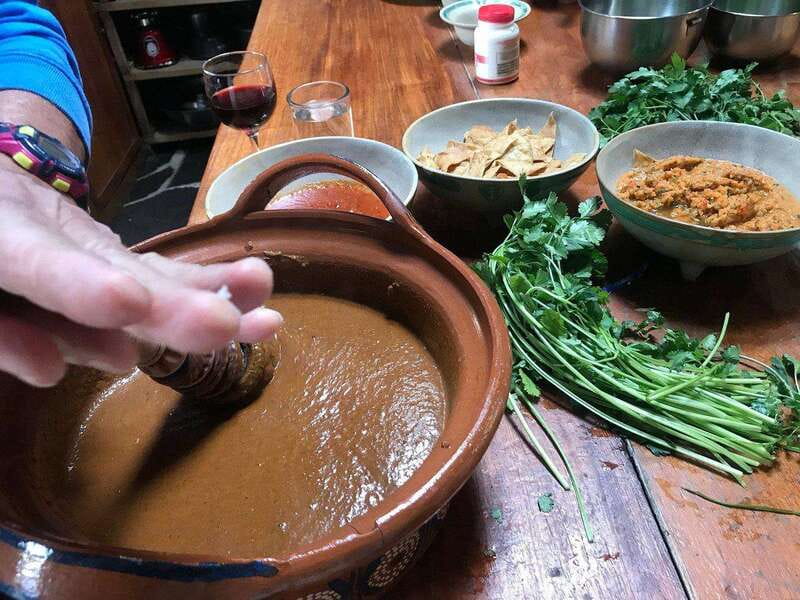
The centerpiece is mole served over enmoladas. The enmoladas are filled with potatoes, then covered with the finished mole sauce. Think of them as a traditional tortilla-based dish where the sauce is not an afterthought. It is the main flavor and the part that requires the most patience.
The 34-ingredient mole is the class’s biggest culinary lesson. A sauce with that many components asks you to pay attention to sequence, proportion, and texture. You learn the role of the ingredients rather than simply receiving a prepared sauce at the end.
That makes this experience especially useful if you want to take Mexican cooking skills home. You may not reproduce the full class menu right away, but you will leave with a clearer understanding of how a complicated sauce is built and how it is used in a finished dish.
The potato filling keeps the enmoladas vegetarian. The dish is also described as nutritious and traditional, with the mole providing the strongest flavors. If you prefer mild food, remember that the finished sauce may have several layers of seasoning even when the heat itself is moderate. Ask Miguel as the recipe develops if you want to know how spicy the final dish is expected to be.
Chocolate water, Mexican wine, and a proper dinner
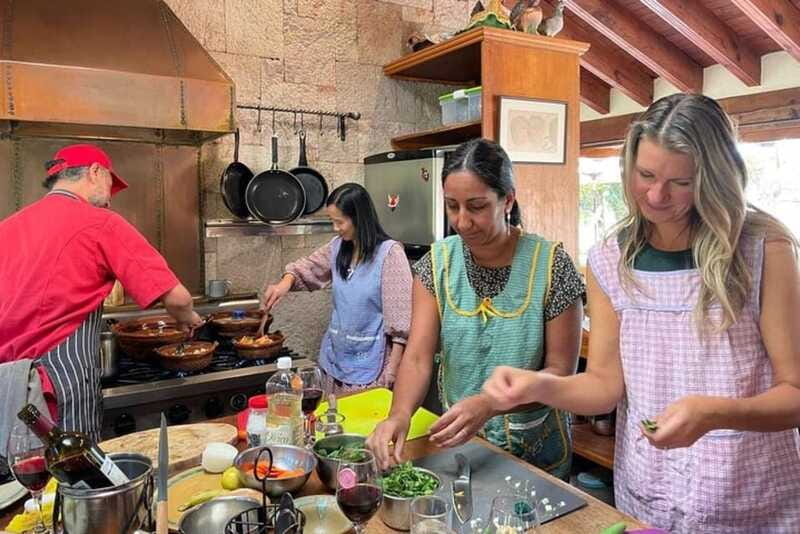
Two drinks are included throughout the experience. The first is Mexican chocolate water, an authentic drink that gives you a taste of a preparation many visitors may not encounter in an ordinary restaurant meal. Its presence adds another food lesson to the class, rather than limiting the drinks to standard soft drinks or bottled water.
You also sip red wine produced in Mexico while cooking. The wine gives the class a relaxed dinner-party feel, and it pairs naturally with the mole, rice, and salsas. The experience includes the wine, but drink at your own pace. You will still want to follow instructions and take part in the kitchen work.
After the cooking, you sit down to eat what you prepared. Dinner includes the two salsas with corn chips, ancestral Mexican rice, and the potato-filled enmoladas with mole. This final meal is important for value. You are not paying only for a lesson and a few tastes. You receive a complete dinner, along with the drinks and ingredients.
The meal also gives the group time to talk. The experience ends in a relaxed setting, with food on the table and the chance to compare the results of the work. If you enjoy social activities, this may be one of the best parts. If you prefer a quiet private lesson, a group class of up to six may feel more communal than personal.
What the $212 price really covers
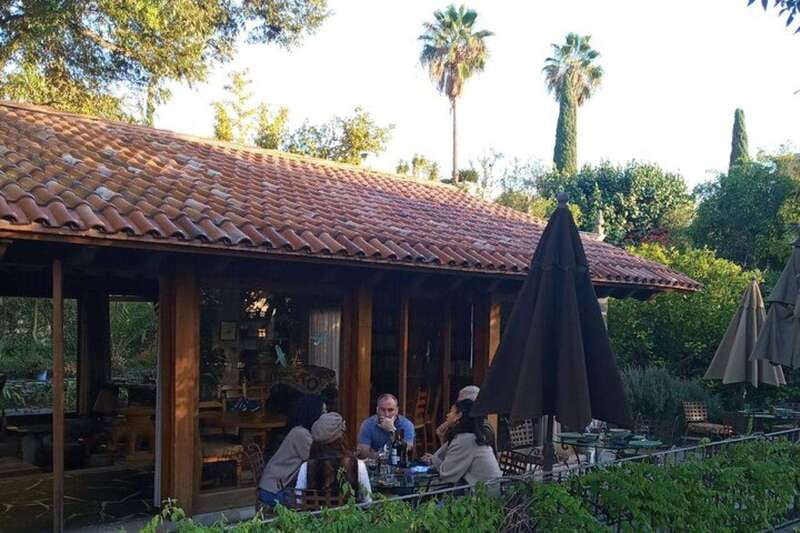
At $212 per person, this is positioned as a premium cooking experience. The price includes the cooking class, all ingredients, dinner, Mexican chocolate water, and Mexican red wine. It also covers the instruction and the use of the historic mansion setting.
The value depends on how you like to spend money in San Miguel. If you would happily pay for a high-quality dinner, a food lesson, and a cultural activity on the same afternoon, the package is easier to justify. You get a meal and a skill-building experience rather than a restaurant table alone.
The small group improves the value for people who want personal attention. A six-person maximum means Miguel can explain the process without addressing a large crowd. You also spend three hours with the same instructor, which gives the activity more substance than a short market tasting.
Still, the cost is not easy to overlook. If your main goal is simply to eat mole, you can likely find less expensive options in San Miguel. Choose this class because you want to understand the food, participate in making it, and enjoy the setting. Do not book it only because you need lunch.
Who will get the most from this class?
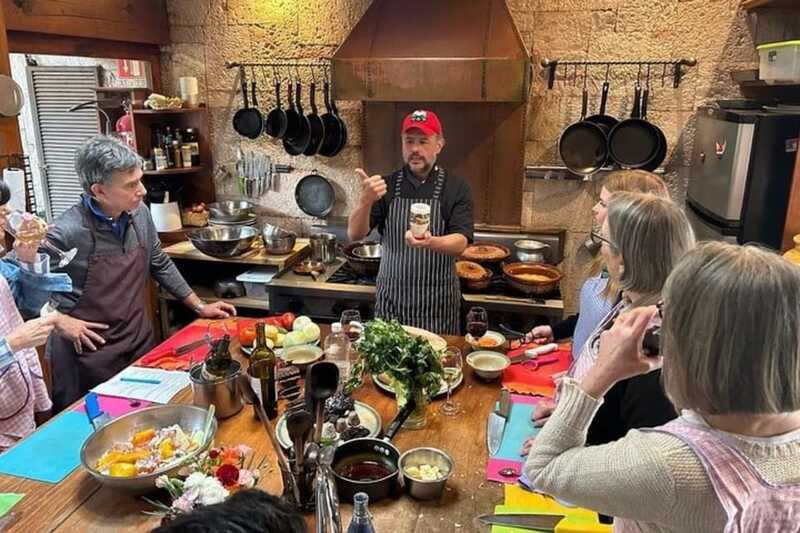
I would recommend this experience to couples, friends, solo food lovers, and small groups who enjoy hands-on activities. It is also a good choice for anyone who wants a cultural activity that does not require leaving central San Miguel.
You do not need to be an experienced cook. The point is to learn traditional methods under guidance, not to prove your kitchen skills. The menu has enough variety to keep an experienced home cook interested, while the instructor’s explanations make it approachable for beginners.
The class suits vegetarians especially well because the menu centers on potato-filled enmoladas, vegetable rice, salsas, and corn chips. Vegan and gluten-free preferences can also be accommodated. Tell the provider about your needs ahead of time so the preparation can be arranged properly.
Families should consider the three-hour duration, the focus on cooking, and the inclusion of wine. The information does not set a minimum age, so ask before booking if you are planning to bring children. The activity is wheelchair accessible, which is useful for visitors who need a more accessible cooking venue.
Practical details before you book
The meeting point is Aldama 9 in Centro, directly at the cooking location. You ring the doorbell to enter. Since the address is close to the Parroquia, you can combine the class with sightseeing in central San Miguel, but leave yourself enough time to find the door.
The class is offered at set starting times, so check availability for the day you want. Free cancellation is available up to 24 hours in advance for a full refund. You can also reserve now and pay later, which helps if you are still arranging your San Miguel schedule.
The provider is Azteca Entertainment SMA Mexico. English and Spanish are offered, and the class is limited to six participants. The small size is worth confirming when you book, especially if you are arranging the activity for a couple or private group.
Bring an appetite rather than a packed schedule. The format includes cooking, tasting, drinks, and dinner, and you will get more from it if you are not watching the clock for another appointment.
Should you book the San Miguel mole class?
Book it if you want a close look at Mexican cooking and value the combination of instruction, food, drinks, and setting. Chef Miguel’s teaching, the 34-ingredient mole, the two salsas, and the final dinner give the three hours a clear focus.
Skip it if $212 feels too high for a cooking activity or if you mainly want a quick meal. The class asks you to spend time in the kitchen, and its value comes from taking part rather than being served.
For food-minded visitors, this is a strong way to spend an afternoon in San Miguel. You leave with more than a full stomach: you understand how the dishes came together, why mole takes work, and how a simple corn chip can become the first course of a memorable meal.
FAQ
Where does the cooking class take place?
The class takes place at Aldama 9 in Centro, San Miguel de Allende, inside an antique mansion. It is about one and a half blocks from the Parroquia.
How long does the experience last?
The cooking class lasts three hours, including preparation, tasting, and the final dinner.
Who teaches the class?
Chef Miguel leads the cooking class. Instruction is available in English and Spanish.
What dishes will I prepare?
You will prepare two Mexican salsas, ancestral Mexican rice with corn, carrots, zucchini, and other local ingredients, plus potato-filled enmoladas served with mole.
Is dinner included?
Yes. Dinner includes the salsas with white and blue-corn chips, the Mexican rice, and the enmoladas with mole.
Are drinks included?
Yes. Mexican chocolate water and red wine produced in Mexico are included during the experience.
Can dietary preferences be accommodated?
The class is designed to accommodate vegetarian, vegan, and gluten-free preferences. Tell the provider about your dietary needs when arranging your booking.
New cooking classes around Mexico
- San José del Cabo:Cooking Class +Margaritas & Mezcal tasting★ 4.8 · 12 reviews
- Puerto Escondido: Mexican Cooking Class, enjoy mexican food★ 5.0 · 9 reviews
- Playa del Carmen: Isa’s Authentic Mexican Cooking Class★ 4.9 · 18 reviews
- Playa del Carmen: Mexican Cooking Class★ 5.0 · 16 reviews
- PDC Traditional Mexican Cooking Experience★ 5.0 · 6 reviews
- Oaxaca: Traditional Oaxacan Cooking Class with Market Visit★ 4.9 · 80 reviews
- Oaxaca: Vegetarian Cooking Class★ 4.8 · 139 reviews
- Oaxaca: Traditional Oaxacan Food Cooking Class★ 5.0 · 10 reviews
Mexico Cooking Classes, side by side.
Cabo San Lucas Mexican Cooking Class Experience and Local Markets
Read our review →
Puerto Vallarta Cooking Class Experience with Market Tour
Read our review →
Mexican Cooking from Scratch in a Local Home in Tulum
Read our review →
Mexican Cooking Class with Food Market Visit in Mexico City
Read our review →
Flavors of Oaxaca: Cooking Class with No Set Menu and Local Market Tour
Read our review →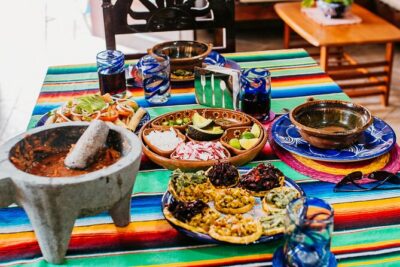
This kitchen also appears in