Review · SIENA
Siena: Pasta and Tiramisu Cooking Class with Wine
The best part of this Siena cooking class is that you make three kinds of pasta dough, not just one. You work with traditional egg pasta, local pici without eggs, and potato dough for gnocchi, then sit down to eat what you prepared with a glass of wine.
I like the relaxed teaching style and the chance to meet people from around the world over a shared meal. I also like the strong value: for $81, you get Prosecco, the class, equipment, lunch or dinner, tiramisu, and wine. The main consideration is that you make the pasta, while the restaurant prepares the sauces, and the traditional instructions focus on gluten, dairy, and eggs.
- Three doughs in one class: Learn the basic differences between egg pasta, pici, and gnocchi dough.
- Tiramisu included: Watch the chef explain the cream, then assemble your own dessert.
- English-speaking instruction: Guides such as Dennis and Natalia explain the techniques clearly and patiently.
- A social meal afterward: Sit with your group and eat the pasta and tiramisu you helped prepare.
- Comfortable year-round option: The teaching kitchen is air-conditioned, making this a useful plan on a hot or rainy day in Siena.
- Food restrictions need care: Substitutions may be possible, but cross-contamination cannot be ruled out.
A Siena Cooking Class Built Around Three Pasta Traditions
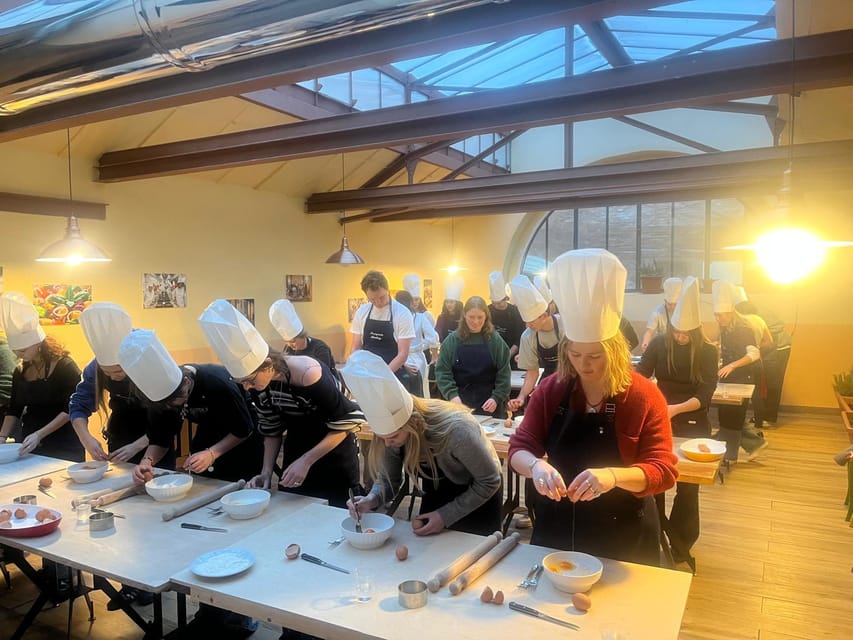
This three-hour class takes place at Trattoria Fonte Giusta, where you enter the restaurant for the activity. It is not a showy cooking demonstration with a few token tasks. You wash your hands, put on an apron, take a workstation, and get your hands into the dough.
That matters because pasta is more about feel than a fixed recipe. Flour behaves differently depending on humidity, eggs vary in size, and dough can turn sticky or dry. The instructor walks around the room and checks the texture, showing you what the dough should feel like before you roll or shape it.
The class is designed for beginners. You do not need much kitchen experience, and the instruction is given in English. Guides including Dennis and Natalia have been praised for keeping the mood light while giving clear directions. You get help when the dough needs more work, without being left to guess.
Expect a group setting, often around a dozen people, although the exact size can vary. The setup keeps each group in its own area, which helps the class move at a steady pace even when other groups are cooking nearby.
Prosecco First, Then Hands-On Work
The class begins with a welcome glass of Prosecco. It is a small touch, but it sets an easy tone before everyone starts measuring, mixing, and trying to keep flour off their clothes.
After the welcome drink, you put on an apron and move to your workstation. The chef introduces the restaurant and the basic method for working with each dough. The lesson is practical rather than technical for its own sake, so you learn details you can actually use at home.
You will likely notice that the class is as social as it is culinary. People often arrive as couples, families, or solo visitors, but the shared tables and cooking tasks make conversation easy. The final meal gives the group more time to talk, with participants from places such as the United States, Australia, Sweden, Mexico, Korea, Brazil, and other countries.
If you are traveling alone, this is a particularly sensible choice. You are not expected to arrive with a ready-made group, and the cooking gives you an easy way to meet people without forcing conversation from the start.
More Cooking Classes with Wine Tasting in Italy
- Florence: Pasta Cooking Class with Unlimited Wine
★ 4.9 · 10,285 reviews - Florence: Pasta & Tiramisu Cooking Class with Unlimited Wine
★ 4.9 · 6,708 reviews - Florence: Pasta Cooking Class with Unlimited Wine
★ 5.0 · 6,413 reviews
Traditional Egg Pasta: The Familiar Starting Point
The first dough is traditional pasta made with eggs. This is the dough most people picture when they think of fresh Italian pasta, and it gives you a useful base for understanding the rest of the class.
You mix the ingredients, work the dough, and learn to judge its consistency. The instructor shows you when it is too wet, too dry, or ready to rest and shape. That hands-on correction is more useful than simply watching a chef produce perfect dough at high speed.
The class may turn this dough into forms such as tagliatelle or ravioli, depending on the session. The exact pasta shapes are not presented as fixed for every class, so do not book expecting one guaranteed menu beyond the three dough types and tiramisu.
One practical point is easy to miss: you prepare the pasta, but the restaurant handles the sauces. This is not a weakness, but you should know what you are buying. You learn the part most home cooks find hardest, then the kitchen finishes the meal with sauces such as tomato or meat sauce.
That approach also keeps the class moving. Making pasta for a group is manageable. Cooking several sauces at the same time for a full restaurant table would slow the experience and leave you waiting.
Pici and Gnocchi Show You How Much Dough Can Change
The second dough is made without eggs for pici, the thick, rustic pasta associated with southern Tuscany. Pici is a useful local lesson because it does not look or feel like thin egg pasta. You get a better sense of how flour, water, and hand shaping create a different result.
The third dough includes potatoes for gnocchi. Potato dough has its own character and requires a lighter touch. Too much handling can make gnocchi heavy, so the chef’s demonstrations and texture checks are useful here.
Learning these three doughs side by side is one of the strongest features of the class. You are not simply repeating the same task. You see how the ingredients alter the dough and why different pasta styles call for different methods.
Some sessions also include ravioli, and one description of the meal included tagliatelle, ravioli, gnocchi, and tiramisu. Since the published details consistently focus on three doughs rather than a guaranteed shape list, treat the specific pasta forms as subject to the class flow.
The food is generous. You should not expect a small tasting plate at the end. People describe a substantial meal, with enough pasta and dessert to leave you full. On some occasions, leftovers may be offered to take away, though this should not be treated as a guaranteed part of the booking.
Tiramisu Gives You a Welcome Rest
After the pasta work, you get a chance to sit down while the chef explains tiramisu. The chef demonstrates how to make the cream and how to combine the ingredients, then you assemble your own dessert.
This part is somewhat less hands-on than the pasta. One participant specifically noted that the tiramisu was demonstrated rather than taught through every individual step. That may disappoint you if you want to prepare the entire dessert from scratch, but it also gives your legs a break after working with dough.
The tiramisu lesson focuses on the cream and construction. You see how the components are put together, then your portion is prepared for the meal. It is a good contrast to the physical work of kneading and shaping pasta.
The dessert is served at the end with the rest of your meal. You get to compare your effort with the chef’s method and leave with a clearer idea of how to repeat the dish at home.
More Pasta Making Classes in Italy:
- 3 in 1 Cooking Class near Navona: Fettuccine, Ravioli & Tiramisu
★ 5.0 · 7,376 reviews - Rome: Pasta Making Class with Wine, Limoncello, and Dessert
★ 4.9 · 3,177 reviews - Pastamania – Florence Pasta Making Class
★ 5.0 · 3,050 reviews - Rome Cooking Class: Make Pasta and 3 Spritz Cocktails
★ 5.0 · 2,937 reviews
Eating Your Pasta Is Part of the Lesson
The class finishes in the restaurant with lunch or dinner. The kitchen prepares and plates the pasta you made, adding the sauces, and you sit with the group to eat. A glass of wine is included, with red or white generally available as a choice.
This shared meal is more than a convenient ending. It lets you taste the effect of the dough after it has been cooked and sauced, which is difficult to judge while you are still standing at the workstation.
The meal also gives the activity its social character. You may begin as strangers at separate workstations and finish around the same table, comparing pasta shapes and swapping travel plans. Several people describe staying at the table for a couple of hours, enjoying the food and conversation.
The restaurant setting helps the class feel connected to Siena rather than like a detached tourist workshop. At the same time, keep your expectations sensible. You are learning basic, repeatable techniques in a group, not taking a private lesson with a chef or producing every component of a restaurant menu.
What the $81 Price Really Covers
At $81 per person, this class is fairly priced if you value a full meal and an activity. The price covers the welcome Prosecco, three hours of instruction, apron, cooking equipment, pasta and tiramisu, lunch or dinner, and a glass of wine.
Compare it with the cost of a good restaurant meal in Siena, then add the value of the class itself. You are paying for a meal plus a structured activity that gives you skills to take home. The price is less appealing if you mainly want a quick pasta dinner and have little interest in cooking.
The food quantity improves the value. This is not a class where you eat a few bites and need to find another dinner afterward. The meal is repeatedly described as substantial, and the wine and dessert are included rather than treated as extras.
You also avoid the cost and trouble of buying ingredients, renting equipment, or finding a kitchen during your stay. For a rainy afternoon, a hot summer day, or a trip where you want a break from sightseeing, the class makes practical sense.
Who Will Enjoy It Most
I would recommend this for couples, families with older children, solo visitors, and small groups of friends who want an activity with a built-in meal. It works especially well if you enjoy meeting people from different countries and do not mind sharing a workstation.
The class is suitable for different ability levels. Beginners can follow the chef step by step, while confident home cooks can pay closer attention to texture, shaping, and the differences between doughs.
It is also a good choice for a 12-year-old or similar age, provided the child can take part safely and stay engaged. Children under 3 are not accepted.
You should think twice if you want a quiet, private lesson. The group atmosphere is part of the appeal, but it also means the instructor divides attention among several people. You may need to wait briefly for help during a busy moment.
Food Restrictions Require an Honest Check
The activity information gives mixed signals that you should take seriously. It says dietary options can be discussed, but the class is listed as not suitable for vegans, people with food allergies, people with gluten intolerance, or people with lactose intolerance.
Substitutions may be available for some preferences, but the instruction remains focused on the traditional recipes, which contain gluten, dairy, and eggs. The provider cannot guarantee that food is free from cross-contamination.
Tell the activity provider about all allergies and restrictions when booking. Do not assume that a substitution makes the whole kitchen safe for a serious allergy. Vegans should not book this as their main meal, since the experience centers on traditional pasta, tiramisu, and ingredients that do not fit a vegan diet.
The class includes sampling the dishes you prepare. If you cannot safely eat the traditional ingredients, this is not the right cooking activity for you.
Timing and Practical Details in Siena
The class lasts three hours, with starting times depending on the date. It can be scheduled as lunch or dinner, so check the available time before booking and fit it around your Siena sightseeing.
You meet directly at Trattoria Fonte Giusta and enter the restaurant. Hotel pickup and drop-off are not included, so you need to make your own way there.
Wear something comfortable and suitable for cooking. An apron and equipment are provided, but pasta making can be messy, and you will be standing and working with dough for part of the class.
The air-conditioned teaching kitchen is a real advantage in summer. It also makes the class a smart backup for a wet day, when outdoor sightseeing in Siena is less pleasant. The class is conducted in English, so you should be comfortable following spoken instructions in that language.
Free cancellation is available up to 24 hours before the start time for a full refund, and you can reserve now while paying later. Those terms help if your Siena schedule is still changing.
The Best Reasons to Book, and the Reasons to Skip It
Book this class if you want to learn useful pasta basics, eat a full meal, and spend a few hours in easy company. The three doughs give you more substance than a single pasta demonstration, and the restaurant meal makes the $81 price easier to justify.
It is also a strong pick for solo visitors and anyone looking for a social activity that does not depend on nightlife. Guides such as Dennis and Natalia have been singled out for patience, humor, and clear English instruction.
Skip it if you need strict allergy control, follow a vegan diet, or want to make every part of the meal yourself. You also should not expect a private chef lesson or complete control over the sauces.
For most food-loving visitors who can eat the traditional ingredients, I would book it. You leave with practical dough skills, a better sense of Tuscan pasta, a meal, and a pleasant evening that feels more personal than simply choosing another restaurant.
FAQ
Where does the Siena pasta and tiramisu class take place?
The meeting point is Trattoria Fonte Giusta in Siena. You should enter the restaurant for the activity.
How long does the cooking class last?
The experience lasts three hours. Available starting times depend on the date you choose.
What food do I learn to prepare?
You learn three types of pasta dough: traditional pasta with eggs, local pici without eggs, and potato dough for gnocchi. You also learn how to assemble tiramisu.
Is lunch or dinner included?
Yes. The class includes a meal featuring the pasta you prepare and the tiramisu, plus a glass of wine.
Is Prosecco included?
Yes. You receive a welcome glass of Prosecco when you arrive.
Is the class taught in English?
Yes. The live guide conducts the class in English. Guides such as Dennis and Natalia lead some sessions.
Can I join if I have a food allergy or dietary restriction?
You must tell the provider about allergies and restrictions when booking. Substitutions may be available, but the traditional instruction uses gluten, dairy, and eggs, and cross-contamination cannot be guaranteed. The activity is listed as not suitable for vegans, people with food allergies, gluten intolerance, or lactose intolerance.
More Tiramisu and Dessert Classes in Italy
- Rome: 3-in-1 Fettuccine, Ravioli, and Tiramisu Cooking Class
★ 4.9 · 2,704 reviews - Florence: Cooking Class Pasta & Tiramisu Making Unlimited Wine
★ 5.0 · 2,234 reviews - Fettuccine & Tiramisù: Cooking Class with Wine & Limoncello
★ 4.9 · 2,103 reviews - Florence Cooking Class The Art of Making Gelato & Authentic Pizza
★ 5.0 · 2,053 reviews
New cooking classes around Italy
- Sestri Levante: Pesto & Cooking Classes, Wine Tasting★ 4.9 · 56 reviews
- Sardinia Cooking Class: Fresh Handmade Pasta★ 5.0 · 53 reviews
- San Gimignano: Tuscan Cooking Class★ 5.0 · 2 reviews
- San Gimignano: Truffle Cooking Class with Wine Tasting★ 5.0 · 5 reviews
- San Gimignano: “Hands in dough” Cooking Class with Lunch★ 5.0 · 6 reviews
- Salento: Authentic Cooking Experience with Fresh Pasta and Local Products★ 5.0 · 8 reviews
- Rome: Private Wine Tour and Pasta Making Class in a Winery★ 5.0 · 6 reviews
- ROME:Hands-On Lasagna & Marsala Tiramisu Cooking Experience”★ 5.0 · 3 reviews
Siena Cooking Classes, side by side.
A Brunello Cooking Class with Vineyards View Winery
Read our review →
Siena: Small group Cooking Class in Chianti Farmhouse
Read our review →