Review · DA NANG
5 Dishes Cooking Class with Market Trip in Da Nang
Da Nang’s best food lesson starts before the stove. You meet at 07 Nguyen Ba Lan Street, walk to Cho Bac My An, and learn what the herbs, vegetables, noodles, and fruits actually look like before cooking five Vietnamese dishes yourself. It is a useful way to move beyond restaurant menus and understand what is in your bowl.
I like the market visit, which gives the class a real local setting, and the broad menu: banh xeo, bun bo Hue, Hoi An fresh rolls, young jackfruit salad, and avocado ice cream. I also like that instructors such as Jenny and Chef Bora explain the steps carefully and answer questions. The main caution is that the group can reach 30 people, and one account describes a long wait and limited English from the teacher on that occasion.
Key points at a glance
- Cho Bac My An comes first: You shop at a nearby market and learn about local ingredients and possible substitutes for cooking at home.
- Five dishes fill the four-hour session: The menu covers a savory pancake, spicy noodle soup, fresh rolls, salad, and dessert.
- Jenny and Chef Bora are named instructors: Jenny is especially noted for clear explanations and an engaging teaching style.
- You eat what you make: The class ends with a shared meal and homemade rice vodka.
- Special diets can be requested: Vegetarian, vegan, and allergy needs should be included in the booking request.
- The price is $39 per person: That covers about four hours, the market visit, cooking instruction, meal, cookbook, and certificate.
Starting at 07 Nguyen Ba Lan Street
Your meeting point is at 07 Nguyen Ba Lan Street in the Bac My An area of Ngu Hanh Son, Da Nang. Plan to arrive 15 minutes before the scheduled start. The activity returns to this same point, so you do not need to arrange a separate pickup at the end.
The location is near public transportation, which helps if you are staying elsewhere in Da Nang. Still, give yourself enough time to find the exact address. A cooking class is not a good place to arrive breathless, especially when the first part takes place at the market.
The session lasts about four hours. That is long enough to include shopping, preparation, cooking, and eating without turning the day into a full-day commitment. You will want to keep the rest of your schedule fairly open, though. Five dishes require more work than a quick demonstration with one recipe.
The maximum group size is 30. That is not a tiny kitchen table, and the feel of the class may depend on the number of people booked that day. A smaller group can make it easier to ask questions and handle each recipe directly. In a full group, you may spend more time watching the instructor and sharing preparation tasks.
More Cooking Classes with a Market Tour in Vietnam
- 5 traditional dishes Da Nang cooking class with market trip
★ 5.0 · 331 reviews - Da Nang Cooking Class with Coffee Tasting and Market Visit
★ 5.0 · 310 reviews - Market Tour, Basket Boat Ride & Cooking Class by Hangcoconut
★ 4.8 · 95 reviews
Cho Bac My An: the useful first lesson
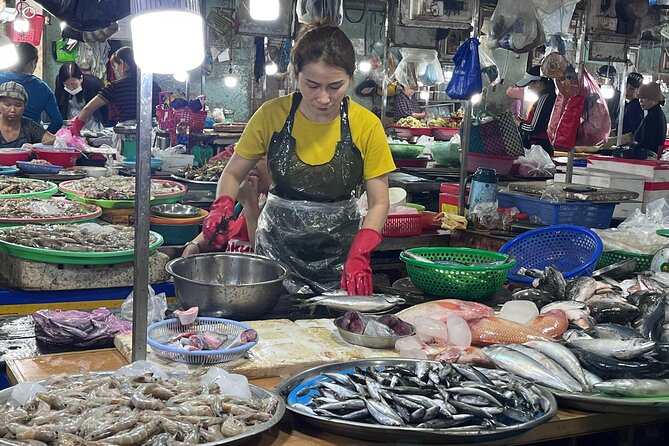
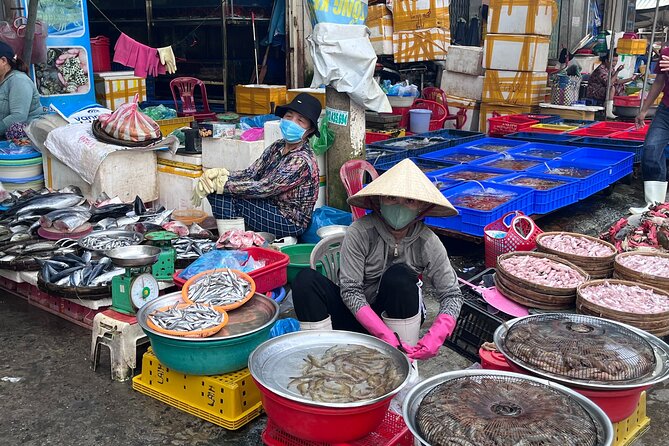
The class visits Cho Bac My An before returning to cook. This is more than a shopping errand. Vietnamese recipes often depend on ingredients that are easy to recognize once you see them, but harder to identify from an English menu or a packaged substitute.
At the market, you learn about the local ingredients used in the recipes and discuss possible replacements for ingredients you may not find at home. That information gives the cooking class lasting value. You are not only copying a dish in Da Nang. You are learning how to make sensible choices when a Vietnamese herb, fruit, or cut of produce is unavailable in your own kitchen.
The market visit also puts the menu in context. Banh xeo, fresh rolls, noodle soup, and a young jackfruit salad do not begin as isolated recipes. They depend on fresh produce and the way ingredients are selected, handled, and combined. Seeing those ingredients before cooking makes the later steps easier to understand.
This stop may be the most rewarding part for curious eaters. You can ask what an ingredient is used for, how it is chosen, and what can replace it. The available information does not promise a long guided market tour or a private shopping experience, so treat it as a focused introduction rather than a major sightseeing stop.
Five dishes, five different cooking lessons
The menu is well chosen because it covers several parts of Vietnamese cooking instead of repeating one technique five times.
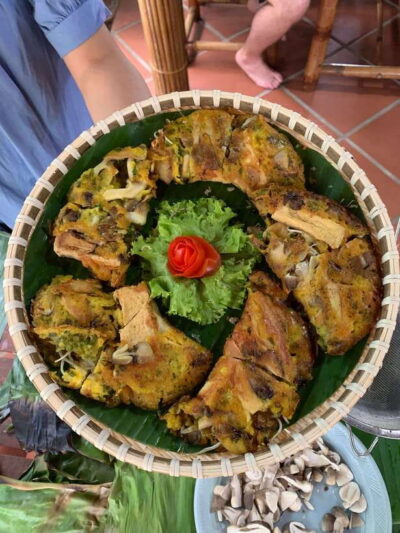
Banh xeo
Banh xeo is the savory Vietnamese pancake on the menu. It gives you a lesson in batter, cooking, and the balance between a crisp outside and a filling inside. The class is designed to let you prepare the dish rather than simply watch a cook make it.
This is a good recipe to learn in person because timing matters. A written recipe can tell you what to add, but an instructor can show you how the mixture should look and how the cooking process develops. The exact instruction style may vary with the group and teacher, so listen closely when the demonstration begins.
More Cooking Classes with a Market Tour in Da Nang:
- Da Nang Cooking: Market tour, farming, and cooking class
★ 4.8 · 13 reviews - Hanoi Cooking Class: Culture, Local Market & Meaning CSR Impact
★ 5.0 · 5,147 reviews - 5 Traditional Dishes Hanoi Cooking Class with Market Trip
★ 5.0 · 4,890 reviews - Cooking Class and Lunch at a Tuscan Farmhouse with Local Market Tour from Florence
★ 5.0 · 4,831 reviews
Bun bo Hue
Bun bo Hue brings a noodle soup from central Vietnam to the table. Its inclusion gives you a different kind of task from the pancake and rolls. You are working with a dish where the broth and the combination of noodles and other ingredients matter as much as the final garnish.
For someone trying to understand regional Vietnamese food, this is an important choice. Da Nang sits in central Vietnam, and Bun Bo Hue connects the class to the food traditions of the wider region. The supplied details do not specify every ingredient or the level of spice, so ask your instructor about those points if they matter to you.
Hoi An fresh rolls
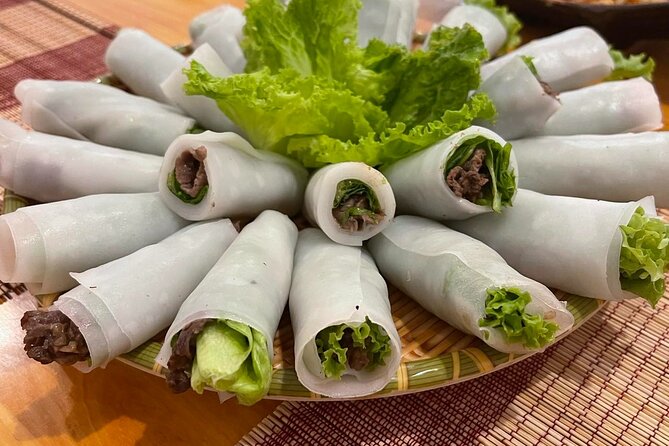
The Hoi An fresh roll is the most hands-on item for practicing assembly. Fresh rolls look simple until you try to keep the wrapper intact and arrange the filling neatly. A teacher can make this easier by showing you the correct handling method.
This dish also suits a mixed group because it offers a clear task for cooks with different levels of experience. You can focus on rolling and presentation while still learning how the ingredients work together. It is the kind of recipe you may be able to repeat at home soon after the class, especially after discussing substitutions at the market.
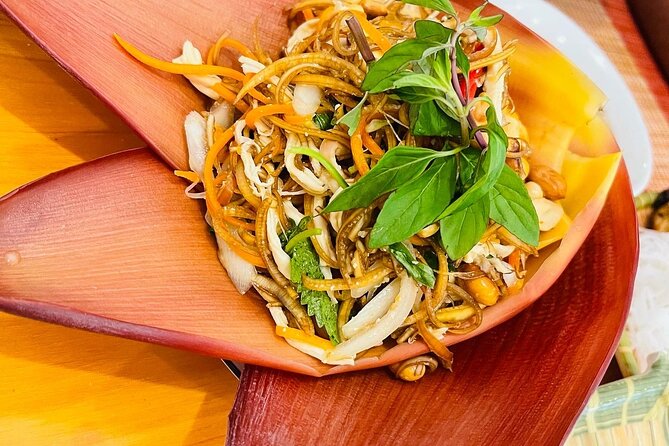
Young jackfruit salad
Young jackfruit salad adds a less familiar ingredient to the session. If you have only encountered jackfruit as a sweet fruit, this dish shows another side of it. The recipe broadens the class beyond the most familiar Vietnamese staples and gives you a reason to pay attention during the market visit.
The availability of young jackfruit may vary at home, which makes the discussion about replacements useful. Do not expect every ingredient to have a perfect substitute. The value is in learning how the dish is built and what qualities an alternative should provide.
Avocado ice cream
Avocado ice cream closes the menu with dessert. It is an unusual finish for many visitors and gives the class a sweet course without moving into a standard Western baking lesson.
Including dessert also makes the meal feel complete. After several savory dishes, you get to prepare something cool and creamy with a familiar fruit used in a less familiar way. The details provided do not state whether the class uses a machine or another preparation method, so the emphasis is best understood as learning the recipe rather than expecting a full pastry workshop.
How the teaching may feel
The strongest teaching comments concern clear explanations, careful instruction, and a fun class atmosphere. Jenny is singled out for explaining the food well and helping connect the cooking to Vietnamese food culture. Chef Bora is also named as an instructor who made the process clear and engaging.
That matters because the menu is ambitious for a four-hour class. You need an instructor who can keep the pace moving while still showing why each step matters. The best version of this class will feel like a working kitchen lesson, with you preparing food under direction instead of merely sitting through a demonstration.
English ability may vary by instructor. One account describes a teacher whose English was not very strong, although communication remained possible. That is worth keeping in mind if you need highly detailed technical explanations. Jenny and Chef Bora received specific praise for teaching, but you are not guaranteed a particular instructor unless the provider confirms one.
A maximum of 30 people also affects the teaching experience. If you prefer close, individual coaching, ask about the expected group size before booking. If you are comfortable sharing tasks and following demonstrations, the class can still offer good value even when it is busy.
The meal, rice vodka, cookbook, and certificate
After cooking, you eat the dishes together. This is a practical reward for the work and gives you a chance to taste the recipes as a complete meal rather than sampling isolated ingredients during preparation.
The class also includes homemade rice vodka. This is a small but distinctive cultural touch. If you do not drink alcohol, you can simply ask about skipping it. The supplied information does not state whether nonalcoholic alternatives are provided, so do not assume one will be available.
You receive a cookbook and certificate at the end. The cookbook adds real value because it gives you a reference for repeating the dishes at home. The certificate is more of a keepsake, but it can be a pleasant reminder of the afternoon.
The meal makes the $39 price easier to judge. You are paying for about four hours of instruction, a market visit, ingredients, five dishes, a shared meal, a cookbook, and a certificate. Compared with paying for one restaurant meal, this costs more, but it offers skills and context you cannot get from a menu.
Who will get the most from the $39 price
I would recommend this class to you if food is one of the main reasons you visit Vietnam. It offers a direct look at ingredients and cooking methods, and the menu is varied enough to keep the session interesting.
It also suits first-time cooks. You do not need to arrive with advanced knife skills or a working knowledge of Vietnamese cuisine. The instructors are there to explain the recipes and guide you through the process.
Experienced home cooks may enjoy the market component most. The cooking itself may cover familiar ideas such as mixing, wrapping, simmering, and assembling. The local ingredients and substitutions are what make the lesson more useful than a generic cooking workshop.
Families and mixed-age groups should consider the four-hour duration and group size. The range of dishes gives different people something to do, but a full class can require patience. Anyone with food allergies should include that information in the special request when booking.
Vegetarian and vegan cooks can request suitable arrangements, as can people with allergies. Make the request early and clearly. The information confirms that the provider can cater for these needs, but it does not list the exact replacement menu, so ask what will change before the class begins.
The main drawbacks to weigh
The market stop is central to the concept, but it may not operate perfectly every time. One account describes a one-hour wait caused by a delayed previous class and says the market portion was missed that day. That is a serious issue if the market is your main reason for booking.
The class may also run behind if an earlier session finishes late. Build some flexibility into your schedule, particularly if you have a flight, timed attraction, or dinner reservation afterward.
Communication can vary with the instructor. Most of the available feedback is strongly positive about the teaching, especially from Jenny and Chef Bora, but the report of limited English is useful to remember. If you want detailed answers about cooking science or exact measurements, bring questions and be ready to follow visual demonstrations.
Finally, 30 is a fairly large maximum group. You may not receive one-to-one attention at every stage. The class is best viewed as a social cooking lesson with guided participation, not a private chef consultation.
Booking and cancellation details
Confirmation is provided when you book, and the activity uses a mobile ticket. You meet at the stated address 15 minutes before the start time and finish back there.
Free cancellation is available if you cancel at least 24 hours before the local start time. Cancellations or changes made less than 24 hours ahead are not accepted for a refund. The class also requires a minimum number of participants. If that minimum is not reached and the activity is canceled, you will be offered another date or experience, or a full refund.
Should you book this Da Nang cooking class?
Book it if you want more than a meal and like the idea of learning by doing. The market visit, five-dish menu, cookbook, and shared meal give you several useful takeaways for $39. Jenny and Chef Bora are especially encouraging choices if you can confirm who will teach your session.
Think twice if you need a small class, a strict timetable, or guaranteed one-to-one English instruction. The possible 30-person group, occasional delay, and uneven communication are the main concerns.
For most food-focused visitors with four hours to spare, I would book it, but I would arrive early, list dietary needs when booking, and leave the rest of the day flexible. The class is at its best when you treat the market and kitchen as one lesson: first learn what the ingredients are, then turn them into a meal you can try again at home.
FAQ
How long does the cooking class last?
The experience lasts approximately four hours, including the market visit, cooking, and shared meal.
Where does the class start?
It starts at 07 Nguyen Ba Lan, Bac My An, Ngu Hanh Son, Da Nang 550000, Vietnam.
Where does the activity finish?
The activity ends back at the meeting point at 07 Nguyen Ba Lan Street.
Which market does the class visit?
The class visits Cho Bac My An, a nearby market where you learn about local ingredients and possible replacements.
Which dishes will I cook?
You will prepare banh xeo, bun bo Hue, Hoi An fresh rolls, young jackfruit salad, and avocado ice cream.
Can vegetarian, vegan, or allergy needs be accommodated?
Yes. Vegetarian, vegan, and allergy requests can be included in the special request when booking.
How many people can join the class?
The maximum group size is 30 participants.
What is the cancellation policy?
You can cancel at least 24 hours before the local start time for a full refund. Cancellations or changes made less than 24 hours before the start are not accepted for a refund.
New cooking classes around Da Nang
- Market Tour, Basket Boat Ride & Cooking Class by Hangcoconut★ 4.8 · 95 reviews
- HOI AN Cooking Class and Lantern Workshop★ 4.7 · 6 reviews
- Da Nang Vegetarian Cooking and coffee Class★ 4.6 · 11 reviews
- Da Nang: Cooking Pho & Vietnamese Dishes With Local Chef★ 5.0 · 5 reviews
- Da Nang Family Cooking Class – with Local Family in Da Nang★ 4.3 · 4 reviews
- Da Nang: Cooking Class and tasting Pho with Local Girl★ 5.0 · 6 reviews
- Da Nang Cooking: Market tour, farming, and cooking class★ 4.8 · 13 reviews
- Da Nang: Coffee Making And Cooking Class★ 5.0 · 7 reviews
Da Nang Cooking Classes, side by side.
5 traditional dishes Da Nang cooking class with market trip
Read our review →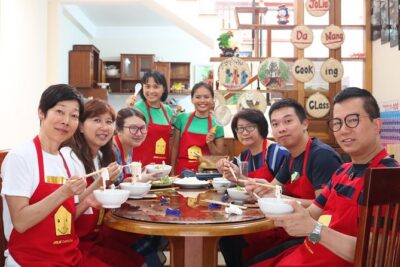
Da Nang Cooking Class with Coffee Tasting and Market Visit
Read our review →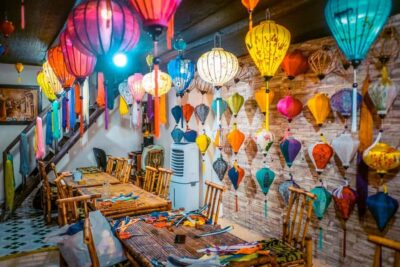
Hoi An: Lantern Making, Basket Boat, and Cooking Class
Read our review →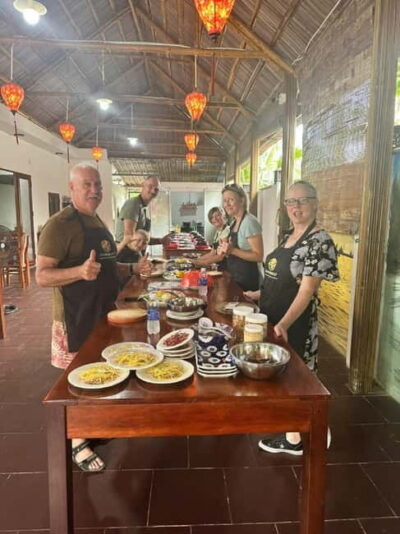
Market Tour, Basket Boat Ride & Cooking Class by Hangcoconut
Read our review →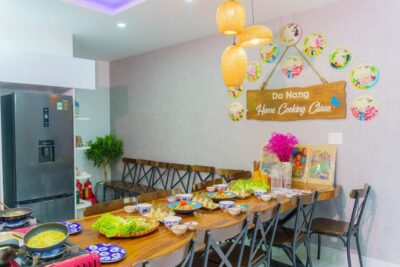
Da Nang Cooking: Market tour, farming, and cooking class
Read our review →