Review · ROME
Home Cooking in Testaccio: Cacio e Pepe, Amatriciana, Carbonara
The best part of this Rome cooking class is that you do not simply watch a chef toss pasta in a restaurant kitchen. You work in Andrea and Milvia’s home, learn their methods, and sit down afterward to eat what you made. I like the practical focus on dough, gluten, flour-to-egg ratios, and cutting techniques. I also like that you make three Roman sauces rather than just one.
The six-person maximum keeps the lesson personal, and the included wine, dessert, coffee, and recipe PDF add real value to the $95.54 price. The main consideration is the setting: this is a home visit, not a polished cooking school, and travelers with serious dog or cat allergies should choose another activity.
Key points at a glance
- Three Roman classics: Prepare cacio e pepe, amatriciana, and carbonara in one class.
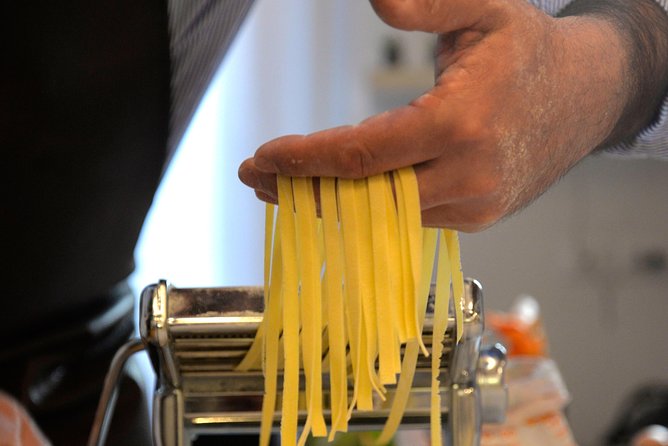
- Pasta from scratch: Mix dough, work the gluten, roll it, cut fettuccine, and make tonnarelli with a traditional machine.
- A home kitchen in Testaccio: Andrea and Milvia welcome you into their apartment for a more personal experience.
- A full meal afterward: Eat three pasta courses with unlimited local wine, homemade dessert, and coffee.
- Small group instruction: The class accepts no more than six people, with a minimum of two per booking.
- Useful take-home material: You receive recipes in PDF form, and Andrea has also sent photos to past participants.
Why this Testaccio class feels different
Rome has plenty of food tours, but this experience focuses on the part many visitors miss: how Roman food is actually made. You enter a local home in Testaccio, put your hands in the dough, and learn why the texture changes when you alter the flour, eggs, or kneading.
That matters because fresh pasta is not just a list of ingredients. Andrea and Milvia explain the role of gluten and protein, then show you how to judge the dough as you work. I appreciate that approach. It gives you a better chance of repeating the lesson at home instead of merely enjoying a pleasant meal and forgetting the method.
The class also has a generous menu. You make three separate sauces, then eat three fresh pasta courses. Cacio e pepe teaches control and timing, since cheese and pepper must form a smooth sauce rather than a clumpy paste. Carbonara requires care with heat and eggs. Amatriciana brings tomato and pork into the picture. Together, the dishes show three distinct sides of Roman pasta cooking.
The hosts are central to the experience. Andrea and Milvia are described as warm, patient, and attentive, with a relaxed way of teaching. Their home, family stories, cooking tips, and conversation are part of the appeal. This is a good fit if you want a personal meeting with local hosts, not just a class led by an instructor who moves from group to group.
More Home Cooking Classes in Italy
- Kitchen of Mamma: Pasta Cooking Class with market visit in Rome
★ 5.0 · 140 reviews - Testaccio: Home Cooking Cacio e Pepe, Amatriciana, Carbonara
★ 4.9 · 57 reviews - Rome : Cooking Class in a Real Roman Home in Trastevere
★ 5.0 · 47 reviews
Arriving in Testaccio and entering the home
The meeting point is Via Galvani 4 in Testaccio, at 00153 Roma RM. The activity begins and ends at the same place, and hotel pickup and drop-off are not included, so you need to make your own way there.
Testaccio is a sensible setting for a Roman food lesson. The neighborhood is closely tied to the city’s working food culture, and its name is familiar to anyone interested in Roman cooking. The class does not turn into a neighborhood sightseeing walk, though. The focus stays inside the home kitchen.
That can be an advantage. After a day of monuments and crowded streets, sitting down in a private apartment gives you a change of pace. One participant described the class as a welcome break from Rome’s busy energy, and I can see why. You have time to talk, ask questions, and work without the pressure of keeping up with a large group.
Do allow time to find the address. The provided meeting point is specific, but no hotel transport is offered. Confirmation arrives when you book, and the mobile ticket makes the booking easy to carry on your phone.
Mixing dough, understanding pasta, and making shapes
The lesson begins with fresh pasta dough. Rather than handing you a fixed recipe and moving on, Andrea and Milvia explain their preferred flour-to-egg ratio and how the ingredients affect the finished pasta.
You learn why gluten matters and how protein changes the dough. These details may sound technical, but they are useful. If your dough is too soft, too dry, or too tough at home, understanding the cause helps you fix it. The goal is not just to copy a Roman recipe. You are learning how the dough behaves.
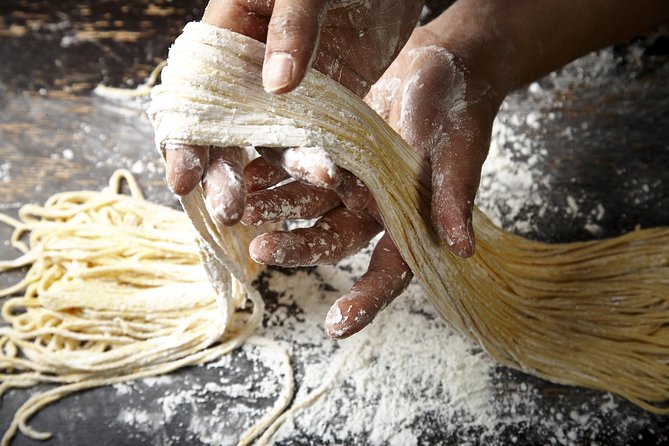
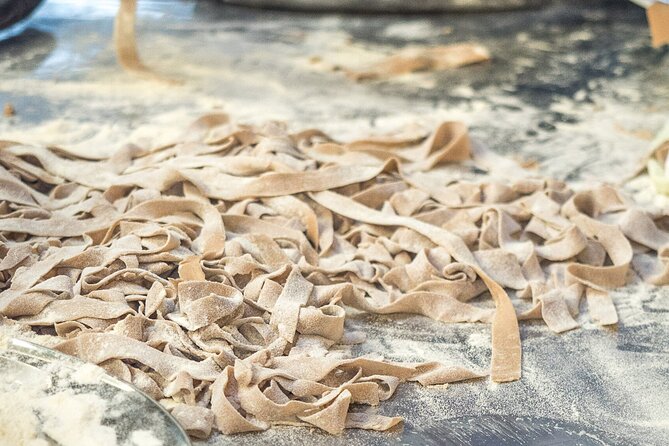
Next comes the physical work. You roll, cut, and shape the pasta yourself. Fettuccine is made by hand, and you also use a traditional pasta machine to create tonnarelli. The hands-on element is important here. You are not watching a demonstration from the back of a room, trying to see over someone else’s shoulder.
The class also gives you practice with different cutting methods. That is a small detail, but it is one of the most useful skills to take home. Fresh pasta does not need to look machine-perfect to taste good, and learning how to handle the dough gives you confidence.
Expect flour on your hands and a slower pace than a professional kitchen. That is part of the fun, but it also means the class is active. You will be standing, rolling, cutting, and paying attention. Wear comfortable clothes that you do not mind using around flour and sauce.
Three sauces, three lessons in Roman cooking
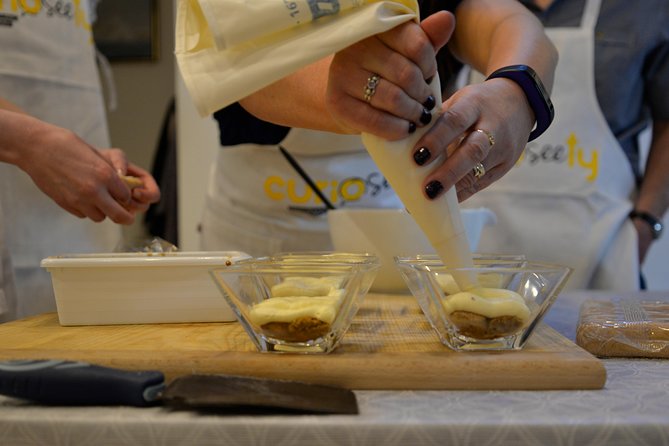
The three sauces are the heart of the class. Each one asks you to handle ingredients differently, so the menu becomes a compact lesson in Roman technique.
More Home Cooking Classes in Rome
- Rome: Market and Cooking Class at a Local’s Home
★ 4.0 · 3 reviews
Cacio e pepe
Cacio e pepe looks simple because the ingredient list is short. That simplicity leaves little room to hide mistakes. You work with cheese, pepper, and pasta water, learning how to bring them together into a smooth sauce.
This is a useful dish to learn in person. At home, it is easy to add too much heat or fail to use the pasta water correctly. Andrea and Milvia explain the steps while you prepare the sauce, giving you a method you can repeat later.
Amatriciana
Amatriciana offers a different style, with a tomato-based sauce and a stronger savory profile. It shows how Roman cooking can remain direct without needing a long ingredient list.
Making the sauce as part of a three-course meal also lets you compare textures and flavors. You are not eating the dishes as unrelated samples. You see how the sauces work with fresh pasta and how the right shape changes the bite.
Carbonara
Carbonara is often the dish people most want to master, and it is easy to understand why. The eggs, cheese, and heat need to be managed carefully. Too much heat can turn the sauce into scrambled egg, while too little may leave it loose.
The class gives you a chance to see the process at close range and ask questions as you work. One participant singled out the carbonara as especially delicious, but the more useful takeaway is the confidence to attempt it yourself. After the lesson, you receive recipes in PDF form, which makes the class more practical than a meal you simply remember.
Vegetarian requests can be accommodated, according to the available information. You should provide dietary requirements when booking rather than waiting until you arrive. The class is built around pasta and sauces, so anyone with a serious allergy needs to think carefully before reserving.
Sitting down to eat what you made
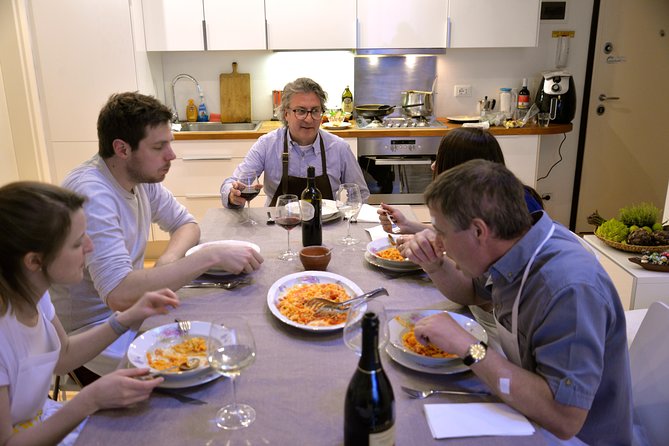
Once the cooking is complete, the lesson becomes a three-course lunch or dinner, depending on the start time. The menu is the three fresh pasta courses: cacio e pepe, amatriciana, and carbonara, followed by dessert.
Wine is included without a stated limit, along with coffee and dessert. That makes the price easier to assess. At $95.54 per person, you are paying for about three hours of instruction, a full meal, drinks, recipes, and a small group rather than a quick pasta demonstration.
The meal also gives you time to talk with Andrea and Milvia. The social side is not an afterthought. Past participants have enjoyed hearing about their lives, Roman customs, and cooking traditions while sitting at the table. You may also find the hosts sharing family stories and small tips that would not appear in a standard recipe.
Dessert varies in the details, but the experience includes a homemade dessert and coffee. Some meals have included items such as a homemade tiramisu-style dessert and additional fried foods, though you should not assume every date will have exactly the same extras. The confirmed menu is the three pasta courses, dessert, wine, and coffee.
The timing is worth considering. A three-hour food activity can feel substantial, especially after eating several pasta courses. A midday booking may suit you if you want to walk afterward and keep the evening free. An evening class works well if you want your cooking lesson to serve as dinner.
Group size, hosts, and the home setting
The maximum group size is six, and that is one of the strongest practical features. With a small class, you can get help with dough, ask about sauce texture, and see the cutting techniques without fighting for attention.
The minimum booking requirement is two people. Solo participants cannot book this activity on their own under the stated conditions, so keep that in mind if you are traveling alone.
Andrea and Milvia receive the most consistent praise for their warmth and patience. They are not presented as distant professionals who deliver a fixed lecture. They welcome you into their home, cook alongside you, and share time at the table afterward.
That intimacy will not suit everyone. Some people prefer a commercial cooking studio with bright counters, a set layout, and a more formal structure. Here, the home setting is the main attraction. You should book it because you want that personal feel, not despite it.
The home also has a dog, and the information specifically says the class is not recommended for people with serious allergies to dogs and cats. Service animals are allowed. If you have a dietary need, allergy, or accessibility concern, contact the provider before booking so you can confirm that the setting works for you.
Is $95.54 a fair price?
I consider the price reasonable for what is included. You receive roughly three hours of instruction, fresh pasta practice, three sauces, three pasta courses, dessert, coffee, unlimited wine, and recipes. The small group adds value because you are paying for direct participation rather than a seat in a large demonstration.
You also get something difficult to price: access to a local couple’s home and conversation. That does not replace a restaurant meal, but it gives the experience a personal quality that a standard dinner cannot provide.
The value is strongest for people who will use the recipes afterward. If you only want to eat pasta and have a glass of wine, Rome offers cheaper options. If you want to learn techniques you can repeat, the cost makes more sense.
The class is also a good choice for mixed skill levels. Beginners can learn the basics, while experienced home cooks may still pick up new methods for dough, cutting, and sauce timing. One Italian participant with cooking experience found the techniques useful, which suggests the lesson is not aimed only at first-timers.
Who should book this Roman cooking class?
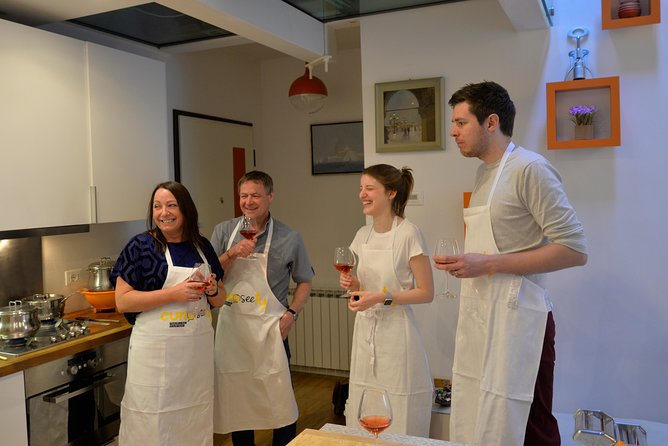
I would choose this experience for couples, families with adult children, and small groups of friends who enjoy cooking and conversation. It also suits anyone who wants a quieter activity between major Rome sights.
You should book it if you want:
- A true hands-on lesson rather than a demonstration
- Classic Roman pasta dishes in one sitting
- A small group capped at six people
- A home setting with local hosts
- Recipes to take home
- Wine and a full meal included
Think twice if you have a serious allergy to dogs or cats, dislike home-based activities, or need a highly controlled professional kitchen. You should also provide dietary requirements in advance. Vegetarian versions have been accommodated, but you should confirm your specific needs before the class.
The activity is offered in English, which makes the instruction accessible to English-speaking visitors. Confirmation is provided at booking, and the mobile ticket is convenient for meeting the hosts.
Final verdict: book it for the pasta, stay for the welcome
This is a strong choice if you want to learn Roman cooking in a personal setting. The three sauces give the class a clear focus, while the dough work and pasta shapes make it genuinely hands-on.
I especially like the balance of instruction and meal. You learn why the pasta works, prepare it yourself, and then sit down to taste the results with wine, dessert, and coffee. Andrea and Milvia add the human touch that makes the class feel less like a scheduled activity and more like an invitation into a Roman home.
Book it if you value local conversation, practical cooking skills, and a small group. Skip it if you want a formal studio, a quick demonstration, or a sightseeing tour. For most pasta lovers, the combination of three classic sauces, a full meal, and personal teaching makes this one of the more worthwhile food experiences in Rome.
FAQ
Where does the pasta class take place?
The class takes place in a local home in Rome’s Testaccio neighborhood. The meeting point is Via Galvani 4, 00153 Roma RM, Italy.
How long does the experience last?
The cooking class and meal last approximately three hours.
What pasta dishes will I make?
You will make fresh pasta and prepare cacio e pepe, amatriciana, and carbonara. The class includes fettuccine and tonnarelli techniques.
Is the class taught in English?
Yes. The experience is offered in English.
How many people can join the class?
The maximum group size is six people. A minimum of two people is required per booking.
Are wine, dessert, and coffee included?
Yes. The experience includes unlimited wine, a homemade dessert, and coffee, along with the three pasta courses.
Is hotel pickup or drop-off provided?
No. Hotel pickup and drop-off are not included. The activity ends back at the meeting point.
Can I request a dietary adjustment?
You should provide dietary requirements when booking. Vegetarian requests have been accommodated, but specific needs should be confirmed in advance. The class is not recommended for people with serious dog or cat allergies.
More Pasta Making Classes in Rome
- 3 in 1 Cooking Class near Navona: Fettuccine, Ravioli & Tiramisu
★ 5.0 · 7,376 reviews - Rome: Pasta Making Class with Wine, Limoncello, and Dessert
★ 4.9 · 3,177 reviews - Rome Cooking Class: Make Pasta and 3 Spritz Cocktails
★ 5.0 · 2,937 reviews - Rome: 3-in-1 Fettuccine, Ravioli, and Tiramisu Cooking Class
★ 4.9 · 2,704 reviews
New cooking classes around Rome
- ROME:Hands-On Lasagna & Marsala Tiramisu Cooking Experience”★ 5.0 · 3 reviews
- Rome: Vatican Food Tours, Cooking classes & Free Tours★ 4.9 · 11 reviews
- Rome: Traditional Pasta, Spritz & Tiramisu Cooking Class★ 4.9 · 279 reviews
- Rome: Trastevere Pasta Making Class★ 4.9 · 33 reviews
- Rome: Traditional Pasta and Tiramisu Cooking Class★ 5.0 · 4 reviews
- Rome: Small Group Pasta cooking class near Piazza Navona★ 4.9 · 8 reviews
- Rome: Traditional Cooking Class in the Jewish Ghetto★ 4.9 · 75 reviews
- Rome: “Rooftop Pasta and Cocktails Cooking Class”★ 5.0 · 12 reviews
Rome Cooking Classes, side by side.

3 in 1 Cooking Class near Navona: Fettuccine, Ravioli & Tiramisu
Read our review →
Rome: Pasta Making Class with Wine, Limoncello, and Dessert
Read our review →
Rome Cooking Class: Make Pasta and 3 Spritz Cocktails
Read our review →
Rome: 3-in-1 Fettuccine, Ravioli, and Tiramisu Cooking Class
Read our review →
Rome: Fettuccine Pasta Cooking Class in Rome’s City Center
Read our review →
Fettuccine & Tiramisù: Cooking Class with Wine & Limoncello
Read our review →
Pasta Cooking Class Near the Colosseum with 3 Spritz Cocktails
Read our review →