
Review · SEMINYAK
Nia Balinese Cooking Class
Nia Balinese Cooking Class turns a morning in Seminyak into a full Balinese food lesson, beginning at the market and ending with a large shared lunch. You will see ingredients where they are sold, then help prepare dishes such as Ayam Betutu wrapped in banana leaves and Nasi Goreng.
I like the market visit because it gives the spices and produce a real setting, not just a row of bowls on a classroom table. I also like the generous finish: you prepare several dishes, eat lunch, receive a recipe book and certificate, and may leave with new friends. The main drawback is the length. Five hours on your feet, often in heat, can feel long if you prefer a quick, small-group lesson.
Key points to know before booking
- Traditional market first: The morning begins around 8:00 or 8:30 am with a look at local ingredients and food culture.
- Nine dishes, sometimes more: The planned class covers nine dishes, while some sessions have prepared 10 or 11.
- Shared cooking and dining: You work as a group on common dishes rather than making a private portion from start to finish.
- A full meal is included: Lunch consists of the food made during class, so arrive ready to eat well.
- Guides bring plenty of energy: Chefs and hosts including Tommy and Chef Komang have led lively, hands-on sessions.
- No ride back is included: The class ends at the starting point, and staff can help you arrange transport afterward.
A market morning near Seminyak Square
The meeting point is Warung Nia Balinese Food & Pork Ribs at Kayu Aya Square, on Jl. Kayu Aya No. 19-21. The class starts at 8:00 am, with the market visit described as beginning at about 8:30. Check your booking details for the exact morning schedule and arrive early.
The opening stop covers Seminyak Square and the nearby Flea Market Seminyak area. The market portion is more than a shopping detour. You see the ingredients in the place where local people buy them, then meet many of those ingredients again at the cooking station.
This matters because Balinese cooking depends on combinations of fresh produce, spices, herbs, chilies, and pastes. Seeing them before the class gives you a better sense of how the food begins. It is one thing to hear about an ingredient. It is another to see it among the other foods and learn how it fits into daily cooking.
The market can also be busy. Large classes may move through the stalls in a group, and the heat and early activity are part of the setting. If you prefer a quiet guided shopping trip, this may feel crowded. If you want a direct look at local food buying, it adds useful context.
Some class sessions use taxis to move between the restaurant and market. Private transportation is not included, so do not assume you will have a dedicated vehicle. The staff can assist with transport, but the tour does not provide a drop-off service at the end.
More Balinese Cooking Classes around Indonesia:
- Ubud: Balinese Cooking Class at an Organic Farm
★ 5.0 · 1,786 reviews - Ubud Cooking Class Bali with Balinese Chef
★ 5.0 · 1,609 reviews - PRIVATE Authentic Balinese Cooking Class in Ubud at Putu’s Home
★ 5.0 · 644 reviews
From banana leaves to Balinese spice pastes
After the market, you return to the cooking venue for a drink and snacks before the hands-on work begins. This small pause helps because the class is not a short demonstration. You will spend much of the morning preparing, cooking, tasting, and moving on to the next dish.
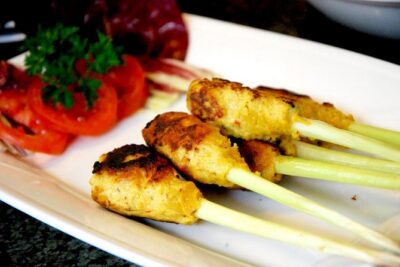
The program is built around about nine dishes. The food list specifically includes Ayam Betutu and Nasi Goreng, and the class also covers fresh pastes and other Balinese recipes. Some sessions have included 10 or 11 dishes, so the exact count may vary.
Ayam Betutu is a particularly useful lesson. The dish is wrapped in banana leaves, and the folding method is part of the instruction. That kind of detail gives you something practical to take home. You are not only tasting a finished dish. You are seeing how presentation and cooking technique work together.
The class uses a shared format. Participants jointly prepare dishes that are later served to the group. Staff may take a prepared dish away to finish it while you begin the next recipe. This keeps a large menu moving, but it also means you may not personally complete every dish from raw ingredients to final serving.
That structure is worth understanding before you book. If you want to cook one or two dishes slowly, with close attention to your own portion, this is not the best match. If you want an overview of Balinese food and the chance to take part in many recipes, the format gives you more variety.
A lively class with Tommy or Chef Komang
The tone depends partly on the chef leading your session. Tommy has been praised for his humor, energy, and ability to make the class feel social. Chef Komang has also led sessions, handling the group while explaining the recipes and keeping the work moving.
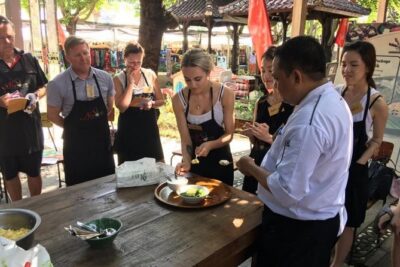
The teaching style is active rather than formal. You will chop, mix, prepare pastes, use the cooking stations, and help produce the meal. The staff also help with cleaning and resetting the work areas, which keeps the class from bogging down between recipes.
A maximum of 15 participants is listed, although one account described a session with two groups of 16 to 20 people. Group size may therefore vary by date or operating arrangement. Ask if the size matters to you, especially if you want close access to the chef.
The class can feel like a cooking party, with jokes and conversation among people from different countries. That social side is a strong reason to choose it over a private lesson. It is less suited to someone who wants silence, detailed one-to-one coaching, or a highly polished culinary school atmosphere.
Plan to be on your feet for more than five hours. The class runs from the early morning meeting time until around 1:00 pm, though the exact finish can shift. Bali heat adds to the effort, so wear light clothing and practical shoes. The available information does not promise air conditioning or a specific kitchen setup, so do not book this as a restful indoor activity.
The meal is the payoff
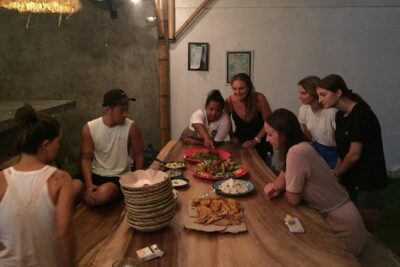
The food you prepare becomes lunch. This is not a tiny tasting menu. You should expect a large spread, and the best advice is to arrive hungry.
Snacks and drinks come before the main cooking, so you will not be left without anything to eat. Still, avoid a heavy breakfast if you want to sample the full result. The meal is a chance to compare the dishes and see how the separate pastes, herbs, and cooking methods work together.
I like this format because the lunch has a clear purpose. You get to eat the food you helped make, rather than watching a chef prepare dishes that appear without explanation. It also lets you talk with the people at your table and compare what you noticed during the class.
The shared meal has a tradeoff. You may not control every dish or every finishing step, and you may find that staff complete some cooking while you move on. But the amount of food makes the $45 price easier to justify, especially when lunch, instruction, a recipe book, a certificate, and the market visit are all included.
More cooking classes around Indonesia:
- From Ubud: Authentic Cooking Class in a Local Village
★ 4.9 · 1,325 reviews - Ubud: Cooking Class with Transfers and Optional Market Visit
★ 4.9 · 824 reviews - Balinese Ubud cooking school (9 Dish Cooking and Market Tour)
★ 5.0 · 540 reviews - Ubud: Balinese Cooking Class and Market Tour
★ 4.8 · 531 reviews
What the $45 price really covers
At $45 per person, this is not the cheapest way to eat in Bali. You could buy an inexpensive local meal for far less. The value comes from the package: roughly five hours of activity, a market tour, cooking instruction, snacks and drinks, a substantial lunch, recipes, and a certificate.
The class also gives you a useful food lesson rather than only a meal. You learn how ingredients are found, prepared, combined, and presented. If you cook at home, the recipe book gives the experience a life beyond your Bali stay.
The value is strongest for first-time visitors to Balinese cuisine, food-focused visitors, and people who enjoy social activities. It is weaker if you already know the dishes well, dislike group cooking, or want a short class. One person felt that fewer dishes and a three-hour format would have been better. That is a fair criticism, especially if your Seminyak schedule is tight.
The activity has been booked frequently and carries a 4.9 rating from 202 reviews, with 99 percent recommending it. Those numbers suggest strong consistency, but they do not remove the main practical questions: Can you manage five hours on your feet? Are you happy sharing dishes? Do you want a full lunch rather than a brief tasting?
Useful items to bring and plan
You do not need to bring ingredients or cooking equipment. The class supplies the food and the cooking setting. A mobile ticket is accepted, and confirmation is provided when you book.
Bring a bottle of water, though water is also provided in at least some sessions. Wear clothes you do not mind cooking in, and choose shoes that are comfortable for the market and kitchen. The class may involve heat, knives, standing, and repeated movement.
If you want to shop for ingredients afterward, the market area and Flea Market Seminyak make that possible. Be careful with food customs rules if you plan to take ingredients home. Rules differ by country, so check them before buying anything. The class information also notes that you should not book if you have a vitamin allergy.
The activity is near public transportation, but the included service does not cover private transport or drop-off. You finish back at the meeting point. Staff can help arrange a ride, but budget time and money for your onward journey.
Cancellation and weather details
You can cancel up to 24 hours before the local start time for a full refund. Changes or cancellations made within 24 hours are not accepted for a refund.
The activity depends on good weather and a minimum number of participants. If poor weather or low enrollment cancels the class, you are offered another date or experience, or a full refund.
Who will enjoy this class most
I would choose Nia for someone who wants food to open a door into Balinese daily life. The market makes the class feel connected to Seminyak rather than sealed inside a restaurant. The recipes, lunch, and group format make it easy to meet people and keep the morning active.
It also suits couples, friends, and solo visitors who like joining a social table. The upbeat hosts, including Tommy and Chef Komang, bring a friendly tone, and the certificate and recipe book give you simple souvenirs that are more useful than another trinket.
Families may enjoy the activity, but the supplied information does not give a minimum age or child price. Ask before booking if you are traveling with children. Anyone with a food or vitamin allergy should also confirm suitability in advance.
I would think twice if you have limited mobility, dislike heat, or need a short activity. The schedule can run beyond five hours, and the cooking is shared rather than tailored to your pace. The class is also not a private culinary lesson.
Should you book Nia Balinese Cooking Class?
Book it if you want a full morning of Balinese food, a market visit, a generous lunch, and plenty of group interaction for $45. The strongest parts are the local-market context, the large range of dishes, the energetic teaching, and the chance to eat what you prepare.
Skip it if you want a quiet, compact lesson or need full control over each recipe. For everyone else, this is a practical way to turn a meal into a cultural activity. Arrive early, eat a light breakfast, wear comfortable shoes, and leave room in your afternoon because you may finish very full.
FAQ
Where does the Nia Balinese Cooking Class start?
It starts at Warung Nia Balinese Food & Pork Ribs, Kayu Aya Square, Jl. Kayu Aya No. 19-21, Seminyak, Bali.
What time does the class start?
The stated start time is 8:00 am. The market visit is described as beginning around 8:30 am.
How long does the activity last?
The activity lasts about five hours. Some sessions finish shortly after 1:00 pm.
Is lunch included?
Yes. Lunch is included and consists of food prepared during the class.
How many dishes will I cook?
The planned class includes nine dishes. Some sessions have prepared 10 or 11 dishes, so the exact number can vary.
Will I visit a traditional market?
Yes. The morning includes a visit to a traditional market, with stops connected to Seminyak Square and the Flea Market Seminyak area.
Is transportation included?
Private transportation and drop-off transport are not included. Staff can assist you with arranging transport, and some sessions use taxis for the market transfer.
What do I receive after the class?
You receive a cooking class certificate and a recipe book. Snacks, drinks, and lunch are also included.
Can I cancel for a full refund?
Yes, if you cancel at least 24 hours before the local start time. Cancellations made less than 24 hours before the start are not refunded.
New cooking classes around Indonesia
- Seminyak: Vegetarian Cooking Class★ 5.0 · 3 reviews
- Seminyak : cooking class traditional food bali★ 5.0 · 5 reviews
- Quad ride, waterfalls & aunthentic cooking class in munduk★ 4.9 · 53 reviews
- Pure Bali Village Experience Cooking & Jamu Class, Transfer★ 4.8 · 5 reviews
- Ubud: Organic Farm Harvest, Bali Cooking Class by Pemulan★ 4.8 · 12 reviews
- packages cooking class and romantic dinner in a local home★ 5.0 · 4 reviews
- Nusa Dua: Balinese Cooking Class with Market Tour★ 5.0 · 4 reviews
- Bali: Balinese Cooking Class and Market Tour★ 4.8 · 19 reviews
Seminyak Cooking Classes, side by side.
Cooking class in the comfort of your own personal villa. Yes, I’ll come to you!
Read our review →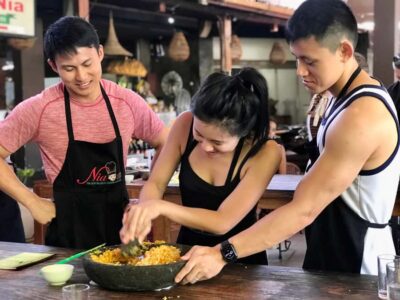
This kitchen also appears in