Review · LECCE
Lecce: Pasta Making Class in 1400s-Era Courtyard with Wine
Lecce’s most memorable cooking lesson happens in a 1400s-era courtyard at the Faggiano Archaeological Museum, where you work flour and water into pasta under the watchful eye of local cooks. You shape orecchiette and Sagne, then sit down with wine and the group to eat what you made.
I like the setting, which gives the class a sense of place that a modern cooking studio cannot match. I also like the hands-on teaching: the cooks show you each movement, correct your technique, and let you keep trying until the shapes look right.
The main thing to consider is the group size. Classes can reach about 20 people, so the room may feel crowded and personal attention can vary. The atmosphere is lively, but this is a shared social activity rather than a quiet private lesson.
Key points at a glance
- Historic setting: Make pasta inside the Faggiano Archaeological Museum on Via Ascanio Grandi 58, in a courtyard dating to the 1400s.
- Two Apulian shapes: Learn how to form orecchiette and Sagne, with some sessions also described as making maccheroni.
- Local instruction: Italian cooks lead the practical work, with support in Italian, English, and French.
- Dinner included: Eat the pasta you prepare and enjoy wine, with some sessions also including snacks or dessert.
- Social format: Expect a lively group class, often with people from several countries.
- Good value: At $68 per person for 2.5 hours, the price covers instruction, the venue, cooking equipment, pasta, and wine.
Why this pasta class feels different in Lecce
Lecce is famous for its warm honey-colored stone, ornate churches, and easygoing evening life. This class adds something more personal: you do not just order a plate of Apulian pasta, you learn how local pasta is made and then eat your own work.
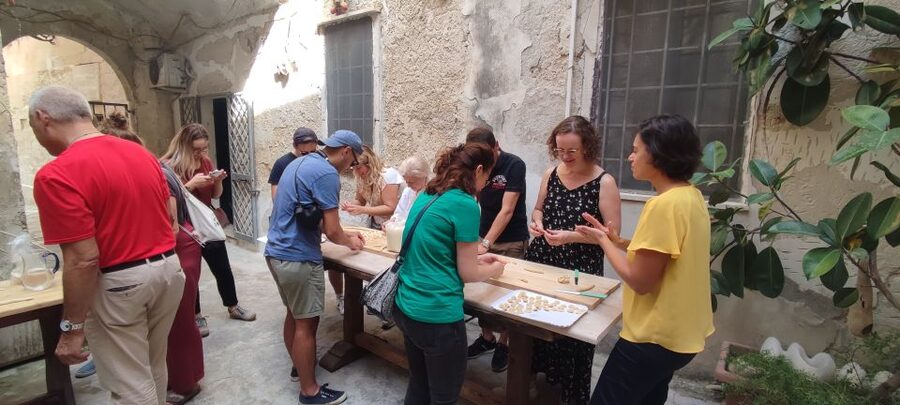
The location matters. The lesson takes place at the Faggiano Archaeological Museum, a family-run museum in the center of Lecce. The courtyard dates to the 1400s and gives the evening an atmospheric backdrop. You are cooking in a place with age and character, not in a generic room arranged only for tourists.
I like that the activity connects food with Salento culture. Orecchiette is one of Puglia’s best-known pasta forms, but the shape is harder to make than it looks. The local cooks make it appear simple, using quick, practiced movements. When you try it yourself, you learn why hand-shaped pasta takes patience.
The class also has a strong social side. You work beside other people, compare shapes, laugh over mistakes, and later share a meal at the same tables. If you are visiting Lecce alone or want an easy evening activity with other people, this format can be especially useful.
More Cooking Classes with Wine Tasting in Italy
- Florence: Pasta Cooking Class with Unlimited Wine
★ 4.9 · 10,285 reviews - Florence: Pasta & Tiramisu Cooking Class with Unlimited Wine
★ 4.9 · 6,708 reviews - Florence: Pasta Cooking Class with Unlimited Wine
★ 5.0 · 6,413 reviews
Arriving at the Faggiano Archaeological Museum
You meet directly at Via Ascanio Grandi 58, at the Faggiano Archaeological Museum. Transport is not included, so you need to make your own way to the central Lecce meeting point.
The museum setting is part of the appeal, but do not expect a standard museum visit followed by a cooking lesson. The main focus is the class itself, held in the historic courtyard and kitchen area. The courtyard gives you a memorable setting while the instructors organize the food and equipment.
Bring a passport or ID card, as this is listed among the things you need for the activity. The tour runs rain or shine, so the weather does not automatically change the plan. If the minimum number of people is not reached, the class can be canceled, with notification and a refund.
The meeting point is central, which makes this easier to fit into an evening in Lecce. You can arrange your own transport and arrive at the museum without needing a separate pickup. Check the exact starting time when booking, since availability can vary.
Mixing flour and water with the local cooks
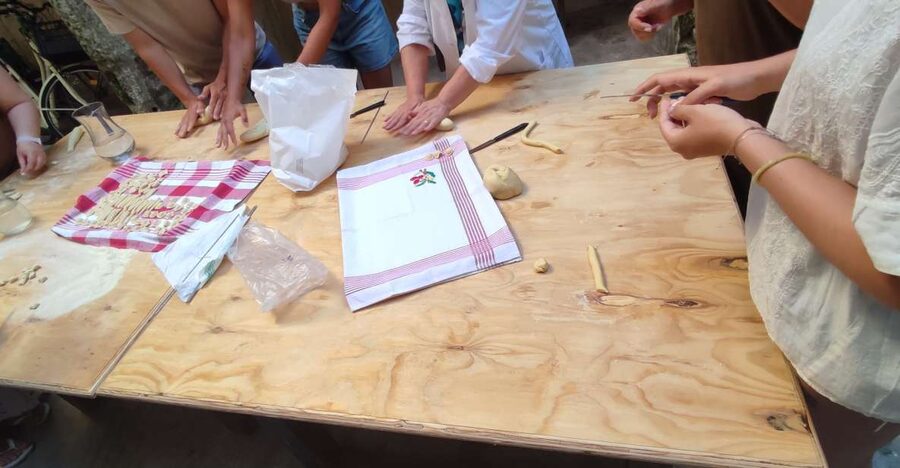
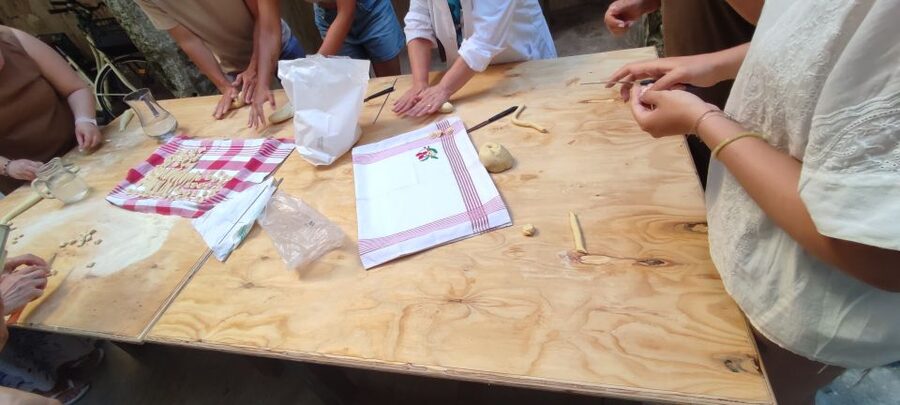
The class begins with the basic dough. You learn how to mix flour and water, work the mixture, and use the available tools. The process is simple in theory, but the shaping requires more control than many people expect.
This is where the local instructors make the difference. Cooks such as Nonna Teresa guide the group through the movements, while people such as Luciana and Therese help explain the steps in clear English. Other sessions have included Italian cooks and multilingual guides, so language support is available in Italian, English, and French.
The teaching style is practical rather than formal. You watch, copy the movement, and ask for another explanation if your dough does not behave. Past sessions have included patient instruction and plenty of correction, although one important lesson is that the cooks may be direct when a piece of pasta needs fixing.
That directness can be useful. Orecchiette gets its name from its small ear-like shape, but producing a neat, thin piece with the right hollow takes practice. The cooks know the technique by feel and can show you where your fingers should press and how to shape the dough.
I would not book this expecting to master pasta in one sitting. You should book it if you want to understand the process, have a go with your own hands, and leave with a technique you can keep practicing at home.
Shaping orecchiette and Sagne
The main lesson focuses on typical Apulian pasta, especially orecchiette and Sagne. Several sessions are also described as teaching maccheroni, so the second shape may be presented under slightly different wording depending on the class.
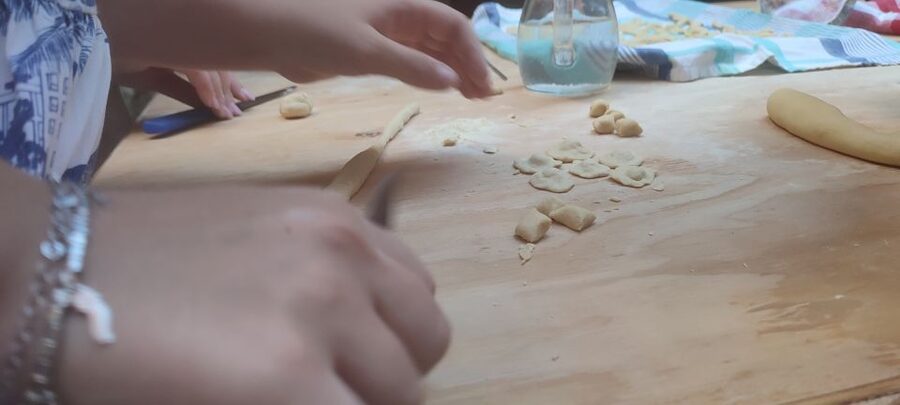
Orecchiette is the more famous of the two. You form small pieces of dough and shape them into the familiar round, cupped pieces. Sagne is another pasta style associated with Puglia and is described here as a variety made in the region and enjoyed well beyond it.
Do not be surprised if the shapes look uneven at first. That is part of the fun, and the instructors expect beginners to need help. The cooks can make pasta quickly, but you are given time to work through the motions and improve.
I like this part of the class because it gives you a useful glimpse of everyday food traditions. The lesson is not only about a recipe. It shows how a small amount of flour and water can become a meal through handwork, repetition, and local technique.
The class is also suitable for families. A past session included children aged 10 and 14 who enjoyed the practical nature of the activity. Since the work is hands-on and social, it can keep older children engaged better than a lecture or food demonstration.
More Pasta Making Classes in Italy:
- 3 in 1 Cooking Class near Navona: Fettuccine, Ravioli & Tiramisu
★ 5.0 · 7,376 reviews - Rome: Pasta Making Class with Wine, Limoncello, and Dessert
★ 4.9 · 3,177 reviews - Pastamania – Florence Pasta Making Class
★ 5.0 · 3,050 reviews - Rome Cooking Class: Make Pasta and 3 Spritz Cocktails
★ 5.0 · 2,937 reviews
Waiting with wine, snacks, and conversation
Once the pasta is prepared, it needs to cook. That pause becomes part of the evening rather than dead time. You can have wine, talk with the other participants, and enjoy the courtyard while the meal is finished.
Some sessions have included snacks, an aperitivo, and dessert along with the wine. The exact food served beyond the pasta may vary, so I would treat those extras as part of the atmosphere rather than the main reason to book.
The wine is an important part of the social rhythm. This is not a lesson where everyone makes pasta and immediately leaves. You prepare the food together, wait together, and then sit down together. People have joined from several countries, creating an easy setting for conversation.
The group format has a clear tradeoff. A class of around 20 people can feel energetic and welcoming, but it can also make the work area crowded. If you want a private lesson with constant one-to-one instruction, this is not the right format. If you like meeting people and sharing a meal, the size can add to the evening.
Eating the pasta you made
The final meal is the payoff. You eat the fresh pasta prepared during the class, usually with a simple preparation that lets the handmade texture do most of the work. One session described pasta served with tomato and basil, while others mention wine, snacks, and dessert.
There is pleasure in eating food you have just shaped yourself. Even imperfect pieces feel rewarding, and you understand the work behind a dish that can look effortless on a restaurant menu.
The meal is served as a shared group experience. You are not simply handed a takeaway box or a quick tasting plate. You sit with the people from the class, continue the conversation, and enjoy the results together.
This makes the activity a good choice for an evening in Lecce. It combines a short cultural lesson, a creative task, a meal, and a chance to meet people without requiring a full day away from the city.
The instructors and language support
The class is led by professional local cooks, with guides helping the group follow the instructions. Names that appear in the experience include Luciana, Therese, Nonna Teresa, and Enrica, although the staff may differ by date.
Luciana and Therese have been praised for clear English, friendly direction, and close attention to the quality of the pasta. Nonna Teresa is associated with the hands-on instruction and the traditional cookery side of the session. Enrica has also led sessions with a warm, engaging approach.
The language options are Italian, English, and French. That does not mean every instructor speaks all three languages, so the guide usually helps bridge the conversation and explain the steps to the full group.
The best part of the teaching is the combination of demonstration and correction. You are not left to copy a recipe from a card. You see the technique, try it, and receive help when your shape is too thick, too flat, or not properly formed.
Is $68 a fair price?
At $68 per person, this is not the cheapest meal you could have in Lecce. You could spend less on a plate of pasta in a local restaurant. But the price covers more than dinner.
You receive about 2.5 hours of instruction, use of the cooking equipment, guidance from local cooks, the historic museum setting, the pasta you make, and wine with the meal. Some sessions have also included snacks or dessert. When you place those parts together, the price is reasonable for a central, hosted evening activity.
The value is strongest if you care about participation. If you only want to eat traditional pasta, a restaurant will be simpler and possibly less expensive. If you want to learn the method, meet other people, and spend time in a historic courtyard, the class offers more than a standard meal.
The high overall rating of 4.7 from 369 reviews supports the idea that the experience usually delivers what it promises. Still, the large-group format is the main limit to keep in mind. You are paying for a lively shared class, not a private chef.
Who should book this activity?
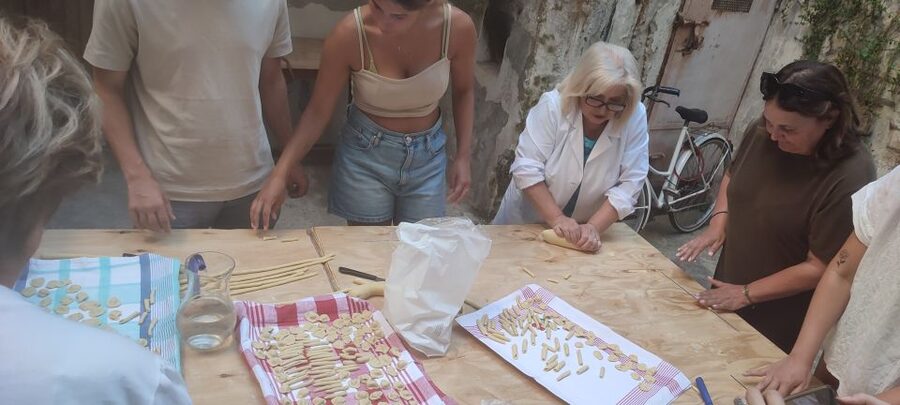
I would recommend it to couples, families with older children, solo visitors, and friends who want a relaxed evening with a practical focus. It works particularly well if you enjoy food, like meeting people, or want an activity that feels more connected to local life than a simple restaurant reservation.
It is also a good option for anyone who has never made pasta before. You do not need to arrive with special skills. The cooks show you what to do, and mistakes are part of learning.
You may want to skip it if you dislike group activities, have limited patience for repetitive handwork, or want a polished private dining experience. The class can be busy, and the pasta shapes take effort. The cooks may be good-natured but firm when they want you to improve.
The activity is listed as wheelchair accessible, which makes it more practical for many visitors. You should still confirm the arrangements for your particular date if you have specific access needs.
Practical details before you book
The experience lasts 2.5 hours, and you should allow enough time to reach the museum at Via Ascanio Grandi 58. Transport is not included, and the meeting point is direct at the Faggiano Archaeological Museum.
You can cancel up to 24 hours in advance for a full refund, and the reserve now, pay later option lets you hold a place without paying immediately. Check the available start times before committing your evening.
The class runs in all weather. If the minimum group size is not reached, the organizers can cancel and notify you with a refund. Bring your passport or ID card, and wear something suitable for working with flour and food.
A small practical tip: do not schedule a tight appointment immediately afterward. The class includes teaching, shaping, cooking, eating, and conversation, and the social meal is part of what makes the evening worthwhile.
Should you book the Lecce pasta class?
Yes, if you want an active food experience in central Lecce rather than a passive tasting. The historic courtyard, local cooks, handmade orecchiette, Sagne, wine, and shared meal give you a lot for $68.
Book it with realistic expectations. You may work beside around 20 people, your pasta may not look like the instructor’s, and the room can feel lively. In return, you get a friendly evening, a useful introduction to Apulian pasta, and the satisfaction of eating something you helped make.
For most visitors, this is a strong choice for one free evening in Lecce. It is especially worthwhile when you value local contact and participation as much as the meal itself.
FAQ
Where does the pasta-making class meet?
The meeting point is directly at the Faggiano Archaeological Museum, Via Ascanio Grandi 58, in the center of Lecce.
How long does the experience last?
The class lasts 2.5 hours. Starting times depend on availability when you book.
What types of pasta will I learn to make?
You will learn to make orecchiette and Sagne. Some descriptions of the class also refer to making maccheroni.
Is the pasta-making class taught in English?
The available languages are Italian, English, and French. Guides help explain the techniques to the group.
Is food and wine included?
You eat the pasta you make after the class, and wine is included. Some sessions also include snacks, an aperitivo, or dessert.
Is transport included?
No. You need to make your own way to the Faggiano Archaeological Museum meeting point.
Can I cancel the booking?
You can cancel up to 24 hours before the activity for a full refund. You can also reserve now and pay later, subject to the booking conditions.
New cooking classes around Italy
- Sestri Levante: Pesto & Cooking Classes, Wine Tasting★ 4.9 · 56 reviews
- Sardinia Cooking Class: Fresh Handmade Pasta★ 5.0 · 53 reviews
- San Gimignano: Tuscan Cooking Class★ 5.0 · 2 reviews
- San Gimignano: Truffle Cooking Class with Wine Tasting★ 5.0 · 5 reviews
- San Gimignano: “Hands in dough” Cooking Class with Lunch★ 5.0 · 6 reviews
- Salento: Authentic Cooking Experience with Fresh Pasta and Local Products★ 5.0 · 8 reviews
- Rome: Private Wine Tour and Pasta Making Class in a Winery★ 5.0 · 6 reviews
- ROME:Hands-On Lasagna & Marsala Tiramisu Cooking Experience”★ 5.0 · 3 reviews
Lecce Cooking Classes, side by side.
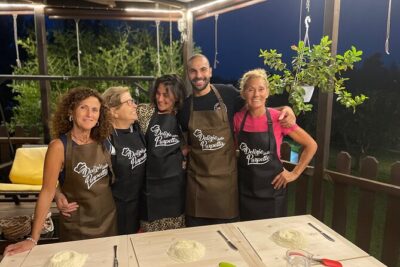
Cooking class, dinner and wine tasting near Lecce
Read our review →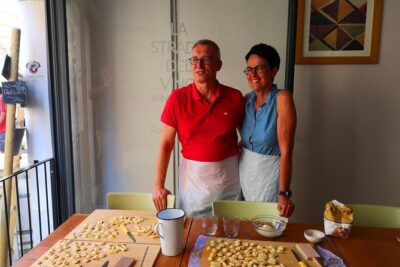
Orecchiette Cooking Class and Wine Pairing in Lecce
Read our review →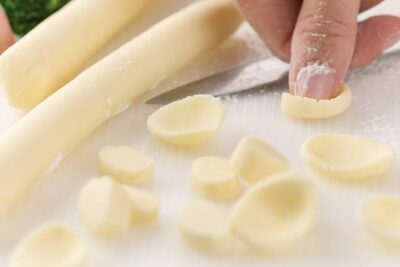
Lecce Hands-on Home Cooking Class: Craft Orecchiette & Savor Wine
Read our review →
Lecce: Pasta & Tiramisu Cooking Class at a Local’s Home
Read our review →