
Review · INDONESIA
From Ubud: Authentic Cooking Class in a Local Village
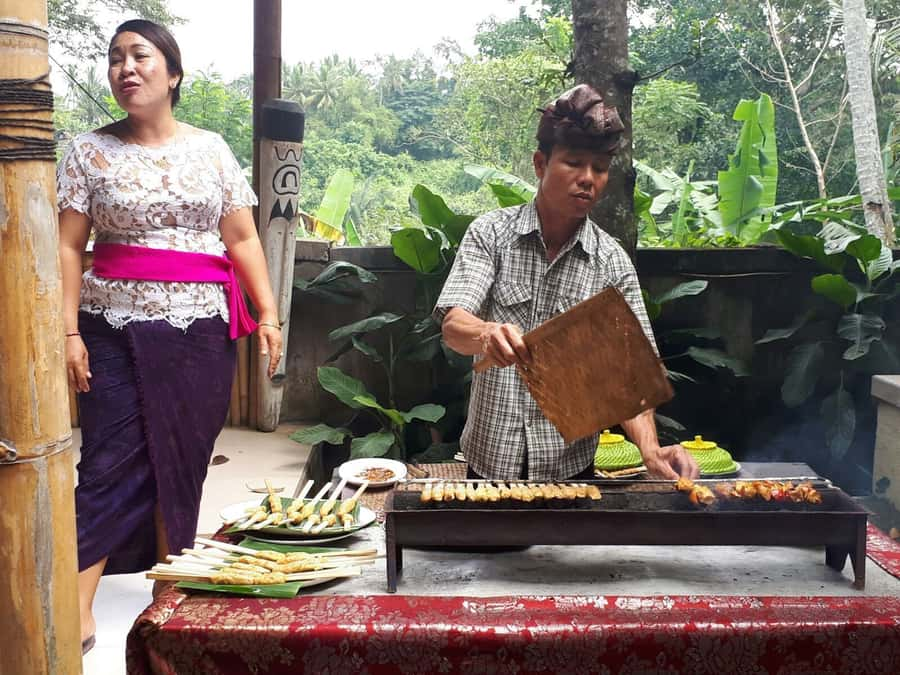
The best part of this experience is that Balinese food becomes something you make, not just something you order. You start at a local market, see where the ingredients come from, then cook in a family setting in Laplapan with Mama Puspa and her team. The market visit and hands-on kitchen work make this feel more personal than a standard restaurant meal.
I like the chance to visit a rice plantation and see the crop behind so much Balinese food. I also like the practical touches: a choice of meat or vegetarian dishes, help with several dietary needs, and a recipe book so you can try the food again at home. The main consideration is timing. The morning class includes the market, while the afternoon class is shorter and skips it.
Key points at a glance
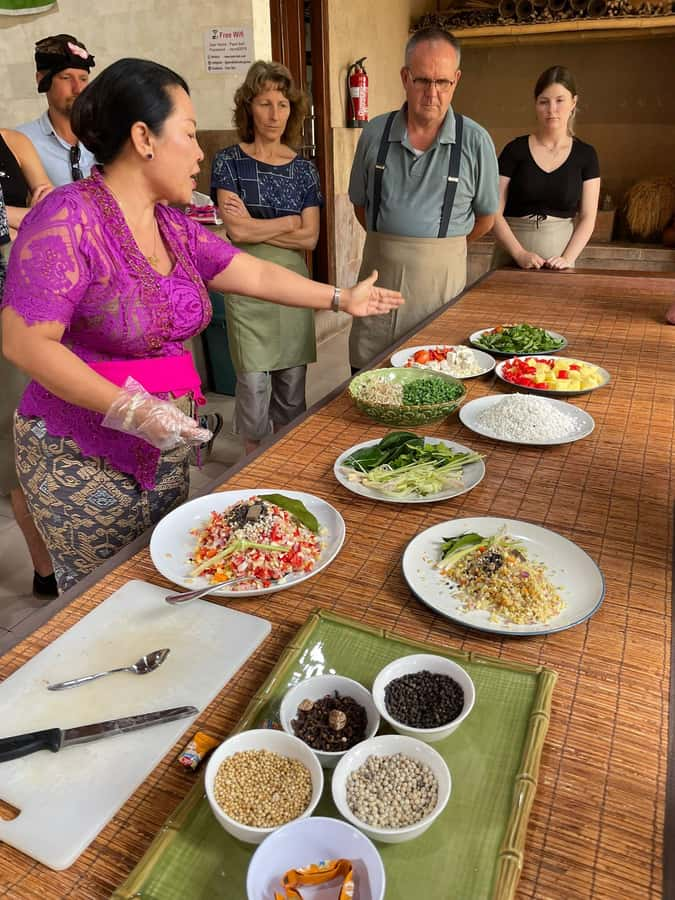
- Morning market visit: Choose the morning session to shop for fresh produce, herbs, meat, and spices, with time to taste local fruit.
- Laplapan family setting: Cook in a traditional village compound and, when available, see the family temple.
- A full Balinese meal: Prepare several starters, main courses, and a dessert before sitting down to eat together.
- Friendly instruction: Mama Puspa and the cooking team keep the lesson social, clear, and practical.
- Dietary flexibility: Meat and vegetarian options are available, and the team has adapted dishes for garlic, onion, capsicum, and gluten-free needs.
- Good value at $35: Hotel transport in Ubud, ingredients, drinks, lunch, instruction, and recipes are included.
Why this cooking class feels different from a regular food tour
Many food activities give you a plate and a short explanation. This one gives you a knife, a mortar, a cooking station, and a reason to pay attention to every smell and texture.
You learn how fresh ingredients are selected, prepared, pounded, mixed, and cooked. That matters because Balinese cooking depends on combinations of herbs and spices that can seem mysterious when you meet them only on a restaurant menu. Here, you handle the ingredients yourself and learn useful substitutions for cooking at home.
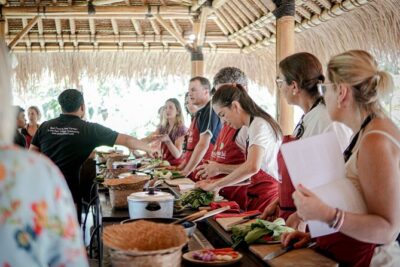
The setting also adds value. The class takes place in the traditional village of Laplapan, not in a hotel demonstration kitchen. You are welcomed into a local family compound, where the cooking area and dining space create a more relaxed, home-based feel. Some groups have also been shown the family temple, giving you a small window into Balinese household life.
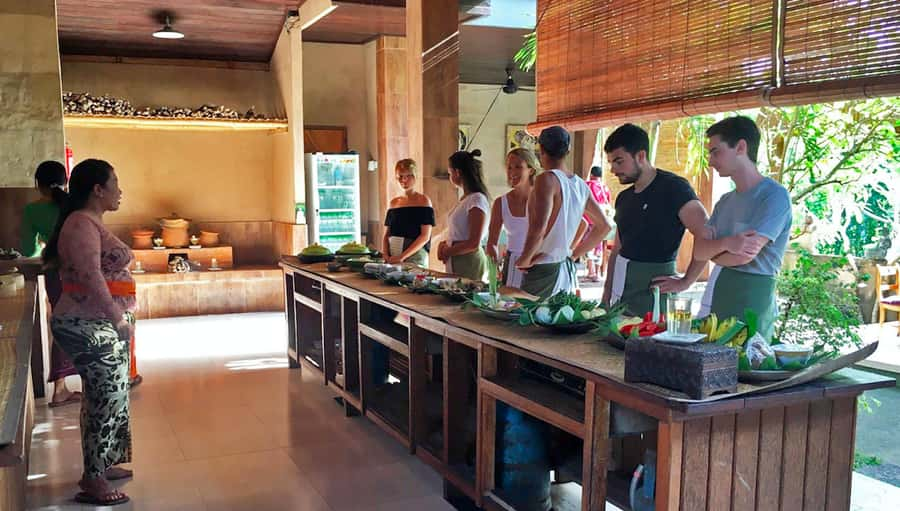
The class is limited to 15 people. That is not a private lesson, but it is small enough for a well-run session to give everyone a turn. The instructors organize tasks in pairs and rotate the work, so you are not left watching someone else chop for three hours.
More cooking classes around Indonesia:
- Ubud: Balinese Cooking Class at an Organic Farm
★ 5.0 · 1,786 reviews - Ubud Cooking Class Bali with Balinese Chef
★ 5.0 · 1,609 reviews - Ubud: Cooking Class with Transfers and Optional Market Visit
★ 4.9 · 824 reviews
The morning begins at Bali’s local market
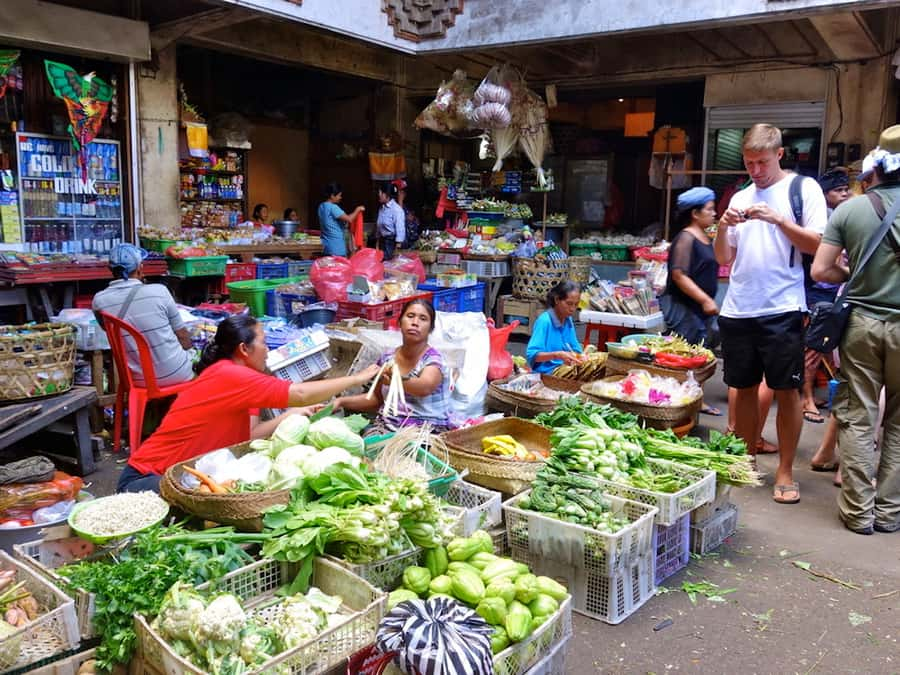
If you can choose, I would book the morning session. It includes a visit to a fresh food market before the cooking class, and this is more than a quick stop for photographs.
Your guide helps identify local vegetables, herbs, meat, spices, and fruit. You might get to taste unfamiliar fruit, and you can buy spices or tea if you want something useful to take home. The market gives you a better sense of how ordinary Balinese meals begin, with fresh ingredients selected for the day rather than pulled from a distant pantry.
This is also a good place to ask questions. The guide can explain what you are seeing and how particular ingredients are used in Balinese food. A few participants have especially enjoyed buying spices after learning what they were for, instead of guessing at a market stall.
The market is the clear reason to choose the morning class. The afternoon option is shorter because it does not include this visit. If your schedule is tight, the afternoon class still gives you the cooking lesson and meal, but you lose the market context that connects the dishes to daily life.
A rice plantation puts the meal in context
The route continues to a rice plantation, where you learn how Bali’s staple crop is cultivated and prepared. The stop is useful because rice is not just a side dish here. It is part of the food system and a central part of everyday meals.
You also get time to take in the rural views around the plantation. This is a quieter part of the outing, and it breaks up the market and kitchen activities nicely. The exact amount of time at the plantation may depend on the day’s schedule, so I would treat it as a scenic educational stop rather than a full agricultural tour.
For anyone interested in how food connects to place, this short visit adds substance. You are not simply learning a list of recipes. You are seeing one of the crops that supports the meals you are about to prepare.
Arriving in Laplapan and meeting the cooking team
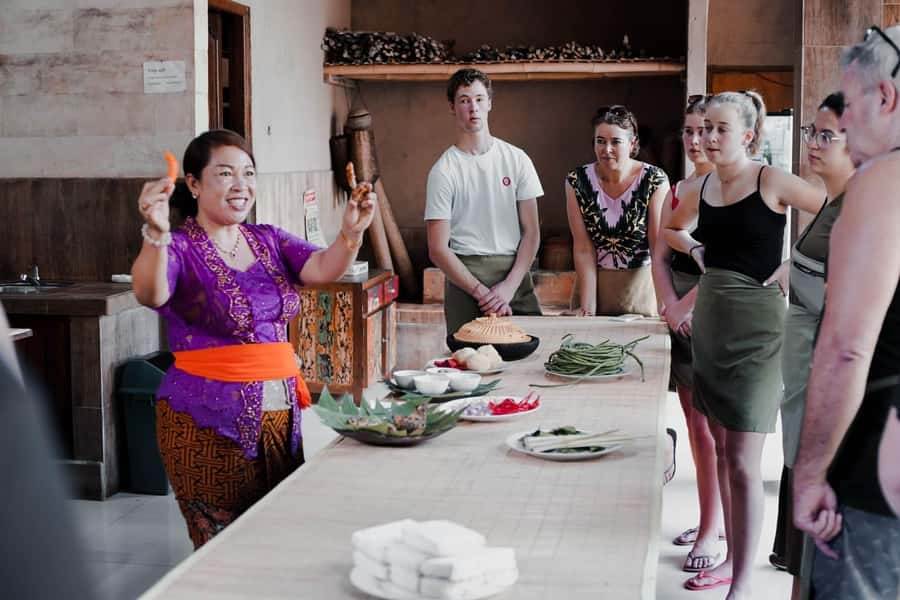
In Laplapan, you receive a welcome drink, often Balinese tea or coffee, before the lesson begins. The family compound is one of the strongest parts of the experience. You get a sense of cooking in someone’s home rather than attending a formal culinary school.
Mama Puspa is the central host, and her humor and lively manner help the group settle in quickly. Other members of the team guide the cooking stations and keep the work moving. Some visitors have specifically praised Wayan for transport and his explanations about Bali, though the person handling your transfer may vary.
The class is carefully organized. Ingredients are prepared, stations are set up, and the instructors explain what you will make before assigning tasks. That structure matters when a group has many dishes to complete. You spend less time waiting and more time chopping, pounding, mixing, and cooking.
The tone is social without requiring you to be an expert. You can come alone, as a couple, with friends, or with older children. The class has been described as suitable for children, but the activity still involves kitchen work, so parents should decide what level of participation suits their children.
Same kitchen, a different dish:
- PRIVATE Authentic Balinese Cooking Class in Ubud at Putu’s Home
★ 5.0 · 644 reviews - Balinese Ubud cooking school (9 Dish Cooking and Market Tour)
★ 5.0 · 540 reviews - Ubud: Balinese Cooking Class and Market Tour
★ 4.8 · 531 reviews - Seminyak: Balinese Cooking Class & Market Tour
★ 4.9 · 458 reviews
What you actually cook during the lesson
The advertised menu includes three starters, four main courses, and one authentic dessert. The precise number or mix can vary, with some sessions described as six dishes plus dessert and others as seven dishes in total.
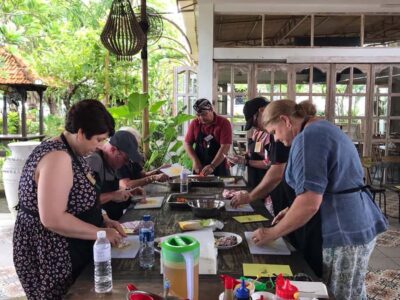
That sounds like a lot, but the teaching system keeps it manageable. You work with partners and share tasks, then rotate so everyone gets a chance to take part. The instructors demonstrate the methods and stay nearby to guide you. You are not expected to know how to balance Balinese spices before you arrive.
The hands-on work is the point. You chop fresh produce, pound spice mixtures, combine ingredients, and cook the dishes with help from the team. The instructors also explain alternatives for ingredients that may be hard to find in your home country.
The result is a generous spread rather than one carefully plated dish. You sit down together after the cooking and eat what the group has prepared. It is a satisfying finish, especially because you understand the work behind each plate.
Expect a filling meal. The experience includes lunch, and the food is served after the class so you can taste the finished dishes while they are fresh. The group meal also gives you time to talk with the other cooks and compare notes about the techniques you have just learned.
Dietary needs are handled with advance notice
The class offers a choice of meat or vegetarian dishes. More importantly, the team has shown flexibility with several specific dietary needs.
Garlic and onion are common in Balinese cooking, yet participants with allergies have had separate versions prepared without them. Capsicum has also been omitted when needed, and gluten-free adaptations have been made. The cooking team has used separate pans and kept special portions apart to avoid cross-contact in at least some cases.
Do not assume every dietary request will be covered automatically. Tell Paon Bali about your needs when you book and confirm them again with the staff at the start. The available information shows strong willingness to adapt, but clear communication is still the safest approach.
Vegetarians should find the class straightforward because a vegetarian choice is explicitly available. If you have a serious allergy, ask exactly how ingredients and equipment will be handled before cooking begins.
The family temple and local setting add meaning
The family temple is a memorable detail for many people because it gives the cooking class a cultural setting beyond food. When permission and timing allow, you may be able to see it and take photographs.
This is not presented as a formal religious tour, and you should follow the hosts’ instructions about where to go and when photographs are appropriate. Its value is in seeing part of a Balinese family compound as part of daily life, rather than treating the village as scenery.
That distinction matters. The experience works best when you approach it as a respectful visit to a local home and cooking space. The hosts share their food, kitchen, and hospitality, while you take part in the meal and conversation.
Transport from Ubud is useful, but check your pickup point
Hotel pickup and drop-off are included for hotels in the Ubud area. This makes the $35 price more attractive, since you do not need to arrange a separate taxi for an early morning class or find your way to a village outside central Ubud.
Pickup from other areas may be possible for an extra fee. Ask about this when booking rather than assuming it is included. One participant had a hotel outside the usual area and was still collected, but that should be treated as a special arrangement, not a guarantee.
Most transport feedback has been positive, with an 88 percent perfect rating for the transport service. Still, allow a little flexibility around pickup. One person reported that the driver arrived earlier than expected and called repeatedly while the group was returning from another activity. Confirm the pickup time and be ready a few minutes early, but do not hesitate to contact the operator if the timing is unclear.
The total outing lasts about 210 minutes to four hours. The morning version is longer because of the market visit. Hotel traffic, group size, and the pace of the class can affect the final timing, so avoid scheduling a tight appointment immediately afterward.
Is $35 good value?
At $35 per person, this is strong value for a half-day activity in Ubud. The price includes transport within Ubud, the market tour for morning participants, the rice plantation visit, tea or coffee, all ingredients, the cooking lesson, lunch, and a certificate.
The recipe notes are especially useful. You are not limited to a pleasant meal that disappears once the day ends. You can take the instructions home and try the dishes again, using the suggested substitutions if some Balinese ingredients are unavailable.
The value is strongest if you take the morning class. You get the market visit and a fuller connection between shopping, farming, cooking, and eating. The afternoon option may suit you better if you want a shorter activity or cannot manage a morning start, but it offers less for the same general experience.
The class is also a good rainy-day choice. Most of the important work takes place under cover in the cooking area, and bad weather does not remove the central part of the activity. The market and plantation portions may be less pleasant in rain, so pack accordingly.
Who should book this experience?
I would recommend it to first-time visitors who want a practical introduction to Balinese food. It also suits people who enjoy meeting others, since the group prepares and eats together.
Families can make good use of it, especially if children enjoy cooking. Couples and solo visitors should also feel comfortable, because the paired tasks and shared meal make it easy to join the group.
Food lovers will get the most from the morning class. Choose it if you want to learn about ingredients, shop at the market, and understand the food before you cook it.
You may want to skip it if you dislike group activities, prefer a private chef lesson, or have a very tight schedule. A group of up to 15 can feel active and social rather than quiet and intimate. The class also involves several hours of kitchen work, so it is not simply a tasting tour.
Should you book Paon Bali Cooking Class?
Yes, if you want more than a restaurant meal and can spare half a day in Ubud. The combination of a local market, rice plantation, family compound, hands-on cooking, and shared lunch gives you a clear sense of how Balinese food fits into everyday life.
Book the morning session if you can. Tell the operator about allergies or dietary needs in advance, confirm pickup if you are outside Ubud, and bring an appetite. At $35, the class offers a lot: food to eat, skills to use, and recipes that can keep the experience going after you leave Bali.
FAQ
Where does the cooking class take place?
The cooking class takes place in the traditional village of Laplapan, near Ubud, in a local family setting.
Is hotel pickup included?
Pickup and drop-off are included for hotels in the Ubud area. Pickup from other areas may be available for an additional fee if requested when booking.
How long does the experience last?
The experience lasts about 210 minutes to four hours. The morning session is longer because it includes the market visit.
Does the afternoon class include the market tour?
No. The afternoon class is shorter and does not include the market tour. Choose the morning session if visiting the market is important to you.
What food will I prepare?
The advertised menu includes three starters, four main courses, and one dessert. The exact dishes and total number may vary by session.
Are vegetarian dishes available?
Yes. You can choose between meat and vegetarian dishes.
Can the class accommodate allergies?
The team has adapted dishes for garlic, onion, capsicum, and gluten-free requirements. Tell the operator about your dietary needs when booking and confirm them before the lesson.
Are ingredients and lunch included?
Yes. The ingredients, cooking lesson, Balinese tea or coffee, and lunch are included.
Do I receive recipes to take home?
Yes. Recipes and cooking notes are supplied for you to keep, along with a certificate.
New cooking classes around Indonesia
- Seminyak: Vegetarian Cooking Class★ 5.0 · 3 reviews
- Seminyak : cooking class traditional food bali★ 5.0 · 5 reviews
- Quad ride, waterfalls & aunthentic cooking class in munduk★ 4.9 · 53 reviews
- Pure Bali Village Experience Cooking & Jamu Class, Transfer★ 4.8 · 5 reviews
- Ubud: Organic Farm Harvest, Bali Cooking Class by Pemulan★ 4.8 · 12 reviews
- packages cooking class and romantic dinner in a local home★ 5.0 · 4 reviews
- Nusa Dua: Balinese Cooking Class with Market Tour★ 5.0 · 4 reviews
- Bali: Balinese Cooking Class and Market Tour★ 4.8 · 19 reviews
Indonesia Cooking Classes, side by side.
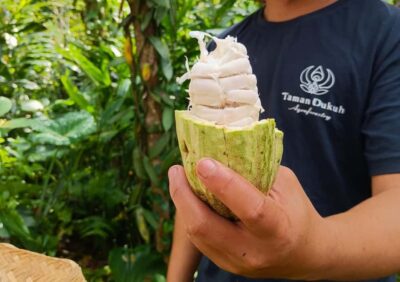
Ubud: Balinese Cooking Class at an Organic Farm
Read our review →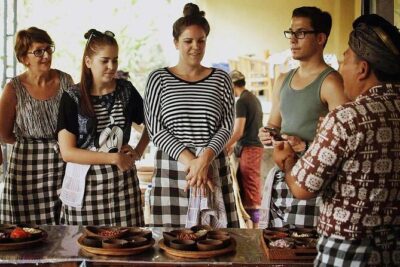
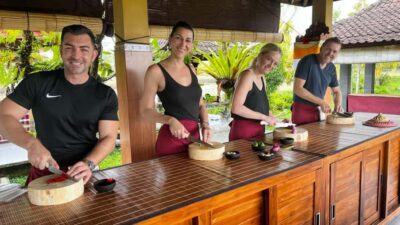
Ubud: Cooking Class with Transfers and Optional Market Visit
Read our review →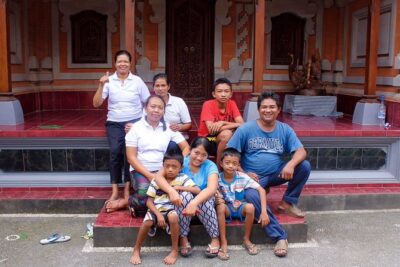
PRIVATE Authentic Balinese Cooking Class in Ubud at Putu’s Home
Read our review →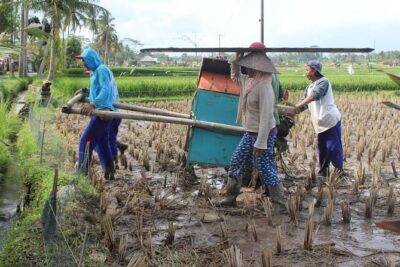
Balinese Ubud cooking school (9 Dish Cooking and Market Tour)
Read our review →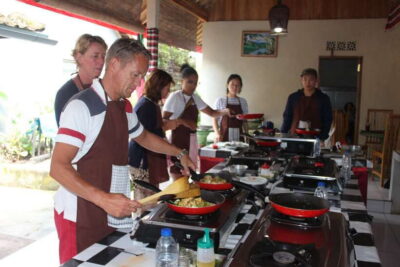
This kitchen also appears in