
Review · INDONESIA
Gili air: Kaktus traditional cooking class
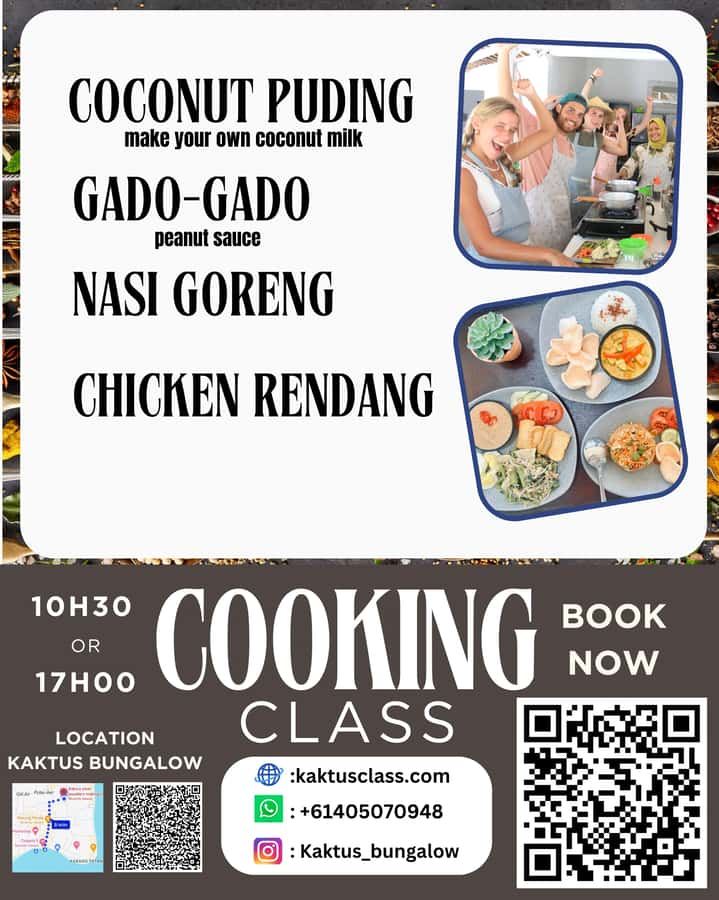
The best part of Kaktus traditional cooking class is that you do not just follow a recipe. You work with fresh coconut, grind spices and peanuts in a traditional cobek, and learn why these simple tools still matter in Indonesian kitchens. Then you sit down and eat what you made.
I like the tiny group size, limited to two participants, and the patient, friendly teaching style associated with guides such as Kai, Sas, and Brice. I also like that the meal is generous enough to share or save, though the two-hour class can feel short if you want a long, leisurely lesson or detailed practice with every dish.
Key points at a glance
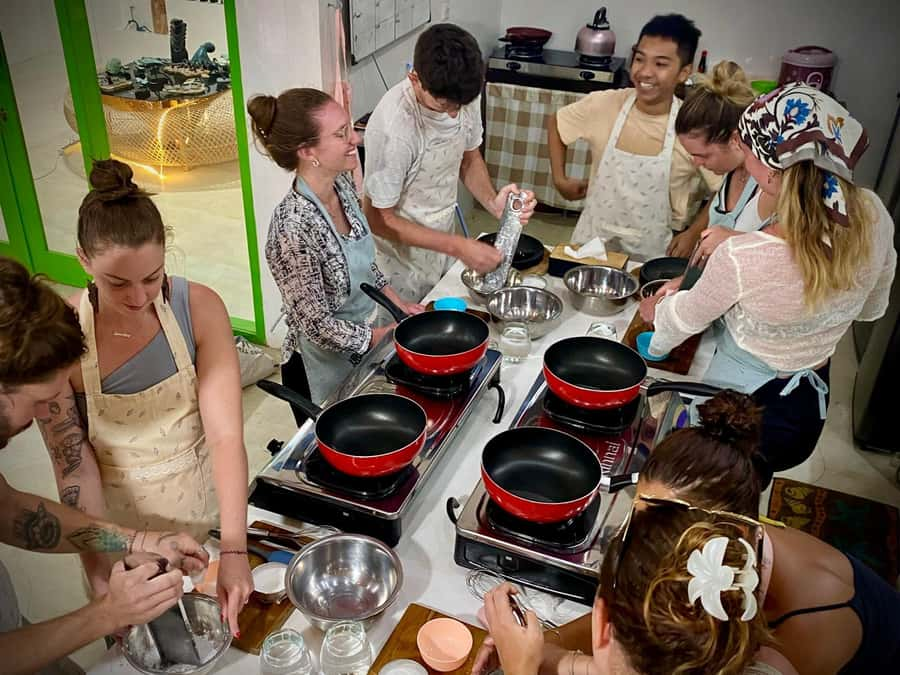
- Fresh coconut milk from scratch: You see and take part in a basic step that gives many Indonesian dishes their body and aroma.
- Traditional cobek technique: You grind ingredients for peanut sauce by hand instead of relying only on modern equipment.
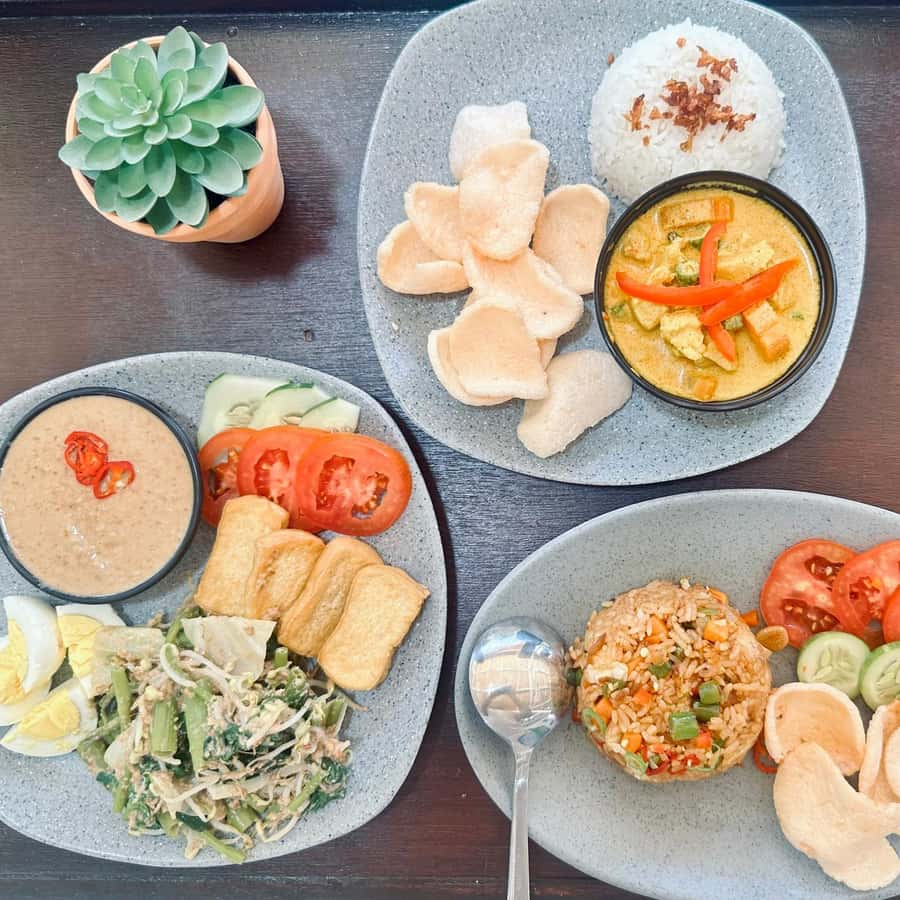
- Several Indonesian dishes: Depending on the class menu, you may prepare nasi goreng, chicken rendang, gado-gado, lalapan, bubur sum sum, or another local favorite.
- Very small setting: The class is limited to two participants, so the chef can give close guidance and adapt the pace.
- A meal as well as a lesson: The food you prepare is included, with portions described as generous by several people who took the class.
- Useful take-home recipes: Digital recipes and methods have been provided, making it easier to repeat the dishes at home.
Why this two-hour class feels different
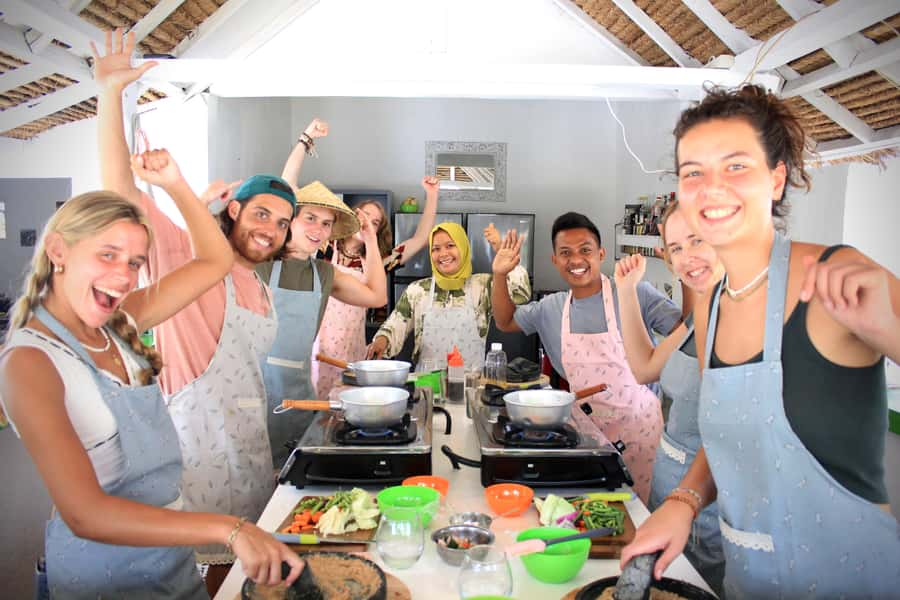
Gili Air is an easy place to spend the day doing very little. That is part of its appeal. Still, after a few hours near the water, a cooking class gives you something active to do and a better connection to the food you are eating across Indonesia.
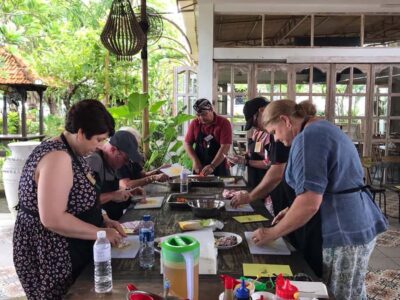
Kaktus keeps the focus on traditional preparation rather than turning the session into a quick demonstration. You should expect to take part in the work, ask questions in English, and taste the results at the end. The mood is described as relaxed and friendly, not formal or rushed.
That matters because Indonesian food can look simple on the plate while hiding plenty of preparation. A peanut sauce may depend on how thoroughly you grind the ingredients. Coconut milk tastes different when it comes from fresh coconut rather than a carton. Rendang gains its character from slow cooking and a careful balance of spices.
The class is priced at $27 per person. For two hours of instruction, ingredients, drinking water, use of the facilities, and a full meal, I see this as a fair island activity. You are paying for food you will eat, but also for a practical lesson you can repeat at home. The value improves if you want more than a passive food tasting.
More cooking classes around Indonesia:
- Ubud: Balinese Cooking Class at an Organic Farm
★ 5.0 · 1,786 reviews - Ubud Cooking Class Bali with Balinese Chef
★ 5.0 · 1,609 reviews - From Ubud: Authentic Cooking Class in a Local Village
★ 4.9 · 1,325 reviews
Starting with coconut, not a packet
One of the clearest highlights is making coconut milk from fresh coconut. This is a small task, but it gives you useful context for Indonesian cooking. Coconut is not just a sweet ingredient used in desserts. It can help form the base of sauces, curries, and other savory dishes.
At Kaktus, the process is treated as part of the lesson. You get to see how a natural ingredient is turned into something smooth and usable in cooking. I like this because it connects the finished meal with the raw materials, rather than hiding every step behind a prepared ingredient.
You should not expect a full agricultural lesson or a long session devoted only to coconut. The class lasts two hours, so this is one part of a wider menu. Still, it is the kind of detail that gives the experience a stronger local feel.
If you cook Indonesian food at home, this technique may be more useful than another restaurant meal. If you rarely cook, it still gives you a better sense of why coconut appears so often in the cuisine.
The cobek and the character of peanut sauce
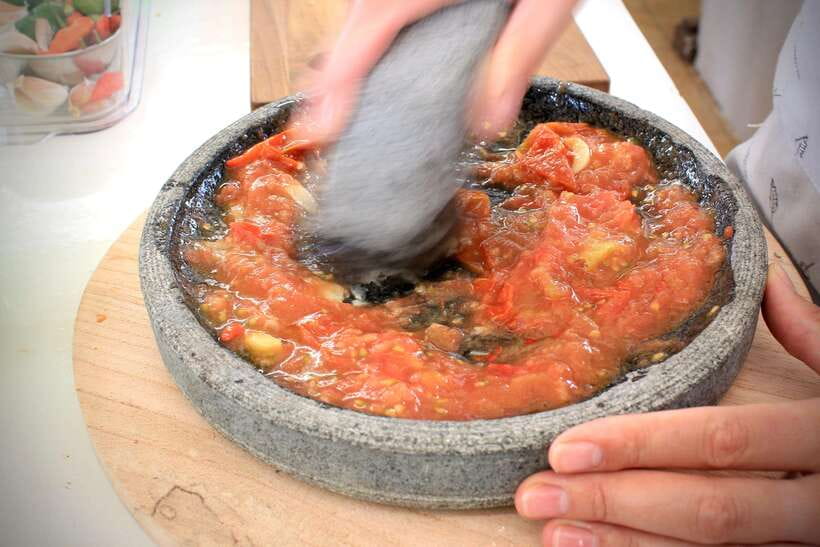
The traditional cobek is a mortar and pestle used to grind ingredients by hand. It is central to the class because you use it to prepare a flavorful peanut sauce.
I like this part for a practical reason. The cobek changes the pace of cooking. You are not simply adding a spoonful of ready-made sauce. You are working the ingredients together and noticing how texture and aroma develop as you grind.
Peanut sauce appears in several Indonesian dishes, including gado-gado. The method also helps you understand why freshly prepared sauces can taste more fragrant and textured than factory-made versions. You may not replace every kitchen appliance at home, but you will leave with a clearer idea of what the traditional tool contributes.
The hands-on work may be easier for some people than others. Anyone with limited hand strength could find grinding tiring, although the small group lets you ask for help or a slower pace. The class is listed as wheelchair accessible, but the supplied information does not explain the exact layout or how every cooking station is arranged, so it is sensible to confirm any specific access needs before booking.
Nasi goreng, rendang, and a changing menu
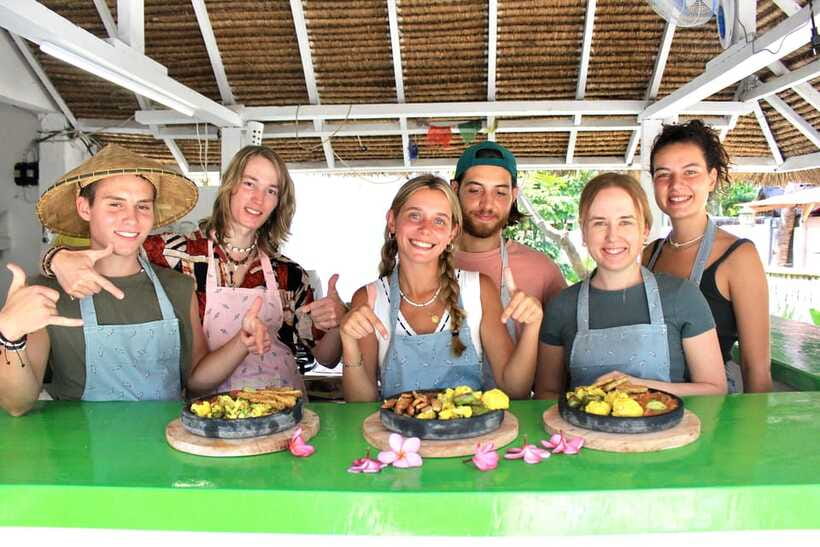
Nasi goreng is one of the best-known Indonesian dishes, and it is included among the featured preparations. Learning to make it in a local cooking class gives you more than a list of ingredients. You can pay attention to the order of cooking, the seasoning, and the way the ingredients come together.
Chicken rendang is another featured dish. It is known for its strong seasoning and deep color, and the class presents it as a flavorful curry. You should expect a dish with plenty of character rather than a mild, plain chicken meal.
The menu is not described as fixed across every session. Different class experiences have included gado-gado, lalapan, bubur sum sum, a pudding, and other dishes. Some people prepared three courses, while another session included four dishes. This is useful to know when booking: you will likely cook several recipes, but you should not assume that every participant receives the exact same menu.
That flexibility can be a strength. It allows the chef to feature different Indonesian favorites and perhaps respond to the ingredients available that day. The drawback is that you may have your heart set on one dish and find that it is not on your particular menu. If nasi goreng or rendang is essential to you, ask about the planned dishes before you pay.
Same kitchen, a different dish:
- Ubud: Cooking Class with Transfers and Optional Market Visit
★ 4.9 · 824 reviews - PRIVATE Authentic Balinese Cooking Class in Ubud at Putu’s Home
★ 5.0 · 644 reviews - Balinese Ubud cooking school (9 Dish Cooking and Market Tour)
★ 5.0 · 540 reviews - Ubud: Balinese Cooking Class and Market Tour
★ 4.8 · 531 reviews
Eating what you prepare
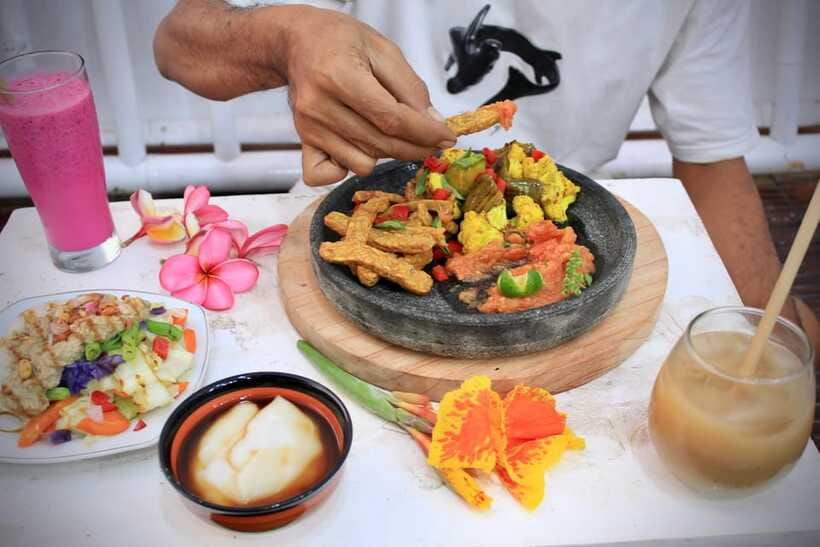
The final part is simple and important: you eat the food. The meal is included, and the portions can be generous. People have reported preparing more food than they could finish, with leftovers sometimes taken away.
I consider this one of the class’s strongest features. You get an immediate reward for the work, and tasting the finished dishes helps you understand the recipe. You can compare the sauce before and after cooking, notice how the coconut affects the curry, and decide which flavors you want to adjust at home.
The food also makes the class suitable for a mixed group. A serious home cook can focus on methods, while a casual cook can enjoy a meal and learn a few new ideas. You do not need to arrive with advanced skills.
Do keep the two-hour schedule in mind. Several recipes and a sit-down meal make for a full session. If you want to linger over every bite or ask detailed questions about Indonesian cuisine, you may find the class moves at a steady pace.
The teaching style and the small group
The class is taught in English, and the instructors are described as patient, kind, and clear. Kai is named as a helpful chef who guided people through several recipes and supplied digital copies of the methods. Sas is praised for a gentle approach, including care toward a participant who was not feeling well. Brice is also described as welcoming and patient.
Those details matter more to me than a polished kitchen setup. Cooking lessons work best when the instructor lets you handle the ingredients and does not make you feel foolish for asking basic questions. The small group, limited to two people, supports that kind of personal attention.
At times, the class may operate as a private session. A daytime booking has been described as private, which can be a good choice if you want to set the pace around your own interests. You should not assume every booking will be private beyond the stated two-person limit, but the format is clearly intimate rather than a large group demonstration.
The atmosphere is open, clean, tidy, and relaxed. That makes the class a good fit if you prefer a calm activity over a loud cooking show. It also suits couples, friends, and solo participants who are comfortable learning in a small setting.
What you take home besides lunch
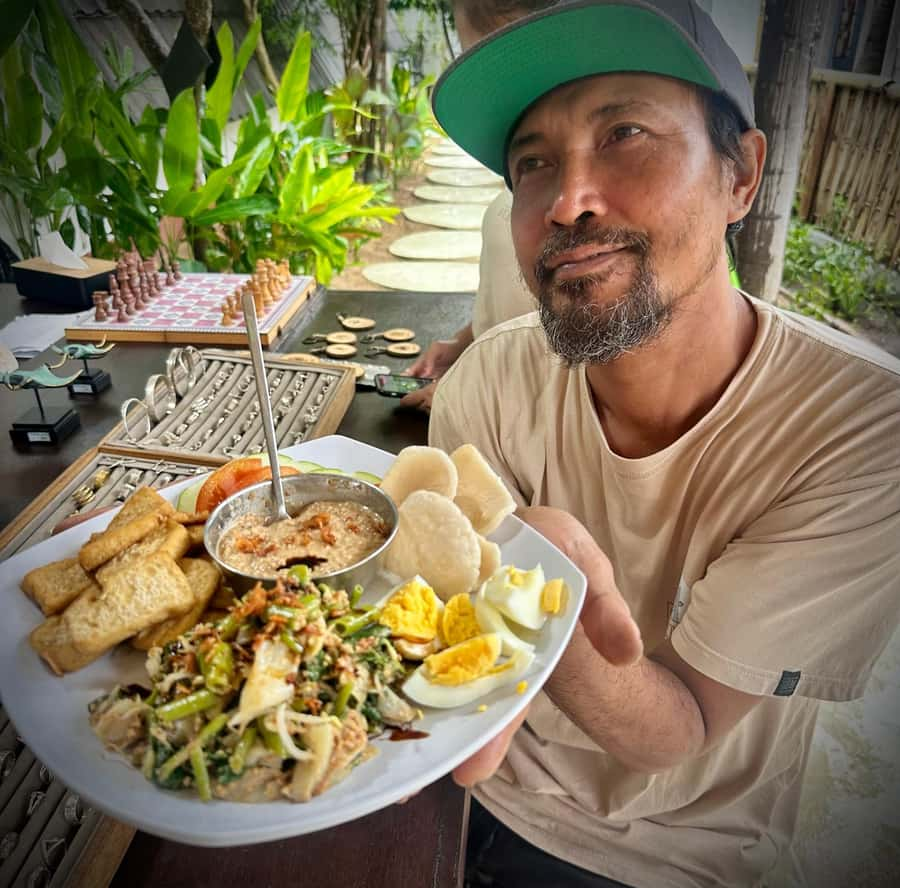
The most obvious souvenir is the meal, but the more lasting one is the method. Several recipes can be recreated at home, and digital copies of recipes and instructions have been provided in at least some sessions.
That is a useful extra because Indonesian cooking often involves a few unfamiliar steps. You may remember the general flavor but forget the proportions or the order in which ingredients were added. A written method gives you a real chance to try again.
You can also take home a better feel for traditional tools. Even if you use a modern blender instead of a cobek, you will understand what the original technique was trying to achieve. The class is not simply about copying a dish. It shows how texture, freshness, and timing shape the result.
I would bring a note in your phone if you have a particular question about substitutions or spice levels. The class provides recipes, but the available information does not promise a full guide to every ingredient replacement.
Who should book this Gili Air activity?
I would choose Kaktus if you want a useful break from swimming, sunbathing, or wandering around the island. The class gives you a structured two hours without taking over your whole day.
It suits you especially well if you:
- Want to cook rather than watch
- Enjoy Indonesian food and want to understand it better
- Prefer a small group to a large demonstration
- Like the idea of eating a generous meal after the lesson
- Want recipes you can try at home
- Are traveling with a friend or partner and want a shared activity
It may be less suitable if you want a fixed menu, a long professional cooking course, or a broad tour of Gili Air. The class centers on food preparation and eating. It does not include sightseeing, transportation, or a wider cultural program in the information provided.
Families and people with mobility needs should note that the activity is listed as wheelchair accessible. Since no detailed layout is provided, I would still check the practical arrangements before booking if you need a particular type of access.
Timing, price, and booking flexibility
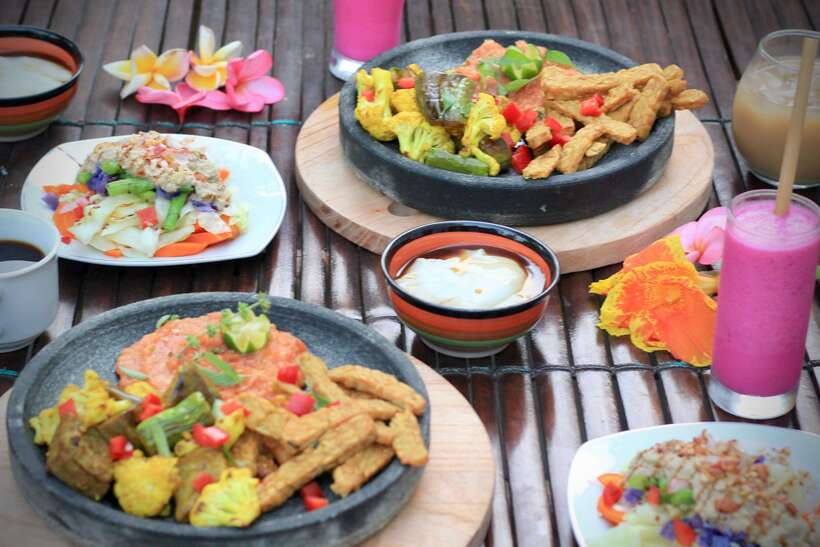
The class lasts two hours, with starting times available according to the day’s schedule. I would choose a daytime slot if you want an active break from the heat and the pool, as one session found that timing especially useful.
At $27 per person, the price covers ingredients, fresh water, toilets, and the food you prepare. For me, the strongest value comes from the combination of instruction and lunch. A meal alone might be cheaper elsewhere, but it would not show you how to make coconut milk, prepare peanut sauce with a cobek, or build several Indonesian dishes from the start.
You can cancel up to 24 hours ahead for a full refund, and you can reserve now and pay later. Those terms are helpful when your island plans depend on weather, boat schedules, or a change of pace. The activity is limited to two participants, so I would book ahead if you have a narrow window.
Is Kaktus traditional cooking class worth it?
I would book this class if you want a friendly, practical introduction to Indonesian food during your time on Gili Air. The fresh coconut milk, cobek-ground peanut sauce, generous meal, and very small group give it more substance than a quick tourist cooking demonstration.
The main caution is the menu. Dishes can vary, and two hours is enough for a focused lesson, not a full culinary course. Ask what will be prepared if one particular dish matters to you.
For most people who enjoy food, I think the $27 price is sensible. You eat well, learn several methods, and may return home with recipes you can actually use. That makes Kaktus a strong choice for a relaxed island day with something useful at the end.
FAQ
Where is Kaktus traditional cooking class located?
The class is located on Gili Air in West Nusa Tenggara, Indonesia.
How long does the cooking class last?
The activity lasts two hours.
How much does the class cost?
The price is $27 per person.
What language is the class taught in?
The instructor teaches in English.
How many people can join the class?
The group is limited to two participants.
What food can I learn to prepare?
The featured dishes include nasi goreng and chicken rendang. Different sessions have also included gado-gado, lalapan, bubur sum sum, pudding, and other Indonesian dishes, so the menu may vary.
Will I make coconut milk during the class?
Yes. You learn to make coconut milk from fresh coconut.
Will I use a traditional mortar and pestle?
Yes. The class demonstrates a traditional cobek for making peanut sauce.
Is food included in the price?
Yes. Ingredients and the food you prepare are included. Fresh water and toilet facilities are also provided.
Can I cancel the booking?
You can cancel up to 24 hours in advance for a full refund. You can also reserve the activity and pay later.
New cooking classes around Indonesia
- Seminyak: Vegetarian Cooking Class★ 5.0 · 3 reviews
- Seminyak : cooking class traditional food bali★ 5.0 · 5 reviews
- Quad ride, waterfalls & aunthentic cooking class in munduk★ 4.9 · 53 reviews
- Pure Bali Village Experience Cooking & Jamu Class, Transfer★ 4.8 · 5 reviews
- Ubud: Organic Farm Harvest, Bali Cooking Class by Pemulan★ 4.8 · 12 reviews
- packages cooking class and romantic dinner in a local home★ 5.0 · 4 reviews
- Nusa Dua: Balinese Cooking Class with Market Tour★ 5.0 · 4 reviews
- Bali: Balinese Cooking Class and Market Tour★ 4.8 · 19 reviews
Indonesia Cooking Classes, side by side.
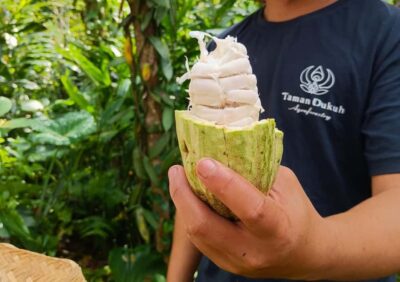
Ubud: Balinese Cooking Class at an Organic Farm
Read our review →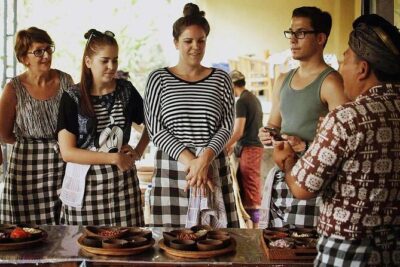
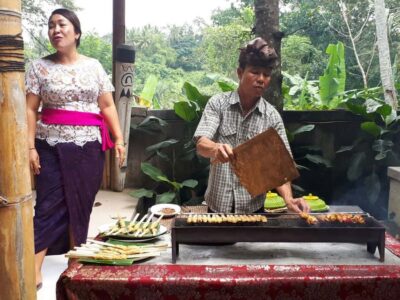
From Ubud: Authentic Cooking Class in a Local Village
Read our review →
Ubud: Cooking Class with Transfers and Optional Market Visit
Read our review →
PRIVATE Authentic Balinese Cooking Class in Ubud at Putu’s Home
Read our review →
Balinese Ubud cooking school (9 Dish Cooking and Market Tour)
Read our review →
This kitchen also appears in