
Review · THAILAND
Ao Nang: Half-Day Thai Cooking Class Krabi Province
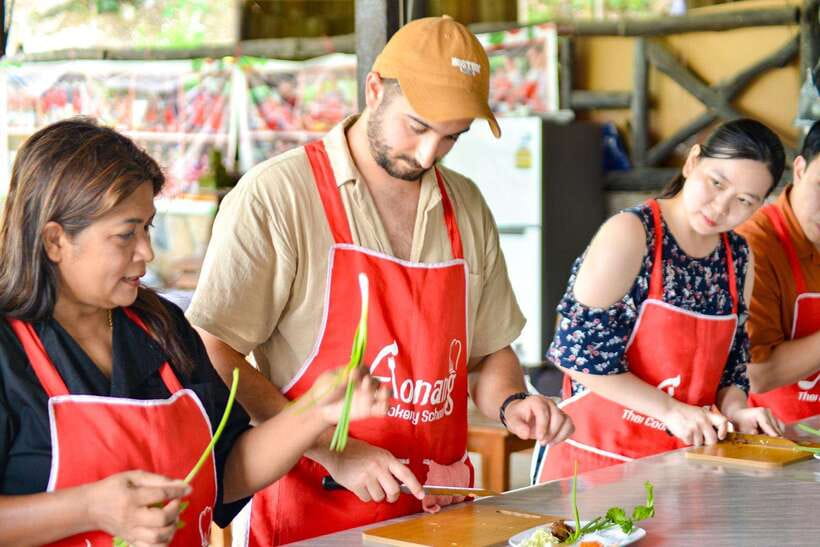
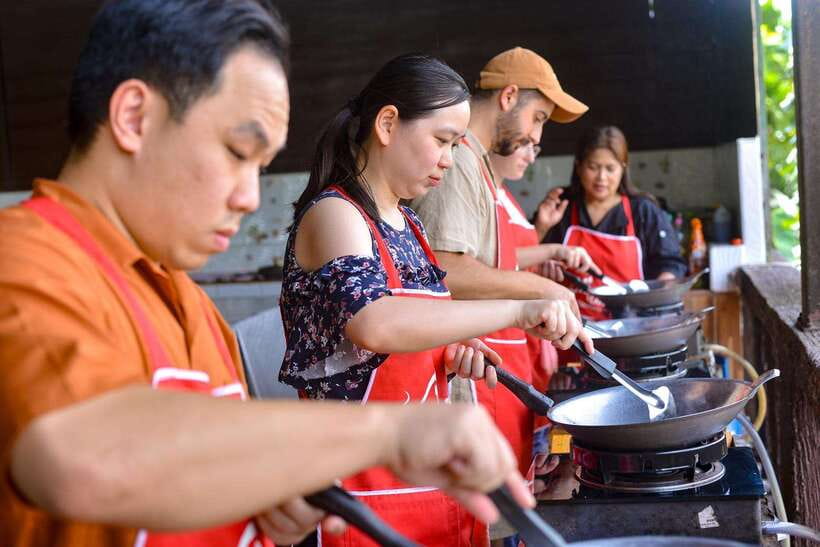
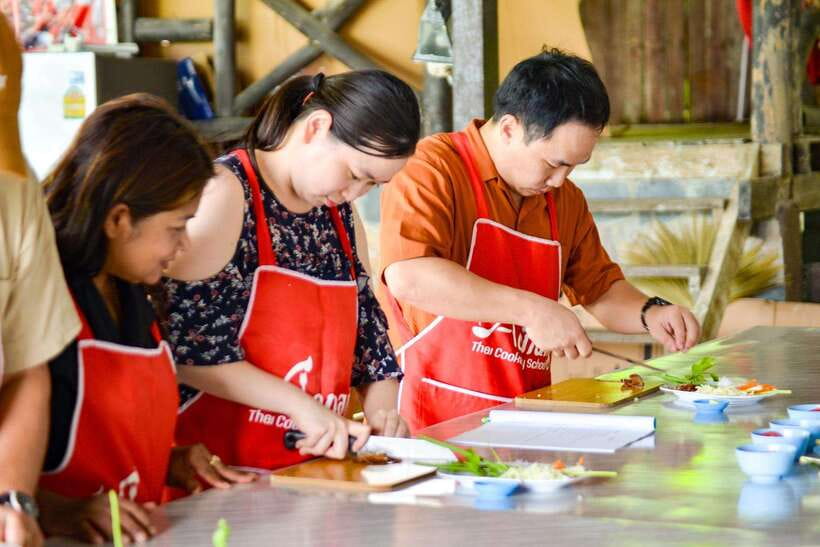
The best part of this Ao Nang cooking class is that you do not just watch someone toss food into a wok. You chop, stir, grind curry paste with a mortar and pestle, and sit down to eat several dishes you made yourself. The open-air kitchen sits beside a Buddha temple, with a fine mountain view and a cool, shady feel.
I like the small-group attention and the practical recipe book, which leaves room for your own notes. I also like the easy hotel pickup, friendly instructors, and the fact that leftovers can go into takeaway boxes. The main thing to check is the menu: some sessions offer three dishes, while morning, afternoon, and dinner classes offer five.
Key points
- Open-air hillside kitchen: Cook beside a Buddha temple with mountain views and plenty of fresh air.
- Five-dish options: Menus can include Pad Thai, curry, soup, spring rolls, stir-fries, salad, and dessert.
- Good for beginners: Ingredients are prepared in advance, while the instructor guides you through chopping, frying, and seasoning.
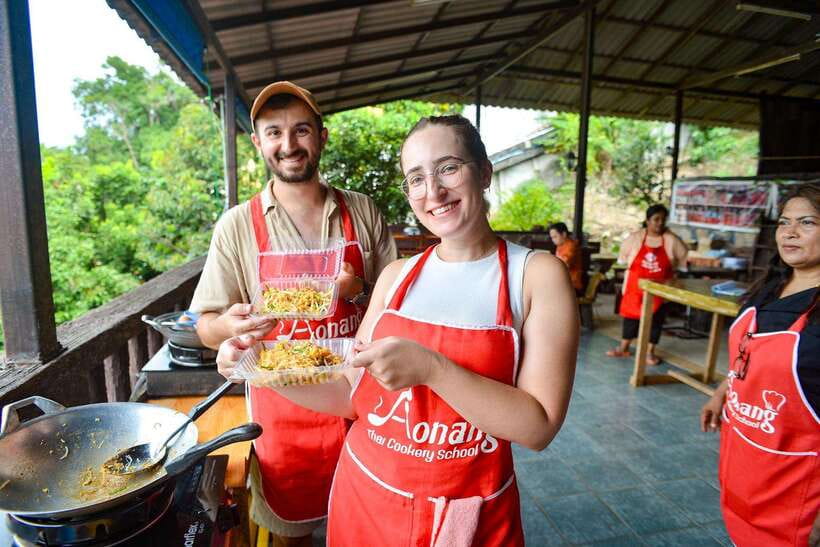
- Food for now and later: Eat at the school, then take extra portions back in provided containers.
- Flexible flavor choices: Dishes can be made vegetarian, vegan, spicy, or non-spicy.
- Simple transport: Pickup and return are included for Ao Nang hotels, with added charges for several outlying areas.
Cooking Thai food beside a temple in Ao Nang
This is the sort of class that turns a familiar Thai meal into a string of small discoveries. You learn that curry paste is not just a supermarket spoonful, that noodles need quick handling, and that the balance of sweet, sour, salty, spicy, and savory can change with a small adjustment.
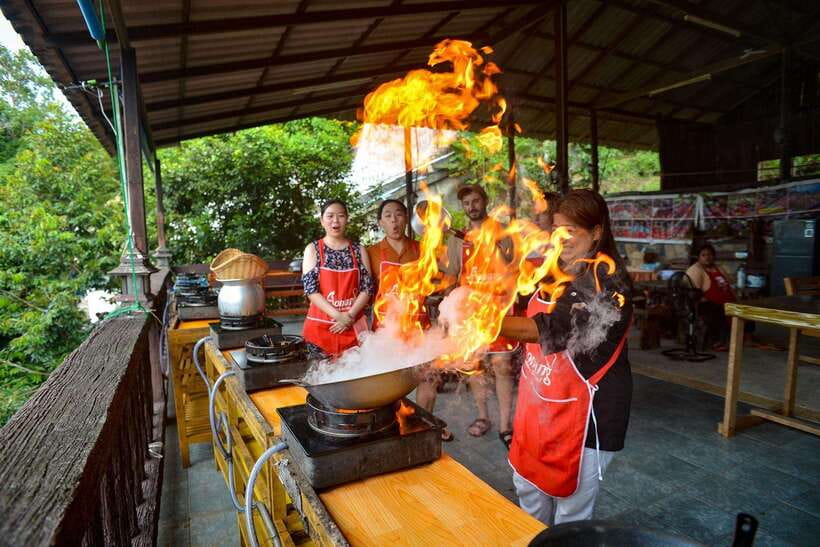
The cookery school is in a raised, open-air setting beside a Buddha temple. You might arrive to mountain scenery, shade, and moving air rather than a closed classroom. Several people have found the setting as memorable as the food, especially when the temple and surrounding hills add a quiet sense of place.
The location also gives the class a little more character than a standard hotel cooking demonstration. You are not simply seated at a counter beneath bright indoor lights. You are working in a Thai kitchen environment, with the temple next door and a view from the cooking area.
At the same time, this is still a practical class designed for visitors. You do not need prior cooking experience. The recipes are printed, ingredients are prepared, and the instructor takes you through each step. One useful detail is that the recipe book includes the wider selection of dishes, not only the ones you prepare that day. You can add notes about spice levels, cooking times, or the changes you prefer.
More Thai Cooking Classes around Thailand:
- Half-Day Thai Cooking Class at Organic Farm in Chiang Mai
★ 5.0 · 19,087 reviews - Chiang Mai: Cooking Class, Market & Thai Herbs Garden Tour
★ 4.9 · 4,824 reviews - Thai and Akha Cooking Class in Chiang Mai
★ 5.0 · 4,358 reviews
The ride from your Ao Nang hotel
Pickup is included from hotels in the Ao Nang area. You are asked to wait in the lobby at least 10 minutes before the scheduled time, and the operator confirms the exact pickup time by email. Read that message carefully, since the class schedule and meeting details depend on your booking.
The ride is a useful part of the package. You do not have to find the cookery school on an unfamiliar road, and the return trip is included after the meal. Transport has been one of the strongest parts of the experience, with on-time pickups and returns repeatedly noted as a benefit.
A few locations need special planning. If you stay at Centara Grand Beach Resort and Villas, take the hotel shuttle boat to Nopparat Thara Pier in Ao Nang. From Railay Beach, pickup is available at the boat ticket office at Ao Nam Mao Pier, which is about a 15-minute longtail-boat ride from Railay East. If you are staying in Ton Sai, the meeting point is at the reception of Phra Nang Inn in Ao Nang.
Krabi Town, Klong Muang, and Tub Kaek are not covered by the standard Ao Nang transfer. Round-trip transport from those areas costs an extra 200 Thai baht per person, with at least two people required. That is still a modest addition, but it is worth adding to your price comparison before booking.
What you cook during the 150-minute to four-hour class
The timing varies because the class format and number of dishes vary. A three-dish course includes Tom Yum, Pad Thai, and green curry. The morning, afternoon, and dinner programs offer five dishes from a longer menu.
A morning session may include spring rolls, vegetable tempura, Tom Kha Kai, Pad Thai, fried noodles in soy sauce, cashew nut stir-fry, one of several curries, and a dessert such as banana in coconut milk or mango sticky rice. You choose five dishes from the available list.
The afternoon menu can include spring rolls, papaya salad, Tom Yum Goong, Pad Thai, fried rice, sweet-and-sour stir-fry, Massaman, yellow, or green curry, banana fritters, and mango sticky rice. The dinner menu may offer spring rolls, vegetable tempura, Tom Yum Goong, Pad Thai, fried cashew nuts, Thai basil with minced chicken, several curries, mango sticky rice, or banana spring rolls.
This choice matters. If you already know your Thai favorites, you can build a class around them. If you are new to the food, ask the instructor for a balanced mix: perhaps a starter, a noodle dish, a curry, a soup, and a sweet. The listed menus are broad, but you should confirm which dishes are available for your particular session.
The class begins with the building blocks of Thai cooking: herbs, vegetables, spices, and curry ingredients. Then comes the mortar and pestle work, where you make curry paste by hand. It is a noisy, physical step, and it helps you understand why fresh curry paste tastes so different from a quick spoonful out of a jar.
Next comes the cooking. Ingredients are prepared ahead of time, so your job is focused on the useful parts: cutting, mixing, frying, seasoning, and watching the heat. This keeps the class moving and makes it possible to produce several dishes in a short period.
One practical point is that the food arrives in large quantities. Plan to eat lightly beforehand. You may finish the meal comfortably full, with enough food left to share at your hotel or save for later.
Why the class works for first-time cooks
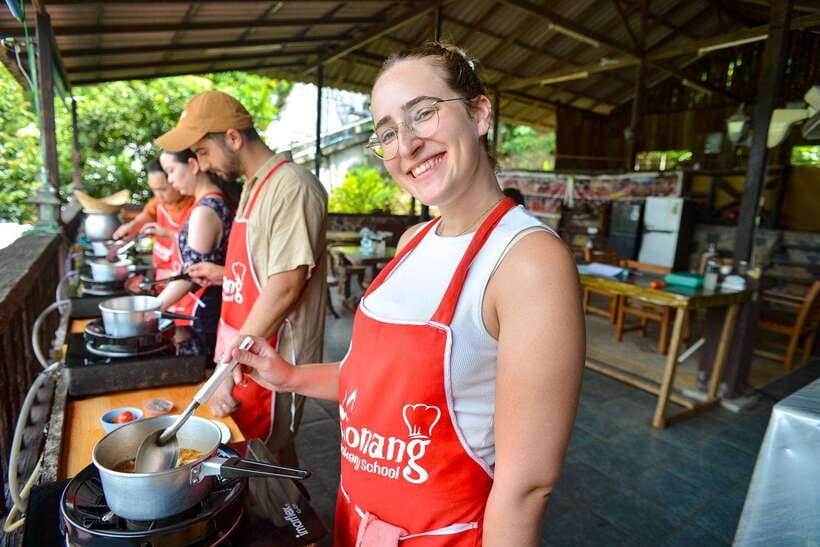
The teaching style is friendly and direct. You are shown what to do, then given a chance to do it yourself. The instructors answer questions and keep an eye on the dishes as they cook, which is especially helpful when you are handling a hot wok or trying to judge the right texture for noodles.
You will not be expected to work alone from a recipe sheet. The local cooking team demonstrates the process, then helps you through it. People who have never made Thai food can follow along, while confident home cooks still have room to ask about seasoning and technique.
Group size can make a difference. The stated maximum is 20 people, but recent sessions have sometimes been far smaller, with three, four, or five participants. In a small class, you are more likely to receive individual help and ask extra questions. A larger class may feel more social, but personal instruction could be less frequent.
The instructors named in personal accounts include Pearl, who spoke English well, and Pheung, who was described as welcoming along with the family. The teaching team can vary, so do not book on the assumption that a particular person will lead your session. The important point is that instruction is offered in Thai and English.
There is also a relaxed family feel to the setting. Cute cats have been part of the charm for some people, though they are an incidental feature rather than a promised activity. The kitchen itself has been praised for being clean and well prepared, which matters when you are handling many ingredients in a warm climate.
More half-day classes around Thailand:
- Bangkok: Tingly Thai Cooking School Half-Day Cooking Class
★ 4.9 · 1,191 reviews - Chiang Mai: HALF-DAY COOKING COURSE at a Thai Cooking Farm
★ 4.9 · 705 reviews - Half-Day Cooking Class with Market Tour
★ 5.0 · 163 reviews - Bangkok: Half-Day Thai Cooking Class in Bangrak District
★ 4.9 · 96 reviews
The meal is part of the lesson
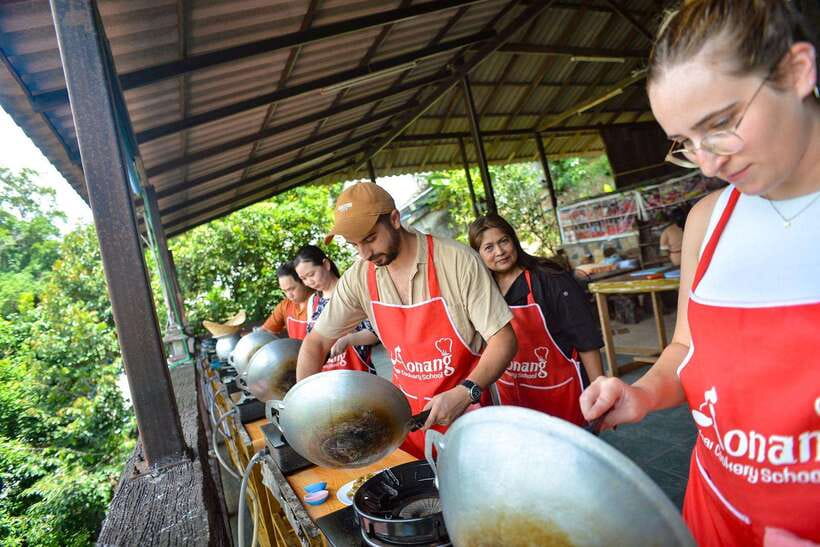
After the cooking, you sit down and eat what you have made. This is more than a reward at the end. It lets you compare the dishes and notice how the flavors work together.
A good example is curry. You may taste the paste before it is combined with coconut milk, then see how the texture and heat change during cooking. A noodle dish gives you a different lesson in speed and timing, while Tom Yum shows how herbs, lime, chili, and broth come together.
The class is generous with food. Takeaway containers are provided when you cannot finish everything, and several people have been able to carry substantial portions back to their hotel. That adds real value to the experience, especially if you are paying for a class as a couple or small group and would otherwise be buying another meal later.
Drinking water and food tasting are included. Other drinks or extras are not listed, so bring your own expectations accordingly. The recipe book and certificate are also included. The certificate is a pleasant souvenir, while the recipe book is the useful item you are most likely to use again.
Choosing vegetarian, vegan, spicy, or mild dishes
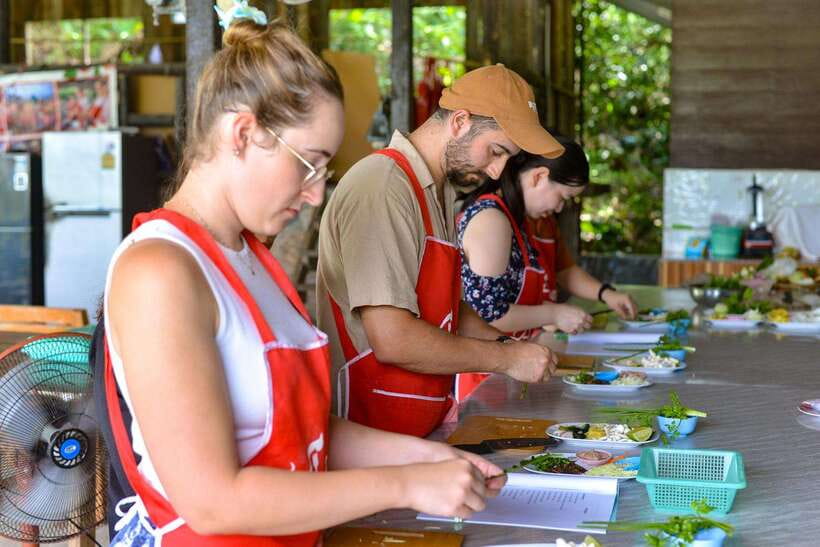
The class is flexible with flavor and dietary preferences. All dishes are available in vegetarian, vegan, spicy, or non-spicy versions. Tell the instructor what you need at the start, rather than waiting until a dish is already being cooked.
This flexibility makes the class suitable for mixed groups. One person can choose a hot green curry, while another keeps the same dish mild. A vegetarian or vegan participant does not have to sit out while the rest of the group cooks.
Still, it is sensible to repeat your dietary needs clearly during pickup or on arrival. The menus include seafood, chicken, minced meat, and sauces that may vary by dish. The information confirms that options are available, but it does not provide a separate allergen policy, so people with serious allergies should ask specific questions before cooking.
Is $41 a fair price?
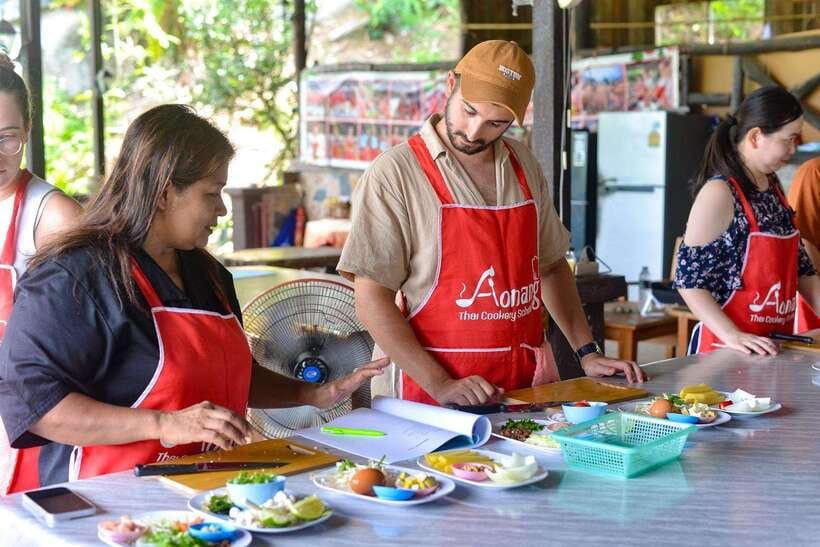
At $41 per person, the value depends on how you use the class. You are paying for hotel transport in Ao Nang, instruction, ingredients for several dishes, the meal, drinking water, a recipe book, a certificate, and the return ride.
That compares well with a simple restaurant meal because you are getting food for more than one sitting and a skill you can use at home. The takeaway portion makes the price feel better still, particularly if you have been looking for a substantial lunch or dinner activity rather than a short demonstration.
The main value comes from participation. If you prefer to sit back and watch, this may feel like a lot of food and a long class. If you want a hands-on activity and enjoy eating what you prepare, the cost is easier to justify.
The group size also affects the value. A small class can feel almost private, with time for questions and closer attention. The school can hold up to 20 people, so the experience may be more personal on some dates than others. If individual instruction is important to you, ask about the expected group size before booking.
Free cancellation up to 24 hours before the activity and the reserve-now, pay-later option make it easier to fit into a changing Krabi schedule. The class requires at least two participants to operate, so a solo booking depends on another participant joining.
Who should book this cooking class?
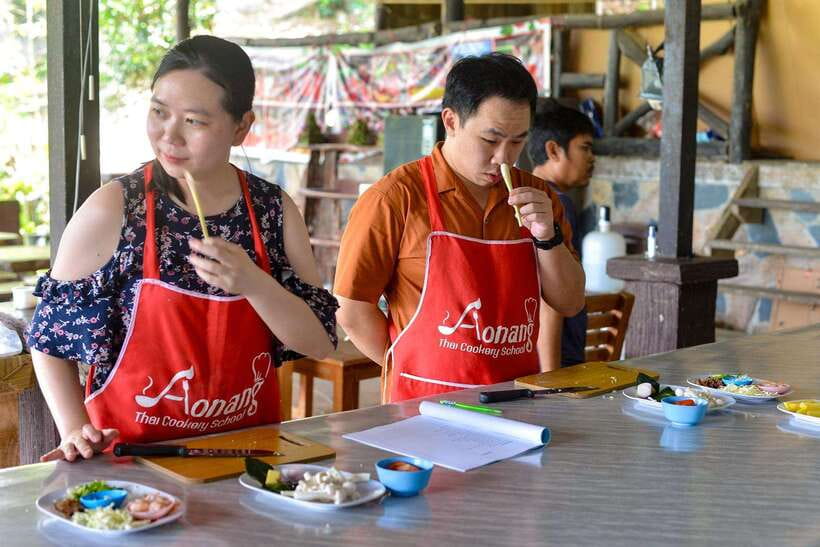
I would choose this for couples, friends, families with children aged 12 or older, and anyone who wants a break from beaches and boat trips. It also suits people who love Thai food but have never learned how the dishes are built.
The open-air setting and temple view give the activity a sense of place, while the hands-on cooking keeps it from becoming a passive food tour. The recipe book means you can keep working on the dishes after Thailand, and the leftovers make the experience feel less disposable.
It is not suitable for children under 12 or people with mobility impairments. The kitchen is in a raised setting, and the experience involves moving around, handling ingredients, and working at cooking stations. If that may be difficult, ask the operator for more detail before paying.
You should also be ready for a meal-heavy activity. This is not a small tasting menu. You will prepare several full dishes, eat them, and possibly take more away.
Final verdict: a strong food day in Krabi
Book this class if you want to learn by doing, eat well, and bring home recipes you can actually attempt. The combination of small-group teaching, flexible spice and dietary choices, reliable pickup, a hillside temple setting, and takeaway food gives it more substance than a basic cooking demonstration.
Before booking, confirm the session menu and whether you will make three or five dishes. If you need a specific transfer from Krabi Town, Klong Muang, or Tub Kaek, add the extra fee to your calculation. For most visitors staying in Ao Nang, this is a practical and enjoyable way to spend half a day, with enough food and new ideas to carry into the rest of your trip.
FAQ
How long does the Thai cooking class last?
The activity lasts between 150 minutes and four hours, depending on the selected course and schedule. Check the available start times when booking.
How many dishes will I cook?
The three-dish course includes Tom Yum, Pad Thai, and green curry. Morning, afternoon, and dinner courses offer five dishes chosen from their listed menus.
Is hotel pickup included?
Pickup and drop-off are included for hotels in the Ao Nang area. Extra round-trip transport from Krabi Town, Klong Muang, and Tub Kaek costs 200 Thai baht per person, with a minimum of two people.
Can I choose vegetarian, vegan, spicy, or mild food?
Yes. All dishes are available in vegetarian, vegan, spicy, or non-spicy versions. Tell the instructor about your preference before cooking begins.
Is the class suitable for children?
The activity is not suitable for children under 12 years old.
What do I receive after the class?
You receive a recipe book and a culinary certificate. Food tasting, drinking water, ingredients, instruction, and the included transfer are also part of the activity.
Can I take the food home?
Yes. Takeaway containers are provided, and you can take leftover food back with you after the meal.
New cooking classes around Thailand
- Sathon: Hands-on Thai Cooking Class & Market Tour in Bangkok★ 5.0 · 19 reviews
- Railay: Hands-On Thai Cooking Class at Railay Beach★ 4.9 · 30 reviews
- Phuket: Thai Cooking Class with Market Tour★ 5.0 · 2 reviews
- Phuket: Pum Thai Cooking School with Meal★ 5.0 · 3 reviews
- Phuket: Rawai Thai Cooking Class with Local Chef★ 4.8 · 23 reviews
- Phuket foodie tour+ Thai cooking class + Local food tasting★ 5.0 · 4 reviews
- Phuket: Half Day Thai Cooking Experience with Market Tour★ 5.0 · 11 reviews
- Phuket: Authentic Thai Cooking Class★ 4.8 · 145 reviews
Thailand Cooking Classes, side by side.
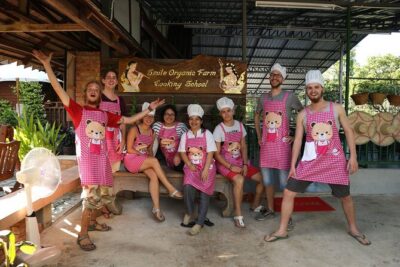
Half-Day Thai Cooking Class at Organic Farm in Chiang Mai
Read our review →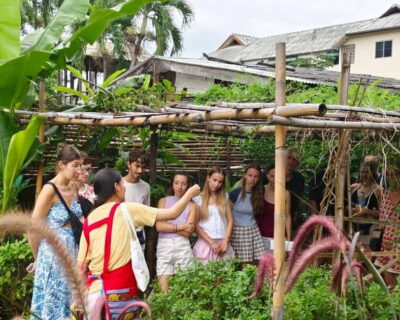
Chiang Mai: Cooking Class, Market & Thai Herbs Garden Tour
Read our review →
Chiang Mai: Authentic Cooking Class with Market & Farm Visit
Read our review →
Phuket Thai Cooking Class with Market Tour Option
Read our review →
Bangkok: Hands-on Thai Cooking Class and Market Tour
Read our review →
Chiang Mai: Cooking Class with Market and Pickup
Read our review →
Bangkok: Tingly Thai Cooking School Half-Day Cooking Class
Read our review →This kitchen also appears in