
Review · SAN SEBASTIAN
Basque cooking class in San Sebastian
San Sebastián’s food culture makes more sense once you have cooked it yourself. In this small-group class, you work through a full Basque menu rather than simply watching a chef, from a creamy tortilla to cod al pil pil, txuleta steak, and Basque cheesecake.
I like the personal instruction and the chance to pair your food with local wine, txakoli, or cider. I also like the Old Town setting and the way guides such as Fabio add local history and customs to the short walk. The main consideration is timing: the class is listed as 2.5 hours, but the detailed plan describes about 2 hours and 45 minutes, so do not schedule a rushed appointment afterward.
Key points at a glance
- Four classic Basque dishes: Prepare tortilla, cod al pil pil, txuleta, and Basque cheesecake in one session.
- A real hands-on class: You receive help with knife skills, timing, sauces, and the techniques behind each dish.
- Small groups: The experience is advertised for up to eight people in one description and up to 10 in another, with actual group size dependent on bookings.
- Old Town meeting point: Meet outside the San Sebastián tourism main office on Alameda del Boulevard before walking to the private kitchen.
- Drinks with the meal: Taste your cooking with wine, txakoli, or cider from the area.
- Useful take-home advice: Recipes, ingredient tips, and practical cooking guidance are included.
Starting at the tourism office in Donostia
Your meeting point is outside the San Sebastián tourism main office at Alameda del Boulevard, 8. This is a straightforward place to find in the Old Town area, but pay attention to the instruction to wait outside the office for your guide rather than going inside to look for the class.
The short walk to the cooking space is part of the welcome. Fabio has guided participants through the Old Town while explaining local history and customs, then helped with translation at the kitchen. Other sessions have used guides such as Ana, who added context to the meal, and Simone, who helped create a more intimate class.
The language listed for the activity is English, and a translator is included if needed. One Spanish-speaking group arranged the class in Spanish without difficulty. Do not assume every session will run in Spanish, but it is worth asking when you book if language matters to your group.
The kitchen is described as a private, tucked-away cooking space in the Old Town. You are not being taken on a long food tour across the city. The point is to get from the historic center to the worktable quickly, then spend most of your time cooking and eating.
More cooking classes around Spain:
- Barcelona: Paella Cooking Experience & Boqueria Market Tour
★ 4.8 · 3,661 reviews - Barcelona Paella Cooking Class with Market Visit, Tapas & Sangria
★ 5.0 · 2,531 reviews - Barcelona Interactive Spanish Cooking Experience
★ 4.5 · 2,155 reviews
Four dishes that explain Basque cooking
The menu gives you a useful cross-section of Basque cooking. It is not just a collection of easy recipes. Each dish highlights a different skill.
Tortilla: simple food, careful timing
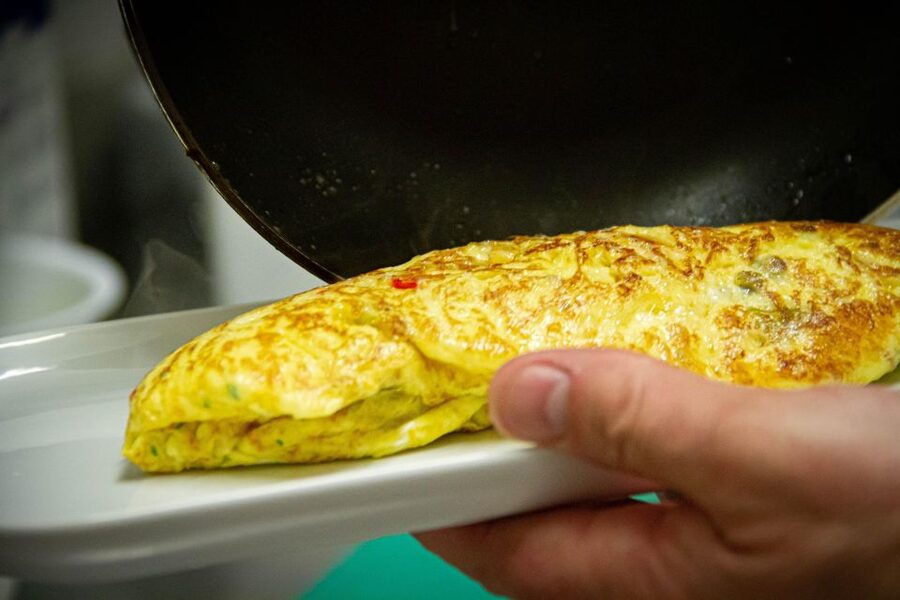
The Spanish omelette is a good opening lesson because its ingredients are familiar, but the result depends on timing and texture. You learn how to prepare a creamy center rather than a dry, overcooked omelette.
This is the sort of dish you can recreate at home, but small details matter. The instructor can show you how to judge the cooking stage and how to handle the pan. If you enjoy practical lessons that produce an immediately useful recipe, this is one of the strongest parts of the class.
Cod al pil pil: the technical centerpiece
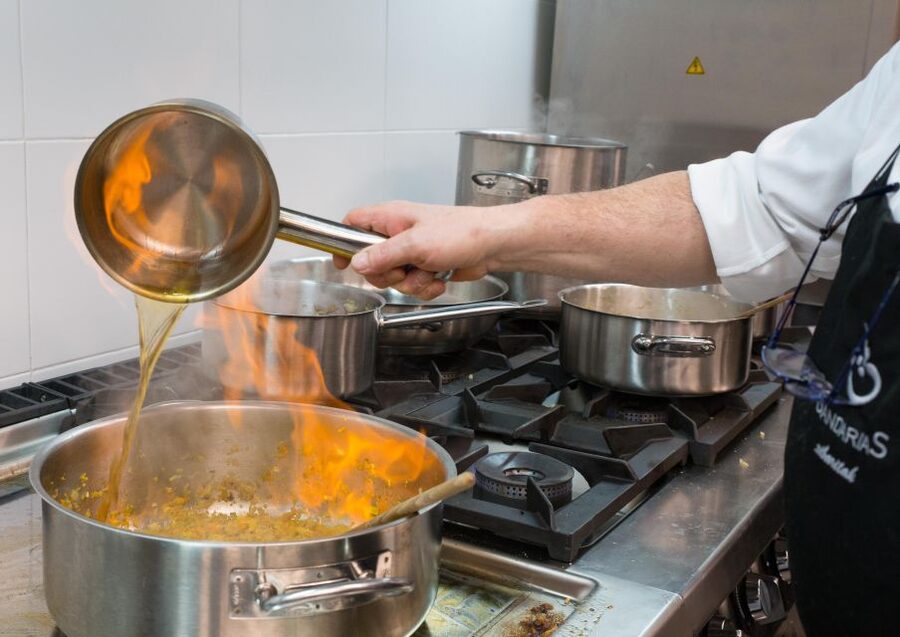
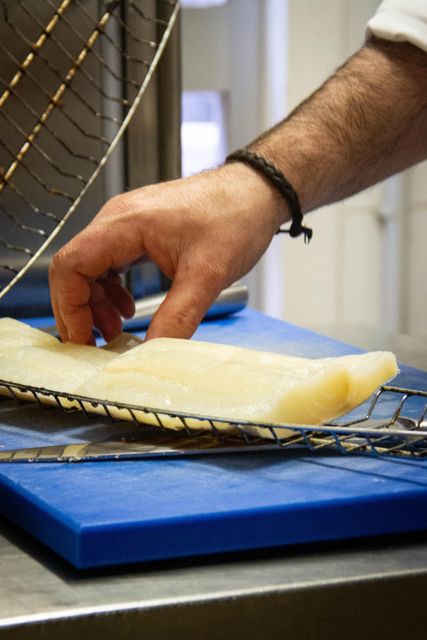
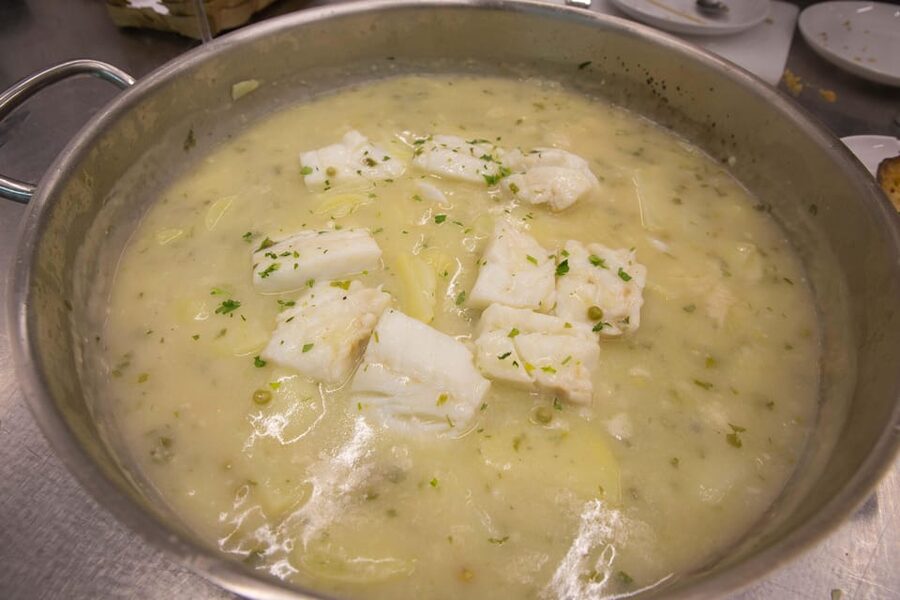
Cod al pil pil is the more demanding dish. Its famous sauce is an emulsion, so the cooking lesson is not simply about heating fish and pouring over a ready-made sauce. You work on getting the oil and fish juices to form a smooth, creamy finish.
This is where personal guidance has real value. A written recipe can tell you what to add, but it cannot easily correct your movement, timing, or heat control. The chef can show you what the sauce should look like and help prevent the common problem of a broken emulsion.
Same kitchen, a different dish:
- Spanish Cooking Class Paella Tapas and Sangria in Madrid
★ 5.0 · 1,340 reviews - Paella Cooking Class, Wine Tasting & Central Market in Valencia
★ 5.0 · 1,150 reviews - Paella Cooking Class in Madrid with Bottomless Wine Pairing
★ 5.0 · 985 reviews - Seville: Spanish Cooking Class with Dinner
★ 4.9 · 900 reviews
Txuleta: a Basque steak tradition
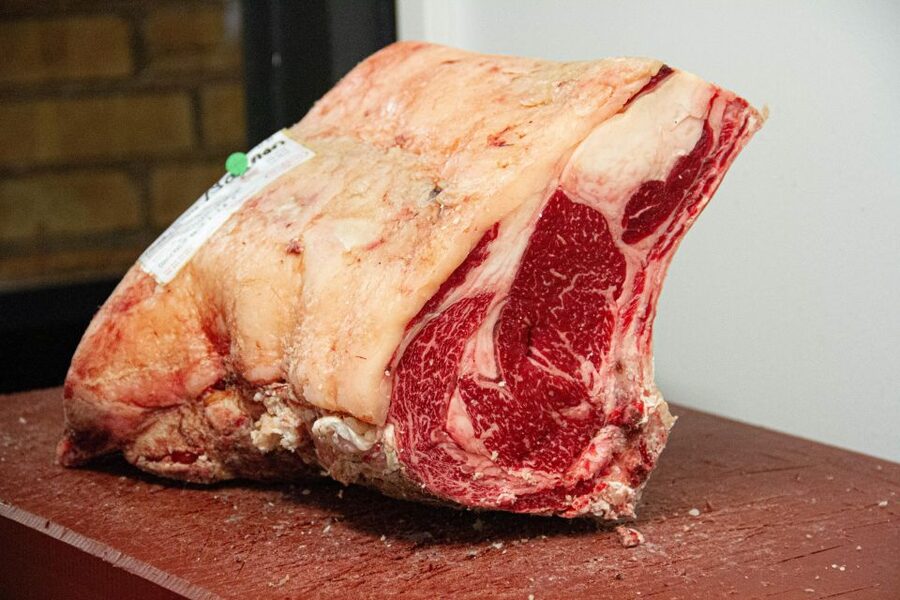
The charred txuleta brings a different kind of cooking to the menu. After the more delicate sauce work, you turn to a substantial cut of steak and focus on heat, browning, and doneness.
The listing also describes this as a New York Strip Steak in the four-course meal. The exact cut may be described differently depending on the session, so you should think of it as the steak course rather than expect a particular butcher’s specification. The useful lesson is the Basque approach to serving a boldly cooked piece of beef with minimal fuss.
Basque cheesecake: the sweet finish
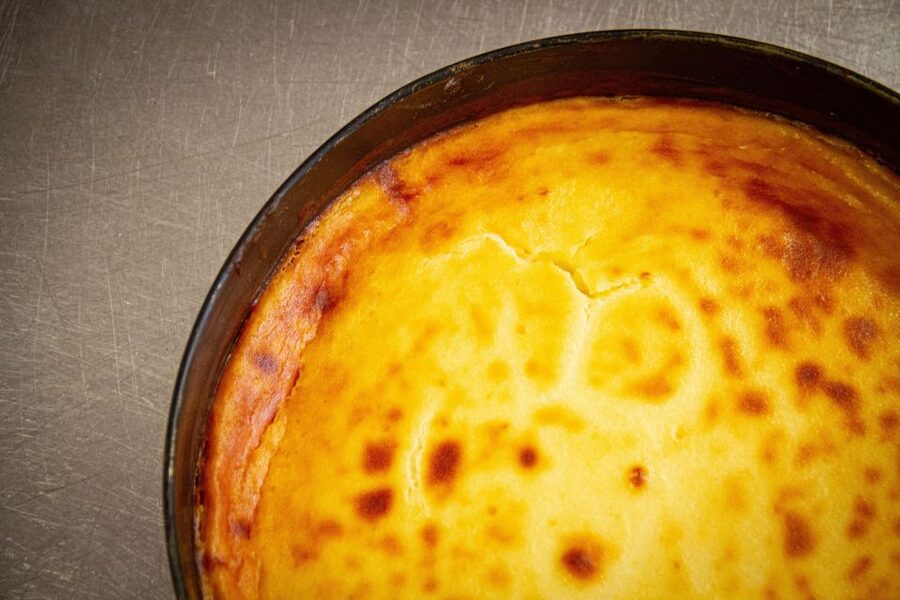
Basque cheesecake is famous for its dark, caramelized top and soft center. It is an excellent final recipe because it looks dramatic but depends on a fairly clear set of baking choices.
You finish the class by eating the cheesecake you helped prepare. That matters. You are not leaving with a recipe card and a promise to try it someday. You taste the result while the method is still fresh in your mind.
How the hands-on format works
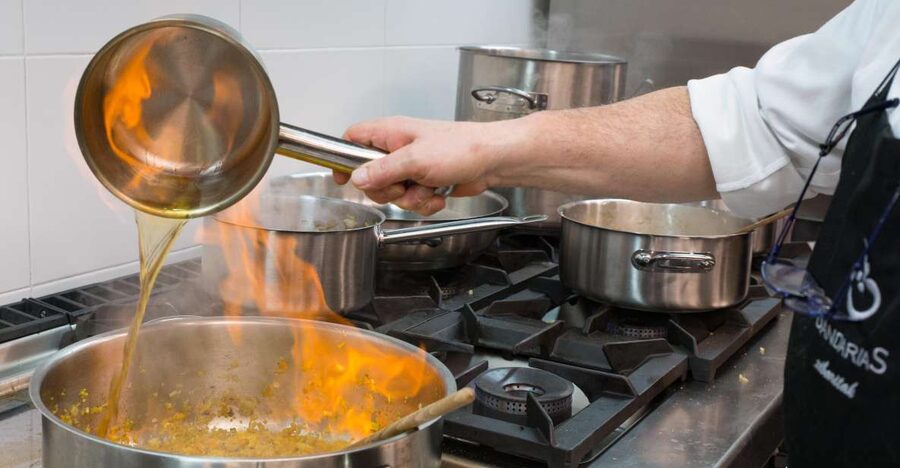
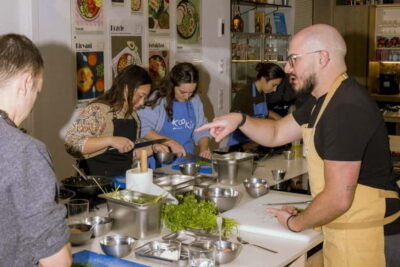
The class balances demonstration and participation. You are not expected to manage every part of every dish alone, but you should be ready to handle ingredients, follow instructions, and take an active role at the counter.
The chef covers basic knife skills, timing, and sauces. That makes the experience suitable for a range of cooking ability. You do not need to arrive as an expert, and you will have more to do than simply stand behind the group and watch.
The small format is important here. The experience is promoted as limited to 10 people in the practical booking information, while the highlights describe a maximum of eight. Treat it as a small class, but confirm the exact capacity if that point is important to you.
Some sessions have been very small. One booking had only two participants, which allowed for unusually close attention from chef Natalia. That kind of group cannot be guaranteed, but it shows how the class may feel when attendance is light. With a fuller group, the value of the chef’s help will depend more on your willingness to ask questions and take your turn.
The food is prepared as a four-course meal. That usually means the cooking process is spread across the session rather than completed in one long burst. You move between preparation, cooking, explanation, and tasting, with the chef managing the order so sauces and baked items are ready at the right time.
Eating the meal with Basque drinks
The final meal is paired with local drinks. You may have wine, txakoli, or cider, depending on the arrangement for the session. Txakoli is a crisp Basque wine, while local cider offers a different way to connect the meal with regional food customs.
The food and drinks are included, but extra food and wine are not. For most people, the prepared four-course meal should be the main focus. If you want additional servings or more drinks beyond what is supplied, budget for that separately.
I like this part of the format because the drink is not an afterthought. Pairing the finished dishes with regional choices helps you understand how the meal is meant to work at the table. The drink also gives the cooking class a social finish instead of ending as soon as the last pan is washed.
The amount of food can vary with the pace and appetite of the group. One session left two participants comfortably full, but you should not treat that as a guaranteed promise about portion size. Come ready for a substantial tasting meal, not a formal restaurant tasting menu with unlimited courses.
What the guide adds beyond the recipes
The chef is the central teacher, but the guide can add useful context. Fabio has combined the walk to the kitchen with explanations of San Sebastián’s history and customs, while helping participants communicate with the chef.
Ana has also worked as a guide alongside chef Angel, and other sessions have featured chef Juan and chef Natalia. The exact team depends on the date, so you should not book expecting one particular person unless the operator confirms it.
The extra explanation matters because San Sebastián is not just a place with a lot of restaurants. Its food identity is tied to careful technique, high-quality seasonal ingredients, and a strong eating culture. The class gives you a practical way to understand those ideas rather than simply hearing them described.
You also receive recipes and advice on choosing local ingredients. That is one of the better long-term benefits of the experience. A photograph of a meal fades quickly, but a reliable tortilla method or a clear explanation of pil pil can return value in your own kitchen.
Price, time, and what you receive for $153
At $153 per person, this is not a cheap meal. You are paying for ingredients, an expert chef, translation if needed, the cooking instruction, the completed food, and the included drinks.
The value is strongest if you would otherwise spend money on a quality meal and want an activity that gives you more than dinner. You are getting a meal plus instruction and local context, all in roughly 2.5 to 2.75 hours. The price is less attractive if you mainly want to eat and would rather spend the evening at a pintxos bar.
The class also gives you four recognizable dishes in one sitting. At a cooking school, that range can be more useful than a narrow class focused on a single recipe. You leave with ideas for a full meal rather than one isolated technique.
Keep your schedule loose. The formal duration is given as 2.5 hours, while the detailed description says 2 hours and 45 minutes. Cooking, translation, serving, and conversation can all affect the finish time, so I would avoid placing a timed museum visit, train, or dinner reservation immediately afterward.
Booking is flexible, with free cancellation up to 24 hours before the activity for a full refund. You can also reserve and pay later. Starting times vary, so check the available slot before building the rest of your day around it.
Who will get the most from this class
This is a strong choice for you if food is a major reason for visiting San Sebastián and you want to understand the cooking behind the city’s restaurant culture. It also suits couples, friends, and families who enjoy doing something together rather than sitting through another meal.
You will get the most from it if you are willing to participate. The class is not designed as a passive demonstration, and the best parts involve handling ingredients, asking questions, and paying attention to how the chef controls texture and timing.
It is also a good option for a mixed group with different cooking abilities. The recipes are familiar enough to follow, while cod al pil pil and the cheesecake offer techniques that can stretch a more experienced cook.
This may not be the right pick if you want a quiet, formal dinner, a large food market tour, or a full day of culinary sightseeing. The walk is brief, the kitchen is the main setting, and the menu is set around four dishes.
Practical details before you reserve
Meet outside the tourism office at Alameda del Boulevard, 8, 20003 Donostia-San Sebastián, Gipuzkoa. Arrive with enough time to identify the guide before the group walks to the kitchen.
English is the listed language. Translation is included if needed, and Spanish may be possible if arranged in advance, but you should confirm your preference rather than assume it.
The group size is described in two ways: up to eight people in the highlights and up to 10 participants in the activity details. Either way, the class is intended to be small, but the precise number depends on bookings.
Ingredients, the chef, translator, food, and wine are included. Extra food and wine are not. The experience has a 4.8 rating from 10 reviews, and the strongest praise centers on the chefs’ warm instruction, the useful balance between watching and cooking, and the quality of the meal and drinks.
Should you book the Basque cooking class?
I would book this if you want a practical food experience that explains San Sebastián from the kitchen outward. The four-dish menu gives you variety, the chef provides real technique, and the included wine, txakoli, or cider makes the finished meal feel connected to the region.
Book it especially if you like the idea of learning cod al pil pil, because that sauce is the sort of skill where direct correction is worth more than a recipe alone. It is also a good fit if you want a social activity in the Old Town without committing to a full-day excursion.
Skip it if your priority is the lowest-cost meal or a flexible menu with many choices. At $153, the value depends on using the class as both dinner and instruction. Leave room in your schedule, arrive at the tourism office on time, and expect a relaxed cooking session rather than a quick food stop.
FAQ
Where does the cooking class meet?
Meet your guide outside the San Sebastián tourism main office at Alameda del Boulevard, 8, 20003 Donostia-San Sebastián, Gipuzkoa.
How long does the experience last?
The activity is listed as 2.5 hours. The detailed description gives a duration of about 2 hours and 45 minutes, so allow extra time.
What language is the class offered in?
English is the listed language. A translator is included if needed.
How many people are in the group?
The experience is described as a small group, with one section stating a maximum of eight people and another stating up to 10 participants.
What dishes will I prepare?
The menu includes a creamy Spanish omelette, cod al pil pil, charred txuleta or a New York Strip Steak course, and Basque cheesecake.
Are food and drinks included?
Ingredients, the prepared food, and wine are included. The drink pairing may include local wine, txakoli, or cider. Extra food and wine are not included.
Do I receive recipes after the class?
Yes. Recipes, cooking tips, and advice on selecting local ingredients are included.
Can I cancel the booking?
You can cancel up to 24 hours in advance for a full refund. Reserve now and pay later is also available.
New cooking classes around Spain
- Seville: Paella-Cooking Experience with Sangria & Full Meal★ 4.9 · 42 reviews
- Seville: Paella Showcooking Experience★ 4.7 · 161 reviews
- Seville: Paella Cooking Class & 30-Min Local Expert Q&A★ 4.8 · 37 reviews
- San Sebastián: Market Tour, Cooking Class, & Meal★ 5.0 · 2 reviews
- San Sebastián: Market Tour and Basque Cooking Class English★ 5.0 · 5 reviews
- Barcelona: Paella Seafood Master Cooking Class with Sangria★ 5.0 · 73 reviews
- Pontevedra: Galician Cooking Class with Chef Instructor★ 4.9 · 3 reviews
- Mojo Workshop Cooking Class in Ancient Canarian Village★ 4.9 · 127 reviews
San Sebastian Cooking Classes, side by side.
Basque Cooking Experience: Market Tour & Hands-On Class English
Read our review →
San Sebastián: Market Tour and Basque Cooking Class English
Read our review →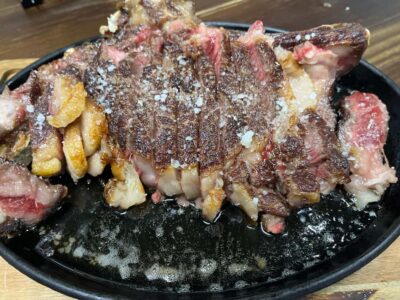
San Sebastián: Market Tour, Cooking Class, & Meal
Read our review →This kitchen also appears in