
Review · CRETE
Chania Cooking Class-The Authentic Enjoy traditional Cretan meal
A plate of food tells you plenty about Crete, but making that food with Veerna and her family tells you much more. In a family kitchen near Chania, you’ll prepare lamb kleftiko, dolmades, stuffed vegetables, kalitsounia, dakos, tzatziki, and a seasonal dessert, then sit down to a full Cretan meal with local wine.
I like the hands-on work, especially rolling pastry and shaping the dishes yourself. I also like the warm family setting, with an outdoor kitchen, olive trees, and time to hear about Cretan food and family traditions. The main drawback is timing: appetizers may not reach the table until roughly three hours after the start, so eat a small meal beforehand.
Key points to know before booking
- Kleftiko is the centerpiece: You prepare a lamb pouch with goat cheese and vegetables, then learn why this dish is called the thieves dinner.
- Pastry is made by hand: You roll dough for savory and sweet kalitsounia instead of simply watching a demonstration.
- The setting feels personal: Cooking takes place near an olive grove, with a shady outdoor kitchen and seating area.
- The meal is generous: Wine, soft drinks, lunch or dinner, dessert, and all cooking supplies are included.
- The class is social: Solo participants can join another group, and larger groups can ask about a discount.
- Plan for transport: The meeting point is in Nerokouros near Chania, and transfers are available for an extra fee.
A family kitchen near Chania, not a staged food show
This class takes place in Nerokouros, outside central Chania, at the home and cooking space used by Chania Cooking Class. The exact location arrives by email after confirmation, so check your messages before setting out.
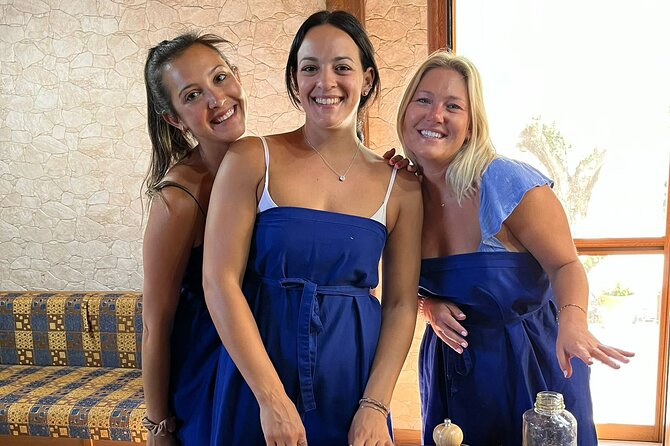
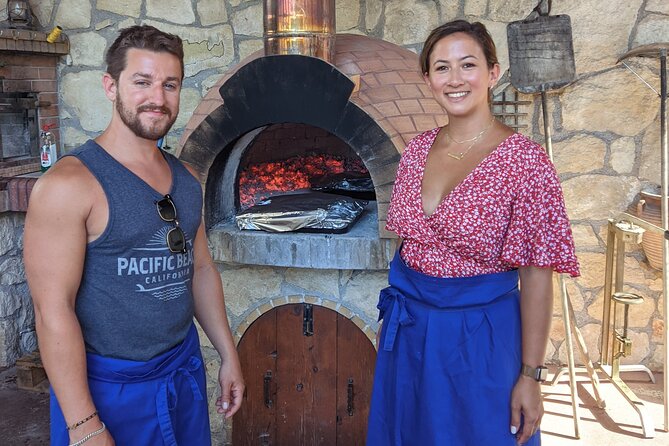
The hosts, including Veerna, Alex, and Kostas, shape the tone of the afternoon or evening. Veerna leads much of the instruction, while family members help with preparation, cooking, transport, and conversation. The result is less like a formal culinary school and more like being welcomed into a Cretan home where everyone happens to be preparing a large meal together.
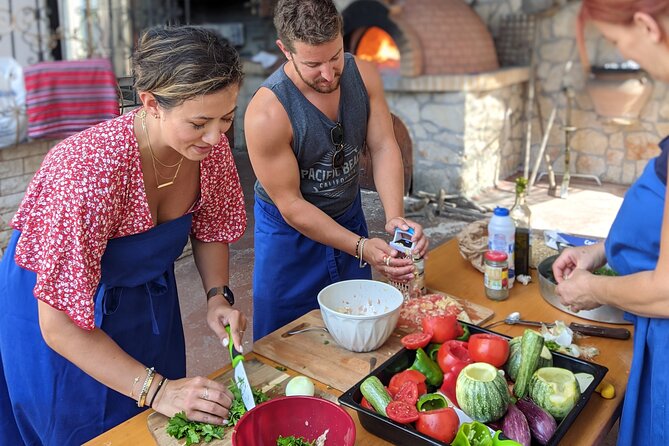
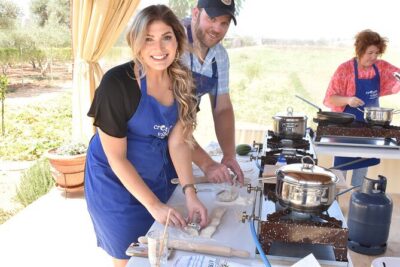
That distinction matters. You are not just shown a finished plate and handed a recipe card. You chop vegetables, roll dough, fill grape leaves, shape pies, and help assemble several dishes. The work is simple enough for beginners, yet a trained cook can still pick up useful details about Cretan ingredients and methods.
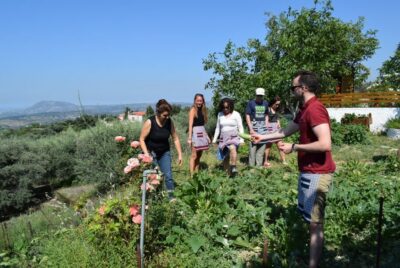
The setting adds to the pleasure. The cooking and dining area is outdoors, with olive trees and a garden nearby. On hot days, the shaded work area helps, though Crete’s summer heat is still worth considering when choosing clothing and scheduling your day.
More Greek Cooking Classes around Greece:
- Greek Cuisine Cooking Class in Santorini with Recipes and Wine
★ 5.0 · 969 reviews - Greek Cooking Class in Athens Including Rooftop Dinner with Acropolis View
★ 5.0 · 826 reviews - Greek Small-Group Athens Cooking Class & Dinner
★ 5.0 · 574 reviews
Starting with coffee, cookies, and a Cretan menu
Your welcome begins with a homemade refreshment or Greek coffee, along with homemade cookies. It is a small touch, but it sets the pace. You have time to settle in before the class moves into the menu and the cultural background behind it.
The menu centers on Mediterranean ingredients: vegetables, herbs, yogurt, cheese, lamb, rice, tomatoes, and olive oil-based preparations. The hosts explain what you’ll make and how the dishes fit into Cretan food traditions.
The first major lesson is kleftiko, also called the thieves dinner. Here, lamb, goat cheese, and vegetables are cooked together in a pouch. The name refers to the old story behind the dish, when stolen meat was cooked in a concealed way so that smoke would not give away the location.
You do not need a strong cooking background to follow the class. Instructions are given step by step, and the atmosphere is relaxed. Still, this is an active class, not a meal with a token cooking demonstration. You should be ready to stand, handle ingredients, and work with the group.
Making kleftiko, stuffed vegetables, and dolmades
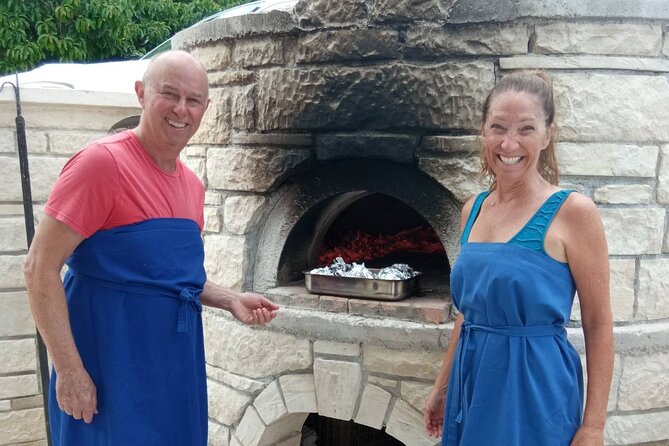
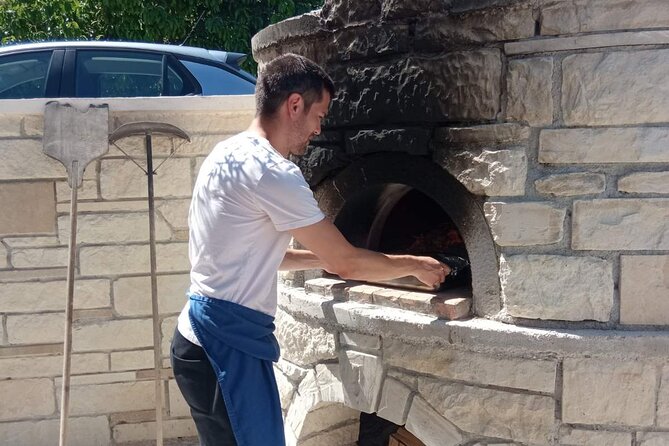
The lamb kleftiko is one of the most distinctive parts of the menu. The pouch holds lamb, goat cheese, and vegetables, allowing the flavors to combine as the dish cooks. The wood oven is handled by Kostas in some sessions, while the rest of the group works through the other recipes.
You also prepare tomatoes, peppers, and zucchini stuffed with rice and herbs. This is a useful introduction to a familiar Greek technique because the filling, seasoning, and balance between vegetable and rice are central to the finished dish.
Dolmades add another layer of hands-on work. You fill grape leaves with rice and herbs, then fold them into compact parcels. This is the kind of task that looks easy until you try to make each piece the same size. The class gives you a chance to learn the method without the pressure of preparing an entire family feast alone.
The menu is large for a four-hour experience. That is good news if you want a full meal, but it also explains why the eating comes late. The cooking progresses in stages, and the dishes are not all served the moment they are prepared.
Rolling dough for savory and sweet kalitsounia
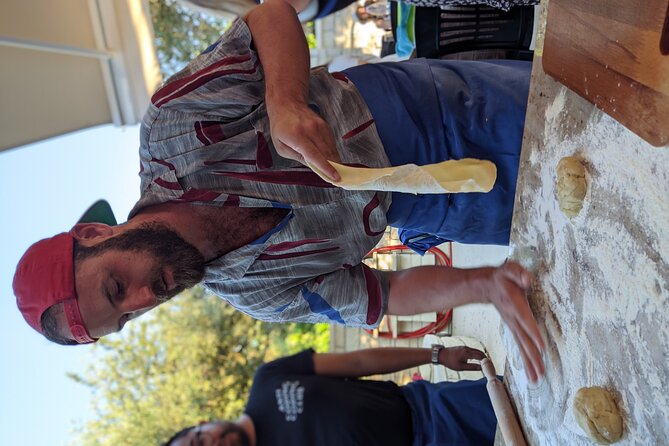
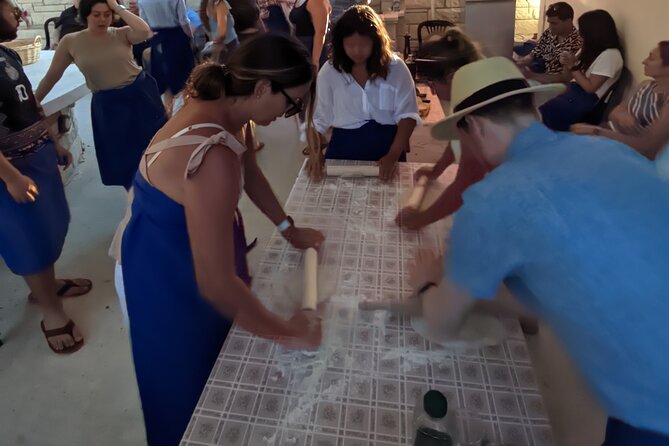
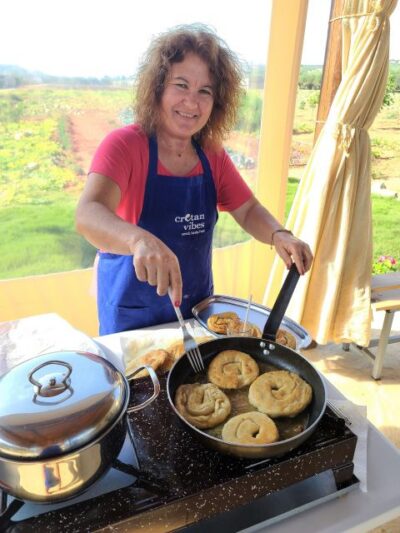
The kalitsounia lesson is a highlight for anyone interested in Greek pastry. You use rolling pins to roll out the dough, then prepare both savory and sweet versions.
The savory pies contain cheese, wild greens, and herbs from the organic garden. They provide a good example of how Cretan cooking turns a few basic ingredients into food with plenty of flavor. The sweet kalitsounia are filled with cheese and served with honey.
Making the dough yourself gives this part more value than simply tasting a pastry at a bakery. You feel the texture, see how thin the dough should be, and learn how the filling is handled. It is also one of the more social parts of the class, since people work side by side and compare their shapes.
The class may not produce bakery-perfect pastries from every participant. That is part of the fun. If you want a polished chef demonstration with exact professional presentation, this may feel informal. If you want to take part and learn a technique you can try at home, it works well.
More cooking classes around Greece:
- Athens: Classic Cooking Class with Market Visit and Wine
★ 5.0 · 1,101 reviews - Athens: Food Market Visit and Cooking Class with Wine
★ 4.9 · 1,087 reviews - Naxos: Half-Day Cooking Class at Basiliko Family Tavern
★ 5.0 · 887 reviews - Exclusive Cooking Experience in our Cave Home by Petra Kouzina
★ 5.0 · 572 reviews
Dakos, tzatziki, and Cretan salad
The appetizers are prepared last but eaten first. That order is practical because these dishes need less cooking time than the lamb and stuffed vegetables.
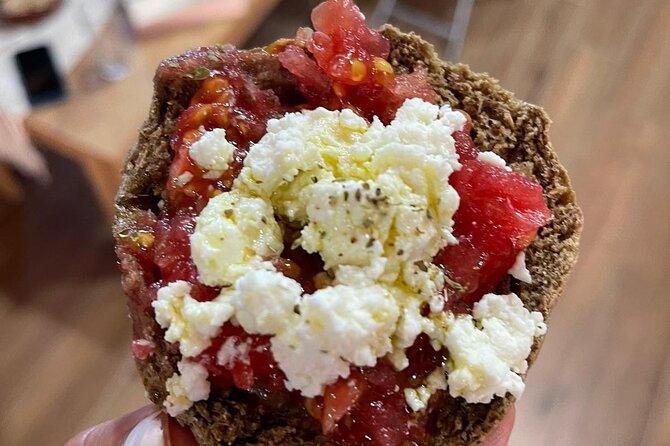
Ntakos is a traditional Cretan baked bread or rusk topped with grated tomato and goat cheese. It is one of the best introductions to the island’s use of dry bread, ripe tomatoes, cheese, and herbs. You may find it simple, but the ingredients carry the dish.
Tzatziki brings yogurt, cucumber, and garlic to the table. It is familiar across Greece, but making it in the class gives you a chance to see how it fits with the other food. The Cretan salad adds more fresh vegetables and herbs to the spread.
These dishes are also useful during the wait for the main courses. If you arrive hungry, the delay before the first proper meal may feel long. Have a light breakfast or lunch first, especially if you choose the later dinner session.
A long table of food, wine, and dessert
Once the cooking is finished, you sit down to eat what the group has prepared. The menu includes kleftiko, stuffed vegetables, dolmades, savory kalitsounia, dakos, tzatziki, salad, and dessert.
Local wine is included, along with soft drinks. The wine helps turn the meal into a social occasion, but you are not required to drink alcohol. Since the class runs four to five hours, the final meal feels like the natural end of a shared project rather than a quick tasting.
Dessert may include sweet kalitsounia with honey and Greek yogurt with spoon sweet. Spoon sweets are made from fruit processed into a thick, sweet preserve, and the exact fruit can be seasonal. This gives the final course a distinctly Greek finish without making the meal overly complicated.
The portion of food is generous. You should expect to leave full, not simply satisfied after a few sample bites. The recipes may be sent afterward, which is helpful if you want to recreate the dishes at home. Phyllo-style pastry is the most ambitious item to repeat, but dakos, tzatziki, stuffed vegetables, and yogurt with spoon sweet are more approachable starting points.
What the four-hour schedule really means
The class can run from 10 a.m. to 2 p.m. for lunch or from 4 p.m. to 8 p.m. for dinner. The stated duration is about four hours, but it can stretch to five depending on the number of participants.
That flexibility is worth noting if you are arranging a ferry, port visit, dinner reservation, or evening walk in Chania. Do not schedule something immediately afterward. The cooking, conversation, and meal are all part of the experience, and rushing away would undercut the relaxed pace.
The class can accommodate a maximum of 40 people, though several accounts describe groups around 20 to 27. A group that size can still work, but it will not feel as intimate as a private lesson. The hosts appear to divide attention among the participants, yet you may spend some time watching while another person handles a particular step.
Solo visitors and groups of fewer than four should contact the provider to ask about joining another group. That can be a good option if you want to attend without paying for a private booking. Groups larger than 10 can ask about a discount.
Price, transfers, and practical value
The listed price is $133.08 per person. The local pricing information gives an adult rate of 105 euros, with children ages 5 to 12 priced at 50 euros and children ages 0 to 4 free. Because the displayed price and local euro rate can vary with booking currency and date, check the final amount before paying.
For that price, you receive the cooking class, all ingredients, lunch or dinner, alcoholic drinks, soft drinks, and dessert. That makes the value stronger than a short demonstration followed by a small tasting. You are paying for several hours of instruction, a substantial meal, and a personal setting near Chania.
Transportation is not included in the base price. A transfer service can be arranged for an extra fee based on your pickup point. Transport uses a nine-seat van and an electric vehicle, and you may share the ride with other participants.
The meeting point is the cooking class location in Nerokouros, and the activity ends there. If you arrange a pickup from a hotel, port, or another location, confirm the added cost and timing in advance. Pickup is especially useful if you do not have a rental car, but it changes the total price.
Free cancellation is available if you cancel at least 24 hours before the start time. Inside that window, the payment is not refunded, and changes are not accepted. The cut-off follows local time.
Who will enjoy this class most
I would choose this experience if you want food to be the main way you connect with Crete. It suits couples, families with older children, solo visitors, and groups of friends who enjoy sitting down with people they have just met.
Families can take part together, and teenagers have enjoyed the active work and the meal. Young children may find four to five hours long, though the stated child pricing makes the option more practical for families than many cooking classes.
Food lovers will appreciate the number of dishes and the chance to make pastry. You do not need to be an experienced cook. The menu is traditional, but the instruction is designed to be approachable.
This is less suitable if you want a short activity, a quiet private lesson, or a tightly timed professional kitchen session. It is also not ideal if you dislike group cooking, shared meals, or a late first course.
Should you book the Chania Cooking Class?
I would book it if you have half a day to spare near Chania and want more than restaurant sightseeing. The strongest reasons are the family welcome, the outdoor cooking area, the sheer amount of food, and the chance to make dishes that carry a real connection to Cretan home cooking.
Book the lunch session if you want the experience to fit more easily into an afternoon. Choose dinner if you like a longer social evening and do not mind returning later. Eat lightly beforehand, confirm your transport cost, and leave room in your schedule for the class to run five hours.
This is not just a lesson in recipes. It is a shared meal built from scratch, with enough practical work to keep you involved and enough conversation to make the setting feel personal. For many visitors, that combination makes it one of the better food-focused activities around Chania.
FAQ
Where does the cooking class take place?
It starts in Nerokouros near Chania, at the Chania Cooking Class meeting point. The exact location is emailed after confirmation.
How long does the experience last?
The class lasts about four hours, but it can run from four to five hours depending on the number of participants.
What times are available?
You can choose a lunch session from 10 a.m. to 2 p.m. or a dinner session from 4 p.m. to 8 p.m.
Is transportation included?
Transportation is not included in the base price. Pickup and transfer service can be arranged for an extra fee based on your location.
What dishes will I prepare?
You will prepare kleftiko with lamb, goat cheese, and vegetables; stuffed vegetables; dolmades; savory and sweet kalitsounia; dakos; tzatziki; Cretan salad; and dessert.
Are food and drinks included?
Yes. Ingredients, lunch or dinner, alcoholic beverages, soft drinks, and dessert are included.
Can solo participants join the class?
Yes. Individual participants and groups of fewer than four can contact the provider to ask about joining another group.
Is the class suitable for children?
Children ages 0 to 4 are free, and children ages 5 to 12 have a listed price of 50 euros. The class can last four to five hours, so consider your child’s comfort with a long cooking and dining session.
What is the cancellation policy?
You can cancel at least 24 hours before the start time for a full refund. Cancellations or changes made within 24 hours are not accepted and are not refunded.
New cooking classes around Greece
- Savor Rhodes: 11-Dish Wine Pairing and Cooking Adventure★ 4.4 · 12 reviews
- Santorini: Hands on Cooking Class with a Chef★ 4.7 · 16 reviews
- Santorini: Cooking Class with a Professional incl. Full Meal★ 5.0 · 2 reviews
- Santorini: Greek Cooking Class with Wine Tasting★ 5.0 · 7 reviews
- Santorini: Vineyard and Winery Tour with Cooking Class★ 4.9 · 5 reviews
- Santorini Cooking Class with Wine Tasting & Lunch★ 4.9 · 36 reviews
- Santorini: Cooking Class with a Chef at the Ftelos Brewery★ 4.8 · 33 reviews
- Rhodes: Winery Tour, Tasting and cooking with the Winemaker★ 4.8 · 21 reviews
Crete Cooking Classes, side by side.
Chania: Authentic Cooking Class in the White Mountains
Read our review →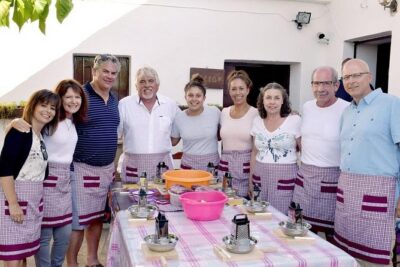
Moires: Cooking Class and Olive Oil Tasting at a Family Farm
Read our review →
Crete: Sightseeing Day Trip with Cooking Lesson and Lunch
Read our review →
Heraklion: Cretan Cooking Lesson with Lunch in Arolithos
Read our review →
This kitchen also appears in