
Review · ITALY
Cinque Terre: Pesto Cooking Class at a Local’s Home
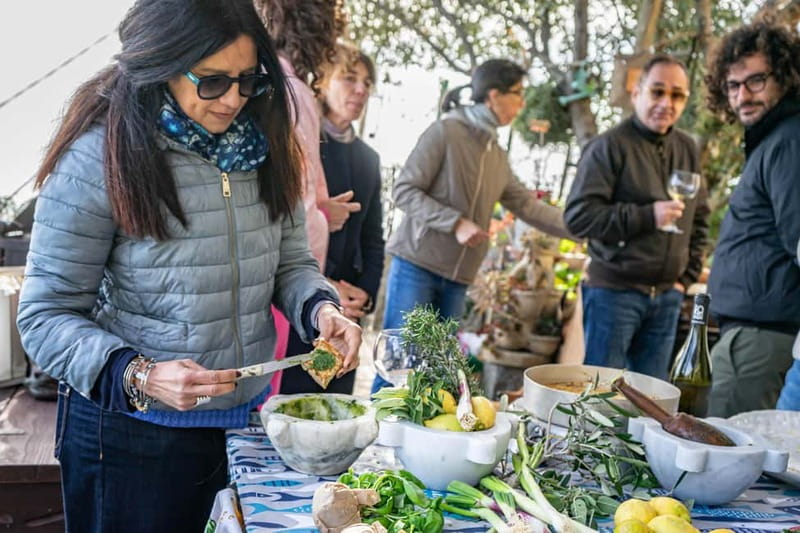
The best part of this two-hour pesto class is the setting: a local home reached through vineyard terraces above the Ligurian sea. You will learn how to make pesto with a mortar and pestle, then compare it with the quicker electric-blender method. The class also covers how to store pesto so it keeps its flavor.
I like the small group, limited to 10 people, and the chance to talk with a local Cesarina rather than simply watch a kitchen demonstration. I also like the simple finish: one glass of Ligurian Possa wine, a taste of your work, and pesto packaged for you to take home. The main drawback is the approach, which includes a 200-meter uphill walk and terraced steps, so allow extra time and wear steady shoes.
Key points
- Two pesto methods: Learn the traditional mortar-and-pestle technique and the faster electric-blender option.
- Sea views from a vineyard: The class takes place at a local home above the coast, with a scenic walk to reach it.
- Pesto to take home: You package your finished pesto and receive storage advice.
- A small, personal group: The class is limited to 10 participants and is offered in English or Italian.
- Local wine included: Sip one glass from Possa winery in Liguria during the class.
- Plan for the walk: The meeting point is not the house itself, and the final route includes uphill walking and terraced steps.
Why this pesto class feels different
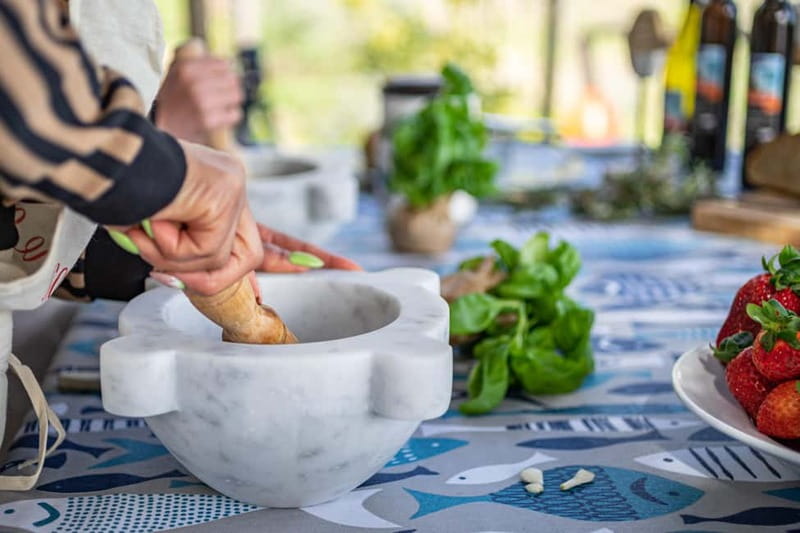
Pesto is often treated as a quick food stop in Liguria. Here, you get the basic recipe, but you also see how much care goes into it. The Cesarina explains the story of pesto from La Spezia and shows you why the basil and other ingredients matter.
That local setting changes the mood. You are not sitting in a large cooking studio with a row of identical workstations. You walk to a home among vineyard terraces, look toward the sea, and learn from someone who prepares the dish as part of everyday regional food culture.
This is an express class, not a full meal or a long culinary course. That makes it a good fit if you have only a few hours free in the Cinque Terre area. You get a clear lesson, a taste of the finished pesto, a glass of wine, and a small edible souvenir without giving up half your day.
More Home Cooking Classes in Italy
- Pasta Cooking Class: Mastering Nonna’s Recipes
★ 5.0 · 554 reviews - Pastamama, Home Cooking Classes at Grace’s Home
★ 5.0 · 521 reviews - Traditional Home Cooking Experience in Venice
★ 5.0 · 377 reviews
Reaching the home above the coast
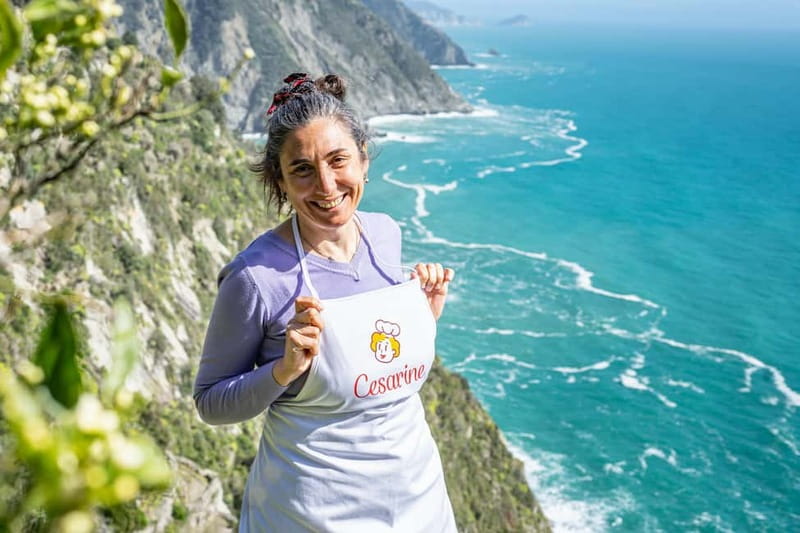
The meeting point is only the beginning. From there, you walk about 200 meters uphill to reach the Cesarina’s house. The directions then involve descending terraced steps, turning right at the sign for I Foresti Farm, and following the path to the home.
Read those directions before you set off. The walk is part of the charm, but it is not a flat stroll from a roadside meeting point. One person who enjoyed the class specifically advised allowing time to arrive because the walk takes a little effort. The same advice applies in reverse at the end, when you return to the meeting point.
I would wear comfortable shoes with a firm sole. The supplied information does not give a formal accessibility rating, so anyone concerned about hills, steps, or uneven paths should contact the organizer before booking. The route itself is worth treating as part of the experience, but you do not want to arrive rushed or uncomfortable.
Once you reach the house, the class has a more personal feel. The group size is capped at 10 people, which is small enough for questions and hands-on work. It also keeps the lesson from turning into a show where you can barely see what is happening.
Starting with Ligurian basil and pesto’s story
The class begins with the history of pesto from La Spezia. This gives the recipe a useful sense of place. Pesto is not presented as a generic green sauce, but as one of the best-known foods connected with Liguria.
The Cesarina explains the traditional system of choosing the best basil plants and selecting high-quality ingredients. That advice matters because pesto has very few main components. When a recipe is this short, the ingredients and the way you handle them make a noticeable difference.
You will learn what to look for in basil and why care is needed during preparation. The class is less about memorizing a complicated formula and more about understanding the choices behind the dish. That is useful when you try to make pesto at home with ingredients from your own market.
The setting helps here. Looking over the sea from a vineyard while discussing basil feels more connected to Liguria than making the same dish in a standard indoor classroom. The view is not an extra decoration only. It links the food to the place where it belongs.
Mortar and pestle versus electric blender
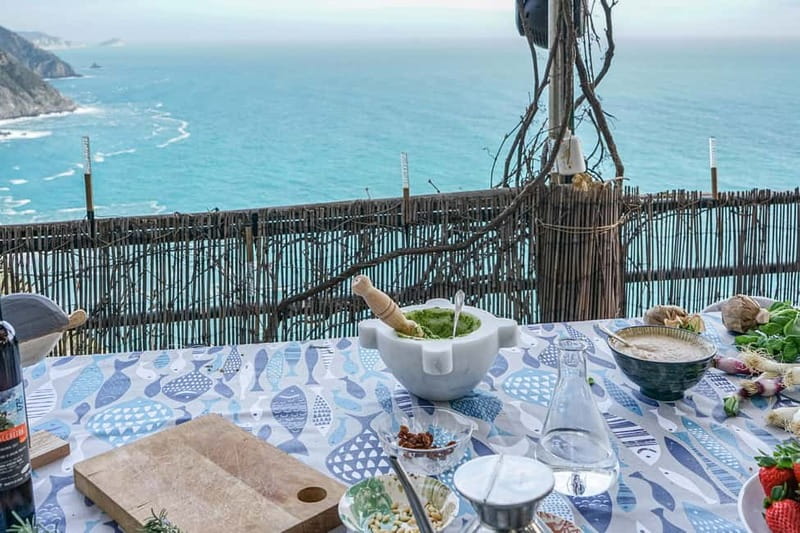
The most useful teaching point is that you learn two ways to prepare pesto. First comes the traditional mortar-and-pestle method. This is the slower, hands-on approach, and it shows the older way of working the ingredients together.
Then you learn how to use an electric blender. That method is faster and easier for a busy home cook, especially when you want pesto for a weeknight meal. Seeing both methods helps you understand the difference between tradition and convenience without pretending that one tool is right for every kitchen.
I like this comparison because it gives you something practical to take home. A class that teaches only the old method can be enjoyable but difficult to repeat. A class that uses only a blender can miss the local character. Here, you get both approaches and can choose the one that suits your time and equipment.
The class is described as an express lesson, so do not expect a long technical workshop on every variation of pesto. The value is in learning the basic process clearly, seeing the two tools used, and picking up tips from the Cesarina as you work.
Same kitchen, a different dish:
- Florence: Pasta Cooking Class with Unlimited Wine
★ 4.9 · 10,285 reviews - 3 in 1 Cooking Class near Navona: Fettuccine, Ravioli & Tiramisu
★ 5.0 · 7,376 reviews - Florence: Pasta & Tiramisu Cooking Class with Unlimited Wine
★ 4.9 · 6,708 reviews - Florence: Pasta Cooking Class with Unlimited Wine
★ 5.0 · 6,413 reviews
Storing your pesto after the class
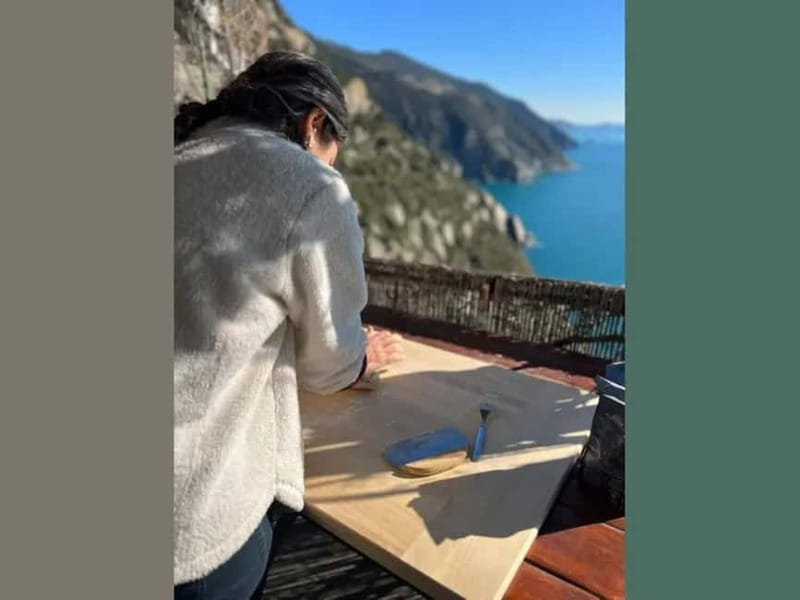
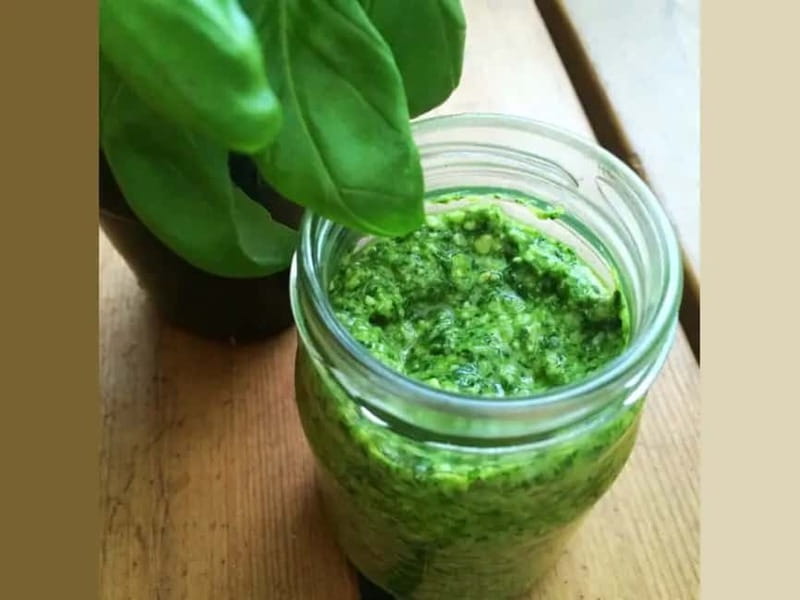
Making pesto is only half the job. The Cesarina also explains how to store it so it stays fresh for as long as possible. This is a small detail, but it is one of the most useful parts for anyone who wants to repeat the recipe at home.
You will package the pesto to take with you. That gives the class a clear ending and means you leave with something more useful than a recipe card alone. You can enjoy the pesto later after returning home, or eat it during your time in the area, including at a rocky cliff overlooking the sea.
The storage advice also helps you avoid a common problem with homemade pesto: preparing more than you can use and then letting it lose its quality. Since the class teaches both preparation and storage, it gives you a better chance of recreating the experience in your own kitchen.
The supplied details do not specify the exact container, storage time, or method, so ask the Cesarina for those points during the class. You can also confirm any dietary needs with the organizer after booking.
A glass of Possa wine with your pesto
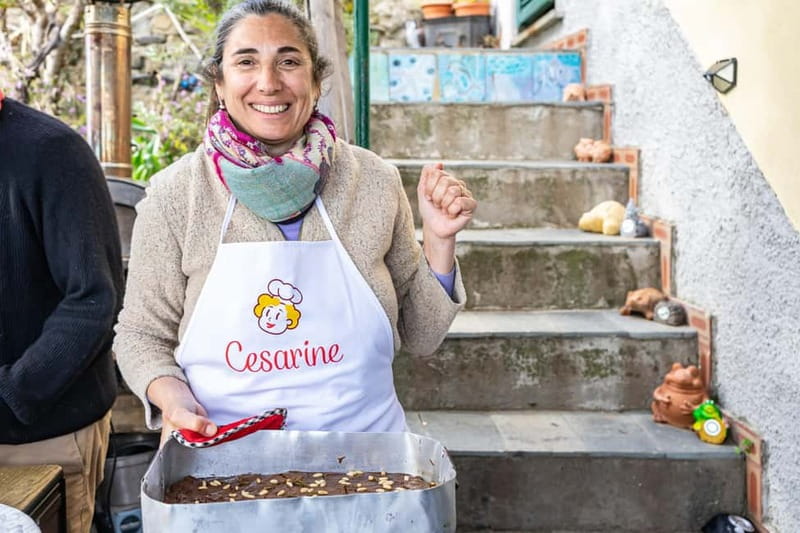
The class includes one glass of local wine from Possa winery in Liguria, along with water. This is a modest inclusion, but it suits the scale of the experience. You are not paying for a long wine tasting or a multi-course lunch. You are getting a local drink to enjoy with the food you have just prepared.
That pairing makes the final part of the class feel relaxed. After the practical work, you can taste the pesto and talk with the host. The experience is as much about conversation and setting as it is about the recipe.
One useful point to keep in mind: the included wine is one glass. If you want additional drinks or a fuller meal, do not assume they are part of the class. The listed inclusions are the express pesto lesson, one glass of Possa wine, and water.
The views are part of the value
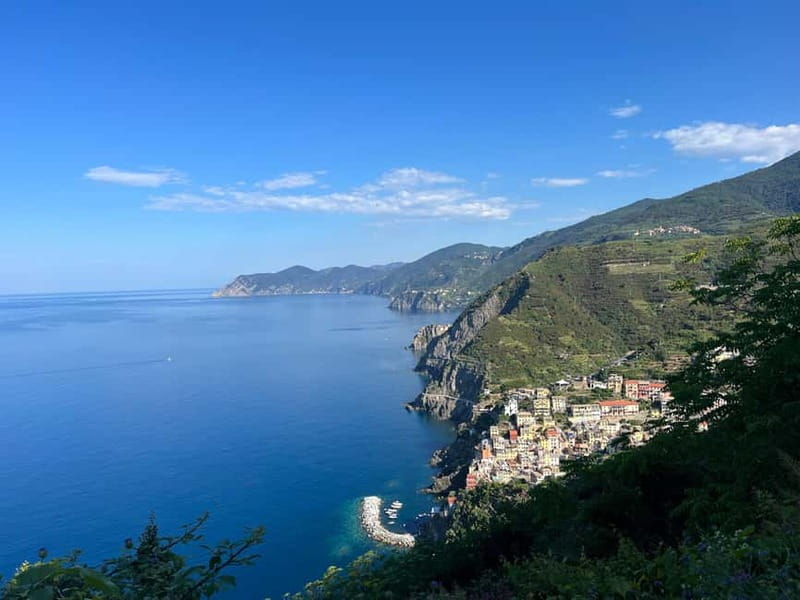
The sea view from the vineyard is a major reason to choose this class instead of a cooking lesson in a regular town kitchen. You get a food activity with a strong sense of place, not just an indoor demonstration.
The view also gives you a memorable way to enjoy what you make. You may taste the pesto when you return home, or you may take it to a rocky cliff overlooking the sea. The choice depends on your plans, but the class gives you an edible souvenir that fits naturally into a Cinque Terre day.
I would not book this solely for the view if you have no interest in cooking. The walk and the setting are pleasant, but the central activity is still learning pesto. If you want a scenic experience with some hands-on food preparation, the balance works well.
The walk to the house adds to the sense of arriving somewhere local, but it can also be inconvenient if your schedule is tight. Build in enough time before the two-hour start so you are not searching for the path at the last minute.
How the two hours are likely to flow
The exact start time depends on availability, but the experience lasts two hours. The meeting point is followed by the walk to the Cesarina’s home, where the class begins with pesto’s story and the selection of basil and other ingredients.
Next, you learn the traditional mortar-and-pestle process. The Cesarina then shows you the electric-blender method, explaining the practical difference between the two. The lesson continues with storage tips, and you package your finished pesto.
The final stretch is for tasting, conversation, water, and your included glass of Possa wine. You then return to the meeting point, so the activity does not end at the house.
This is a good length for a food activity during a busy Cinque Terre visit. Two hours gives you enough time for instruction and tasting, but it does not take over your full day. At the same time, the class is short enough that you should not expect a broad survey of Ligurian cooking. The focus stays on pesto.
Language, group size, and personal attention
The class is offered in English and Italian. That gives English-speaking visitors a clear way to follow the instruction, while Italian speakers can participate in the host’s own language.
With a maximum of 10 people, the group is small by tour standards. That matters in a cooking class because you need to see the tools, follow each step, and ask questions. A large crowd would make the mortar-and-pestle demonstration less useful.
The two-hour format also leaves room for conversation with the host. The experience is not only about producing pesto quickly. It gives you a chance to talk about ingredients, local food, and the home where the class takes place.
The host is identified through the Cesarine network rather than by a personal name in the booking details. You receive the home address after reserving, so do not expect to have the exact location before booking. This is common for a local-home experience, but it means you should read the arrival instructions carefully once they are sent.
Who will enjoy this experience most
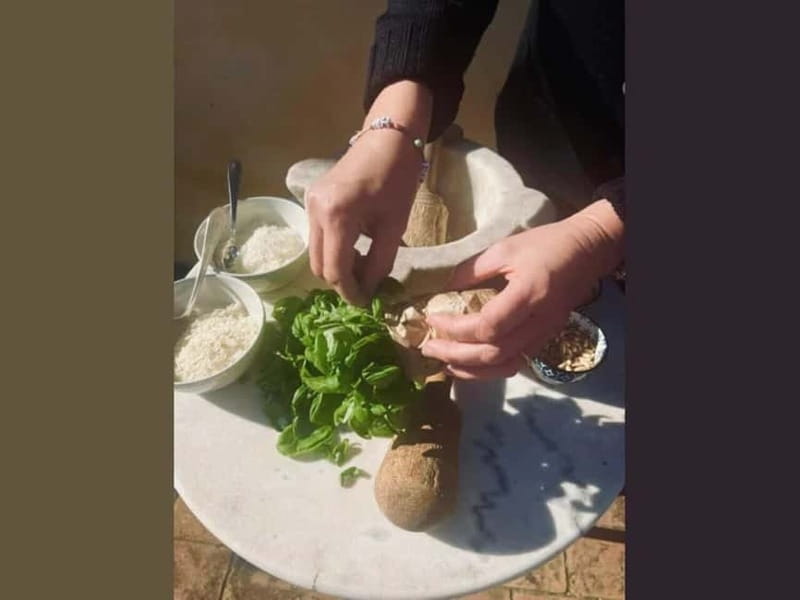
I would recommend this class to you if you want a quiet, personal food activity with a strong local setting. It suits couples, friends, and small families who enjoy making something together and do not need a long formal cooking course.
It is also a good choice if you want a souvenir you can actually use. The pesto comes home with you, and the storage advice helps you keep it in good condition. That is more practical than buying a mass-produced food item without learning how it was made.
The class may also suit you if you have already seen the main Cinque Terre villages and want a change of pace. Instead of spending another few hours on crowded streets, you spend time at a vineyard home above the coast.
I would think twice if you have trouble with uphill walking or terraced steps. I would also choose another activity if you want a full meal, several dishes, or an advanced culinary course. This is a focused pesto lesson with one glass of wine, not a broad food tour.
Booking, flexibility, and dietary needs
You can cancel up to 24 hours before the activity for a full refund. The reserve-now, pay-later option gives you some flexibility while your Cinque Terre plans are still changing.
Dietary requirements can be accommodated, but you need to confirm them directly with the organizer after booking. Do not wait until you arrive. Tell the organizer early so the Cesarina has a clear idea of what you need.
The price is not provided in the supplied details, so I cannot judge the exact cost. To assess the value, compare it with what you would pay for a standard cooking class, then consider the added setting, local host, small group, wine, and pesto to take home. The experience makes the most sense when you value personal contact and place as much as the food lesson itself.
Should you book the Cinque Terre pesto class?
Book it if you want a small-group cooking lesson in a scenic local home, and if an uphill walk with terraced steps is manageable for you. The combination of sea views, two pesto methods, storage advice, local wine, and pesto to take home gives the two hours a clear purpose.
Skip it if you want a large meal, a broad tour of Ligurian cuisine, or a fully flat and easy-to-reach venue. For the right visitor, this is a thoughtful way to connect a famous local food with the hills, vineyards, and homes around La Spezia.
FAQ
How long does the pesto cooking class last?
The activity lasts two hours.
Where does the class take place?
The class takes place at a local Cesarina’s home in Liguria, reached from the meeting point by walking uphill through vineyard terraces.
How far is the walk to the Cesarina’s house?
You need to walk about 200 meters uphill from the meeting point, then follow terraced steps and a path to the house.
What cooking methods will I learn?
You will learn to prepare pesto with a traditional mortar and pestle and with an electric blender.
Is pesto included to take home?
Yes. After preparing the pesto, you will package it to take with you.
Will I learn how to store the pesto?
Yes. The Cesarina explains how to store the pesto so it stays fresh for as long as possible.
Is wine included?
Yes. The experience includes one glass of local wine from Possa winery in Liguria, as well as water.
What languages are offered?
The class is offered in English and Italian.
How many people can join the class?
The group is limited to 10 participants.
Can dietary requirements be accommodated?
Different dietary requirements can be accommodated, but you must confirm them directly with the organizer after booking.
New cooking classes around Italy
- Sestri Levante: Pesto & Cooking Classes, Wine Tasting★ 4.9 · 56 reviews
- Sardinia Cooking Class: Fresh Handmade Pasta★ 5.0 · 53 reviews
- San Gimignano: Tuscan Cooking Class★ 5.0 · 2 reviews
- San Gimignano: Truffle Cooking Class with Wine Tasting★ 5.0 · 5 reviews
- San Gimignano: “Hands in dough” Cooking Class with Lunch★ 5.0 · 6 reviews
- Salento: Authentic Cooking Experience with Fresh Pasta and Local Products★ 5.0 · 8 reviews
- ROME:Hands-On Lasagna & Marsala Tiramisu Cooking Experience”★ 5.0 · 3 reviews
- Rome: Private Wine Tour and Pasta Making Class in a Winery★ 5.0 · 6 reviews
Italy Cooking Classes, side by side.
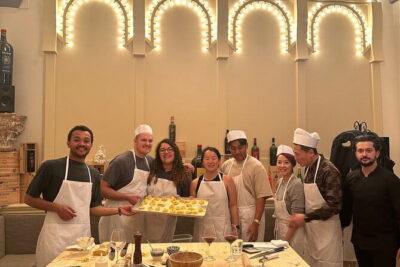
Florence: Pasta Cooking Class with Unlimited Wine
Read our review →
3 in 1 Cooking Class near Navona: Fettuccine, Ravioli & Tiramisu
Read our review →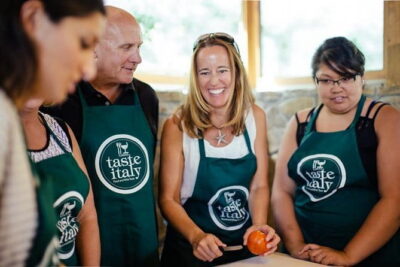
Cooking Class and Lunch at a Tuscan Farmhouse with Local Market Tour from Florence
Read our review →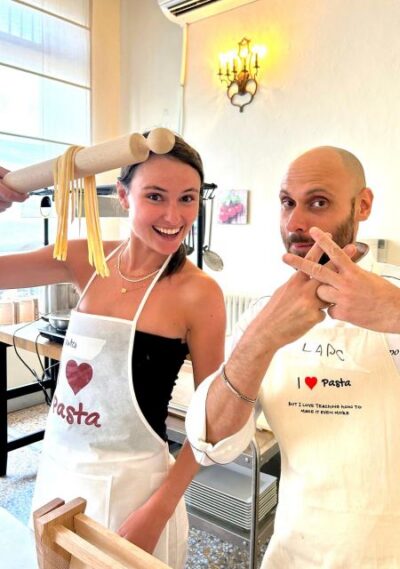
Rome: Pasta Making Class with Wine, Limoncello, and Dessert
Read our review →
Rome Cooking Class: Make Pasta and 3 Spritz Cocktails
Read our review →
Rome: 3-in-1 Fettuccine, Ravioli, and Tiramisu Cooking Class
Read our review →
Rome: Fettuccine Pasta Cooking Class in Rome’s City Center
Read our review →This kitchen also appears in