
Review · ITALY
Cooking class in a private medieval village
The best part of this experience is the setting: you learn to cook in a private medieval village surrounded by Tuscan countryside, rather than in a city kitchen built for tour groups. Oscar and Pasquale guide the class, and the family-run atmosphere makes the visit feel personal.
I like the small-scale cooking lesson and the extras that turn it into more than a meal: fresh pasta, tiramisu, wine, lunch, pool access, and panoramic gardens. I also like that the ingredients are local and the cooking follows a practical, environmentally aware approach.
There is one important caution. The experience has had a few serious scheduling problems, including cancellations, so I would confirm the class before making a tight connection or building your whole day around it. The hilltop drive can also feel long and winding, especially if you are not expecting a country retreat.
Key points at a glance
- A cooking class in a medieval village: You work in a historic Tuscan setting, not a standard culinary school.
- Oscar and Pasquale lead the experience: Expect English instruction and a warm family-hosted atmosphere.
- Three classic dishes: The class focuses on fresh pasta, traditional sauce, and tiramisu.
- More than cooking: Lunch, wine, pool access, gardens, animals, and ping pong may fill out the visit.
- A good side trip from Florence: The experience is reachable by a short train ride to Figline Valdarno, followed by the local transfer.
- Plan for a flexible day: Some time may pass between cooking and eating, so bring swimwear and perhaps a card game.
Cooking pasta in a private Tuscan village
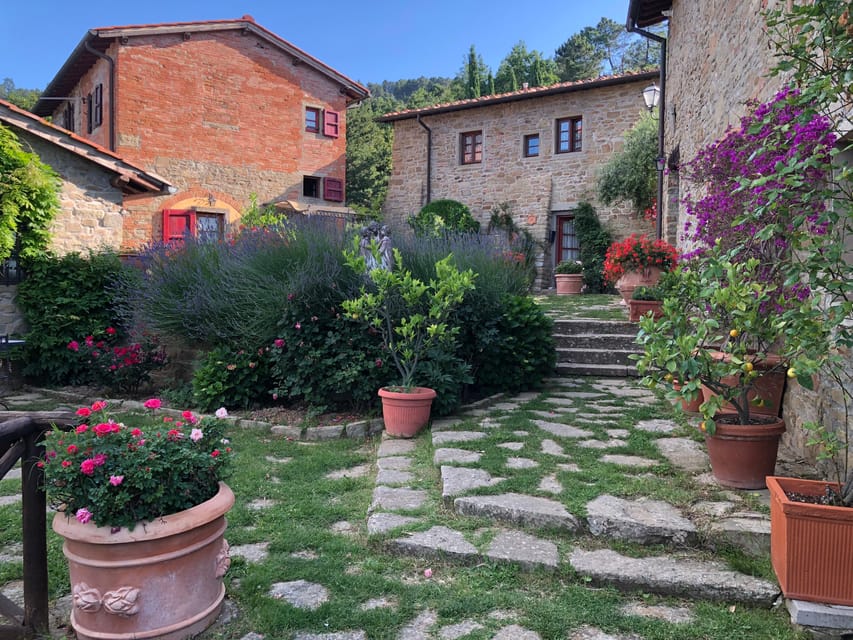
This is not the kind of class where you rush through a modern studio, take a photograph, and leave with a small sample of pasta. Borgo La Capraia places the lesson inside a family-run country hotel in a medieval village, where the setting does much of the work.
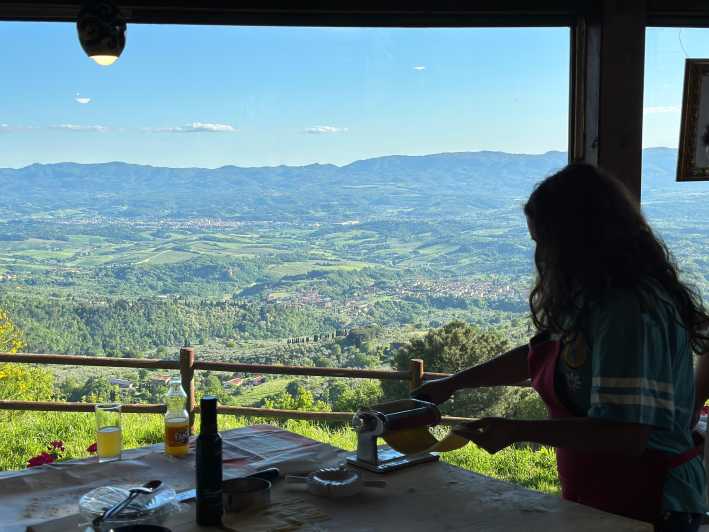
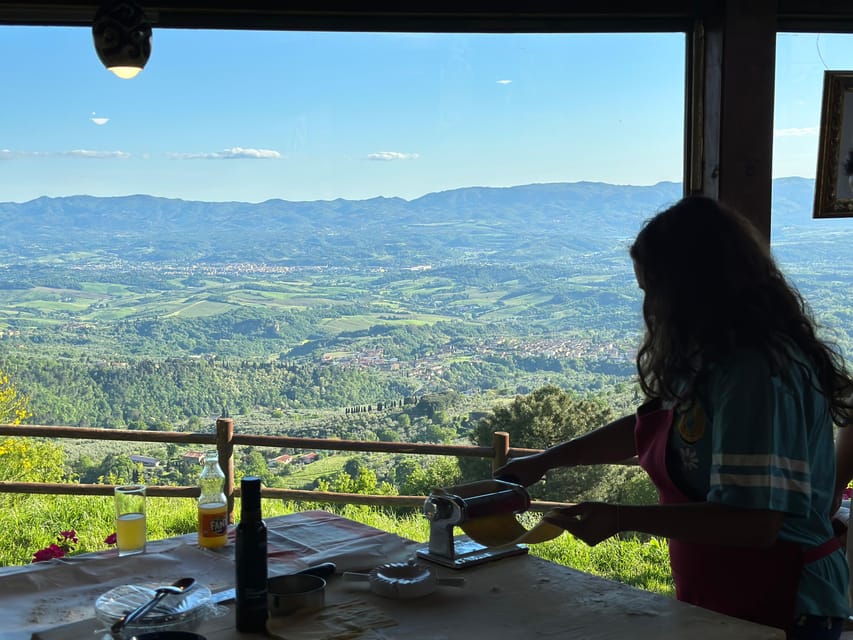
You arrive at the restaurant, the stated meeting point, and settle into a slower rhythm. The village sits in the Tuscan countryside, with broad views from the property and gardens made for lingering. The appeal is simple: you are learning a basic Italian skill in the sort of place where the food, family, and setting belong together.
The class lasts about two hours within a three-hour experience. English instruction is provided, and Oscar is the host most often associated with the cooking session. Pasquale is also part of the warm family welcome. You should expect an informal lesson rather than a formal chef-training course.
That distinction matters. If you want advanced knife skills, a long technical lecture, or a highly polished restaurant demonstration, this may feel too simple. If you want to understand how fresh pasta fits into an Italian family meal, the relaxed approach is more appealing.
More Private Cooking Classes in Italy
- Rome: Pasta Making Class with Tiramisu & Wine PRIVATE OPTION
★ 4.8 · 404 reviews - Private Cooking Class in Rome with Chef Andrea Consoli
★ 5.0 · 150 reviews - Rialto Market Tour & Private Cooking Class in the Heart of Venice
★ 5.0 · 106 reviews
What you make during the two-hour class
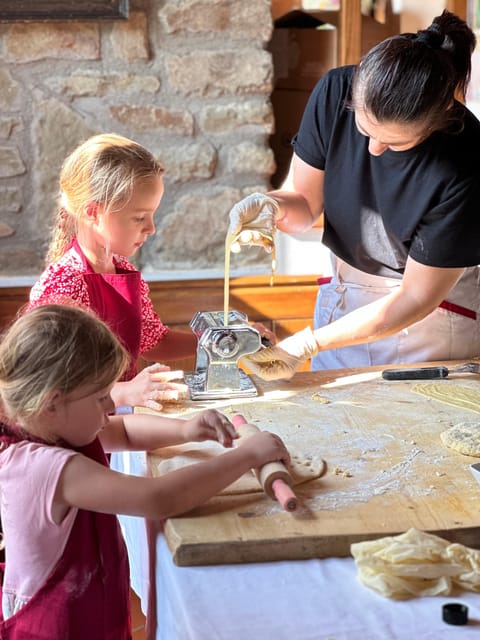
The cooking focuses on three reliable Italian favorites: fresh pasta, a traditional sauce, and tiramisu. That is a well-chosen menu for a short class because it gives you a complete meal without trying to cover too much ground.
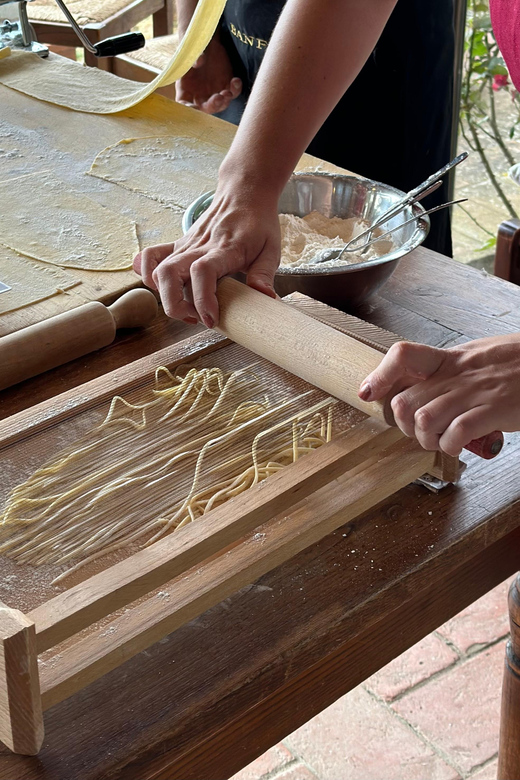
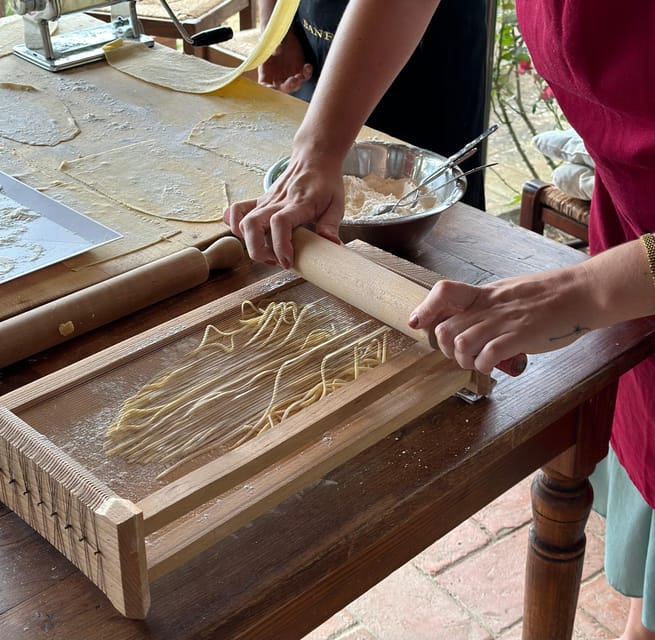
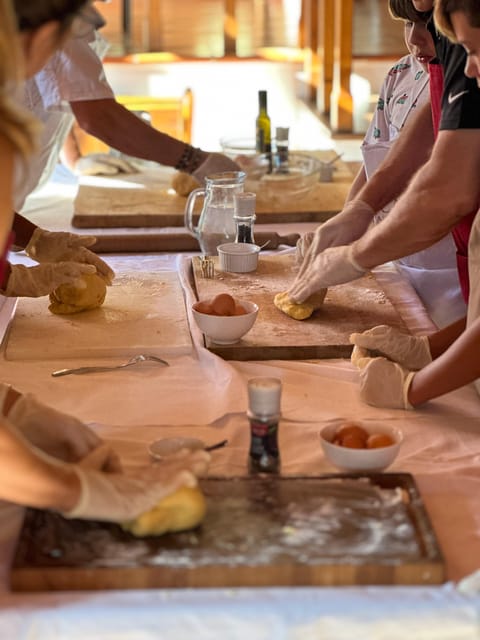
Fresh pasta is the main event. You can expect to work with the dough and learn the basic process behind making pasta by hand. The pleasure is not only in eating it later. You get a feel for the texture, the rhythm, and the patience required to make something that many visitors only encounter on a restaurant plate.
The sauce adds the practical part. Italian cooking often depends less on a long ingredient list than on good products, proper timing, and restraint. Here, the emphasis is on traditional sauces and high-quality local ingredients, with respect for the surrounding area.
Tiramisu provides a sweet finish and rounds out the lesson. It is also a useful dish to include in a group class because it can require waiting time before serving. That may help explain why there can be a gap between the cooking session and lunch.
The class is described as sustainable in its approach. That does not mean you should expect a separate lesson in farming or environmental policy. It means the food is presented as part of the local place, with ingredients chosen for quality and connection to the area.
The long pause before lunch
The schedule deserves honest attention. The total activity is three hours, but the cooking itself takes about two hours, and there can be a wait before you eat the food you prepared.
That pause is not necessarily a problem, but it changes how you should plan the visit. You are not guaranteed a fast, restaurant-style transition from the last stir of the sauce to a plated lunch. Instead, you may have time to use the pool, sit in the gardens, play ping pong, or simply enjoy the property.
Bring a swimsuit if the weather is warm. One visitor specifically found the pool useful during the wait, and pool access is included. A deck of cards or another small game is also a sensible addition if you are making this a relaxed half-day outing.
Families and couples who like unhurried days will probably see the pause as part of the charm. Anyone with a train to catch, another tour booked soon after, or a low tolerance for open-ended timing should take it seriously.
Lunch, wine, and the country hotel setting
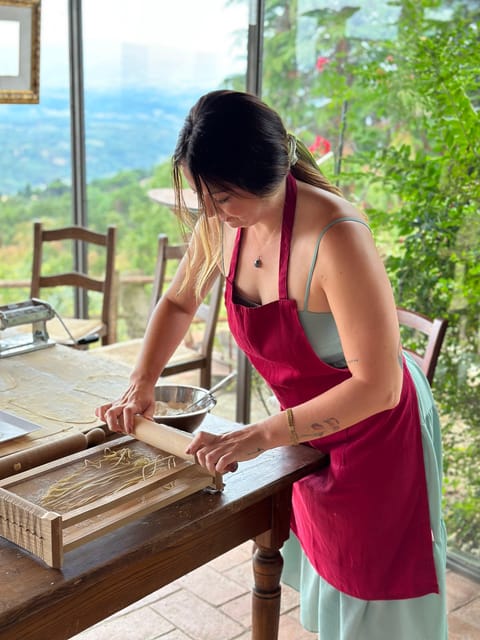
Lunch is included, along with wine. Since you help prepare the food, the meal has more meaning than an ordinary restaurant stop. You can taste the finished pasta and sauce with a clearer sense of the work behind them.
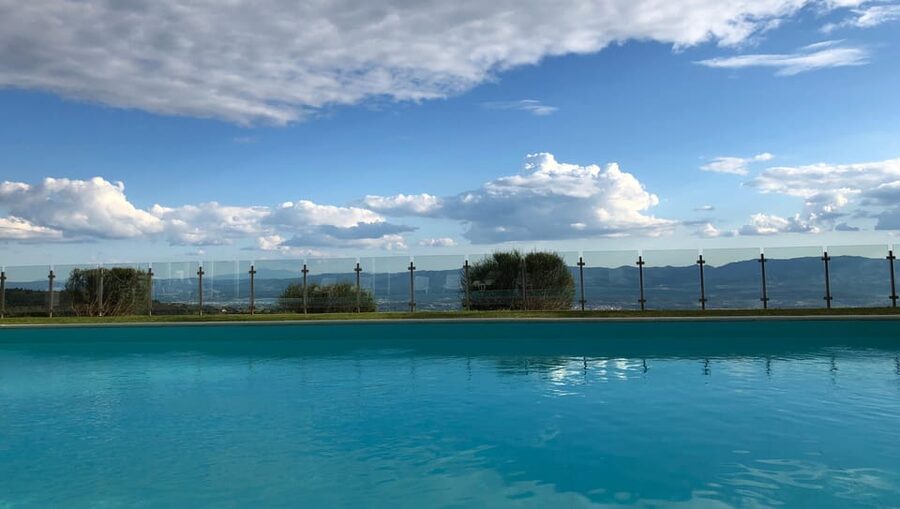
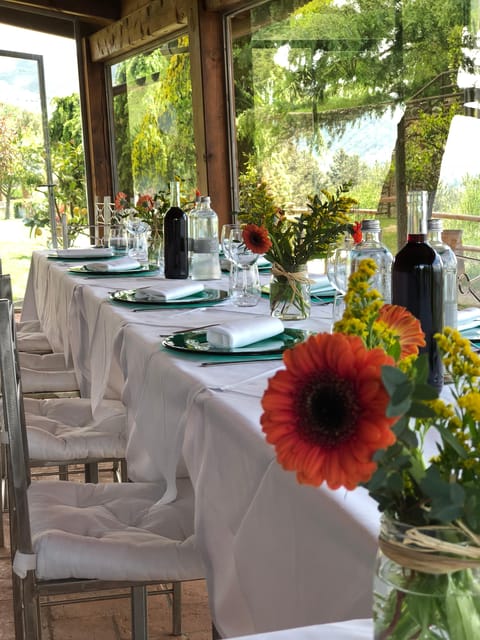
The meal is also where the setting earns its keep. Borgo La Capraia functions as a country hotel, so the cooking class is connected to a wider property rather than being a stand-alone activity. You can enjoy the panoramic gardens and, when conditions permit, use the swimming pool.
The property has also been described as having animals and ping pong. These details are not the main reason to book, but they help explain why the experience can stretch beyond the formal class. You are visiting a family place, not only attending a scheduled lesson.
The family atmosphere is one of the strongest reasons to choose this activity. Oscar is described as attentive and welcoming, and the hosts have made visitors feel at home. That warmth is valuable in a cooking class because you spend much of the time standing close to other people, handling food, and asking simple questions.
Still, keep expectations sensible. The meal is part of the class package, but the exact dishes, portions, and timing are not specified. The setting and hospitality are clearer selling points than a detailed gourmet menu.
Same kitchen, a different dish:
- Florence: Pasta Cooking Class with Unlimited Wine
★ 4.9 · 10,285 reviews - 3 in 1 Cooking Class near Navona: Fettuccine, Ravioli & Tiramisu
★ 5.0 · 7,376 reviews - Florence: Pasta & Tiramisu Cooking Class with Unlimited Wine
★ 4.9 · 6,708 reviews - Florence: Pasta Cooking Class with Unlimited Wine
★ 5.0 · 6,413 reviews
Getting there from Florence by train
For visitors staying in Florence, the train connection to Figline Valdarno makes this possible as a side trip. One visitor found the train ride short and worthwhile, but the full journey does not end at the station.
A transfer from Figline Valdarno train station and back is included. That is a major practical benefit because the property is in the countryside, and driving directions may involve a long, winding approach. You meet in front of the restaurant, then return to the station after the experience.
The road is worth considering before you book. One visitor described the drive as long and difficult, while others considered the peaceful location part of the reward. Both impressions can be true. The property is appealing because it feels away from the city, but that distance creates extra travel time and less independence if plans change.
I would avoid scheduling anything immediately after the class. The activity is advertised as three hours, but the relaxed pace and possible delay before lunch make a generous buffer sensible. If your day is open, the transfer is convenient. If you are trying to squeeze this between major Florence appointments, the timing may feel uncomfortable.
How the $141 price works out
At $141 per person, this is not a bargain cooking demonstration in the narrow sense. It is better understood as a combined food lesson, country outing, lunch, wine stop, and property visit.
The price includes two hours of cooking instruction, lunch, wine, pool access, a recipe book, and transport from Figline Valdarno station. When you add those elements together, the cost can make sense, especially for visitors who value a small group and a personal host more than a low-cost class in central Florence.
The value is strongest if you use the property. Swim, walk through the gardens, spend time with the family, or enjoy the quiet before and after the meal. If you arrive only for the lesson and hurry away, you lose much of what makes the experience different from other pasta classes.
The small-group character is another plus. A small class gives you more direct attention from the instructor and makes it easier to follow the pasta-making process. It also means that the experience may feel intimate rather than anonymous.
The price is less convincing for anyone focused only on technical instruction. You are paying for the setting, transport, food, and family hospitality as much as for the recipes.
The main concern: reliability and last-minute changes
I would not ignore the scheduling record. One booking was canceled by the provider, with the customer still waiting for a refund at the time of the report. Another cancellation happened after arrival because of a family emergency, and the host returned the money directly.
The second case appears to have been an unexpected personal crisis, not a normal operating pattern. Even so, the result for the customer was the same: a long journey to a class that did not take place.
The overall rating is 4.3 from nine ratings, with several very positive experiences and a few sharp problems. That is encouraging but not flawless. The safest approach is to confirm the activity shortly before the date, especially if you are traveling from Florence and relying on the train transfer.
The cancellation policy allows a full refund when you cancel at least 24 hours ahead. You can also reserve and pay later, which helps keep your plans flexible. Those terms are useful, but they do not remove the need to check that the provider is operating on your chosen day.
Who will enjoy this most
I would recommend this experience to you if you like food, family-run places, and a slower day in the countryside. It works especially well for couples, small groups, and visitors who want to pair a cooking lesson with a peaceful Tuscan setting.
It also suits people who have already seen Florence’s major sights and want a change of pace. The trip gives you a reason to leave the city without committing to a full day of sightseeing.
Families may appreciate the pool, animals, and ping pong, though the cooking class itself is the core activity. You should confirm the suitability of any young children directly, since age requirements are not provided.
I would be more cautious if you need a highly polished culinary school, a guaranteed chef-led performance, or minute-by-minute timing. The experience is personal and informal. That is its strength, but also its limit.
A practical way to plan your visit
Wear comfortable clothes suitable for cooking and bring swimwear if you want to use the pool. A small card game is a smart extra because the time between cooking and eating may be longer than expected.
Keep your day open around the class. Allow time for the train, the transfer, the rural road, the cooking, the meal, and the return trip. You will enjoy the outing more if you treat it as a country visit rather than a quick activity inserted between city appointments.
It is also worth checking the exact starting time before booking because availability varies. English instruction is offered, and a recipe book is included, so you can take the lesson home rather than relying on memory alone.
Should you book Borgo La Capraia?
Book it if you want a relaxed Tuscan food day, not simply a two-hour recipe lesson. The pasta, sauce, tiramisu, wine, lunch, pool, gardens, and family welcome create a fuller experience than the cooking alone suggests.
I would book with two conditions: confirm the class shortly before departure, and leave plenty of room in your schedule. The setting is beautiful, the personal attention can be excellent, and the train connection from Florence is useful. The rural location and occasional cancellations are real drawbacks.
For me, the strongest reason to choose it is the combination of cooking and place. You are not just learning how to make pasta. You are spending time at a family property in a medieval Tuscan village, with room to slow down and enjoy the day.
FAQ
How long does the experience last?
The activity lasts three hours. The cooking class itself lasts about two hours, with lunch and other time at the property included within the visit.
What dishes will I prepare?
You will learn to make fresh pasta, traditional sauces, and tiramisu using local, high-quality ingredients.
Is lunch included?
Yes. Lunch and wine are included in the experience.
Is transportation included?
Yes. Transfer from Figline Valdarno train station to the property and back is included. The meeting point at the property is in front of the restaurant.
Can I use the swimming pool?
Yes. Swimming pool access is included. Bringing swimwear is especially useful because there may be time between the cooking lesson and lunch.
Is the class taught in English?
Yes. English instruction is provided. Oscar and Pasquale are associated with the family-run experience at Borgo La Capraia.
New cooking classes around Italy
- Sestri Levante: Pesto & Cooking Classes, Wine Tasting★ 4.9 · 56 reviews
- Sardinia Cooking Class: Fresh Handmade Pasta★ 5.0 · 53 reviews
- San Gimignano: Tuscan Cooking Class★ 5.0 · 2 reviews
- San Gimignano: Truffle Cooking Class with Wine Tasting★ 5.0 · 5 reviews
- San Gimignano: “Hands in dough” Cooking Class with Lunch★ 5.0 · 6 reviews
- Salento: Authentic Cooking Experience with Fresh Pasta and Local Products★ 5.0 · 8 reviews
- ROME:Hands-On Lasagna & Marsala Tiramisu Cooking Experience”★ 5.0 · 3 reviews
- Rome: Private Wine Tour and Pasta Making Class in a Winery★ 5.0 · 6 reviews
Italy Cooking Classes, side by side.
Florence: Pasta Cooking Class with Unlimited Wine
Read our review →
3 in 1 Cooking Class near Navona: Fettuccine, Ravioli & Tiramisu
Read our review →
Cooking Class and Lunch at a Tuscan Farmhouse with Local Market Tour from Florence
Read our review →
Rome: Pasta Making Class with Wine, Limoncello, and Dessert
Read our review →

Rome Cooking Class: Make Pasta and 3 Spritz Cocktails
Read our review →
Rome: 3-in-1 Fettuccine, Ravioli, and Tiramisu Cooking Class
Read our review →
Rome: Fettuccine Pasta Cooking Class in Rome’s City Center
Read our review →This kitchen also appears in