
Review · CHENGDU
Half-Day Chengdu Cooking Class with a Local Market Visit
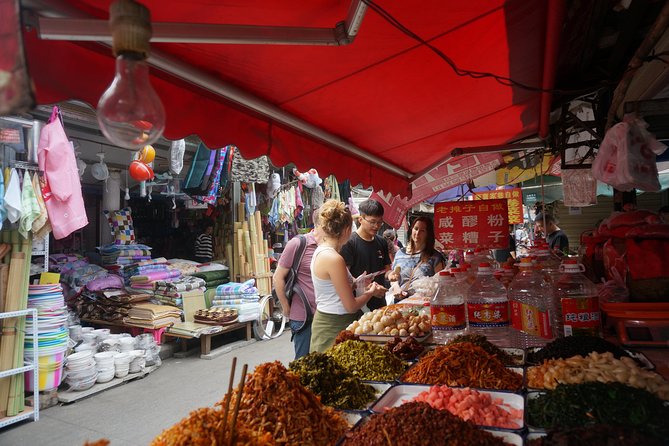
Chengdu’s best food lesson may begin far from a restaurant. You start at Liangjiaxiang market, where Lance or Jerry can help you identify unfamiliar vegetables, chilies, spices, and snacks before taking you into the kitchen to cook them. That market-to-table link gives the class a clear sense of place.
I like the practical cooking instruction, especially the chance to work with a wok and make dishes such as mapo tofu, kung pao chicken, dumplings, or twice-cooked pork. I also like that the price covers ingredients, drinks, recipes, and the meal you prepare. The main consideration is time: four hours passes quickly, and the market walk involves standing and walking, so comfortable shoes and an open schedule help.
Key points at a glance
- Liangjiaxiang market comes first: See the ingredients in their local setting before cooking with them.
- Lance and Jerry add useful translation: They explain food, local customs, and kitchen instructions in English.
- You cook several dishes: Past classes have included mapo tofu, kung pao chicken, stir-fried vegetables, dumplings, salads, and twice-cooked pork.
- The meal is part of the lesson: You sit down afterward to eat what you made, with beverages included.
- Vegetarian cooking is available: Tell the provider when booking so the menu can be planned.
- Small groups keep it manageable: The maximum group size is 15, and private options are also offered.
Why the market walk makes this Chengdu cooking class worthwhile
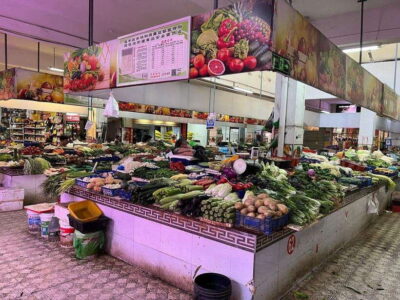
Many cooking classes begin with ingredients already measured and waiting on a counter. This one starts earlier, in Liangjiaxiang market in the Jinniu District. That matters because Sichuan food depends on ingredients that may look ordinary until you understand how they are used.
You might see fresh chilies, leafy greens, tofu, aromatics, sauces, and other produce used in everyday Chengdu cooking. Your guide helps explain what you are seeing and how local cooks choose ingredients. If you cannot recognize half the vegetables, that is normal. The market walk is designed to make those ingredients less mysterious.
The guide also acts as a bridge between you and the market. English-speaking hosts such as Lance and Jerry have helped visitors ask questions, try unfamiliar foods, practice simple Chinese phrases, and understand local shopping customs. The point is not to rush through a row of stalls and take pictures. It is to connect the food you later cook with the way it is bought and used in Chengdu.
Some class formats have included samples along the way, dumpling making at a market stall, and visits connected with local drinks such as baijiu. These details can vary, so I would treat them as possible extras rather than guaranteed stops.
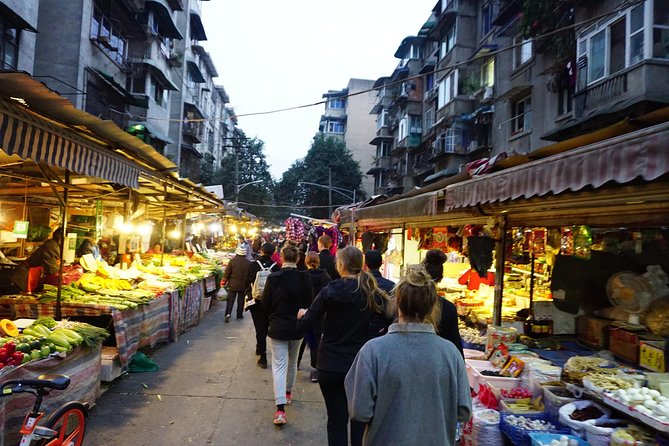
The market is a real working place, not a polished food hall. You should expect local activity, unfamiliar smells, and plenty of ingredients that need explanation. That is part of the value, though anyone who prefers a quiet, carefully staged tour may find the market section more demanding.
More Cooking Classes with a Market Tour in China:
- Chengdu: Cooking Class with Fresh Market Half Day Experience
★ 5.0 · 42 reviews - Half-Day steamed Buns Cooking Class with a Local Market Visit
★ 5.0 · 26 reviews - Half-Day Professional Mapo Tofu Cooking with a Local Market Visit
★ 5.0 · 19 reviews
Meeting at Chilli Cool’s Kitchen in Jinniu District
The official meeting point is Chilli Cool’s Kitchen at 163-11 Yi Huan Lu Bei San Duan, in Jinniu District, Chengdu. The activity ends back at the same meeting point, and the location is near public transportation. Several class descriptions place the meeting near a subway station, making public transit a practical choice.
Allow enough time to find the address. Chengdu streets can feel confusing when you are reading signs in translation, and arriving late could cut into the market portion. Your confirmation should be close at hand, along with the passport information requested at booking.
The kitchen itself is described as clean, comfortable, and well set up for hands-on work. That is important. A class can have an excellent market walk but feel cramped once everyone reaches the stove. Here, the cooking space is intended for instruction, preparation, and a shared meal.
The maximum group size is 15. That is not a tiny private lesson, but it is still small enough for a guide and chef to keep an eye on the cooking. Private bookings and group discounts are available, so families or friends may want to compare those choices with the standard small-group option.
Learning Sichuan flavors instead of just eating them
Sichuan cuisine is one of China’s eight major culinary traditions. It is known for bold seasoning, chili heat, fragrant peppercorns, fermented ingredients, garlic, ginger, and careful control of oil and heat.
The useful lesson here is that spicy does not mean one-dimensional. The chef can show you how ingredients are added at different moments, how a wok changes the cooking speed, and how seasoning affects the finished dish. You are not simply watching a professional cook prepare lunch. You are taking part in the chopping, stirring, folding, and tasting.
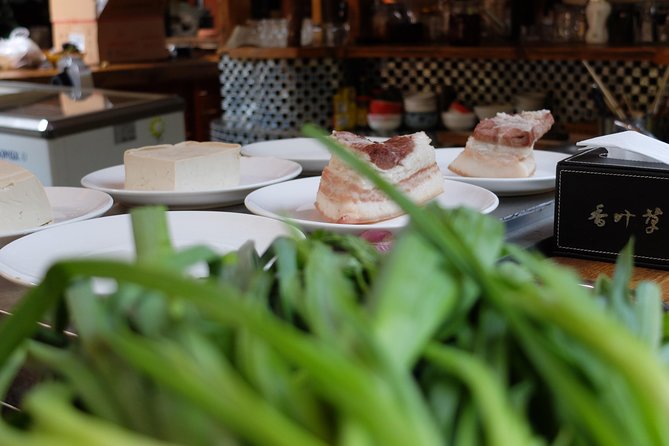
Past menus have included three main dishes, often with a tofu or meat dish, a vegetable preparation, and a salad or dumpling course. Specific examples include mapo tofu, kung pao chicken, stir-fried cabbage, twice-cooked pork, cucumber salad, and dumplings or wontons.
Do not expect every booking to feature the same combination. Menus can depend on the class schedule, ingredients, dietary needs, and the version of the experience you select. The strong point is the range. You learn more than one recipe and see how different Sichuan dishes use heat, texture, and seasoning in different ways.
What happens in the kitchen
After the market, you move into the cooking lesson. Ingredients are supplied, and much of the preparation is organized before the class begins. That keeps the four-hour schedule moving and lets you spend more time learning technique.
The chef demonstrates the steps, while your English-speaking guide helps translate and explain. This arrangement is useful because kitchen instruction can move fast. You may be watching the wok, managing ingredients, and trying to remember what goes in next. A guide such as Lance or Jerry helps turn the chef’s directions into something you can follow.
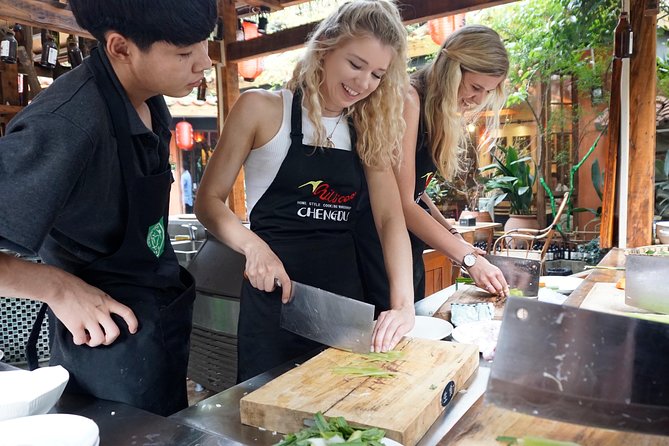
You may chop vegetables, prepare fillings, fold dumplings, season tofu, and practice wok cooking. Making dumplings is often a cheerful challenge rather than a test of precision. If your first few look rough, you are in good company. The point is to learn how the dough and filling work, not to produce restaurant-perfect shapes.
The wok work is where the class earns its keep. You learn about timing, heat, oil, and the order in which ingredients enter the pan. These are skills you can use at home, even if you do not have a Chinese-style burner. The chef can also explain how to adjust flavor, which is helpful if you need less heat or want to recreate a dish with ingredients available in your own kitchen.
The experience is hands-on, but it is not a full professional chef course. You will not leave after four hours as a Sichuan chef. You should leave with a better sense of how these dishes are assembled and with recipes to guide future attempts.
More half-day classes around China:
- Half-Day Thai Cooking Class at Organic Farm in Chiang Mai
★ 5.0 · 19,087 reviews - Bangkok: Tingly Thai Cooking School Half-Day Cooking Class
★ 4.9 · 1,191 reviews - Half-Day Cooking Class with Local Chef Laila in Marrakech
★ 5.0 · 952 reviews - Naxos: Half-Day Cooking Class at Basiliko Family Tavern
★ 5.0 · 887 reviews
Sitting down to eat what you made
The final meal is one of the smartest parts of the format. Once cooking ends, you sit down and eat the dishes you prepared. Beverages, including beer, are included, along with light refreshments and food tasting during the activity.
Eating your own work changes the meal. You notice if the tofu is too salty, if the cabbage still has bite, or if the dumpling folds held together. You can compare your result with the chef’s method and ask questions while the techniques are still fresh.
The food is intended to serve as lunch or dinner depending on your class time. That makes the experience easy to fit into a busy Chengdu visit. Still, do not book it immediately before a major appointment. Four hours is approximate, and market visits, questions, and group cooking can affect the finish time.
The meal also gives you time to talk with the guide and other people in the group. Several class formats include tea in a traditional workshop setting before cooking, though exact elements may vary. Either way, the experience has a social rhythm: market, kitchen, table.
Guides, chefs, and the language advantage
The quality of this experience depends heavily on the people leading it. Lance and Jerry are the names most closely associated with the guiding and translation side of the class. They help explain market products, answer questions about Chengdu life, and keep the group moving between the market and kitchen.
Different sessions may feature different chefs, including Chef Lei or Chef Lee. The chef’s role is not only to cook in front of you. It is to demonstrate the small decisions that make Sichuan food work, from how ingredients are cut to when the wok is hot enough.
English support is a major practical benefit. You can ask why a certain chili is used, what a market ingredient is called, or how to replace something at home. That makes the class more useful than simply following a printed recipe.
The guides have also helped with practical requests such as finding spices to take home or navigating other local purchases. Those favors are not guaranteed services, but the team can be helpful beyond the strict cooking lesson.
Price, group size, and the real value
The listed price is $90 per person. That is not a bargain-basement cooking lesson, but it covers a lot: an English-speaking guide, market tour, ingredients, food tastings, refreshments, beverages or beer, the lunch or dinner, and recipes.
You are also paying for translation and access. Exploring a local market alone can be rewarding, but you may not know what you are looking at or how to ask about it. The guide turns a confusing shopping trip into a food lesson, then carries that information into the kitchen.
For a solo visitor, the small-group format can be especially useful. The experience accepts individual bookings, and the maximum is 15 people. Friends and families should check group discounts and private options, since a private class may offer more control over the pace and menu.
The value is strongest if you want participation rather than a meal demonstration. If you only want to eat Sichuan food, $90 could buy several restaurant meals. If you want market context, cooking practice, a guided meal, and recipes to take home, the price is easier to justify.
Who should book this class
I would recommend it to anyone who plans to eat widely in Chengdu and wants to understand the food beyond the plate. It suits curious cooks, food-focused visitors, solo visitors who want a social activity, and families with children aged five or older.
It is also a good choice if you are nervous about Sichuan cooking. The chef and guide can explain what creates heat and how flavors are balanced. You can ask about vegetarian adjustments, and the provider offers a vegetarian option when requested in advance.
You should think twice if you dislike group activities, cannot stand or walk comfortably for part of four hours, or want a highly predictable menu. The market is part of the experience, so the pace is not as controlled as a simple restaurant meal.
Wear comfortable walking shoes. The tour operates in all weather, so dress for Chengdu’s conditions on the day. Tell the provider about dietary requirements when booking, rather than hoping they can change the menu at the last minute.
Free cancellation is available up to 24 hours before the start time. Changes or cancellations inside that window are not accepted for a refund, so keep that cutoff in mind when arranging your Chengdu schedule.
Should you book the Chengdu market and cooking class?
Book it if you want a practical introduction to Chengdu food and like the idea of learning by doing. The market visit gives the class a local setting, while the kitchen turns unfamiliar ingredients into dishes you can eat and repeat at home.
I especially like the combination of market guidance, English translation, several dishes, and a sit-down meal. It gives you more than a recipe card and more than a quick tasting. The main limit is the fixed four-hour format and the possibility that your exact dishes or chef will vary.
For a first visit to Chengdu, this is a strong choice for making sense of Sichuan cuisine. Bring comfortable shoes, arrive ready to ask questions, and notify the provider early about vegetarian or other dietary needs.
FAQ
How long does the cooking class and market visit last?
The experience lasts approximately four hours.
Where does the activity begin?
It begins at Chilli Cool’s Kitchen, 163-11 Yi Huan Lu Bei San Duan, Jinniu District, Chengdu.
Where does the activity end?
It ends back at the meeting point.
Is the market tour included?
Yes. A guided visit to Liangjiaxiang market is included.
Are ingredients included?
Yes. The food ingredients used during the class are included in the price.
Are drinks and food included?
Yes. Beverages or beer, light refreshments, food tasting, and lunch or dinner based on the class schedule are included.
Is a vegetarian option available?
Yes. A vegetarian option is available, but you should advise the provider when booking.
What is the minimum age?
The minimum age is five years.
How many people can join the activity?
The maximum group size is 15 travelers. Group discounts and private options are available.
What information is required at booking?
A passport name, passport number, expiry date, and country are required for all participants.
Can I cancel for a full refund?
Yes. You can cancel at least 24 hours before the experience start time for a full refund. Cancellations or changes made less than 24 hours before the start time are not accepted.
New cooking classes around China
- Shanghai: Authentic Chinese Cooking Class with Master Chef★ 5.0 · 2 reviews
- Online Cooking Class Hand Pulled Noodles by Sunflower Li★ 5.0 · 3 reviews
- Online Cooking Class Steamed Buns by Chef Sunflower Li★ 5.0 · 2 reviews
- Chengdu Sichuan Cuisine Cooking Class and Savor Local Snacks★ 4.4 · 2 reviews
- Beijing: Vegan Home Cooking & Local Market Tour with Sanxia★ 4.8 · 4 reviews
- Shanghai-Cooking Dumpling & Meal in Local Family-w/Vegan★ 4.9 · 36 reviews
- 2.5hrs Chinese Kitchen Cooking Class: Xiaolongbao Soup Dumplings★ 5.0 · 12 reviews
- Private Cooking Class: Make Your Own Dim Sum In Shanghai★ 5.0 · 27 reviews
Chengdu Cooking Classes, side by side.
Chengdu: Cooking Class with Fresh Market Half Day Experience
Read our review →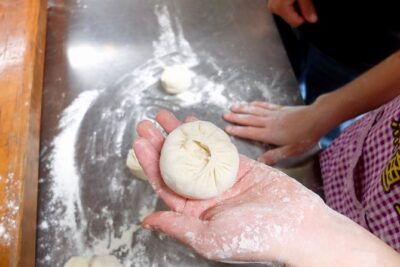
Half-Day steamed Buns Cooking Class with a Local Market Visit
Read our review →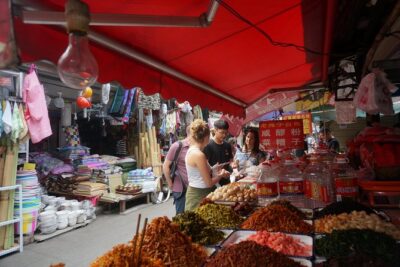
Half-Day Professional Mapo Tofu Cooking with a Local Market Visit
Read our review →
Chengdu Sichuan Cuisine Cooking Class and Savor Local Snacks
Read our review →This kitchen also appears in