
Review · HUE
Hue: Traditional Vietnamese Cooking Class
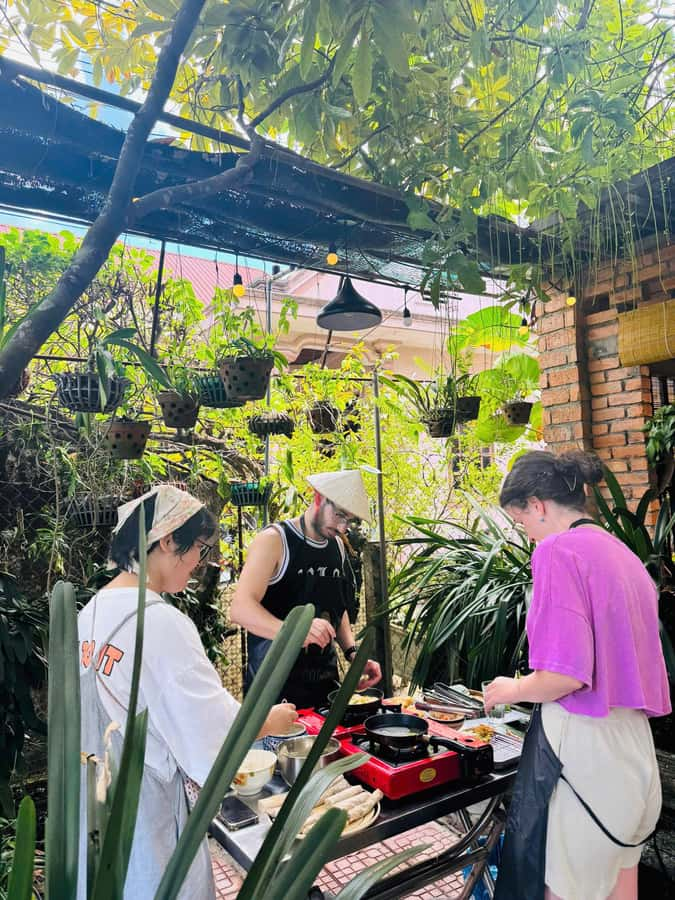
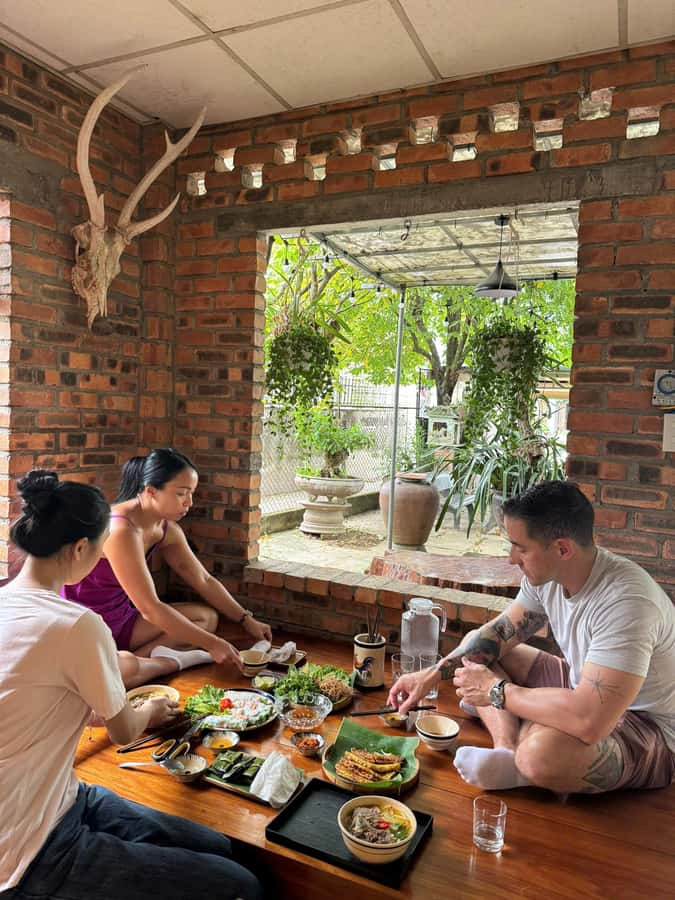
Hue’s best food lesson is less about watching a chef perform and more about getting your hands busy. In this 150-minute cooking class, you prepare five local dishes, brew royal herbal tea, and then sit down to eat the meal you made. The setting is a quiet house down an alley, not a polished restaurant.
I especially like the choice of vegetarian or non-vegetarian menus, and the tiny group size, capped at six people. You get real attention from the chef, including instructors such as Duck and Uyen, who explain how Hue cooking differs from food in other parts of Vietnam. The one consideration is location: it is a little beyond Hue’s main tourist area, so you may need a short, inexpensive ride to reach the alley.
Key points at a glance
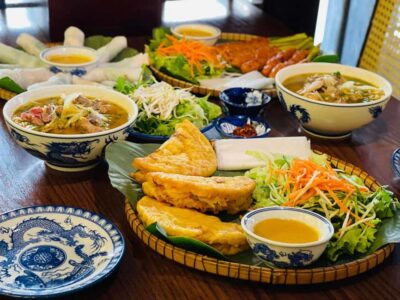
- Five Hue dishes from scratch: Prepare Bun Bo Hue, Banh Xeo, fresh spring rolls, Banh Bot Loc, seasonal fruit, and royal herbal tea.
- Two full menu choices: The meat menu includes beef, shrimp, and pork, while the vegetarian menu uses mushrooms, tofu, mung beans, and vegetables.
- Small group, limited to six: The format gives you more direct help than a large demonstration class.
- A quiet garden setting: Enter Hoàng Quốc Việt Street alley number 1 and walk about 50 meters to the Huế Experience sign.
- A useful price for a full meal: At $35 per person, the cost covers ingredients, equipment, instruction, tea, recipes, and the meal you cook.
- Good flexibility: You can cancel up to 24 hours ahead for a full refund and reserve now with payment later.
Why Hue food deserves its own cooking class
Hue is not simply another stop for standard Vietnamese dishes. The city’s food has a careful, balanced character tied to central Vietnam and its imperial past. Portions can be small and neatly prepared, flavors can be layered, and herbs, dipping sauces, broth, and texture matter as much as the main ingredient.
That is why this class works better than a generic lesson in spring rolls alone. You get a taste of several cooking methods in one sitting: simmering broth, folding dumplings, frying pancakes, rolling fresh vegetables, cutting fruit, and brewing tea.
The chef also explains the differences between Hue cooking and food from other parts of Vietnam. That regional context is useful. You are not just memorizing a recipe. You are learning why the dishes taste the way they do and how local cooks balance savory, spicy, fresh, chewy, and crisp elements.
The class is taught in English, and the instructors are described as friendly and attentive. Duck is one of the named instructors, while Uyen, also referred to as Duc in the class information, has led sessions as well. The exact chef may vary, but the format remains personal and informal.
More Vietnamese Cooking Classes around Vietnam:
- Vietnamese Food Cooking Class in Hanoi with Market Experience
★ 5.0 · 778 reviews - Hoi An/Da Nang: Vietnamese Cooking Class with Transportation
★ 4.9 · 297 reviews - Hanoi Cooking Class: Pho/Bun Cha/Banh Xeo…+Free Egg/Salt Coffee
★ 5.0 · 267 reviews
Finding the quiet kitchen on Hoàng Quốc Việt Street
The meeting point is easy to miss if you expect a large sign on a main road. Enter alley number 1 on Hoàng Quốc Việt Street, walk about 50 meters, and look for the Huế Experience signboard.
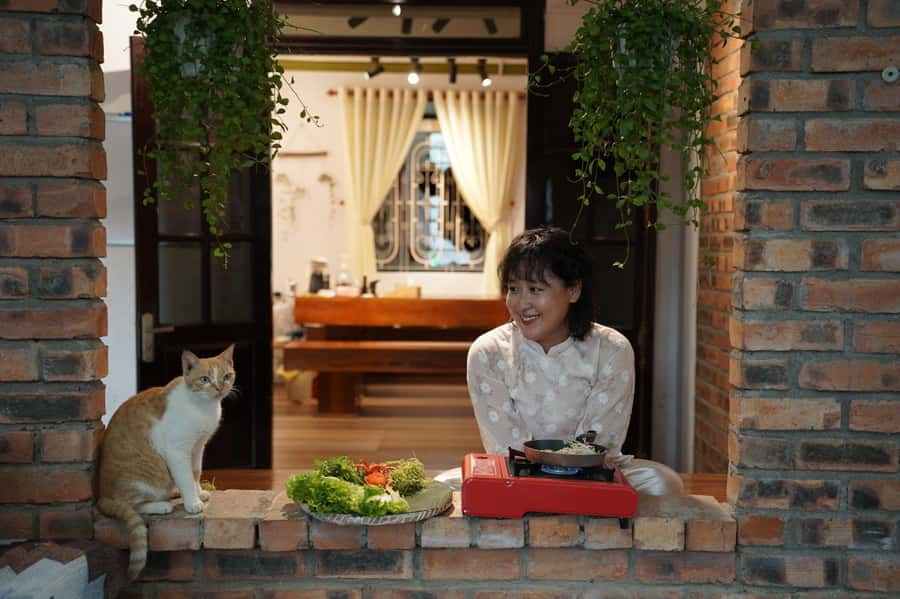
The house sits in a calm garden setting. That gives the class a different feel from a commercial cooking school with rows of workstations. You are in a local kitchen atmosphere, with the garden providing a pleasant place to sit down after cooking.
The trade-off is simple: the location is a little farther from Hue’s tourist center. One participant described it as a cheap ride from the tourist area, so include that short transfer in your plans. Give yourself enough time to find the alley, especially if you are arriving close to the starting time.
The space is wheelchair accessible, and drinking water is provided during the session. An apron is available for use, which is a small but helpful detail when you are working with batter, broth, and dipping sauces.
The 150-minute cooking plan
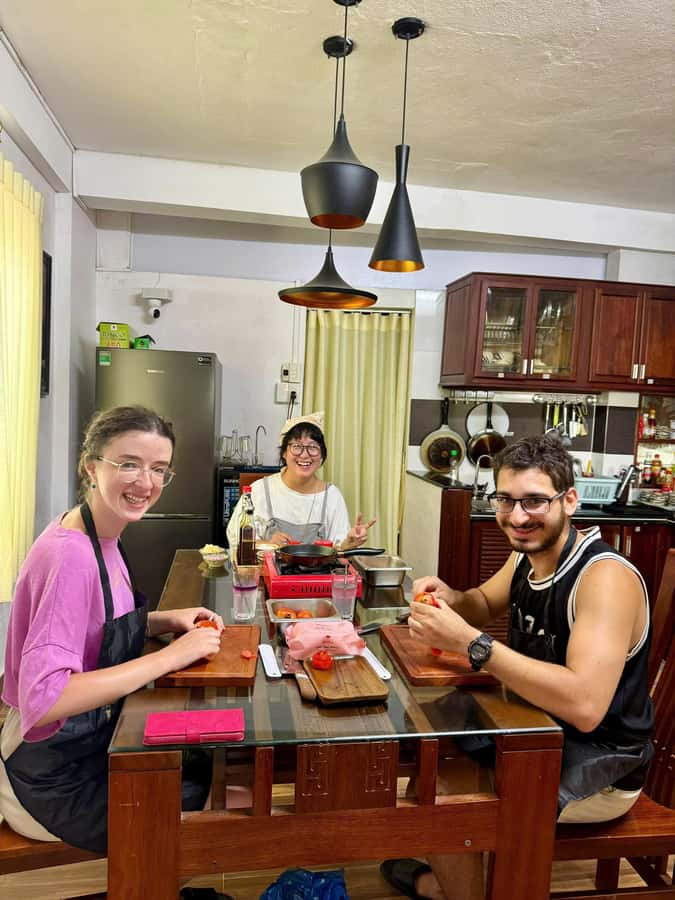
The experience is built around active cooking rather than a long lecture. Ingredients are prepared in advance, so you can spend your time learning techniques and assembling food instead of washing and chopping for half the class.
That setup is good for a short city visit. You still get a full meal and plenty of instruction, but the pace stays focused. Since the group has no more than six participants, the chef can guide you step by step and answer questions as you work.
You will prepare five dishes plus royal herbal tea. The exact order may change, but the menu moves through several different skills.
Bun Bo Hue brings the class to central Vietnam
The centerpiece of the non-vegetarian menu is Bun Bo Hue, a spicy beef noodle soup served with fresh herbs. It is one of Hue’s best-known dishes, and making it in the city gives the lesson a clear local purpose.
You learn how the broth and seasonings come together, then serve the soup with herbs that add freshness to the spicy base. This is not a quick instant-noodle exercise. The value is in understanding how the soup’s strong flavors are balanced.
The vegetarian version uses mushroom broth, tofu, and vegan sausage. That is a useful alternative rather than a token plate of plain vegetables. You still get a recognizable Hue-style noodle soup with savory depth and different textures.
If you love food with a little heat, this will likely be one of the most memorable parts of the menu. If you prefer mild food, ask the chef about the spice level while cooking. The supplied information identifies the soup as spicy, so it is worth being clear about your comfort before seasoning.
More cooking classes around Vietnam:
- Hanoi Cooking Class: Culture, Local Market & Meaning CSR Impact
★ 5.0 · 5,147 reviews - 5 Traditional Dishes Hanoi Cooking Class with Market Trip
★ 5.0 · 4,890 reviews - Cooking Class Hoi An:Local Market, Basket Boat, Fishing & Cooking
★ 5.0 · 3,660 reviews - Hoi An Cooking Class(Market,BasketBoat Crabfishing&Cooking Class)
★ 5.0 · 3,386 reviews
Banh Bot Loc teaches texture and patience
Banh Bot Loc is a chewy tapioca dumpling traditionally filled with shrimp and pork and steamed in banana leaves. It is a very different experience from the soup and pancake, since the pleasure comes from the dumpling’s texture and the fragrant wrapping.
The class also offers Banh Bot Loc Chay, filled with wood ear mushrooms and mung beans. This vegetarian option keeps the banana-leaf dumpling idea while changing the filling completely.
This is one of the more distinctive dishes on the menu. Spring rolls are familiar to many visitors, but steamed tapioca dumplings are less common outside central Vietnam. Pay attention to how the filling is placed and how the dumpling is wrapped. Those details are the sort of thing that can be hard to reproduce at home without seeing the process once.
Crispy Banh Xeo is the hands-on crowd favorite
Banh Xeo is a Vietnamese pancake with a crisp shell and savory filling. The non-vegetarian version includes shrimp and pork, with herbs and dipping sauce on the side. The vegetarian version uses mushrooms, bean sprouts, carrots, and a vegan dipping sauce.
The key lesson here is contrast. You want a crisp pancake, fresh herbs, and a sauce that ties the components together. The dish also gives you a chance to work with heat and timing, which makes it more interactive than simply assembling cold ingredients.
The class menu describes the pancake as crispy, and this dish has been singled out as a favorite by participants. I can see why. It is familiar enough to enjoy right away, but the cooking process still feels like a skill you are learning.
Fresh spring rolls keep the meal light
Fresh spring rolls with pork and shrimp provide a cool, herb-filled counterpoint to Banh Xeo and Bun Bo Hue. You assemble the rolls yourself, combining the filling with vegetables and herbs before serving them with dipping sauce.
The vegetarian version replaces the meat and seafood with tofu and vegetables. It is a straightforward change that keeps the rolling and dipping experience intact.
Do not dismiss this as the easy part of the class. Rolling rice paper neatly takes a little practice, and the lesson lets you see how Vietnamese cooks balance soft wrappers with crisp vegetables and herbs. It also gives you a practical dish to recreate at home since the ingredients and assembly are less demanding than a full noodle broth.
Seasonal fruit and royal herbal tea finish the meal
The seasonal fresh fruit plate brings a simple ending to a meal with plenty of spice, herbs, and fried food. Since the fruit changes with the season, it is best viewed as a fresh local finish rather than a fixed recipe.
The tea session is more distinctive. You brew Hue royal herbal tea, a fragrant drink connected with imperial traditions. It is described as soothing, and it provides a quiet final step after the cooking is done.
The tea is not just a drink added to the menu. It helps explain the city’s connection to courtly food and herbal traditions without turning the class into a history lecture. Some sessions also include candied ginger at the end, according to the experience details shared by the provider. That small sweet finish pairs well with the tea.
Vegetarian cooking is a real second menu
Vegetarians do not receive a reduced version of the experience. The meat-free menu includes its own Bun Bo Hue with mushroom broth, tofu, and vegan sausage; Banh Bot Loc Chay with wood ear mushrooms and mung beans; tofu and vegetable spring rolls; and Banh Xeo with mushrooms, bean sprouts, and carrots.
That matters because the class covers cooking methods, not just ingredients. Vegetarian participants still make a soup, steamed dumplings, fresh rolls, a crisp pancake, fruit, and tea.
The menu is also useful for mixed groups. One person can select the traditional meat and seafood dishes while another follows the vegetarian version. Tell the provider your preference when booking so the correct ingredients are ready.
What the small group changes
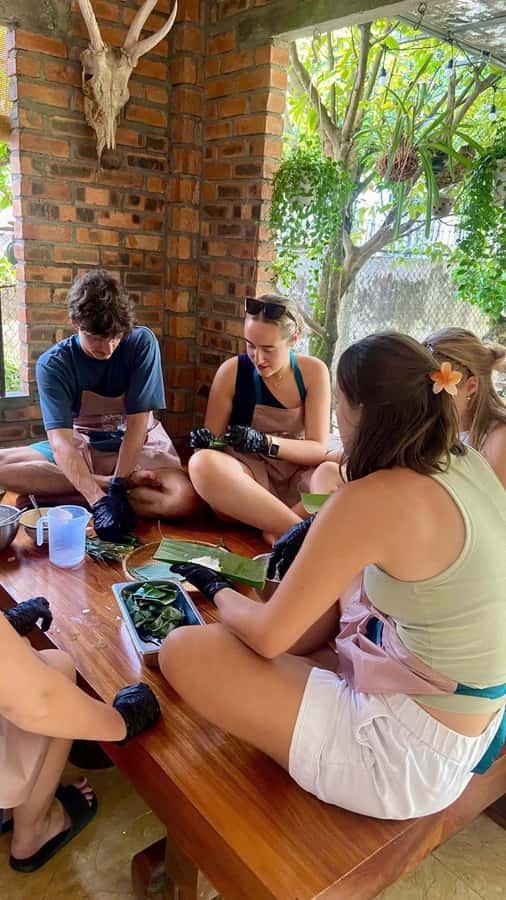
The group limit is six people. That is one of the strongest practical features because a cooking class can lose its value when several people gather around one pan and only one person gets to stir.
With a group this small, you have a better chance to ask about substitutions, seasoning, folding, and the difference between Hue methods and those used elsewhere in Vietnam. The chef can correct your technique instead of giving one general demonstration and moving on.
There is also a chance the group will be much smaller. Two participants had a private lesson for two, which meant direct attention from the chef. You should not assume every booking will be private, but the six-person cap keeps the class personal even when it is full.
The informal mood is another plus. The instructors are described as friendly and good fun, with an easy way of explaining both food and culture. That suits people who want to ask questions rather than sit quietly through a formal demonstration.
Is $35 good value in Hue?
At $35 per person, this is a fair price for a two-and-a-half-hour experience that includes a full meal. You are paying for five dishes, tea, ingredients, equipment, an apron, water, English instruction, cultural explanations, and a printed recipe card.
The meal itself is only part of the value. You also leave with a set of recipes and a better sense of how Hue food is put together. The recipe card matters if you want the class to continue after your trip.
The cost is especially reasonable for a small group. A cheaper food activity might give you a short demonstration or one dish. Here, you work across soup, dumplings, pancakes, rolls, fruit, and tea.
Still, this may not be the right choice if you want a market tour, a restaurant meal, or a long culinary lecture. The ingredients are prepared for you, so you will not be shopping for produce or learning how to select items at a market. The focus is cooking and eating in one quiet place.
Who should book this Hue cooking class?
I would choose this class for food lovers who want more than a quick tasting. It suits first-time cooks because the chef guides you through each stage, and it suits experienced home cooks who want regional ideas to take home.
It is also a good fit for couples, families, and small groups of friends. The private sessions described by participants suggest that two people can have a very personal experience, while the six-person maximum keeps a larger booking manageable.
Vegetarians have a clear reason to book because the alternative menu is substantial and thoughtfully designed. The class also works for people curious about Hue’s cultural identity, since the chef explains family recipes, local techniques, and the distinction between central Vietnamese cooking and food from other regions.
You may want to skip it if you dislike hands-on activities, cannot eat the listed ingredients, or want to stay within the central tourist zone without arranging a ride. The menu includes seafood, pork, beef, mushrooms, tofu, and herbs depending on your selection, so check the options before booking.
Booking details worth knowing
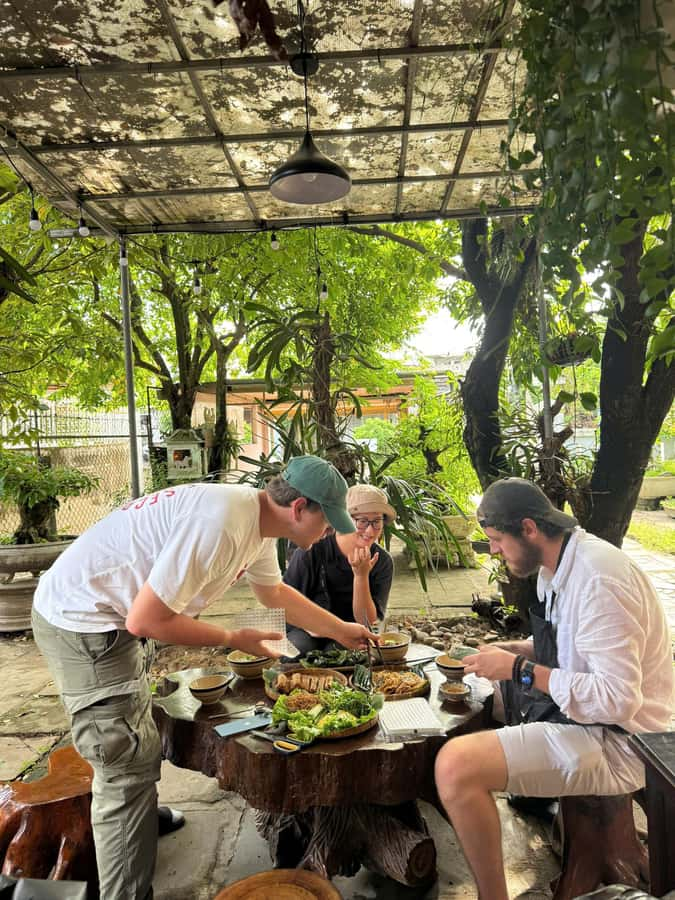
The class lasts 150 minutes, and starting times depend on availability. English is the listed teaching language. The provider is Phin Coffee Class Viet Nam, and the meeting point is marked by a Huế Experience signboard in the alley.
You can reserve now and pay later, which helps if your Hue schedule is still moving around. Cancellation is free up to 24 hours before the class for a full refund.
Because the class is limited to six people, book ahead if you have a fixed day in Hue. If you want the best chance of a very small group, avoid assuming that a private lesson is guaranteed. Ask about the group size when you book.
Should you book it?
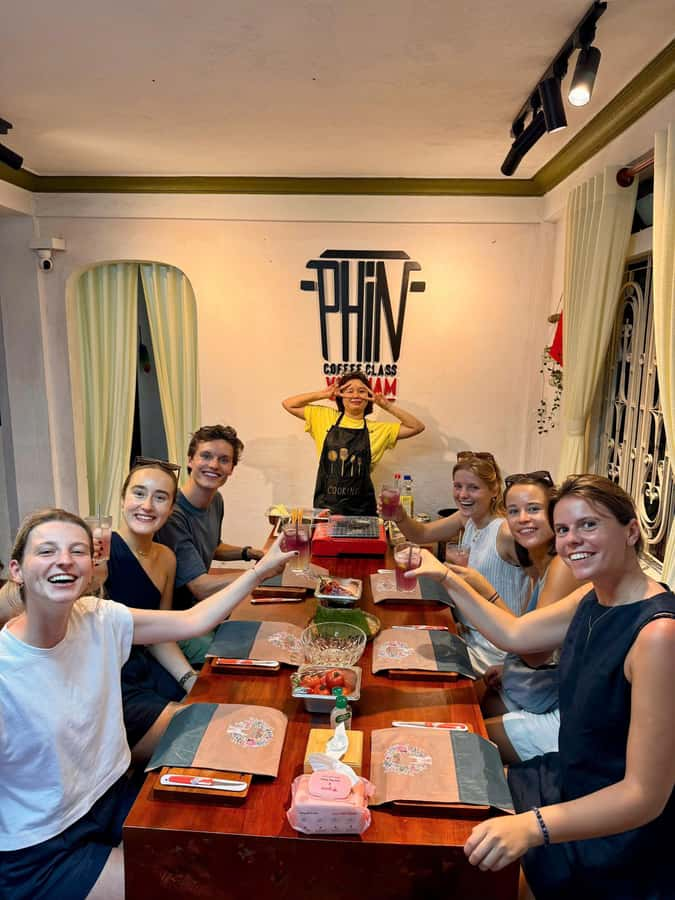
Book this class if you want to cook Hue food, not merely eat it. The strongest reasons are the small group, the choice of a serious vegetarian menu, the mix of dishes, and the chance to learn from a local chef in a quiet garden kitchen.
The main drawbacks are the short ride beyond the tourist center and the fact that ingredients are prepared before you arrive. You will not get a market visit or a full lesson in shopping and preparation.
For $35, I think the balance is good. You get a substantial meal, five regional dishes, royal herbal tea, cultural background, and recipes you can try at home. If Bun Bo Hue, crisp Banh Xeo, and chewy banana-leaf dumplings sound better to you than another restaurant dinner, this is an easy choice.
FAQ
How long does the Hue cooking class last?
The class lasts 150 minutes, or two and a half hours.
How many dishes will I cook?
You will prepare five traditional Hue dishes, a seasonal fruit plate, and one royal herbal tea.
Are vegetarian options available?
Yes. You can choose a vegetarian menu with mushroom broth, tofu, vegan sausage, wood ear mushrooms, mung beans, vegetables, and vegan dipping sauce.
Where is the meeting point?
Enter alley number 1 on Hoàng Quốc Việt Street and walk about 50 meters. The meeting point is marked by the Huế Experience signboard.
Is the class taught in English?
Yes. English is the listed language for instruction.
How large is the group?
The class is limited to six participants. A smaller group, including a private class for two, may be available depending on bookings.
Can I cancel or pay later?
You can cancel up to 24 hours in advance for a full refund. You can also reserve now and pay later.
New cooking classes around Vietnam
- M.O.M COOKING CLASS★ 4.8 · 6 reviews
- Sapa: Bun Cha Cooking Class★ 4.8 · 6 reviews
- Sapa Cooking Class With Ethnic Minorities Chef In Village★ 5.0 · 2 reviews
- Sapa: Local Hmong Cooking Class★ 5.0 · 6 reviews
- Mama Lan’s Home Cooking Class with 30+ Years of Experience★ 5.0 · 3 reviews
- Private cooking class tour with Master Chef★ 5.0 · 5 reviews
- Ninh Binh Jeep Adventure: Temples, Lotus, Fishing & Cooking★ 4.5 · 5 reviews
- Ninh Binh: Half-Day Cooking Class at a Local Home★ 5.0 · 26 reviews
Hue Cooking Classes, side by side.
Hue City: Cyclo, Market Tour & Cooking Class at Madam Thu
Read our review →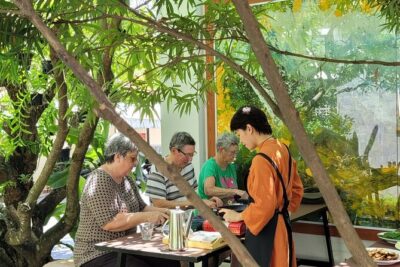
Hue’s Vegetarian Cooking Class in Ancient Garden
Read our review →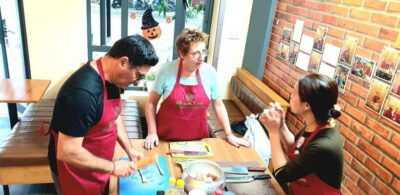
Vietnamese Cooking Class with Local Family in Hue
Read our review →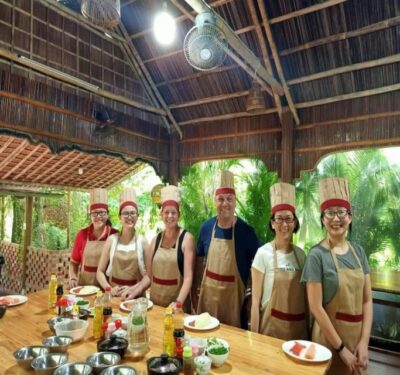
Hue: Vietnamese Cooking Class in Local Home & Market trip
Read our review →
Hue: Home Vegan/Vegetarian Cooking Class with Local Girl
Read our review →
Hue Cooking Class with local-Visit market, cook local food
Read our review →
This kitchen also appears in