
Review · KRABI
Krabi: Traditional Thai Cooking Class
Thai cooking is easiest to understand when you work with the ingredients yourself. In this Krabi class, you’ll crush curry pastes, balance sweet, sour, salty, and spicy flavors, then sit down to eat what you made. The small setup, limited to eight people, keeps the cooking hands-on rather than turning you into an audience member.
I especially like the choice of dishes, since you can focus on food you actually want to recreate at home. I also like the clear attention to herbs, spices, and substitutions, including vegetarian and non-spicy versions. The main consideration is heat: cooking over individual gas-fired woks can feel warm in Thailand, and the number of dishes may vary by time slot.
Quick points to know
- Small class, maximum eight people: You get more room at the cooking station and a better chance to ask questions.
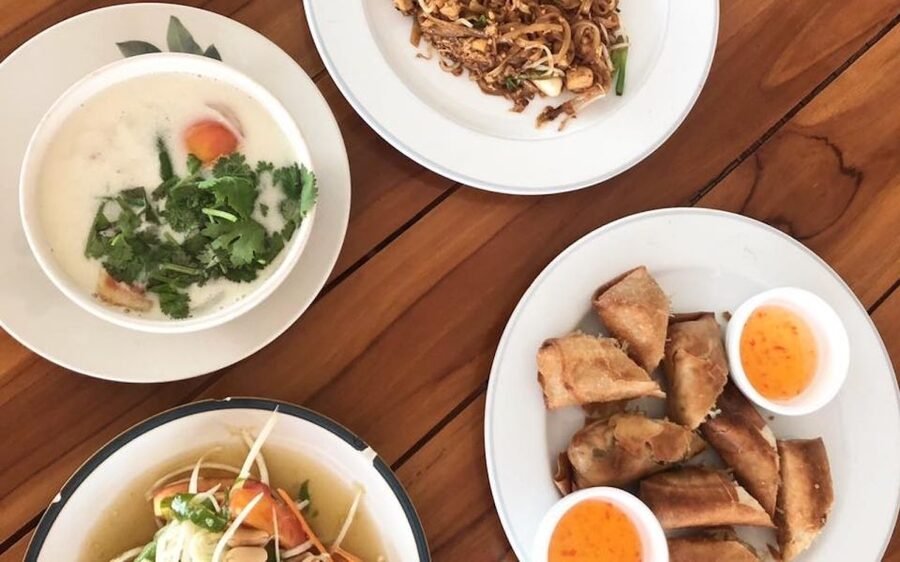
- Choose your own menu: Options include Pad Thai, green curry, Panang curry, papaya salad, tom kha kai, stir-fries, and mango sticky rice.
- Fresh ingredients and individual equipment: You cook rather than simply watch a demonstration.
- Several starting times: Morning, afternoon, late afternoon, and evening sessions suit different beach and sightseeing plans.
- Recipe booklet included: You leave with recipes for the dishes you prepare and additional Thai dishes.
- Ao Nang pickup is included: Hotels in Klong Muang, Tubkaek, and Railay may require an extra fee.
Thai cooking in Krabi, one wok at a time
This is a practical half-day class based in Krabi Province, with transport arranged from selected pickup points in the Ao Nang area. The listed price is $57 per person, and the session lasts about three and a half hours.
You are not simply watching a chef prepare a meal. The format puts you at a cooking station with raw ingredients, equipment, and an apron. Your instructor explains the herbs and seasonings, then guides you through each dish. That matters because Thai food depends on timing and balance more than a long ingredient list.
You learn why curry paste changes the character of a dish, how coconut milk softens heat, and how fresh herbs affect the final taste. The class also helps take some of the mystery out of ingredients that may be unfamiliar when you return home.
The teaching is in English. One instructor mentioned in the feedback is Siam, described as friendly, funny, and clear in her explanations. The teaching staff can also adapt dishes to vegetarian or non-spicy preferences. Tell the instructor what you need before cooking begins so the right substitutions can be arranged.
More Thai Cooking Classes around Thailand:
- Half-Day Thai Cooking Class at Organic Farm in Chiang Mai
★ 5.0 · 19,087 reviews - Chiang Mai: Cooking Class, Market & Thai Herbs Garden Tour
★ 4.9 · 4,824 reviews - Thai and Akha Cooking Class in Chiang Mai
★ 5.0 · 4,358 reviews
The pickup ride from Ao Nang
The itinerary begins with a car transfer from one of three pickup areas: Nong Thale, 102 Panurat, or Ao Nang. Hotel pickup and drop-off are included for hotels in Ao Nang, which makes this a simple option if you are staying near the main resort area.
The ride is useful, but it is not the main attraction. You are being transported to the cooking venue, then returned after the meal. Several pickup and drop-off points are listed, so check your exact meeting arrangement rather than assuming every Krabi hotel qualifies for free transport.
If you stay in Klong Muang, Tubkaek, or at a hotel on Railay, an additional pickup fee applies. That is worth checking before you book, since a low advertised price can change once transport is added.
Do not bring luggage or a large bag. Wear comfortable clothes and shoes. You will be working around food, heat, and cooking equipment, so practical clothing is a better choice than beachwear or anything restrictive.
Choosing four dishes, with one important catch
The central decision comes before the class: which four dishes do you want to make?
The menu changes by time slot. The morning class at 9:00 AM offers dishes such as Massaman curry, red curry with chicken and vegetables, tom yam goong, chicken mint salad, Pad Thai, chicken with cashew nuts, sweet and sour chicken or vegetables, and fried rice.
The 1:00 PM class has a different mix. It can include spring rolls, mango sticky rice, curry pastes, green curry, Panang curry, Pad Thai, tom kha kai, Thai basil chicken, papaya salad, and stir-fried morning glory.
The 2:00 PM class focuses on curry pastes, green curry, Panang curry, Pad Thai, papaya salad, tom kha kai, and Thai basil chicken. The 6:00 PM option adds stir-fried morning glory and mango sticky rice to a similar selection.
The published format says you choose four dishes per person. Some class experiences described six dishes, so the actual number may depend on the session, group, or current menu. Confirm the number of dishes available for your chosen time if this point matters to you.
That difference is not trivial. Four dishes already make a filling meal and a busy class. Six dishes offer more variety, but also mean more chopping, cooking, tasting, and eating in the same three and a half hours.
What the menu teaches you
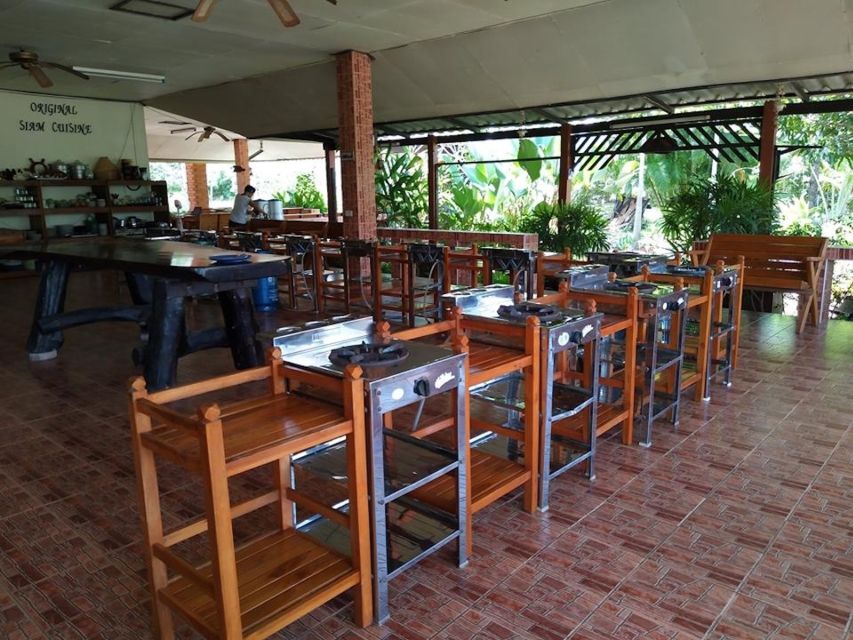
The menu gives you a useful cross-section of Thai cooking rather than just one famous dish.
Pad Thai teaches the familiar sweet, salty, and sour balance of stir-fried noodles. It is a good choice if you want a dish that is easy to recognize and practical to make at home.
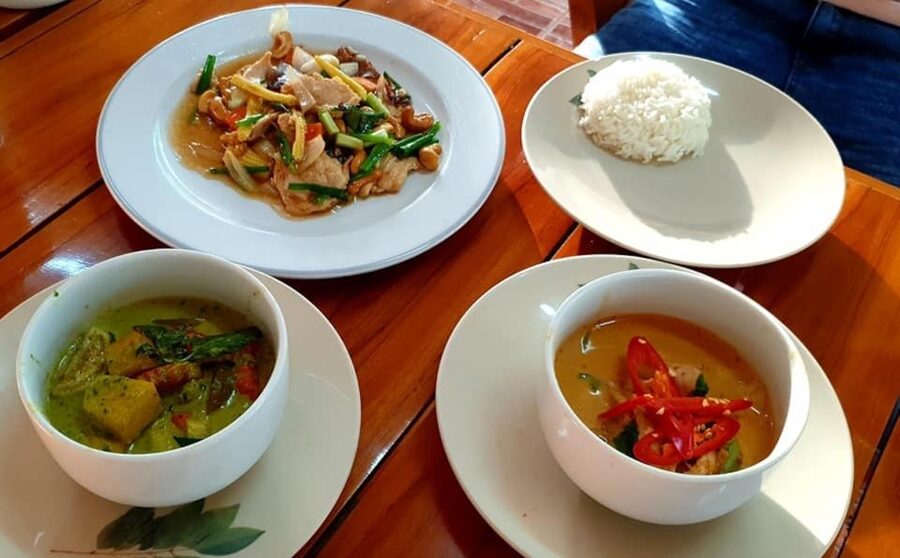
Green, red, Panang, and Massaman curries show how different curry pastes create different results. You can compare heat, sweetness, richness, and texture. Massaman is often gentler and heavier, while green curry usually brings a sharper herbal character.
Tom yam goong focuses on hot and sour flavors with prawns. If you prefer something creamy and milder, tom kha kai, chicken in coconut milk, is a different lesson in using coconut milk to round out spice and acidity.
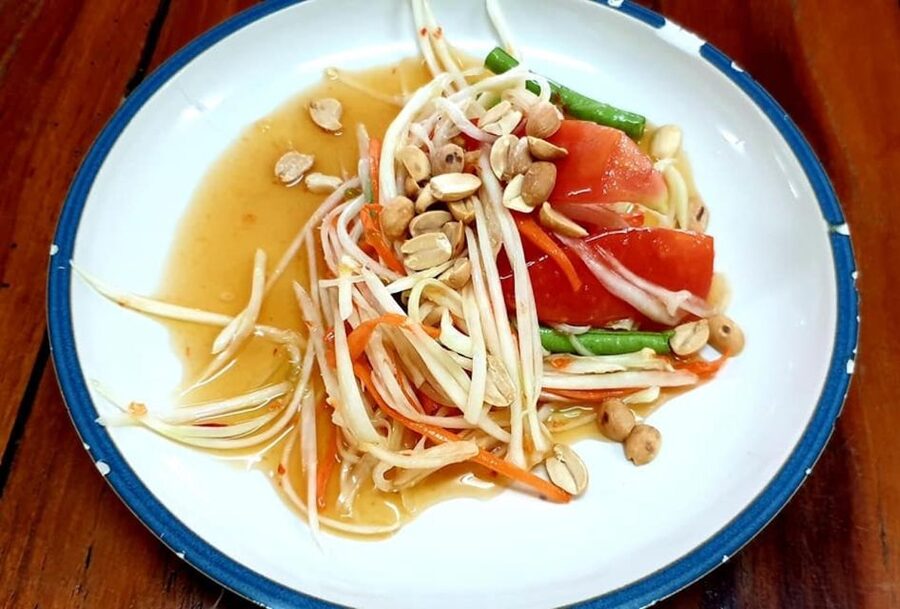
Papaya salad teaches a fresh, crunchy preparation with strong seasoning. It can be spicy, so request a milder version if you do not enjoy heat.
Thai basil chicken, cashew chicken, morning glory, sweet and sour stir-fries, and fried rice are useful everyday dishes. They are less ceremonial than a curry, but often easier to reproduce in a home kitchen.
Spring rolls and mango sticky rice add texture and dessert to selected sessions. Mango sticky rice is especially useful if you want to finish with a classic Thai sweet rather than another savory dish.
The menu is not identical at every start time. If one dish is your priority, choose the session that lists it rather than hoping it will be available later.
More cooking classes around Thailand:
- Chiang Mai: Authentic Cooking Class with Market & Farm Visit
★ 4.9 · 4,546 reviews - Phuket Thai Cooking Class with Market Tour Option
★ 5.0 · 2,665 reviews - Bangkok: Hands-on Thai Cooking Class and Market Tour
★ 4.9 · 1,614 reviews - Chiang Mai: Cooking Class with Market and Pickup
★ 4.9 · 1,365 reviews
A hands-on class, not a cooking show
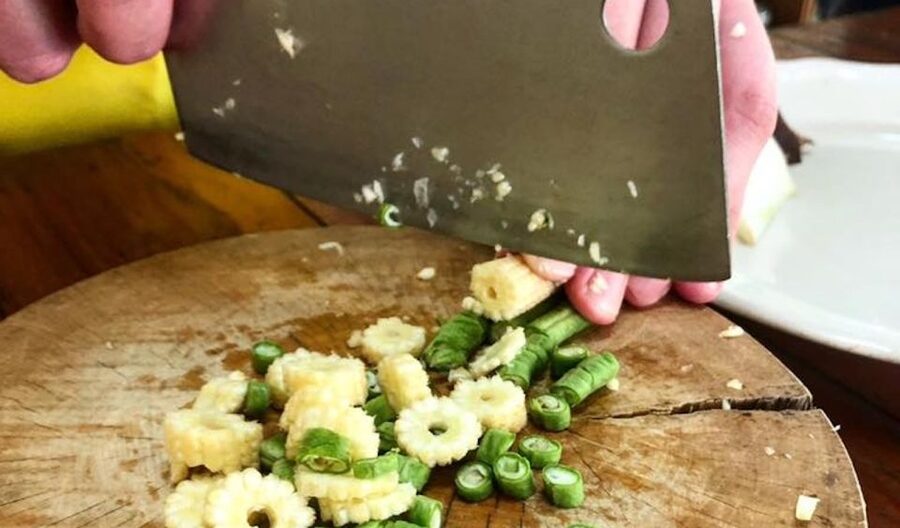
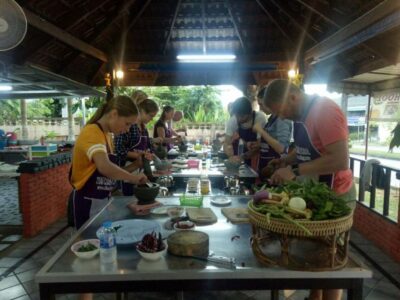
The setup is built around participation. You receive raw ingredients, cooking equipment, and an apron, then work through the recipes with the instructor.
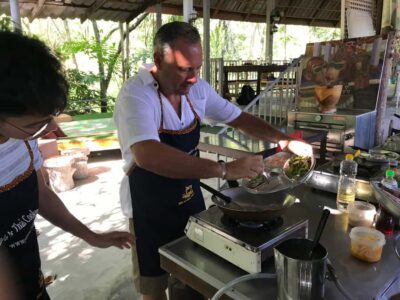
Individual gas-fired woks make the experience feel closer to real Thai cooking than a class where one chef handles everything. You can see how quickly ingredients cook and how much heat affects the result. The drawback is that the cooking area can get hot, especially over the wok. Fans are available, but this is still an active kitchen in a warm country.
The class moves at a good pace. You need to listen closely, especially when several dishes are being prepared in one session. The instructor explains the ingredients and the steps, but this is not a slow, private lesson where every moment is tailored to one person.
That said, the maximum group size of eight is a strong point. A class this small is more manageable than a large demonstration. You can ask about spice levels, substitutions, and techniques without shouting across the room.
Eating what you make
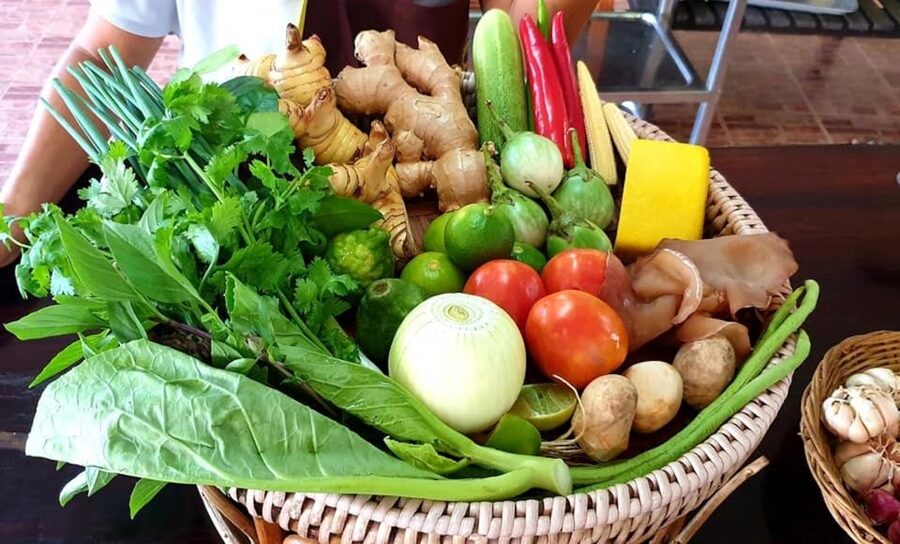
The best part comes after the cooking: you eat your own food.
Portions can be generous, especially if the session includes six dishes. Plan to arrive hungry. You may not finish everything at the table, and takeaway containers can be available for food you cannot manage.
This is one reason I see the class as more than a lesson. You get a full meal while testing the recipes. If a curry is too spicy, a stir-fry too sweet, or a salad too sour, you can ask what caused the result and how to adjust it next time.
The class also gives you a direct comparison between Thai food prepared for immediate eating and the versions you may order abroad. Fresh herbs and curry paste have a big effect, and the instructor’s comments help you identify which ingredients matter most.
The recipe book adds real value
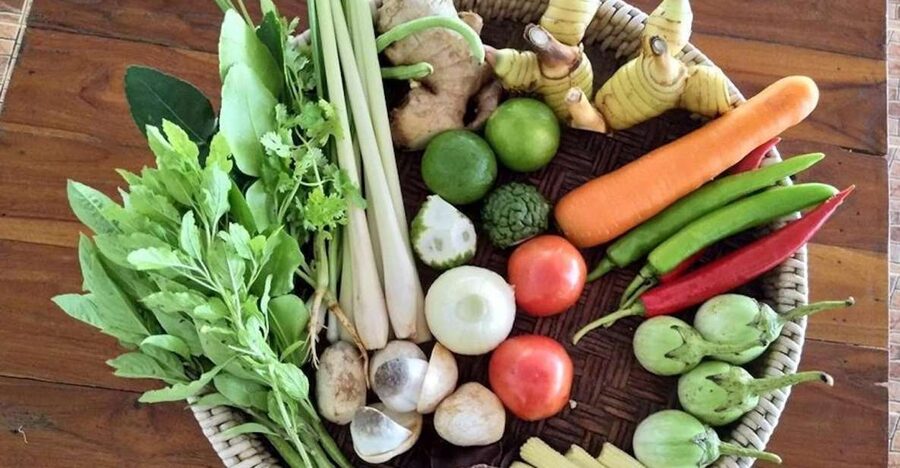
A recipe booklet is provided at the end. It includes the dishes you make and recipes for additional dishes from the menu.
That small book may be the most useful souvenir from the activity. Food memories fade quickly, but a written recipe gives you a chance to repeat the meal at home. The class also teaches techniques, not just ingredient lists, so you can adapt the recipes to what you can find locally.
Do keep your expectations realistic. Thai ingredients may not be available in exactly the same form where you live. Still, learning the role of each herb, curry paste, and seasoning helps you make sensible substitutions instead of guessing.
The recipes are also suitable for sharing with family and friends. You can turn the experience into a meal at home rather than leaving it behind as a holiday memory.
Which start time should you choose?
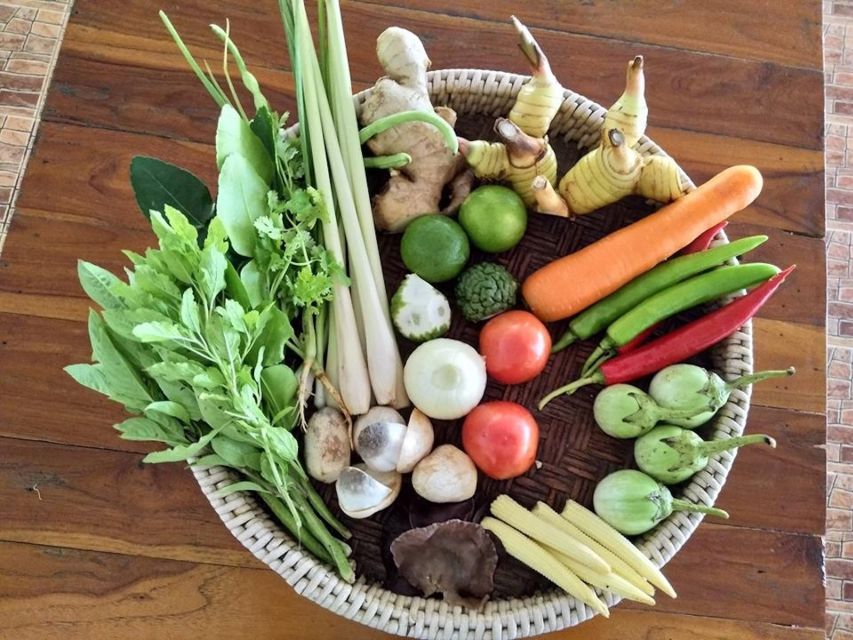
The 9:00 AM class works well if you want the rest of the day free. It also gives you a substantial early meal, so do not plan a large breakfast beforehand.
The 1:00 PM class fits a relaxed morning and leads into a late lunch. It may not suit you if you prefer to eat lightly in the middle of the day.
The 2:00 PM option is useful for a later schedule. The class may function as an early dinner, depending on the exact length of the session and your return transfer.
The 6:00 PM class is the natural choice if you want a Thai dinner and do not mind giving up the evening. It includes mango sticky rice and morning glory among the possible dishes, though menus can change.
The timing matters because you will eat what you cook. Leave enough room in your day and your stomach.
Is $57 a fair price?
At $57 per person, the value depends on what you want from a cooking class.
You receive transport from eligible Ao Nang hotels, raw ingredients, cooking equipment, an apron, instruction in English, and a full meal. The small group size also gives the experience more personal attention than a large workshop.
The price looks stronger if you cook six dishes, but the standard description promises four. I would compare the exact menu and dish count before booking. If you mainly want to watch a chef and eat one dish, this is more than you need. If you want practical instruction, multiple recipes, and a booklet to take home, the cost is easier to justify.
The included transfer adds value for Ao Nang visitors. Those staying farther away should include the extra transport fee in the total cost.
Free cancellation is available up to 24 hours before the activity for a full refund, and you can reserve now and pay later. Those options are useful if your Krabi plans are still shifting.
Who will enjoy this class most?
I would choose this activity if you enjoy cooking, want to understand Thai ingredients, or plan to recreate Thai food at home. It suits beginners because the instructor guides you through the steps, and the menu lets you avoid dishes that are too spicy or unsuitable for your diet.
It is also a good choice for couples and small groups. Two people may end up preparing a wide range of dishes between them, while a small class gives everyone room to work.
This is not suitable for children under 12. It may also disappoint anyone looking for a quiet, passive food tour. You will be standing, chopping, stirring, and working near heat.
Vegetarians can take part, and dishes can be made non-spicy. Ask about the available substitutions at the beginning rather than waiting until the cooking is underway.
Should you book it?
Book this class if you want more than a restaurant meal and like the idea of taking Thai cooking skills home. The fresh ingredients, individual woks, flexible menu, small group, and recipe booklet make it a practical choice in Krabi.
Before paying, confirm your pickup location, the extra fee for hotels outside Ao Nang, the dishes available at your chosen time, and whether that session prepares four or six dishes. If those details fit your plans, this is a well-priced, hands-on way to spend three and a half hours, and you should arrive hungry.
FAQ
Where does the cooking class take place?
The class takes place in Krabi Province, Thailand. Pickup locations include Nong Thale, 102 Panurat, and Ao Nang.
How long does the cooking class last?
The activity lasts approximately three and a half hours.
What time does the class start?
Available sessions begin at 9:00 AM, 1:00 PM, 2:00 PM, or 6:00 PM. Check availability for the current starting times.
How many dishes can I choose?
The activity information says you choose four dishes per person. The menu and number of dishes can vary by time slot, and some sessions may prepare six dishes, so confirm when booking.
What dishes can I make?
Depending on the class time, choices include Pad Thai, green curry, Panang curry, Massaman curry, red curry, tom yam goong, tom kha kai, papaya salad, Thai basil chicken, stir-fries, spring rolls, fried rice, and mango sticky rice.
Can the food be vegetarian?
Yes. The dishes can be prepared as vegetarian options.
Can the food be made non-spicy?
Yes. All dishes can be prepared non-spicy to suit your preference.
Is hotel pickup included?
Pickup and drop-off are included for hotels in Ao Nang. An additional fee applies for hotels in Klong Muang, Tubkaek, and Railay.
How many people are in each class?
The class is limited to eight participants.
What should I bring?
Bring comfortable shoes and comfortable clothes. Luggage and large bags are not allowed.
New cooking classes around Thailand
- Sathon: Hands-on Thai Cooking Class & Market Tour in Bangkok★ 5.0 · 19 reviews
- Railay: Hands-On Thai Cooking Class at Railay Beach★ 4.9 · 30 reviews
- Phuket: Thai Cooking Class with Market Tour★ 5.0 · 2 reviews
- Phuket: Pum Thai Cooking School with Meal★ 5.0 · 3 reviews
- Phuket: Rawai Thai Cooking Class with Local Chef★ 4.8 · 23 reviews
- Phuket foodie tour+ Thai cooking class + Local food tasting★ 5.0 · 4 reviews
- Phuket: Half Day Thai Cooking Experience with Market Tour★ 5.0 · 11 reviews
- Phuket: Authentic Thai Cooking Class★ 4.8 · 145 reviews
Krabi Cooking Classes, side by side.
Krabi: Cooking Class at Thai Charm Cooking School with Meal
Read our review →
Krabi: Evening Thai Cooking Class at Ya’s Cookery
Read our review →
Railay: Hands-On Thai Cooking Class at Railay Beach
Read our review →This kitchen also appears in