
Review · LUCCA
Lucca: Pasta Cooking Class with a Local Chef
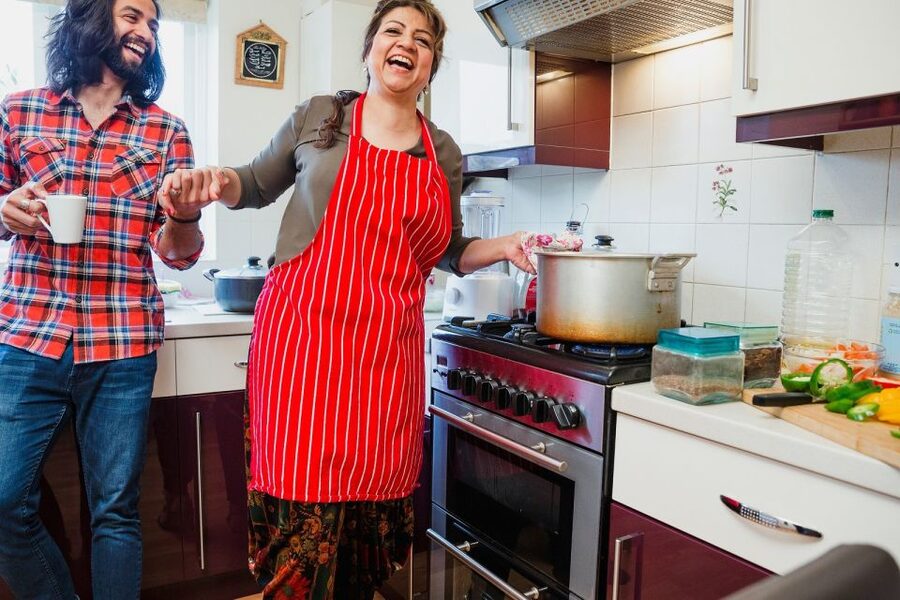
The best part of this Lucca cooking class is that it takes place in a working family home, not a polished demonstration kitchen. At Antonietta and Piero’s farmhouse near Capannori, you make pasta from scratch, use produce from the garden, and eat your work around the same table. The setting feels personal and the meal goes well beyond one bowl of pasta.
I like two things right away: you actually work with the dough, shaping the pasta rather than watching a chef do everything, and you get a full Tuscan meal afterward with bruschetta, cold cuts, cheese, vegetables, dessert, wine, coffee, and homemade limoncello. Piero’s Italian cowboy character adds a fun twist to the farmhouse visit.
The main consideration is transportation. You must reach Via dei Selmi 34 in Capannori on your own, and the farmhouse is outside Lucca. The class is taught in English, but translation may be provided by a family friend or interpreter, so the pace and style of communication can vary.
Key points to know before booking
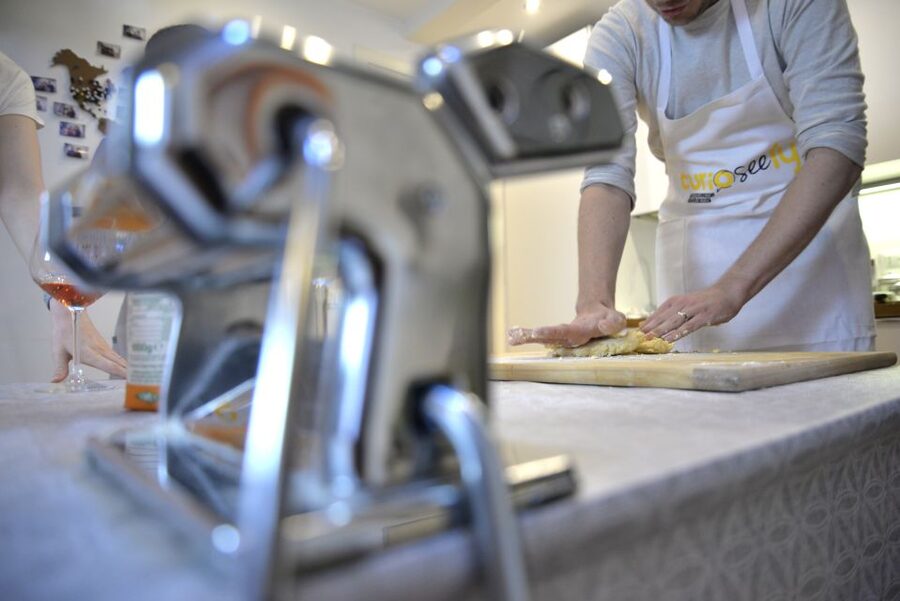
- Antonietta leads the pasta lesson: You prepare dough, shape fresh pasta, and learn her simple tomato sauce method.
- The farmhouse setting is part of the experience: The class takes place in a family home on the hills around Lucca, with garden and farm life close by.
- The meal is substantial: Expect bruschetta, garlic toast, cold cuts, cheese, olives, vegetables, pasta, dessert, coffee, and local wine.
- Piero adds personality: His role as an Italian cowboy gives the visit a memorable ranch-house flavor.
- The group is small: The activity is limited to six participants, encouraging hands-on time and conversation.
- Plan your own transport: The meeting point is the yellow gate at Via dei Selmi 34 in Capannori, and transportation is not included.
A farmhouse kitchen near Lucca, not a staged restaurant class
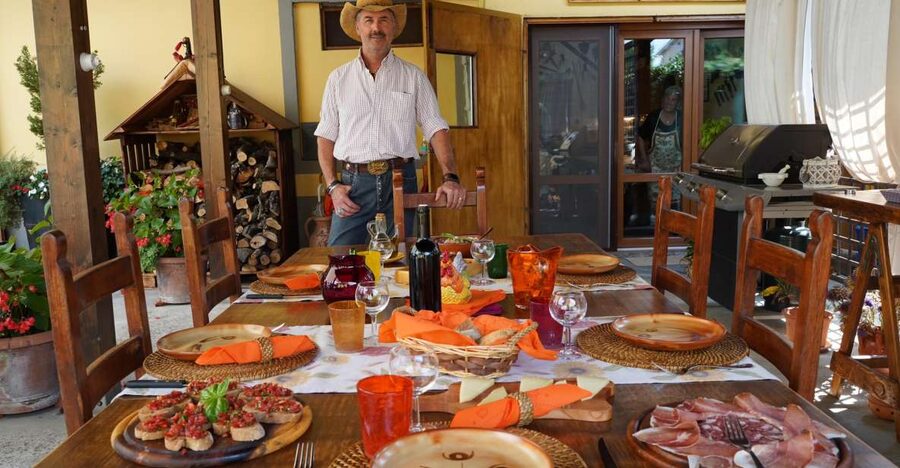
You begin at the main yellow gate at Via dei Selmi 34 in Capannori. This is the practical detail to get right. The experience does not begin in central Lucca, and transportation is not included, so allow time to reach the meeting point and identify the gate before the class starts.
From there, you enter the farmhouse and meet Antonietta and Piero. The mood is informal. You may be offered coffee, juice, or water before the cooking starts, and the welcome is part of the visit rather than a quick introduction before a formal lesson.
That matters because the class is built around hospitality. You are not simply paying for a recipe and a meal. You are entering the hosts’ home, meeting the people behind the food, and seeing how a family kitchen works. The result feels closer to being invited to an Italian household than attending a standard commercial cooking session.
The property also has a farm and ranch character. The exact schedule for seeing the animals is not fixed in the activity details, but past participants have described horses and chickens on the property. That gives the visit a distinctive Italian Wild West flavor, especially with Piero’s cowboy persona.
More Pasta Making Classes in Italy:
- Florence: Pasta Cooking Class with Unlimited Wine
★ 4.9 · 10,285 reviews - 3 in 1 Cooking Class near Navona: Fettuccine, Ravioli & Tiramisu
★ 5.0 · 7,376 reviews - Florence: Pasta & Tiramisu Cooking Class with Unlimited Wine
★ 4.9 · 6,708 reviews
Making fresh pasta with Antonietta
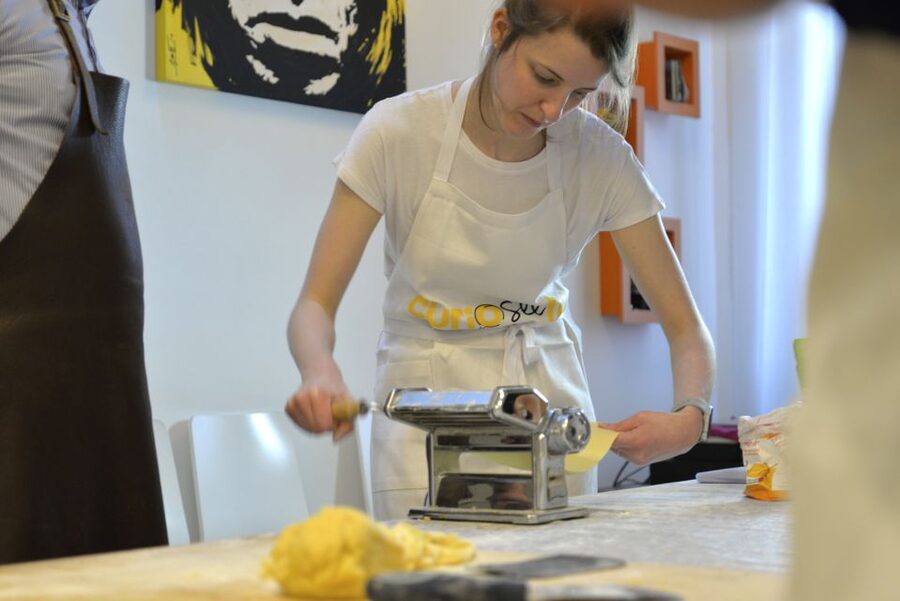
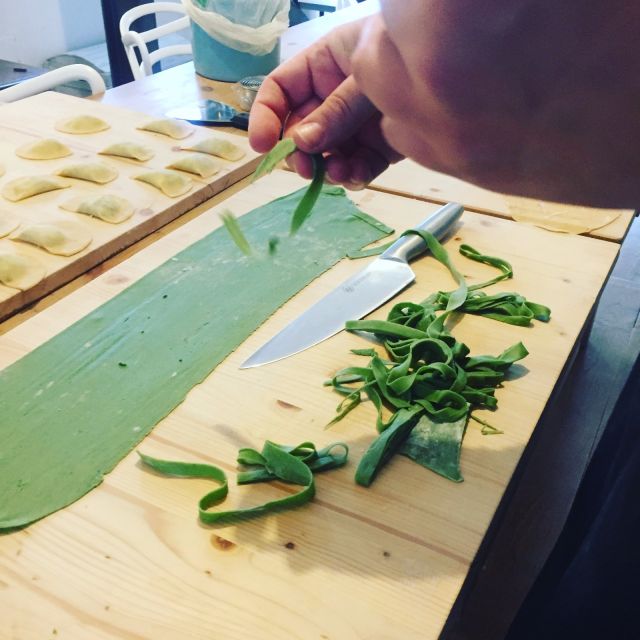
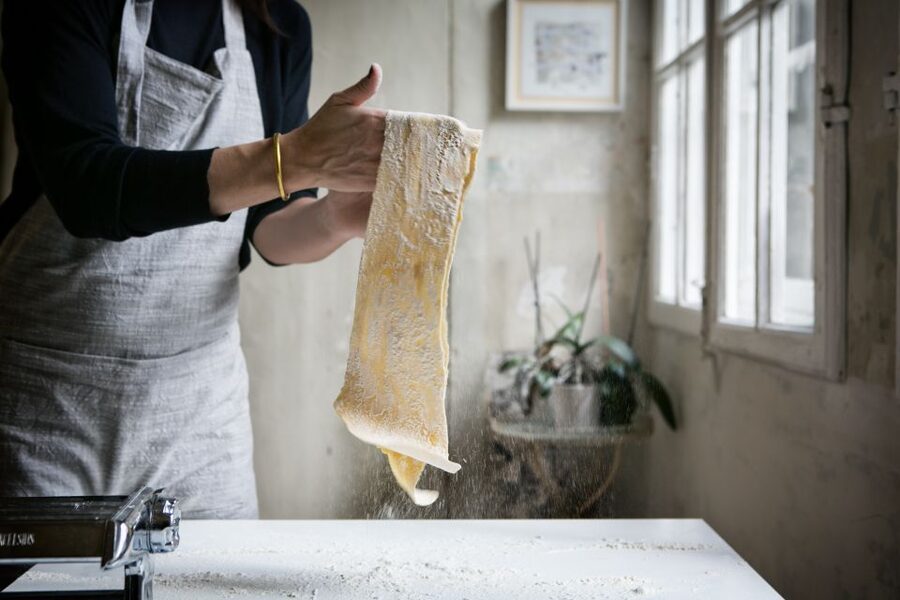
The central lesson is fresh pasta. Antonietta shows you how to prepare the dough, work it, and shape it by hand. The class is genuinely hands-on, which is important if you want to take a useful skill home rather than simply enjoy a food demonstration.
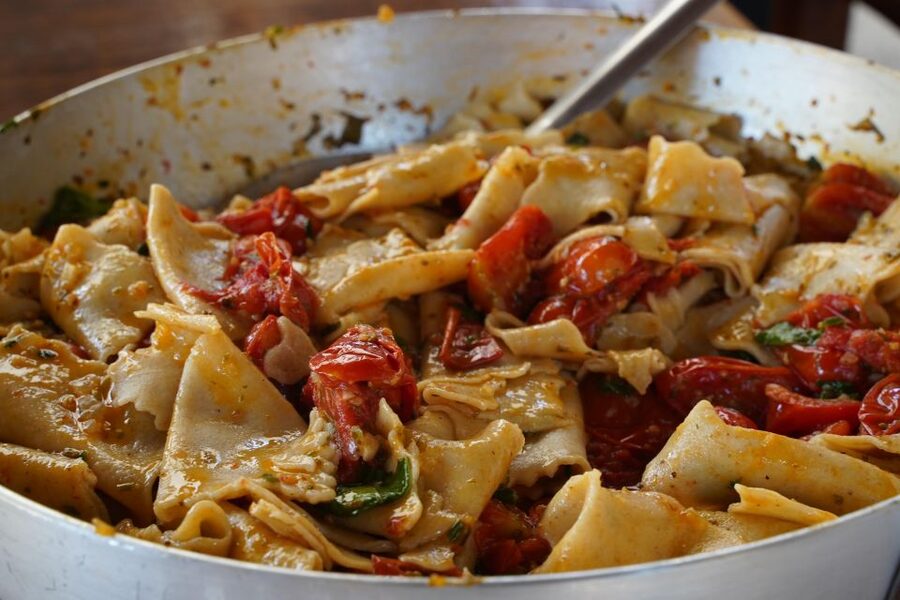
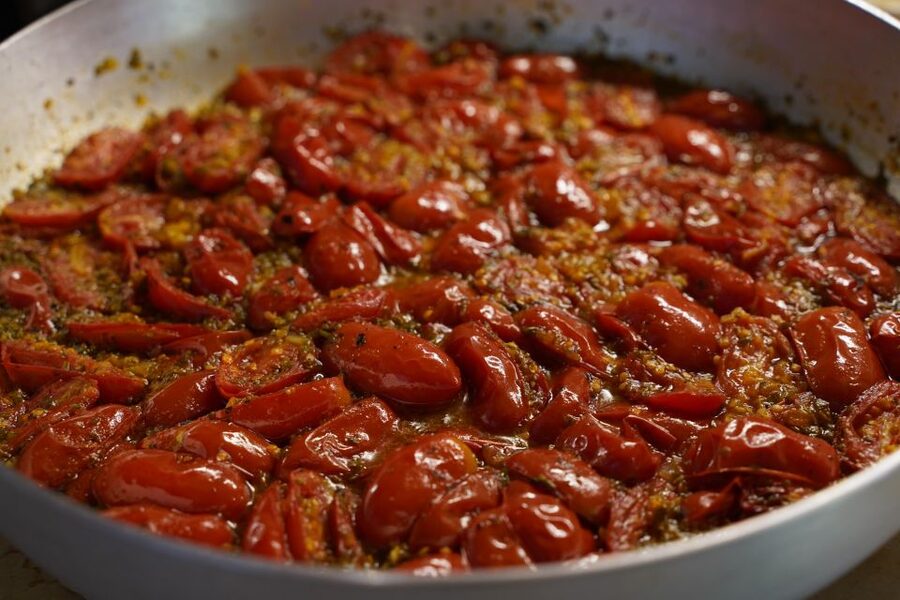
You will also learn how the pasta is paired with sauce. Antonietta uses tomatoes grown in the garden for a straightforward tomato sauce, placing the focus on good ingredients and careful preparation. This is not a lesson built around complicated restaurant tricks. It is about getting the basics right: dough, texture, sauce, and timing.
I like this approach for two reasons. First, fresh pasta is one of the few Italian cooking skills you can repeat with ordinary kitchen equipment. Second, the lesson connects the finished dish to the place itself. The eggs, tomatoes, herbs, and other produce are not just abstract ingredients. Some come from the family’s own garden or farm.
The class is suitable for beginners because Antonietta is described as patient and willing to guide participants through each stage. Families have also taken part, including children aged nine, twelve, and fourteen. One family specifically noted that gluten-free preparation was not a problem, but you should still communicate dietary needs when booking rather than assume every request can be handled.
An interpreter or English-speaking helper may assist during the session. Past classes have included people such as Camilla, Francesca, Chris, or Monica, depending on the day. The activity is listed in English, and the available information indicates that translation can make communication easy, but the exact interpreter is not guaranteed.
Bruschetta, garden produce, and the first taste of your work
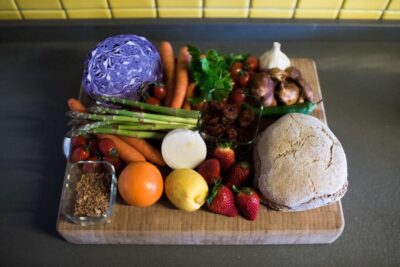
The cooking does not stop at pasta. You also help prepare bruschetta and garlic toast, then sit down to taste these early dishes with wine, cheese, olives, cold cuts, and vegetables.
This part gives the class a better rhythm. You are not waiting for one dish to finish. You prepare food, share small plates, and gradually move from the kitchen to the dining table. The menu may vary, but the meal is designed around the produce and family cooking of Tuscany.
The garden-grown tomatoes receive special attention. A simple tomato can taste very different when it is ripe, fresh, and used soon after picking. Antonietta’s lesson gives you a chance to notice that difference without wrapping it in technical language or turning the class into a lecture.
The meal also makes this a good choice for people who want more than a pasta lesson. You receive a broad introduction to Tuscan table customs, from small starters and local wine to dessert and after-dinner drinks. If you only want to learn one recipe and leave, this will feel longer than necessary. If you enjoy lingering over food and conversation, the four-hour length makes sense.
Eating together at the farmhouse table
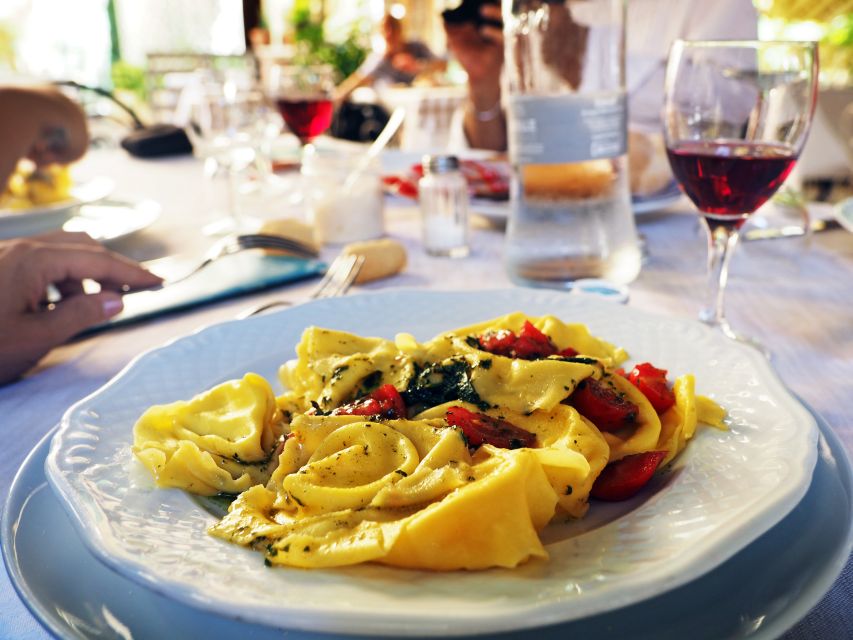
Once the pasta is ready, you sit down in the farmhouse dining room. The setting is relaxed and without much formality. That is one of the strongest parts of the experience, but it also means you should not expect a tightly timed restaurant service.
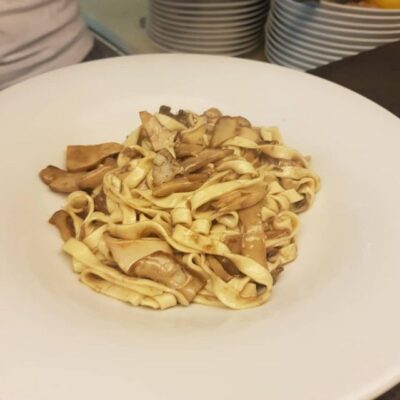
The pasta you helped prepare is served as the first course, usually with the simple tomato sauce made from the garden produce. The appeal is direct: you can compare the dough you shaped with the finished texture, then eat it while the process is still fresh in your mind.
The rest of the meal can include cold cuts, cheese, bruschetta, vegetables, olives, and garlic toast. Dessert follows, with past participants describing panna cotta with fresh strawberries, Vin Santo with biscotti, or another sweet ending. The precise menu is not promised, so treat these as examples rather than a fixed course list.
Water and coffee are included, along with wine from the area. The experience is described as a wine tasting, but it is also simply the drink served with the meal. If you are looking for a formal lesson in Tuscan wine, this is not the right product. If you want local wine with a home-cooked lunch or dinner, it fits well.
The final touch is homemade limoncello. Coffee and a small after-dinner drink extend the meal and reinforce the unhurried family atmosphere. This is not a class where you rush out after tasting your pasta.
More cooking classes around Italy:
- Florence: Pasta Cooking Class with Unlimited Wine
★ 5.0 · 6,413 reviews - Cooking Class and Lunch at a Tuscan Farmhouse with Local Market Tour from Florence
★ 5.0 · 4,831 reviews - Rome: Pasta Making Class with Wine, Limoncello, and Dessert
★ 4.9 · 3,177 reviews - Pastamania – Florence Pasta Making Class
★ 5.0 · 3,050 reviews
Antonietta, Piero, and the social side of the visit
Antonietta is the main cooking figure, while Piero helps create the welcoming atmosphere. His Italian cowboy identity is a memorable feature, especially for anyone who enjoys food experiences with a strong sense of place and personality.
The hosts are not presented as distant instructors. They cook with you, answer questions, and share their home. An interpreter may help bridge language gaps, and the small group makes it easier to talk with the hosts and the other participants.
The class is limited to six people. That size should give you a better chance to handle the dough, ask for help, and follow the cooking without standing behind a crowd. It also means availability may be limited, particularly during busy periods, so check the date before building your schedule around it.
The social side can be a benefit or a drawback depending on what you want. I would choose this class if you enjoy conversation, shared tables, and meeting people through food. I would look elsewhere if you prefer a private lesson with no interaction beyond the chef.
What four hours really gets you
Four hours is a generous block for this type of activity. It allows time for the welcome, introductions, pasta preparation, side dishes, cooking, the meal, and coffee or limoncello afterward.
You should not read the duration as four hours of nonstop instruction. Some of that time is spent eating and talking. That is part of the value, but it also means the experience is closer to a half-day cultural visit than a short cooking workshop.
The pace suits families and couples who want a calm day outside the city. It may be less suitable if you have only a brief stop in Lucca or a packed list of museums and churches. Once you arrive, the point is to slow down and enjoy the farmhouse setting.
The start time varies, so check availability carefully. The activity ends back at the same meeting point, but you are responsible for reaching Capannori and returning from there. No transport is included.
Is the $157.47 price good value?

At $157.47 per person, this is not a cheap pasta lesson. The price makes more sense when you count the whole experience: a four-hour visit, a small group, hands-on instruction, a full meal, water, coffee, wine, dessert, and the personal setting.
You are also paying for the parts that are difficult to reproduce at a restaurant. The farmhouse, garden produce, family hosts, ranch atmosphere, and shared table give the class its identity. A basic city cooking class may cost less, but it may not include this same connection to a local home and working farm.
I would consider the price fair for someone who values a personal food experience and plans to eat a full meal during the activity anyway. It is less attractive if your main aim is simply to learn how to make pasta as cheaply as possible.
The strongest value comes from the combination of instruction and hospitality. You leave with recipes and a method you can repeat, but also with an afternoon or evening built around Tuscan food and conversation. That is a better reason to book than the pasta alone.
Who should book this class?
I would recommend it to couples, families, and small groups who want an authentic home-cooking experience near Lucca. It works particularly well for people who enjoy meeting local hosts and do not mind spending several hours at the table.
Families should note that children have taken part successfully, including children from age nine upward. The hands-on work gives younger participants something useful to do, though the calm meal and conversation may suit older children better than very young ones.
Food-focused visitors will appreciate the garden tomatoes, homemade pasta, bruschetta, local wine, and traditional dessert. Anyone interested in Italian family cooking will get more from this than someone seeking a polished chef-led performance.
The class can also suit visitors who have already seen Lucca’s walls and historic center and want a different side of the area. You trade city sightseeing for a farmhouse, a family kitchen, and a meal that takes its time.
Practical details before you go
The meeting point is in front of the main yellow gate at Via dei Selmi 34, Capannori. The activity ends at the same meeting point, and transportation is not included.
The class lasts four hours, with starting times available by date. It is conducted in English and is limited to six participants. The instructor is Antonietta, with Piero and possibly an English-speaking interpreter or family helper involved in the visit.
The price is $157.47 per person. The booking terms allow cancellation up to 24 hours before the activity for a full refund, and you can reserve now and pay later. These terms help if your Lucca schedule is still changing.
Bring an appetite and wear something comfortable for kitchen work. The activity description does not specify a dress code or equipment list, so do not assume that special tools or transportation are supplied.
Should you book it?
Book this class if you want a personal farmhouse meal, not just a recipe lesson. Antonietta’s fresh pasta instruction, garden produce, Piero’s entertaining presence, and the long shared meal create an experience with a clear sense of family and place.
Skip it if you need a central Lucca activity, private transportation, or a tightly scheduled professional workshop. The location requires planning, and the four-hour visit rewards people who are happy to slow down.
For most food-loving visitors with half a day to spare, I think the price is justified. You learn a practical dish, eat a generous Tuscan meal, and spend time in a family home that feels very different from the usual tourist circuit.
FAQ
Where does the pasta cooking class take place?
It takes place at a farmhouse on the hills around Lucca. The meeting point is in front of the main yellow gate at Via dei Selmi 34 in Capannori.
How long does the activity last?
The cooking class and meal last four hours. Starting times depend on availability.
Is transportation included?
No. Transportation is not included, so you must arrange your own way to and from the meeting point in Capannori.
What do you make during the class?
You learn to prepare fresh pasta dough, shape the pasta, and make a tomato sauce. You also help prepare bruschetta and garlic toast.
What food is included after the cooking lesson?
The meal can include cold cuts, cheese, bruschetta, vegetables, olives, the pasta you prepared, dessert, water, coffee, local wine, and homemade limoncello.
Is wine included?
Yes. Wine from the area is included with the meal, along with water and coffee.
Is the class taught in English?
Yes. The activity is listed as English-language. An interpreter or English-speaking family helper may also assist during the class.
How many people can join?
The activity is described as a small group limited to six participants.
Can children take part?
Children have taken part in the class, including ages nine, twelve, and fourteen. The available information also notes that gluten-free preparation was possible for one family.
What is the cancellation policy?
You can cancel up to 24 hours in advance for a full refund. The activity also offers a reserve-now-and-pay-later option.
New cooking classes around Italy
- Sestri Levante: Pesto & Cooking Classes, Wine Tasting★ 4.9 · 56 reviews
- Sardinia Cooking Class: Fresh Handmade Pasta★ 5.0 · 53 reviews
- San Gimignano: Tuscan Cooking Class★ 5.0 · 2 reviews
- San Gimignano: Truffle Cooking Class with Wine Tasting★ 5.0 · 5 reviews
- San Gimignano: “Hands in dough” Cooking Class with Lunch★ 5.0 · 6 reviews
- Salento: Authentic Cooking Experience with Fresh Pasta and Local Products★ 5.0 · 8 reviews
- ROME:Hands-On Lasagna & Marsala Tiramisu Cooking Experience”★ 5.0 · 3 reviews
- Rome: Private Wine Tour and Pasta Making Class in a Winery★ 5.0 · 6 reviews
Lucca Cooking Classes, side by side.
Lucca Walking Tour & Traditional Cooking Class with Wine
Read our review →
Lucca: Traditional-Traditional Cooking Class cuisine course
Read our review →This kitchen also appears in