
Review · MALLORCA
Palma: Mediterranean Cooking Class with Drinks
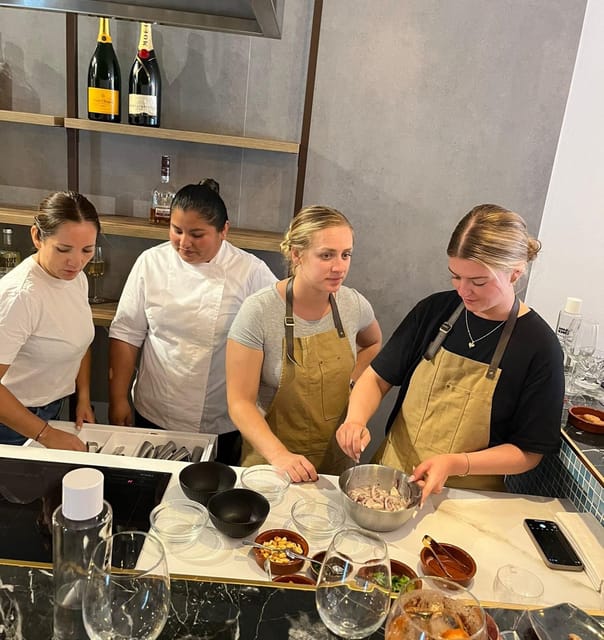
Palma’s Omare cooking class turns dinner into a three-hour shared feast, with local chefs guiding you through Spanish dishes and Mediterranean recipes with international twists. You may prepare tortilla, ceviche, paella, desserts, and other courses, then sit down with the group to eat what you have made.
I like the generous food and drinks, especially when the class includes several courses, appetizers, wine, beer, and soft drinks for $105. I also like the easy social setting: solo visitors, couples, and groups often cook together, and the English- and Spanish-speaking hosts keep the mood relaxed. The main consideration is that this is a group cooking experience, not a private lesson. You may prepare one dish while others handle the rest, and vegan food is not available.
Key details before you book
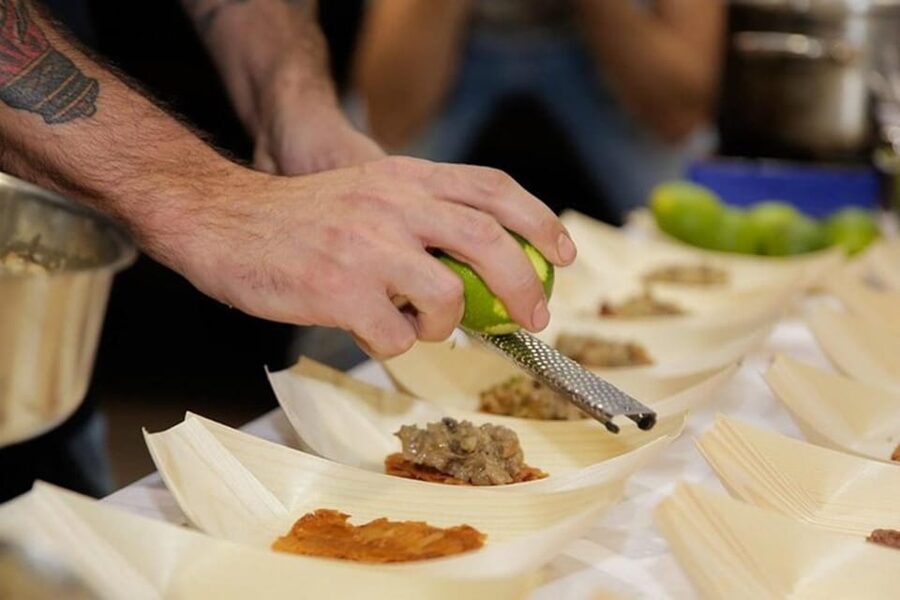
- Five-course meals are possible: Previous menus have included tortilla, ceviche, paella, appetizers, and several desserts, though the exact dishes can vary.
- Spanish food meets international ideas: Expect traditional island cooking alongside touches such as Peruvian ceviche, leche de tigre, and yuzu sorbet.
- The open bar is part of the value: Water, soft drinks, wine, and beer are included, with many sessions also offering Prosecco.
- Cooking is shared rather than constant: Everyone gets a chance to help, but you may not personally cook every course.
- The meeting point is easy to miss: Find the instructor with a name card at Omare, Plaça de l’Olivar 5, local 4, Palma.
- Food restrictions need early attention: Vegetarian and allergy requests may be accommodated, but the class does not offer vegan food and communication has not always been quick.
Cooking at Omare in Palma’s Plaça de l’Olivar
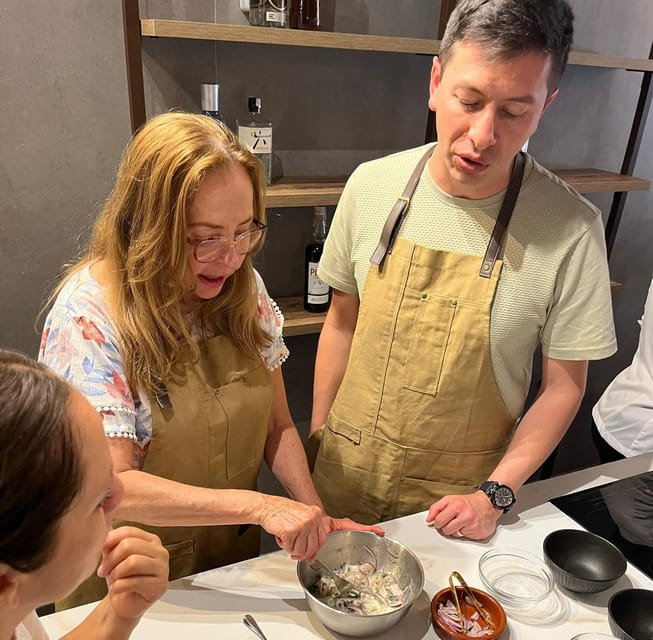
The class meets at Omare, in Plaça de l’Olivar, a central Palma location. Your instructor waits at the entrance to the cooking-class section with a name card. The meeting point is specific, but the signage can be hard to spot, so I would arrive early and allow time to find the right entrance.
The setting is a small restaurant-style space rather than a large formal school. That matters. You are close to the chefs, the cooking stations, and the other people at your table. The atmosphere tends to feel more like a lively dinner party than a silent demonstration.
You start by meeting the chef and host, settling in with a drink, and hearing what you will prepare. Instructors have included Lorena, Aurelia, Mily, and assistants such as Laura, Isabel, and Charlotte. Names can change by date, but the format remains the same: an English- and Spanish-speaking team guides the class and explains the food as you work.
The class suits people who like conversation. Groups have included couples, solo participants, families, birthday parties, and bachelorette groups. Several nationalities may share the table, which gives the evening a built-in social element without requiring you to arrange a group of your own.
More cooking classes around Spain:
- Barcelona: Paella Cooking Experience & Boqueria Market Tour
★ 4.8 · 3,661 reviews - Barcelona Paella Cooking Class with Market Visit, Tapas & Sangria
★ 5.0 · 2,531 reviews - Barcelona Interactive Spanish Cooking Experience
★ 4.5 · 2,155 reviews
Fresh ingredients and Mediterranean fusion
The food is the reason to book this rather than simply choosing another restaurant in Palma. You work with market-fresh fish, locally grown produce, and hand-picked vegetables. The cooking has a Mediterranean base, but it does not stay inside a narrow definition of Spanish cuisine.
One menu may include a Spanish tortilla or paella. Another may bring in ceviche with leche de tigre, a Peruvian-style citrus and seafood preparation, followed by a yuzu sorbet. These combinations give the class its fusion character. You get familiar island ingredients, but the seasonings and methods may come from farther afield.
That mix is useful if you want more than a basic paella lesson. You learn how local products can work with international flavors, and you get a meal that feels more creative than a fixed regional menu. It is also a good introduction to how modern Palma restaurants use Spanish foundations without treating tradition as a strict rulebook.
The menu is not guaranteed in advance, so do not book expecting one exact set of dishes. The food can include appetizers, several main courses, and dessert, with some classes serving four or five separate preparations. The supplied details specifically point to fish, vegetables, farm produce, and local ingredients, so seafood is a recurring possibility.
How the three-hour class unfolds
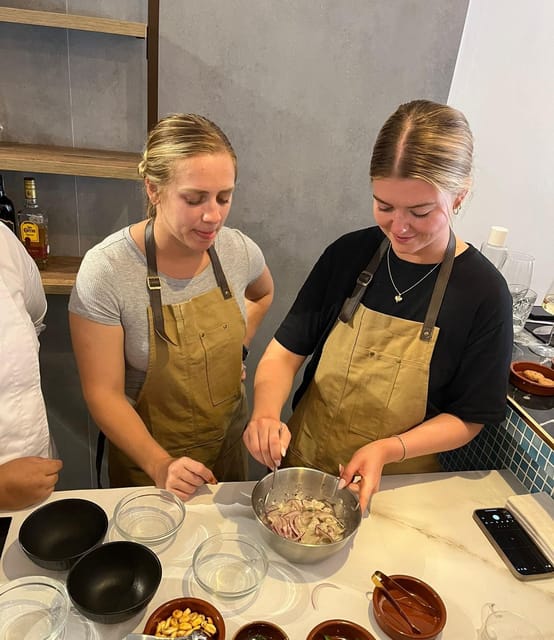
The opening part is social and fairly easy. You meet the instructors, take a drink, and get oriented before the cooking begins. The hosts explain the recipes and the story behind Mediterranean fusion cooking, giving you enough context to understand why the ingredients belong together.
Next comes the preparation. You may chop vegetables, arrange ingredients, stir, sauté, or help with a dish under the chef’s direction. The class is designed to be approachable, so you do not need advanced cooking skills. Simple tasks still have value when the chef explains timing, texture, and how the ingredients come together.
The main point to understand is the division of work. Everyone gets a chance to participate, but not everyone cooks every course. One person or small group may handle a tortilla, while others prepare ceviche, paella, or dessert. You then share the finished dishes.
If you want continuous hands-on work, this may feel lighter than expected. One participant who had taken similar classes wanted more time at the cooking station. That is a fair criticism. This format protects the meal from becoming chaotic, but it means you should think of the class as part cooking lesson and part communal dinner.
The reward is variety. You may not personally stir every pot, but you can watch several methods and taste the results. You also learn from what the other people at your table prepare. For many people, that mix creates a better evening than spending three hours focused on a single recipe.
The meal: tortilla, ceviche, paella, and dessert
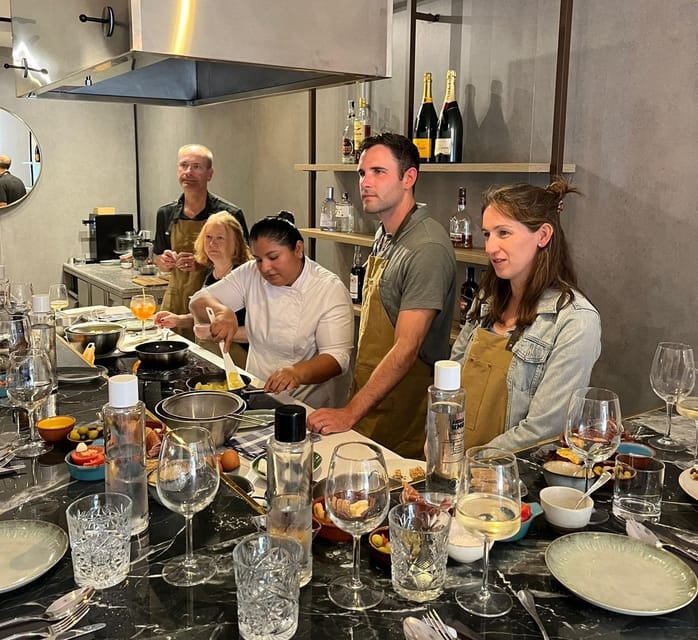
The meal can be substantial. Past sessions have included appetizers, four separate preparations, five courses, and multiple desserts. The exact menu changes, but the pattern is generous enough that you should arrive hungry.
A Spanish tortilla is a useful dish to prepare because it looks simple but depends on careful handling of potatoes, eggs, and heat. A class participant once made the tortilla for the group, while others prepared different courses. This shared approach gives you a chance to contribute something meaningful without placing the entire meal on one person.
Ceviche brings a sharper, fresher contrast to the heavier Spanish dishes. When it appears, the leche de tigre adds a Peruvian touch and shows what the fusion idea means in practice. Paella provides the familiar Spanish centerpiece, though the ingredients may lean toward seafood.
Dessert can be more than an afterthought. Yuzu sorbet has appeared as a bright finish after savory courses, while other sessions have included a range of desserts. Since the menu is not fixed, treat these examples as possibilities rather than promises.
The portions are generally described as ample, and the meal is included in the $105 price. You are not paying for a small tasting plate followed by a separate restaurant bill. You cook, eat, and continue drinking within the three-hour session.
Same kitchen, a different dish:
- Spanish Cooking Class Paella Tapas and Sangria in Madrid
★ 5.0 · 1,340 reviews - Paella Cooking Class, Wine Tasting & Central Market in Valencia
★ 5.0 · 1,150 reviews - Paella Cooking Class in Madrid with Bottomless Wine Pairing
★ 5.0 · 985 reviews - Seville: Spanish Cooking Class with Dinner
★ 4.9 · 900 reviews
Wine, beer, and the social side
The open bar adds a major part of the value. Water, soft drinks, wine, and beer are included, and some sessions have offered Prosecco as well. The hosts keep glasses topped up, according to the supplied experience details, so the drinks are not merely a token serving at the start.
That also shapes the mood. This is a social evening, not a strict classroom. Music, conversation, and shared cooking are part of the appeal. You might arrive with a partner and end up chatting with people from several countries, or come alone and find the group gives you an easy way to meet people.
I would still plan your drinking sensibly. The class lasts three hours, and the combination of cooking, food, and an open bar can make the evening move quickly. If you are mainly interested in technique, focus on the chef’s explanations and do not let the social side drown them out.
The atmosphere works particularly well for celebrations. Birthday groups and bachelorette parties have used the class as a relaxed activity, and the hosts have helped make those occasions feel personal. The same setup also works for couples and solo participants who want company without joining a large sightseeing tour.
Is $105 good value in Palma?
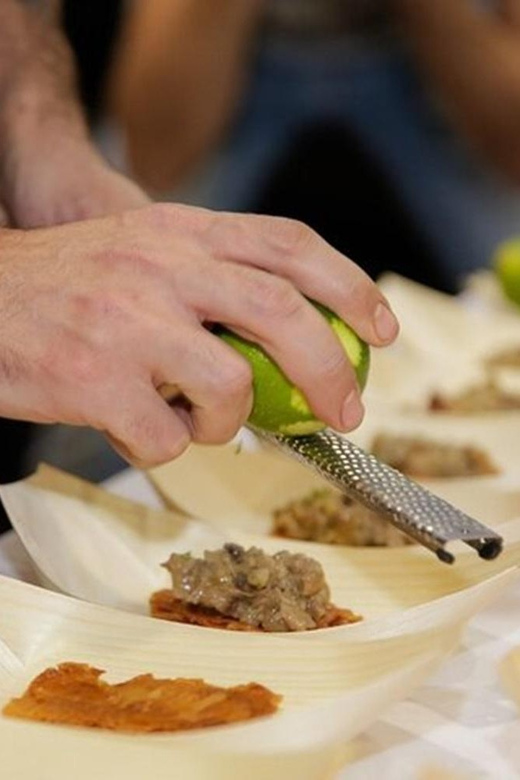
At $105 per person, the class is not the cheapest way to eat in Palma. You can find a less expensive lunch or tapas meal. That comparison misses the point, though. Your price covers instruction, ingredients, cooking equipment, a full meal, and an open bar for three hours.
The value improves if you would otherwise book dinner and an evening activity separately. You get several dishes rather than one main course, and the wine, beer, and soft drinks are included. Several participants have considered the food and drinks generous enough to make the price feel fair, with some describing it as one of the better-value activities of their trip.
The experience is also good value for a group celebration because the activity itself gives the evening structure. You are not just sitting at a restaurant table. You are preparing food, learning recipes, and sharing the results.
The value is weaker if you want a private chef lesson or detailed technical training. You may cook only one part of the meal, and the menu is shared across the group. Someone looking for advanced instruction should ask about the cooking format before booking.
Food allergies, vegetarian needs, and vegan limits
This is the area where I would be most careful. The activity states that vegan food is not available. Many traditional dishes also contain meat or fish, and seafood paella is a possible main course.
Some food allergies have been handled well, with alternative ingredients prepared when the team had enough notice. But communication about allergies has not always been fast. One participant sent questions through several channels and received a reply only a few hours before the class. Another had warned about a shellfish allergy but found no alternative offered for the seafood paella.
The practical advice is simple: contact the provider well before the class and get confirmation that your needs can be met. Do not assume that mentioning an allergy at the door will solve the problem. If your needs are strict, ask specifically what you will cook, what you may handle, and what alternative meal will be provided.
Vegetarians should also confirm the menu in advance. Adaptations may be possible, but the activity information does not promise a standard vegetarian option. Vegans should choose another experience.
Who will enjoy this Palma cooking class?
I would choose this for:
- Couples who want a relaxed evening that combines dinner and an activity.
- Solo visitors who enjoy meeting people at a shared table.
- Small groups celebrating a birthday, hen party, or family occasion.
- Food lovers interested in Spanish cooking with international influences.
- First-time cooks who prefer simple, guided tasks over a demanding lesson.
- Visitors who place a high value on generous food and included drinks.
I would hesitate if you want to cook every course yourself. The shared format is friendly and practical, but it limits individual time at the stove. I would also hesitate if you need vegan food or have a serious allergy that has not been confirmed in writing.
The class is wheelchair accessible, and instruction is available in English and Spanish. It lasts three hours, with start times depending on availability. There is no hotel pickup or drop-off, so you make your own way to Omare in central Palma.
Booking advice for a smoother evening
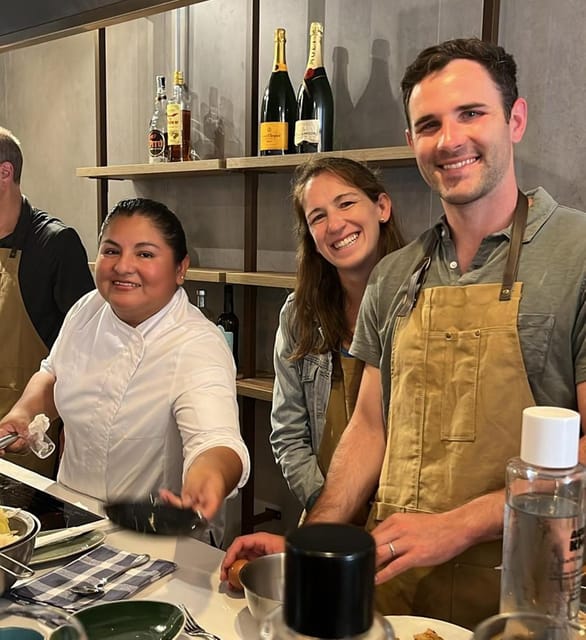
Use the exact meeting point: Omare, Plaça de l’Olivar 5, local 4. Look for the instructor with a name card at the cooking-class entrance, and allow extra time because the signage may not be obvious.
Bring an appetite, but do not expect a formal restaurant service from start to finish. You will be moving between preparation, tasting, conversation, and eating. Wear something comfortable and suitable for food preparation, though no special equipment is listed as necessary.
The experience permits free cancellation up to 24 hours before the start for a full refund. You can also reserve now and pay later, which is useful when your Palma plans are still shifting.
Should you book the Omare cooking class?
Book it if you want a social food night with a generous meal, local drinks, and a taste of Spanish cooking mixed with international ideas. The strongest points are the friendly hosts, fresh ingredients, broad menu, and unusually generous drinks policy.
Skip it if you need a fully private lesson, want to cook every recipe yourself, or require vegan food. For everyone else, $105 buys more than dinner. It buys a guided introduction to Palma’s food culture, a chance to meet people around a shared table, and several recipes you can try again at home.
FAQ
Where does the Palma cooking class meet?
It meets at Omare in Plaça de l’Olivar, number 5, local 4, in Palma. The instructor waits at the entrance to the cooking-class section with a name card.
How long does the cooking class last?
The experience lasts three hours. Starting times vary, so check availability when booking.
What drinks are included?
Water, soft drinks, wine, and beer are included in the open bar. Some sessions also include Prosecco. Additional beverages are not included.
Is the class available in English?
Yes. The instructors speak English and Spanish.
Is vegan food available?
No. The activity specifically states that vegan food is not available. If you have allergies or other dietary needs, contact the provider well before the class to discuss possible alternatives.
Can I cancel for a full refund?
Yes. You can cancel up to 24 hours in advance for a full refund. The activity also allows you to reserve now and pay later.
New cooking classes around Spain
- Seville: Paella-Cooking Experience with Sangria & Full Meal★ 4.9 · 42 reviews
- Seville: Paella Showcooking Experience★ 4.7 · 161 reviews
- Seville: Paella Cooking Class & 30-Min Local Expert Q&A★ 4.8 · 37 reviews
- San Sebastián: Market Tour, Cooking Class, & Meal★ 5.0 · 2 reviews
- San Sebastián: Market Tour and Basque Cooking Class English★ 5.0 · 5 reviews
- Barcelona: Paella Seafood Master Cooking Class with Sangria★ 5.0 · 73 reviews
- Pontevedra: Galician Cooking Class with Chef Instructor★ 4.9 · 3 reviews
- Mojo Workshop Cooking Class in Ancient Canarian Village★ 4.9 · 127 reviews
Mallorca Cooking Classes, side by side.
Spanish Cooking Class Palma meals+drinks 7 dishes Full meals
Read our review →
Mallorca: Market Visit and Traditional Cooking Workshop
Read our review →
Mallorca: Paella Cooking Class in the Tramuntana Mountains
Read our review →This kitchen also appears in