
Review · POSITANO
Positano: Small-group Cooking Class at a Local’s Home
The best part of this experience is the setting: you cook in an Italian host’s home, using family recipes rather than simply watching a chef work. You prepare a starter, fresh pasta, and dessert, then sit down to eat the full meal with local wines and coffee.
I like the small group of up to 10 and the hands-on workstations, which give you more to do than a standard demonstration. I also like the personal touch from hosts such as Carla, Rocco, and Antonio, though you should check the meeting details carefully because some sessions advertised for Positano take place in nearby Praiano.
Key points at a glance
- Three courses from scratch: Prepare a seasonal appetizer, regional fresh pasta, and a traditional dessert.
- A real local setting: The class takes place in a host’s home, with the full address sent after booking for privacy.
- Dinner is part of the lesson: Eat what you make with local red and white wines, water, and coffee.
- Hosts vary: Past sessions have included Carla and Rocco, as well as Chef Antonio, so the style and setting can differ.
- Allow for the location: One session was in Praiano, not central Positano, so ask about transport before booking.
- Good cancellation terms: You can cancel up to 24 hours ahead for a full refund, and reserve now while paying later.
Cooking Italian food inside a local home
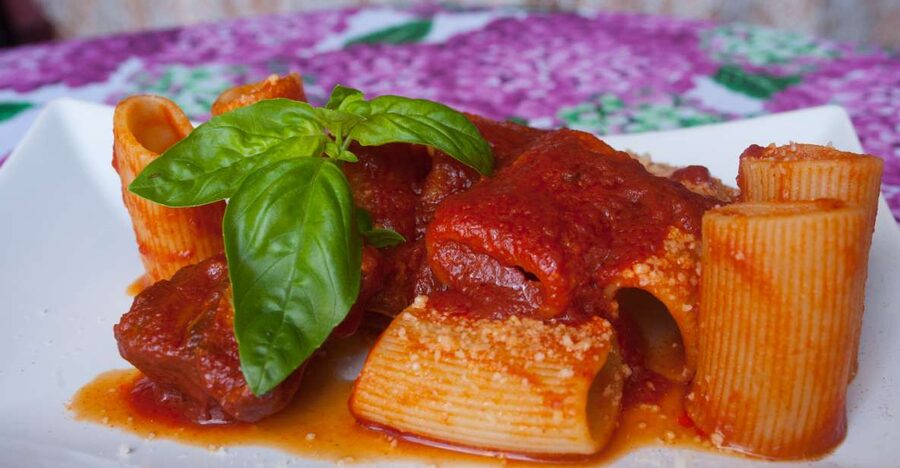
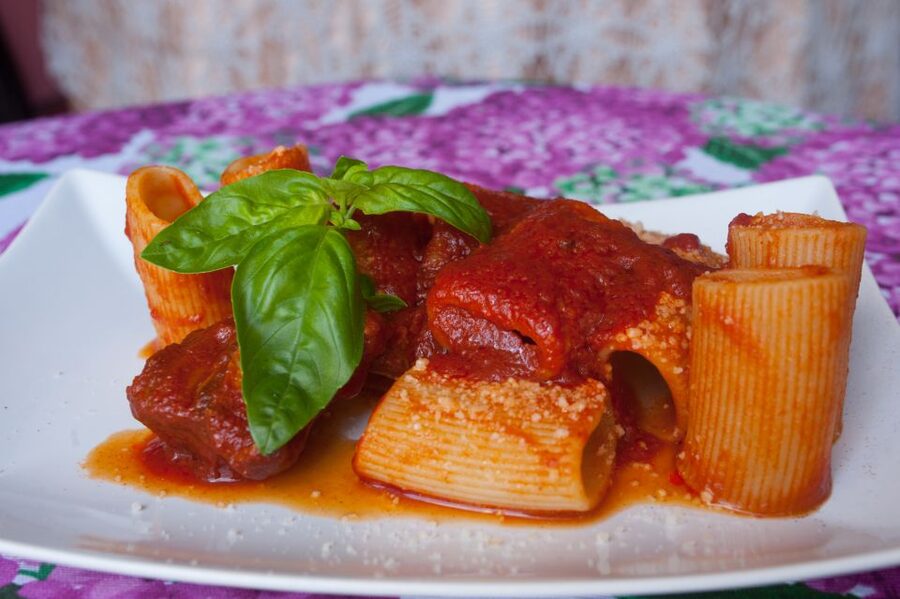
Positano is full of polished restaurants, handsome terraces, and menus built for people passing through. This class offers something more personal. Instead of simply ordering another plate of pasta, you learn how three dishes come together in an Italian kitchen and then share the result with the person who taught you.
That difference matters. A restaurant can show you what Campanian cooking looks like on the plate. A home cook can explain the habits behind it: how a family makes pasta, how seasonal ingredients shape a starter, and how dessert fits at the end of the meal.
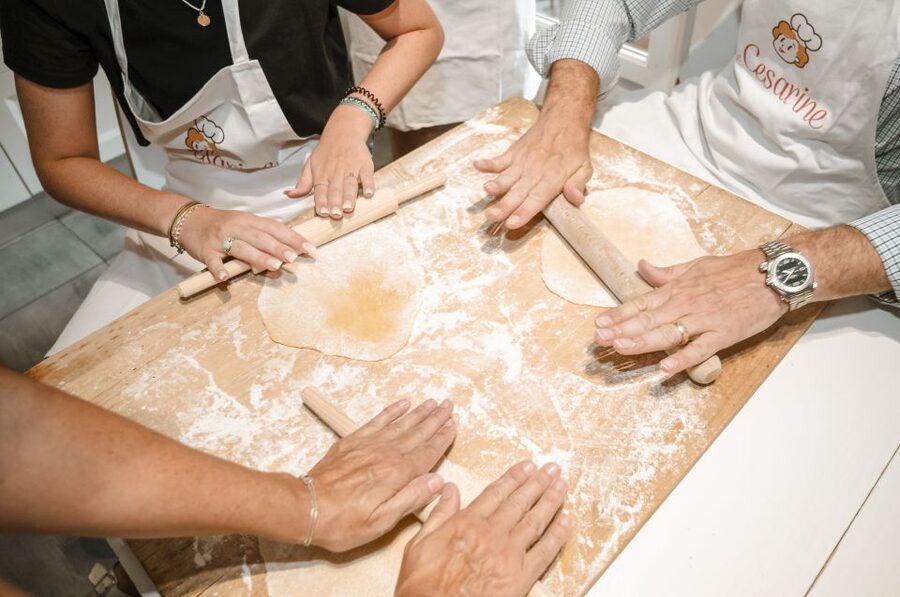
The class lasts about three hours. You receive your own workstation, utensils, and ingredients, so this is not a lecture with a little stirring at the end. You should expect to mix, shape, assemble, and taste under the direction of your host.
The exact menu changes. A typical meal includes a starter made with seasonal ingredients, fresh pasta from the region, and a local dessert. That is a sensible format for a short class: you get a full meal without spending the entire afternoon on one complicated dish.
More Home Cooking Classes in Italy
- Pasta Cooking Class: Mastering Nonna’s Recipes
★ 5.0 · 554 reviews - Pastamama, Home Cooking Classes at Grace’s Home
★ 5.0 · 521 reviews - Traditional Home Cooking Experience in Venice
★ 5.0 · 377 reviews
The three-course format gives you a real taste of Campania

The first course is a starter built around seasonal ingredients. The supplied details do not name one fixed recipe, and that is a plus rather than a problem. A changing menu makes more sense in Italy, where local produce and family habits often guide the meal.
You will likely begin with preparation work that helps you understand the host’s approach to food. The point is not to reproduce a restaurant menu with perfect speed. It is to learn how a local cook turns available ingredients into something suitable for the table.
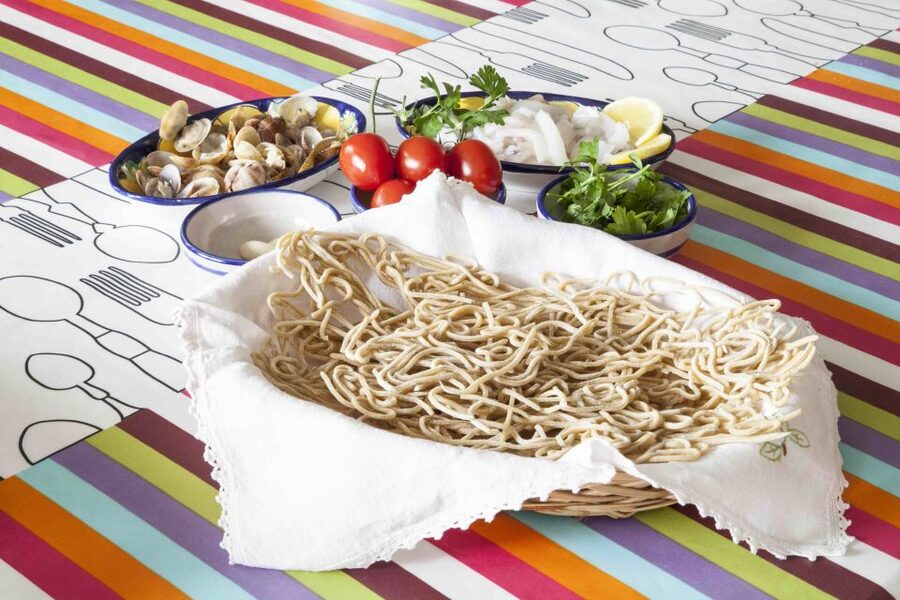
Next comes fresh pasta, the centerpiece of the class. Fresh pasta takes more than opening a packet, and the hands-on format lets you see how dough behaves, how it is handled, and how the dish is put together. The experience promises an authentic regional pasta recipe, though the exact shape and sauce depend on your host.
Dessert completes the meal. Again, the specific sweet is not fixed in advance, but the format gives you a useful view of the whole Italian meal rather than stopping after the main course.
I like this progression because it keeps the class practical. You work through a complete menu, then taste the results in the same order you would eat them. You also leave with a better sense of how separate courses fit together.
Carla, Rocco, Antonio, and the human side of the class
The host is a major part of the experience, and Cesarine works with more than 1,000 home cooks across Italy. The Positano-area hosts can differ, so you should not book this expecting one fixed instructor or one identical room.
Carla and Rocco have hosted sessions in the area. Carla leads the cooking, while Rocco brings a lively presence and dry humor to the group. That pairing may appeal to you if you enjoy a class with conversation and personality, not just precise instruction.
Another session featured Chef Antonio. His class took place in a restaurant with especially attractive decor and a striking setting. That detail is worth noting because the experience is described as being held in a local home, but actual host arrangements can vary. You may cook in a private residence, or your assigned host may use a restaurant-style space.
This is one reason the host details matter. After booking, Cesarine asks for your allergies or food intolerances, the neighborhood where you are staying, and how you plan to reach the host’s home. The company then sends the host’s telephone number and full address.
You can also use that exchange to confirm the location. One past booking marketed as Positano was actually in Praiano, and reaching it required extra effort. Positano and Praiano are close on the Amalfi Coast, but they are not the same place, and the steep roads can make a short map distance feel longer than expected.
What your three hours look like
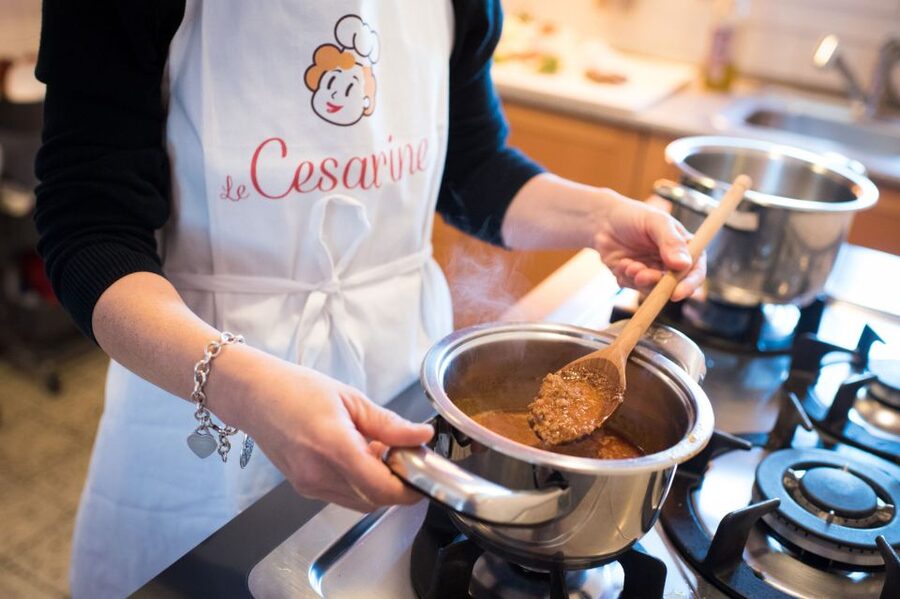
Your session begins at the host’s local home or assigned cooking venue. Since the address is kept private until booking, you cannot judge the exact view, road, or walking route in advance from the general meeting information.
Once you arrive, you receive a workstation with the utensils and ingredients needed for the recipes. The small-group limit is 10 people, which should give you room to follow the host and take part without turning the class into a large demonstration.
The host then guides you through three recipes. You learn the methods as you make the dishes, with the instruction shaped around the family cookbook and regional food traditions. The emphasis is on participation, so bring a willingness to work rather than expecting a passive food tasting.
After the cooking is finished, you eat the meal you prepared. Water, local red and white wines, and coffee are included. The wine pairing makes the activity feel more like a shared lunch or dinner than a class that ends the moment the last pan is washed.
The schedule is compact but useful. Three hours is enough time for a full menu and a meal, while still leaving part of your day for Positano. Starting times vary, so check availability before planning a boat ride, beach visit, or dinner reservation afterward.
Same kitchen, a different dish:
- Florence: Pasta Cooking Class with Unlimited Wine
★ 4.9 · 10,285 reviews - 3 in 1 Cooking Class near Navona: Fettuccine, Ravioli & Tiramisu
★ 5.0 · 7,376 reviews - Florence: Pasta & Tiramisu Cooking Class with Unlimited Wine
★ 4.9 · 6,708 reviews - Florence: Pasta Cooking Class with Unlimited Wine
★ 5.0 · 6,413 reviews
Why the private-home setting matters
Cooking in a local home changes the tone. You see food as part of ordinary life, not only as something served to visitors. The host can explain family recipes, regional habits, and the small decisions that rarely appear on a printed menu.
That personal contact is the strongest reason to choose this over a standard restaurant meal. You are not just paying for food. You are paying for instruction, ingredients, drinks, conversation, and access to a local setting that you would not normally enter.
Still, a private home is not the same as a purpose-built cooking school. The space may be less formal, and the equipment or layout will depend on the host. If you want a highly polished studio with a fixed menu and predictable views, this may feel less controlled.
I see that uncertainty as part of the bargain, but you should understand it before paying the price. The experience is designed around matching you with a suitable local cook, not delivering an identical production every day.
The view and the venue can change the experience
The Amalfi Coast is famous for scenery, and the area around Positano and Praiano can add a visual bonus to a meal. One session had an especially attractive setting at a restaurant, and the view was a major part of its appeal.
But do not book solely for a guaranteed terrace or sea panorama. The information confirms a local home, not one fixed viewpoint. Your host, address, and venue are provided after booking, and the setting can differ from another person’s session.
That is also why you should plan your route with care. The class is not necessarily in central Positano. If your host is in Praiano, you may need additional time and transport planning. Ask for the full location as soon as it is available, and do not assume that the word Positano means a meeting point beside the town’s main pedestrian areas.
The host can also ask how you plan to travel to the home. Give a clear answer when booking. It helps the team match you with a practical location and gives you a chance to flag any transport concern early.
Is the $243.56 price good value?
At $243.56 per person, this is not a cheap way to eat pasta. You are paying considerably more than you would for a casual meal in Campania, and the class may not suit you if you simply want a quick lunch.
The value comes from the combination. Your fee covers a three-hour lesson, ingredients, use of utensils, a three-course meal, local wines, water, coffee, and the host’s time. You also receive a more personal food experience than a regular restaurant can provide.
For me, the price makes the most sense for a special occasion, a food-focused trip, or a first visit to Italy when you want one meal with a strong local connection. It is less attractive for a budget trip or for anyone who already has several cooking classes planned.
The small group helps justify the cost. With no more than 10 participants, you should have a fair chance to handle the ingredients and ask questions. The exact amount of individual attention will still depend on the host and the group size on your date.
Who should book this experience?
I would recommend it to you if you enjoy eating slowly, asking questions, and learning by doing. It works especially well for couples, families with older children, and small groups of friends who want a shared activity rather than another sightseeing stop.
It also suits people who care about regional food beyond famous dishes. The menu is not fixed, and that gives the host room to explain local ingredients and family recipes. You may not leave with a restaurant-style recipe booklet, but you will have seen how the dishes are made and tasted the finished meal.
The class is less suitable if you need full accessibility. It is not suitable for wheelchair users. You should also provide any food allergy or intolerance details when booking, or email them to Cesarine with your booking reference and name.
English and Italian are available. That makes the class workable for English-speaking visitors, while the Italian setting keeps the experience connected to the local culture.
Booking details that affect your day
The full address is not provided before booking because the host’s home is private. After you give Cesarine your relevant information, you receive the host’s details, including a telephone number and address.
The experience allows free cancellation up to 24 hours before the start time. You can also reserve now and pay later, which helps if you are still arranging your Amalfi Coast schedule.
The activity ends back at the meeting point. Since the starting time varies, confirm the available slot and then allow extra time for the route, especially if the address is in Praiano or another nearby area rather than central Positano.
Cesarine’s customer operations team is available seven days a week. Use that support for practical questions about the host, route, dietary needs, or meeting details before the day of the class.
Should you book the Positano cooking class?
Book it if you want your Positano food experience to involve your hands, not just your fork. The three-course format, local wine, small group, and home setting offer real value for anyone who wants a social and personal introduction to Campanian cooking.
Go in with flexible expectations. The host, menu, setting, and exact location can vary, and one session advertised for Positano was held in Praiano. Confirm the address and transport plan before committing.
For a food-loving couple or family, I think the personal setting makes the $243.56 worthwhile. If you mainly want a cheap meal, a fixed view, or a predictable restaurant experience, spend the money elsewhere.
FAQ
Where does the cooking class take place?
The activity takes place in a local host’s home. For privacy, the full address is sent only after you book. Some sessions may be in the Positano area, including Praiano, so confirm the exact location and route.
How long does the experience last?
The cooking class lasts three hours. Starting times vary, so you need to check availability for the date you want.
What will I cook?
A typical menu includes a seasonal starter, fresh pasta from the region, and a traditional dessert. The exact recipes can vary by host.
Is food and drink included?
Yes. The experience includes the three recipes you prepare and eat, along with water, local red and white wines, and coffee.
How large is the group?
This is a shared small-group class limited to 10 participants.
What languages are available?
The class is available in Italian and English.
Do I need to provide allergy information?
Yes. You should provide food intolerance and allergy details when booking, or email them to Cesarine with your booking reference and name.
Can I cancel the booking?
You can cancel up to 24 hours in advance for a full refund. The experience also offers a reserve-now, pay-later option.
New cooking classes around Italy
- Sestri Levante: Pesto & Cooking Classes, Wine Tasting★ 4.9 · 56 reviews
- Sardinia Cooking Class: Fresh Handmade Pasta★ 5.0 · 53 reviews
- San Gimignano: Tuscan Cooking Class★ 5.0 · 2 reviews
- San Gimignano: Truffle Cooking Class with Wine Tasting★ 5.0 · 5 reviews
- San Gimignano: “Hands in dough” Cooking Class with Lunch★ 5.0 · 6 reviews
- Salento: Authentic Cooking Experience with Fresh Pasta and Local Products★ 5.0 · 8 reviews
- ROME:Hands-On Lasagna & Marsala Tiramisu Cooking Experience”★ 5.0 · 3 reviews
- Rome: Private Wine Tour and Pasta Making Class in a Winery★ 5.0 · 6 reviews
Positano Cooking Classes, side by side.
Cooking class with Pasta, mozzarella and Tiramisu with wine
Read our review →
Small-Group Cooking Class in Positano: Gnocchi, Tiramisù & Drinks
Read our review →
Ravioli & Tagliatelle Cooking Class at a Local’s Home in Positano
Read our review →
Amalfi Coast Cooking Class: Make Pasta, Mozzarella & Tiramisu
Read our review →
Positano: Small Group Cooking Class with Prosecco & Dessert
Read our review →This kitchen also appears in