
Review · ROME
Rome: Hands-On Pizza Cooking Class with Spritz Mixology
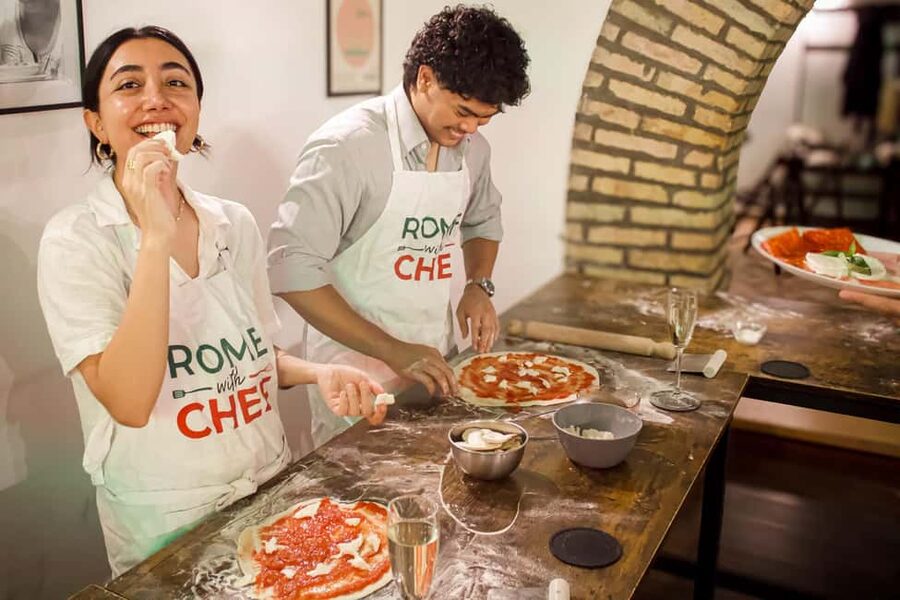
Making pizza by hand is the heart of this 2.5-hour Roman food class, but the evening is also built around conversation. You knead dough, choose your toppings, mix Aperol and Hugo Spritz, then sit down with the group to eat what you made.
I like the practical side: you leave with digital recipes, not just a full stomach. I also like the easy social setup, especially for solo visitors or couples who want an evening activity near the Colosseum. The main catch is dietary: the class cannot accommodate vegan, gluten-free, or celiac requirements, and it is intended for people aged 18 and over.
Key points to know before booking
- Pizza from scratch: You work with the dough, toppings, and baking rather than simply watching a chef cook.
- Spritz mixing is part of the evening: You learn to prepare Aperol and Hugo Spritz, with alcohol-free choices available.
- A shared Roman-style dinner: After cooking, you eat your personalised pizza around a common table with the group.
- English-speaking instruction: Past sessions have been led by instructors including Gio, Sunny, Benjamin, Giovanna, and Chef Sani.
- Recipes go home with you: Digital recipes let you try the pizza and drinks again after Rome.
- Important food limits: Vegetarian food is available, but vegan, gluten-free, and celiac-friendly options are not.
Pizza, spritz, and a social night near the Colosseum
This experience takes place in the central Rome area, within a short walk of the Colosseum. That location matters. You can pair the class with an afternoon sightseeing around ancient Rome, then finish the day with an activity that is warmer and more personal than another restaurant meal.
The mood is deliberately informal. This is not a quiet demonstration where you sit at the back and take notes. You handle the dough, ask questions, choose toppings, and take part in the drink-making. The format gives you something to do with your hands, which makes conversation come more naturally.
That social element is one of the strongest reasons to book. The class suits a couple, a group of friends, or a solo visitor who would like company at dinner without arranging a formal group tour. You may be seated with people you have just met, so it works best if you are comfortable sharing a table and joining in.
The price is $81 per person. That is not the cheapest pizza meal in Rome, but the comparison is not quite fair. The fee covers instruction, your own pizza, a mixology demonstration, Aperol and Hugo Spritz, alcohol-free choices, and the recipes. You are paying for an activity as well as food, and the class can replace both a casual dinner and an evening of entertainment.
More Pizza Making Classes in Rome
- Cooking Class in the Heart of Rome: Pizza and Tiramisu Making
★ 5.0 · 1,330 reviews - Rome: Traditional Pizza Cooking Class near Piazza Navona
★ 4.7 · 1,241 reviews - Rome: Combo Pizza and Pasta Cooking Class with Wine
★ 4.6 · 1,180 reviews
Arriving before the dough begins
You should arrive 10 minutes before the scheduled start. Look for the Rome with Chef logo at the entrance, where the chef will welcome you. This is worth taking seriously because late arrivals may not be able to take part once the session is underway.
Bring a passport or ID card. The information provided does not list a transfer or transport service, so plan to make your own way to the meeting point. Since the class is near the Colosseum, allow extra time if you are walking through busy central streets or coming directly from sightseeing.
The class is conducted in English. Several instructors have led sessions, including Gio, Sunny, Benjamin, Chef Sani, Giovanna, and others. The exact chef appears to depend on the date, but the teaching style described across the sessions is friendly, patient, and lively.
You should also tell the organisers about food allergies or dietary restrictions in advance. That gives the kitchen a chance to plan safely, although it does not change the firm limit on vegan, gluten-free, or celiac-friendly food.
Kneading dough instead of watching a demonstration
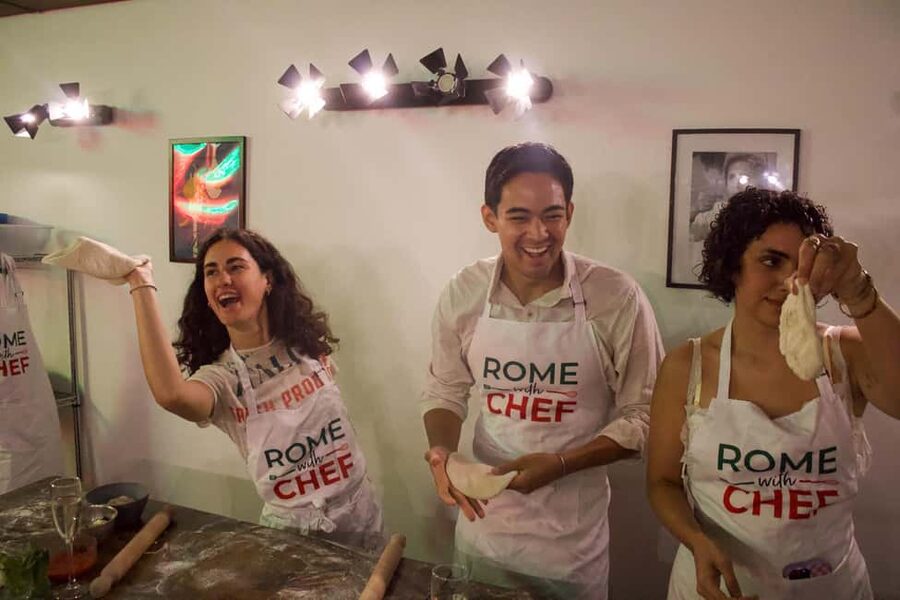
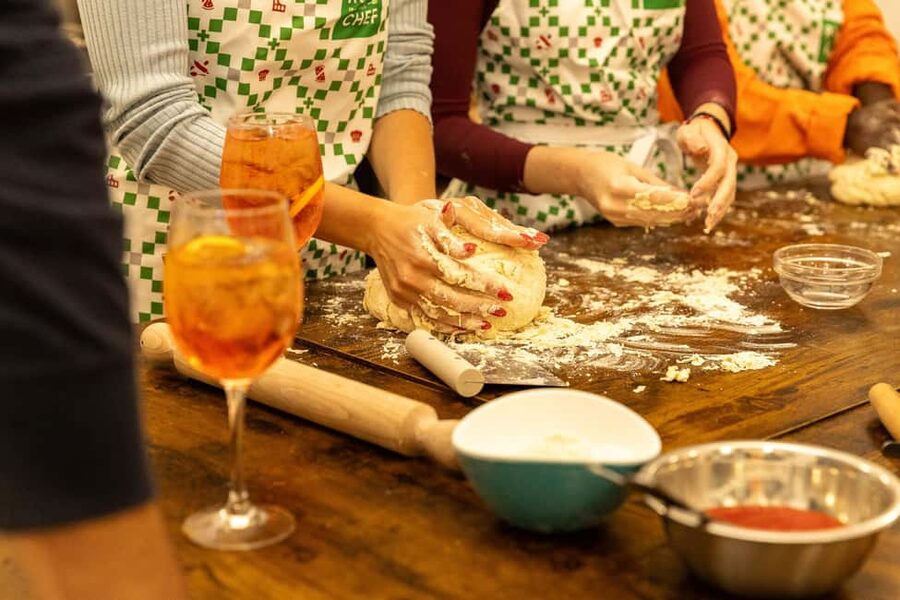
The first major task is making the pizza dough. You will knead it by hand under the chef’s direction, learning the basic feel of the dough rather than simply being handed a ready-made base.
That hands-on step is useful even if you rarely cook. One participant who said they never cook still found the class easy to follow and enjoyable. Another asked detailed questions about dough hydration and rising time and received clear answers. This suggests the class can work at two levels: beginners can keep up, while curious home cooks can ask for more technical detail.
The teaching seems to be one of the experience’s best features. Gio is described as clear and energetic, while Benjamin is praised for keeping the group engaged without taking over the activity. Chef Sani and Sunny are also noted for patient instruction and enthusiasm for Italian food.
The result is not a professional baking course. You will not leave with a full education in Roman pizza science, and the class is too short for that. What you do get is a practical introduction to dough, a better sense of how pizza is assembled, and enough guidance to try the recipe at home.
Choosing toppings and baking your own pizza
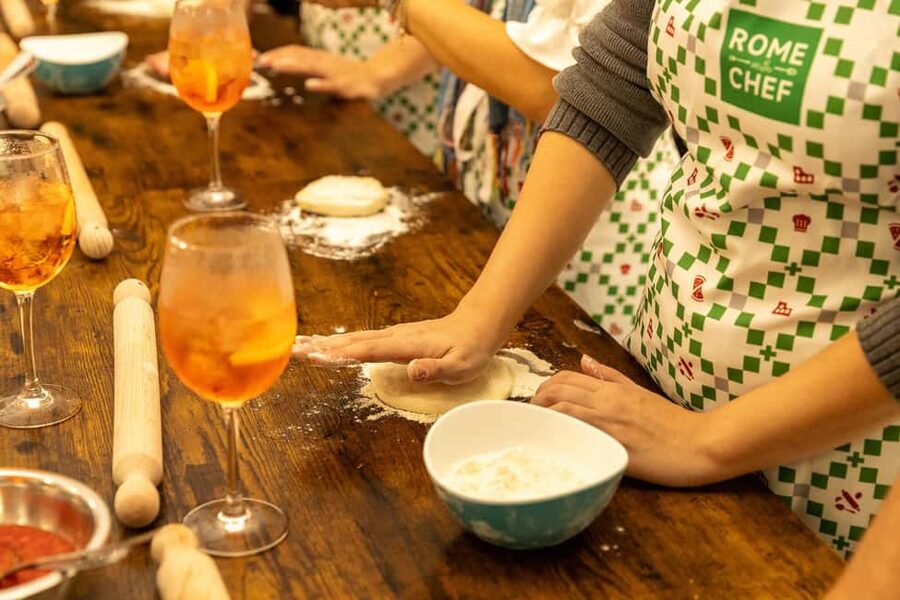
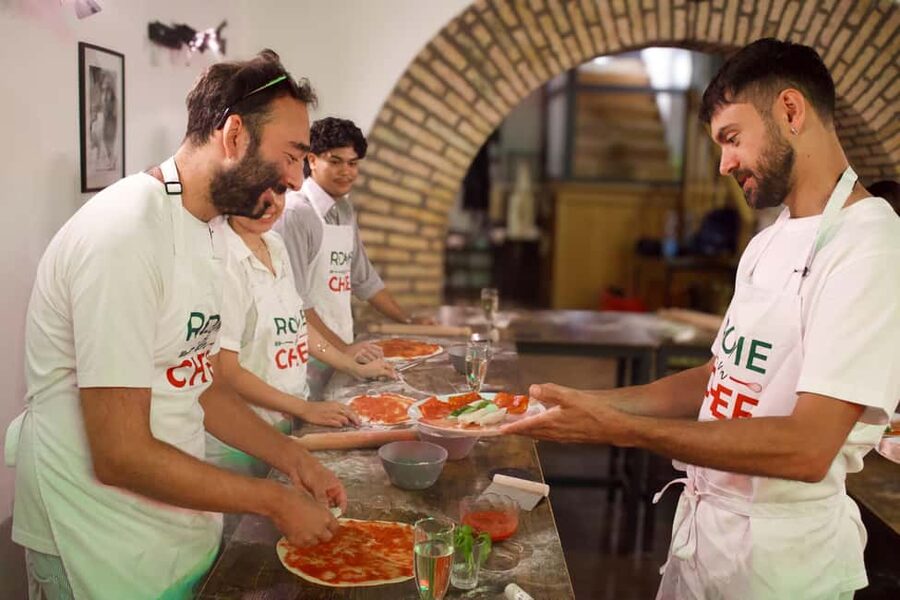
Once the dough is ready, you customise your pizza with toppings before it goes into the oven. This is a small but important detail. You are not all eating identical pizzas produced by the kitchen. Your final meal reflects your own choices.
The baking stage creates a natural pause in the class. The group has already worked together, and now everyone waits for the pizzas to cook. That gap is used for the drink portion, keeping the evening active rather than leaving you sitting around with nothing to do.
The quality of the finished pizza will depend partly on your expectations. This is a guided group class, not a restaurant tasting menu. One assessment described the pizza as decent rather than exceptional, while many others found it delicious and satisfying. I would treat it as a rewarding homemade meal, not a replacement for Rome’s best specialist pizzeria.
That distinction helps set the right expectations. The value is in making the pizza yourself, learning a repeatable recipe, and eating it fresh with the group. If you only want the finest pizza in town, book a restaurant instead.
Same kitchen, a different dish:
- 3 in 1 Cooking Class near Navona: Fettuccine, Ravioli & Tiramisu
★ 5.0 · 7,376 reviews - Rome: Pasta Making Class with Wine, Limoncello, and Dessert
★ 4.9 · 3,177 reviews - Rome Cooking Class: Make Pasta and 3 Spritz Cocktails
★ 5.0 · 2,937 reviews - Rome: 3-in-1 Fettuccine, Ravioli, and Tiramisu Cooking Class
★ 4.9 · 2,704 reviews
Mixing Aperol and Hugo Spritz
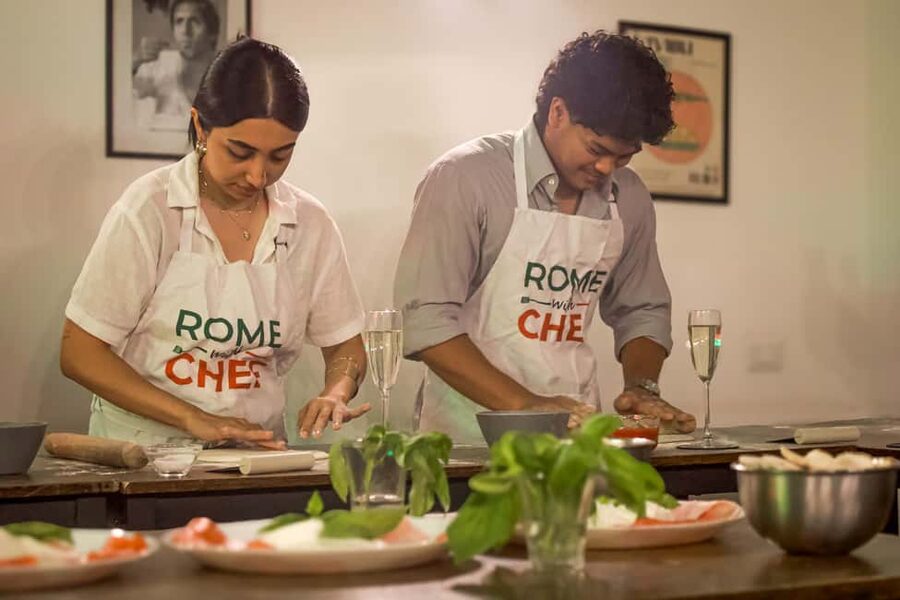
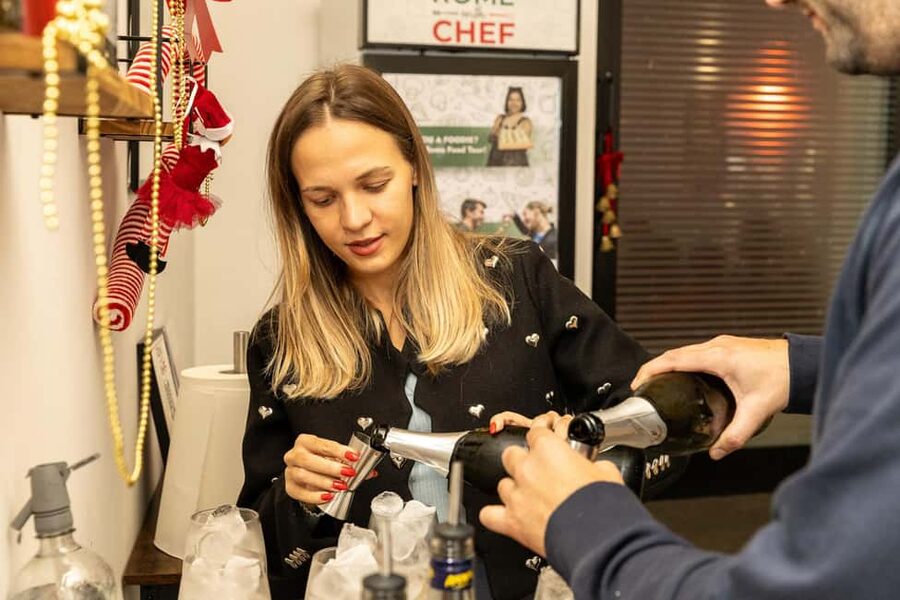
While the pizzas cook, the chef gives a short Italian mixology lesson. You prepare Aperol Spritz and Hugo Spritz, adding a drinks element that turns a standard cooking class into a fuller evening out.
The spritz portion is not just a drink served alongside dinner. You take part in making it, which keeps the class balanced between cooking and socialising. It also gives non-cooks an easy way to join in while the dough and toppings are being handled.
Alcohol-free options are included, which is useful for anyone who does not drink. Alcoholic drinks are available only to people aged 18 and over, so bring identification and do not assume the class is suitable for younger visitors.
The supplied details also mention optional prosecco cocktails and other alcoholic drinks. These may involve an additional choice beyond the included drinks, so ask the organiser about any extras before ordering.
Sitting down for a shared dinner
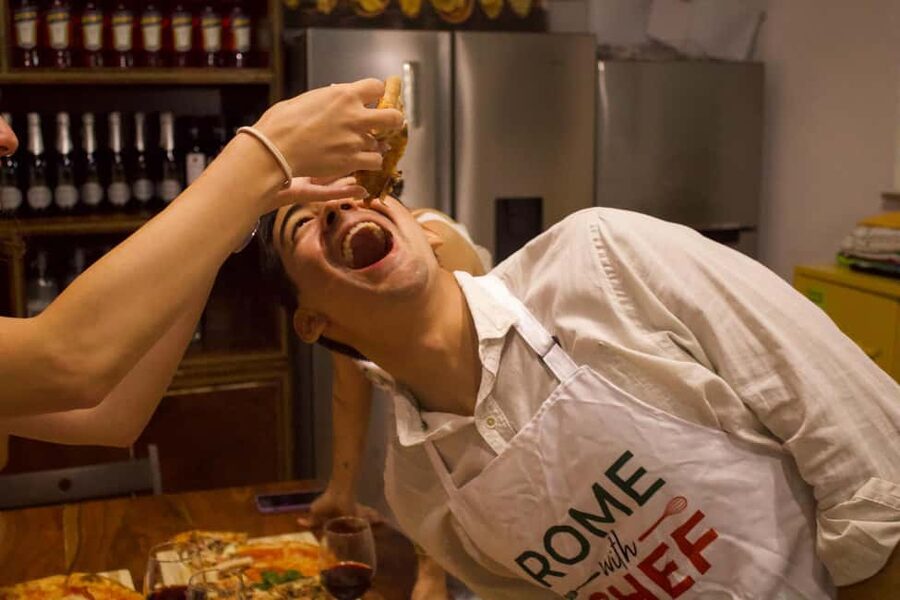
After the pizzas and spritzes are ready, you sit with the group and eat together. This shared dinner is where the class becomes more than a cooking lesson. You have already worked through the same steps, so conversation tends to start with the dough, the toppings, or the drinks.
The atmosphere is described as relaxed, funny, and welcoming. Music is part of the setting, and several sessions were praised for good energy from both the chef and the assisting staff. The names that come up most often include Gio, Sunny, Benjamin, Giovanna, Sarah, and Chef Sani.
That does not mean every session will have the same personality. The instructor can change, and group dynamics are never fully predictable. Still, the format gives the evening a good chance of feeling sociable without forcing you into a formal performance or a long lecture.
For solo visitors, this is the main appeal. You get a built-in dinner table and a clear activity, rather than having to find a restaurant alone after a day of sightseeing. Couples can also use the class as a change from the usual sequence of aperitivo, dinner, and dessert.
What the class teaches you to take home
The digital recipes are one of the more useful inclusions. Many cooking activities are enjoyable in Rome but hard to repeat because the instructions are vague or forgotten by the time you return home. Having the recipes gives you a better chance of recreating the pizza and spritzes.
You should still view the recipes as a starting point. Your home oven, flour, ingredients, and cooking temperature may differ from those used in Rome. The class can show you the method and proportions, but your first attempt at home may need some adjustment.
The most valuable lesson is often tactile. You learn how dough should feel, how much topping is sensible, and how the process moves from mixing to baking. Those details are difficult to pick up from a recipe alone.
Who will enjoy this Rome cooking class

I would recommend it most strongly to:
- Couples who want an interactive evening near the Colosseum
- Solo visitors who would enjoy meeting people over dinner
- Friends looking for a lighthearted group activity
- First-time cooks who want clear, guided instruction
- Home cooks interested in dough, hydration, and rising times
- Vegetarians who can eat the available meat-free choices
It is less suitable for someone seeking a serious culinary course. The tone is social and entertaining, with plenty of time for jokes, drinks, and conversation. It is also not suitable for vegans, people with celiac disease, or anyone who needs gluten-free food.
The age rule matters too. The activity is listed as unsuitable for children under 18. Infants do not have a separate seat or workspace and, if they attend, must remain on an adult’s lap. For most families with younger children, this is not the right activity.
The $81 question: is the value there?
At $81, this class costs more than buying a pizza and spritz separately. If you are measuring value only by the amount of food, you can find cheaper options in Rome.
The stronger value comes from combining several things in one evening: instruction, hands-on cooking, your own customised pizza, two types of spritz, a shared dinner, and recipes for home. You also save the effort of planning a restaurant reservation and a separate evening activity.
I think the price is fair for someone who wants participation rather than a meal alone. It is especially reasonable for a solo visitor, since the social setting adds something that a normal restaurant dinner may not provide. For a couple focused strictly on budget, the cost may feel high compared with a simple pizzeria meal.
The class also offers private groups, which can make sense for friends or family who want to keep the evening together. The available details do not give a separate private-group price, so check the cost before booking.
Practical details that affect your decision
The class lasts 2.5 hours, long enough for a proper activity and meal without taking up the entire evening. Starting times vary, so check availability when choosing a date.
Free cancellation is available up to 24 hours in advance for a full refund. You can also reserve now and pay later, which helps if your Rome schedule is still shifting. These terms are useful, but check the exact booking conditions attached to your date.
The meeting point is near the Colosseum, but the experience is not a guided Colosseum tour. You will not be learning about ancient monuments during the class. Plan it as a food-focused evening that fits neatly after sightseeing in the area.
The high rating of 4.9 from 90 ratings matches the main strengths of the format: lively instructors, clear teaching, fresh pizza, good drinks, and an easy social setting. The one recurring qualification is that the pizza itself may be judged as good rather than extraordinary. That is a fair trade if you value participation.
Should you book this pizza and spritz class?
Book it if you want to make your own dinner, meet people, and learn a few recipes in an upbeat setting near the Colosseum. It is a particularly good choice for couples, solo visitors, and groups who prefer a shared activity to another standard restaurant meal.
Skip it if you need vegan or gluten-free food, have celiac disease, want a quiet dinner, or are mainly hunting for Rome’s finest pizza. For everyone else, the combination of dough, spritz, music, and a shared table offers solid value at $81, provided you arrive ready to take part.
FAQ
How long does the pizza and spritz class last?
The class lasts 2.5 hours.
Where does the activity take place?
It takes place in Rome’s Lazio region, near the Colosseum and within a short walk of it.
What language is the class taught in?
The class is taught in English.
What food and drinks are included?
You make your own personalised pizza and prepare Hugo and Aperol Spritz. Alcohol-free options are available.
Are vegetarian options available?
Yes, vegetarian options are available.
Can the class accommodate vegan or gluten-free diets?
No. The class cannot accommodate vegan or gluten-free diets or people with celiac disease.
Is the class suitable for children under 18?
No. The activity is listed as unsuitable for children under 18.
What should I bring?
Bring a passport or ID card.
How early should I arrive?
Arrive 10 minutes before the scheduled start time. Late arrivals may not be able to participate.
Can I cancel for a full refund?
Yes. You can cancel up to 24 hours in advance for a full refund.
New cooking classes around Rome
- ROME:Hands-On Lasagna & Marsala Tiramisu Cooking Experience”★ 5.0 · 3 reviews
- Rome: Vatican Food Tours, Cooking classes & Free Tours★ 4.9 · 11 reviews
- Rome: Traditional Pasta, Spritz & Tiramisu Cooking Class★ 4.9 · 279 reviews
- Rome: Trastevere Pasta Making Class★ 4.9 · 33 reviews
- Rome: Traditional Pasta and Tiramisu Cooking Class★ 5.0 · 4 reviews
- Rome: Small Group Pasta cooking class near Piazza Navona★ 4.9 · 8 reviews
- Rome: Traditional Cooking Class in the Jewish Ghetto★ 4.9 · 75 reviews
- Rome: “Rooftop Pasta and Cocktails Cooking Class”★ 5.0 · 12 reviews
Rome Cooking Classes, side by side.

3 in 1 Cooking Class near Navona: Fettuccine, Ravioli & Tiramisu
Read our review →
Rome: Pasta Making Class with Wine, Limoncello, and Dessert
Read our review →
Rome Cooking Class: Make Pasta and 3 Spritz Cocktails
Read our review →
Rome: 3-in-1 Fettuccine, Ravioli, and Tiramisu Cooking Class
Read our review →
Rome: Fettuccine Pasta Cooking Class in Rome’s City Center
Read our review →
Fettuccine & Tiramisù: Cooking Class with Wine & Limoncello
Read our review →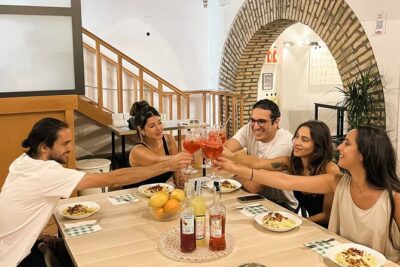
Pasta Cooking Class Near the Colosseum with 3 Spritz Cocktails
Read our review →
Enjoy Spritz and Pasta Making in Piazza Navona
Read our review →This kitchen also appears in