Review · VENICE
Venice: Pasta and Tiramisu Cooking Class with Wine
Fresh pasta is the star here, but the real treat is the full rhythm of an Italian meal. You make fettuccine, ravioli, and tiramisu in a Venice restaurant, then sit down with wine, limoncello, and coffee to eat what you prepared. It is a useful break after a morning of churches and bridges.
I like the hands-on pace and the social table at the end. Hosts such as Barbara, Serena, Eddie, and Thomas have been praised for clear instruction, humor, and local food knowledge. The main catch is dietary: the traditional recipes contain gluten, dairy, and eggs, and the kitchen cannot promise a completely contamination-free meal.
Key points to know before you book
- Three classic dishes in three hours: You prepare fresh fettuccine, ravioli, and tiramisu, then eat them as your meal.
- A restaurant setting in Dorsoduro: The class takes place in the heart of Venice, giving you a convenient base for exploring the neighborhood afterward.
- The host shapes the evening: Barbara, Serena, Eddie, Thomas, and other instructors may lead the session, with teaching styles that include music, humor, food stories, and even singing.
- Wine is part of the experience: Wine accompanies the meal, with limoncello and coffee also provided at the end.
- Good for beginners and families: Clear demonstrations and a forgiving pace make this suitable for first-time pasta makers and families with teenagers.
- Check dietary limits carefully: Substitutions are available for some preferences, but vegan, gluten-free, and lactose-intolerant diners are listed as unsuitable.
Making pasta in the heart of Venice
This is not a class where you sit at the edge of a demonstration and watch a chef do all the work. You receive the ingredients and take part in making the food yourself. The exact room setup can vary, but the class is held inside a local restaurant in Venice, with the Dorsoduro area close at hand.
That location matters. Dorsoduro is one of the more pleasant parts of central Venice for a walk, with a different feel from the heavy traffic around St. Mark’s Square and the Rialto Bridge. You can schedule the class as a midday meal, an early evening activity, or a pause between sightseeing stops, depending on the available start time.
I would not book this only for the promise of a meal. The meal is the payoff, but the point is learning the basic process: how pasta dough comes together, how to shape filled pasta, and how a simple dessert gets its familiar coffee and cream flavor.
The class is conducted in English. Hosts have included Barbara, Serena, Eddie, Thomas, Sarina, Lauti, Fammy, and others. You cannot count on a particular instructor unless the booking option allows you to request one, but the teaching team has a strong record of friendly, clear sessions.
More Cooking Classes with Wine Tasting in Italy
- Florence: Pasta Cooking Class with Unlimited Wine
★ 4.9 · 10,285 reviews - Florence: Pasta & Tiramisu Cooking Class with Unlimited Wine
★ 4.9 · 6,708 reviews - Florence: Pasta Cooking Class with Unlimited Wine
★ 5.0 · 6,413 reviews
The first task: fresh fettuccine
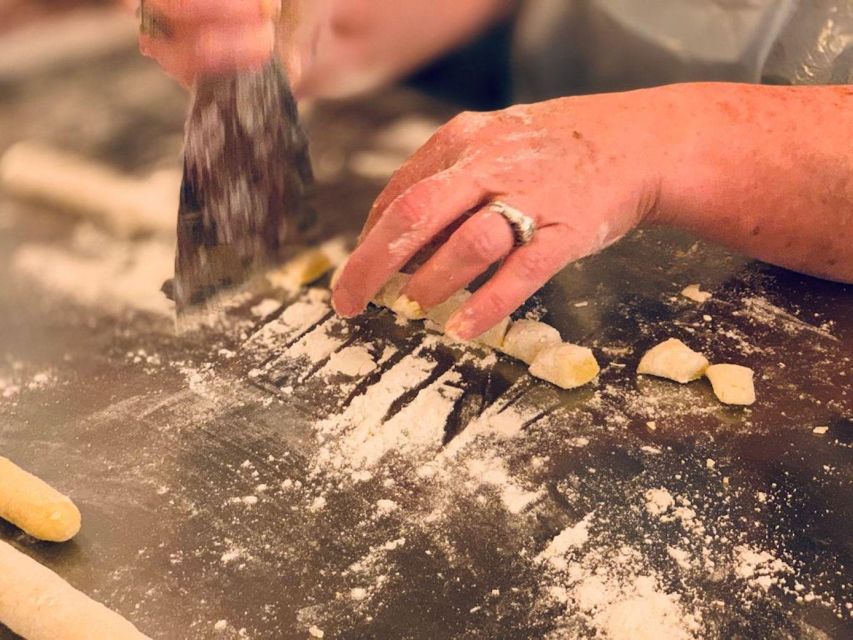
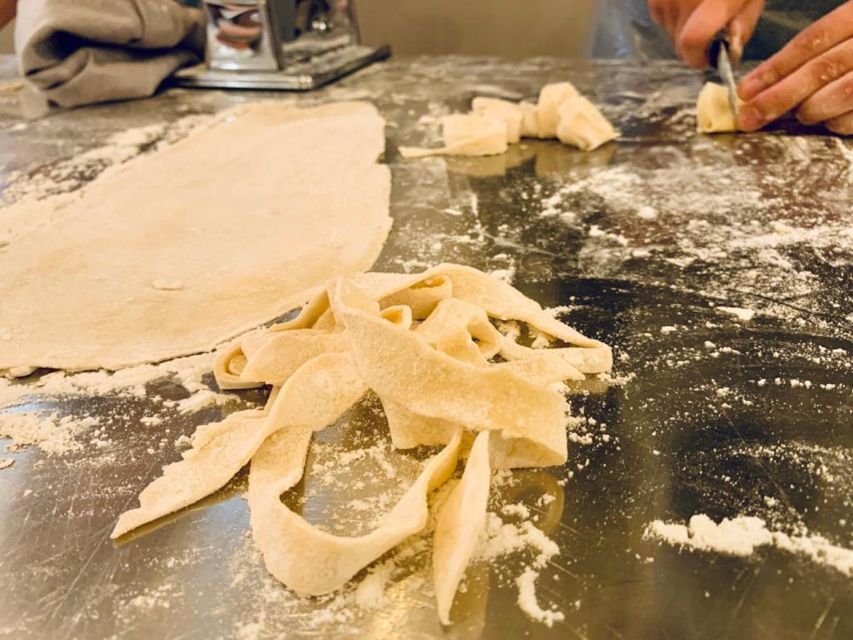
The pasta portion begins with the basics. You work with the supplied ingredients and learn the steps needed to turn dough into fresh fettuccine. For many people, this is the most useful part because it is easy to repeat at home without special culinary training.
The instructors focus on traditional methods rather than presenting pasta as a complicated art reserved for Italian grandmothers. You get to see how the dough should feel and how to handle it as it changes under your hands. That practical contact is worth more than simply receiving a printed recipe.
The pace is designed for beginners. Serena has been praised for moving slowly enough for everyone to keep up, while other instructors have been described as patient and attentive when someone needed another explanation. If you cook often, you may already know some of the techniques, but you should still pick up small tips about texture, shaping, or timing.
The class also gives you a chance to ask about Italian food. Questions can range from the ingredients in the dish to the origins of the recipe and the way food fits into local life. That conversation is one of the better parts of the experience because it adds context without turning the session into a formal lecture.
Shaping ravioli without the stress
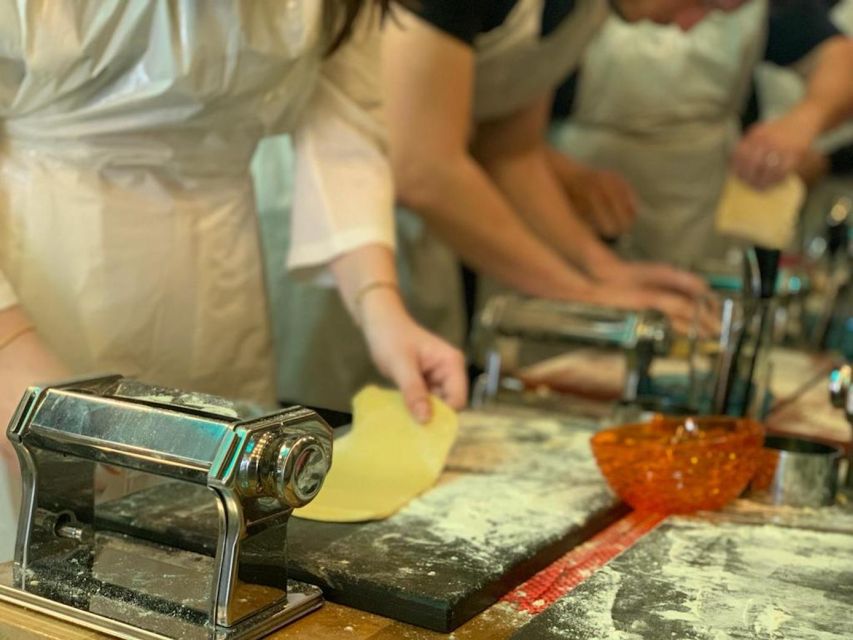
Ravioli gives the class a second kind of pasta lesson. Instead of making long strands, you learn how to handle filled pasta and prepare it for cooking. This is where the session becomes more tactile and social, since everyone at the table is working toward the same meal.
You do not need advanced knife skills or professional equipment. The instructors guide each stage, and the repeated pattern makes the process easier than it may look at first. Several participants have found the techniques surprisingly simple, which is encouraging if you worry that fresh ravioli will be too fiddly.
The result is not just a practice sample. The pasta and ravioli you prepare are cooked and served later, so your work has a clear purpose. That makes the class feel less like a craft workshop and more like a shared lunch or dinner that you helped create.
Expect some variation in presentation. This is a group class, not a private lesson, and the final dishes are prepared for the table rather than judged in a cooking competition. If you want detailed instruction on regional fillings, advanced pasta shapes, or restaurant-level plating, you may find the class too introductory.
Tiramisu adds an easy sweet finish
Tiramisu is the dessert lesson, and it gives the three-hour class a change of pace. You learn the steps behind a traditional version, including the elements that create its familiar coffee, cream, and cocoa character.
This section is especially approachable for beginners. The ingredients are supplied, the host explains the order of work, and you have time to ask questions before the dessert is served. It is also a good choice for a mixed group, since people who are less interested in rolling pasta can still take part in assembling the sweet course.
The class places its instructions within the traditional recipe, even when substitutions are needed. That point is important for anyone with an allergy or food preference. The provider can offer alternatives in some cases, but the teaching remains based on a recipe containing gluten, dairy, and eggs.
You should tell the provider about allergies and restrictions when booking. The kitchen does not guarantee complete protection from cross contamination. The food you prepare is sampled during the class, so this is not an activity where you can simply skip the finished dishes and eat something else without planning ahead.
More Pasta Making Classes in Italy:
- 3 in 1 Cooking Class near Navona: Fettuccine, Ravioli & Tiramisu
★ 5.0 · 7,376 reviews - Rome: Pasta Making Class with Wine, Limoncello, and Dessert
★ 4.9 · 3,177 reviews - Pastamania – Florence Pasta Making Class
★ 5.0 · 3,050 reviews - Rome Cooking Class: Make Pasta and 3 Spritz Cocktails
★ 5.0 · 2,937 reviews
Sitting down with wine, limoncello, and coffee
Once the cooking is finished, you sit at the table and eat the dishes prepared during the class. Wine is included, and the meal also comes with limoncello and coffee. This changes the mood from instruction to dinner, with time to talk to the people seated nearby.
The social part is not an afterthought. You may be paired with people from different countries, and the shared meal gives everyone an easy subject to discuss. The class can work well for couples, solo visitors, families, and small groups because cooking creates conversation without requiring anyone to be especially outgoing.
The amount of food is intended to function as a meal. One participant described it as effectively covering lunch with dessert, while others found the portions and wine generous. Exact serving size can vary, but you should arrive ready to eat what you make rather than expecting a separate restaurant menu.
The hosts add much of the personality. Barbara has been singled out for lively teaching and a warm manner. Serena is known for clear pacing and patient answers. Eddie has brought humor, singing, and an entertaining presence to the class. Thomas and other assistants have also been praised for keeping the work easy to follow.
That variety is worth noting. Your experience may be more energetic with a host who plays music or tells jokes, or more focused with an instructor who spends extra time on technique. The food remains the main activity, but the person leading the class can shape how relaxed and fun the evening feels.
Why the $78 price can make sense
At $78 per person, this is not the cheapest meal you can find in Venice. You can eat pasta for less, especially if you choose a casual counter or a simple neighborhood restaurant. The value here comes from combining the meal with instruction, ingredients, wine, limoncello, coffee, and three hours of hosted time.
I think the price works best if you want an activity, not just dinner. You are paying for an English-language class, a meal made during the session, and a chance to learn techniques you can repeat at home. The ingredients and instruction are included, so there are no obvious add-on costs for the cooking itself.
The value is weaker if you dislike group activities or already have several food-focused tours planned. You may also prefer a normal restaurant if your main goal is a quiet meal or a detailed tasting of Veneto wines. This class is friendly and social rather than formal or private.
Still, it can replace a meal while giving you something to do on a day full of sightseeing. That makes the cost easier to justify, especially for couples and families who want a shared memory rather than another restaurant table.
Who will enjoy this class most
I would recommend it most strongly to first-time pasta makers. The instructions are practical, the pace is manageable, and you get to eat the result. You do not need to arrive with cooking experience, though an interest in food will make the three hours more rewarding.
It is also a good fit for families with older children and teenagers. Several families have enjoyed the hands-on work, and teenagers have found the session entertaining rather than passive. Children under three are not suitable, and babies under one year are excluded.
Couples can use the class as a relaxed evening activity, especially if they want to meet people instead of spending the entire night alone at a table. Solo visitors may also find the shared meal helpful, since the format gives you natural conversation without the awkwardness of joining a guided walking group.
I would be cautious about booking it for a strict vegan, someone with gluten intolerance, or someone with lactose intolerance. The supplied information lists these groups as unsuitable, even though some substitutions may be possible for other dietary needs. This is traditional cooking instruction first, dietary customization second.
Planning the class around Dorsoduro
The meeting point can vary according to the option you book, so check your confirmation carefully before setting out. Do not assume every version starts at the same restaurant or at the same time. Availability determines the start time, and the total duration is three hours.
Because the class takes place in a restaurant, you will spend the cooking session indoors. That makes it a useful plan for a wet afternoon or for a break from the strain of walking over Venice’s bridges. You can then continue around Dorsoduro after the meal, or stay in the area with the people you met.
I would avoid scheduling another tight activity immediately afterward. Cooking, eating, conversation, and coffee take the full three hours, and the class is designed to end with a proper meal rather than a quick sample. Give yourself enough time to arrive, find the meeting point, and enjoy the final table service without watching the clock.
The activity has free cancellation up to 24 hours before the start time, and you can reserve now while paying later. Those terms help if your Venice plans are still shifting, but you should still read the conditions attached to your specific booking option.
What makes the experience memorable
The best part is the contrast with standard sightseeing. Venice can turn into a sequence of museums, churches, bridges, and crowded lanes. Here, you spend a few hours doing something ordinary and useful: preparing food, asking questions, and eating around a table.
I also like that the recipes connect directly to the setting. Fresh pasta and tiramisu are familiar worldwide, but making them in Italy gives you a clearer feel for how simple ingredients become a shared meal. The class does not require you to be a serious cook. It asks you to pay attention and take part.
The social element may be the surprise. People have met new friends at the table, celebrated birthdays, and marked special occasions with help from the restaurant staff. Hosts have sung happy birthday, played music, and used humor to keep the work moving.
That said, this is not a quiet cultural seminar. The room may feel lively, and your attention will shift between demonstration, hands-on work, food, and conversation. If you prefer a private chef lesson or a highly technical course, choose something more specialized.
Should you book the Venice pasta class?
Book it if you want a hands-on meal with a friendly group, especially after a busy day of sightseeing. The combination of fettuccine, ravioli, tiramisu, wine, limoncello, and coffee gives you plenty to do and eat for $78.
I would make it a priority for beginners, couples, families with teenagers, and solo visitors who like meeting people. Before paying, check the meeting point, confirm the available start time, and disclose every allergy or food restriction. If you are vegan, gluten intolerant, or lactose intolerant, this is not the right choice.
For most other food-minded visitors, the class offers a useful balance: enough instruction to learn something, enough food to count as a meal, and enough time at the table to feel like you spent an evening in Venice rather than simply passing through it.
FAQ
How long does the Venice pasta and tiramisu class last?
The class lasts three hours. Availability determines the starting time.
What dishes will I learn to make?
You will learn to prepare fresh fettuccine, ravioli, and tiramisu.
Is wine included?
Yes. Wine is included with the cooking class and meal. Limoncello and coffee are also provided at the end.
Is the class taught in English?
Yes. The live tour guide and instruction are in English.
Where does the class take place?
The class takes place in a restaurant in the heart of Venice, in or near the Dorsoduro area. The exact meeting point may vary according to the option booked.
Can beginners join the class?
Yes. The activity provides ingredients and guidance, and the instruction is designed to be easy to follow. No previous cooking experience is stated as a requirement.
Can children attend?
Children under three are not suitable for the activity, and babies under one year are not suitable. Families with teenagers have enjoyed the class.
Can the class accommodate dietary restrictions?
Substitutions may be available for allergies and food preferences, but you must report your needs when booking. The traditional recipes contain gluten, dairy, and eggs, and complete protection from cross contamination cannot be guaranteed.
Can I cancel for a full refund?
You can cancel up to 24 hours in advance for a full refund. The reserve-now, pay-later option is also available.
More Tiramisu and Dessert Classes in Italy
- Rome: 3-in-1 Fettuccine, Ravioli, and Tiramisu Cooking Class
★ 4.9 · 2,704 reviews - Florence: Cooking Class Pasta & Tiramisu Making Unlimited Wine
★ 5.0 · 2,234 reviews - Fettuccine & Tiramisù: Cooking Class with Wine & Limoncello
★ 4.9 · 2,103 reviews - Florence Cooking Class The Art of Making Gelato & Authentic Pizza
★ 5.0 · 2,053 reviews
New cooking classes around Italy
- Sestri Levante: Pesto & Cooking Classes, Wine Tasting★ 4.9 · 56 reviews
- Sardinia Cooking Class: Fresh Handmade Pasta★ 5.0 · 53 reviews
- San Gimignano: Tuscan Cooking Class★ 5.0 · 2 reviews
- San Gimignano: Truffle Cooking Class with Wine Tasting★ 5.0 · 5 reviews
- San Gimignano: “Hands in dough” Cooking Class with Lunch★ 5.0 · 6 reviews
- Salento: Authentic Cooking Experience with Fresh Pasta and Local Products★ 5.0 · 8 reviews
- ROME:Hands-On Lasagna & Marsala Tiramisu Cooking Experience”★ 5.0 · 3 reviews
- Rome: Private Wine Tour and Pasta Making Class in a Winery★ 5.0 · 6 reviews
Venice Cooking Classes, side by side.
Pasta and Tiramisu Cooking Class with Wine in Venice
Read our review →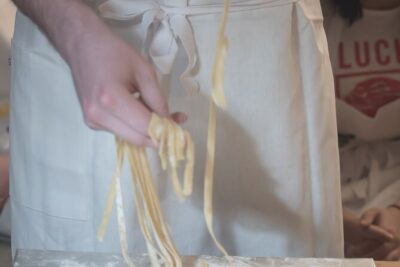
Market Tour and Cooking Class with a Local Venetian Chef
Read our review →
Rialto Market Tour & Private Cooking Class in the Heart of Venice
Read our review →