
Review · CRETE
Heraklion: Cretan Cooking Lesson with Lunch in Arolithos
At Arolithos, the cooking lesson is only half the story. You begin among old stone houses, narrow village lanes, and family-collected objects, then sit down to eat food prepared with your own hands. I like the mix of Cretan village history and practical cooking, and I like that the meal comes with wine, recipes, and wide views toward Heraklion and Mount Giouchtas. The main thing to know is that this is partly food preparation rather than a full chef-led cooking course, since the kitchen staff handle much of the main cooking.
The setting is about 20 minutes from Heraklion, but transport is not included. Arolithos works especially well for couples, families, and small private groups who want a relaxed half-day outside the city. Come hungry: the food keeps arriving, and the final feast can be larger than you expect.
Key points at a glance
- A recreated Cretan village: Walk through old-style homes, cobbled lanes, a small church, and a folk museum built around a family collection.
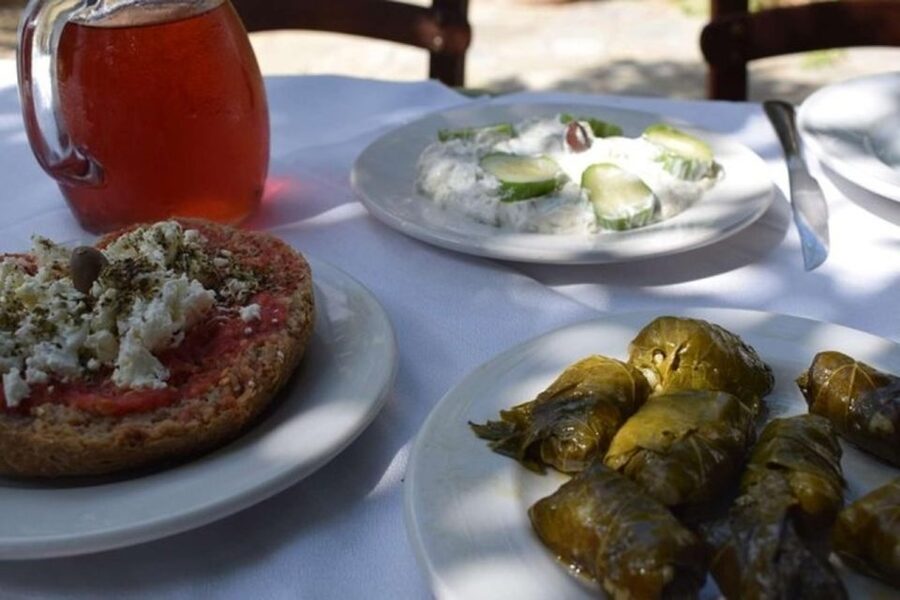
- Hands-on local recipes: Prepare dakos, tzatziki, dolmades, stuffed tomatoes and peppers, cheese pastries, and other simple dishes.
- A generous final meal: Eat the food you helped prepare, along with local wine and mineral water.
- Guides who make the difference: Evi, Mary, Christina, Avie, Maria, and Alexandra have each led warm, personal sessions at different times.
- Views from the taverna: The terrace looks across vineyards, olive trees, Heraklion, and Mount Giouchtas.
- A flexible family experience: Children can take part with adult supervision, and vegetarian menus are available if requested in advance.
Arolithos, a village built to recall old Crete
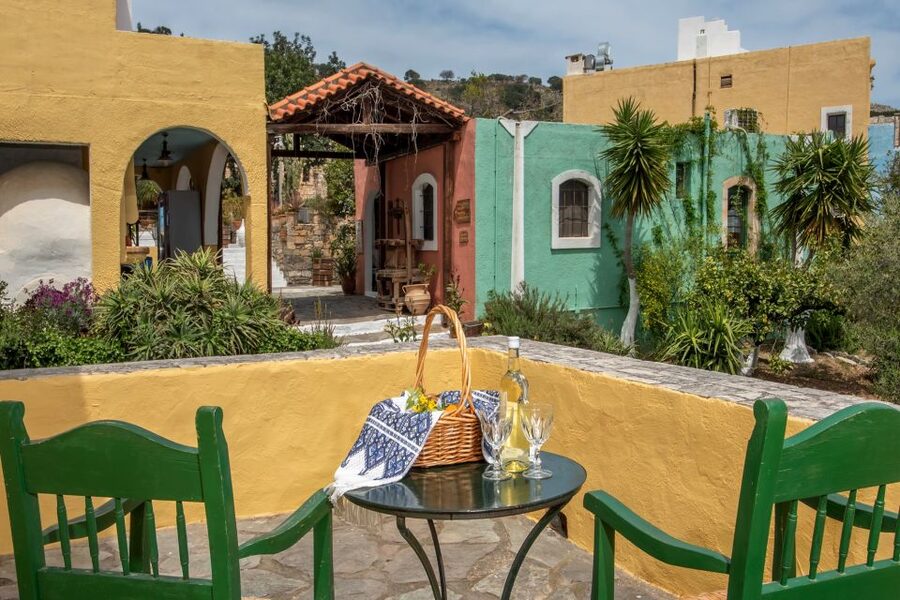
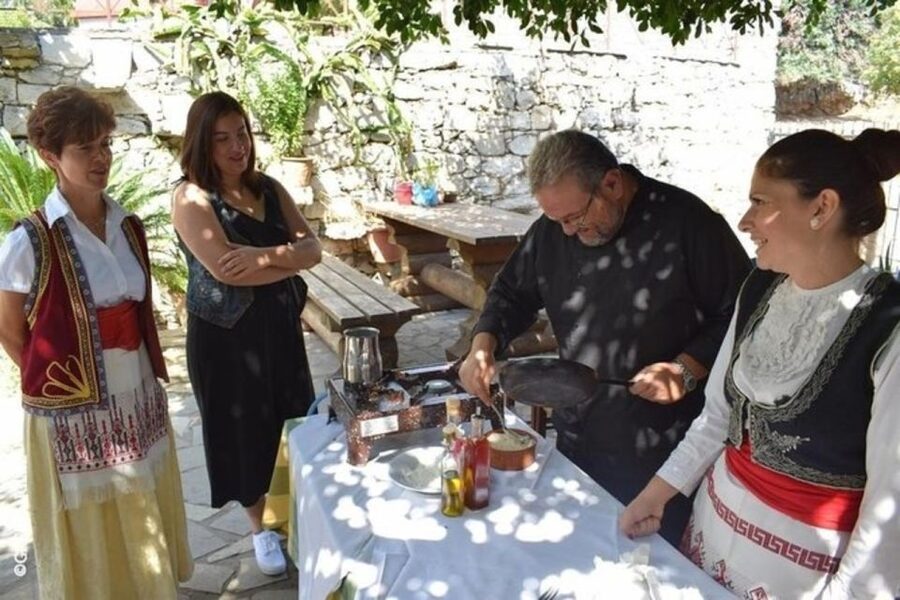
Arolithos Traditional Cretan Village is not an untouched medieval settlement. It was created in the 1980s by a local family who wanted to preserve and present the look and feel of an older Cretan village. That distinction matters. You are visiting a carefully made cultural site, not stumbling onto a village that has remained unchanged for centuries.
Still, the place gives you something many city tours do not: a physical sense of how rural Cretan life was organized. You walk along small lanes, pass traditional stone buildings, and visit two old-style houses that show how different social groups once lived. The village also includes workshops, a small church, a museum, and a taverna.
The museum holds a family collection of old household objects. It is not a huge institution, so do not expect a long, formal museum visit. Its value is in the details: the tools, furnishings, and everyday items help explain the practical world behind the recipes you will later prepare.
Guides have included Evi, Mary, Christina, Avie, Maria, and Alexandra. The experience can feel especially personal when your group is small. On some dates, a booking has been for only one couple or one family, giving the guide time to answer questions and adjust the pace.
More Greek Cooking Classes around Greece:
- Greek Cuisine Cooking Class in Santorini with Recipes and Wine
★ 5.0 · 969 reviews - Greek Cooking Class in Athens Including Rooftop Dinner with Acropolis View
★ 5.0 · 826 reviews - Greek Small-Group Athens Cooking Class & Dinner
★ 5.0 · 574 reviews
The museum and old houses come first
The first part of the visit is a walking tour through Arolithos. You see the museum and the two traditional homes before moving to the taverna for the food session. The tour is not physically demanding in the way a mountain walk would be, but the village has uneven surfaces and steps.
The old houses are useful because they turn general talk about Cretan culture into something you can see. You get a sense of household space, work, and social differences rather than just hearing a list of dates. Guides also share pieces of Greek history and local customs, and some teach a few common Greek expressions along the way.
Allow yourself time to look around instead of treating this as a quick walk to the kitchen. The village includes attractive details such as a little church, a mosaic workshop, old objects, and village cats. The museum portion is brief compared with the meal, but it gives the cooking class a stronger cultural frame.
If you are visiting Crete on a cruise stop or have only a short stay in Heraklion, this combination is efficient. You get a short outing, a cultural visit, and lunch without spending the day driving between separate sights.
The cooking class: simple food, useful skills
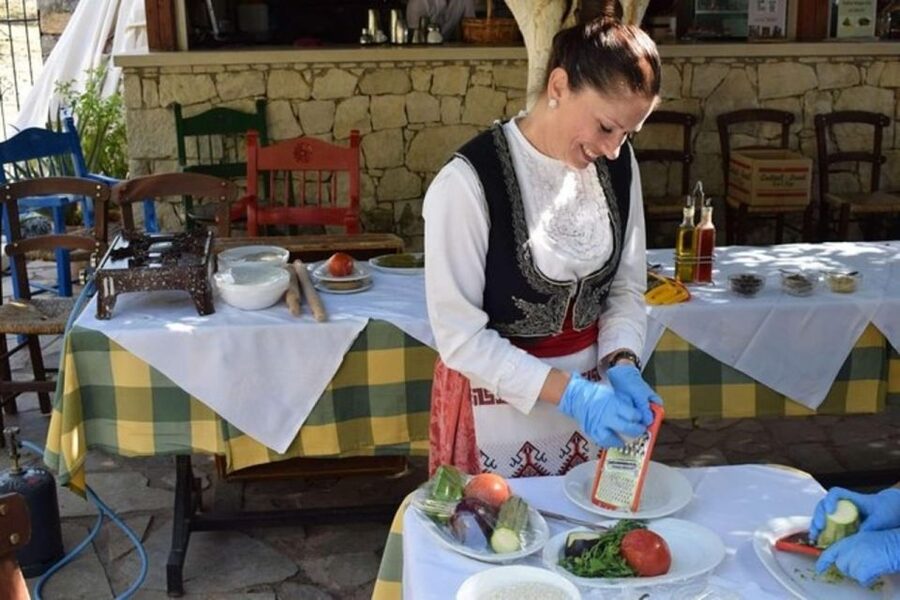
The kitchen session lasts about two and a half hours. The full experience, including the meal, takes roughly four hours. You work with the instructor on dishes drawn from everyday Cretan cooking rather than elaborate restaurant food.
The exact menu can vary, but the advertised choices include:
- Stuffed vine leaves
- Stuffed tomatoes, peppers, and other vegetables
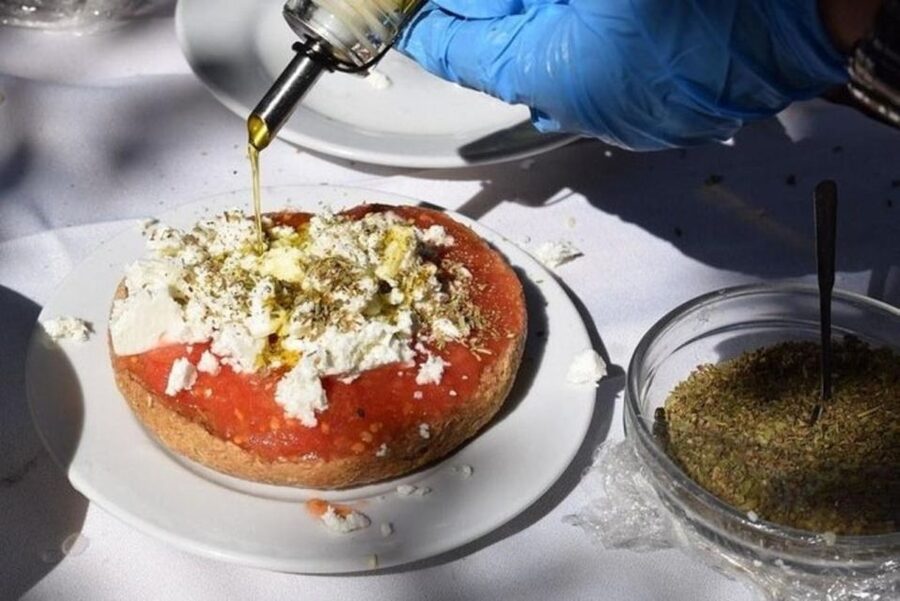
- Dakos, a Cretan salad made with dried bread, tomato, cheese, and olive oil
- Tzatziki
- Pork with wine sauce
- Lamb with green beans
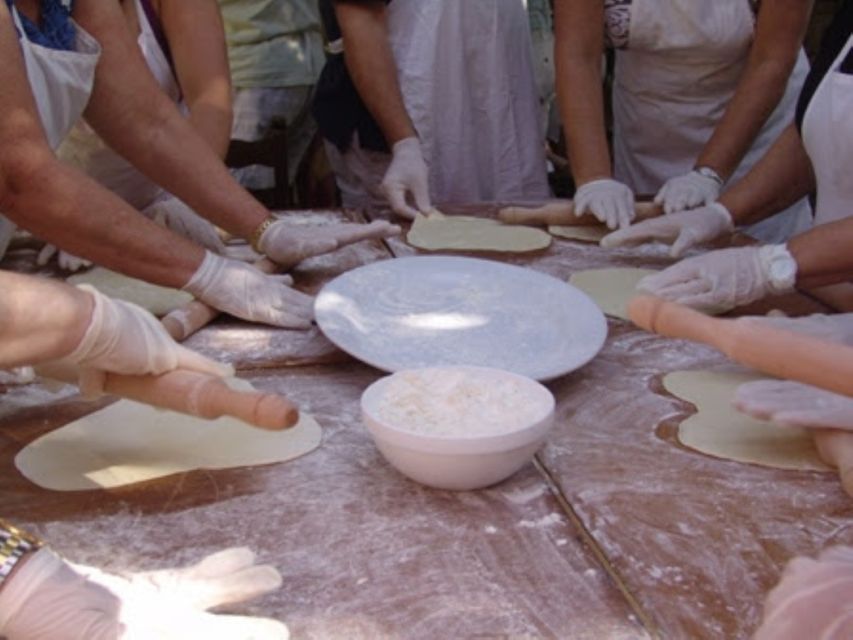
- Cheese pies and other cheese-filled pastries
The recipes are generally straightforward. That is part of the appeal. You learn how Cretan cooks make good use of fresh produce, herbs, olive oil, cheese, and meat without relying on long ingredient lists. Some dishes use only a few ingredients, making them realistic to repeat at home.
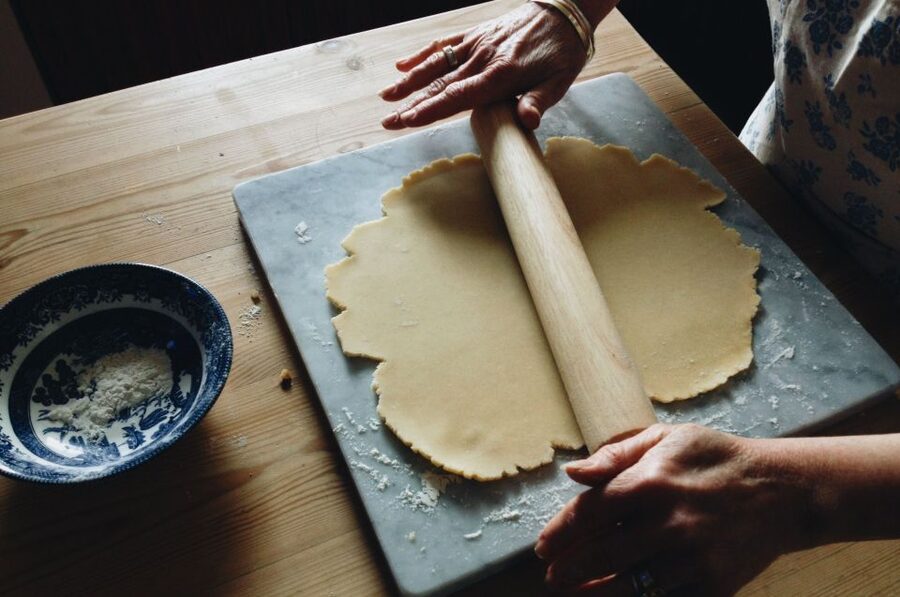
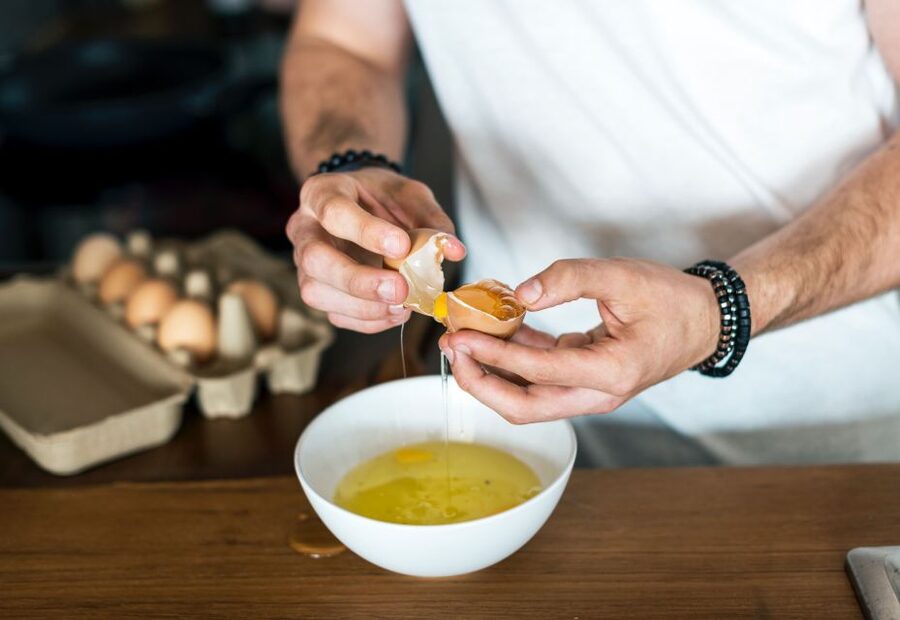
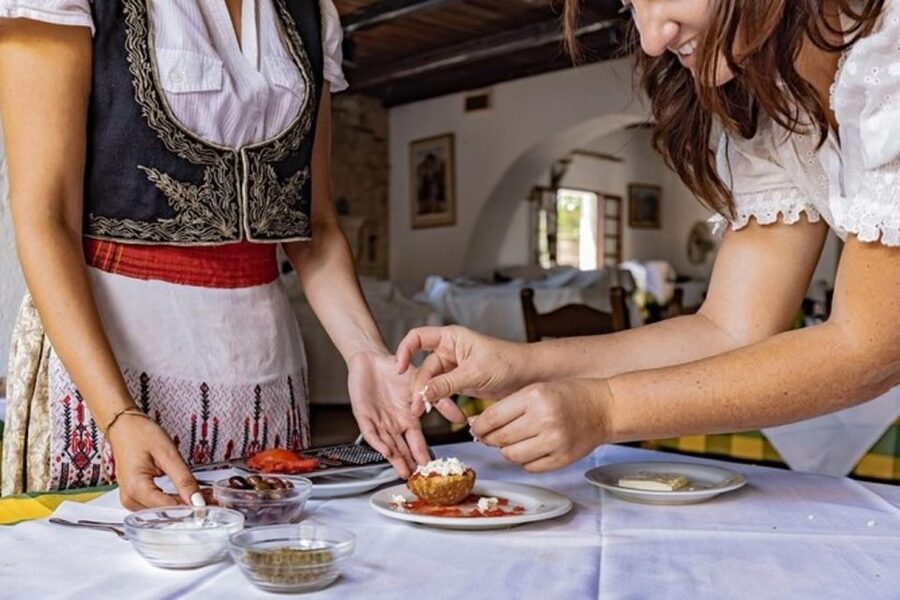
Expect to chop, grate, mix, stuff, fold, and season. One instructor helped a child hold a knife properly, fold grape leaves, and grate tomatoes. That gives you a good idea of the class style: practical, patient, and suitable for beginners.
There is an important limitation. The class is not always a full demonstration of every stage from raw ingredients to finished plate. Some of the meat dishes are prepared or completed by the kitchen team elsewhere. You may prepare the ingredients and watch demonstrations, then eat the finished dishes later.
That arrangement keeps the class manageable and lets you taste a broad range of food, but it may disappoint you if you want to cook every course from start to finish. I would describe it as a hands-on Cretan food workshop with a substantial meal, not as professional culinary training.
What you eat at the end
The strongest part of the experience is the meal. Your prepared dishes are brought out for you to enjoy, usually on the terrace of the taverna. You may also taste local products such as bread, olive oil, sheep cheese, wine, and raki, depending on the session.
The food is filling rather than fancy. Dakos offers the sharp taste of tomato and cheese over crisp dried bread. Tzatziki brings cool yogurt, cucumber, and garlic. Stuffed vegetables and vine leaves show how rice, herbs, and vegetables can become a complete dish with very little fuss.
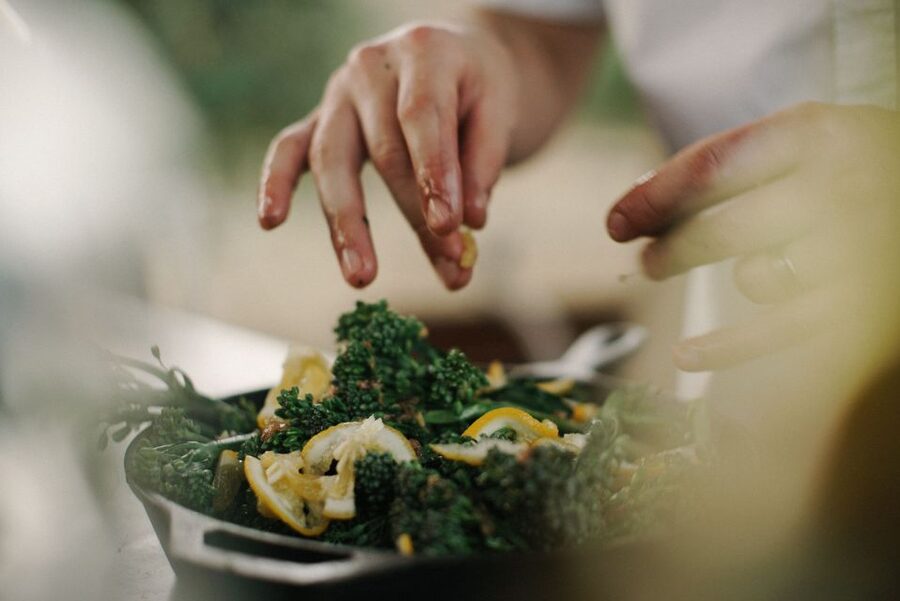
The meat courses add weight to the meal. Lamb with green beans and pork with wine sauce are examples of the hearty dishes that may be served. Cheese pastries provide a rich finish, and some sessions include pastries with honey. Greek coffee may also be demonstrated.
Bring a very empty stomach. Several people have found that there was too much food to finish, especially because appetizers and main courses can arrive separately. A practical improvement would be to eat some of the appetizers during one of the breaks rather than waiting for the full meal.
Wine and mineral water are included. The wine is part of the social rhythm of the experience, with pauses for a drink, cheese, and snacks between preparation tasks. If you do not drink alcohol, tell the host and stick with water.
More Cooking Classes with Lunch or Dinner in Greece:
- Santorini: Cooking Class with Lunch and Wine Tasting
★ 4.8 · 289 reviews - Rhodes: Cooking Lesson and Wine Tasting with Lunch
★ 4.9 · 93 reviews - Argassi: Zakynthian Culture & Greek Cooking Class with Lunch
★ 5.0 · 58 reviews - Private Greek Cooking Class in Kos with Lunch
★ 5.0 · 26 reviews
The terrace view is part of the meal
The taverna has a broad view over the nearest valley and toward Heraklion. You can see vineyards, olive trees, and Mount Giouchtas, known locally as a holy mountain. On a quiet day, animal bells add to the rural setting.
This is not just a place to sit after the cooking. The view changes the pace of the outing. After standing, chopping, and folding, you can sit in the shade with your food and take your time. The setting also helps connect the ingredients to their source. Olive trees and vineyards are not abstract symbols here. They are part of the view in front of your table.
The taverna is a better setting for the final meal than a city restaurant would be. You are eating food linked to the place where you have just walked and learned. That local connection is one of the main reasons to choose this activity over a standard cooking demonstration in central Heraklion.
Arolithos also has a swimming pool, and you may have free time to relax there after the meal. The information provided does not promise pool use as a central part of the scheduled class, so treat it as an extra possibility rather than the main reason to book.
How much value do you get for $129?
At $129 per person, this is not the cheapest lunch near Heraklion. You are paying for more than food, though. The price includes the village and museum entrance, a guided mini-tour, the cooking instruction, food tasting, your final meal, wine tasting, recipes, and an English-speaking guide.
The value is strongest if you want several activities in one outing. A separate museum visit, restaurant lunch, and cooking class could easily take more planning and transport. Here, everything happens at one site, and the meal is substantial.
The price is less appealing if your main goal is advanced cooking technique. Since the kitchen team may finish the main dishes, you are not spending four uninterrupted hours at a stove. You are paying for a cultural visit, a social meal, and basic food preparation in a pleasant setting.
Small or private groups improve the value. A private session gives you more time with the instructor and makes it easier to ask questions or adjust the pace. Families also get more direct help with children. The booking information identifies the group type as private, but the exact feel can depend on the date and party size.
Getting there from Heraklion
Arolithos is outside Heraklion, roughly 20 minutes away by car under normal conditions. Hotel pickup and drop-off are not included, so you need to arrange your own transport.
A taxi is the simplest option if you do not have a car. Make sure the driver knows Arolithos Traditional Cretan Village and is familiar with the location. Transfer service and car hire can be arranged for an additional charge.
This is the main practical drawback. The experience itself is easy to follow, but reaching the village takes planning. If you are on a cruise schedule, allow plenty of time for the return trip and arrange transport before the day begins. One useful feature is that the organizers have adjusted timing for cruise visitors in some cases, but you should confirm your schedule directly before booking.
The meeting point is Arolithos Traditional Cretan Village. Since no hotel transfer is included, do not assume you can simply meet in central Heraklion.
Dietary needs, children, and mobility
Tell the organizers about allergies or dietary needs when you book. Vegetarian food is available with advance notice. The kitchen can adapt the menu, but last-minute requests may be harder to manage.
Children must be accompanied by an adult, and the activity is not suitable for children under three. Older children can enjoy the food preparation when an instructor gives them a safe, simple task. An eight-year-old took part successfully, and an 11-year-old received help with knife handling and grape leaves.
The entire village tour is not wheelchair accessible, although the cooking class itself is accessible. The activity is not recommended for people with mobility impairments, wheelchair users, visually impaired people, people over 80, or babies under one. Uneven lanes and the walking tour are the key concerns.
The site does not permit outside food or drinks, weapons, sharp objects, alcohol or drugs, explosives, or fire-making. These rules are standard for a hosted food and cultural site, but the sharp-object rule is worth noting because the class provides its own cooking tools.
Who will enjoy Arolithos most?
I would choose this for someone who wants food and culture together. It suits couples looking for a relaxed half-day, families with older children, and small groups who prefer a personal experience to a large demonstration.
It is also a good choice if you want recipes you can repeat at home. The dishes are based on simple ingredients and familiar techniques. You leave with recipes, and some sessions also provide a certificate or recipe booklet.
You may want a different kind of class if you want a market visit, a professional kitchen, or detailed instruction in advanced techniques. You should also think twice if walking on uneven village paths is difficult or if your schedule leaves no room for a transfer outside the city.
The atmosphere is gentle and social. Breaks for wine, cheese, and snacks keep the session from feeling like a long block of instruction. You will have time to talk, look around, and enjoy the view.
Should you book this experience?
Book it if you want a taste of daily Cretan food and village life in one well-paced outing. The museum and old houses give context, the class gives you useful kitchen skills, and the terrace meal makes the afternoon feel generous rather than rushed.
Skip it if your priority is serious culinary training or a central Heraklion activity with no transport planning. Also confirm accessibility and dietary arrangements before paying.
For most visitors who enjoy food, local traditions, and a long lunch, Arolithos offers good value at $129. The best reason to go is not one spectacular dish. It is the complete afternoon: old houses, patient instruction, easy recipes, wine, and a meal overlooking the Cretan countryside.
FAQ
How long does the Arolithos cooking experience last?
The total experience takes about four hours. The cooking and cultural activity lasts roughly two and a half hours, followed by lunch or dinner made from the dishes prepared during the session.
Where does the activity meet?
The meeting point is Arolithos Traditional Cretan Village outside Heraklion.
Is transportation from Heraklion included?
No. Hotel pickup and drop-off are not included. Transfer service or car hire can be arranged for an additional charge.
What dishes might I prepare?
The menu can include dakos, tzatziki, stuffed vine leaves, stuffed tomatoes and peppers, pork with wine sauce, lamb with green beans, and cheese pies.
Is the food vegetarian?
Vegetarian options are available, but you must request them when booking.
Can allergies and special diets be accommodated?
You should tell the organizers about allergies or other dietary needs in advance so the menu can be adapted.
Is wine included?
Yes. Local wine and mineral water are included, along with food tasting and the meal.
Is the entire tour wheelchair accessible?
No. The cooking class is wheelchair accessible, but the whole village tour is not. The activity is not recommended for wheelchair users or people with mobility impairments.
Can children take part?
Children must be accompanied by an adult, and children under three are not accepted. Older children can participate in suitable food preparation tasks with guidance.
New cooking classes around Greece
- Savor Rhodes: 11-Dish Wine Pairing and Cooking Adventure★ 4.4 · 12 reviews
- Santorini: Hands on Cooking Class with a Chef★ 4.7 · 16 reviews
- Santorini: Cooking Class with a Professional incl. Full Meal★ 5.0 · 2 reviews
- Santorini: Greek Cooking Class with Wine Tasting★ 5.0 · 7 reviews
- Santorini: Vineyard and Winery Tour with Cooking Class★ 4.9 · 5 reviews
- Santorini Cooking Class with Wine Tasting & Lunch★ 4.9 · 36 reviews
- Santorini: Cooking Class with a Chef at the Ftelos Brewery★ 4.8 · 33 reviews
- Rhodes: Winery Tour, Tasting and cooking with the Winemaker★ 4.8 · 21 reviews
Crete Cooking Classes, side by side.
Chania: Authentic Cooking Class in the White Mountains
Read our review →
Chania Cooking Class-The Authentic Enjoy traditional Cretan meal
Read our review →
Moires: Cooking Class and Olive Oil Tasting at a Family Farm
Read our review →
Crete: Sightseeing Day Trip with Cooking Lesson and Lunch
Read our review →
This kitchen also appears in