
Review · INDONESIA
Ubud: Balinese Cooking Class at an Organic Farm
The best part of this Ubud cooking class is that it starts before the chopping board. In the morning option, you visit a local market, taste unfamiliar fruits, then head into the countryside to pick vegetables at an organic farm. Only after seeing where the food comes from do you cook it.
I like the farm-to-table setup and the fact that you prepare a full meal rather than one token dish. I also like the friendly teaching style of guides such as Buda, Depi, and Wayan. The main catch is time: the trip can last from 330 minutes to eight hours, and the farm may be about an hour from central Ubud, with traffic affecting the ride back.
Key points at a glance
- Morning market visit: See local produce, spices, and fruit before the cooking begins. This is available with the morning class.
- Organic farm harvest: Walk through the farm and collect some of the vegetables used in your meal.
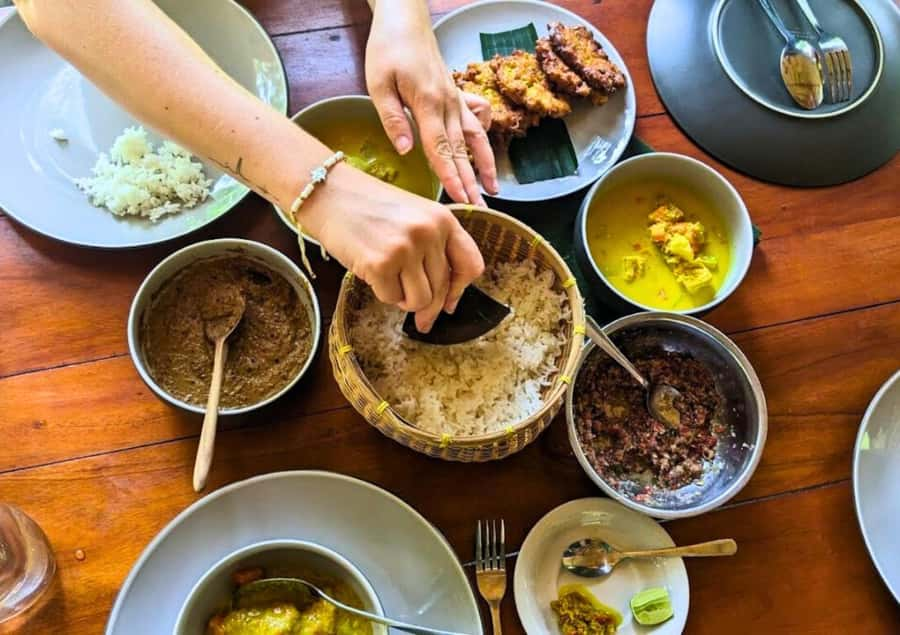
- Six Balinese dishes: Prepare a generous menu with spice paste, vegetables, curry, tempe, sate lilit, fish or vegan alternatives, and dessert.
- Regular or vegetarian menu: The vegetarian option includes gado gado, tempe curry, corn fritters, vegan sate lilit, and dessert.
- Small shared class: Groups are limited to 14 people, with two people sharing each cooking station.
- Useful take-home gift: You receive a recipe book plus access to a downloadable PDF of the latest recipes.
Why this cooking class feels different from a standard food lesson
Many cooking classes begin with ingredients already lined up in neat bowls. This one gives you a better sense of the food chain first. You see produce at a local market, walk through a working organic farm, and harvest some vegetables before cooking.
That order matters. Balinese food depends heavily on fresh aromatics and spice pastes, and the class shows you those ingredients in their everyday setting. You are not just told that chilies, herbs, coconut, and vegetables matter. You handle them, smell them, and see how a Balinese family uses the resources around the farm.
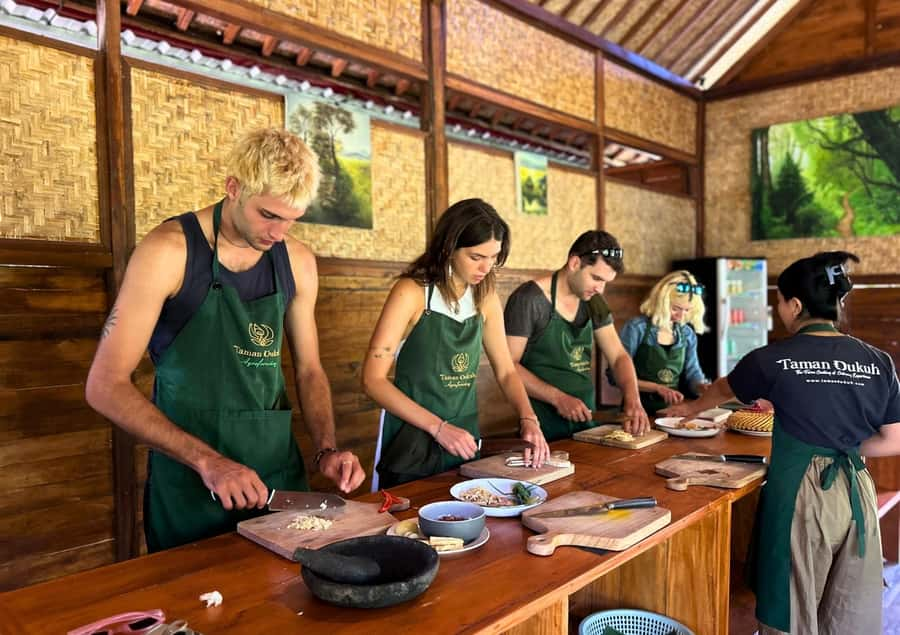
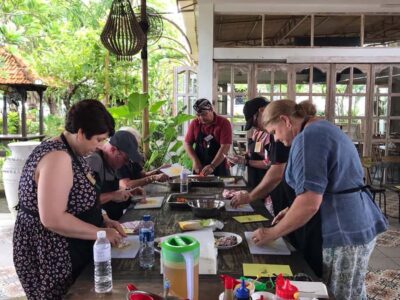
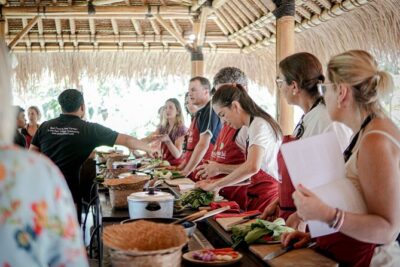
The setting also changes the mood. The kitchen is open air, surrounded by trees, plants, and farm paths. Several people describe the farm as peaceful and tucked away from busy Ubud. It is a useful break from traffic, shops, and the steady stream of temple visits.
You should still think of this as a full half-day or day activity, not a quick two-hour lesson. The published duration ranges from 330 minutes to eight hours, depending on the option and timing. That is good value if you want a complete food and culture outing, but it can take a large part of your day.
More Farm Cooking Classes in Indonesia
- Balinese Farm Cooking Class by Pemulan Bali
★ 5.0 · 410 reviews - From Ubud: Authentic Bali Farm Cooking School & Organic Farm
★ 5.0 · 122 reviews - Balinese Vegan Cooking Class with Fresh Harvesting & Garden Tour
★ 5.0 · 86 reviews
The morning begins at an Ubud market
Choose the morning class if you want the fullest version of the experience. Transport is provided from an Ubud meeting point, though the exact pickup arrangement can vary by booking option.
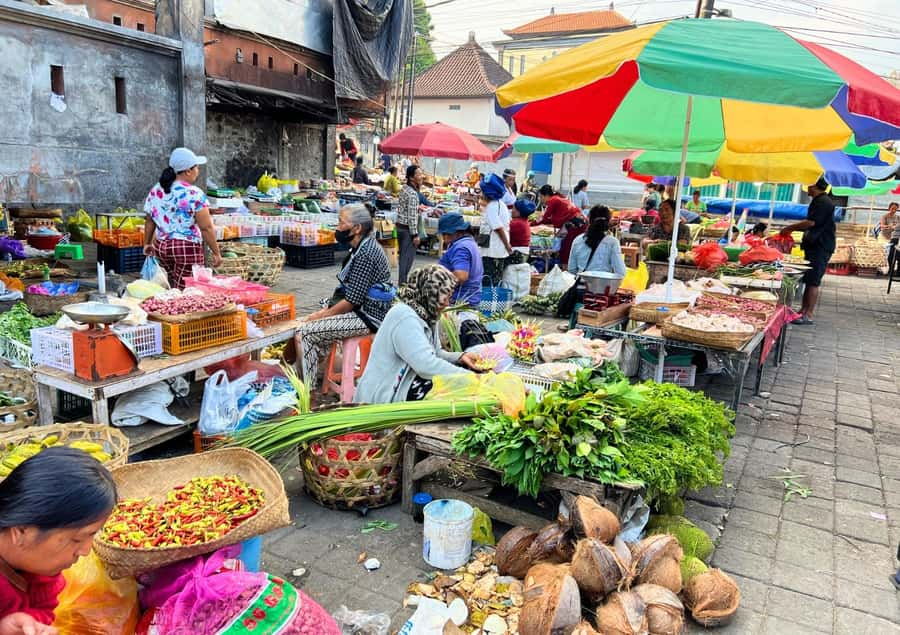
The market visit gives you a look at the practical side of Balinese cooking. You can see local fruit, vegetables, and spices being bought and sold early in the day. The guide explains what you are looking at and may offer tastes of unfamiliar fruit.
This is not a polished food hall arranged for sightseeing. It is a place where people begin their day by purchasing ingredients, so it gives you useful context before the farm visit. You can also ask questions about produce that would be hard to identify on your own in Bali.
The early start is worth taking seriously. The morning class is listed at around 7:15 a.m. in the experience details and is the option to choose if you want the market tour. You will need to be comfortable getting up early, but you gain an extra cultural stop that the later option may not include.
If you dislike early mornings, the class can still work without the market component. Just understand that you will miss one of the most distinctive parts of the day.
The farm turns ingredients into a story
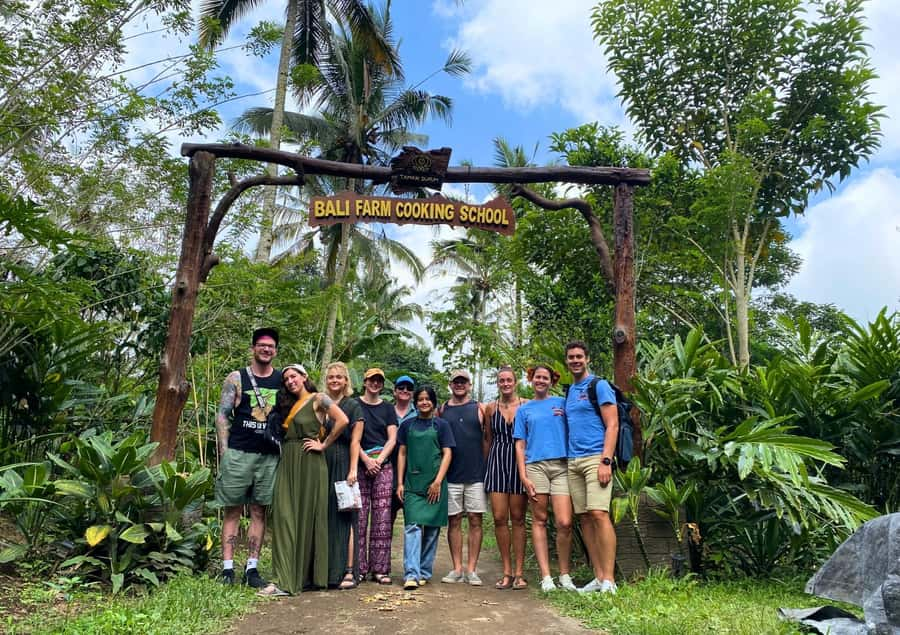
After the market, you travel to the organic farm and receive coffee or tea with a light breakfast. Fresh fruit and cake may be part of this opening meal, and it gives you something to eat before the hands-on cooking begins.
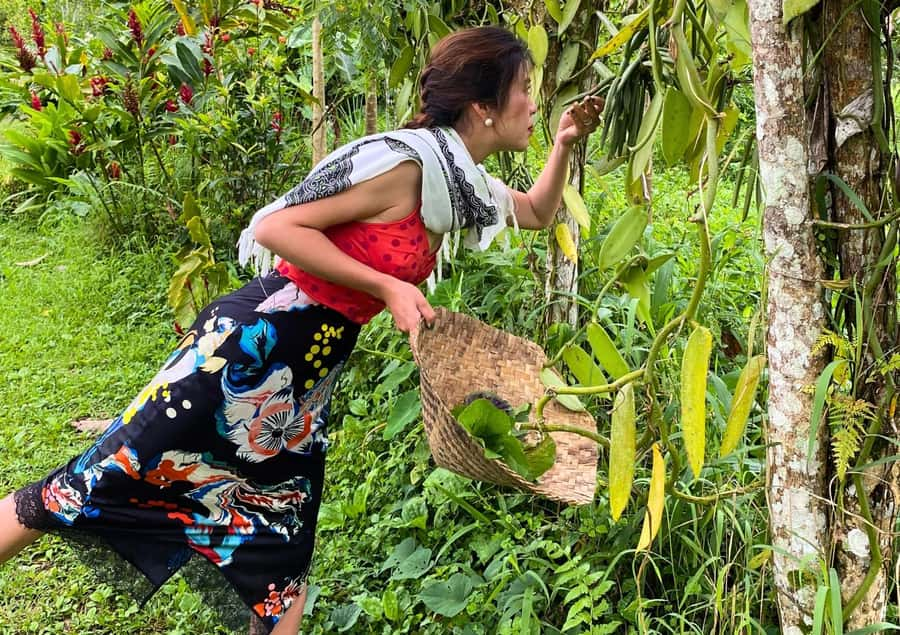
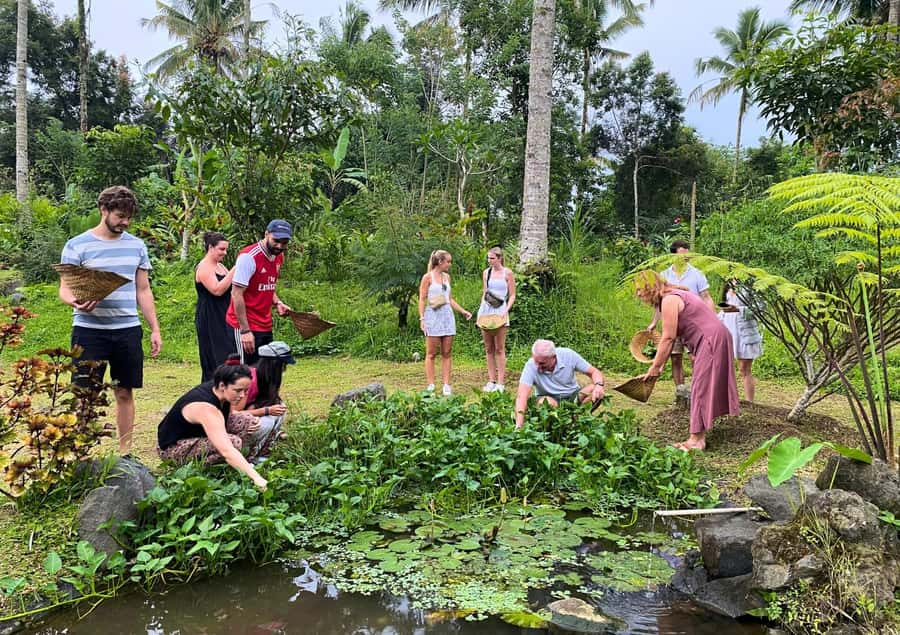
The farm tour is more than a short walk past decorative plants. You learn about the produce grown there and how the surrounding natural resources are used. You then collect vegetables for your own class.
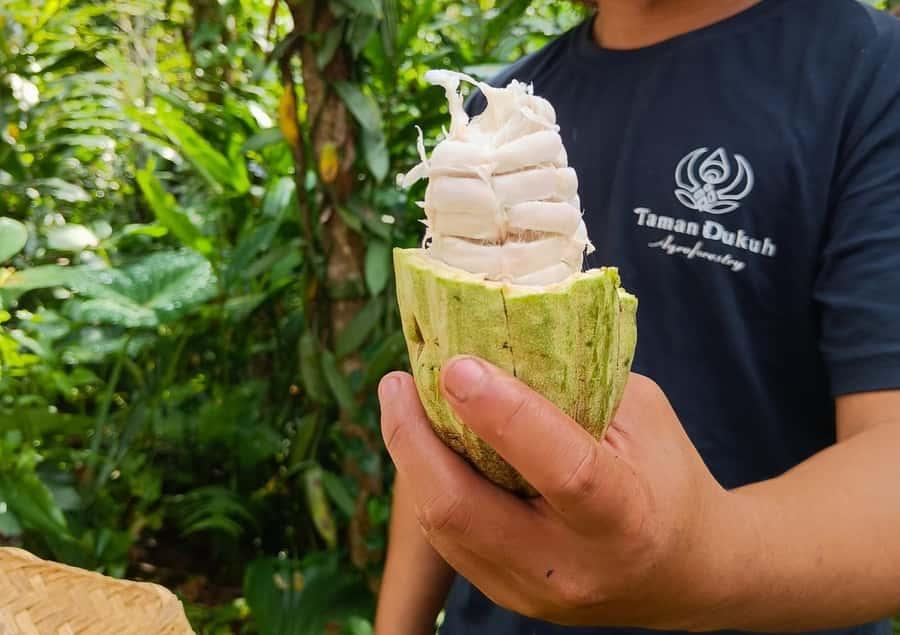
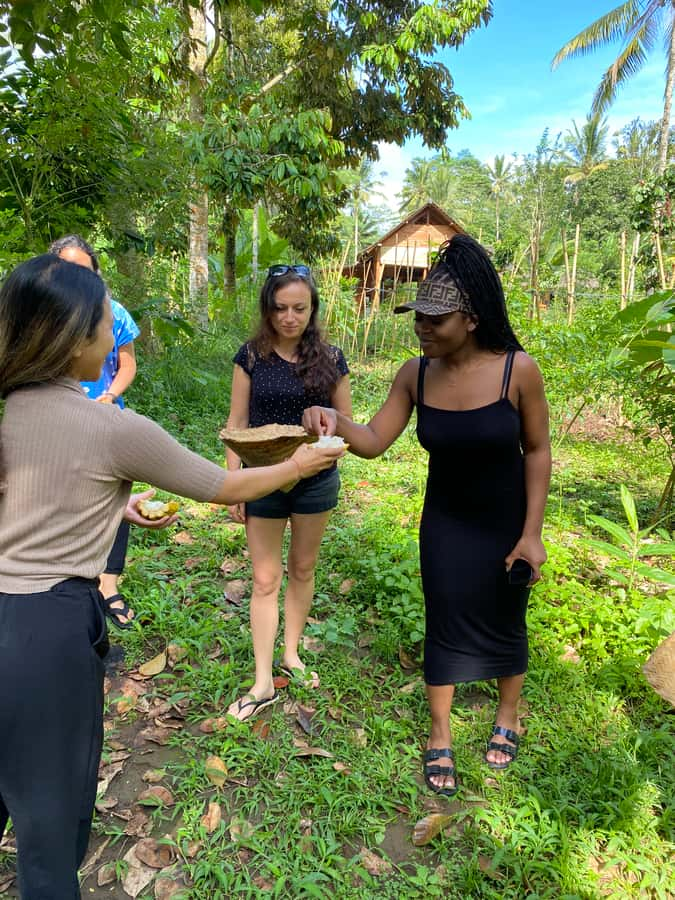
Some of the most memorable details come from the produce itself. You may be shown unusual plants, local herbs, or even cacao fruit, as one class participant described. The point is not to turn you into a farmer in an hour. It is to help you connect a finished dish with the plants and ingredients that create it.
I would allow time to walk slowly here. The farm may be the part you enjoy most if you like gardens, food growing, and rural settings. If you are mainly interested in cooking technique, you may find the tour longer than necessary, but it is what gives this class its sense of place.
The farm is not necessarily right beside central Ubud. One account put the drive at about an hour from the meeting point, and traffic on the return can be heavy. Plan your evening around the tour rather than booking a tight dinner reservation immediately afterward.
How the shared cooking station works
A chef introduces the recipes and keeps the class moving. Each station is shared by two people, and the maximum group size is 14. That means you get personal involvement, but you are not receiving a private lesson.
The shared setup can be a benefit. You can divide tasks, compare results with the person beside you, and enjoy a social class without needing to cook every single component alone. It also means you should be ready to take turns with chopping, pounding, mixing, and frying.
The instructors are repeatedly described as warm, patient, funny, and clear in English. Buda, Depi, and Wayan are names that appear in the experience feedback, though the guide assigned to your session can vary. One of the nicest touches is that staff may take photos or make a short video during the class and send it afterward, but this should be treated as a possible extra touch rather than a guaranteed part of every session.
You will receive mineral water, coffee, or tea during the class. Soft drinks and beer cost extra. Wear clothes you can move in, and expect a working kitchen rather than a formal restaurant demonstration.
More Balinese Cooking Classes around Indonesia:
- Ubud Cooking Class Bali with Balinese Chef
★ 5.0 · 1,609 reviews - PRIVATE Authentic Balinese Cooking Class in Ubud at Putu’s Home
★ 5.0 · 644 reviews - Balinese Ubud cooking school (9 Dish Cooking and Market Tour)
★ 5.0 · 540 reviews - Ubud: Balinese Cooking Class and Market Tour
★ 4.8 · 531 reviews
The regular menu: spice paste, curry, and sate lilit
The regular menu begins with Base Gede, a traditional Balinese spice paste. This is the foundation of the meal and one of the most useful techniques to take home. You learn how a mixture of aromatics and spices builds flavor across several dishes.
You then prepare Sayur Urab, a mixed green salad with coconut and spices. It is a good introduction to the balance of vegetables, fresh elements, and seasoned coconut that appears often in Balinese cooking.
The main dishes include Opor Ayam, a Balinese chicken curry, and sate lilit. Sate lilit differs from the familiar skewer style many people expect. The seasoned meat mixture is shaped around a stick, with coconut and spices worked into the paste. It is a hands-on dish in every sense.
The menu also includes pindang base tomat, fish with tomato sauce, and tempe asam manis, sweet and sour tempe. Dessert is either pisang goreng, banana fritters with coconut and palm sugar syrup, or bubur injin, a black rice pudding.
This is a lot of food. The meal is not a small tasting plate at the end of class. You eat the dishes as you go, and the portions can leave you very full. That makes the $32 price particularly attractive, since it covers transport from the Ubud meeting point, instruction, ingredients, drinks listed in the inclusions, and the food you prepare.
The vegetarian menu is a real alternative
The vegetarian option is not simply the regular menu with the meat removed. It has its own set of dishes and uses tempe, vegetables, corn, jackfruit, peanuts, and coconut in ways that still create a substantial meal.
You begin with Base Gede, then prepare gado gado, blanched vegetables with traditional peanut sauce. This is a useful dish for home cooks because it shows how a simple vegetable plate can become a full meal through sauce and seasoning.
Opor tempe provides the curry element. You also make bergedel, fried corn with Balinese spices, and tempe asam manis. Vegan sate lilit uses jackfruit and a spiced paste instead of meat.
Dessert is again pisang goreng or bubur injin. The vegetarian menu therefore has variety: raw or blanched vegetables, fried food, curry, sweet and sour flavors, a satay-style dish, and a sweet finish.
If you are vegan, tell the operator when booking and confirm the exact arrangement. The class information provides a vegan menu, and one reported session kept non-vegan cooking separate, which is helpful for avoiding confusion at a shared station. Still, dietary needs are worth confirming before you arrive.
What you actually learn, beyond following instructions
The value of this class is not just the meal. You get a practical introduction to the logic of Balinese cooking.
The Base Gede shows you how a spice paste becomes a starting point for different dishes. The curries and sauces demonstrate how coconut, tomato, peanuts, and aromatics create different textures and flavors. Tempe appears in more than one form, which helps you see it as a flexible ingredient rather than a substitute used only in vegetarian food.
The instructors explain each step as you work. You are not left to copy a recipe without context, but you also are not expected to sit quietly while someone else cooks. Several parts are prepared in advance or handled by the staff when they involve fiddly work, so the class remains manageable for beginners.
That balance suits most people. You get enough practical work to feel involved, but you do not need advanced knife skills or professional kitchen experience. If you already cook often, ask questions about substitutions and technique. If you are new to Balinese food, let the guide set the pace.
The recipe book is a genuine advantage. You can take home the printed recipes, and a downloadable PDF of the latest recipes is also included. Without that, a long list of unfamiliar ingredients would be easy to forget once you leave Bali.
Timing, transport, and the real value of $32
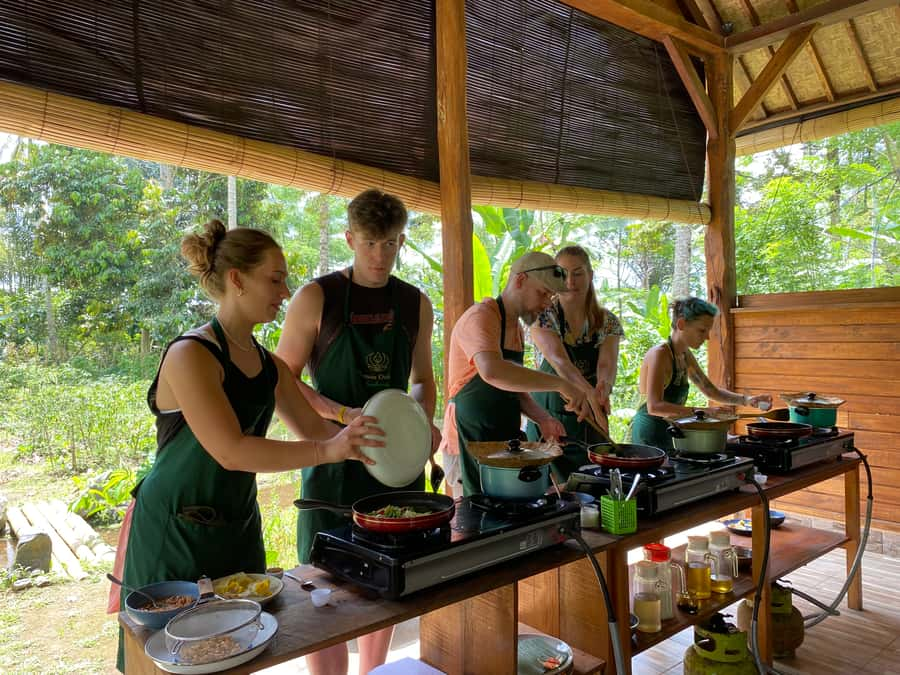
At $32 per person, this is priced well for what it includes. You get a market visit with the morning option, transport from an Ubud meeting point, a farm tour, harvested ingredients, a full cooking class, drinks such as coffee or tea and mineral water, the meal, and recipes to use later.
A normal restaurant meal would not give you the farm visit, market context, or cooking instruction. A shorter cooking lesson might cost less, but it would not offer the same number of dishes or the same amount of time in the countryside.
The tradeoff is time and transport. The class can last 330 minutes to eight hours, and the farm trip may involve a long drive in traffic. You should not book this on a day when you need to reach the airport, catch a ferry, or make a fixed evening appointment.
The group limit of 14 keeps it from becoming a huge demonstration. Still, two people share each station, so a private class is a better fit if you want individual attention or have very specific culinary goals.
Free cancellation up to 24 hours before the activity and the reserve now, pay later option make planning easier. The meeting point depends on the option you choose, so check your confirmation carefully.
Who will enjoy this day most
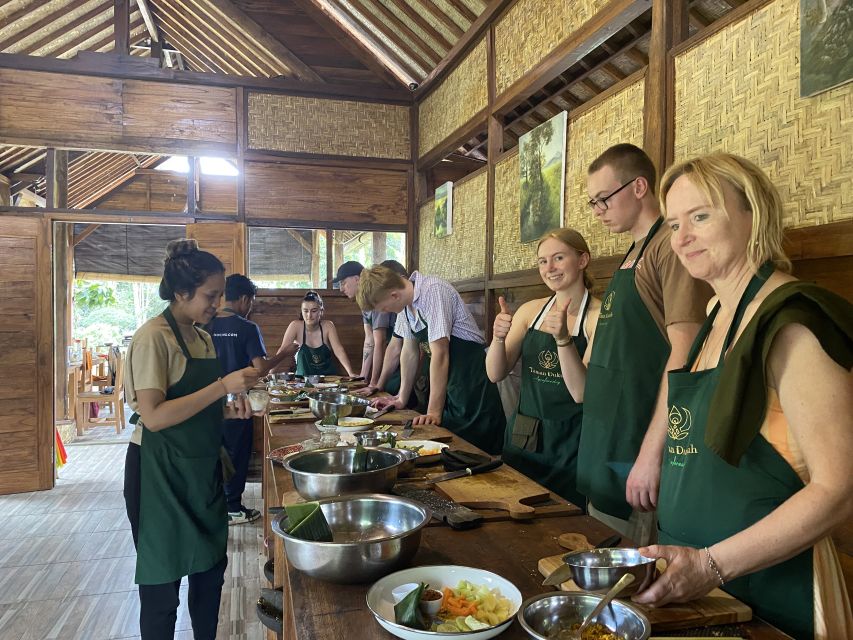
I would recommend this class to you if food is one of the main reasons you visit Bali. It also suits families, couples, solo participants who enjoy meeting people, and anyone who wants a break from Ubud’s central streets.
It is especially good for:
- People who want both a cultural outing and a meal
- Beginners who prefer clear, guided instruction
- Vegetarians and vegans looking for a dedicated menu
- Families with older children who can share a cooking station
- Home cooks who want recipes they can use after returning home
- Visitors who enjoy gardens, farming, and rural scenery
It may not suit you if you need step-free access. The activity is not suitable for wheelchair users, and the farm setting involves walking outdoors. Pets are not allowed.
You should also skip it if you dislike group activities, long transfers, or early starts. The class is friendly and relaxed, but it is not a private chef lesson.
My verdict on the Bali Farm Cooking School
I would book this if I had several days in Ubud and wanted one activity that combined food, rural Bali, and local daily life. The market and farm make it more useful than a cooking class that begins with premeasured ingredients, while the recipe book gives the experience a life beyond the holiday.
The strongest reasons to choose it are the farm setting, the generous six-dish menu, and the instructors. Buda, Depi, and Wayan are praised for making the class easy to follow and fun without turning it into a rushed performance.
Book the morning option if you want the market tour and the fullest cultural experience. Choose another time if an early start is difficult, but allow plenty of room for transport and traffic.
At $32, this is a strong value for a long, food-focused day. Just make sure you want a shared class, can manage the walking, and are happy to give up much of a day. If that sounds right, this is one of the better ways to connect a Balinese meal with the people, plants, and places behind it.
FAQ
How much does the Ubud Balinese cooking class cost?
The listed price is $32 per person. It includes the cooking class, prepared meal, organic farm activities, recipe book, listed drinks, and shuttle service from an Ubud meeting point.
How long does the cooking class last?
The duration is listed as 330 minutes to eight hours. The exact length depends on the option and starting time you select.
Does the experience include a local market visit?
Yes, the local market tour is included with the morning class. It is not listed as part of every option.
What food do you cook?
The regular menu includes Base Gede, Sayur Urab, Opor Ayam, sate lilit, fish with tomato sauce, sweet and sour tempe, and either banana fritters or black rice pudding.
Is there a vegetarian or vegan menu?
Yes. The vegetarian menu includes Base Gede, gado gado, opor tempe, bergedel, sweet and sour tempe, vegan sate lilit, and either banana fritters or black rice pudding.
Are drinks included?
Mineral water, coffee, and tea are included during the class. Soft drinks and beer are available for purchase but are not included.
How many people are in each group?
The maximum group size is 14 people. At the farm, there may be two or three groups in one session, and each cooking station is shared by two people.
Is transport provided?
A shuttle from an Ubud meeting point is included. The exact meeting point may vary according to the option booked.
Can wheelchair users join the activity?
No. The activity is listed as unsuitable for wheelchair users. Pets are also not allowed.
New cooking classes around Indonesia
- Seminyak: Vegetarian Cooking Class★ 5.0 · 3 reviews
- Seminyak : cooking class traditional food bali★ 5.0 · 5 reviews
- Quad ride, waterfalls & aunthentic cooking class in munduk★ 4.9 · 53 reviews
- Pure Bali Village Experience Cooking & Jamu Class, Transfer★ 4.8 · 5 reviews
- Ubud: Organic Farm Harvest, Bali Cooking Class by Pemulan★ 4.8 · 12 reviews
- packages cooking class and romantic dinner in a local home★ 5.0 · 4 reviews
- Nusa Dua: Balinese Cooking Class with Market Tour★ 5.0 · 4 reviews
- Bali: Balinese Cooking Class and Market Tour★ 4.8 · 19 reviews
Indonesia Cooking Classes, side by side.
From Ubud: Authentic Cooking Class in a Local Village
Read our review →
Ubud: Cooking Class with Transfers and Optional Market Visit
Read our review →
PRIVATE Authentic Balinese Cooking Class in Ubud at Putu’s Home
Read our review →
Balinese Ubud cooking school (9 Dish Cooking and Market Tour)
Read our review →
This kitchen also appears in