
Review · SYRACUSE
Arancino Cooking Class in Ortygia Syracuse
The best part of this Ortygia food class is its focus: one famous Sicilian street food, explained by local hosts and prepared in a small group. You’ll shape traditional rice balls, hear how fillings vary, and taste them alongside caponata, parmigiana, and cannolo. I especially like the personal setting and the chance to meet Maria and Massimo, who bring local stories to the table.
I also like the short 90-minute format, which fits neatly into a day of sightseeing in Syracuse. The main caution is value: if your price is around €60 per person, this is more of a guided tasting and demonstration than a full hands-on cooking lesson. Most ingredients are ready before you arrive, and the frying may be handled for you.
Key points at a glance
- Shape Sicily’s famous rice snack: You’ll learn how arancini are formed and filled before they are fried.
- Small group setting: The class is limited to 10 people, so the room should feel more personal than a large food demonstration.
- Local hosts Maria and Massimo: Maria has been praised for her local food knowledge and her stories about Syracuse.
- More than arancino: The tasting also introduces caponata or parmigiana, cannolo, and a drink.
- Short and central: The 1.5-hour class works well as a compact food stop in Ortygia.
- Check your expectations: Much of the cooking may be prepared in advance, with the final frying done by the host.
Why arancino makes a good Syracuse cooking class
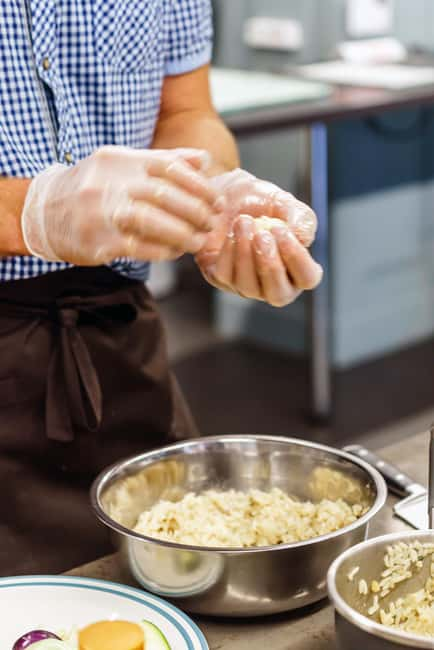
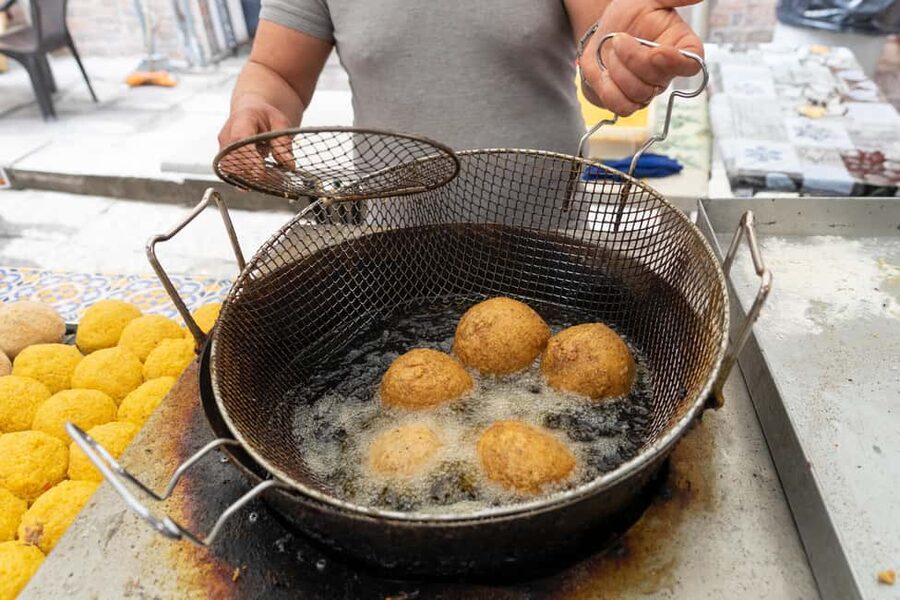
Sicily’s arancino is simple in outline but tricky in practice. Cooked rice is shaped around a filling, coated, and deep fried until the outside is crisp. Inside, you may find meat, cooked ham, spinach, pistachios, aubergine, or another local combination.
The appeal is not just the snack itself. Arancino is a useful introduction to Sicilian cooking because it combines rice, bold fillings, careful shaping, and frying in one compact dish. You get a lesson in texture as much as flavor: firm rice outside, a hot savory center, and a crisp shell.
The name and shape can vary across Sicily. Some versions are round, while others are more pointed. This class is centered on the traditional arancino, so you’ll be learning a familiar Sicilian style rather than a broad menu of dishes.
For you, that narrow focus can be a good thing. A class that tries to cover pasta, seafood, desserts, and several sauces in 90 minutes would likely skim over each one. Here, the main food has enough character to carry the session.
More cooking classes around Italy:
- Florence: Pasta Cooking Class with Unlimited Wine
★ 4.9 · 10,285 reviews - 3 in 1 Cooking Class near Navona: Fettuccine, Ravioli & Tiramisu
★ 5.0 · 7,376 reviews - Florence: Pasta & Tiramisu Cooking Class with Unlimited Wine
★ 4.9 · 6,708 reviews
Meeting Maria and Massimo in Ortygia
The class meets in front of the entrance to the Banco di Sicilia at 37.061317443847656, 15.293965339660645. This is a practical meeting point in Ortygia, but you should still allow time to locate the exact entrance before the start.
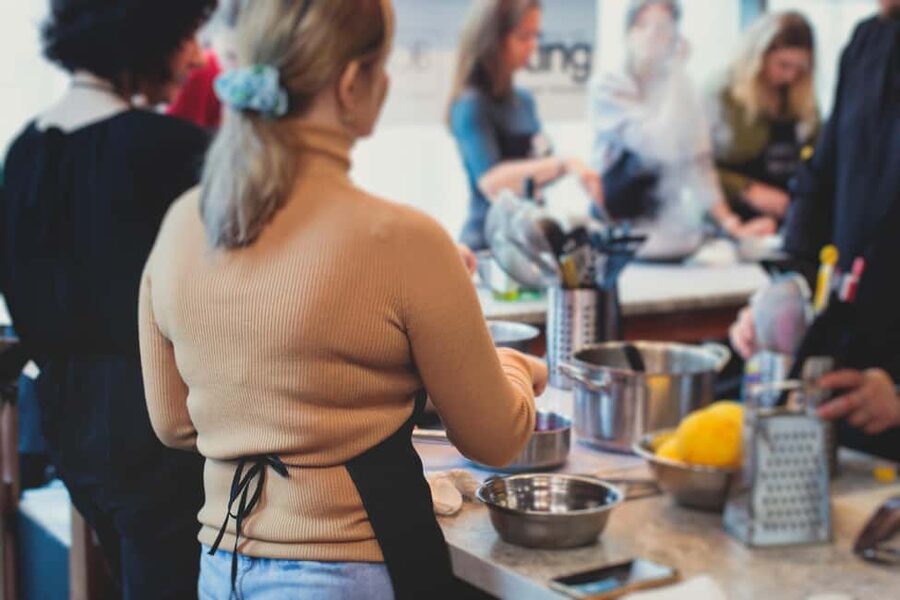
The class takes place in a small, comfortable setting rather than a large cooking school. The group is limited to 10 people, with participants coming from different countries. That size matters. You are more likely to see the shaping clearly, ask a question, and follow the guide’s explanation without competing with a crowd.
Maria has received particular praise for explaining both Syracuse and Sicilian food in a natural way. Her role appears to be more than simply showing a recipe. She can connect the dish to local eating habits and the city’s food culture, which gives the class more meaning than a quick recipe demonstration.
Massimo handles the food preparation with Maria. One practical detail is important: some of the work may already be done before you arrive. In particular, the rice, fillings, and other ingredients can be prepared in advance, while you take part in the shaping and watch the final cooking.
Shaping the arancini in 90 minutes
The main activity is forming the rice balls. You’ll work with cooked rice and a prepared filling, shaping the mixture into the proper form. This is the part of the class where you get the most direct contact with the food.
Do not expect a full professional kitchen session. The available information points to a demonstration-led format. One participant reported forming four arancini per person, while the breading and frying were handled by Massimo. That detail is worth considering if you are booking specifically to practice every step yourself.
For some people, this is exactly the right amount of participation. You avoid spending an hour measuring ingredients and cleaning equipment, yet you still learn the key physical skill: how to form the rice around the filling without it falling apart.
For others, it may feel too limited. If you want to prepare the rice, make the filling, bread each arancino, and operate the fryer, ask about the hands-on level before booking. The activity description promises the secrets of making arancini, but the actual format may be closer to guided shaping plus demonstration.
The class is conducted in English or Italian. That makes it accessible to an international group, while still leaving room for local Italian food terms and explanations.
The Sicilian tasting beyond the rice
The class includes a small aperitivo with typical Sicilian foods. The exact balance may vary, but the planned selection includes arancino, caponata or parmigiana, cannolo, and a drink.
Same kitchen, a different dish:
- Florence: Pasta Cooking Class with Unlimited Wine
★ 5.0 · 6,413 reviews - Cooking Class and Lunch at a Tuscan Farmhouse with Local Market Tour from Florence
★ 5.0 · 4,831 reviews - Rome: Pasta Making Class with Wine, Limoncello, and Dessert
★ 4.9 · 3,177 reviews - Pastamania – Florence Pasta Making Class
★ 5.0 · 3,050 reviews
Arancino
The arancino you shape is the star of the session. Fillings can include meat, ham, spinach, pistachios, aubergines, and other ingredients. The point is not only to eat one, but to understand how a modest rice dish becomes a portable, satisfying snack.
You may not eat every arancino you help form. One account described each person receiving one arancino and some caponata to taste, while the remaining prepared arancini stayed in the shop. That is a useful expectation to set before you arrive. The class may produce more food than each person individually receives.
Caponata
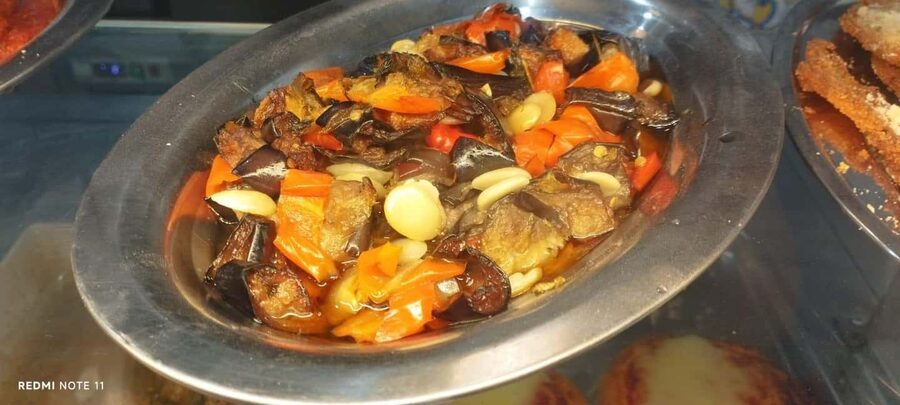
Caponata is a sweet-and-sour Sicilian vegetable dish, usually built around fried aubergine. It also includes tomato sauce, celery, onion, olives, capers, sugar, and vinegar.
This is a fine companion to arancino because it shows a different side of Sicilian cooking. The arancino is crisp and filling, while caponata is soft, tangy, and layered with contrasting flavors. It can be served as a side dish or an appetizer today, although it was also eaten as a main course in earlier times.
Parmigiana
Parmigiana uses fried slices of aubergine layered with tomato sauce and Parmesan, then baked. It is heavier and more comforting than caponata, with a soft center and savory cheese.
The available description presents caponata or parmigiana as part of the food tasting, so you should not assume both will always be served in equal portions. If you have a strong preference, ask at the start.
Cannolo
The cannolo brings dessert into the class. Its crisp pastry shell is traditionally shaped around a hot metal bar, then filled with sweet ricotta. Candied fruit, pistachios, or dark chocolate chips may be added.
This gives you a quick look at one of Sicily’s best-known sweets without turning the class into a pastry workshop. It also rounds out the tasting nicely: savory rice, vegetables, baked aubergine, and a sweet ricotta finish.
How much cooking do you really do?
This is the most important point for deciding if the class suits you. The activity is called a cooking class, but the available details indicate that much of the food is prepared before the group begins.
You should expect to:
- Learn about arancino and Sicilian recipes
- Shape a small number of arancini
- Watch the breading and frying
- Taste the finished food and other local specialties
- Ask questions in English or Italian
You should not automatically expect to:
- Cook the rice from raw ingredients
- Prepare every filling from scratch
- Bread each arancino yourself
- Operate the fryer
- Take home all the food you help prepare
That distinction affects value. If your goal is to learn a repeatable recipe for home, the explanations and shaping practice can still help. If your goal is a long, fully participatory kitchen lesson, another Syracuse class with explicit hands-on cooking may be a better match.
I would treat this as a food experience with a cooking component, not as a complete culinary course. That does not make it poor. It simply tells you what you are paying for.
Is the €60 price fair?
One price reported for the class was €60 per person. At that level, I would compare the experience with both a food tour and a hands-on cooking workshop.
The price makes more sense if you value the small group, local guidance, tasting menu, and the convenience of a short activity in Ortygia. Maria’s explanations about Syracuse and Sicilian food can add something that a simple restaurant meal cannot. You also get a social activity that works well for a couple, family, or group of friends.
The price is harder to justify if you expect a large meal or a full recipe lesson. One report described only one arancino, some caponata, and a drink for each person, with the other arancini remaining at the shop. That is not a generous meal for €60.
My practical advice is to book it for the setting and the local contact, not for the amount of food. If you mainly want to eat, put the money toward a longer food tour or a restaurant meal. If you want a short introduction to a signature Sicilian dish and enjoy meeting local hosts, the value improves.
Who will enjoy this class most?
This class suits couples who want a light shared activity between sightseeing stops. It also works for families and small groups of friends, especially if not everyone wants a demanding kitchen lesson.
First-time visitors to Syracuse can use it as a quick way to connect food with place. The discussion of local recipes and Syracuse gives the class a stronger sense of location than a generic arancino demonstration.
It is also a good fit for people with limited time. Ninety minutes leaves room for Ortygia’s churches, lanes, markets, and waterfront before or after the class.
Food-focused visitors should look closely at the participation level. You may enjoy the chance to shape the rice and taste several dishes, but you may be disappointed if you expect every step to be yours.
The class is not suitable for wheelchair users, according to the activity information. Wear comfortable shoes and comfortable clothes, and leave pets and large bags behind.
How it fits into a day in Ortygia
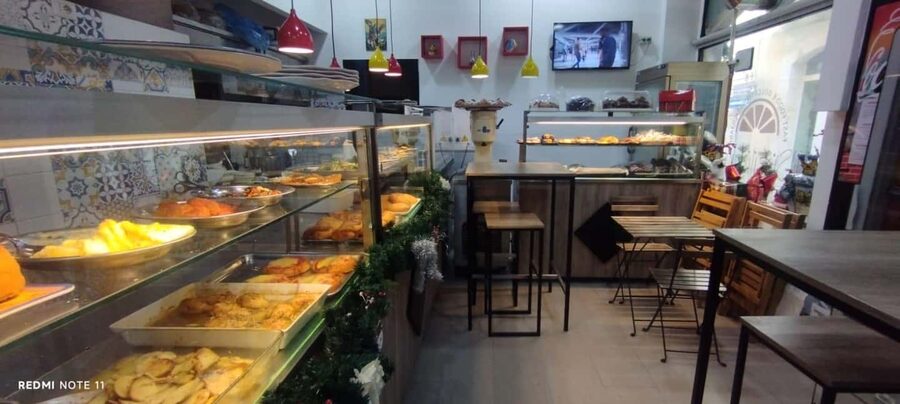
Because the class lasts only 1.5 hours, it can slot into a wider day in Syracuse without taking over your schedule. You could place it between sightseeing and dinner, or use it as a midday food break.
The central meeting point makes timing important. Ortygia’s streets can be easy to wander through, so do not rely on finding the Banco di Sicilia entrance at the last second. Arrive ready to begin, with comfortable footwear rather than anything formal.
The class also gives you a reason to slow down. Much of Ortygia is about looking at buildings and moving from one sight to another. Sitting down with food professionals changes the pace and lets you pay attention to ingredients, techniques, and local habits.
My verdict: book it if you want a tasting with hands-on shaping
I would book this arancino class if I wanted a compact, friendly food activity with a small group and local conversation. The strongest features are the focused recipe, the chance to shape the rice, Maria’s explanations of Syracuse and Sicilian food, and the extra tasting of caponata or parmigiana and cannolo.
I would not book it expecting a full afternoon of cooking or a large meal. The reported €60 price can feel high when the ingredients are prepared in advance, the frying is done by the host, and each person may receive only one finished arancino.
Before paying, confirm how much food you will prepare, which dishes will be served, and whether the frying is demonstration only. If those limits suit you, this is a pleasant way to meet local hosts and get a taste of Sicilian cooking without giving up half a day.
FAQ
Where does the arancino class meet?
The meeting point is in front of the entrance of the Banco di Sicilia in Ortygia, Syracuse. The listed coordinates are 37.061317443847656, 15.293965339660645.
How long does the class last?
The activity lasts 1.5 hours.
What languages are available?
The live guide service is available in English and Italian.
How many people can join the class?
The class is limited to 10 participants.
What food is included?
The experience includes arancino and an aperitivo with typical Sicilian delicacies such as caponata or parmigiana, cannolo, and a drink.
Do I make the arancini from start to finish?
You take part in shaping the arancini, but some food is prepared in advance. The breading and frying may be handled by the host.
What should I wear or bring?
Wear comfortable shoes and comfortable clothes. Pets, luggage, and large bags are not allowed.
Is the class suitable for wheelchair users?
No. The activity is listed as unsuitable for wheelchair users.
New cooking classes around Italy
- Sestri Levante: Pesto & Cooking Classes, Wine Tasting★ 4.9 · 56 reviews
- Sardinia Cooking Class: Fresh Handmade Pasta★ 5.0 · 53 reviews
- San Gimignano: Tuscan Cooking Class★ 5.0 · 2 reviews
- San Gimignano: Truffle Cooking Class with Wine Tasting★ 5.0 · 5 reviews
- San Gimignano: “Hands in dough” Cooking Class with Lunch★ 5.0 · 6 reviews
- Salento: Authentic Cooking Experience with Fresh Pasta and Local Products★ 5.0 · 8 reviews
- ROME:Hands-On Lasagna & Marsala Tiramisu Cooking Experience”★ 5.0 · 3 reviews
- Rome: Private Wine Tour and Pasta Making Class in a Winery★ 5.0 · 6 reviews
Syracuse Cooking Classes, side by side.
Syracuse: Traditional Cooking Class & Ancient Market Visit
Read our review →
Syracuse: Sicilian Street Food Hands-On Cooking Class
Read our review →This kitchen also appears in